
BuddhistCatholicContemplativeEvangelicalGeneral ChristianHinduJewishLatter-day SaintMuslimNew VisionsProgressive Christian
Beliefs
- Buddhist
- Catholic
- Contemplative
- Evangelical
- General Christian
- Hindu
- Jewish
- Latter-day Saint
- More Voices
- Muslim
- New Visions
- Pagan
- Progressive Christian
Topics
- Religion News
- Food and Religion
- Sports and Religion
- Religious Art
- Religious Music and Entertainment
- Religious Events
- History and Religion
- Style and Religion
- Politics and Religion
- Women in Religion
- Recreation Outdoors and Religion
- Business Finance and Religion
- Careers Workplace and Religion
- Education and Religion
- Family Parenting and Religion
- Health Fitness and Religion
- Home and Religion
- Relationships and Religion
- Technology and Religion
- Travel and Religion
Columnists
- Buddhist Columnists
- Business Finance and Religion Columnists
- Careers Workplace and Religion Columnists
- Catholic Columnists
- Contemplative Columnists
- Education and Religion Columnists
- Evangelists Columnists
- Family Parenting and Religion Columnists
- General Christian Columnists
- Health Fitness and Religion Columnists
- Hindu Columnists
- History and Religion Columnists
- Home and Religion Columnists
- Jewish Columnists
- More Voices Columnists
- Latter Day Columnists
- Muslim Columnists
- New Visions Columnists
- Nonreligious Columnists
- Pagan Columnists
- Politics and Religion Columnists
- Progressive Columnists
- Recreation Outdoors and Religion Columnists
- Relationships and Religion Columnists
- Religion News Columnists
- Religious Art Columnists
- Religious Events Columnists
- Religious Music and Entertainment Columnists
- Sports and Religion Columnists
- Style and Religion Columnists
- Technology and Religion Columnists
- Travel and Religion Columnists
- Women in Religion Columnists
Resource Library
- 2026 Calendar
- Library of World Religions
- The 100 Most Holy Places on Earth
- Patheos Answers
- Podcasts
- Videos
- Faith Leaders Database
- Anglican Episcopalian
- Bahai
- Baptist
- Buddhism
- Christianity
- Confucianism
- Eastern Orthodoxy
- Hinduism
- Holiness and Pentecostal
- ISKCON
- Islam
- Judaism
- Lutheran
- Methodist
- The Church of Jesus Christ of Latter-day Saints
- New Age
- Paganism
- Presbytarian and Reformed
- Protestantism
- Religion Behind the Scenes
- Roman Catholic
- Scientology
- Shia Islam
- Sikhism
- Sufism
- Sunni Islam
- Taoism
- Zen
- See all religions
Research Tools
 Ad-Free & Subscriber Log-In Subscription Support
Follow Patheos 

- Trending:
- Advent
- |
- Forgiveness
- |
- Thanksgiving
- |
- Election
- |
- Seasonal Holidays
- |
- Marriage
 Bad Catholic
- Home
- Catholic
- On Wanting To Eat Your Baby
On Wanting To Eat Your Baby
Last updated on: August 1, 2012 at 2:04 pm by Marc
On Wanting To Eat Your Baby 2012-08-01T14:04:48-04:00 Marc
Patheos Explore the world's faith through different perspectives on religion and spirituality! Patheos has the views of the prevalent religions and spiritualities of the world.
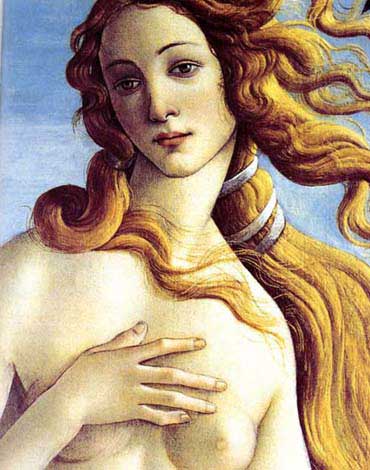
It is a tangible reality of human experience, that in the presence of a Beauty we let slip groans that sound an awful lot like dissatisfaction. In the light of some masterpiece of nature, we screw up our faces like we’ve stubbed a toe. In the quiet dark of of an old stone room, observing an icon or painting lit by candlelight, we may even cry. Tears and moans and groans are the songs Beauty sings. Beauty hurts.
But if Beauty, by its very nature, creates this experience of dissatisfaction in the human person, then it is reasonable to conclude that beauty is infinite in quality.
For dissatisfaction is the term given for “not-having”. We want to eat, but we don’t have food, and so we are dissatisfied. But at some point we will be full. At some point — after dinner, most likely — we will say, “no more food!” The experience of hunger, then, is finite. It can be sated, as can the experience of immaterial things, like anger.
But Beauty is never sated. No man in recorded history has ever said “no more Beauty, please.” No man, gazing on Michaelangelo’s Sistine Chapel or watching the sun sink below the Blue Ridge Mountains, has ever said, “This is far too much Beauty. Take it away, for I am full.” If a thing can never be conceived of reaching an end point, then as far as we are concerned, that thing is infinite. We can never think of too many numbers — it is an infinite progression. We can never think of too much Beauty. We can never have too much Beauty. This implies that it too, is infinite.

Now this infinity makes us long for consummation. To put it poetically, Beauty makes us want to be fully taken into a Thing, to become One with it. To put it crudely, it makes us want to be eaten. This is a fact so obvious that it is taken for granted, a thing so close to our noses that we rarely ever see it.
What is the innate feeling of a mother gazing on the Beauty of her infant child? It is often phrased thus: “Ooh, I just wanna eat you all up.” This should be a horrifying statement, but somehow we all understand. We understand that sweetly frustrating desire for consummation. (At least I assume we do, or else we should be seriously concerned for the wellbeing of our babies. (Alternatively, this desire for consummation may manifest itself by way of sticking your infant’s foot in your mouth. (Don’t pretend you haven’t.)))

When we experience Beauty in nature, we genuinely wish to be “one with nature.” It’s a cliche, but only because it’s a thing often repeated and rarely experienced in our housing-development world. When we listen to beautiful music, what is our desire? To be immersed in it, contained by it. And of course, the experience of our lover’s Beauty imbues us with a desire to consummate and be consummated — ultimately in the sexual act — but also in the fascinating habit lovers have of “consuming” each other by way of chewing on earlobes, kissing, nibbling on various digits and appendages…yes, I understand it’s awkward out of context, but lovers, don’t pretend it’s otherwise, lest Venus smite you.
Herein lies the rub: This desire for total consummation cannot be satisfied, and we know it. The mother will never actually proceed to consume her child. The nature lover will always remain distinct from Nature, if only for the reason that he must eventually leave the woods. The music lover is never actually consumed by the music — thanks to a few obvious metaphysical difficulties — and the lovers’ marvelous communion of flesh will come to an end (though I would argue that it is an infinite act by virtue of being procreative).
It seems logical to conclude that it is not merely the beautiful things we want to consume and be consumed by, but Beauty itself. The mother wants to consume her beautiful baby, but will not, because it is her baby, and babies are not meant to be consumed. It is the Beauty then*,* that she longs to “eat all up”, Beauty that in this case manifests itself in the startling eyes of her newborn. Or take the case of being one with Nature. We sit on the moss, we hear the waterfall against the rocks, we watch the deer lick clean her young, and we wish to be “one with Nature”. But this is not a feeling associated with sitting on a cactus, near a donkey-corpse being devoured by maggots, suffering the purely natural herpes we caught last week, though one could equally claim the experience as Oneness with Nature. No, it is not merely The Great Outdoors we want to be consumed by, but the Beauty present there.

To prove it another way: We cannot be one with nature, our newborn, our spouse, and Mozart’s Requiem. Being one with something excludes being one with something else. It would be a fool who said I am indistinguishably one with the woods, and I am simultaneously indistinguishably one with my lover, for a lover is distinguishable from a woods. Yet we often desire total consummation with both the Requiem and nature. Thus it would seem that we desire to be one with some unifying factor in all these things, a thing we call Beauty.
So come, see the incredible position the human being is in: There is a thing called Beauty. This thing is experienced as Infinite. As an infinite experience, it cannot bring satisfaction, but can only make the human being long for more, more, more. Yet, mysteries of mysteries, the human being wants this longing. He wants the aching, groaning, dissatisfaction, and he will thus put Palestrina in his CD player, knowing full well that the experience of Beauty will not sate him, but make him long for a consummation he can approach but never achieve. He will subject himself to the terror of stargazing. He will undertake the impossible task of being satisfied by a sunset. Human life teeters on the brink of metaphorical orgasm, never crossing the edge, always sweetly dissatisfied, always groaning. Thus the very existence of a human being demands an answer to this question: Will our desires ever be met? Will we ever consume and be consumed by Beauty?
If the answer is no, it comes with a whole slough of difficulties. This is saying that the human being is at utter odds with reality. A “no” makes the claim that the human contains within himself a completely absurd desire. He has sexual desires, nutritional desires, psychological desires, and these can all be met, but his desire to be consumed by Beauty? No, that one’s a mistake. It’s quite clear that there is no Ultimate Beauty in the universe, and thus the human desire to be One with such a thing is a foolish desire.
The issue with this dismissal is that it defeats itself. Everything we think and know we gain from the experience of the human person. Thus, to say that human experience is foolish and absurd calls into question everything we think and know. It is because we believe our desire for Truth can be met that we have the ability to declare that something is true. If our innate desire for consummation with Beauty cannot be met, who could firmly say that our innate desire to know the Truth can? And if our innate desire to know Truth cannot be met, how could we utter the statement, “the human desire to be One with Beauty is a foolish desire” and believe it to be true?
If we say “yes,” there is no innate human desire that does not have a corresponding satisfaction, and thus this desire to consume and be consumed by Beauty must at some point be fulfilled, well, then we have come to believe in God. Or rather, God is the name human beings have historically given to an Infinity outside of ourselves that we desire to be in communion with. God is Beauty, and Beauty is God. Our seemingly insane desires to be consumed by our lovers, by nature, and to consume our loved ones — they all make sense if God is Beauty. For then in all these experiences, we are truly desiring communion with God.
But to the Christian, this is old news. God has always been the reality behind that which make us groan: “We do not know what we ought to pray for, but the Spirit himself intercedes for us with groans that words cannot express” (Romans 8:26). It the influence of God that provokes us to unutterable groanings, that makes us moan at the sight of Beauty. Every gasp is a prayer, and every tear shed for the sake of Beauty is an act of Worship, inspired by the God who is Beauty itself.
Give thanks then, Catholic, for the gift of Eucharist. For if what the Church claims is true, that the bread and wine offered at Mass truly become the body and blood of God, then Beauty itself is placed on our tongues. That infinite desire to consume Beauty is met on the altar, tangibly and sacramentally. And if we consume Beauty, we can only be consumed by it in turn, for it is Infinite. We eat Beauty, and are made beautiful. If only we recognized our Beauty, how we would change the world.

Happy Penetecost!
Previous Post

May 26, 2012
Converting to Paganism
Next Post
May 28, 2012 Imagine Sisters
Browse Our Archives
Select a Category Another Look Atheism Bad Catholics Beauty Communio Crookedhart Destupidification Exiting the Culture Wars Gender Theory That Doesn't Suck How To Language Liturgy! Love One Another Marriage Equality Modesty Music Objectification pop culture Poverty Sacraments Sex Technology The Best Religion in the World The Erotic Phenomenon Time Uncategorized Virtue Ethics That Don't Suck Winning the Culture Wars
Select a Month January 2017 December 2016 November 2016 October 2016 July 2016 June 2016 April 2016 March 2016 February 2016 January 2016 December 2015 November 2015 October 2015 September 2015 August 2015 July 2015 June 2015 May 2015 March 2015 February 2015 January 2015 June 2014 May 2014 April 2014 March 2014 February 2014 January 2014 December 2013 November 2013 October 2013 September 2013 August 2013 July 2013 June 2013 May 2013 April 2013 March 2013 February 2013 January 2013 December 2012 November 2012 October 2012 September 2012 August 2012 July 2012 June 2012 May 2012 April 2012 March 2012 February 2012 January 2012 December 2011 November 2011 October 2011 September 2011 August 2011 July 2011 June 2011 May 2011 April 2011 March 2011 February 2011 January 2011 December 2010 November 2010 October 2010 September 2010 August 2010
Follow Us!
TAKE THE
Religious Wisdom Quiz
What Christian group commonly practices foot washing as a religious act?
Select your answer to see how you score.
Episcopalians Mennonites Presbyterians Methodists
Related posts from Bad Catholic

Towards a New Argument Against Pornography
How to Know That You Are Beautiful

Death, Split Selves, and Demons: The Dopest Album...
TRENDING AT PATHEOS Catholic

How Discretion Guides Us Away From Extremes
Prudence is an important virtue for all of us. While we should...

Bad Survey Questions Distort Eucharistic Theology
It seems to be the newest thing: someone conducts a bad survey...

If Baptism Washes Away Sin, Why Do Catholics...
The seven sacraments stand as the foundation of Catholic ecclesial life. The...

The Power of Setting a Good Example
Remember last August when the Chicago White Sox hosted a "Pope Hat...

A Catholic Critique of Biblical Unitarianism
If the statistics are to be believed, Unitarianism is rising worldwide. Although...

How Grandma Tourism Helps Grandparents Live Their Vocation
Grandma, The New Travel Influencer What started as a nostalgia-inspired social media...
view all Catholic blogs
Ad-Free & Subscriber Log-In Subscription Support
- About Us
- 2026 Calendar
- Videos
- Podcasts
- Library of World Religions
- Faith In Media Tracker
- Advertise With Us
- Write for Us
- Privacy Policy
- Terms of Service
- Do Not Sell My Data
- Contact Us
- Radiant Digital
- Manage Newsletter Subscriptions
- Unsubscribe From Notifications
- Sitemap
Copyright 2008-2026, Patheos, part of the Radiant Digital network of media brands. All rights reserved.
Subscription Support Ad-Free & Subscriber Log-In
Follow Patheos