
BuddhistCatholicContemplativeEvangelicalGeneral ChristianHinduJewishLatter-day SaintMuslimNew VisionsProgressive Christian
Beliefs
- Buddhist
- Catholic
- Contemplative
- Evangelical
- General Christian
- Hindu
- Jewish
- Latter-day Saint
- More Voices
- Muslim
- New Visions
- Pagan
- Progressive Christian
Topics
- Religion News
- Food and Religion
- Sports and Religion
- Religious Art
- Religious Music and Entertainment
- Religious Events
- History and Religion
- Style and Religion
- Politics and Religion
- Women in Religion
- Recreation Outdoors and Religion
- Business Finance and Religion
- Careers Workplace and Religion
- Education and Religion
- Family Parenting and Religion
- Health Fitness and Religion
- Home and Religion
- Relationships and Religion
- Technology and Religion
- Travel and Religion
Columnists
- Buddhist Columnists
- Business Finance and Religion Columnists
- Careers Workplace and Religion Columnists
- Catholic Columnists
- Contemplative Columnists
- Education and Religion Columnists
- Evangelists Columnists
- Family Parenting and Religion Columnists
- General Christian Columnists
- Health Fitness and Religion Columnists
- Hindu Columnists
- History and Religion Columnists
- Home and Religion Columnists
- Jewish Columnists
- More Voices Columnists
- Latter Day Columnists
- Muslim Columnists
- New Visions Columnists
- Nonreligious Columnists
- Pagan Columnists
- Politics and Religion Columnists
- Progressive Columnists
- Recreation Outdoors and Religion Columnists
- Relationships and Religion Columnists
- Religion News Columnists
- Religious Art Columnists
- Religious Events Columnists
- Religious Music and Entertainment Columnists
- Sports and Religion Columnists
- Style and Religion Columnists
- Technology and Religion Columnists
- Travel and Religion Columnists
- Women in Religion Columnists
Resource Library
- 2026 Calendar
- Library of World Religions
- The 100 Most Holy Places on Earth
- Patheos Answers
- Podcasts
- Videos
- Faith Leaders Database
- Anglican Episcopalian
- Bahai
- Baptist
- Buddhism
- Christianity
- Confucianism
- Eastern Orthodoxy
- Hinduism
- Holiness and Pentecostal
- ISKCON
- Islam
- Judaism
- Lutheran
- Methodist
- The Church of Jesus Christ of Latter-day Saints
- New Age
- Paganism
- Presbytarian and Reformed
- Protestantism
- Religion Behind the Scenes
- Roman Catholic
- Scientology
- Shia Islam
- Sikhism
- Sufism
- Sunni Islam
- Taoism
- Zen
- See all religions
Research Tools
 Ad-Free & Subscriber Log-In Subscription Support
Ad-Free & Subscriber Log-In Subscription Support
Follow Patheos 

- Trending:
- Forgiveness
- |
- Marriage
- |
- Consciousness
- |
- Death Penalty
- |
- Election
- |
- Halloween

- Home
- Religious Music & Entertainment
- Tolkien’s Theological Speculations
Tolkien’s Theological Speculations
Last updated on: September 22, 2021 at 5:15 pm by Guest Contributor
Tolkien’s Theological Speculations 2021-09-22T17:15:09-06:00 Guest Contributor
Patheos Explore the world's faith through different perspectives on religion and spirituality! Patheos has the views of the prevalent religions and spiritualities of the world.
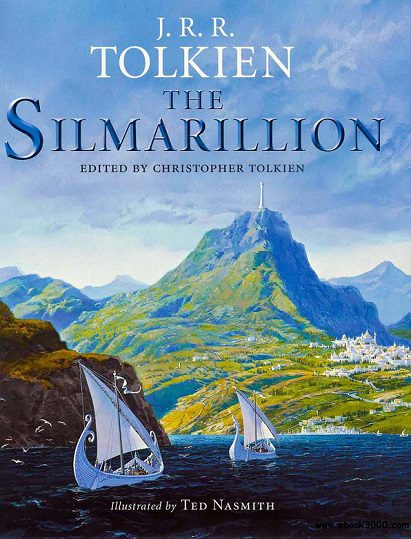
CC-BY-SA
by T. M. Doran
By all accounts, a tiny fraction of those who have read or viewed The Hobbit and The Lord of The Rings (LOTR) have been able to plow through The Silmarillion (Houghton Mifflin, 1977) assembled by J.R.R. Tolkien’s son, Christopher, after his father’s death.
Encompassing eons of time, dense with mythology and archaic language, reading like a historical narrative in places, identifying three-four-five different names for people and places, the book is hard work, especially the first time through. And because The Silmarillion can be hard work, the deeper themes in the chronicle can easily get lost in the fog of elves, dwarves, and monsters.
Alas, my first edition hardcover is not a collectible, having been read, referenced, hand-annotated, and dog-eared many times.
It’s been observed that religion is absent from The LOTR, but one of the most prominent themes in “The Silmarillion” is theological, not so much expressed as depicted in events, starting with creation, and in the choices and actions of characters.
This article is not intended to be an exploration of J.R.R. Tolkien’s religious beliefs but of the theological speculations that are depicted in the book that Christopher Tolkien compiled from his father’s resource material. Why didn’t Tolkien senior publish this work in his lifetime? Because he had decided he wasn’t fit enough at a later age to do everything he deemed necessary to complete a chronicle of the ages that preceded The LOTR.
Early in The Silmarillion, we find angelic beings (The Ainur) assisting their Creator (Ilúvatar) with the Divine Music that brings the physical universe into existence. Here, the powerful theological theme—radical freedom—is first introduced.
The Creator’s angelic beings aren’t passive observers but are invited to be active participants in the creation event. When Melkor—Tolkien’s Lucifer—adds discordant notes to the creation music, the Creator does not eliminate those rebellious notes; rather, allowing them to remain and then introducing melodies that bring new and unexpected beauty out of those discordant notes.
Some of the angelic beings remain with the Creator outside of physical creation, other loyal angels (the Valar) clad themselves in earthly raiment and tie themselves to the physical world so as to nurture creation, and a rebellious band, led by Melkor (in those ages, The LOTR’s Sauron is his captain), tie themselves to the physical world to dominate and rule it.
Those angelic beings that tied themselves to the physical world can be likened to the gods of ancient Earth with the significant difference that they are all creatures. Nonetheless, “it was then the delight of the Valar…to clothe themselves as in a vesture in the forms of the Children of Ilúvatar (elves and mortals), so also did they eat and drink…For he (Melkor) was yet as one of the Valar, and could change his form, or walk unclad, as could his brethren…”
The world described in The Silmarillion has an advanced physics feel to it, as if extra dimensions were lurking in the background and forces and creatures could be acquired from outside the physical world.
The angelic beings—the Valar and Melkor’s rebels—learn that the Creator intends for two races of “Children” to abide in this physical world: the firstborn elves and mortal men and women. In the eventide of their residence in Middle-earth, elves in The Hobbit and The LOTR are largely a race unto themselves.
In The Silmarillion, the elven “bridge race” allows readers to better understand the angelic beings with whom many of the elves abide and mortals with whom the elves in Middle-earth cooperate and contend. In the elves, we see a race not subject to aging or disease as mortals are, though possessing less power than the Valar.
And though elves are immortal, they are subject to human-like passions and their immortality takes a heavy toll as ages pass. It may seem odd to witness the union of an angelic being and an elf, or the union of an elf and a mortal but perhaps this is Tolkien’s way of reinforcing that for all their differences the Valar and the Children are creatures, from the highest angel to the humblest mortal.
The Creator bestows the gift of freedom on angels, elves, and mortals to the extent of permitting the disordered use of freedom to mar creation. You might say the big theological idea in The Silmarillion is the Creator’s willed vulnerability to his creatures.
Is the purpose of this gift of freedom to foster super-natural trust so that such trust might grow into super-natural love? Is the purpose of freedom, super-natural trust and love, to partake to the greatest possible degree in the Divine Life? Heroic examples in The Silmarillion suggest as much.
For all his power over the physical world, Melkor lives a cramped sub-natural life because he abuses freedom and rejects trust and love. So too, to a lesser degree, does the most gifted of the elven race, the maker of the Silmarils who names Melkor Morgoth—“The Back Foe of the World,” along with those who swear fealty to this gifted elf in opposition to the Valar.
What follows is betrayal and the sundering of father from son and kin-slaying and an age of misery. The Creator’s gift of freedom is emulated by the Valar in the matter of the calamitous departure of many of the elves from the blessed realm.
“And Manwë was grieved, but he watched and said no word. The Valar had brought the Eldar (elves) to their land freely, to dwell or to depart; and though they might judge departure to be folly, they might not restrain them from it.”
How disordered freedom affects other creatures is eloquently depicted by Tolkien in the figure of the human chieftain, Húrin, and his family. Húrin is captured by Melkor and tortured physically and spiritually.
In The Tale of the Children of Húrin (Houghton Mifflin, 2007), also edited by Christopher Tolkien, an expanded version of the same tale in The Silmarillion, Melkor lies to Húrin: “For beyond the Circles of the World there is Nothing. But within them they (Húrin’s family) shall not escape me, until they enter into Nothing.”
Húrin is the just man unjustly assailed by evil. The contest of minds and wills between Húrin and Melkor is one of Tolkien’s most masterful depictions of the humanly-incomprehensible mystery of evil, a mystery that cannot be intellectually deciphered and must ultimately rely on trust and love.
Even the choices of loyal Valar contribute to the suffering of elves and men; the ill-considered release of Melkor from bondage; the choice of Aulë, one of the Valar, to create the dwarves prior to the “birth” of the Children of Ilúvatar.
Though Aulë had erred in this act, because he had acted out of love, Ilúvatar blessed the dwarves and allowed them to live. In contrast is Melkor’s creation of orcs and other destructive creatures as tools to further his will to rule, and in mockery of the Creator and his work.
Tolkien seems to be saying that freedom is inextricably linked to sharing in the Divine Life or rejecting that Life, that the peril that accompanies freedom is worth the reward for those who persevere in trust and love:
“It is one with this gift of freedom that the Children of Men dwell only a short space in the world alive, and are not bound to it, and depart soon whither the Elves know not…Death is their fate, the gift of Ilúvatar, which as Time wears even the Powers shall envy.
“But Melkor has cast his shadow upon it, and confounded it with darkness, and brought forth evil out of good, and fear out of hope. Yet of old the Valar declared to the Elves in Valinor that Men shall join in the Second Music of the Ainur; whereas Ilúvatar has not revealed what he purposes for the Elves after the World’s end, and Melkor has not discovered it.”

About T.M. Doran
T.M. Doran is the author of the Tolkien-inspired trilogy of novels: “Toward the Gleam”, “The Lucifer Ego”, and “Kataklusmós”; also, stand-alone novels, “Terrapin” and “Iota”. In his other life, he worked on hundreds of environmental projects involving water, wastewater, air, habitats, and was an adjunct professor at Lawrence Technological University. You can find his short story, “Mr. Tanner”, at https://www.benedictinstitute.org/2021/04/mr_tanner/ You can read more about the author here.
Previous Post

August 11, 2021
Joker: A Christian Take
Next Post

September 30, 2021 Are There Skeletons Buried in Catholic History?
Browse Our Archives
Select a Category Artist Interviews Christian Music Movie Reviews Movie Trailers Movies Television Uncategorized
Select a Month March 2026 August 2023 July 2023 June 2022 May 2022 February 2022 September 2021 August 2021 July 2021 April 2021 March 2021 February 2021 December 2020 October 2020 September 2020 July 2020 May 2020 February 2020 January 2020 December 2019 October 2019 April 2019 March 2019 February 2019 August 2018 July 2018 June 2018 May 2018 March 2018 January 2018 November 2017 October 2017 September 2017 August 2017 June 2017 May 2017 April 2017 February 2017 January 2017 December 2016 November 2016 October 2016 August 2016 July 2016 June 2016 March 2016 February 2016 August 2014 May 2014 April 2014 March 2014 October 2013 May 2013 April 2013 September 2012 August 2012 July 2012
TAKE THE
Religious Wisdom Quiz
This shortest book in the Old Testament prophesies judgment on Edom for violence against Judah. How many verses does it contain?
Select your answer to see how you score.
21 verses 30 verses 15 verses 12 verses
Related posts from Backstage Pass
The Faithful: FOX Retells Genesis Through Its Women

Gerwig’s Barbie Is Gender Revenge Porn, And It...

Book of Mormon Films Focus on Jesus as...
TRENDING AT PATHEOS Religious Music & Entertainment

"Les Diabolique" and Transgression
Alongside something like Arrival, Vertigo, or Charade, Les Diaboliques is a...

"The Plague Dogs" and Mortality
So, flashback to the late 70s, early 80s. Walt Disney Studios is...

With the recent and highly successful release of Christopher Nolan’s epic film,...

"L'avventura" and Human Weakness
Today's piece is going to be a little different for a few...

I first want to apologize for not posting or writing anything. I'm...

I've engaged in the multi-year project of reading through the Church Fathers,...
view all Religious Music & Entertainment blogs
Ad-Free & Subscriber Log-In Subscription Support
- About Us
- 2026 Calendar
- Videos
- Podcasts
- Library of World Religions
- Faith In Media Tracker
- Advertise With Us
- Write for Us
- Privacy Policy
- Terms of Service
- Do Not Sell My Data
- Contact Us
- Radiant Digital
- Manage Newsletter Subscriptions
- Unsubscribe From Notifications
- Sitemap
Copyright 2008-2026, Patheos. All rights reserved.
Subscription Support Ad-Free & Subscriber Log-In
Follow Patheos