
BuddhistCatholicContemplativeEvangelicalGeneral ChristianHinduJewishLatter-day SaintMuslimNew VisionsProgressive Christian
Beliefs
- Buddhist
- Catholic
- Contemplative
- Evangelical
- General Christian
- Hindu
- Jewish
- Latter-day Saint
- More Voices
- Muslim
- New Visions
- Pagan
- Progressive Christian
Topics
- Religion News
- Food and Religion
- Sports and Religion
- Religious Art
- Religious Music and Entertainment
- Religious Events
- History and Religion
- Style and Religion
- Politics and Religion
- Women in Religion
- Recreation Outdoors and Religion
- Business Finance and Religion
- Careers Workplace and Religion
- Education and Religion
- Family Parenting and Religion
- Health Fitness and Religion
- Home and Religion
- Relationships and Religion
- Technology and Religion
- Travel and Religion
Columnists
- Buddhist Columnists
- Business Finance and Religion Columnists
- Careers Workplace and Religion Columnists
- Catholic Columnists
- Contemplative Columnists
- Education and Religion Columnists
- Evangelists Columnists
- Family Parenting and Religion Columnists
- General Christian Columnists
- Health Fitness and Religion Columnists
- Hindu Columnists
- History and Religion Columnists
- Home and Religion Columnists
- Jewish Columnists
- More Voices Columnists
- Latter Day Columnists
- Muslim Columnists
- New Visions Columnists
- Nonreligious Columnists
- Pagan Columnists
- Politics and Religion Columnists
- Progressive Columnists
- Recreation Outdoors and Religion Columnists
- Relationships and Religion Columnists
- Religion News Columnists
- Religious Art Columnists
- Religious Events Columnists
- Religious Music and Entertainment Columnists
- Sports and Religion Columnists
- Style and Religion Columnists
- Technology and Religion Columnists
- Travel and Religion Columnists
- Women in Religion Columnists
Resource Library
- 2026 Calendar
- Library of World Religions
- The 100 Most Holy Places on Earth
- Patheos Answers
- Podcasts
- Videos
- Faith Leaders Database
- Anglican Episcopalian
- Bahai
- Baptist
- Buddhism
- Christianity
- Confucianism
- Eastern Orthodoxy
- Hinduism
- Holiness and Pentecostal
- ISKCON
- Islam
- Judaism
- Lutheran
- Methodist
- The Church of Jesus Christ of Latter-day Saints
- New Age
- Paganism
- Presbytarian and Reformed
- Protestantism
- Religion Behind the Scenes
- Roman Catholic
- Scientology
- Shia Islam
- Sikhism
- Sufism
- Sunni Islam
- Taoism
- Zen
- See all religions
Research Tools
 Ad-Free & Subscriber Log-In Subscription Support
Ad-Free & Subscriber Log-In Subscription Support
Follow Patheos 

- Trending:
- Forgiveness
- |
- Marriage
- |
- Consciousness
- |
- Death Penalty
- |
- Election
- |
- Halloween
 Back Rome Again
- Home
- Catholic
- Politics and Religion
- Ross Doudhat on the Division in the Church
Ross Doudhat on the Division in the Church
Last updated on: January 30, 2023 at 9:58 am by Cory Tucholski
Ross Doudhat on the Division in the Church 2023-01-30T09:58:32-05:00 Cory Tucholski
Patheos Explore the world's faith through different perspectives on religion and spirituality! Patheos has the views of the prevalent religions and spiritualities of the world.
The goal of this blog was to analyze news from a Catholic perspective.
The first few posts have detailed, in part, my move from anti-Catholic Protestant to committed Catholic.
This post will split the difference in more ways than one.
One of the reasons I became Catholic is the “both/and” perspective on interpreting Scripture. Too often American Evangelicals see two conflicting ideas and interpret it as black/white and either/or. For example, there are verses that suggest baptism is necessary for salvation (1 Pet 3:21) and verses that suggest only confessing the name of Jesus is necessary for salvation (Rom 10:9; Lk 23:39-43). Evangelicals pit these ideas against each other. But as Catholics, we can confidently say yes to both ideas.
Protestant apologist J.P. Holding has a series of essays on the both/and ideas of interpreting Scripture that were common in the Ancient Near East. When you see Scripture that says faith saves us (Rom 4:1-8) and Scripture that says works save us (Jms 2:26), an American Evangelical scoffs and asks “Well, which saves us then: faith, or works?” And the answer a first century Christian would give is the same answer a Catholic would give today: “Yes.” Holding details that beautifully in his essay about the Semitic Totality Concept.
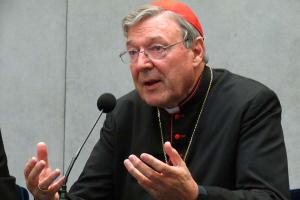 I took the long way to lead into a recent editorial in the New York Times by Ross Doudhat, referring to a memo from the late Cardinal George Pell and an essay from Cardinal Robert McElroy that may as well come from two different religions. Cardinal Pell urges Catholics to adhere firmly to tradition and blasts Pope Francis’s papacy as a chaotic mess. Cardinal McElroy urges us to dissemble all traditions, especially gender roles, and move forward with a liberal agenda.
Here is where the American Evangelical black/white, either/or thinking creeps in. Catholics are bound to react to these pieces with contempt depending on which side of the political aisle they might fall. Conservative, right-wing Catholics will be cheering Pell and jeering McElroy. Liberal, left-wing Catholics will be praising McElroy. This is the shadow of a massive schism in our Church.
But it doesn’t have to be that way.
The both/and nature of the Church, I thought when I rejoined, was the greatest part. We may argue about agendas, but united in Christ and protected by Mary we can continue forward in unison. But both sides are becoming incorrigible. No one wants to find a middle ground, both/and solution. Doudhat laments:
As someone who basically agrees with Pell’s diagnosis, I can read McElroy and find points of reasonable discussion, particularly where he talks about the role of Catholic women in the governance of the church. In theory one can imagine a Catholicism with more nuns and laywomen in important offices that retains its core doctrinal commitments, just as — to jump off from the pope’s recent interview — one can imagine a church vigorously opposed to unjust discrimination or state violence against gay people that also still holds to the rule of chastity and the centrality of sacramental marriage.
I wish that as a Church there was a way we could come together and find a happy medium on these polarizing issues. It is cruel and cold-hearted to turn a blind eye to the plight of gay people in other countries. We can advocate for their rights to exist without elevating same-sex marriage to the level of sacramental marriage. We can include more women in parish and Vatican leadership roles without elevating them to the sacramental priesthood.
The role of the priest is mentor and guide, preparing us to change the world. He should be encouraging all of the laity, women included, to take a more active role in parish leadership. That often means he should take a backseat and let the laity drive. There are, in fact, several ministries at my own parish that are entirely lay-led with no involvement from the priests. This is as it should be: formed by the clergy, we the laity of both genders should then take that teaching forward first to this generation and then the next.
The way forward is neither the liberal way nor the conservative way. It is the synthesis of embracing both.
Evangelical
Politics and Religion
History and Religion
Previous Post

August 12, 2022
Becoming Catholic Again: Step Three
Next Post
January 31, 2023 Pope Francis & Homosexuality
Recent Comments
Browse Our Archives
Select a Category Uncategorized
Select a Month February 2023 January 2023 August 2022 July 2022
Follow Us!
TAKE THE
Religious Wisdom Quiz
What does Paul tell Timothy to do with myths and old wives' tales?
Select your answer to see how you score.
Refute them Have nothing to do with them Ignore them Correct them
Related posts from Back Rome Again
The Unexpected Lesson at Eucharistic Adoration

Becoming Catholic Again: Step Three

Readings: Thursday, Week 17 of Ordinary Time
TRENDING AT PATHEOS Catholic

Rejecting Doom: Christian Hope And Human Action
Christianity is a religion of hope. We are to have hope and...

It’s What Comes From Within Which Matters
One of the most difficult things for us to understand is why...

Why I Choose the Eucharist Over the Sermon
Choose the Eucharist, Not the Sermon What are we supposed to get...

5 Design Elements Found in Spiritually Rooted Homes
Putting Spirituality Into Home Decor Our homes are more than our living...

Credo: A Story of God Told with the...
About 10 years ago, I began to imagine a personal "Credo" that...

The Anatomy of Divine Revelation in Catholic Thought
The claim that God has made Himself known to human beings is...
view all Catholic blogs
Ad-Free & Subscriber Log-In Subscription Support
- About Us
- 2026 Calendar
- Videos
- Podcasts
- Library of World Religions
- Faith In Media Tracker
- Advertise With Us
- Write for Us
- Privacy Policy
- Terms of Service
- Do Not Sell My Data
- Contact Us
- Radiant Digital
- Manage Newsletter Subscriptions
- Unsubscribe From Notifications
- Sitemap
Copyright 2008-2026, Patheos. All rights reserved.
Subscription Support Ad-Free & Subscriber Log-In
Follow Patheos