
BuddhistCatholicContemplativeEvangelicalGeneral ChristianHinduJewishLatter-day SaintMuslimNew VisionsProgressive Christian
Beliefs
- Buddhist
- Catholic
- Contemplative
- Evangelical
- General Christian
- Hindu
- Jewish
- Latter-day Saint
- More Voices
- Muslim
- New Visions
- Pagan
- Progressive Christian
Topics
- Religion News
- Food and Religion
- Sports and Religion
- Religious Art
- Religious Music and Entertainment
- Religious Events
- History and Religion
- Style and Religion
- Politics and Religion
- Women in Religion
- Recreation Outdoors and Religion
- Business Finance and Religion
- Careers Workplace and Religion
- Education and Religion
- Family Parenting and Religion
- Health Fitness and Religion
- Home and Religion
- Relationships and Religion
- Technology and Religion
- Travel and Religion
Columnists
- Buddhist Columnists
- Business Finance and Religion Columnists
- Careers Workplace and Religion Columnists
- Catholic Columnists
- Contemplative Columnists
- Education and Religion Columnists
- Evangelists Columnists
- Family Parenting and Religion Columnists
- General Christian Columnists
- Health Fitness and Religion Columnists
- Hindu Columnists
- History and Religion Columnists
- Home and Religion Columnists
- Jewish Columnists
- More Voices Columnists
- Latter Day Columnists
- Muslim Columnists
- New Visions Columnists
- Nonreligious Columnists
- Pagan Columnists
- Politics and Religion Columnists
- Progressive Columnists
- Recreation Outdoors and Religion Columnists
- Relationships and Religion Columnists
- Religion News Columnists
- Religious Art Columnists
- Religious Events Columnists
- Religious Music and Entertainment Columnists
- Sports and Religion Columnists
- Style and Religion Columnists
- Technology and Religion Columnists
- Travel and Religion Columnists
- Women in Religion Columnists
Resource Library
- 2026 Calendar
- Library of World Religions
- The 100 Most Holy Places on Earth
- Patheos Answers
- Podcasts
- Videos
- Faith Leaders Database
- Anglican Episcopalian
- Bahai
- Baptist
- Buddhism
- Christianity
- Confucianism
- Eastern Orthodoxy
- Hinduism
- Holiness and Pentecostal
- ISKCON
- Islam
- Judaism
- Lutheran
- Methodist
- The Church of Jesus Christ of Latter-day Saints
- New Age
- Paganism
- Presbytarian and Reformed
- Protestantism
- Religion Behind the Scenes
- Roman Catholic
- Scientology
- Shia Islam
- Sikhism
- Sufism
- Sunni Islam
- Taoism
- Zen
- See all religions
Research Tools
 Ad-Free & Subscriber Log-In Subscription Support
Ad-Free & Subscriber Log-In Subscription Support
Follow Patheos 

- Trending:
- Forgiveness
- |
- Marriage
- |
- Consciousness
- |
- Death Penalty
- |
- Election
- |
- Halloween
 Back Rome Again
- Home
- Catholic
- Education and Religion
- Becoming Catholic Again: Step One
Becoming Catholic Again: Step One
Last updated on: August 26, 2022 at 6:40 pm by Cory Tucholski
Becoming Catholic Again: Step One 2022-08-26T18:40:52-04:00 Cory Tucholski
Patheos Explore the world's faith through different perspectives on religion and spirituality! Patheos has the views of the prevalent religions and spiritualities of the world.
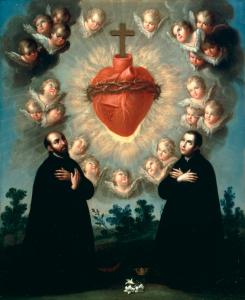 I thought that for my introductory posts to this blog, I’d chronicle my journey back to Catholicism. Rather sets the tone for a blog entitled “Back Rome Again,” I think! This entire series appeared on my old blog, the defunct Josiah Concept Ministries. I wrote these when I was getting ready for a second swim across the Tiber, although I didn’t know it at the time. Obviously, I’ve edited them to comport with Catholic teaching as I understand it.
The first step on my journey was the rejecting three distinctly Protestant doctrines: perspicuity of Scripture, sola Scriptura, and sola fide. Let’s examine each one in turn and see why I ultimately rejected these building blocks of the Protestant Reformation.
Perspicuity of Scripture
The first is perspicuity of Scripture, sometimes called clarity of Scripture by the less fancy among us. This is the ridiculous notion that Average Joe Christian, with no help or guidance, can grab a Bible in his native language, read it, and totally understand everything.
I think we can agree that doesn’t happen. Otherwise, there would be no need for primers on theology, books like Malina’s Handbook of Biblical Social Values, Bible commentaries, study guides, or Bible dictionaries and other reference works.
Now that doesn’t mean that Average Joe Christian can’t understand it, or that he can’t come by the requisite knowledge to understand it. The problem with perspicuity of Scripture is it claims that he will get it unaided.
The Bible was written 2,000-4,000 years ago across vastly different time periods by authors from all walks of life. It contains everything from epic poetry and song lyrics to pithy cliches and historical narrative.
To understand the Bible, you need knowledge of the various cultures it records, the literary style of the book as the culture that produced it utilized that style, familiarity with several dialects of the original languages, and the basics of textual criticism. And that’s only a start!
Fortunately, people called pastors and elders have studied all of that stuff. It is therefore the job of the church to teach us sound theology, not the job of the laity to figure it all out on our own. Unless we’re willing to devote a lifetime and an academic career to it, interpreting the Bible shouldn’t be our aim. Understanding God’s truths should be, and that’s what the teaching ministry of the church is there for.
Sola Scriptura
Perspicuity of Scripture is baked into the cake of sola Scriptura. For the uninitiated, sola Scriptura is the notion that Sacred Scripture alone is the arbiter of faith. It follows logically from perspicuity of Scripture: if we laymen are able to interpret the Bible for ourselves with only the Holy Spirit as our guide, then we have no need of creeds, catechisms, or any centralized teaching Magisterium.
This creates problems. Questions about points in Scripture that are unclear, such as how to perform a baptism ceremony, what a Communion service entails, and the relationship between faith and works have wildly different answers in various Christian denominations.
Look at baptism: the first and probably the most important of all the sacraments. Presbyterians sprinkle infants; they don’t dunk believers like Baptists. Who’s right? There is no central teaching authority to answer that for us. That was my biggest criticism of Protestantism.
Different believing and sincere brothers in Christ are going to read the same passages differently than each other. Without submission to the church as a teacher, you have no other way to go other than to split into a separate body of believers with no further fellowship at every disagreement. Sola Scriptura leads only to anarchy. There is no other outcome.
Sola Fide
Sola fide teaches that salvation is by faith alone. The Protestant church I used to attend said that salvation is by “grace through faith plus nothing.” The pastor always emphasized the “plus nothing” part of that sentiment.
The Bible itself explains that more is required of us than mere faith. That faith must be refined through trials, produce good works, and endure to the end of the age. This is why the book of James is my favorite book in the Bible: it is a call to action.
Salvation by faith alone essentially lets a person who lived sinful life but claimed faith in Jesus into heaven. However, I don’t think that’s the case at all, as there is more required than simply one day saying, “I believe in Jesus!” There are Protestants who actively teach this. Check out this video of a Protestant saying what is usually the quiet part out loud.
We are saved by the grace of God alone, and faith effects that grace. That faith always produces good works. If the world is no better for your profession of faith, then what has the Kingdom of God gained? To put this another way: we cannot live a sinful life with no repentance and expect eternity with God after that. We are called to repentance and good works, all fruits of the free gift of grace.
Conclusion
Interestingly, I wrote this article while I was a Protestant with no inkling to revert to Catholicism and it required almost no editing. I was closer to Catholicism then I ever knew when I originally wrote this in 2011. My faith journey continues with the lack of consistency that I saw in Evangelical Protestantism, which I will examine in the next post.
Education and Religion
Previous Post
February 3, 2023
The Unexpected Lesson at Eucharistic Adoration
Next Post
July 19, 2022 Becoming Catholic Again: Step Two
Browse Our Archives
Select a Category Uncategorized
Select a Month February 2023 January 2023 August 2022 July 2022
Follow Us!
TAKE THE
Religious Wisdom Quiz
Who wrote the letter to the Hebrews?
Select your answer to see how you score.
Peter James Paul Unknown
Related posts from Back Rome Again
The Unexpected Lesson at Eucharistic Adoration
Ross Doudhat on the Division in the Church

Becoming Catholic Again: Step Three
TRENDING AT PATHEOS Catholic

Rejecting Doom: Christian Hope And Human Action
Christianity is a religion of hope. We are to have hope and...

It’s What Comes From Within Which Matters
One of the most difficult things for us to understand is why...

Why I Choose the Eucharist Over the Sermon
Choose the Eucharist, Not the Sermon What are we supposed to get...

5 Design Elements Found in Spiritually Rooted Homes
Putting Spirituality Into Home Decor Our homes are more than our living...

Credo: A Story of God Told with the...
About 10 years ago, I began to imagine a personal "Credo" that...

The Anatomy of Divine Revelation in Catholic Thought
The claim that God has made Himself known to human beings is...
view all Catholic blogs
Ad-Free & Subscriber Log-In Subscription Support
- About Us
- 2026 Calendar
- Videos
- Podcasts
- Library of World Religions
- Faith In Media Tracker
- Advertise With Us
- Write for Us
- Privacy Policy
- Terms of Service
- Do Not Sell My Data
- Contact Us
- Radiant Digital
- Manage Newsletter Subscriptions
- Unsubscribe From Notifications
- Sitemap
Copyright 2008-2026, Patheos. All rights reserved.
Subscription Support Ad-Free & Subscriber Log-In
Follow Patheos