
BuddhistCatholicContemplativeEvangelicalGeneral ChristianHinduJewishLatter-day SaintMuslimNew VisionsProgressive Christian
Beliefs
- Buddhist
- Catholic
- Contemplative
- Evangelical
- General Christian
- Hindu
- Jewish
- Latter-day Saint
- More Voices
- Muslim
- New Visions
- Pagan
- Progressive Christian
Topics
- Religion News
- Food and Religion
- Sports and Religion
- Religious Art
- Religious Music and Entertainment
- Religious Events
- History and Religion
- Style and Religion
- Politics and Religion
- Women in Religion
- Recreation Outdoors and Religion
- Business Finance and Religion
- Careers Workplace and Religion
- Education and Religion
- Family Parenting and Religion
- Health Fitness and Religion
- Home and Religion
- Relationships and Religion
- Technology and Religion
- Travel and Religion
Columnists
- Buddhist Columnists
- Business Finance and Religion Columnists
- Careers Workplace and Religion Columnists
- Catholic Columnists
- Contemplative Columnists
- Education and Religion Columnists
- Evangelists Columnists
- Family Parenting and Religion Columnists
- General Christian Columnists
- Health Fitness and Religion Columnists
- Hindu Columnists
- History and Religion Columnists
- Home and Religion Columnists
- Jewish Columnists
- More Voices Columnists
- Latter Day Columnists
- Muslim Columnists
- New Visions Columnists
- Nonreligious Columnists
- Pagan Columnists
- Politics and Religion Columnists
- Progressive Columnists
- Recreation Outdoors and Religion Columnists
- Relationships and Religion Columnists
- Religion News Columnists
- Religious Art Columnists
- Religious Events Columnists
- Religious Music and Entertainment Columnists
- Sports and Religion Columnists
- Style and Religion Columnists
- Technology and Religion Columnists
- Travel and Religion Columnists
- Women in Religion Columnists
Resource Library
- 2026 Calendar
- Library of World Religions
- The 100 Most Holy Places on Earth
- Patheos Answers
- Podcasts
- Videos
- Faith Leaders Database
- Anglican Episcopalian
- Bahai
- Baptist
- Buddhism
- Christianity
- Confucianism
- Eastern Orthodoxy
- Hinduism
- Holiness and Pentecostal
- ISKCON
- Islam
- Judaism
- Lutheran
- Methodist
- The Church of Jesus Christ of Latter-day Saints
- New Age
- Paganism
- Presbytarian and Reformed
- Protestantism
- Religion Behind the Scenes
- Roman Catholic
- Scientology
- Shia Islam
- Sikhism
- Sufism
- Sunni Islam
- Taoism
- Zen
- See all religions
Research Tools
 Ad-Free & Subscriber Log-In Subscription Support
Ad-Free & Subscriber Log-In Subscription Support
Follow Patheos 

- Trending:
- Forgiveness
- |
- Marriage
- |
- Consciousness
- |
- Death Penalty
- |
- Election
- |
- Halloween
 A Witch's Ashram
- Home
- Pagan
- Reviewing the New Hindu Toolbox
Reviewing the New Hindu Toolbox
Last updated on: September 16, 2014 at 6:30 am by Niki Whiting
Reviewing the New Hindu Toolbox 2014-09-15T10:56:36-08:00 Niki Whiting
Patheos Explore the world's faith through different perspectives on religion and spirituality! Patheos has the views of the prevalent religions and spiritualities of the world.
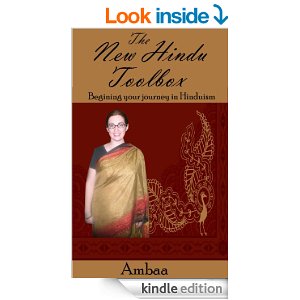 My fellow Patheos blogger, Ambaa, The White Hindu over at the Hindu Portal, has a short e-book out on what a new follower of Hinduism needs to know. I was curious about what she’d have to say and thought my readers might enjoy an review, as well. I am a long time reader of Ambaa and we are friendly colleagues, but this review was my idea and I paid for the e-book.
The New Hindu Toolbox is a short, easy to read introduction for those who want to begin practicing Hinduism and don’t know where to start. Why am I avoiding the word convert? Well, that’s a contentious word in Hindusim. Some say that no one can convert because everyone is a Hindu. Others acknowledge that Hinduism is so vast that one must be more specific about just what one is converting to. Still others say that being Hindu is a cultural and/or ethnic identity and a person can’t just become Hindu. All of those ideas are right!
So, ideas of conversion aside, what if Hinduism speaks to you? Where do you begin? For less than $3 you could do worse than starting with this book. Ambaa was raised in a family that followed a Hindu philosophy and later adopted a more all encompassing version of Hinduism. As a white, North American, female, she has some hard-won insight for us.
The book covers a variety of topics, from her preferred editions of the Bhagavad Gita (her favorite is also mine), how to set up an altar in your home, how to do basic puja, common cultural issues, a glossary, and more.
Let’s get my number one complaint out of the way. Surely you all know what is coming: the book needed much better editing. There were some typos and some places where more or better explanation would be helpful. On the first page there is a factual error regarding Hinduism’s history in the US. Ambaa says that “In the 1970s Hindu ideas spread to the west (sic)…” However, Hindu ideas began influencing notable thinkers in the US in the mid-late 19th century; by the 1960s the inroads were becoming fairly established.
The book is written for a more mainstream Hindu, which I am not, so personally the book wasn’t super helpful for me. For example, I have no qualms being naked or having sex in front of my altar or gods. I also don’t have the option of joining up with a Hindu community, as there aren’t any in my area! I would have liked some tips for left-handed people in the etiquette section, as we’re not supposed to use it to eat or shake or so on. I’m not sure what I would do!
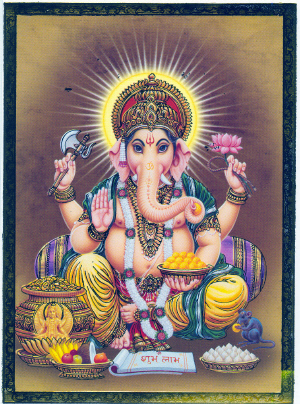 There were a few places where I thought Ambaa’s experience and integration of her religion shined through, and this is the real strength of her book. In the section on altars there is a beautiful line describing them as the place where “The Gods come and live with us.” What a beautiful reminder to polytheists of all stripes that we need to make a place for gods join us. Ambaa says “Any cabinet or corner or table can do … The most important thing is to get started.” I love this attitude. When I gave up being a perfectionist about my practices, that is when I started to really reap the joy of my efforts and begin to forge relationships with spirits and deities.
Ambaa also has wise words regarding gurus. Her number one piece of advice, which I think is relevant no matter one’s tradition, is trust yourself. Enlightenment is not (usually) instantaneous. Think things over for yourself. Be skeptical of anyone who encourages you not to think for yourself.
This book is thoughtful and encouraging entry point for any one interested in exploring Hinduism and making it a part of one’s life.
Previous Post

September 14, 2014
What I Miss About Being A Christian
Next Post
September 18, 2014 The Coming Equinox
Browse Our Archives
Select a Category Alaska altar altars Ana Ancestors Anderson witchcraft Arddu Bhairava Biography bodies books Christianity Christmas community current events death Delphic Maxims Dhumavati dual observance Durga Faery family life feminism Feri Feri tradition Feri witchcraft food ganesha gratitude Guest Post guru health Hinduism holidays Jesus Kali Lakshmi land links magic Many Gods West movie review movies music my heart mystery myth Navratri Orthodoxy pagan pagan culture paganism pantheacon parenting Place politics polytheism practice pratice prayer Red Goddess review ritual sacred arts Samhain Saraswati Shinto Shiva singing Star Goddess Tantra tarot the Gods theory Uncategorized values virgin mary wales washington winter witchcraft year in review yoga
Select a Month September 2015 August 2015 July 2015 June 2015 May 2015 April 2015 March 2015 February 2015 January 2015 December 2014 November 2014 October 2014 September 2014 August 2014 July 2014 June 2014 May 2014 April 2014 March 2014 February 2014 January 2014 December 2013 November 2013 October 2013 September 2013 August 2013 July 2013 June 2013 May 2013 April 2013 March 2013 February 2013 January 2013 December 2012 November 2012 October 2012 September 2012 August 2012 July 2012 June 2012 May 2012 April 2012 March 2012 February 2012 January 2012 December 2011 November 2011 October 2011 September 2011 August 2011 July 2011 June 2011
Follow Us!
TAKE THE
Religious Wisdom Quiz
Who said, "I am not worthy to untie the strap of his sandals"?
Select your answer to see how you score.
Thomas Paul Peter John the Baptist
Related posts from A Witch's Ashram

So Long, and Thanks for All the Clicks


Polytheism, Politics, Discomfort, and Growth
TRENDING AT PATHEOS Pagan

I was recently chatting with someone on Instagram. She asked me what...

While there are many people who share their results, the end of...

On July 23, I saw Christopher Nolan's The Odyssey which is Homer’s...

As I write this two big events have just finished up. One...

Restoring the Watershed of Divine Love
Perhaps cooperation is not something we manufacture through legislation, ideology, or moral...

Many UUs don’t pray because of bad experiences in a previous religion,...
view all Pagan blogs
Ad-Free & Subscriber Log-In Subscription Support
- About Us
- 2026 Calendar
- Videos
- Podcasts
- Library of World Religions
- Faith In Media Tracker
- Advertise With Us
- Write for Us
- Privacy Policy
- Terms of Service
- Do Not Sell My Data
- Contact Us
- Radiant Digital
- Manage Newsletter Subscriptions
- Unsubscribe From Notifications
- Sitemap
Copyright 2008-2026, Patheos. All rights reserved.
Subscription Support Ad-Free & Subscriber Log-In
Follow Patheos