
BuddhistCatholicContemplativeEvangelicalGeneral ChristianHinduJewishLatter-day SaintMuslimNew VisionsProgressive Christian
Beliefs
- Buddhist
- Catholic
- Contemplative
- Evangelical
- General Christian
- Hindu
- Jewish
- Latter-day Saint
- More Voices
- Muslim
- New Visions
- Pagan
- Progressive Christian
Topics
- Religion News
- Food and Religion
- Sports and Religion
- Religious Art
- Religious Music and Entertainment
- Religious Events
- History and Religion
- Style and Religion
- Politics and Religion
- Women in Religion
- Recreation Outdoors and Religion
- Business Finance and Religion
- Careers Workplace and Religion
- Education and Religion
- Family Parenting and Religion
- Health Fitness and Religion
- Home and Religion
- Relationships and Religion
- Technology and Religion
- Travel and Religion
Columnists
- Buddhist Columnists
- Business Finance and Religion Columnists
- Careers Workplace and Religion Columnists
- Catholic Columnists
- Contemplative Columnists
- Education and Religion Columnists
- Evangelists Columnists
- Family Parenting and Religion Columnists
- General Christian Columnists
- Health Fitness and Religion Columnists
- Hindu Columnists
- History and Religion Columnists
- Home and Religion Columnists
- Jewish Columnists
- More Voices Columnists
- Latter Day Columnists
- Muslim Columnists
- New Visions Columnists
- Nonreligious Columnists
- Pagan Columnists
- Politics and Religion Columnists
- Progressive Columnists
- Recreation Outdoors and Religion Columnists
- Relationships and Religion Columnists
- Religion News Columnists
- Religious Art Columnists
- Religious Events Columnists
- Religious Music and Entertainment Columnists
- Sports and Religion Columnists
- Style and Religion Columnists
- Technology and Religion Columnists
- Travel and Religion Columnists
- Women in Religion Columnists
Resource Library
- 2026 Calendar
- Library of World Religions
- The 100 Most Holy Places on Earth
- Patheos Answers
- Podcasts
- Videos
- Faith Leaders Database
- Anglican Episcopalian
- Bahai
- Baptist
- Buddhism
- Christianity
- Confucianism
- Eastern Orthodoxy
- Hinduism
- Holiness and Pentecostal
- ISKCON
- Islam
- Judaism
- Lutheran
- Methodist
- The Church of Jesus Christ of Latter-day Saints
- New Age
- Paganism
- Presbytarian and Reformed
- Protestantism
- Religion Behind the Scenes
- Roman Catholic
- Scientology
- Shia Islam
- Sikhism
- Sufism
- Sunni Islam
- Taoism
- Zen
- See all religions
Research Tools
 Ad-Free & Subscriber Log-In Subscription Support
Ad-Free & Subscriber Log-In Subscription Support
Follow Patheos 

- Trending:
- Forgiveness
- |
- Marriage
- |
- Consciousness
- |
- Death Penalty
- |
- Election
- |
- Halloween
 A Witch's Ashram
- Home
- Pagan
- Fault Lines: A Review
Fault Lines: A Review
Last updated on: August 20, 2014 at 1:47 pm by Niki Whiting
Fault Lines: A Review 2014-08-20T13:47:03-08:00 Niki Whiting
Patheos Explore the world's faith through different perspectives on religion and spirituality! Patheos has the views of the prevalent religions and spiritualities of the world.
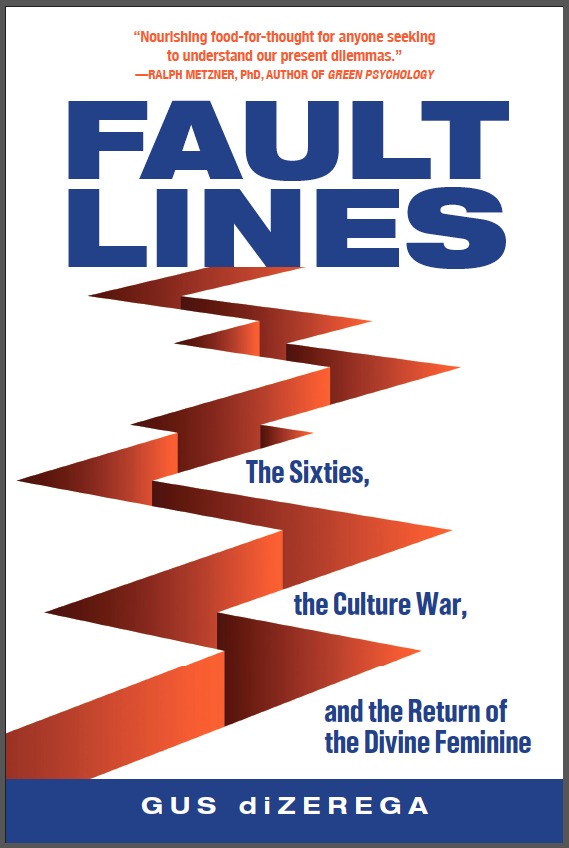 Gus DiZerega is a scholar and blogger – in fact, he writes regularly here at Patheos Pagan! His most recent book is Fault Lines: The Sixties, the Culture War, and the Return of the Divine Feminine. I’ve spent most of my advanced academic career studying the Divine Feminine in one form or another, so I was interested in what a smart, Pagan scholar would have to say about this topic. I am disappointed to report that this book is underwhelming.
DiZerega spends most of the book detailing how Western philosophy and politics are overwhelmingly masculine in mindset and actively dismiss and denigrate anything considered feminine. This means that reason is considered masculine to the exclusion of intuitive ‘feminine’ ways of knowing; all things intellectual are privileged over anything ‘earthy.’ Collaboration and community are dismissed in the face of dominance and the individual. DiZerega chronicles how feminine ways of thinking started to re-emerge in the 1960s and how feminine thinking is the way forward.
For those whose hackles start to raise at the mention of things ‘masculine’ and ‘feminine’ (and I’m one of those, because typically those words are misused), rest assured that DiZerega does not use these terms incorrectly and he specifically avoids any form of gender essentialism. In fact, he does a great job succinctly explaining the difference between liberal feminism and cultural feminism. He also demonstrates an understanding of feminist theology in the 20th century.
Throughout DiZerega has links to larger topics and more writing in an online appendix. Some of these appendices are more interesting than the sections in the book and I think his overall argument would have been stronger if he had found a way to integrate these into Fault Lines. I’m not sure where the editor was, but the entire project needed better editing.
I was also disappointed with some of the political jabs and DiZerega’s choice of certain sources. This is not a book to give to your conservative in-laws, as some of the wording is slanted against Republicans in tone. Unfortunately, two of the sources I followed up on did not help. One was a wikipedia source. I expect more from a trained scholar. The second was from a super liberal, satire site. On page 106 DiZerega quotes Larry Summers, from 1991, who was the World Bank’s chief economist at that time. DiZerega takes this quote from a leaked memo cited on a website called “Whirled Bank”. This satire site did not seem like a legitimate source, so I followed up with research of my own and found that the New York Times had reported on this memo in 1992. Apparently, Summers was so aghast at some of the recommendations from another office within the World Bank that he put his name on a sarcastic memo. Whether or not Summers was being sarcastic (and I sure hope he was), it is disingenuous of DiZerega to present this statement as fact.
I found DiZerega’s book too focused on building his argument – he only gets to his main idea in chapter 10 and devotes only 30 or so pages to it! I ended the book wondering just what exactly his book was supposed to be about. However, along with his definition of feminism, he expertly explains several other terms that often get muddled about in contemporary discussion. While this book would not be a good choice for classroom use or required reading, several of the paragraphs and sections could be enormously helpful.
I should be the choir to DiZerega’s preaching. I’m no fan of the Democrats, but I lean far more left than I do right. I support the revitalization of culture and relationship that embracing a divine Feminine can bring. I am the target audience for this book and yet….. I was bored. Part of the blame is surely due to bad (or no) editing. I didn’t notice any typos, but the book read like a first draft. I hope that these ideas can find a better way to reach their target audience.
Previous Post

August 18, 2014
What We're Reading
Next Post
August 26, 2014 Magic Amongst the Mundane
Browse Our Archives
Select a Category Alaska altar altars Ana Ancestors Anderson witchcraft Arddu Bhairava Biography bodies books Christianity Christmas community current events death Delphic Maxims Dhumavati dual observance Durga Faery family life feminism Feri Feri tradition Feri witchcraft food ganesha gratitude Guest Post guru health Hinduism holidays Jesus Kali Lakshmi land links magic Many Gods West movie review movies music my heart mystery myth Navratri Orthodoxy pagan pagan culture paganism pantheacon parenting Place politics polytheism practice pratice prayer Red Goddess review ritual sacred arts Samhain Saraswati Shinto Shiva singing Star Goddess Tantra tarot the Gods theory Uncategorized values virgin mary wales washington winter witchcraft year in review yoga
Select a Month September 2015 August 2015 July 2015 June 2015 May 2015 April 2015 March 2015 February 2015 January 2015 December 2014 November 2014 October 2014 September 2014 August 2014 July 2014 June 2014 May 2014 April 2014 March 2014 February 2014 January 2014 December 2013 November 2013 October 2013 September 2013 August 2013 July 2013 June 2013 May 2013 April 2013 March 2013 February 2013 January 2013 December 2012 November 2012 October 2012 September 2012 August 2012 July 2012 June 2012 May 2012 April 2012 March 2012 February 2012 January 2012 December 2011 November 2011 October 2011 September 2011 August 2011 July 2011 June 2011
Follow Us!
TAKE THE
Religious Wisdom Quiz
What did David take from Saul's camp while he was sleeping?
Select your answer to see how you score.
Sword and scroll Crown and robe A sack of gold Spear and water jug
Related posts from A Witch's Ashram

So Long, and Thanks for All the Clicks


Polytheism, Politics, Discomfort, and Growth

TRENDING AT PATHEOS Pagan

I was recently chatting with someone on Instagram. She asked me what...

While there are many people who share their results, the end of...

On July 23, I saw Christopher Nolan's The Odyssey which is Homer’s...

As I write this two big events have just finished up. One...

Restoring the Watershed of Divine Love
Perhaps cooperation is not something we manufacture through legislation, ideology, or moral...

Many UUs don’t pray because of bad experiences in a previous religion,...
view all Pagan blogs
Ad-Free & Subscriber Log-In Subscription Support
- About Us
- 2026 Calendar
- Videos
- Podcasts
- Library of World Religions
- Faith In Media Tracker
- Advertise With Us
- Write for Us
- Privacy Policy
- Terms of Service
- Do Not Sell My Data
- Contact Us
- Radiant Digital
- Manage Newsletter Subscriptions
- Unsubscribe From Notifications
- Sitemap
Copyright 2008-2026, Patheos. All rights reserved.
Subscription Support Ad-Free & Subscriber Log-In
Follow Patheos