
BuddhistCatholicContemplativeEvangelicalGeneral ChristianHinduJewishLatter-day SaintMuslimNew VisionsProgressive Christian
Beliefs
- Buddhist
- Catholic
- Contemplative
- Evangelical
- General Christian
- Hindu
- Jewish
- Latter-day Saint
- More Voices
- Muslim
- New Visions
- Pagan
- Progressive Christian
Topics
- Religion News
- Food and Religion
- Sports and Religion
- Religious Art
- Religious Music and Entertainment
- Religious Events
- History and Religion
- Style and Religion
- Politics and Religion
- Women in Religion
- Recreation Outdoors and Religion
- Business Finance and Religion
- Careers Workplace and Religion
- Education and Religion
- Family Parenting and Religion
- Health Fitness and Religion
- Home and Religion
- Relationships and Religion
- Technology and Religion
- Travel and Religion
Columnists
- Buddhist Columnists
- Business Finance and Religion Columnists
- Careers Workplace and Religion Columnists
- Catholic Columnists
- Contemplative Columnists
- Education and Religion Columnists
- Evangelists Columnists
- Family Parenting and Religion Columnists
- General Christian Columnists
- Health Fitness and Religion Columnists
- Hindu Columnists
- History and Religion Columnists
- Home and Religion Columnists
- Jewish Columnists
- More Voices Columnists
- Latter Day Columnists
- Muslim Columnists
- New Visions Columnists
- Nonreligious Columnists
- Pagan Columnists
- Politics and Religion Columnists
- Progressive Columnists
- Recreation Outdoors and Religion Columnists
- Relationships and Religion Columnists
- Religion News Columnists
- Religious Art Columnists
- Religious Events Columnists
- Religious Music and Entertainment Columnists
- Sports and Religion Columnists
- Style and Religion Columnists
- Technology and Religion Columnists
- Travel and Religion Columnists
- Women in Religion Columnists
Resource Library
- 2026 Calendar
- Library of World Religions
- The 100 Most Holy Places on Earth
- Patheos Answers
- Podcasts
- Videos
- Faith Leaders Database
- Anglican Episcopalian
- Bahai
- Baptist
- Buddhism
- Christianity
- Confucianism
- Eastern Orthodoxy
- Hinduism
- Holiness and Pentecostal
- ISKCON
- Islam
- Judaism
- Lutheran
- Methodist
- The Church of Jesus Christ of Latter-day Saints
- New Age
- Paganism
- Presbytarian and Reformed
- Protestantism
- Religion Behind the Scenes
- Roman Catholic
- Scientology
- Shia Islam
- Sikhism
- Sufism
- Sunni Islam
- Taoism
- Zen
- See all religions
Research Tools
 Ad-Free & Subscriber Log-In Subscription Support
Ad-Free & Subscriber Log-In Subscription Support
Follow Patheos 

- Trending:
- Forgiveness
- |
- Marriage
- |
- Consciousness
- |
- Death Penalty
- |
- Election
- |
- Halloween
 A Witch's Ashram
- Home
- Pagan
- A Polytheist Twist on Narrative Theology
A Polytheist Twist on Narrative Theology
Last updated on: July 7, 2014 at 7:30 am by Niki Whiting
A Polytheist Twist on Narrative Theology 2014-07-06T16:35:15-08:00 Niki Whiting
Patheos Explore the world's faith through different perspectives on religion and spirituality! Patheos has the views of the prevalent religions and spiritualities of the world.
Narrative theology (also known as postliberal theology, which I just found out) is a recent theological development where the overarching narrative of the Christian story takes on central importance, over/against ideas of systematic theology. One of its main points is that individuals are part of a community and that community’s history, which is the focus of Christian narrative theology. I like the idea of being part of a story that is bigger than myself. That seems to take into account the reality that no matter our individual practices or beliefs we are part of a larger system of beliefs, practices, and histories. I studied a little bit of this in graduate school and I thought it was helpful in many ways, though I didn’t adopt it as my preferred theological model.
This narrative model of theology makes sense in a polytheist context as well. We might be solitary practitioners, yet we are part of a larger narrative, whether or not it is our particular narrative. For some this narrative, even as undeveloped as it may be, means more; for others, it means less. I am thinking particularly of the backlash Ronald Hutton faced when he published Triumph of the Moon, in which he rained on a lot of people’s historical parade. Clearly, there was a narrative that held meaning for a lot of people, shaping their practices and the stories they told about their lineages. Even non-Wiccans have stories they are part of – whether it’s communal narratives spanning only the last five years, participating in creating the world, or even just the story of their own lives.
And this is one of the many gifts that polytheism has given me. I have yet to feel that I am part of an overarching communal narrative, but finally I have been able to embrace my own narrative: I am the hero of my own story.
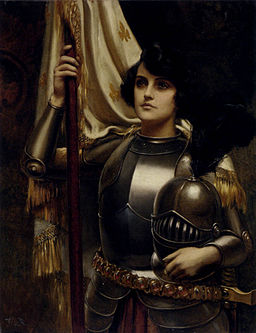
Joan of Arc by Harold Piffard, c. 1895
I get to be the hero and author of my own story, my own life, my own narrative. As a Christian, Jesus was supposed to the be the hero and God was the author of my story. Now, I might join up with other heroes and characters along the way, I may add my story to the grand narrative, but I get to be the hero of my own story. No one else does. This is not selfish, though it is self-centered – and appropriately so.
Don’t children and young folk (when is that cut off again?) want to be the hero of the story? Whether that’s the knight or the princess, we want to be the focus. I wanted the hero’s journey. I wanted the hermit’s freedom and enlightenment. I wanted the witch’s confidence and power and autonomy. No one raises their hand to be the pageboy or the slave or the scullery maid. Sure, in feudal metaphors, which are deeply problematic on many levels, we are most of us more like the servants and peasants than the knights and princesses. Myth was a sacred guide. I wish I’d read more of it!
There are several ways one can take narrative theology. We can weave it into the narrative of our pantheons. We can tell the story/ies of our community: where we’ve come from, where we’re headed. We can lose ourselves in myths and stories in delusional ways, like people who lose their lives in gaming consoles, never taking their stories out into their ‘real worlds.’ Narrative theology can inform our experience whether we’re polytheists, monists, dualists, or humanistic Pagans.
If I am the author of my life then I relate to the gods and spirits however the relationship requires, rather than in a one-size-fits-all way. Sometimes I am battling demons, usually my own. Sometimes I am engaging with land spirits. Sometimes I am worshiping the gods, other times listening as a student, or acting as ambassador to or for them.
What is the story I am telling? Often times when I read interviews with authors they say that characters evolve and the stories tell themselves. I have an idea of what I want for my life and who I want to be; I aim for some consistency, but I don’t restrict myself to the ‘genre’ I think I am. Sometimes my life is a melodrama, sometimes a comedy, occasionally with tragic moments. Sometimes I’m my own worst enemy. Sometimes the hermit.
But I’m still not exactly sure what it is I’m looking for, I’m still not exactly weaving a new narrative. What is my ‘grail’? Am I the knight, the witch, the monk, the lady? Likely I’m all of them, depending on what day it is. Paganism, in the broadest sense, best allows me to be who I need to be. Its language and vocabulary best expresses what I’ve experienced. But sometimes I find myself continuing to seek out the same story and characters I was looking for when I was a Christian.
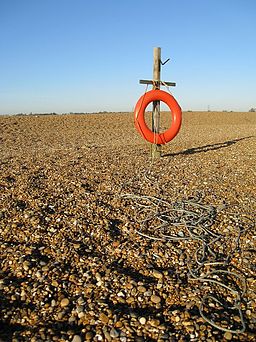
by Alison Rawson via Wikimedia Commons
If I may mix metaphors for a bit, it’s like sailing on the sea in a boat. By leaving behind Christianity I thought I’d gotten into an entirely new mode of transportation, except it’s the same style of boat, only with a new paint job. I am looking for a god to fill my gaps, give my life order and meaning, help me feel special. I see that this new story I think I’m living is a lot like my time in Christianity. I still keep thinking of things in Christian-ish terms: personal relationship (am I supposed to have these with the gods?), prayers, worthiness (I struggle with never feeling quite ‘enough’). I’m still sailing in a monotheistic boat, only with polytheist paint. Paganism, of any kind, ought to be like diving in to the waters and swimming. Me, I find myself still clinging to the rudder of some boat. That’s not the story I thought I was writing!
I have to remind myself to let go, to swim and bob in uncharted waters, even though much of the seas have been sailed and swum by countless adventurers before me. I can read their stories and look at their maps, but I have to swim this magical, polytheist sea for myself. There’s no one to save me, at least not in my narrative.
Previous Post

July 2, 2014
Literally in the Weeds
Next Post
July 10, 2014 Being Called While Young
Browse Our Archives
Select a Category Alaska altar altars Ana Ancestors Anderson witchcraft Arddu Bhairava Biography bodies books Christianity Christmas community current events death Delphic Maxims Dhumavati dual observance Durga Faery family life feminism Feri Feri tradition Feri witchcraft food ganesha gratitude Guest Post guru health Hinduism holidays Jesus Kali Lakshmi land links magic Many Gods West movie review movies music my heart mystery myth Navratri Orthodoxy pagan pagan culture paganism pantheacon parenting Place politics polytheism practice pratice prayer Red Goddess review ritual sacred arts Samhain Saraswati Shinto Shiva singing Star Goddess Tantra tarot the Gods theory Uncategorized values virgin mary wales washington winter witchcraft year in review yoga
Select a Month September 2015 August 2015 July 2015 June 2015 May 2015 April 2015 March 2015 February 2015 January 2015 December 2014 November 2014 October 2014 September 2014 August 2014 July 2014 June 2014 May 2014 April 2014 March 2014 February 2014 January 2014 December 2013 November 2013 October 2013 September 2013 August 2013 July 2013 June 2013 May 2013 April 2013 March 2013 February 2013 January 2013 December 2012 November 2012 October 2012 September 2012 August 2012 July 2012 June 2012 May 2012 April 2012 March 2012 February 2012 January 2012 December 2011 November 2011 October 2011 September 2011 August 2011 July 2011 June 2011
Follow Us!
TAKE THE
Religious Wisdom Quiz
How many times did Peter deny Jesus?
Select your answer to see how you score.
3 5 2 4
Related posts from A Witch's Ashram

So Long, and Thanks for All the Clicks


Polytheism, Politics, Discomfort, and Growth
TRENDING AT PATHEOS Pagan

I was recently chatting with someone on Instagram. She asked me what...

While there are many people who share their results, the end of...

On July 23, I saw Christopher Nolan's The Odyssey which is Homer’s...

As I write this two big events have just finished up. One...

Restoring the Watershed of Divine Love
Perhaps cooperation is not something we manufacture through legislation, ideology, or moral...

Many UUs don’t pray because of bad experiences in a previous religion,...
view all Pagan blogs
Ad-Free & Subscriber Log-In Subscription Support
- About Us
- 2026 Calendar
- Videos
- Podcasts
- Library of World Religions
- Faith In Media Tracker
- Advertise With Us
- Write for Us
- Privacy Policy
- Terms of Service
- Do Not Sell My Data
- Contact Us
- Radiant Digital
- Manage Newsletter Subscriptions
- Unsubscribe From Notifications
- Sitemap
Copyright 2008-2026, Patheos. All rights reserved.
Subscription Support Ad-Free & Subscriber Log-In
Follow Patheos