
BuddhistCatholicContemplativeEvangelicalGeneral ChristianHinduJewishLatter-day SaintMuslimNew VisionsProgressive Christian
Beliefs
- Buddhist
- Catholic
- Contemplative
- Evangelical
- General Christian
- Hindu
- Jewish
- Latter-day Saint
- More Voices
- Muslim
- New Visions
- Pagan
- Progressive Christian
Topics
- Religion News
- Food and Religion
- Sports and Religion
- Religious Art
- Religious Music and Entertainment
- Religious Events
- History and Religion
- Style and Religion
- Politics and Religion
- Women in Religion
- Recreation Outdoors and Religion
- Business Finance and Religion
- Careers Workplace and Religion
- Education and Religion
- Family Parenting and Religion
- Health Fitness and Religion
- Home and Religion
- Relationships and Religion
- Technology and Religion
- Travel and Religion
Columnists
- Buddhist Columnists
- Business Finance and Religion Columnists
- Careers Workplace and Religion Columnists
- Catholic Columnists
- Contemplative Columnists
- Education and Religion Columnists
- Evangelists Columnists
- Family Parenting and Religion Columnists
- General Christian Columnists
- Health Fitness and Religion Columnists
- Hindu Columnists
- History and Religion Columnists
- Home and Religion Columnists
- Jewish Columnists
- More Voices Columnists
- Latter Day Columnists
- Muslim Columnists
- New Visions Columnists
- Nonreligious Columnists
- Pagan Columnists
- Politics and Religion Columnists
- Progressive Columnists
- Recreation Outdoors and Religion Columnists
- Relationships and Religion Columnists
- Religion News Columnists
- Religious Art Columnists
- Religious Events Columnists
- Religious Music and Entertainment Columnists
- Sports and Religion Columnists
- Style and Religion Columnists
- Technology and Religion Columnists
- Travel and Religion Columnists
- Women in Religion Columnists
Resource Library
- 2026 Calendar
- Library of World Religions
- The 100 Most Holy Places on Earth
- Patheos Answers
- Podcasts
- Videos
- Faith Leaders Database
- Anglican Episcopalian
- Bahai
- Baptist
- Buddhism
- Christianity
- Confucianism
- Eastern Orthodoxy
- Hinduism
- Holiness and Pentecostal
- ISKCON
- Islam
- Judaism
- Lutheran
- Methodist
- The Church of Jesus Christ of Latter-day Saints
- New Age
- Paganism
- Presbytarian and Reformed
- Protestantism
- Religion Behind the Scenes
- Roman Catholic
- Scientology
- Shia Islam
- Sikhism
- Sufism
- Sunni Islam
- Taoism
- Zen
- See all religions
Research Tools
 Ad-Free & Subscriber Log-In Subscription Support
Ad-Free & Subscriber Log-In Subscription Support
Follow Patheos 

- Trending:
- Forgiveness
- |
- Marriage
- |
- Consciousness
- |
- Death Penalty
- |
- Election
- |
- Halloween
 A Witch's Ashram
- Home
- Pagan
- Guest Post: Confessions of a Buddhist Witch, part two
Guest Post: Confessions of a Buddhist Witch, part two
Last updated on: January 24, 2014 at 7:30 am by Niki Whiting
Guest Post: Confessions of a Buddhist Witch, part two 2014-01-23T13:09:12-08:00 Niki Whiting
Patheos Explore the world's faith through different perspectives on religion and spirituality! Patheos has the views of the prevalent religions and spiritualities of the world.
Welcome to the second installment of Willow Moon’s comparison of his two traditions, Tibetan Buddhism and Faerie Witchcraft. You can read the first part here and Willow’s bio. Enjoy!
*****
Both Buddhists and Faerie Witches gain knowledge and understanding of ourselves and the world through inner knowledge combined with an acquired knowledge passed to us by our teachers and spiritual friends. Inner knowledge is the development of what we have learned from others by mulling it over, practicing the teachings enough to gain experience and applying the understanding thus gained to our life. The long path to inner knowledge can be started only if the individual is open to learning from someone else. This is why lineage is so important in both religions. The teachings can only be imparted by another embodied individual; the traditional knowledge can only be passed directly by a living, skilled practitioner because the teachings are composed of more than just words. There are many more subtle nuances to communication than mere speech or writing. Human contact is absolutely necessary for transmission of both traditions. That is why neither religion can be fully learned over the internet or merely from reading books. Both are initiatory mystery religions and only through connecting directly to the living lineage can one authentically learn the mysteries of the tradition.

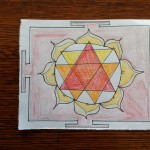
By Hoi-Man Hau (Harmony Bells), via Wikimedia Commons
The respect offered to others by both religions does not just extend to living beings that we can see but also to the unseen ones who inhabit our world. As with animals, Buddhists consider all the spirits and Gods who live in the world to have the same innate Buddha nature as themselves. They are all capable of accomplishing enlightenment, although it may be more difficult than for humans. The Buddhist term “enlightenment” can be misunderstood as an unattainable goal, but there are many stories of people from every walk of life having discovered it. “Enlightenment” can be an obtuse term in English but the Tibetan word used for enlightenment gives a clearer definition. In Tibetan the word for enlightenment is “Sang gye” which means fully purified and fully blossomed. This refers to the process of uncovering our enlightened mind which is to practice purification methods to clear out harmful psychological complexes and to completely develop our psychic potential. The goal of Buddhism is not to destroy the ego, as His Holiness the Dalai Lama said in a lecture in Bloomington, Indiana; but to change our attitude of “I can’t” into “I can!”
Magical powers are perhaps one of the most interesting aspects of Witchcraft to the public. The modern western Witch usually has a very different view of magic than what is depicted in movies and TV shows. The popular image of magic is to wave your wand or twitch your nose and whatever you want appears! Most Witches of today think of magic as a lot of sustained hard work mixed with the joy of success. Magical powers are not usually just given or born in a Witch but she has to do appropriate spiritual exercises for years to develop them. The spiritual exercises entail visualization, breath control, ritual, body movements, meditation, concentration and engagement with helping the people of the earth. When magical power manifests after working the exercises then it is usually as the ability to shape the world within the parameters of the normal processes of nature. That is, a spell usually manifests as something that seems normal. Most modern Witches don’t go flying around on brooms or conjure objects out of thin air!
The traditional Tibetan view of magical phenomena is quite different. Venerable Lama Tarchin Rinpoche once said to me that when he lived in Kham (Eastern Tibet) before escaping from the Chinese occupation to America, he thought the stories about westerners looking into boxes to see things far away or talking into horns for long distant communication or flying through the air in metal birds were fantasy! He, however, was convinced of the reality of people running across wild mountainous terrain at train-like speeds or people flying through the air and upon landing leaving their foot prints in rock; or changing their shape and size at will! Ironically, the magic that we see in the west in the movies is more accurate to the ancient Tibetan worldview. Tibetans consider magical phenomena to be a natural part of how the world operates, and one way we can communicate with the world our hopes and needs. Tibetan Buddhists will do magic rites intended to harness harmful spiritual energy and transform it into a beneficial effect or to control the weather. They develop their psychic potential for clairvoyance, telepathy, psychometry, levitation etc. primarily through meditation and visualization/breath/body exercises. In meditation, it is through paying attention to the natural space between thoughts that allows one to be aware of psychic knowledge that arises in the gap.
Since spirits and Gods can become enlightened and because they have the same basic nature as us they deserve just as much respect as humans. That is why Buddhists of the Vajrayana (Diamond vehicle) tradition, of which Tibetan Buddhism is a part, make offerings to spirits of nature and the Gods – so that they too can have the fortunate circumstances necessary for discovering their true nature. The Gods and spirits are not seen as psychological constructs but as real individual beings with whom we can interact. A God may be cosmic in form and function but they are also each personally interactive. This individualized, personal yet cosmic arena of activity is also how Faerie Witches relate to the Gods.
Both Faerie Witches and Buddhists practice spiritual exercises over long periods of time. The goal of these exercises is the transformation of our mundane experience of the world into the experience of our world as a magical display of the divine or enlightened state of being. The skilled Faerie initiate Loki once told me that Faerie practitioners are “technicians of the sacred.” Both religions employ techniques that change one’s state of complex, unsatisfying clinging to a “reality” learned from others into a fulfilling open-ended dance with the powers of life. The methods, of course are different between the two religions, but they both have the goal of obtaining freedom from the tyranny of those who desire to control and manipulate us.
*****
Stay tuned for the conclusion next Friday!
Previous Post

January 22, 2014
On Being a Student
Next Post
January 27, 2014 Maxim Monday: Praise Hope
Browse Our Archives
Select a Category Alaska altar altars Ana Ancestors Anderson witchcraft Arddu Bhairava Biography bodies books Christianity Christmas community current events death Delphic Maxims Dhumavati dual observance Durga Faery family life feminism Feri Feri tradition Feri witchcraft food ganesha gratitude Guest Post guru health Hinduism holidays Jesus Kali Lakshmi land links magic Many Gods West movie review movies music my heart mystery myth Navratri Orthodoxy pagan pagan culture paganism pantheacon parenting Place politics polytheism practice pratice prayer Red Goddess review ritual sacred arts Samhain Saraswati Shinto Shiva singing Star Goddess Tantra tarot the Gods theory Uncategorized values virgin mary wales washington winter witchcraft year in review yoga
Select a Month September 2015 August 2015 July 2015 June 2015 May 2015 April 2015 March 2015 February 2015 January 2015 December 2014 November 2014 October 2014 September 2014 August 2014 July 2014 June 2014 May 2014 April 2014 March 2014 February 2014 January 2014 December 2013 November 2013 October 2013 September 2013 August 2013 July 2013 June 2013 May 2013 April 2013 March 2013 February 2013 January 2013 December 2012 November 2012 October 2012 September 2012 August 2012 July 2012 June 2012 May 2012 April 2012 March 2012 February 2012 January 2012 December 2011 November 2011 October 2011 September 2011 August 2011 July 2011 June 2011
Follow Us!
TAKE THE
Religious Wisdom Quiz
What is the first commandment in the Ten Commandments?
Select your answer to see how you score.
Do not steal No other gods Honor parents Do not murder
Related posts from A Witch's Ashram

Many Gods, Many Peoples, Many Experiences


TRENDING AT PATHEOS Pagan

I was recently chatting with someone on Instagram. She asked me what...

While there are many people who share their results, the end of...

On July 23, I saw Christopher Nolan's The Odyssey which is Homer’s...

As I write this two big events have just finished up. One...

Restoring the Watershed of Divine Love
Perhaps cooperation is not something we manufacture through legislation, ideology, or moral...

Many UUs don’t pray because of bad experiences in a previous religion,...
view all Pagan blogs
Ad-Free & Subscriber Log-In Subscription Support
- About Us
- 2026 Calendar
- Videos
- Podcasts
- Library of World Religions
- Faith In Media Tracker
- Advertise With Us
- Write for Us
- Privacy Policy
- Terms of Service
- Do Not Sell My Data
- Contact Us
- Radiant Digital
- Manage Newsletter Subscriptions
- Unsubscribe From Notifications
- Sitemap
Copyright 2008-2026, Patheos. All rights reserved.
Subscription Support Ad-Free & Subscriber Log-In
Follow Patheos