
BuddhistCatholicContemplativeEvangelicalGeneral ChristianHinduJewishLatter-day SaintMuslimNew VisionsProgressive Christian
Beliefs
- Buddhist
- Catholic
- Contemplative
- Evangelical
- General Christian
- Hindu
- Jewish
- Latter-day Saint
- More Voices
- Muslim
- New Visions
- Pagan
- Progressive Christian
Topics
- Religion News
- Food and Religion
- Sports and Religion
- Religious Art
- Religious Music and Entertainment
- Religious Events
- History and Religion
- Style and Religion
- Politics and Religion
- Women in Religion
- Recreation Outdoors and Religion
- Business Finance and Religion
- Careers Workplace and Religion
- Education and Religion
- Family Parenting and Religion
- Health Fitness and Religion
- Home and Religion
- Relationships and Religion
- Technology and Religion
- Travel and Religion
Columnists
- Buddhist Columnists
- Business Finance and Religion Columnists
- Careers Workplace and Religion Columnists
- Catholic Columnists
- Contemplative Columnists
- Education and Religion Columnists
- Evangelists Columnists
- Family Parenting and Religion Columnists
- General Christian Columnists
- Health Fitness and Religion Columnists
- Hindu Columnists
- History and Religion Columnists
- Home and Religion Columnists
- Jewish Columnists
- More Voices Columnists
- Latter Day Columnists
- Muslim Columnists
- New Visions Columnists
- Nonreligious Columnists
- Pagan Columnists
- Politics and Religion Columnists
- Progressive Columnists
- Recreation Outdoors and Religion Columnists
- Relationships and Religion Columnists
- Religion News Columnists
- Religious Art Columnists
- Religious Events Columnists
- Religious Music and Entertainment Columnists
- Sports and Religion Columnists
- Style and Religion Columnists
- Technology and Religion Columnists
- Travel and Religion Columnists
- Women in Religion Columnists
Resource Library
- 2026 Calendar
- Library of World Religions
- The 100 Most Holy Places on Earth
- Patheos Answers
- Podcasts
- Videos
- Faith Leaders Database
- Anglican Episcopalian
- Bahai
- Baptist
- Buddhism
- Christianity
- Confucianism
- Eastern Orthodoxy
- Hinduism
- Holiness and Pentecostal
- ISKCON
- Islam
- Judaism
- Lutheran
- Methodist
- The Church of Jesus Christ of Latter-day Saints
- New Age
- Paganism
- Presbytarian and Reformed
- Protestantism
- Religion Behind the Scenes
- Roman Catholic
- Scientology
- Shia Islam
- Sikhism
- Sufism
- Sunni Islam
- Taoism
- Zen
- See all religions
Research Tools
 Ad-Free & Subscriber Log-In Subscription Support
Ad-Free & Subscriber Log-In Subscription Support
Follow Patheos 

- Trending:
- Forgiveness
- |
- Marriage
- |
- Consciousness
- |
- Death Penalty
- |
- Election
- |
- Halloween
 A Sense of Place
- Home
- Pagan
- The power of the song thrush: life, death and the feast of St. John
The power of the song thrush: life, death and the feast of St. John
Last updated on: May 8, 2017 at 5:42 pm by Elinor Prędota
The power of the song thrush: life, death and the feast of St. John 2017-05-08T17:42:00+00:00 Elinor Prędota
Patheos Explore the world's faith through different perspectives on religion and spirituality! Patheos has the views of the prevalent religions and spiritualities of the world.
“‘Twas on the twenty-fourth of June
Oh, as I sat weaving all at my loom,
‘Twas on the twenty-fourth of June
Oh, as I sat weaving all at my loom,
I heard a thrush, singing on yon bush,
And the song she sang was the jug of punch.”
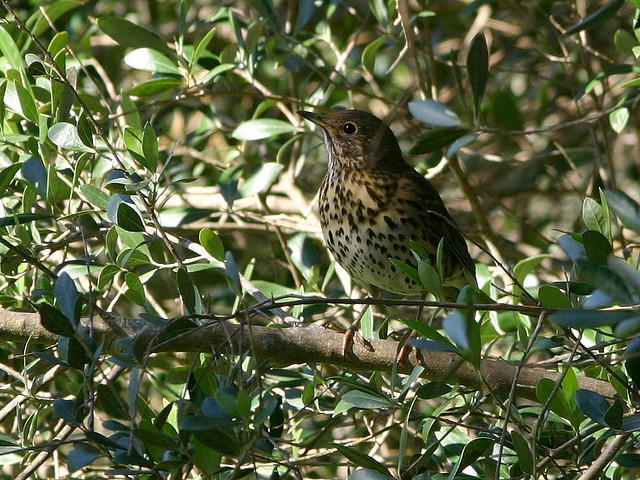
Image by Jose Sousa, used under Creative Commons license.
These words are the first verse of a traditional Irish drinking song, The Jug of Punch, in its simplest form. I’m thinking of it today, St. John’s Eve. The feast of St. John, celebrated on the 23rd and 24th June, is a Christian gloss over the celebration of the summer solstice, in the same way that Christmas is a Christian gloss over the celebration of the winter solstice.
This song has puzzled me as long as I’ve known it. Even before I was aware of the feast of St. John, I was sure the meaning of the song had something to do with the magic of the summer solstice: the date mentioned was too close for it not to be. The song is seemingly a jolly one, but at its most basic it is about sex and death, themes that all of us Pagans are familiar with being bound up together, whether we’re comfortable with the connections between them or not:
“What more mirth can a man desire,
Than to sit a drinking-o by the fire?
What more mirth can a man desire,
Than to sit a drinking-o by the fire?
And in his hand a jug of punch,
And on his knee-o a pretty wench.“When I am gone and in my hole,
At my head and feet place a flowing bowl,
When I am gone and in my hole,
At my head and feet place a flowing bowl,
And every friend that passes by
Can take a cup and remember times gone by.”
And what has any of it to do with the song thrush mentioned in the first verse, and the final verse, a simple repeat?
There are plenty of song thrushes about here in Eskdalemuir at present. They can be seen sometimes, and recognised always by their doubled song, the distinctive way they repeat refrains.
Their Latin name, Turdus philomelus, refers to the Ancient Greek story of Philomela, a princess of Athens whose tongue was cut out when she threatened to speak up about her brother-in-law, Tereus, raping her. Transformed into a song thrush, she was able to escape him, and to shout his crime abroad.
Song thrushes’ lives are most evident in these parts through the broken shells of snails that they leave strewn about the stone track, their living contents eaten up. The song thrush breaks open the shells on a rock, or on hard ground. It is a fastidious bird, wiping the flesh of each snail on the ground before eating it up.
I’m careful to look out for living snails, so I don’t tread on them while out walking the dog, but in the twilight of morning and evening, often I’ll hear a ‘crunch’ underfoot. I’m always relieved when it’s only the discarded shell that I’ve crushed. As if it made any difference to the snail whether it was killed for food or from carelessness.
Song thrushes have come into my consciousness most strongly and most recently, though, through their deaths. Within a fortnight of moving back into my new/old home — finally rebuilt and habitable again after more than two years — no fewer than three song thrushes have met their deaths by flying into windows around our house.
I spent a long time pondering this, looking up meanings of song thrushes in different traditions (variously: voice, music, warning, confidence, vision, communication, pride, love, devotion, fertility, peace, writers, poets, singers, songwriters) and any stories from cultures around the world. In the end, I decided these poor dead thrushes were not a message for me, but simply the result of the birds’ inability to distinguish glass from free air.
Do I have any conclusions from all of this? Have I made anything of The Jug of Punch, the place of the thrush within it, and its relationship to the summer solstice?
Not many: that life, sex and death are all part of one another; that as the song of the thrush is repeated, and the first verse of The Jug of Punch becomes the last, so all things come around again to the same place, which is also a different place, because it’s a different time; that conviviality, celebration, joy are everywhere, if we can grasp them; that singing in the sunlight of summer, or in the darkness of winter, is still singing all the same.
Previous Post

June 20, 2014
When People Don't Want You In This Place
Next Post

June 25, 2014 Can a human being be the spirit of a place?
Browse Our Archives
Select a Category Africa Amazon Ancestors Animism Austin Boots Across Ireland Boston boundary crossing Bretagne Children Cities Community Connection Culture Detroit Druidry Earth Edinburgh Elements England Eskdalemuir Eugene experiential family Fiction Florida folklore France Glasgow Heathenry home how to build it Human Spaces imaginary landscapes Introduction Ireland Journeys Know your wild herbs Land Spirits London Maine memory lane Naturalizing Nature's Metaphors New York Poetry Remembering Ancestors Sacred Spaces San Francisco Scotland Seasons Seattle Tanzania Technology Texas the South Theory Top 10 traditions Travel Uncategorized United States video Water West Virginia Witchcraft Worlding
Select a Month August 2015 June 2015 May 2015 April 2015 March 2015 February 2015 January 2015 December 2014 November 2014 October 2014 September 2014 August 2014 July 2014 June 2014 May 2014 April 2014 March 2014 February 2014 January 2014 December 2013 November 2013 October 2013 September 2013 August 2013 July 2013 June 2013 May 2013 April 2013 March 2013 February 2013 January 2013 December 2012
Follow Us!
TAKE THE
Religious Wisdom Quiz
Who said, "I do not know how to speak; I am too young"?
Select your answer to see how you score.
Moses Jeremiah Isaiah Samuel
Related posts from A Sense of Place

On Place, Pagan Values, and Politicizing Paganism


Earth Day: A Moment to Celebrate

Footprints in the Muck, Blind Spots, & Seeing...
TRENDING AT PATHEOS Pagan

I was recently chatting with someone on Instagram. She asked me what...

While there are many people who share their results, the end of...

On July 23, I saw Christopher Nolan's The Odyssey which is Homer’s...

As I write this two big events have just finished up. One...

Restoring the Watershed of Divine Love
Perhaps cooperation is not something we manufacture through legislation, ideology, or moral...

Many UUs don’t pray because of bad experiences in a previous religion,...
view all Pagan blogs
Ad-Free & Subscriber Log-In Subscription Support
- About Us
- 2026 Calendar
- Videos
- Podcasts
- Library of World Religions
- Faith In Media Tracker
- Advertise With Us
- Write for Us
- Privacy Policy
- Terms of Service
- Do Not Sell My Data
- Contact Us
- Radiant Digital
- Manage Newsletter Subscriptions
- Unsubscribe From Notifications
- Sitemap
Copyright 2008-2026, Patheos. All rights reserved.
Subscription Support Ad-Free & Subscriber Log-In
Follow Patheos