
BuddhistCatholicContemplativeEvangelicalGeneral ChristianHinduJewishLatter-day SaintMuslimNew VisionsProgressive Christian
Beliefs
- Buddhist
- Catholic
- Contemplative
- Evangelical
- General Christian
- Hindu
- Jewish
- Latter-day Saint
- More Voices
- Muslim
- New Visions
- Pagan
- Progressive Christian
Topics
- Religion News
- Food and Religion
- Sports and Religion
- Religious Art
- Religious Music and Entertainment
- Religious Events
- History and Religion
- Style and Religion
- Politics and Religion
- Women in Religion
- Recreation Outdoors and Religion
- Business Finance and Religion
- Careers Workplace and Religion
- Education and Religion
- Family Parenting and Religion
- Health Fitness and Religion
- Home and Religion
- Relationships and Religion
- Technology and Religion
- Travel and Religion
Columnists
- Buddhist Columnists
- Business Finance and Religion Columnists
- Careers Workplace and Religion Columnists
- Catholic Columnists
- Contemplative Columnists
- Education and Religion Columnists
- Evangelists Columnists
- Family Parenting and Religion Columnists
- General Christian Columnists
- Health Fitness and Religion Columnists
- Hindu Columnists
- History and Religion Columnists
- Home and Religion Columnists
- Jewish Columnists
- More Voices Columnists
- Latter Day Columnists
- Muslim Columnists
- New Visions Columnists
- Nonreligious Columnists
- Pagan Columnists
- Politics and Religion Columnists
- Progressive Columnists
- Recreation Outdoors and Religion Columnists
- Relationships and Religion Columnists
- Religion News Columnists
- Religious Art Columnists
- Religious Events Columnists
- Religious Music and Entertainment Columnists
- Sports and Religion Columnists
- Style and Religion Columnists
- Technology and Religion Columnists
- Travel and Religion Columnists
- Women in Religion Columnists
Resource Library
- 2026 Calendar
- Library of World Religions
- The 100 Most Holy Places on Earth
- Patheos Answers
- Podcasts
- Videos
- Faith Leaders Database
- Anglican Episcopalian
- Bahai
- Baptist
- Buddhism
- Christianity
- Confucianism
- Eastern Orthodoxy
- Hinduism
- Holiness and Pentecostal
- ISKCON
- Islam
- Judaism
- Lutheran
- Methodist
- The Church of Jesus Christ of Latter-day Saints
- New Age
- Paganism
- Presbytarian and Reformed
- Protestantism
- Religion Behind the Scenes
- Roman Catholic
- Scientology
- Shia Islam
- Sikhism
- Sufism
- Sunni Islam
- Taoism
- Zen
- See all religions
Research Tools
 Ad-Free & Subscriber Log-In Subscription Support
Ad-Free & Subscriber Log-In Subscription Support
Follow Patheos 

- Trending:
- Forgiveness
- |
- Marriage
- |
- Consciousness
- |
- Death Penalty
- |
- Election
- |
- Halloween
 A Sense of Place
- Home
- Pagan
- The Mountain Of Fire, A Parable
The Mountain Of Fire, A Parable
Last updated on: August 14, 2015 at 8:00 am by Sterling
The Mountain Of Fire, A Parable 2015-08-13T01:52:58+00:00 Sterling
Patheos Explore the world's faith through different perspectives on religion and spirituality! Patheos has the views of the prevalent religions and spiritualities of the world.
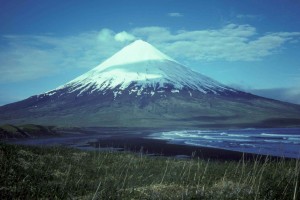
Image in the Public Domain
Once upon a time, a long time ago, in another dimension where whole worlds can be built in a singular city, there was one such world on a magnificent volcanic mountain.
The mountain was home to a vast number of humans of diverse skin colors, languages and cultures. The top of the mountain was covered in an ancient glacier that sparkled in the sunlight and was truly amazing to behold in all its glorious colors at dawn and dusk.
Just below the line of the glaciers, there was a community of mansions. These were the homes of the very, very rich. They were lit day and night, and filled with all sorts of technological gadgets. TV, Computers, Internet, yes, sure, but so much more. The houses themselves were smart, with artificial intelligence that would cater to every need of the human inhabitants. All — or at least most — of the other humans on that mountain dreamed of living in those mansions.
Below the community of mansions was a group of neighborhoods, tied together by a system of roads, phone lines and a free market economy. (Well, they called it a free market economy. There are other tales to be told about that!) These neighborhoods were filled with homes that used a great deal of the natural resources of the mountain. They were built with a mixture of natural and modern materials. They followed, more or less, a strict code for building quality, type and usage based on their location and population. Like the mansions, they had many mechanical and computerized gadgets to make life easier: dishwashers, washing machines, computers, and more.
Further down the mountain there was more wilderness, and the neighborhoods tended to be clustered in small areas. The humans who lived in these neighborhoods did not always have lights in their home. In fact, many didn’t even have running water, and some had to walk long distances to reach a rivulet of fresh glacial melt water or a hand pump with treated water provided by the wealthier neighborhoods above. These neighborhoods were built from materials in the environment around them. Many had no building codes at all. Some of the neighborhoods were densely packed with people who lived in extreme poverty, with little access to the basic resources needed to maintain life. They still had some electronic goods, though, because this is the nature of trickle down economy. The people on the bottom spend money to buy the throw away goodies of those further up, and thus happiness can find its way into even the darkest slum. Nearly everyone had a tv set to let them imagine for a moment each day what it would be like to live an easier life, and of course they had mobile phones, because how else would they do business so that their money could cycle through to the rest of the people on the mountain?
Near the bottom of the mountain was a series of lakes, with islands of humanity on their banks. Some of these neighborhoods were quite luxurious indeed, like the mansions near the top of the mountain. These were mostly owned by people whose families lived up there at the top. The rest of the neighborhoods were a mix of middle and poor. A few were so remote that no human from outside had visited them in historic memory.
Now, this mountain economy was based not on gold or silver or petroleum, for it was a volcano at its heart. Long ago, the humans who lived there had learned how to use the molten magma from inside the mountain to generate electricity, to run their gadgets, to make new materials, and to create the technological wonders they all enjoyed. (Well, not all. Stop distracting me. I’m telling a story.)
The magma was pumped up from inside the mountain and captured in special tanks. It was run through different machinery to generate electricity, passed through high tech systems that separated the elements inside to make all manner of modern materials. The neighborhoods around the lava industry sites were difficult places to live, choked with smoke, jagged rock, and other refuse from the processes of the refinement and use of the magma. There were many safety mechanisms to keep the lava from burning through tanks and pipes of the refineries and factories, but there were frequent accidents and spills. The people who worked in those lava industry jobs were also prone to health problems and short lives, and even their children suffered greatly from the effects of their work.
The people who lived at the top of the mountain owned all the magma, and were in charge — directly or indirectly — of all the lava industry refineries and factories. They were the ones who chose where new magma pumps should be built, and which communities should get new lava industry jobs. Many of the people in the lower parts of the mountain were thrilled at the opportunity to get those new jobs, because they brought money to their communities that they could spend on more of the things that the people higher up the mountain enjoyed. Other people fought against the lava industry coming into their communities. They knew that the money was not enough to give them the sort of life that those nearest the mansions enjoyed, and they also knew the cost to their communities in terms of health and lives. Some had even noticed what terrible things happened to the non-human inhabitants of the mountain wherever the lava industry set up shop.
Forests burned. Deer and wolves were killed. There were no more mountain lions left. When ash would billow from a smoke stack for a few days, an entire year’s food crop could be wiped out in one go. Sometimes, an ash covering would destroy an entire species of wildflower such that it never bloomed again.

Image by Eric Hensley
Over a couple of centuries, the people became completely dependent on the lava industry for every part of their lives. At the same time, the negative effects of working with lava became more and more pronounced. The smoke from the factories choked neighborhoods all up and down the mountain. Spills, some minor and others quite large, started fires that engulfed entire communities. Eventually, nearly every neighborhood on the mountain was at least partially aflame, and all of them had some level of residue of volcanic pollution.
Eventually, they noticed that the heat from the fires was even melting the glacier at the top of the mountain. The people who lived in the mansions had to build concrete rivers to funnel this extra flow of water down and away from their homes. At the same time, they had to add various new features to their homes to filter out the smoke from the fires below and to protect their buildings from the flames.
In the midst of this fire crisis, unease increased at nearly all levels of the mountain.
The people near the top had many issues on their mind. They worried about the quality of the air that they were breathing. They worried about the glacial waters that poured down from the cement rivers and undermined their homes. They worried about the fact that all the high paying factory jobs had moved down the mountain where labor and safety codes were nonexistent or less strictly enforced. They worried about the inequality between the richest and the poorest among those on their level. They worried about education. They worried about debt.
The people who lived in the next layer down were worried about their homes and their health. The fires were consuming their neighborhoods and many people could no longer work in paid jobs because they had to spend all their hours fighting fires. Nearly everyone was getting sick from overwork, stress, and pollution. They also worried about the houses from the level above them that sometimes slid down the hill when cement-river-guided glacial melt went underground and turned the ground up there to mush. Oh, and the quality of the water. That was bad, too. They had to worry about what was in it — trash from the cement rivers, pollution from lava refineries, sewage from higher up the mountain. They worried, too, about having enough clean water to fight the fires.
At the bottom of the mountain, the people worried about pollution, of course. It all rolled down hill, not so much in a trickle but in a gush. And worst of all was the water that was now pouring downwards every day, filling the lakes with grey goo that at up the land and swamped their homes.
This is a true story, as true as can be. Tonight you will dream well, my little sweet pea. And tomorrow I shall tell you a special tale indeed. The tale of the Fruitvale up in the clouds…

Image in the Public Domain.
Previous Post

August 13, 2015
The Most Important Issue Of Our Day
Next Post

August 15, 2015 Speaking of Burning Mountains...
Browse Our Archives
Select a Category Africa Amazon Ancestors Animism Austin Boots Across Ireland Boston boundary crossing Bretagne Children Cities Community Connection Culture Detroit Druidry Earth Edinburgh Elements England Eskdalemuir Eugene experiential family Fiction Florida folklore France Glasgow Heathenry home how to build it Human Spaces imaginary landscapes Introduction Ireland Journeys Know your wild herbs Land Spirits London Maine memory lane Naturalizing Nature's Metaphors New York Poetry Remembering Ancestors Sacred Spaces San Francisco Scotland Seasons Seattle Tanzania Technology Texas the South Theory Top 10 traditions Travel Uncategorized United States video Water West Virginia Witchcraft Worlding
Select a Month August 2015 June 2015 May 2015 April 2015 March 2015 February 2015 January 2015 December 2014 November 2014 October 2014 September 2014 August 2014 July 2014 June 2014 May 2014 April 2014 March 2014 February 2014 January 2014 December 2013 November 2013 October 2013 September 2013 August 2013 July 2013 June 2013 May 2013 April 2013 March 2013 February 2013 January 2013 December 2012
Follow Us!
TAKE THE
Religious Wisdom Quiz
What was the primary construction in Biblical times?
Select your answer to see how you score.
Stone hammer Iron hammer Bronze chisel Wooden mallet
Related posts from A Sense of Place

Speaking of Burning Mountains...
The Most Important Issue Of Our Day

TRENDING AT PATHEOS Pagan

I was recently chatting with someone on Instagram. She asked me what...

While there are many people who share their results, the end of...

On July 23, I saw Christopher Nolan's The Odyssey which is Homer’s...

As I write this two big events have just finished up. One...

Restoring the Watershed of Divine Love
Perhaps cooperation is not something we manufacture through legislation, ideology, or moral...

Many UUs don’t pray because of bad experiences in a previous religion,...
view all Pagan blogs
Ad-Free & Subscriber Log-In Subscription Support
- About Us
- 2026 Calendar
- Videos
- Podcasts
- Library of World Religions
- Faith In Media Tracker
- Advertise With Us
- Write for Us
- Privacy Policy
- Terms of Service
- Do Not Sell My Data
- Contact Us
- Radiant Digital
- Manage Newsletter Subscriptions
- Unsubscribe From Notifications
- Sitemap
Copyright 2008-2026, Patheos. All rights reserved.
Subscription Support Ad-Free & Subscriber Log-In
Follow Patheos