
BuddhistCatholicContemplativeEvangelicalGeneral ChristianHinduJewishLatter-day SaintMuslimNew VisionsProgressive Christian
Beliefs
- Buddhist
- Catholic
- Contemplative
- Evangelical
- General Christian
- Hindu
- Jewish
- Latter-day Saint
- More Voices
- Muslim
- New Visions
- Pagan
- Progressive Christian
Topics
- Religion News
- Food and Religion
- Sports and Religion
- Religious Art
- Religious Music and Entertainment
- Religious Events
- History and Religion
- Style and Religion
- Politics and Religion
- Women in Religion
- Recreation Outdoors and Religion
- Business Finance and Religion
- Careers Workplace and Religion
- Education and Religion
- Family Parenting and Religion
- Health Fitness and Religion
- Home and Religion
- Relationships and Religion
- Technology and Religion
- Travel and Religion
Columnists
- Buddhist Columnists
- Business Finance and Religion Columnists
- Careers Workplace and Religion Columnists
- Catholic Columnists
- Contemplative Columnists
- Education and Religion Columnists
- Evangelists Columnists
- Family Parenting and Religion Columnists
- General Christian Columnists
- Health Fitness and Religion Columnists
- Hindu Columnists
- History and Religion Columnists
- Home and Religion Columnists
- Jewish Columnists
- More Voices Columnists
- Latter Day Columnists
- Muslim Columnists
- New Visions Columnists
- Nonreligious Columnists
- Pagan Columnists
- Politics and Religion Columnists
- Progressive Columnists
- Recreation Outdoors and Religion Columnists
- Relationships and Religion Columnists
- Religion News Columnists
- Religious Art Columnists
- Religious Events Columnists
- Religious Music and Entertainment Columnists
- Sports and Religion Columnists
- Style and Religion Columnists
- Technology and Religion Columnists
- Travel and Religion Columnists
- Women in Religion Columnists
Resource Library
- 2026 Calendar
- Library of World Religions
- The 100 Most Holy Places on Earth
- Patheos Answers
- Podcasts
- Videos
- Faith Leaders Database
- Anglican Episcopalian
- Bahai
- Baptist
- Buddhism
- Christianity
- Confucianism
- Eastern Orthodoxy
- Hinduism
- Holiness and Pentecostal
- ISKCON
- Islam
- Judaism
- Lutheran
- Methodist
- The Church of Jesus Christ of Latter-day Saints
- New Age
- Paganism
- Presbytarian and Reformed
- Protestantism
- Religion Behind the Scenes
- Roman Catholic
- Scientology
- Shia Islam
- Sikhism
- Sufism
- Sunni Islam
- Taoism
- Zen
- See all religions
Research Tools
 Ad-Free & Subscriber Log-In Subscription Support
Ad-Free & Subscriber Log-In Subscription Support
Follow Patheos 

- Trending:
- Forgiveness
- |
- Marriage
- |
- Consciousness
- |
- Death Penalty
- |
- Election
- |
- Halloween
 A Sense of Place
- Home
- Pagan
- Living Values in A Place
Living Values in A Place
Last updated on: June 8, 2015 at 8:00 am by Sterling
Living Values in A Place 2015-06-05T14:51:56+00:00 Sterling
Patheos Explore the world's faith through different perspectives on religion and spirituality! Patheos has the views of the prevalent religions and spiritualities of the world.
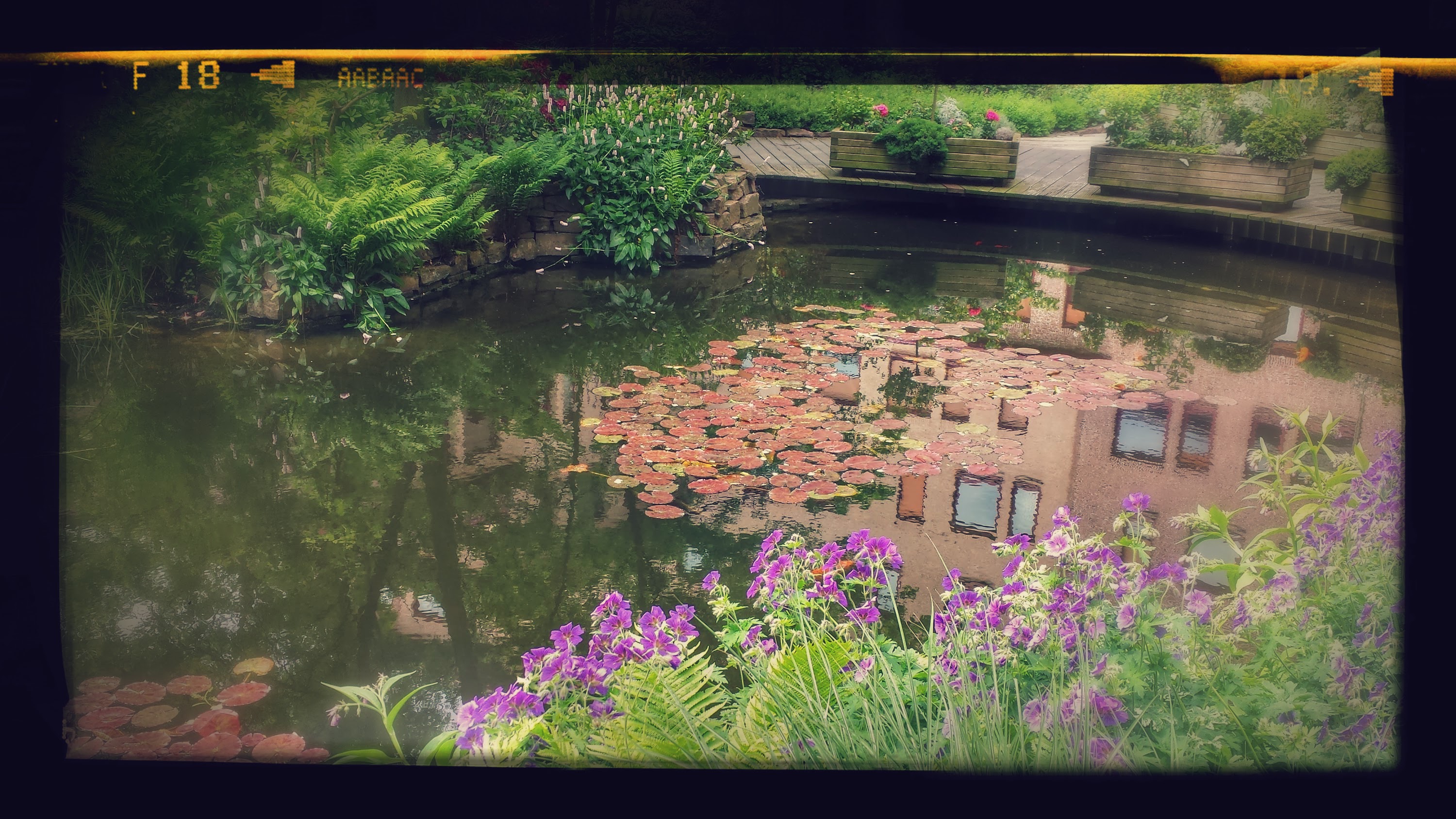
Photo: © 2015 Elisheva Sterling.
Lately I’ve had reason to think an awful lot about values. Family values. Religious values. Cultural values. National values. The values that we claim to have and the values that our actions declare.
It all started out with a question about international development, local governments, and the things that either do or do not happen on the ground in less developed countries. The thread began with an inquiry into the long term viability of infrastructure developments in poor rural areas, but before long I found myself pondering much deeper and more personal territory. It also bounced back and forth into the territory of politicians and the engagement or lack thereof on behalf of citizens – not just in less developed places, but back in the USA or any other highly developed nation.
Recently I wrote a post about the anatomy of the Spirit of Place. That feeds in directly to this line of questioning because the Spirit of a Place is made up of the the many bits of matter inside of it and all the actions that they do. You can think of this as a health issue, which it is, but it’s also just a basic matter of how all these pieces fit together to affect the personality of a Place. Your personality is affected by the precise balance of chemicals (endogamous and otherwise) in your brain and body, and those are in turn affected by the actions of not only the cells which hold your DNA, but also by the actions of the other microorganisms that make their home inside you. So, too, the personality of a Place is built up from the results of all those various relationships amongst the “cells” within that Place, whether those cells are mineral, vegetable or animal.
So, what are my values and how do those relate to my actions? If I say that I put my children first in my life, but I never see them because I’m always at work, do I really put my children first? What if the reason that I never see my kids is because the only way I can give them all the things that they need to survive in life is by working three jobs to make enough money to make ends meet? It might be killing me, but my kids have a safe home, plenty of healthy food in their bellies, a great school, nice clothes. That choice may not be someone else’s way to show that their children are their highest value, but maybe it’s mine.
This is not a description of my actual life, but it is the description of many other people’s lives. Putting the story into the first person is a good way to walk around in it for a moment and gain empathy for other people’s choices. It helps in the process of understanding how a certain action may be a result of spoken values or a result of hidden values – values of which the person doing the action may not even be aware.
Personal values are only the tip of the iceberg, though. Values are not only things we hold deep inside ourselves which inform our behavior and our choices. They are also things which we share with various communities of people. We share some of our core values with our family of birth or our chosen family. We share some core values with our co-religionists. We share values with the cultures that we live in, as well, both the wider culture and the various subcultures we are a part of.
When we try to live according to our values, we cannot just do so in the private sphere. Our values-driven actions spill into the public space, whether we intend for them to do so or not. One might even argue that all of our actions are values-driven. Although some of our actions seem to be against our values, we tend to have reasons for taking those actions that speak of competing values that live alongside of, or interfere with our stated core. As we interact with other people in our families and communities, those values bump into friction points. That’s where personal values often turn into political ones.
In the United States, politicians talk an awful lot about family values. They claim that they will vote in ways that promote core American Family Values, which means the value of a hardworking family with one mother, one father, and at least two kids. They say that their votes to cut taxes are to benefit these struggling families, but in fact the taxes they cut are almost always the taxes of wealthy people who may or may not fit the “nuclear family” ideal. They certainly don’t fit the “struggling family” picture. At the same time, they cut services that directly benefit actual struggling families, and they blame those who are falling from “middle class” down into poverty for their own circumstances. No matter how I turn this idea over in my head, I cannot find a way in which the values that the politicians speak of are actually demonstrated by their actions. Worse than that, the values that I see represented by their actions are quite the opposite of what they claim. This is true even when I put the story of the politician into the first person.
So, how do our values get expressed in the political sphere? And how do they effect the Spirit and the Nature of Place?
Previous Post

June 5, 2015
Bugs of Africa
Next Post

August 13, 2015 The Most Important Issue Of Our Day
Browse Our Archives
Select a Category Africa Amazon Ancestors Animism Austin Boots Across Ireland Boston boundary crossing Bretagne Children Cities Community Connection Culture Detroit Druidry Earth Edinburgh Elements England Eskdalemuir Eugene experiential family Fiction Florida folklore France Glasgow Heathenry home how to build it Human Spaces imaginary landscapes Introduction Ireland Journeys Know your wild herbs Land Spirits London Maine memory lane Naturalizing Nature's Metaphors New York Poetry Remembering Ancestors Sacred Spaces San Francisco Scotland Seasons Seattle Tanzania Technology Texas the South Theory Top 10 traditions Travel Uncategorized United States video Water West Virginia Witchcraft Worlding
Select a Month August 2015 June 2015 May 2015 April 2015 March 2015 February 2015 January 2015 December 2014 November 2014 October 2014 September 2014 August 2014 July 2014 June 2014 May 2014 April 2014 March 2014 February 2014 January 2014 December 2013 November 2013 October 2013 September 2013 August 2013 July 2013 June 2013 May 2013 April 2013 March 2013 February 2013 January 2013 December 2012
Follow Us!
TAKE THE
Religious Wisdom Quiz
What city is known as the Holy City, sacred to Jews, Christians, and Muslims?
Select your answer to see how you score.
Athens Cairo Jerusalem Rome
Related posts from A Sense of Place

Speaking of Burning Mountains...

The Mountain Of Fire, A Parable
The Most Important Issue Of Our Day
TRENDING AT PATHEOS Pagan

I was recently chatting with someone on Instagram. She asked me what...

While there are many people who share their results, the end of...

On July 23, I saw Christopher Nolan's The Odyssey which is Homer’s...

As I write this two big events have just finished up. One...

Restoring the Watershed of Divine Love
Perhaps cooperation is not something we manufacture through legislation, ideology, or moral...

Many UUs don’t pray because of bad experiences in a previous religion,...
view all Pagan blogs
Ad-Free & Subscriber Log-In Subscription Support
- About Us
- 2026 Calendar
- Videos
- Podcasts
- Library of World Religions
- Faith In Media Tracker
- Advertise With Us
- Write for Us
- Privacy Policy
- Terms of Service
- Do Not Sell My Data
- Contact Us
- Radiant Digital
- Manage Newsletter Subscriptions
- Unsubscribe From Notifications
- Sitemap
Copyright 2008-2026, Patheos. All rights reserved.
Subscription Support Ad-Free & Subscriber Log-In
Follow Patheos