
BuddhistCatholicContemplativeEvangelicalGeneral ChristianHinduJewishLatter-day SaintMuslimNew VisionsProgressive Christian
Beliefs
- Buddhist
- Catholic
- Contemplative
- Evangelical
- General Christian
- Hindu
- Jewish
- Latter-day Saint
- More Voices
- Muslim
- New Visions
- Pagan
- Progressive Christian
Topics
- Religion News
- Food and Religion
- Sports and Religion
- Religious Art
- Religious Music and Entertainment
- Religious Events
- History and Religion
- Style and Religion
- Politics and Religion
- Women in Religion
- Recreation Outdoors and Religion
- Business Finance and Religion
- Careers Workplace and Religion
- Education and Religion
- Family Parenting and Religion
- Health Fitness and Religion
- Home and Religion
- Relationships and Religion
- Technology and Religion
- Travel and Religion
Columnists
- Buddhist Columnists
- Business Finance and Religion Columnists
- Careers Workplace and Religion Columnists
- Catholic Columnists
- Contemplative Columnists
- Education and Religion Columnists
- Evangelists Columnists
- Family Parenting and Religion Columnists
- General Christian Columnists
- Health Fitness and Religion Columnists
- Hindu Columnists
- History and Religion Columnists
- Home and Religion Columnists
- Jewish Columnists
- More Voices Columnists
- Latter Day Columnists
- Muslim Columnists
- New Visions Columnists
- Nonreligious Columnists
- Pagan Columnists
- Politics and Religion Columnists
- Progressive Columnists
- Recreation Outdoors and Religion Columnists
- Relationships and Religion Columnists
- Religion News Columnists
- Religious Art Columnists
- Religious Events Columnists
- Religious Music and Entertainment Columnists
- Sports and Religion Columnists
- Style and Religion Columnists
- Technology and Religion Columnists
- Travel and Religion Columnists
- Women in Religion Columnists
Resource Library
- 2026 Calendar
- Library of World Religions
- The 100 Most Holy Places on Earth
- Patheos Answers
- Podcasts
- Videos
- Faith Leaders Database
- Anglican Episcopalian
- Bahai
- Baptist
- Buddhism
- Christianity
- Confucianism
- Eastern Orthodoxy
- Hinduism
- Holiness and Pentecostal
- ISKCON
- Islam
- Judaism
- Lutheran
- Methodist
- The Church of Jesus Christ of Latter-day Saints
- New Age
- Paganism
- Presbytarian and Reformed
- Protestantism
- Religion Behind the Scenes
- Roman Catholic
- Scientology
- Shia Islam
- Sikhism
- Sufism
- Sunni Islam
- Taoism
- Zen
- See all religions
Research Tools
 Ad-Free & Subscriber Log-In Subscription Support
Follow Patheos 

- Trending:
- Advent
- |
- Forgiveness
- |
- Thanksgiving
- |
- Election
- |
- Seasonal Holidays
- |
- Marriage
 A Sense of Place
- Home
- Pagan
- Oiche na Sprideanna Approaches
Oiche na Sprideanna Approaches
Last updated on: October 20, 2013 at 4:44 pm by Traci
Oiche na Sprideanna Approaches 2013-10-20T16:44:12+00:00 Traci
Patheos Explore the world's faith through different perspectives on religion and spirituality! Patheos has the views of the prevalent religions and spiritualities of the world.
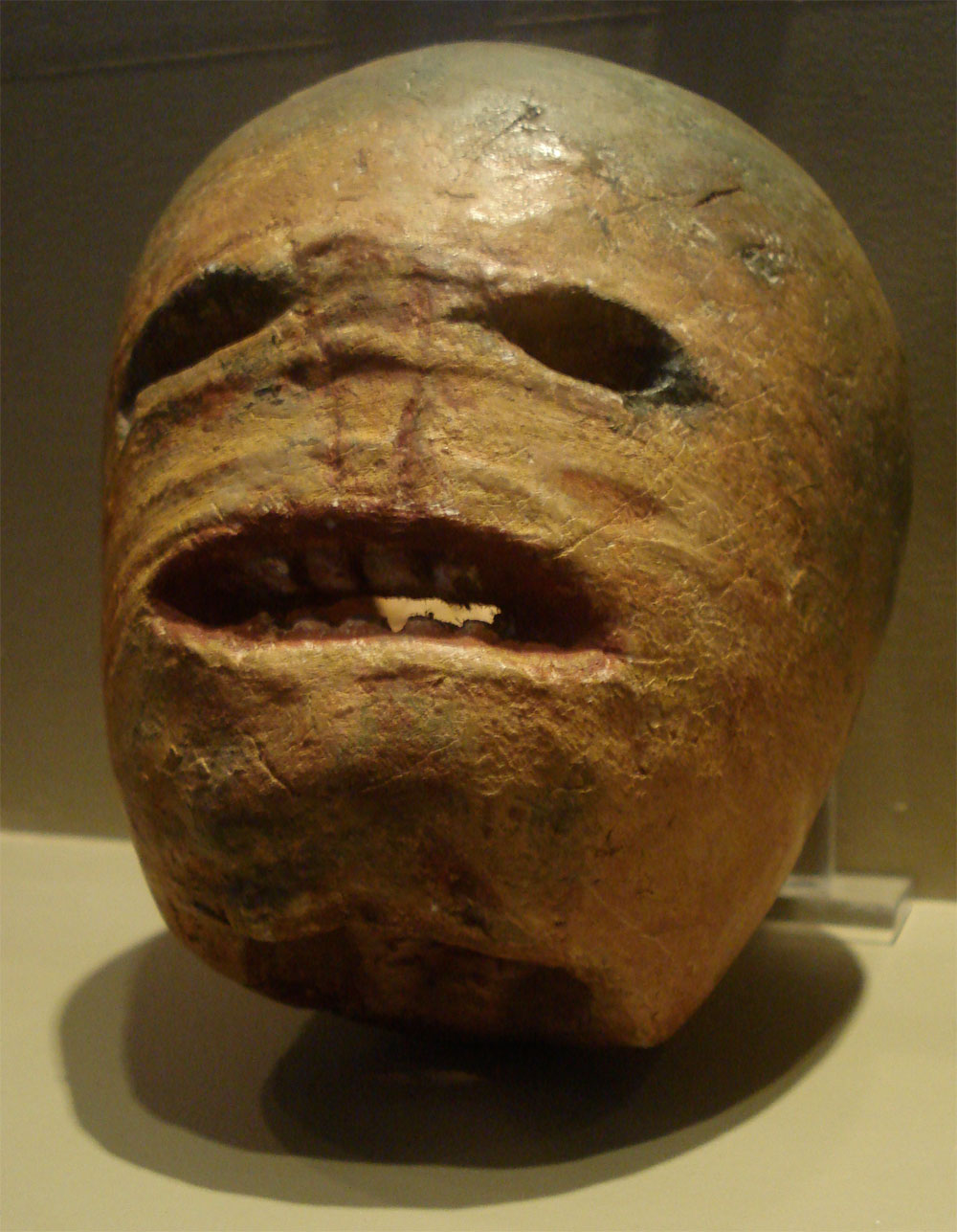
As we approach the Irish festival of Samhain, I want to share some little known lore.
Then on the eve of samain (November 1) precisely Mongfind dies. So this is The Death of Mongfind the Banshee. Hence samain is called by the rabble Féile Moingfhinne “Mongfhionn’s feast”, for she was a witch and had magical power while she was in the flesh; wherefore women and the rabble make petitions to her on samain-eve.
Stokes, Whitley (1903). Revue Celtique 24: 179
A prominent hill called Cnoc Samhna “Hill of Samhain” also known as Ard na Ríoghraidhe “Height of the Kingfolk” south of Bruree, County Limerick is associated with a tale connected to Mongfind. Also, “Anocht Oíche Shamhna Moingfhinne banda“, a children’s rhyme from County Waterford, translates as “Tonight is the eve of Samhain of womanly Mongfhionn”.
Several important mythological happenings or changes occurred at Samhain:
- Oengus mac ind-Og was born on Samhain
- An Dagda mated with the Morrigan on Samhain, just before the Second Battle of Magh Turedh (which may have also been on Samhain)
- The invasion of Ulster that makes up the main action of the Táin Bó Cúailnge (Cattle Raid of Cooley) begins on Samhain. As cattle-raiding typically was a summer activity, the invasion during this off-season surprised the Ulstermen.
- According to the Dindsenchas and Annals of the Four Masters, Samhain in ancient Ireland was associated with the god Crom Cruach. King Tigernmas (Tighearnmhas) was said to have made offerings to Crom Cruach each Samhain, sacrificing a first-born child by smashing their head against a stone idol of the god. The Four Masters says that Tigernmas, with “three fourths of the men of Ireland about him” died while worshiping Crom Cruach at Magh Slécht on Samhain (p.43).
- Irish kings Diarmait mac Cerbaill and Muirchertach mac Ercae both die a threefold death on Samhain, which may be linked to human sacrifice.[1]
- In the 10th-century Tochmarc Emire (the Wooing of Emer), Samuin is the first of the four “quarter days” of the year mentioned by the heroine Emer.[p.232]
- The 12th century tales Mesca Ulad and Serglige Con Culainn begin at Samhain. In Serglige Con Culainn, it is said that the festival of the Ulaidh at Samhain lasted a week: Samhain itself, and the three days before and after. They would gather on the Plain of Muirthemni where there would be meetings, games, and feasting.[2]
- In Aislinge Óengusa (the Dream of Óengus) it is when he and his bride-to-be switch from bird to human form, and in Tochmarc Étaíne (the Wooing of Étaín) is the day on which Óengus claims the kingship of Brú na Bóinne.[1]
- In Echtra Neraí (the Adventure of Nera), Nera undergoes a test of bravery on Samhain. King Ailill offers his own gold-hilted sword as a prize to the man who would leave the warmth and safety of the hall, to make his way through the night to a gallows where two prisoners had been hanged the day before, tie a withe around one corpse’s ankle, and return. Where others had failed, Nera fulfills the task and other adventures ensue! Taking etymology into consideration, it is interesting to note that the word for summer in the Echtra Nerai is samraid.
- In many folk tales and in some late Fionn tales, it was the day that the Hollow Hills would open and the sidhe would walk about.
- The winter season (Samhain to Bealtaine) was and is the time for seanchas; the time when the seanchaí share their wisdom over a pint or near a turf fire. In fact, it was and is taboo to tell stories in summer.
Some of the All Hallows’ Eve folk traditions of the Ulster-Scots
- Traditionally regarded as the end of the year.
- The onset of winter in late October, combined with the harvest of the fruits of summer growth, determine a personality for this season.
- Before mechanization made these customs impractical, the last stalks of the oat crop (referred to as corn, and which were harvested with hand sickles) were considered the last sheaf, and referred to as the calliagh, granny, or hare. It was plaited where it stood, then the men took turns tossing their sickles at it, until it was cut down. The person to have done the ‘killing’ placed the plait around the neck of the mistress of the house, as an implied threat that required reward with food and drink. The last sheaf was stored over winter in the house of the man who had cut her down,
- The booly parties, with their cattle, returned from the summer pasturage in the mountains.
- Bonfires, children visiting houses (guising or rhyming), and parties with special games and food (vegetarian) that had a particular focus on divination (especially of marriage and death).
- Pranks and practical jokes abounded. Notable stories include removing the field gate and reconstructing it on the neighbor’s roof, or taking apart the cart, then reconstructing it inside hooked to the donkey! These were closely tied to the belief in supernatural activity during this time.
- To ‘protect’ children on this night of spirit activity, older people would place a pile of salt on the child’s forehead.
Koch, John T. The Celts: History, Life, and Culture. 2012. p.690
Hutton, Ronald (1996) Stations of the Sun: A History of the Ritual Year in Britain. Oxford, Oxford University Press ISBN 0-19-288045-4, p. 361.
Previous Post

October 15, 2013
The Place Where I'm Not Weird
Next Post

October 23, 2013 Beauty In Other People's Faith
Browse Our Archives
Select a Category Africa Amazon Ancestors Animism Austin Boots Across Ireland Boston boundary crossing Bretagne Children Cities Community Connection Culture Detroit Druidry Earth Edinburgh Elements England Eskdalemuir Eugene experiential family Fiction Florida folklore France Glasgow Heathenry home how to build it Human Spaces imaginary landscapes Introduction Ireland Journeys Know your wild herbs Land Spirits London Maine memory lane Naturalizing Nature's Metaphors New York Poetry Remembering Ancestors Sacred Spaces San Francisco Scotland Seasons Seattle Tanzania Technology Texas the South Theory Top 10 traditions Travel Uncategorized United States video Water West Virginia Witchcraft Worlding
Select a Month August 2015 June 2015 May 2015 April 2015 March 2015 February 2015 January 2015 December 2014 November 2014 October 2014 September 2014 August 2014 July 2014 June 2014 May 2014 April 2014 March 2014 February 2014 January 2014 December 2013 November 2013 October 2013 September 2013 August 2013 July 2013 June 2013 May 2013 April 2013 March 2013 February 2013 January 2013 December 2012
Follow Us!
TAKE THE
Religious Wisdom Quiz
Which Jewish festival commemorates the defeat of Haman?
Select your answer to see how you score.
Purim Booths Pentecost Passover
Related posts from A Sense of Place
Speaking of Burning Mountains...

The Mountain Of Fire, A Parable

The Most Important Issue Of Our Day
TRENDING AT PATHEOS Pagan

10 years of the Power Sigil & Moving...
Last week while reorganizing my studio space, I found the sketchbook that...
Here comes a rant (and TLDR: if you're a US citizen eligible...

Why are younger seekers drawn to Paganism and...
One of the things I've noticed the most is that I'm far...

When we talk about Greek religion, we often begin with the dodekatheion—the...

I was recently chatting with someone on Instagram. She asked me what...

On July 23, I saw Christopher Nolan's The Odyssey which is Homer’s...
view all Pagan blogs
Ad-Free & Subscriber Log-In Subscription Support
- About Us
- 2026 Calendar
- Videos
- Podcasts
- Library of World Religions
- Faith In Media Tracker
- Advertise With Us
- Write for Us
- Privacy Policy
- Terms of Service
- Do Not Sell My Data
- Contact Us
- Radiant Digital
- Manage Newsletter Subscriptions
- Unsubscribe From Notifications
- Sitemap
Copyright 2008-2026, Patheos. All rights reserved.
Subscription Support Ad-Free & Subscriber Log-In
Follow Patheos