
BuddhistCatholicContemplativeEvangelicalGeneral ChristianHinduJewishLatter-day SaintMuslimNew VisionsProgressive Christian
Beliefs
- Buddhist
- Catholic
- Contemplative
- Evangelical
- General Christian
- Hindu
- Jewish
- Latter-day Saint
- More Voices
- Muslim
- New Visions
- Pagan
- Progressive Christian
Topics
- Religion News
- Food and Religion
- Sports and Religion
- Religious Art
- Religious Music and Entertainment
- Religious Events
- History and Religion
- Style and Religion
- Politics and Religion
- Women in Religion
- Recreation Outdoors and Religion
- Business Finance and Religion
- Careers Workplace and Religion
- Education and Religion
- Family Parenting and Religion
- Health Fitness and Religion
- Home and Religion
- Relationships and Religion
- Technology and Religion
- Travel and Religion
Columnists
- Buddhist Columnists
- Business Finance and Religion Columnists
- Careers Workplace and Religion Columnists
- Catholic Columnists
- Contemplative Columnists
- Education and Religion Columnists
- Evangelists Columnists
- Family Parenting and Religion Columnists
- General Christian Columnists
- Health Fitness and Religion Columnists
- Hindu Columnists
- History and Religion Columnists
- Home and Religion Columnists
- Jewish Columnists
- More Voices Columnists
- Latter Day Columnists
- Muslim Columnists
- New Visions Columnists
- Nonreligious Columnists
- Pagan Columnists
- Politics and Religion Columnists
- Progressive Columnists
- Recreation Outdoors and Religion Columnists
- Relationships and Religion Columnists
- Religion News Columnists
- Religious Art Columnists
- Religious Events Columnists
- Religious Music and Entertainment Columnists
- Sports and Religion Columnists
- Style and Religion Columnists
- Technology and Religion Columnists
- Travel and Religion Columnists
- Women in Religion Columnists
Resource Library
- 2026 Calendar
- Library of World Religions
- The 100 Most Holy Places on Earth
- Patheos Answers
- Podcasts
- Videos
- Faith Leaders Database
- Anglican Episcopalian
- Bahai
- Baptist
- Buddhism
- Christianity
- Confucianism
- Eastern Orthodoxy
- Hinduism
- Holiness and Pentecostal
- ISKCON
- Islam
- Judaism
- Lutheran
- Methodist
- The Church of Jesus Christ of Latter-day Saints
- New Age
- Paganism
- Presbytarian and Reformed
- Protestantism
- Religion Behind the Scenes
- Roman Catholic
- Scientology
- Shia Islam
- Sikhism
- Sufism
- Sunni Islam
- Taoism
- Zen
- See all religions
Research Tools
 Ad-Free & Subscriber Log-In Subscription Support
Ad-Free & Subscriber Log-In Subscription Support
Follow Patheos 

- Trending:
- Forgiveness
- |
- Marriage
- |
- Consciousness
- |
- Death Penalty
- |
- Election
- |
- Halloween
 A Sense of Place
- Home
- Pagan
- Naturalizing: Bringing Our Practice Home
Naturalizing: Bringing Our Practice Home
Last updated on: October 10, 2013 at 10:44 pm by Traci
Naturalizing: Bringing Our Practice Home 2013-10-10T22:44:02+00:00 Traci
Patheos Explore the world's faith through different perspectives on religion and spirituality! Patheos has the views of the prevalent religions and spiritualities of the world.
My years in Ireland were like graduate school. They challenged my thoughts on spirituality, witchcraft, and culture. While living outside my culture of origin, I chose to drop my identifiers and preconceived ideas. I sought to experience my culture of residence with fresh eyes and an insider perspective. Irish mythology and folklore have shaped much of our understanding, and practice of paganism. The very names used for significant seasonal celebrations are influenced by Irish language and custom. Yet what I learned about those seasons, while living on that island, forever altered my practice. I am finally becoming naturalised–a term I first heard Steven Posch use to describe a paganism that more accurately reflects our living Place, as opposed to some far-away homeland (or fantasy of that homeland).
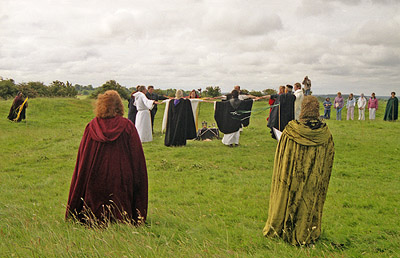
I began this journey years ago, when the knowledge that American culture is shaped by western Christianity first awoke in my consciousness. It was the first time I questioned how my upbringing in the U.S. had shaped and informed my world-view, and how intertwined it was with the philosophy of western Christianity. Steven Posch is quoted as saying, “Much of what passes for Pagan these days is actually a bad translation into Pagan of some variety of Natal Monotheism or, worse, Pop Culture.” Once I realised (and agreed with) this, I began to examine how my culture of origin shaped my personal experience of paganism. In what ways was I continuing to behave and think like a monotheist? I also began to examine how this world-view shaped my government, the systems operating within my society, and the science that informs my understanding of the cosmos. It was a profound and powerful journey. One which decimated my entire structure of belief and perception.
The Great Stripping Away (or untangling) was ongoing when I moved across the pond to the Emerald Isle, a land I mythicized for years. Yet, when finally able to experientially connect with the land on a daily basis, the stories I had read with a sense of disconnection, and almost romanticized wonder, took on an unexpected immediacy; they became embodied. I soon came to realize that the persons referenced in the ancient stories were as real as the Knockmealdown Mountains I could see from my front garden. In fact, one or two of them actually were those strong peaks!
But seeing the landscape anthropomorphized in the stories was not enough. I began to look behind those ‘new’ tales for the Old Gods, the Elder Gods, the gods of the witches who are the Great Powers: wild, untamed, and untamable. The far-side-of-the-hedge ones. And, I found them!
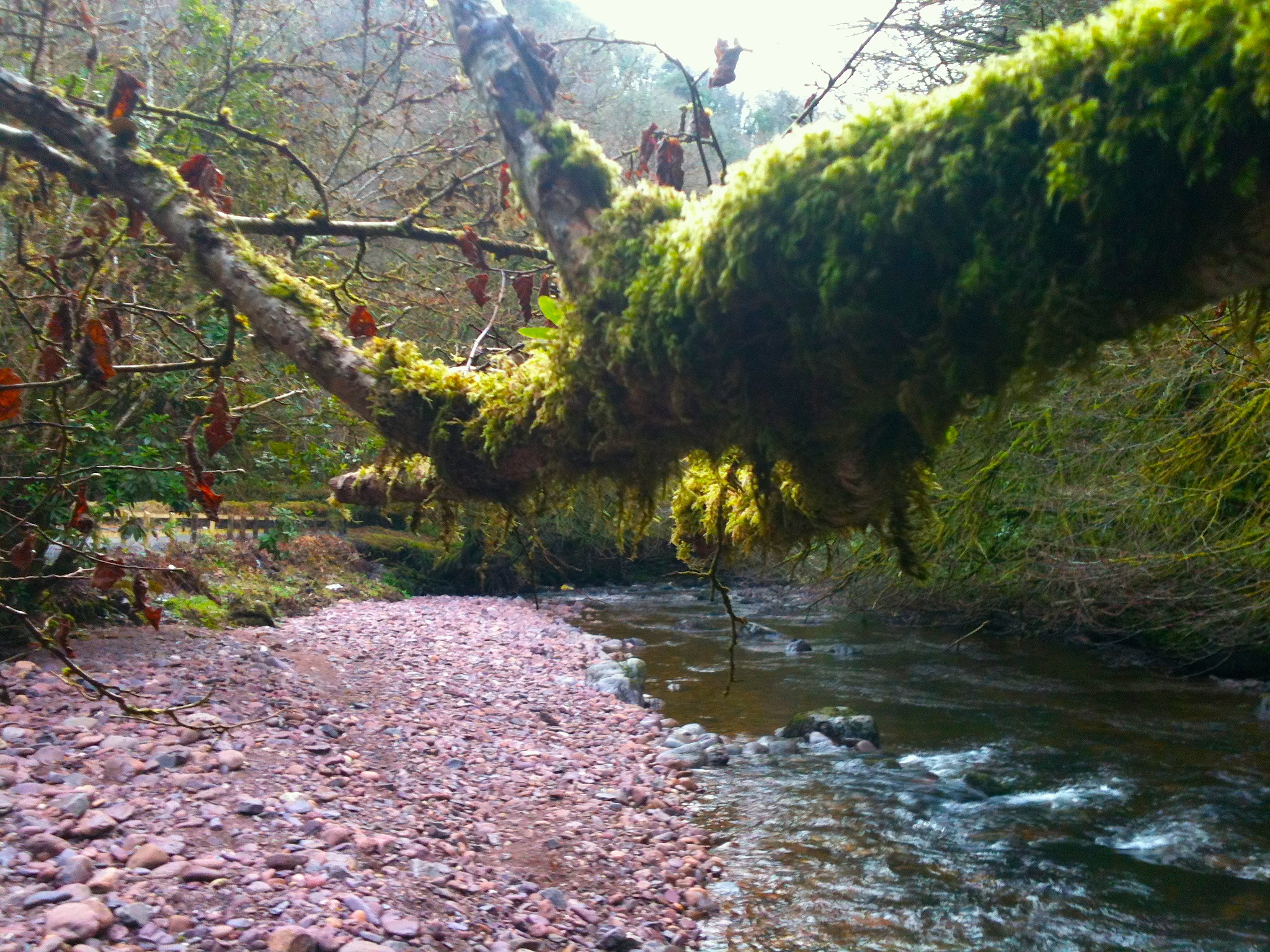
Éire
They were wherever my eye would see or my ear hear. Strange and frightful, yet as alive as me: each tree–Blackthorn, Oak, Ash–the strong West Wind, the River Bride. Each with a voice, and a story of their own. The ancestral voice, rich and deep, reverberated with remembered history. These beings are alien, so unlike human-persons that it is hard to fathom them. Yet they hold a perspective and an experience I can not gain on my own. As a witch, I am interested in understanding the powers of my world; as an animist, I care about living in right relationship with the other-than-human persons I share space with. As a human-person, I want to learn about the world I inhabit.
As these changes to the way I interact with my world unfolded, I came to realize my paganism was diverging from what I saw around me. My practice began to look less and less like what I had been taught, or what I read of ‘mainstream’ paganism. I was moving backward on a time-stream into a more primal thought that was, nonetheless, influenced by the modernity I am part of.
If there had indeed been pagans of our ilk in Europe during the Hidden Years, and if those old paganisms had managed to survive in backwaters here and there, and if they had undergone the usual kinds of culture loss and internal innovation, and if the old ways had been influenced as one would expect by the new religion, and if those ways had managed to survive into modern times, and if our ancestors had brought those ways with them to the New World in their heads, hearts, and steamer trunks, and if those ways had become naturalized to the local weather patterns, vegetation and wildlife, and if those ways had been influenced by the lore of the indigenous peoples, and of other incomers, and if those ways had survived industrialization and the Wars, and if they had managed to come down intact to us today in the second decade of the so-called twenty-first century: then what would our paganism look like?

Texas
That is the question I want to answer for myself. As I prepare to return home to Texas, I also prepare to naturalize my practice. In so doing, I may create a new tradition, a new spirituality. One shaped by the comings and goings of Little Brother and Little Sister: he who brings rain and cold, she who brings fiery heat. A spirituality shaped by the Wild Mother, whose winds blow fierce. A year divided by two turnings: rich fertility that gives way to the long hot, and ancestral breath which offers cool respite.
What is the spirituality of your Place? Have you naturalized?
Previous Post

October 8, 2013
The Intersection of People and Place
Next Post
October 14, 2013 Getting clear about my place: the uses of withdrawal
Browse Our Archives
Select a Category Africa Amazon Ancestors Animism Austin Boots Across Ireland Boston boundary crossing Bretagne Children Cities Community Connection Culture Detroit Druidry Earth Edinburgh Elements England Eskdalemuir Eugene experiential family Fiction Florida folklore France Glasgow Heathenry home how to build it Human Spaces imaginary landscapes Introduction Ireland Journeys Know your wild herbs Land Spirits London Maine memory lane Naturalizing Nature's Metaphors New York Poetry Remembering Ancestors Sacred Spaces San Francisco Scotland Seasons Seattle Tanzania Technology Texas the South Theory Top 10 traditions Travel Uncategorized United States video Water West Virginia Witchcraft Worlding
Select a Month August 2015 June 2015 May 2015 April 2015 March 2015 February 2015 January 2015 December 2014 November 2014 October 2014 September 2014 August 2014 July 2014 June 2014 May 2014 April 2014 March 2014 February 2014 January 2014 December 2013 November 2013 October 2013 September 2013 August 2013 July 2013 June 2013 May 2013 April 2013 March 2013 February 2013 January 2013 December 2012
Follow Us!
TAKE THE
Religious Wisdom Quiz
What animal is commonly associated with Jesus?
Select your answer to see how you score.
Lion Lamb Donkey Fish
Related posts from A Sense of Place

Speaking of Burning Mountains...

The Mountain Of Fire, A Parable

The Most Important Issue Of Our Day

TRENDING AT PATHEOS Pagan

I was recently chatting with someone on Instagram. She asked me what...

While there are many people who share their results, the end of...

On July 23, I saw Christopher Nolan's The Odyssey which is Homer’s...

As I write this two big events have just finished up. One...

Restoring the Watershed of Divine Love
Perhaps cooperation is not something we manufacture through legislation, ideology, or moral...

Many UUs don’t pray because of bad experiences in a previous religion,...
view all Pagan blogs
Ad-Free & Subscriber Log-In Subscription Support
- About Us
- 2026 Calendar
- Videos
- Podcasts
- Library of World Religions
- Faith In Media Tracker
- Advertise With Us
- Write for Us
- Privacy Policy
- Terms of Service
- Do Not Sell My Data
- Contact Us
- Radiant Digital
- Manage Newsletter Subscriptions
- Unsubscribe From Notifications
- Sitemap
Copyright 2008-2026, Patheos. All rights reserved.
Subscription Support Ad-Free & Subscriber Log-In
Follow Patheos