
BuddhistCatholicContemplativeEvangelicalGeneral ChristianHinduJewishLatter-day SaintMuslimNew VisionsProgressive Christian
Beliefs
- Buddhist
- Catholic
- Contemplative
- Evangelical
- General Christian
- Hindu
- Jewish
- Latter-day Saint
- More Voices
- Muslim
- New Visions
- Pagan
- Progressive Christian
Topics
- Religion News
- Food and Religion
- Sports and Religion
- Religious Art
- Religious Music and Entertainment
- Religious Events
- History and Religion
- Style and Religion
- Politics and Religion
- Women in Religion
- Recreation Outdoors and Religion
- Business Finance and Religion
- Careers Workplace and Religion
- Education and Religion
- Family Parenting and Religion
- Health Fitness and Religion
- Home and Religion
- Relationships and Religion
- Technology and Religion
- Travel and Religion
Columnists
- Buddhist Columnists
- Business Finance and Religion Columnists
- Careers Workplace and Religion Columnists
- Catholic Columnists
- Contemplative Columnists
- Education and Religion Columnists
- Evangelists Columnists
- Family Parenting and Religion Columnists
- General Christian Columnists
- Health Fitness and Religion Columnists
- Hindu Columnists
- History and Religion Columnists
- Home and Religion Columnists
- Jewish Columnists
- More Voices Columnists
- Latter Day Columnists
- Muslim Columnists
- New Visions Columnists
- Nonreligious Columnists
- Pagan Columnists
- Politics and Religion Columnists
- Progressive Columnists
- Recreation Outdoors and Religion Columnists
- Relationships and Religion Columnists
- Religion News Columnists
- Religious Art Columnists
- Religious Events Columnists
- Religious Music and Entertainment Columnists
- Sports and Religion Columnists
- Style and Religion Columnists
- Technology and Religion Columnists
- Travel and Religion Columnists
- Women in Religion Columnists
Resource Library
- 2026 Calendar
- Library of World Religions
- The 100 Most Holy Places on Earth
- Patheos Answers
- Podcasts
- Videos
- Faith Leaders Database
- Anglican Episcopalian
- Bahai
- Baptist
- Buddhism
- Christianity
- Confucianism
- Eastern Orthodoxy
- Hinduism
- Holiness and Pentecostal
- ISKCON
- Islam
- Judaism
- Lutheran
- Methodist
- The Church of Jesus Christ of Latter-day Saints
- New Age
- Paganism
- Presbytarian and Reformed
- Protestantism
- Religion Behind the Scenes
- Roman Catholic
- Scientology
- Shia Islam
- Sikhism
- Sufism
- Sunni Islam
- Taoism
- Zen
- See all religions
Research Tools
 Ad-Free & Subscriber Log-In Subscription Support
Ad-Free & Subscriber Log-In Subscription Support
Follow Patheos 

- Trending:
- Forgiveness
- |
- Marriage
- |
- Consciousness
- |
- Death Penalty
- |
- Election
- |
- Halloween
 A Sense of Place
- Home
- Pagan
- Returning To America : Place As Cultural Experience
Returning To America : Place As Cultural Experience
Last updated on: September 26, 2013 at 4:52 pm by Traci
Returning To America : Place As Cultural Experience 2013-09-26T16:52:33+00:00 Traci
Patheos Explore the world's faith through different perspectives on religion and spirituality! Patheos has the views of the prevalent religions and spiritualities of the world.
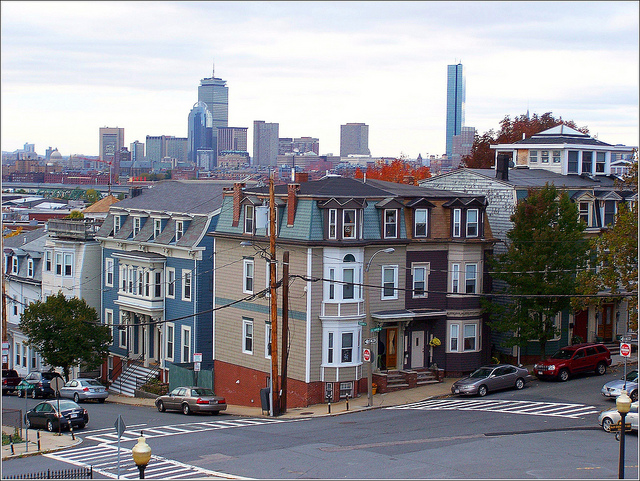
Each time I return from abroad, I am struck by just how different things are here in ‘Murica. Spaces are large, cars move fast, and people are pointy. Life in the U.S. is like an oil painting, with layered color, defined texture, and not-so-subtle edges. Contrast this with the watercolor world that is Ireland, where I have lived for the past three years, and suddenly the two cultures, though shaped and influenced by shared or similar values and forces, appear at polar ends of a cultural spectrum. On one end you have collectivist culture that values the group over the individual, and on the other end you have individualist culture that emphasizes personal achievement above group goals.
This spectrum is also found when considering what Place means, to both individuals and to academics. Within some academic disciplines, a sense of place refers to the group experience, or to those symbols that help shape cultural meaning. To others, it refers to a very personal experience of a specific landscape, or setting. Even within these categories, or ways of understanding and relating to place, there are different ways to connect: biographical (birth place), spiritual (intangible sense of belonging), ideological (moral/ethical), narrative (mythical), commodified (self-selected based on lifestyle preference), and dependent (constrained due to lack of choice or ability).
As a human-person, I may experience my place in any number of values or combinations along these two different spectra, both in terms of my personal preference and of my cultural understanding. My sense of place, of ‘home’ versus ‘elsewhere’, or ‘us’ and ‘them’, arises through my mobility, or potential of mobility–it is activated by my movement through my landscape. Our scale of mobility, in a postmodern world, has changed dramatically. Just 50 years ago, the notion that I could wake-up in Cork and go to sleep in Boston was alien and out of reach for most people.
At one time, human settlement was shaped by the landscape. Now, we shape the landscape to fit our human settlements. That shaping is determined, in large part, by our cultural connection, or relationship, with place. I believe the modern world is experiencing a bit of an identity crisis. Our technology has so removed us from a sensual experience of our environment–an experience that is vital for health and wellbeing–that we have forgotten, or lost touch with, an embodied sense of place. Our rediscovery of place, as a centre of felt value reflective of the aspirations of a people, is paramount, for environmental, social, and personal reasons.
I am still learning a lot about what place means to me, and what is personally important to my own sense of place. One thing Ireland taught me is the importance of relationship, and connection, with other human-persons. I always thought myself a bit of a hermit, and I am to some extent. I’m very happy to sit at home for days on end, with no outside contact. Yet, I need substantive relationships, with other human-persons, that are within reach when I need them. The human part was a key, and new, insight.
My unique upbringing (a sense of having been reared by nature, not parents) led me to believe humans were not my favorites. I still prefer sitting in the arms of my Blackthorn friend than around a table with many humans, but my experience in Ireland reminded me of our social natures. We need each other. We are relational beings, and there is no getting away from that.
The pull of relationship is what brought me to Boston, where I am staying for the next several weeks supporting a friend with her first baby. While I am here, I have the opportunity to test culture and place. Massachusetts may be part of the U.S., but it has a distinct cultural expression; and though this neighborhood is part of Boston, it offers a unique experience of place.
To connect with these spaces, I am using the same techniques I employ when connecting with any city (of which I have spoken on this blog), though I have added relationship building with the house itself, because my friend is quite literally building her ‘home’. So far, my experience of Boston is of a fast moving river in a narrow bank. It’s a little daunting! My experience of this neighborhood, in particular, is of a hedge–a dividing line between places. I look forward to seeing what the coming weeks hold, and how my experience and perception of America changes.
Previous Post
September 24, 2013
Thoughts on Cyberspace
Next Post

September 30, 2013 Connecting with the sound of place
Browse Our Archives
Select a Category Africa Amazon Ancestors Animism Austin Boots Across Ireland Boston boundary crossing Bretagne Children Cities Community Connection Culture Detroit Druidry Earth Edinburgh Elements England Eskdalemuir Eugene experiential family Fiction Florida folklore France Glasgow Heathenry home how to build it Human Spaces imaginary landscapes Introduction Ireland Journeys Know your wild herbs Land Spirits London Maine memory lane Naturalizing Nature's Metaphors New York Poetry Remembering Ancestors Sacred Spaces San Francisco Scotland Seasons Seattle Tanzania Technology Texas the South Theory Top 10 traditions Travel Uncategorized United States video Water West Virginia Witchcraft Worlding
Select a Month August 2015 June 2015 May 2015 April 2015 March 2015 February 2015 January 2015 December 2014 November 2014 October 2014 September 2014 August 2014 July 2014 June 2014 May 2014 April 2014 March 2014 February 2014 January 2014 December 2013 November 2013 October 2013 September 2013 August 2013 July 2013 June 2013 May 2013 April 2013 March 2013 February 2013 January 2013 December 2012
Follow Us!
TAKE THE
Religious Wisdom Quiz
Who said, "Let us build us a city and a tower, whose top may reach unto heaven"?
Select your answer to see how you score.
Chaldeans Egyptians People of Babel Israelites
Related posts from A Sense of Place

Speaking of Burning Mountains...

The Mountain Of Fire, A Parable

The Most Important Issue Of Our Day

TRENDING AT PATHEOS Pagan

I was recently chatting with someone on Instagram. She asked me what...

While there are many people who share their results, the end of...

On July 23, I saw Christopher Nolan's The Odyssey which is Homer’s...

As I write this two big events have just finished up. One...

Restoring the Watershed of Divine Love
Perhaps cooperation is not something we manufacture through legislation, ideology, or moral...

Many UUs don’t pray because of bad experiences in a previous religion,...
view all Pagan blogs
Ad-Free & Subscriber Log-In Subscription Support
- About Us
- 2026 Calendar
- Videos
- Podcasts
- Library of World Religions
- Faith In Media Tracker
- Advertise With Us
- Write for Us
- Privacy Policy
- Terms of Service
- Do Not Sell My Data
- Contact Us
- Radiant Digital
- Manage Newsletter Subscriptions
- Unsubscribe From Notifications
- Sitemap
Copyright 2008-2026, Patheos. All rights reserved.
Subscription Support Ad-Free & Subscriber Log-In
Follow Patheos