
BuddhistCatholicContemplativeEvangelicalGeneral ChristianHinduJewishLatter-day SaintMuslimNew VisionsProgressive Christian
Beliefs
- Buddhist
- Catholic
- Contemplative
- Evangelical
- General Christian
- Hindu
- Jewish
- Latter-day Saint
- More Voices
- Muslim
- New Visions
- Pagan
- Progressive Christian
Topics
- Religion News
- Food and Religion
- Sports and Religion
- Religious Art
- Religious Music and Entertainment
- Religious Events
- History and Religion
- Style and Religion
- Politics and Religion
- Women in Religion
- Recreation Outdoors and Religion
- Business Finance and Religion
- Careers Workplace and Religion
- Education and Religion
- Family Parenting and Religion
- Health Fitness and Religion
- Home and Religion
- Relationships and Religion
- Technology and Religion
- Travel and Religion
Columnists
- Buddhist Columnists
- Business Finance and Religion Columnists
- Careers Workplace and Religion Columnists
- Catholic Columnists
- Contemplative Columnists
- Education and Religion Columnists
- Evangelists Columnists
- Family Parenting and Religion Columnists
- General Christian Columnists
- Health Fitness and Religion Columnists
- Hindu Columnists
- History and Religion Columnists
- Home and Religion Columnists
- Jewish Columnists
- More Voices Columnists
- Latter Day Columnists
- Muslim Columnists
- New Visions Columnists
- Nonreligious Columnists
- Pagan Columnists
- Politics and Religion Columnists
- Progressive Columnists
- Recreation Outdoors and Religion Columnists
- Relationships and Religion Columnists
- Religion News Columnists
- Religious Art Columnists
- Religious Events Columnists
- Religious Music and Entertainment Columnists
- Sports and Religion Columnists
- Style and Religion Columnists
- Technology and Religion Columnists
- Travel and Religion Columnists
- Women in Religion Columnists
Resource Library
- 2026 Calendar
- Library of World Religions
- The 100 Most Holy Places on Earth
- Patheos Answers
- Podcasts
- Videos
- Faith Leaders Database
- Anglican Episcopalian
- Bahai
- Baptist
- Buddhism
- Christianity
- Confucianism
- Eastern Orthodoxy
- Hinduism
- Holiness and Pentecostal
- ISKCON
- Islam
- Judaism
- Lutheran
- Methodist
- The Church of Jesus Christ of Latter-day Saints
- New Age
- Paganism
- Presbytarian and Reformed
- Protestantism
- Religion Behind the Scenes
- Roman Catholic
- Scientology
- Shia Islam
- Sikhism
- Sufism
- Sunni Islam
- Taoism
- Zen
- See all religions
Research Tools
 Ad-Free & Subscriber Log-In Subscription Support
Ad-Free & Subscriber Log-In Subscription Support
Follow Patheos 

- Trending:
- Forgiveness
- |
- Marriage
- |
- Consciousness
- |
- Death Penalty
- |
- Election
- |
- Halloween
 A Sense of Place
- Home
- Pagan
- A Night In The Mound
A Night In The Mound
Last updated on: September 5, 2013 at 9:59 am by Traci
A Night In The Mound 2013-09-05T09:59:59+00:00 Traci
Patheos Explore the world's faith through different perspectives on religion and spirituality! Patheos has the views of the prevalent religions and spiritualities of the world.

Croagh Patrick : by John Nolan
One time they [the king of Ireland’s three sons: Ruide, Fiacha, and Eochaid] went to talk with their father at the Grave of the Druids [fert na ndruadh] to the northwest of Tara. Where have you come from? he asked them. From Echlais Banguba in the south, they replied, from the home of our nurse and guardian. They were dressed in beautiful cloaks: a green cloak on the eldest, Ruide; a fringed woolen cloak from the Land of Promise on Fiacha; and a blue one on Eochaid, who had a band of shining silver fastened across his chest with a golden pin.
Young men, asked the king of Ireland, why have you come? To ask you for land and territory, they replied. The king was silent for a while before he answered: No father gave me land and territory, but my own ability and determination. I will not give you land. You must earn it yourselves.
They rose up as one and went to the green of Bruig na Bóinne where they sat with nobody near them.
What is your advice this night? asked Ruide.
Our advice, said his brothers, is that we fast against the Tuatha Dé Danann to be granted a kingdom, estates, land and great wealth from them.
They were not long there before they saw a … young man coming towards them.
….
What is your name? they asked.
Bodb Derb, son of the Dagda.
It was made known to the Tuatha Dé Danann that you would come here tonight to fast for lands and great wealth.
….
They stayed in that fairy mound for three days and three nights.
(Agallamh na senórach ‘The colloquy of the ancients’)
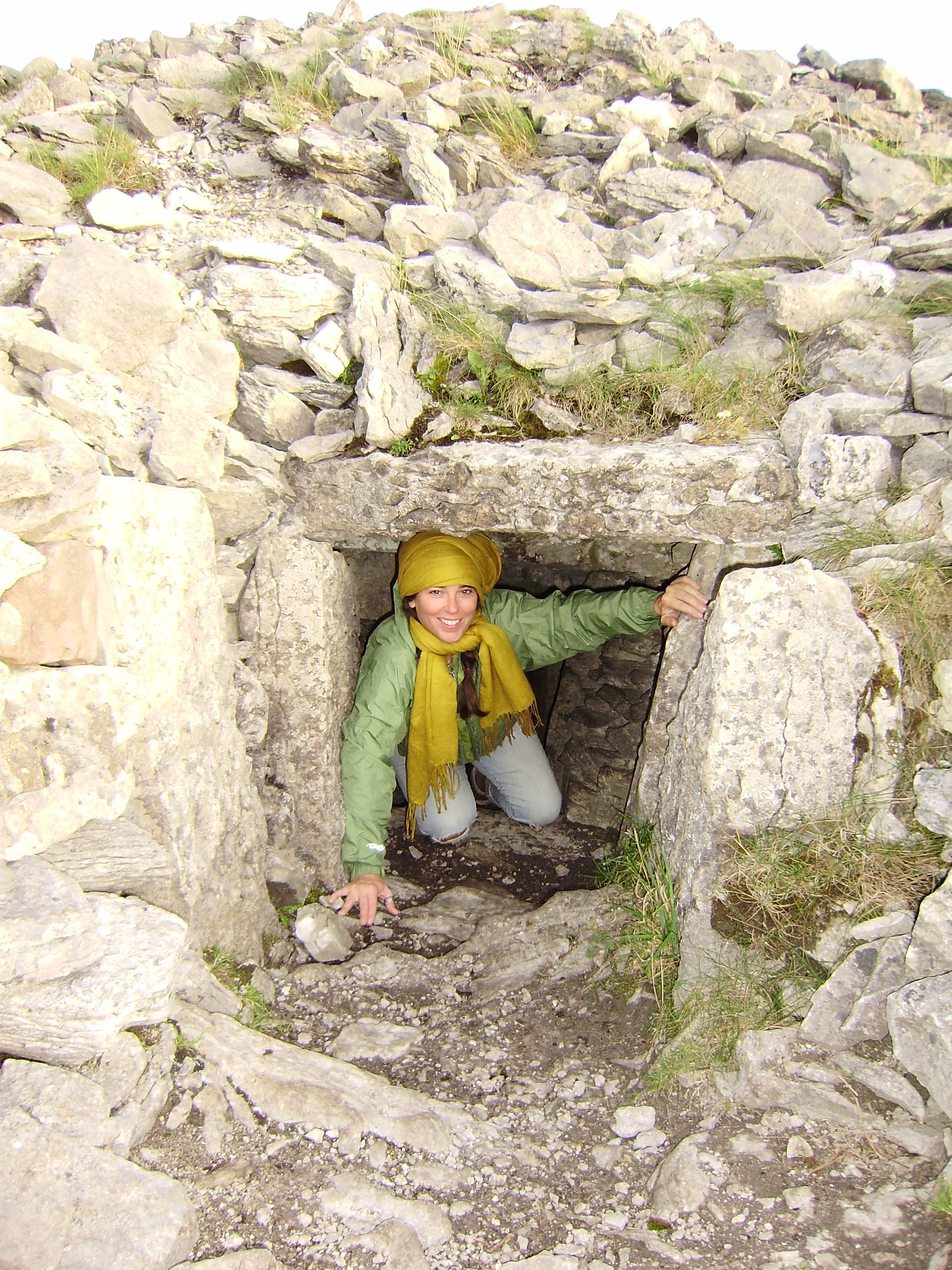 Four nights ago I slept inside the mound. My head, resting hard, on stone which once cradled cremated remains of the Mighty Dead. My back to the West, and the stone of Crom–fashioned in the likeness of the reek, Crom’s holy mountain, now a pilgrimage site to Patrick, the “driven, tormented British eccentric”–I arranged myself inside the recess, fetal like, and there I spent a long, dark night.
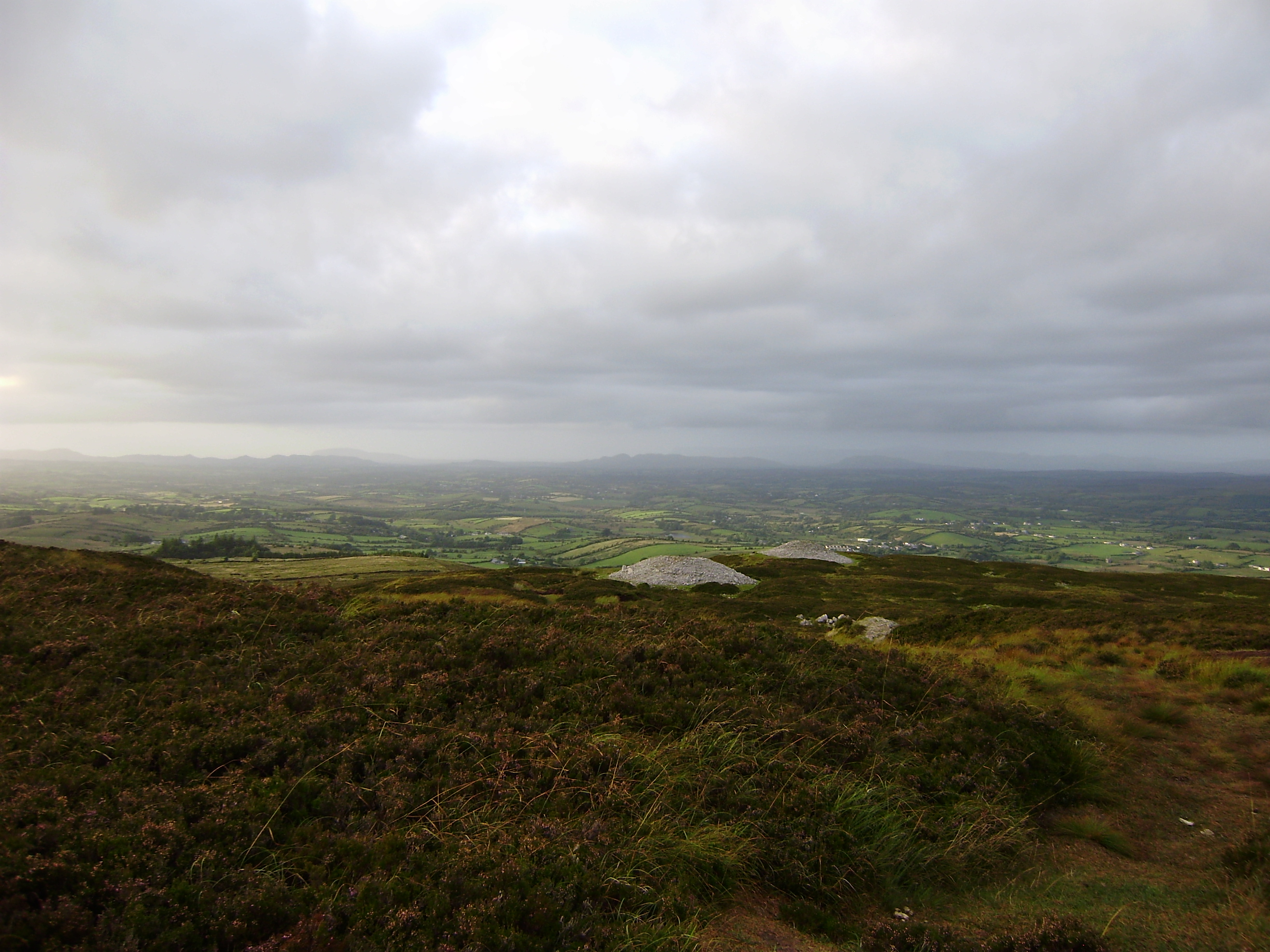
The weather on the west coast had turned cool and cloudy. The long forgotten valley, which leads to the cairns, is like another world; the narrow quarter of the speckled mountains. The path winds up through boggy ground, and as you leave the houses and road behind the necropolis appears suddenly before you. Cairns claim place of honor atop every ridge and peak. I was overcome by a feeling of watchfulness, and immediacy, as the cairns come into view quickly, without warning.
As I began my ascent up the bumpy mountain, the cairns slid from view. My attention was then drawn back down the valley, to the north and the horizon. A vast expanse of small undulations spread below me, like a green ocean, and in the distance danced rock islands of strange proportion. Benbulbin loomed furthest, with its flat top and long, sharp-toothed sides. The Ox Mountains, with their strange shapes (reminiscent of the raised hairs on a wild boar’s back), hurried between me and the jaw-shaped Benbulbin. The scene brought to mind the story of Diarmuid’s tragic end. It was on Benbulbin that Fionn, jealous of Grainne’s love of Diarmuid, tricked him into hunting boar, though he was under geas not to. Diarmuid was gored, and though water could have saved him–and Lough Gill stretches long nearby–Fionn refused. This story is written in the landscape, and I watched as dark clouds, full of Grainne’s tears, rolled in from the Atlantic.
In the night I heard the rumble of thunder, deep in the rocks; I heard high pitched cries, insistent with their repetition; and the whistle, and moan, of wind dancing across the peaks. The repeated cries, only inches from me in the dark, woke me. Quickly my light went on. On the back of the recess clung three red moths, in front of me on the lintel were another two, but the cries continued. I shone my light into the chamber, expecting anything, but only space and shadow greeted me. Off went the light, as I sat, until I felt from deep in the earth an expectancy.
To understand the placing of offerings in storage pits, it is perhaps helpful to think of corn storage itself as, in a sense, a ritual or religious act, whereby the grain was given into the safe-keeping of the chthonic or underground gods. […] The animals which rotted in the ground, their blood and vital juices seeping into the earth, nourished the earth-gods in whose territory the pits were dug. – Animals in Celtic Life and Myth, Miranda Green.
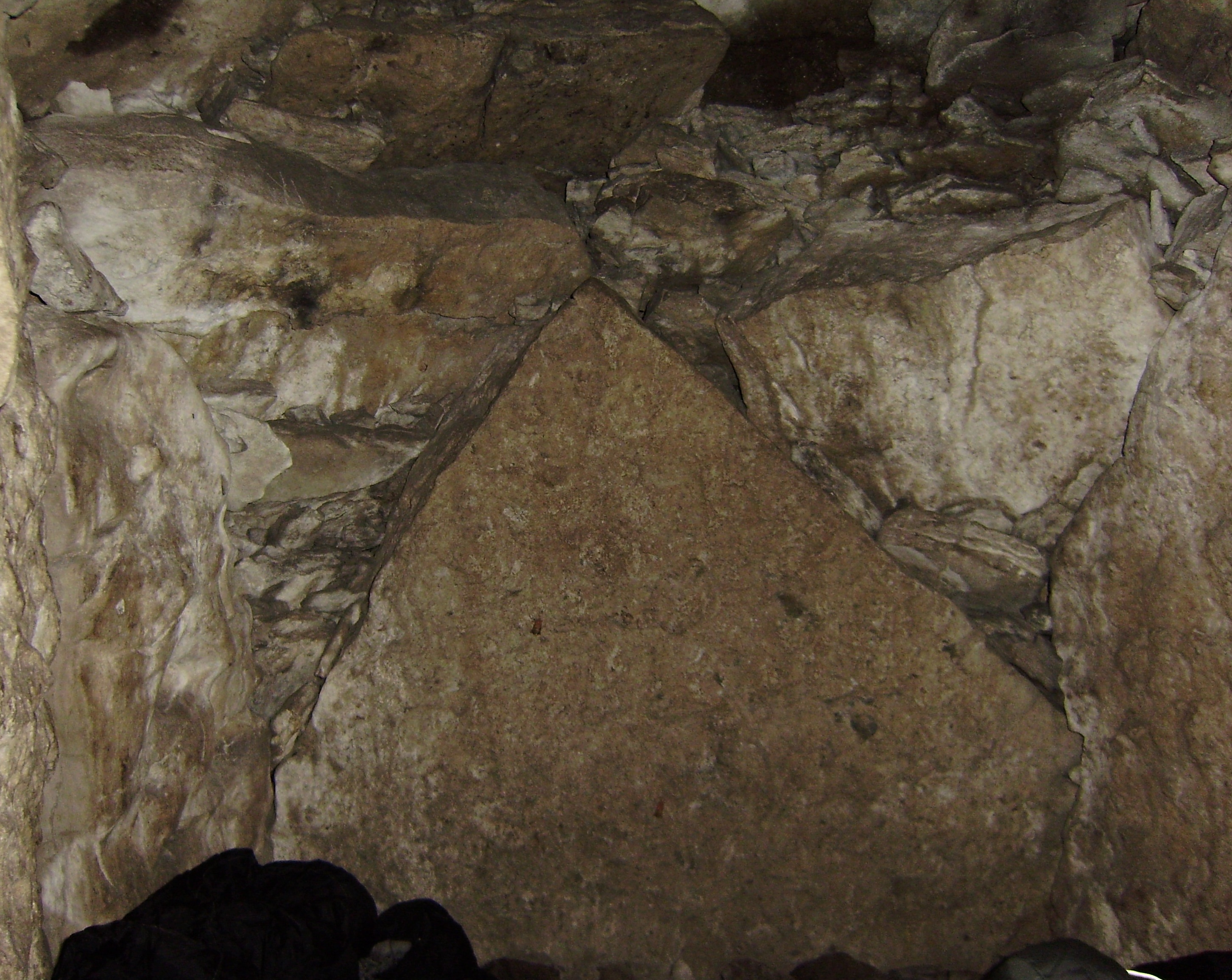 I shifted myself then to the antechamber, a liminal space between the narrow birth-canal passage and the expansive inner chamber. As I sat there in the returning dark, my eyes slowly adjusting to the faint glow of night sky barely visible at the end of the passage, a blur of motion soared above my head: another and another, wings quick on the chill air. Bats were leaving the cairn for the hunt, darting around and above me, yet so close I could feel the subtle wind currents set in motion by their wings.
There is a saying that if you sleep on a mound you will either die, go mad, be replaced with a changeling, or become a poet. But in the tale of the King of Ireland’s sons, they went to the dwelling of their ancestors to demand a boon. That night, under a waning crescent moon of Lughnasadh, I sought the Ancients–who were long venerated here–to make a pledge ….. and to seek a blessing.
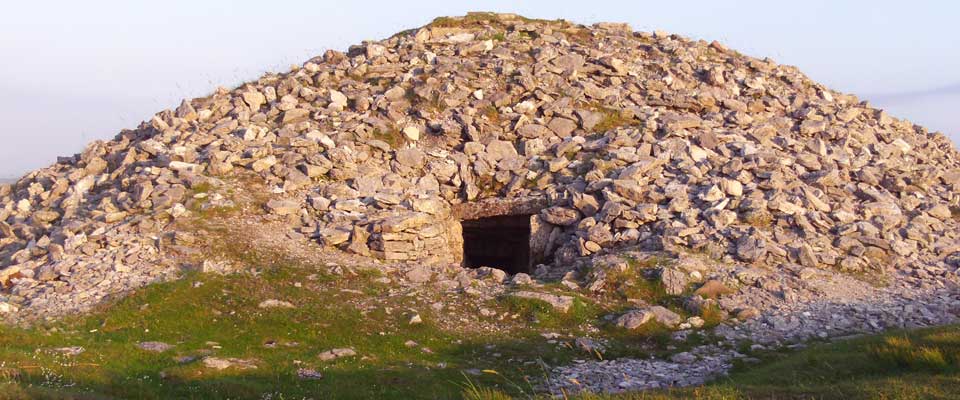
WARNING: If you visit an Irish megalithic structure, do NOT burn candles near the rock; do NOT climb on the mound (internal collapse can happen–these are 5000 year old temples!); do NOT remove stones (in fact, the tradition is to bring a stone to add to the cairn); do NOT etch your name into the rock; and remove ALL rubbish you find or brought. They are watching you!

Next Post
September 6, 2013 Memories of place, held on the tongue
Browse Our Archives
Select a Category Africa Amazon Ancestors Animism Austin Boots Across Ireland Boston boundary crossing Bretagne Children Cities Community Connection Culture Detroit Druidry Earth Edinburgh Elements England Eskdalemuir Eugene experiential family Fiction Florida folklore France Glasgow Heathenry home how to build it Human Spaces imaginary landscapes Introduction Ireland Journeys Know your wild herbs Land Spirits London Maine memory lane Naturalizing Nature's Metaphors New York Poetry Remembering Ancestors Sacred Spaces San Francisco Scotland Seasons Seattle Tanzania Technology Texas the South Theory Top 10 traditions Travel Uncategorized United States video Water West Virginia Witchcraft Worlding
Select a Month August 2015 June 2015 May 2015 April 2015 March 2015 February 2015 January 2015 December 2014 November 2014 October 2014 September 2014 August 2014 July 2014 June 2014 May 2014 April 2014 March 2014 February 2014 January 2014 December 2013 November 2013 October 2013 September 2013 August 2013 July 2013 June 2013 May 2013 April 2013 March 2013 February 2013 January 2013 December 2012
Follow Us!
TAKE THE
Religious Wisdom Quiz
What is the main structure of Lamentations?
Select your answer to see how you score.
Five acrostic poems Six sermons Twelve genealogies Ten parables
Related posts from A Sense of Place

Speaking of Burning Mountains...

The Mountain Of Fire, A Parable

The Most Important Issue Of Our Day

TRENDING AT PATHEOS Pagan

I was recently chatting with someone on Instagram. She asked me what...

While there are many people who share their results, the end of...

On July 23, I saw Christopher Nolan's The Odyssey which is Homer’s...

As I write this two big events have just finished up. One...

Restoring the Watershed of Divine Love
Perhaps cooperation is not something we manufacture through legislation, ideology, or moral...

Many UUs don’t pray because of bad experiences in a previous religion,...
view all Pagan blogs
Ad-Free & Subscriber Log-In Subscription Support
- About Us
- 2026 Calendar
- Videos
- Podcasts
- Library of World Religions
- Faith In Media Tracker
- Advertise With Us
- Write for Us
- Privacy Policy
- Terms of Service
- Do Not Sell My Data
- Contact Us
- Radiant Digital
- Manage Newsletter Subscriptions
- Unsubscribe From Notifications
- Sitemap
Copyright 2008-2026, Patheos. All rights reserved.
Subscription Support Ad-Free & Subscriber Log-In
Follow Patheos