
BuddhistCatholicContemplativeEvangelicalGeneral ChristianHinduJewishLatter-day SaintMuslimNew VisionsProgressive Christian
Beliefs
- Buddhist
- Catholic
- Contemplative
- Evangelical
- General Christian
- Hindu
- Jewish
- Latter-day Saint
- More Voices
- Muslim
- New Visions
- Pagan
- Progressive Christian
Topics
- Religion News
- Food and Religion
- Sports and Religion
- Religious Art
- Religious Music and Entertainment
- Religious Events
- History and Religion
- Style and Religion
- Politics and Religion
- Women in Religion
- Recreation Outdoors and Religion
- Business Finance and Religion
- Careers Workplace and Religion
- Education and Religion
- Family Parenting and Religion
- Health Fitness and Religion
- Home and Religion
- Relationships and Religion
- Technology and Religion
- Travel and Religion
Columnists
- Buddhist Columnists
- Business Finance and Religion Columnists
- Careers Workplace and Religion Columnists
- Catholic Columnists
- Contemplative Columnists
- Education and Religion Columnists
- Evangelists Columnists
- Family Parenting and Religion Columnists
- General Christian Columnists
- Health Fitness and Religion Columnists
- Hindu Columnists
- History and Religion Columnists
- Home and Religion Columnists
- Jewish Columnists
- More Voices Columnists
- Latter Day Columnists
- Muslim Columnists
- New Visions Columnists
- Nonreligious Columnists
- Pagan Columnists
- Politics and Religion Columnists
- Progressive Columnists
- Recreation Outdoors and Religion Columnists
- Relationships and Religion Columnists
- Religion News Columnists
- Religious Art Columnists
- Religious Events Columnists
- Religious Music and Entertainment Columnists
- Sports and Religion Columnists
- Style and Religion Columnists
- Technology and Religion Columnists
- Travel and Religion Columnists
- Women in Religion Columnists
Resource Library
- 2026 Calendar
- Library of World Religions
- The 100 Most Holy Places on Earth
- Patheos Answers
- Podcasts
- Videos
- Faith Leaders Database
- Anglican Episcopalian
- Bahai
- Baptist
- Buddhism
- Christianity
- Confucianism
- Eastern Orthodoxy
- Hinduism
- Holiness and Pentecostal
- ISKCON
- Islam
- Judaism
- Lutheran
- Methodist
- The Church of Jesus Christ of Latter-day Saints
- New Age
- Paganism
- Presbytarian and Reformed
- Protestantism
- Religion Behind the Scenes
- Roman Catholic
- Scientology
- Shia Islam
- Sikhism
- Sufism
- Sunni Islam
- Taoism
- Zen
- See all religions
Research Tools
 Ad-Free & Subscriber Log-In Subscription Support
Ad-Free & Subscriber Log-In Subscription Support
Follow Patheos 

- Trending:
- Forgiveness
- |
- Marriage
- |
- Consciousness
- |
- Death Penalty
- |
- Election
- |
- Halloween
 A Sense of Place
- Home
- Pagan
- A Forest Walk
A Forest Walk
Last updated on: July 31, 2013 at 12:51 pm by Sterling
A Forest Walk 2013-07-31T12:51:19+00:00 Sterling
Patheos Explore the world's faith through different perspectives on religion and spirituality! Patheos has the views of the prevalent religions and spiritualities of the world.
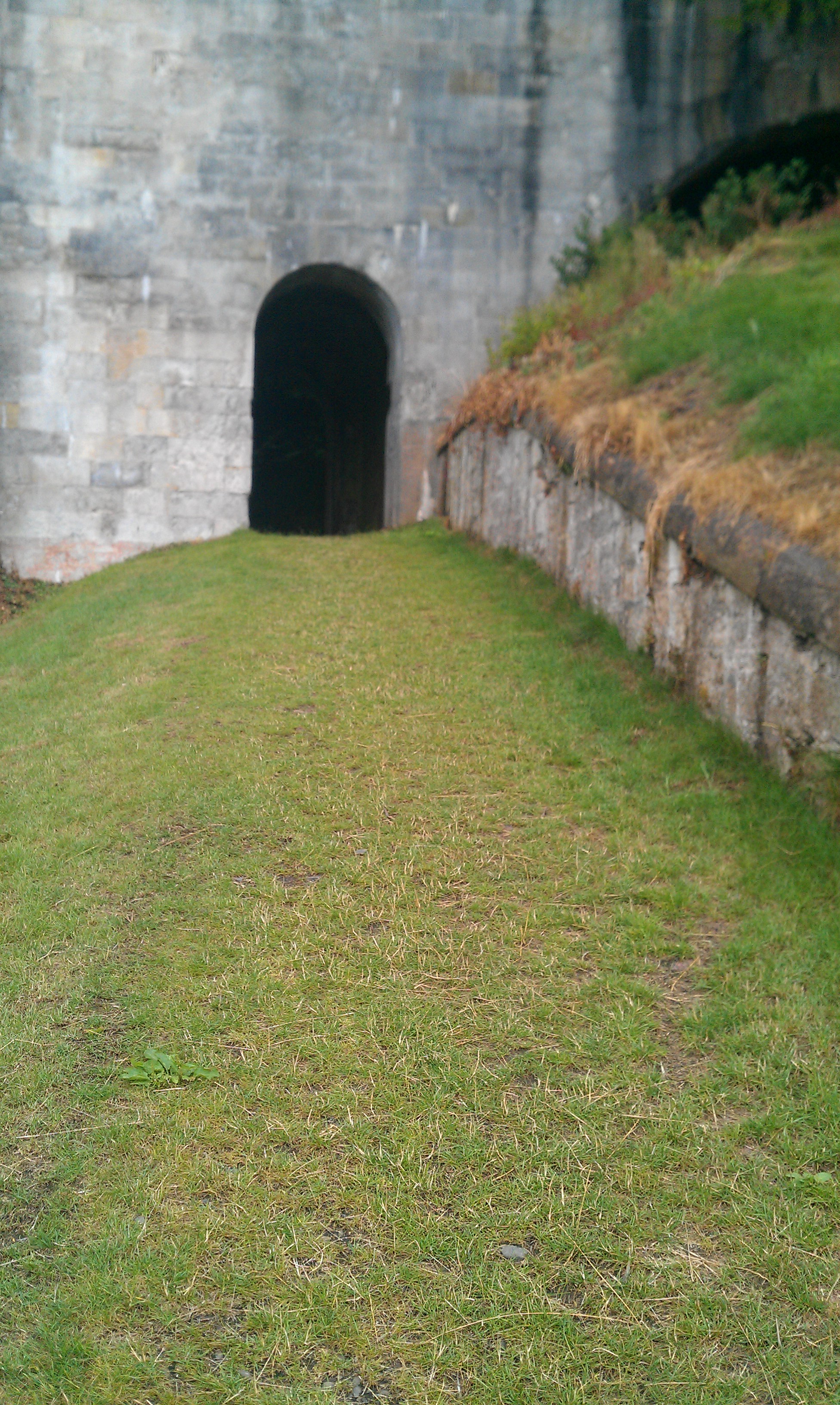 Last week I took a short, unplanned holiday to Edinburgh. I spent Wednesday in the Old City right next to Waverley Station where my train from Glasgow arrived. I enjoyed a museum visit, an art gallery, and some leisurely book store browsing. In the evening I headed to Dalkeith where I stayed Wednesday and Thursday nights, allowing me to spend Thursday and Friday hiking through the village of Dalkeith and through the forest in Dalkeith Country Park.
The three days of walking around with a heavy backpack left my body quite sore, but my spirit invigorated. Each night I slept like a rock — a very happy rock — exhausted from the day’s explorations.
Thursday’s hike through Dalkeith Country Park was certainly the highlight of the week. It seems, in hindsight, as if all my other wanderings on the trip were just a lead up to that hike or a reflection on it. On Thursday morning, as I sat eating breakfast in the restaurant next to the hotel where I was staying, I looked at a map of the area on my tablet. The area has a cluster of villages, numerous small parks, and some fairly decent sized swaths of forest as well as grazing land and farm fields. One of the great things about being in the UK in general is the accessibility of the walking paths in areas like this, and Scottish rural access seems to be even more open than England’s. I didn’t know exactly where I would go for the day, but as I looked over the map I saw a large patch of forest I wanted to go explore.
I set off on Bonnyrigg Road which turned into Eskbank Road which in turn became the Dalkeith High Street. Onward, to the end of the street, and at last I arrived at the gates of the Dalkeith Country Park. The day was a bit grey and I didn’t see another person on the trails the entire time I was there.
Shortly after I walked past under a bridge that separated manicured lawns from the forest, there were obvious signs that many trees had been cut down recently. I had mixed feelings walking through that space. Whatever the reason for the culling, they had not clear cut the trees as I’ve seen so many times in the forests of Idaho and Eastern Washington. I walked quietly, reaching out with both my feelings and my intellect, watching, listening, trying to understand the space and the relationship between humans and the wilderness.
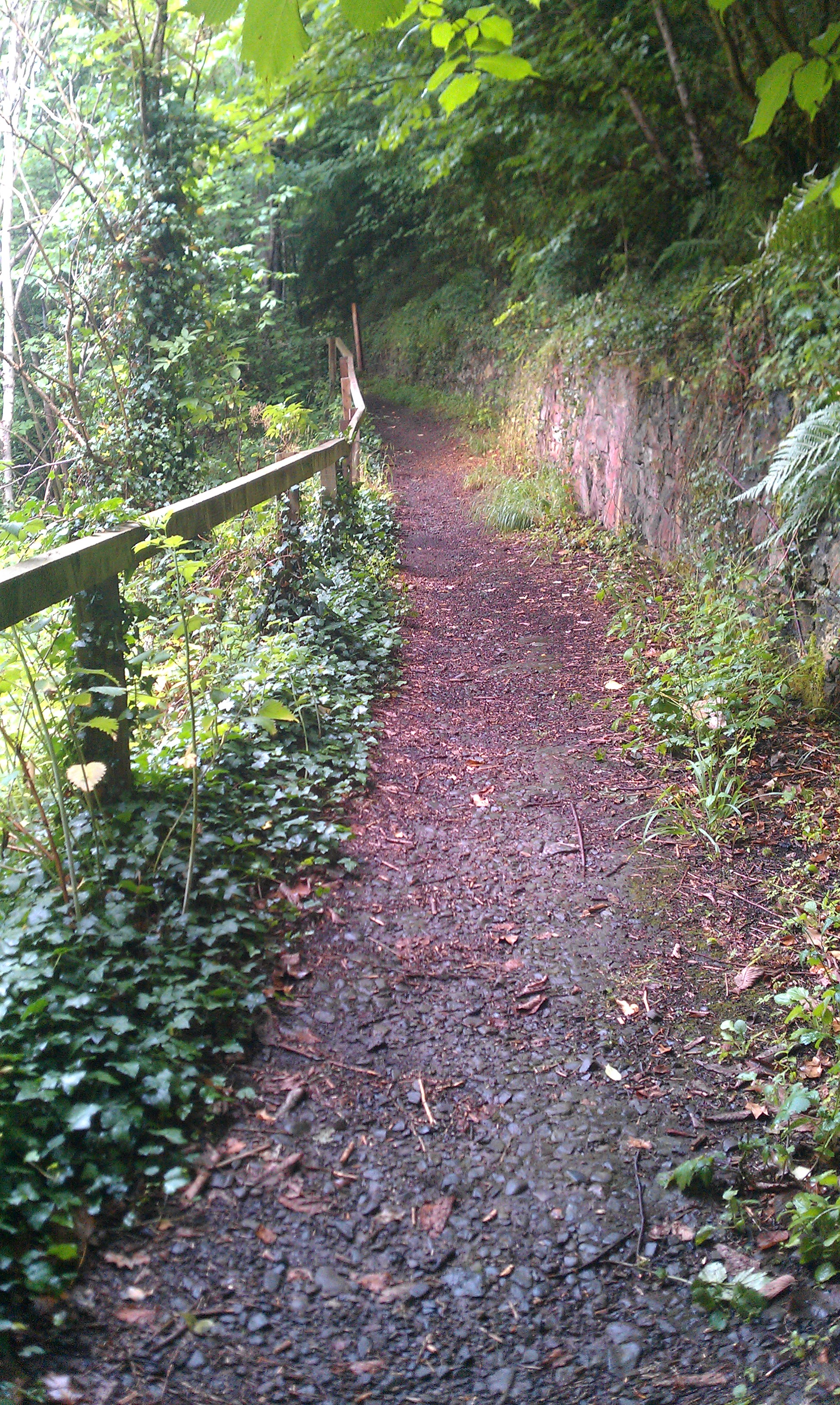 Of course, a park like this one is not really wilderness. With some notable exceptions, most of the “wild” places of the UK are not, in fact, wild, but carefully tended spaces where humans interact with the environment in a manner intended to preserve the illusion of wilderness. To find something really wild, where the non-human inhabitants have more control that the human ones, I would have to go much further North.
Later in the day, I learned from trail markers at the other end of the park that this forest is a commercial wood farm. The trees in that first section of wood must have been cut down for sale, whether for paper or lumber, I do not know.
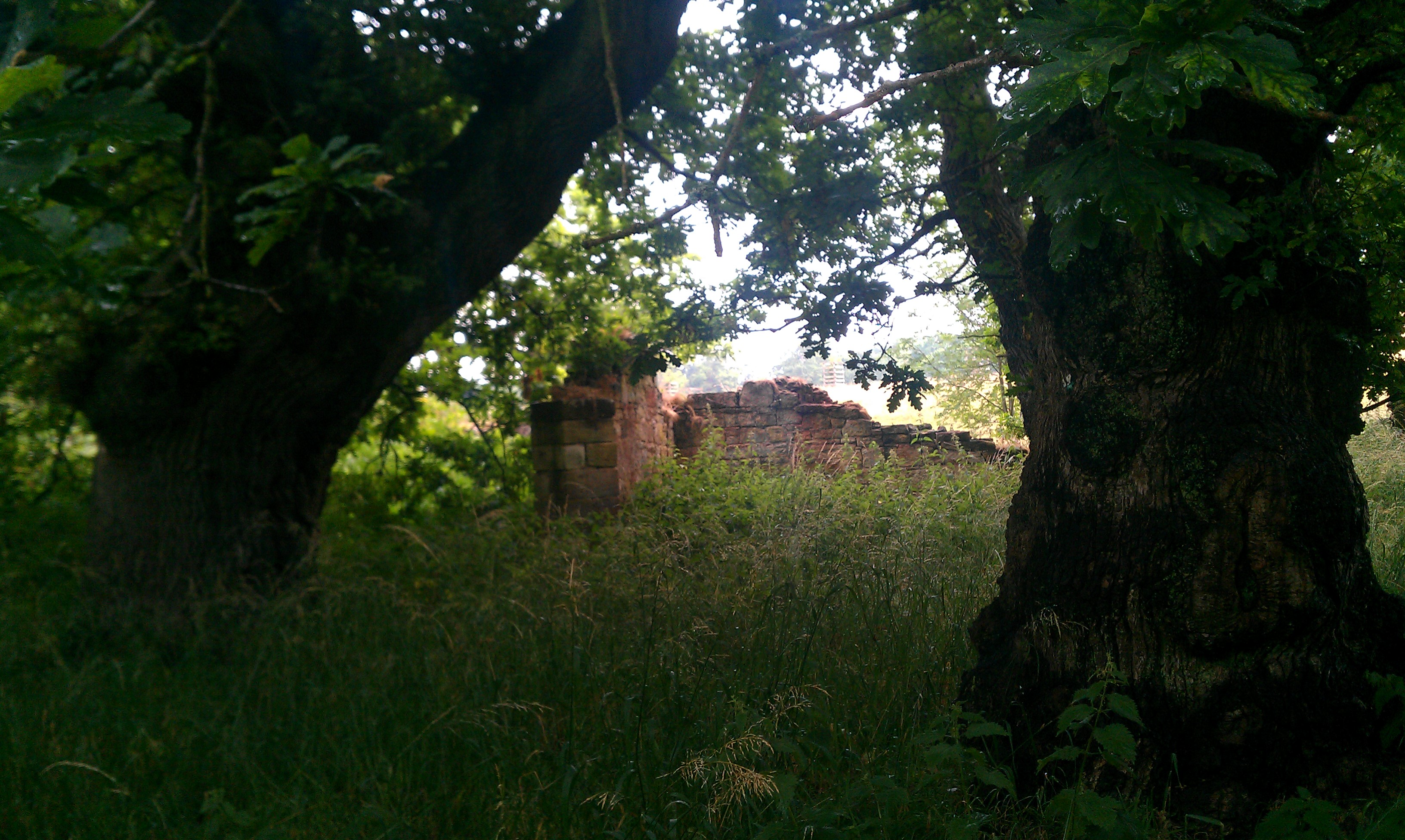
I only walked one of many well worn paths through that forest. I didn’t cross the Esk, but only walked along side of it. I watched some cows grazing in a field inside the park, as I walked the path that ran along the outside of their pasture. When I got hungry, I sat on a tree stump sticky with sap, and watched the river while I ate the sandwich I’d packed. Farther along the path there were more signs of the human history of the estate. Oak trees had much thicker bases than tops, signs that the wood had been harvested in the past by cutting the tops and leaving the tree to regrow from beheaded trunk. In a few places along the path there were bits of old buildings.
In one spot I saw trees growing out of what looked like a very old stone retaining wall pressed against a small hillock. The stones no longer formed a solid wall, but were pressed apart by the earth and the tree roots, one large trunk coming out near the top at an angle and then rising up toward the sky. Humans may manage the land with the utmost care, but the plants and wild animals are never completely under human control.
Previous Post

July 26, 2013
The ordinary, everyday occult knowledge of herbs, flowers and beasts
Next Post

August 1, 2013 Happy calendrical Lughnasadh
Browse Our Archives
Select a Category Africa Amazon Ancestors Animism Austin Boots Across Ireland Boston boundary crossing Bretagne Children Cities Community Connection Culture Detroit Druidry Earth Edinburgh Elements England Eskdalemuir Eugene experiential family Fiction Florida folklore France Glasgow Heathenry home how to build it Human Spaces imaginary landscapes Introduction Ireland Journeys Know your wild herbs Land Spirits London Maine memory lane Naturalizing Nature's Metaphors New York Poetry Remembering Ancestors Sacred Spaces San Francisco Scotland Seasons Seattle Tanzania Technology Texas the South Theory Top 10 traditions Travel Uncategorized United States video Water West Virginia Witchcraft Worlding
Select a Month August 2015 June 2015 May 2015 April 2015 March 2015 February 2015 January 2015 December 2014 November 2014 October 2014 September 2014 August 2014 July 2014 June 2014 May 2014 April 2014 March 2014 February 2014 January 2014 December 2013 November 2013 October 2013 September 2013 August 2013 July 2013 June 2013 May 2013 April 2013 March 2013 February 2013 January 2013 December 2012
Follow Us!
TAKE THE
Religious Wisdom Quiz
Which letter encourages believers to "be quick to listen, slow to speak, and slow to anger"?
Select your answer to see how you score.
1 John Romans 2 Peter James
Related posts from A Sense of Place

Speaking of Burning Mountains...

The Mountain Of Fire, A Parable

The Most Important Issue Of Our Day

TRENDING AT PATHEOS Pagan

I was recently chatting with someone on Instagram. She asked me what...

While there are many people who share their results, the end of...

On July 23, I saw Christopher Nolan's The Odyssey which is Homer’s...

As I write this two big events have just finished up. One...

Restoring the Watershed of Divine Love
Perhaps cooperation is not something we manufacture through legislation, ideology, or moral...

Many UUs don’t pray because of bad experiences in a previous religion,...
view all Pagan blogs
Ad-Free & Subscriber Log-In Subscription Support
- About Us
- 2026 Calendar
- Videos
- Podcasts
- Library of World Religions
- Faith In Media Tracker
- Advertise With Us
- Write for Us
- Privacy Policy
- Terms of Service
- Do Not Sell My Data
- Contact Us
- Radiant Digital
- Manage Newsletter Subscriptions
- Unsubscribe From Notifications
- Sitemap
Copyright 2008-2026, Patheos. All rights reserved.
Subscription Support Ad-Free & Subscriber Log-In
Follow Patheos