
BuddhistCatholicContemplativeEvangelicalGeneral ChristianHinduJewishLatter-day SaintMuslimNew VisionsProgressive Christian
Beliefs
- Buddhist
- Catholic
- Contemplative
- Evangelical
- General Christian
- Hindu
- Jewish
- Latter-day Saint
- More Voices
- Muslim
- New Visions
- Pagan
- Progressive Christian
Topics
- Religion News
- Food and Religion
- Sports and Religion
- Religious Art
- Religious Music and Entertainment
- Religious Events
- History and Religion
- Style and Religion
- Politics and Religion
- Women in Religion
- Recreation Outdoors and Religion
- Business Finance and Religion
- Careers Workplace and Religion
- Education and Religion
- Family Parenting and Religion
- Health Fitness and Religion
- Home and Religion
- Relationships and Religion
- Technology and Religion
- Travel and Religion
Columnists
- Buddhist Columnists
- Business Finance and Religion Columnists
- Careers Workplace and Religion Columnists
- Catholic Columnists
- Contemplative Columnists
- Education and Religion Columnists
- Evangelists Columnists
- Family Parenting and Religion Columnists
- General Christian Columnists
- Health Fitness and Religion Columnists
- Hindu Columnists
- History and Religion Columnists
- Home and Religion Columnists
- Jewish Columnists
- More Voices Columnists
- Latter Day Columnists
- Muslim Columnists
- New Visions Columnists
- Nonreligious Columnists
- Pagan Columnists
- Politics and Religion Columnists
- Progressive Columnists
- Recreation Outdoors and Religion Columnists
- Relationships and Religion Columnists
- Religion News Columnists
- Religious Art Columnists
- Religious Events Columnists
- Religious Music and Entertainment Columnists
- Sports and Religion Columnists
- Style and Religion Columnists
- Technology and Religion Columnists
- Travel and Religion Columnists
- Women in Religion Columnists
Resource Library
- 2026 Calendar
- Library of World Religions
- The 100 Most Holy Places on Earth
- Patheos Answers
- Podcasts
- Videos
- Faith Leaders Database
- Anglican Episcopalian
- Bahai
- Baptist
- Buddhism
- Christianity
- Confucianism
- Eastern Orthodoxy
- Hinduism
- Holiness and Pentecostal
- ISKCON
- Islam
- Judaism
- Lutheran
- Methodist
- The Church of Jesus Christ of Latter-day Saints
- New Age
- Paganism
- Presbytarian and Reformed
- Protestantism
- Religion Behind the Scenes
- Roman Catholic
- Scientology
- Shia Islam
- Sikhism
- Sufism
- Sunni Islam
- Taoism
- Zen
- See all religions
Research Tools
 Ad-Free & Subscriber Log-In Subscription Support
Ad-Free & Subscriber Log-In Subscription Support
Follow Patheos 

- Trending:
- Forgiveness
- |
- Marriage
- |
- Consciousness
- |
- Death Penalty
- |
- Election
- |
- Halloween
 A Sense of Place
- Home
- Pagan
- Enchantment: coming back to our Selves
Enchantment: coming back to our Selves
Last updated on: March 14, 2013 at 9:44 pm by Traci
Enchantment: coming back to our Selves 2013-03-14T21:44:25+00:00 Traci
Patheos Explore the world's faith through different perspectives on religion and spirituality! Patheos has the views of the prevalent religions and spiritualities of the world.
… I looked at her
And felt her watching;
I became a strange being …
D.H. Lawrence, upon seeing a doe
Last week I discussed my need for more enchantment, which led to a conversation about disenchantment, and its alienating influence on society. This week I conclude by talking about the internal impact of objectification, and how I (re)enchanted my life.
There is a Void at our core. So threatening is this hollowness that it presses us to a-Voidance. We search out “secondary satisfactions” to fill the emptiness inside. We seek to re-create a state of undivided consciousness–the “primary satisfaction” of unity with our environment. We long to re-connect. It may be drugs, alcohol, or sex that we use as our substitute, but other likely candidates are food, romantic love, rearing of children, religious ecstasy, pursuit of career, sports, technology, and even the pursuit of artistic expression. All these outlets can serve to produce the same effect: to temporarily relieve the “no-body-ness”–and their effect is dramatic! Yet, the a-Voidance returns, often in short order, and we again desperately seek the experience of “primary satisfaction.”

Our bodies, our somatic experience of the world–of our Selves as part of that world– is our primary satisfaction of wholeness. It’s what we are built for. But if we are out of our bodies we need a substitute for the feeling of being grounded. Much of what passes for “culture” and “personality” in our society tends to fall into this substitute category, and is in fact the result of running from silence, and from genuine somatic experience. However,
…if you are embodied – if you are in-corporated – if you are in your body most of the time, the Void is not so threatening.
This search is not simply a private one, or even a collective private one. The scope of this is much larger than personal anguish or individual dilemmas. Our social and political life is a charade, asking us to take substitute activity seriously. This is particularly true in the case of the worlds dominate ideologies. In capitalist societies for instance, the search for love and primary satisfaction often takes the form of the drive for success. The ideology of achievement and productivity extends to virtually every activity, even the writing of poetry. Ambition is, for us, unquestionably “good.” The poet who is “not producing” is invariably inferior, in our eyes, to the one who has a “prodigious literary output.”
Ideologies arise when people feel they have no real somatic anchoring. The person who is truly grounded in him- or herself as a biological organism may espouse a cause, but they do not need it in order to feel that their existence is validated.
Careful now, this is a slippery slope!
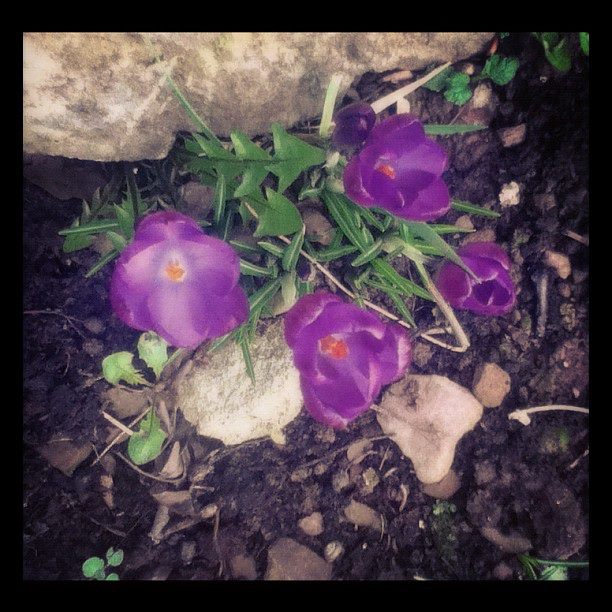
We have inherited a civilization in which the things that really matter in human life exist at the margin of culture.
And it is at this margin, at the hedge, so to speak, that we begin our (re)enchantment. For here, we are at a crossroad, and any choice we make will altar us.
For now, we must ask ourselves: “What matters?”
- How birthing takes place matters.
- How infants are raised matters.
- Having a rich and varied dream life matters.
- All living persons (human or Other) matter.
- Ontological security matters.
- The magic of personal interaction and healthy and passionate sexual expression matter.
Enchantment means sorting this out once and for all. It also means becoming embodied. And the two ultimately amount to the same thing.
But what of cultural change? What of social change? What of the structures that alienate us?
Our cultural history is encoded in our bodies, and as you begin to sort one out, you will sort the other out as well. As Wilhelm Reich rightly expressed, characterology and culture go hand in hand. What appears in the infant body is created by the surrounding culture and in turn created (reproduced) that culture.
The walking wounded are everywhere, and they create our modern culture. Our loss of kinesthetic awareness, and unhappy experiences of Other, make it easy to numb ourselves and continue to a-Void the “no-body-ness.”
We suffer from an addictive weakness for large illusions…Power in our civilization is repeatedly tied to the pursuit of all-inclusive truths and utopias…The unshakeable belief that we are on the trail to truth–and therefore to the solution to our problems–prevent us from identifying this obsession as an ideology.
-John Ralston Saul, The Unconscious Civilization
And that is the paradox. In seeking one solution, one final answer to our pain, we create another ideology. The very thing that arises when we are out of our bodies.
How did I (re)Enchant my life?

I re-membered.
I asked myself what matters and re-affirmed those core values; then I set the textbooks aside, closed my iPad, put on my coat and…
went outside to sit in silence.
Through smell, taste, touch we apprehend each other, ignite each other’s minds; information conveyed by the body’s odours after orgasm, breath, tongue–taste – through these one “knows“ in quite primeval fashion.
Lawrence Durrell
For me, it was a matter of Deciding to change my thinking. I had gotten caught up in macro-issues, which have their place, but they take me out of my body–out of the micro. The ability to change my thinking at Will hasn’t always been easy. It isn’t always easy even now. All those years ago when I began the quest to Know Myself it took time and effort. I had to identify my own masks, learn to be comfortable in my own skin, let go of painful childhood memories, and heal old wounds–and that was just the beginning.
There is a paradox in the dance between macro and micro; between modernity and holism; between the pain of division and the joy of dissolution. As human-persons we move between Wild and Tame; between Self and Other.
So, it is in holding the tension of Paradox, in allowing our Selves to be still and listen–understanding what matters, that we experience Enchantment.
Se hace camino al andar.
(We make the road by walking it.)
Antonio Machado
Previous Post

March 12, 2013
Expanded awareness
Next Post
March 15, 2013 My spiritual map
Browse Our Archives
Select a Category Africa Amazon Ancestors Animism Austin Boots Across Ireland Boston boundary crossing Bretagne Children Cities Community Connection Culture Detroit Druidry Earth Edinburgh Elements England Eskdalemuir Eugene experiential family Fiction Florida folklore France Glasgow Heathenry home how to build it Human Spaces imaginary landscapes Introduction Ireland Journeys Know your wild herbs Land Spirits London Maine memory lane Naturalizing Nature's Metaphors New York Poetry Remembering Ancestors Sacred Spaces San Francisco Scotland Seasons Seattle Tanzania Technology Texas the South Theory Top 10 traditions Travel Uncategorized United States video Water West Virginia Witchcraft Worlding
Select a Month August 2015 June 2015 May 2015 April 2015 March 2015 February 2015 January 2015 December 2014 November 2014 October 2014 September 2014 August 2014 July 2014 June 2014 May 2014 April 2014 March 2014 February 2014 January 2014 December 2013 November 2013 October 2013 September 2013 August 2013 July 2013 June 2013 May 2013 April 2013 March 2013 February 2013 January 2013 December 2012
Follow Us!
TAKE THE
Religious Wisdom Quiz
How many psalms are attributed to Moses?
Select your answer to see how you score.
One Five Three Ten
Related posts from A Sense of Place

On Place, Pagan Values, and Politicizing Paganism

Beltane On The Beach: An Enduring Maine Tradition
Footprints in the Muck, Blind Spots, & Seeing...
TRENDING AT PATHEOS Pagan

I was recently chatting with someone on Instagram. She asked me what...

While there are many people who share their results, the end of...

On July 23, I saw Christopher Nolan's The Odyssey which is Homer’s...

As I write this two big events have just finished up. One...

Restoring the Watershed of Divine Love
Perhaps cooperation is not something we manufacture through legislation, ideology, or moral...

Many UUs don’t pray because of bad experiences in a previous religion,...
view all Pagan blogs
Ad-Free & Subscriber Log-In Subscription Support
- About Us
- 2026 Calendar
- Videos
- Podcasts
- Library of World Religions
- Faith In Media Tracker
- Advertise With Us
- Write for Us
- Privacy Policy
- Terms of Service
- Do Not Sell My Data
- Contact Us
- Radiant Digital
- Manage Newsletter Subscriptions
- Unsubscribe From Notifications
- Sitemap
Copyright 2008-2026, Patheos. All rights reserved.
Subscription Support Ad-Free & Subscriber Log-In
Follow Patheos