
BuddhistCatholicContemplativeEvangelicalGeneral ChristianHinduJewishLatter-day SaintMuslimNew VisionsProgressive Christian
Beliefs
- Buddhist
- Catholic
- Contemplative
- Evangelical
- General Christian
- Hindu
- Jewish
- Latter-day Saint
- More Voices
- Muslim
- New Visions
- Pagan
- Progressive Christian
Topics
- Religion News
- Food and Religion
- Sports and Religion
- Religious Art
- Religious Music and Entertainment
- Religious Events
- History and Religion
- Style and Religion
- Politics and Religion
- Women in Religion
- Recreation Outdoors and Religion
- Business Finance and Religion
- Careers Workplace and Religion
- Education and Religion
- Family Parenting and Religion
- Health Fitness and Religion
- Home and Religion
- Relationships and Religion
- Technology and Religion
- Travel and Religion
Columnists
- Buddhist Columnists
- Business Finance and Religion Columnists
- Careers Workplace and Religion Columnists
- Catholic Columnists
- Contemplative Columnists
- Education and Religion Columnists
- Evangelists Columnists
- Family Parenting and Religion Columnists
- General Christian Columnists
- Health Fitness and Religion Columnists
- Hindu Columnists
- History and Religion Columnists
- Home and Religion Columnists
- Jewish Columnists
- More Voices Columnists
- Latter Day Columnists
- Muslim Columnists
- New Visions Columnists
- Nonreligious Columnists
- Pagan Columnists
- Politics and Religion Columnists
- Progressive Columnists
- Recreation Outdoors and Religion Columnists
- Relationships and Religion Columnists
- Religion News Columnists
- Religious Art Columnists
- Religious Events Columnists
- Religious Music and Entertainment Columnists
- Sports and Religion Columnists
- Style and Religion Columnists
- Technology and Religion Columnists
- Travel and Religion Columnists
- Women in Religion Columnists
Resource Library
- 2026 Calendar
- Library of World Religions
- The 100 Most Holy Places on Earth
- Patheos Answers
- Podcasts
- Videos
- Faith Leaders Database
- Anglican Episcopalian
- Bahai
- Baptist
- Buddhism
- Christianity
- Confucianism
- Eastern Orthodoxy
- Hinduism
- Holiness and Pentecostal
- ISKCON
- Islam
- Judaism
- Lutheran
- Methodist
- The Church of Jesus Christ of Latter-day Saints
- New Age
- Paganism
- Presbytarian and Reformed
- Protestantism
- Religion Behind the Scenes
- Roman Catholic
- Scientology
- Shia Islam
- Sikhism
- Sufism
- Sunni Islam
- Taoism
- Zen
- See all religions
Research Tools
 Ad-Free & Subscriber Log-In Subscription Support
Ad-Free & Subscriber Log-In Subscription Support
Follow Patheos 

- Trending:
- Forgiveness
- |
- Marriage
- |
- Consciousness
- |
- Death Penalty
- |
- Election
- |
- Halloween
 A Sense of Place
- Home
- Pagan
- Mending the tears in a displaced life
Mending the tears in a displaced life
Last updated on: May 8, 2017 at 5:42 pm by Elinor Prędota
Mending the tears in a displaced life 2017-05-08T17:42:14+00:00 Elinor Prędota
Patheos Explore the world's faith through different perspectives on religion and spirituality! Patheos has the views of the prevalent religions and spiritualities of the world.
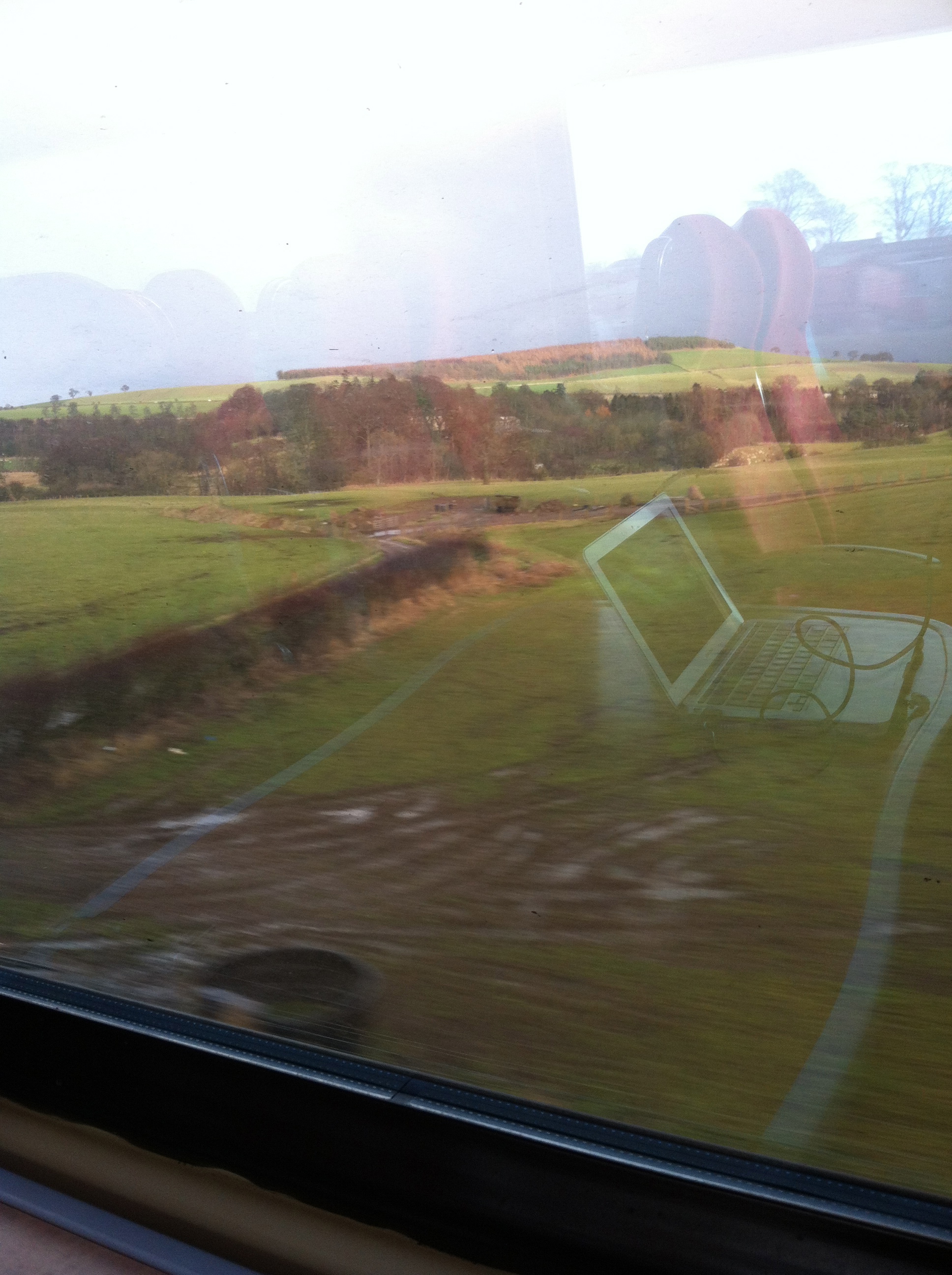
As I write this blog post, I’m sitting on a train. I’ve spent a lot of time travelling, this Imbolctide. I spent the weekend with friends in Edinburgh, celebrating the festival with food and crafts and ritual. Now I’m heading south to Birmingham for my grandmother’s funeral.
I never met her, at least, not that I remember. I and my father and step-mother had talked off and on over the past few years about me visiting her in her nursing home, but in the end, it seemed too odd, to introduce a new element into her ill-remembered world after nearly 100 years of life. Now she’s dead, and I will be ‘meeting’ her tomorrow at her funeral.
As Pagans, the role of family in our sense of our place in the world can be a complex and difficult one.
While many of us seek to honour and connect with our ancestors as part of our spiritual and/or magical practice, those ancestors who are closest to us in time – and, as a friend of mine p0ints out, therefore most likely to be concerned with our personal well-being – are also those most likely to be of a different religion or spirituality than ourselves; they are perhaps even people we had a troubled relationship with while they were alive, or people we know little or nothing about.
Many of us look towards indigenous spiritual traditions, in which spiritual knowledge and tradition is passed down from grandparents to children to grandchildren, with awe and more than a little envy. Some of us even attempt to emulate – or appropriate – those traditions for ourselves. Yet we may find it hard to find or see the wisdom which our own parents or grandparents may hold, because they are part of a religious or philosophical tradition which we find problematic.
As Pagans following more-or-less reconstructed and/or inspired traditions at the beginning of the 21st century, I believe we are a spiritually displaced people. Members of living indigenous traditions not only have continuity of human knowledge over time, but also continuity of relationship with the land on which they live and in which their ancestors bones are buried or over which their ashes are scattered. In contrast, modern (neo)Pagans are lucky to have even one generation of continuity in the passing on of their spiritual and religious tradition, and we do not, for the most part, have the kind of connection to place that tens or hundreds of generations of living in one place or one area gives.
If I recall his argument correctly, in his masterpiece, The Triumph of the Moon, Ronald Hutton proposes that many of the roots of the creation and revival of Pagan movements – not only Wicca, but also Druidry and other traditions – lie in the British Romantic movement, which itself could be argued to have come out of the mass displacement of British people from country to city in the Industrial Revolution, hand in hand with the enclosure of the commons and the Highland clearances. And those in turn led Scots, Irish, English and Welsh people to take their chances in the ‘New World’ of north America and the Antipodes.
Displacement at every turn: from the space of the country to cramped city living, from common land which families had worked for generations, to a ‘New’ world, fought over, killed over and parcelled out.
I am not advocating backward-facing, impotent anger over what was done to our ancestors, nor hair-shirted guilt over what was done by our ancestors. Nor am I advocating focusing on the distant past at the expense of our personal, recent pasts, and our living present. I simply believe we do well to remember and accept our displacement in space, time and relationship, and to do what we can to reconnect ourselves.
I know next to nothing about my father’s mother. There is a tear in the fabric of my relationship with my ancestry of blood and bone, of my relationship with the cosmos. Tomorrow I will begin the task of gathering the knowledge to begin to weave that particular tear whole again.
Previous Post

February 1, 2013
The problem of Imbolc
Next Post

February 6, 2013 Relocalized
Browse Our Archives
Select a Category Africa Amazon Ancestors Animism Austin Boots Across Ireland Boston boundary crossing Bretagne Children Cities Community Connection Culture Detroit Druidry Earth Edinburgh Elements England Eskdalemuir Eugene experiential family Fiction Florida folklore France Glasgow Heathenry home how to build it Human Spaces imaginary landscapes Introduction Ireland Journeys Know your wild herbs Land Spirits London Maine memory lane Naturalizing Nature's Metaphors New York Poetry Remembering Ancestors Sacred Spaces San Francisco Scotland Seasons Seattle Tanzania Technology Texas the South Theory Top 10 traditions Travel Uncategorized United States video Water West Virginia Witchcraft Worlding
Select a Month August 2015 June 2015 May 2015 April 2015 March 2015 February 2015 January 2015 December 2014 November 2014 October 2014 September 2014 August 2014 July 2014 June 2014 May 2014 April 2014 March 2014 February 2014 January 2014 December 2013 November 2013 October 2013 September 2013 August 2013 July 2013 June 2013 May 2013 April 2013 March 2013 February 2013 January 2013 December 2012
Follow Us!
TAKE THE
Religious Wisdom Quiz
What did Aaron make for the people while Moses was on the mountain?
Select your answer to see how you score.
A silver snake An altar A golden calf A wooden idol
Related posts from A Sense of Place

Speaking of Burning Mountains...

The Mountain Of Fire, A Parable

The Most Important Issue Of Our Day

TRENDING AT PATHEOS Pagan

I was recently chatting with someone on Instagram. She asked me what...

While there are many people who share their results, the end of...

On July 23, I saw Christopher Nolan's The Odyssey which is Homer’s...

As I write this two big events have just finished up. One...

Restoring the Watershed of Divine Love
Perhaps cooperation is not something we manufacture through legislation, ideology, or moral...

Many UUs don’t pray because of bad experiences in a previous religion,...
view all Pagan blogs
Ad-Free & Subscriber Log-In Subscription Support
- About Us
- 2026 Calendar
- Videos
- Podcasts
- Library of World Religions
- Faith In Media Tracker
- Advertise With Us
- Write for Us
- Privacy Policy
- Terms of Service
- Do Not Sell My Data
- Contact Us
- Radiant Digital
- Manage Newsletter Subscriptions
- Unsubscribe From Notifications
- Sitemap
Copyright 2008-2026, Patheos. All rights reserved.
Subscription Support Ad-Free & Subscriber Log-In
Follow Patheos