
BuddhistCatholicContemplativeEvangelicalGeneral ChristianHinduJewishLatter-day SaintMuslimNew VisionsProgressive Christian
Beliefs
- Buddhist
- Catholic
- Contemplative
- Evangelical
- General Christian
- Hindu
- Jewish
- Latter-day Saint
- More Voices
- Muslim
- New Visions
- Pagan
- Progressive Christian
Topics
- Religion News
- Food and Religion
- Sports and Religion
- Religious Art
- Religious Music and Entertainment
- Religious Events
- History and Religion
- Style and Religion
- Politics and Religion
- Women in Religion
- Recreation Outdoors and Religion
- Business Finance and Religion
- Careers Workplace and Religion
- Education and Religion
- Family Parenting and Religion
- Health Fitness and Religion
- Home and Religion
- Relationships and Religion
- Technology and Religion
- Travel and Religion
Columnists
- Buddhist Columnists
- Business Finance and Religion Columnists
- Careers Workplace and Religion Columnists
- Catholic Columnists
- Contemplative Columnists
- Education and Religion Columnists
- Evangelists Columnists
- Family Parenting and Religion Columnists
- General Christian Columnists
- Health Fitness and Religion Columnists
- Hindu Columnists
- History and Religion Columnists
- Home and Religion Columnists
- Jewish Columnists
- More Voices Columnists
- Latter Day Columnists
- Muslim Columnists
- New Visions Columnists
- Nonreligious Columnists
- Pagan Columnists
- Politics and Religion Columnists
- Progressive Columnists
- Recreation Outdoors and Religion Columnists
- Relationships and Religion Columnists
- Religion News Columnists
- Religious Art Columnists
- Religious Events Columnists
- Religious Music and Entertainment Columnists
- Sports and Religion Columnists
- Style and Religion Columnists
- Technology and Religion Columnists
- Travel and Religion Columnists
- Women in Religion Columnists
Resource Library
- 2026 Calendar
- Library of World Religions
- The 100 Most Holy Places on Earth
- Patheos Answers
- Podcasts
- Videos
- Faith Leaders Database
- Anglican Episcopalian
- Bahai
- Baptist
- Buddhism
- Christianity
- Confucianism
- Eastern Orthodoxy
- Hinduism
- Holiness and Pentecostal
- ISKCON
- Islam
- Judaism
- Lutheran
- Methodist
- The Church of Jesus Christ of Latter-day Saints
- New Age
- Paganism
- Presbytarian and Reformed
- Protestantism
- Religion Behind the Scenes
- Roman Catholic
- Scientology
- Shia Islam
- Sikhism
- Sufism
- Sunni Islam
- Taoism
- Zen
- See all religions
Research Tools
 Ad-Free & Subscriber Log-In Subscription Support
Ad-Free & Subscriber Log-In Subscription Support
Follow Patheos 

- Trending:
- Forgiveness
- |
- Marriage
- |
- Consciousness
- |
- Death Penalty
- |
- Election
- |
- Halloween
 A Sense of Place
- Home
- Pagan
- The land does not belong to us; we belong to the land.
The land does not belong to us; we belong to the land.
Last updated on: May 8, 2017 at 5:37 pm by Elinor Prędota
The land does not belong to us; we belong to the land. 2017-05-08T17:37:04+00:00 Elinor Prędota
Patheos Explore the world's faith through different perspectives on religion and spirituality! Patheos has the views of the prevalent religions and spiritualities of the world.
Saturday was the first new moon after the winter solstice: in the Roman calendar, it was the first calends of the year, sacred to Janus. It was a religious festival probably celebrated officially in Eskdalemuir about 1900 years ago, at the fort built where the Rae Burn meets the River Esk.
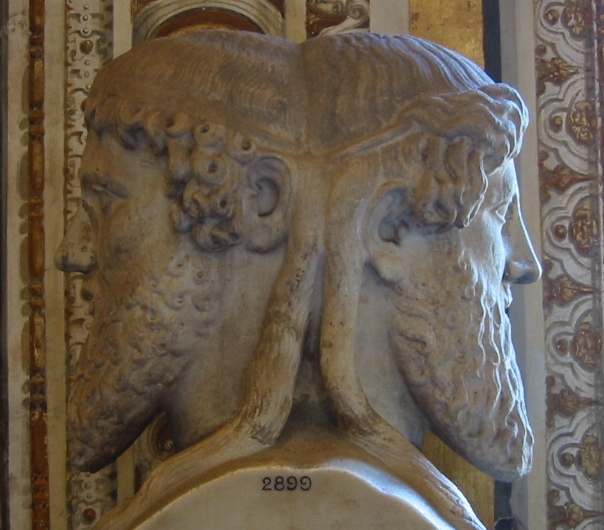
Bust of the God Janus at the Vatican Museum.
Photo by ‘Fubar Obfusco’. Public domain.
If I were a reconstructionist Pagan, living where I do, based on the past of this land, I’d have a host of Pagan religious traditions to reconstruct from: not only those of the Romans, but of the Brythonic tribes and the Picts who lived here before them (as little as we really know about who they were what they did here), and the Romano-Celtic culture which followed them.
Even among ‘the Romans’ there was huge religious diversity, as soldiers were recruited from across the Empire – from Syria to Gaul, and from Egypt to Germania. (Not so far away from here, in northern Cumbria, is a temple to Mithras.) I’m a little fuzzy on the era of history between the Romans and the Normans, but I might even be able to justifiably reconstruct a Nordic path, if the Danes ever got this far west.
It’s the same across this island, encompassing England, Wales and Scotland. We are a land which, in the 12,000 years since the end of the last Ice Age, has seen an ebb and flow of peoples from all around the world – starting long, long before the British Empire was even a gleam in the eye of the East India Company.
There were often human conflicts as new peoples arrived and made their home here, but the land itself took them in, each the same, and made them part of itself. It’s a reality I attempted to capture in a poem I wrote several years ago:
…and my view tilts, a vertigo
of generations, footstep upon footstep,
massing under the empty hills. I feeltheir grief for those who breathe, that
we are not yet married to the land, joined
in union with the loam, communion
with the layers thick of lives
and deaths gone before…
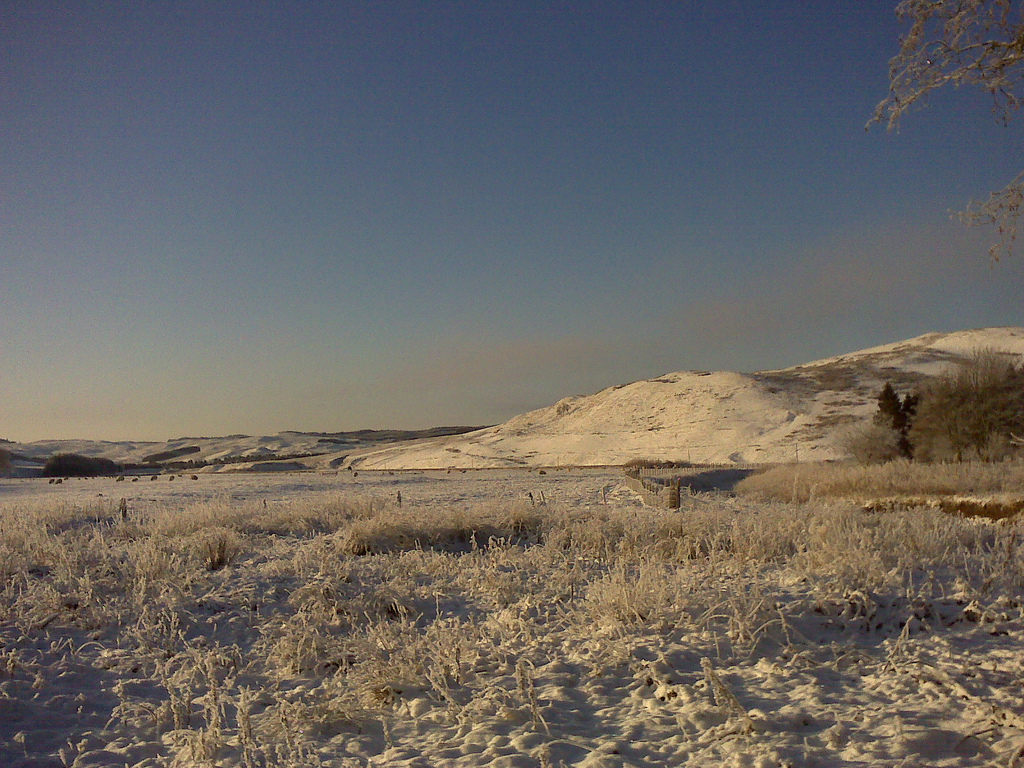
When I connect to this land, this specific land of Eskdale, its soil, its past, and its human ancestors, whose lives shaped it and whose bones still lie, layered somewhere down there, I aim to connect not with a mythic, misty past made up of ‘the Celts’ or other such imaginary peoples, but with the real layers of life of which the land is made: the human lives which belonged to this land before me, in all their amazing diversity.
This is not because I am trying to do things the way they did: I am not, after all, a reconstructionist. If I were to pick one past religious tradition which has been practised here to follow, there are so many that it would be an arbitrary choice. And even were I to select the past tradition that I considered to be most about connection with the land, I do not seek to connect with the land as it was then, but the land at it is now.
And all of those past human lives, along with the lives of tree and rock, horse and dog, buzzard and vole, cattle and barley with which they were interwoven, are still part of this land. They are not only the past, in history and imagination, but also the present, not (only) as spirit presences, but in the very soil and landscape itself.
My footsteps on these hills are mirrored by their footsteps under them.
It feels tender and new, being woven into the pattern of time, and of life within this land: like being broken open and held close, like being stripped bare and given strength, all together, all at once.
Previous Post

January 11, 2013
10 things to look forward to in 2013
Next Post
January 15, 2013 Eaten by the Nothing
Browse Our Archives
Select a Category Africa Amazon Ancestors Animism Austin Boots Across Ireland Boston boundary crossing Bretagne Children Cities Community Connection Culture Detroit Druidry Earth Edinburgh Elements England Eskdalemuir Eugene experiential family Fiction Florida folklore France Glasgow Heathenry home how to build it Human Spaces imaginary landscapes Introduction Ireland Journeys Know your wild herbs Land Spirits London Maine memory lane Naturalizing Nature's Metaphors New York Poetry Remembering Ancestors Sacred Spaces San Francisco Scotland Seasons Seattle Tanzania Technology Texas the South Theory Top 10 traditions Travel Uncategorized United States video Water West Virginia Witchcraft Worlding
Select a Month August 2015 June 2015 May 2015 April 2015 March 2015 February 2015 January 2015 December 2014 November 2014 October 2014 September 2014 August 2014 July 2014 June 2014 May 2014 April 2014 March 2014 February 2014 January 2014 December 2013 November 2013 October 2013 September 2013 August 2013 July 2013 June 2013 May 2013 April 2013 March 2013 February 2013 January 2013 December 2012
Follow Us!
TAKE THE
Religious Wisdom Quiz
Who is known for his wisdom and built a temple?
Select your answer to see how you score.
Moses Paul David Solomon
Related posts from A Sense of Place

Speaking of Burning Mountains...

The Mountain Of Fire, A Parable

The Most Important Issue Of Our Day

TRENDING AT PATHEOS Pagan

When we talk about Greek religion, we often begin with the dodekatheion—the...

I was recently chatting with someone on Instagram. She asked me what...

While there are many people who share their results, the end of...

On July 23, I saw Christopher Nolan's The Odyssey which is Homer’s...

As I write this two big events have just finished up. One...

Restoring the Watershed of Divine Love
Perhaps cooperation is not something we manufacture through legislation, ideology, or moral...
view all Pagan blogs
Ad-Free & Subscriber Log-In Subscription Support
- About Us
- 2026 Calendar
- Videos
- Podcasts
- Library of World Religions
- Faith In Media Tracker
- Advertise With Us
- Write for Us
- Privacy Policy
- Terms of Service
- Do Not Sell My Data
- Contact Us
- Radiant Digital
- Manage Newsletter Subscriptions
- Unsubscribe From Notifications
- Sitemap
Copyright 2008-2026, Patheos. All rights reserved.
Subscription Support Ad-Free & Subscriber Log-In
Follow Patheos