
BuddhistCatholicContemplativeEvangelicalGeneral ChristianHinduJewishLatter-day SaintMuslimNew VisionsProgressive Christian
Beliefs
- Buddhist
- Catholic
- Contemplative
- Evangelical
- General Christian
- Hindu
- Jewish
- Latter-day Saint
- More Voices
- Muslim
- New Visions
- Pagan
- Progressive Christian
Topics
- Religion News
- Food and Religion
- Sports and Religion
- Religious Art
- Religious Music and Entertainment
- Religious Events
- History and Religion
- Style and Religion
- Politics and Religion
- Women in Religion
- Recreation Outdoors and Religion
- Business Finance and Religion
- Careers Workplace and Religion
- Education and Religion
- Family Parenting and Religion
- Health Fitness and Religion
- Home and Religion
- Relationships and Religion
- Technology and Religion
- Travel and Religion
Columnists
- Buddhist Columnists
- Business Finance and Religion Columnists
- Careers Workplace and Religion Columnists
- Catholic Columnists
- Contemplative Columnists
- Education and Religion Columnists
- Evangelists Columnists
- Family Parenting and Religion Columnists
- General Christian Columnists
- Health Fitness and Religion Columnists
- Hindu Columnists
- History and Religion Columnists
- Home and Religion Columnists
- Jewish Columnists
- More Voices Columnists
- Latter Day Columnists
- Muslim Columnists
- New Visions Columnists
- Nonreligious Columnists
- Pagan Columnists
- Politics and Religion Columnists
- Progressive Columnists
- Recreation Outdoors and Religion Columnists
- Relationships and Religion Columnists
- Religion News Columnists
- Religious Art Columnists
- Religious Events Columnists
- Religious Music and Entertainment Columnists
- Sports and Religion Columnists
- Style and Religion Columnists
- Technology and Religion Columnists
- Travel and Religion Columnists
- Women in Religion Columnists
Resource Library
- 2026 Calendar
- Library of World Religions
- The 100 Most Holy Places on Earth
- Patheos Answers
- Podcasts
- Videos
- Faith Leaders Database
- Anglican Episcopalian
- Bahai
- Baptist
- Buddhism
- Christianity
- Confucianism
- Eastern Orthodoxy
- Hinduism
- Holiness and Pentecostal
- ISKCON
- Islam
- Judaism
- Lutheran
- Methodist
- The Church of Jesus Christ of Latter-day Saints
- New Age
- Paganism
- Presbytarian and Reformed
- Protestantism
- Religion Behind the Scenes
- Roman Catholic
- Scientology
- Shia Islam
- Sikhism
- Sufism
- Sunni Islam
- Taoism
- Zen
- See all religions
Research Tools
 Ad-Free & Subscriber Log-In Subscription Support
Ad-Free & Subscriber Log-In Subscription Support
Follow Patheos 

- Trending:
- Forgiveness
- |
- Marriage
- |
- Consciousness
- |
- Death Penalty
- |
- Election
- |
- Halloween
 A Sense of Place
- Home
- Pagan
- A Place Within A Place: reconsidering what is sacred
A Place Within A Place: reconsidering what is sacred
Last updated on: January 17, 2013 at 5:27 pm by Traci
A Place Within A Place: reconsidering what is sacred 2013-01-17T17:27:20+00:00 Traci
Patheos Explore the world's faith through different perspectives on religion and spirituality! Patheos has the views of the prevalent religions and spiritualities of the world.
The bees are still. The wild hive in the back garden is quiet. It’s cold out. A sliver of moon rides high in the sky: french tip manicure nail of beauty. The air is crisp, with hints of sycamore leaf, tobacco smoke, and steel–the numb metallic smell when too cold air is breathed in through the nostrils.
This week, winter weather dances over Austin.
As dusk deepens, I walk to one of the neighborhood coffee shops. A faint glow graces the horizon. Porch lights are on. Colored bulbs drip from eaves, shrub, and tree on those houses where Fairy Lights were selected over their traditional outdoor counterparts. Neighbors are out: walking their dogs; taking an evening stroll while they smoke, talk on their phones, or laugh; some are even, dressed in toasty gear, getting-in their evening run.
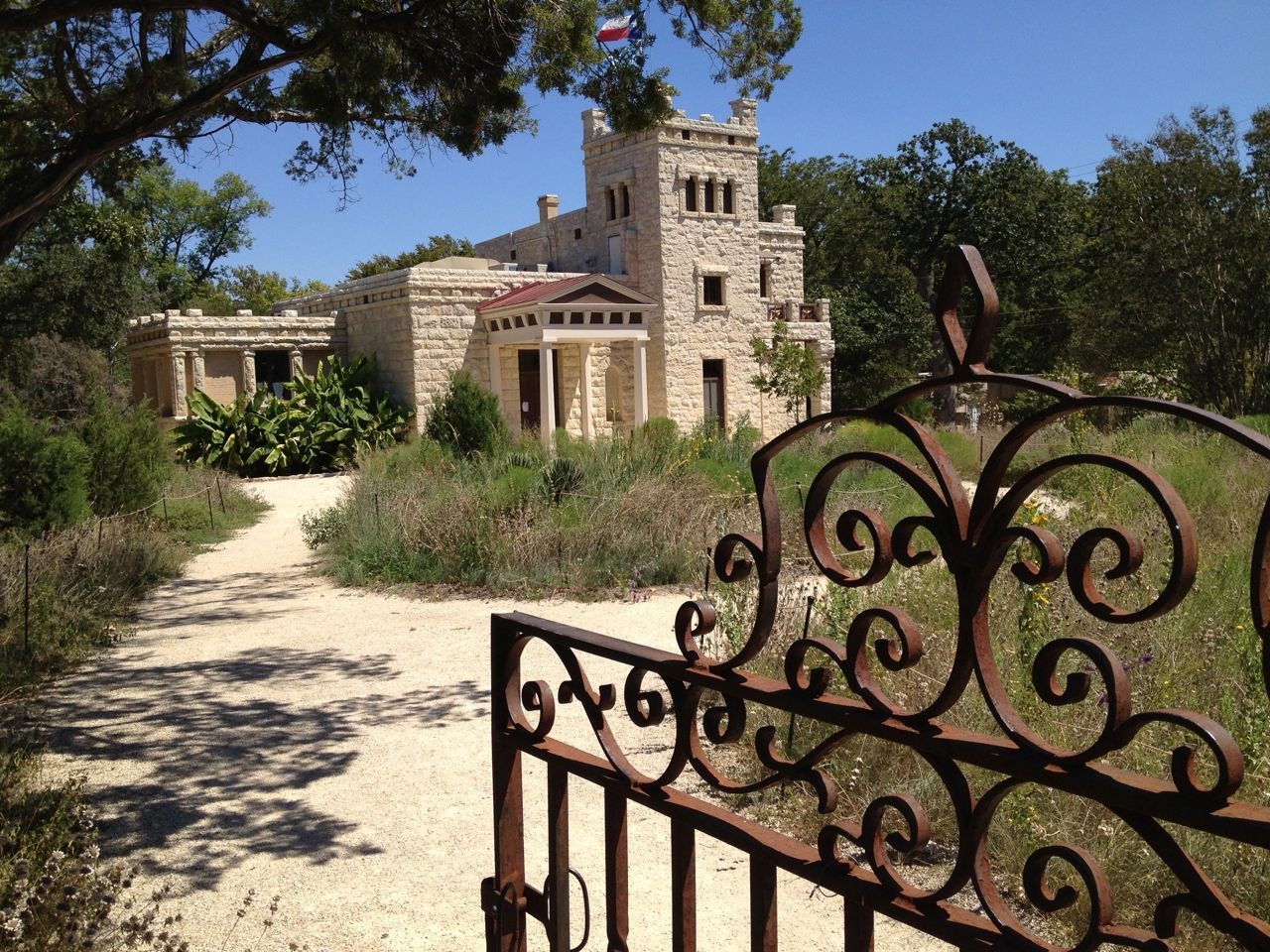
Elisabet Ney Museum : Hyde Park : Austin, Texas
A Place Within A Place
This neighborhood, close to the heart of the city, is a Place within a Place–a concept I first discovered after ditching the automobile and buying a commuter bicycle. On two wheels, my range became smaller. Crossing town was no longer as convenient, and I evaluated every excursion: living became regional.
I was fortunate. My earlier choices (giving up some modern ‘conveniences’ for inner-city living at a reasonable price) made my transition easier. Hyde Park, in Austin, is a historic suburb that the city grew around. There are restaurants, a small grocery, cheese shop, post office, cleaners, pharmacy, bike shop, theatre, wine bar, coffee shops, hair salon: in essence, I rarely needed to leave the neighborhood.
The planner of this “suburb” intended it to be a self-sufficient community, respectfully isolated from the city yet connected via public transport–originally, streetcars connected it to downtown. He achieved his vision, and today Hyde Park is a sought after location because of its convenience, amenities, and community feel. It is home to many progressives, and the vibe reflects the eclectic soul of the city.
Biking within my ‘hood and down Duval to campus (at the University of Texas) where I worked, with the occasional excursion into other regions, taught me that not all neighborhoods feel the same–let alone look the same! Many of these areas, while built within the same ecoregion, had distinctly different vibes about them. [Austin falls into two major ecoregions: the Edwards Plateau (western side of Austin) and the Blackland Prairie (eastern side of Austin).]
…which sounds reasonable, even commonsensical, but until I was out of my car and FEELING the difference, it remained an intellectual construct.
How A Place Within A Place Is Made
If the natural environment is theoretically the same in these areas (same ecoregion), what distinguishes and differentiates these Places (gives them their special vibe)?
People. The human-persons are what make each block, neighborhood, and section (north of the river or south) of the city unique. Going with the “cities are anthills” metaphor isn’t enough. Each micro-locale that human-persons have set apart by naming, possesses a distinct flavor– much the way different subspecies of ants build different types of anthills.
What I experience in Hyde Park is not Blackland Prairie (the ecoregion of the area), per say. Rather, it is an human “anthill” influenced by Texas Blackland Prairie.
Thinking of cities as Concrete Jungles may help us feel connected to, and within, them. When I journey, as I did this weekend, to the Edwards Plateau, I expect to shift my ways of perceiving. I look for different plants, animals, and geology. I don’t expect to hear the wind whisper through tall pines or see wild antelope bound through the grass. Likewise, as pagans seeking place, if we think of human cities, and neighborhoods, as their own distinct ecoregions, with their own plant and animal life; geology; and weather patterns, we can intentionally shift our ways of connecting.
Are Cities Sacred?
We may hesitate to think of cities as distinct ecoregions, even feel uncomfortable doing so, because it requires us to think of them as “natural”–part of nature. This line of thinking leads to an even bigger question, one I am interested in grappling with and consider a fundamental question for pagans; a question that goes back to our philosophy and world-view, and how it connects us to, or distances us from, nature, each other, and the experience of life.
Western civilization was founded on a particular world-view, and set of values. There have been significant shifts, at least in trajectory, over the centuries, but I would wager that many of us disagree, on some level, with the major premise of modern Western consciousness–namely, the sundering of spirit from matter. The technological paradigm we live within permeates every thing, from what we consider knowledge; to how we communicate and categorize information; to how we are taught about the world; how we define aliveness; how our governments are run and our societies structured; and how we look backward in our search for a different religious affiliation.
If we are seeking an embodied spirituality, one where connection to Place–both an amorphic concept and physical location–is possible, we must consider and wrestle with these ideas…even if we sound silly. Especially if we sound silly!
In thinking of Places within Places, and finding deep connection in an urban environment, it is especially important to consider what constitutes aliveness and how we define ‘sacred’ or ‘spirit’. Is there as much room in our definition of Place for modern human-made architecture as there is for other-than-human made architecture? Is the star-dust we put together less sacred than the star-dust the Universe put together?
If we can finally begin to see our own creations as sacred, lessen the Baconian-driven desire to alter ever bit of nature we find, and reconsider the Descartian assumption that human-persons, as thinking beings, are purely mechanical–confronting the world as an object–then perhaps there is hope for us after all! At least, we may finally create healthier, more sustainable, places to live; and find connection, instead of alienation, within our communities and under our own feet.
Previous Post

January 16, 2013
The Challenge of Place
Next Post

January 18, 2013 Land as Lover
Browse Our Archives
Select a Category Africa Amazon Ancestors Animism Austin Boots Across Ireland Boston boundary crossing Bretagne Children Cities Community Connection Culture Detroit Druidry Earth Edinburgh Elements England Eskdalemuir Eugene experiential family Fiction Florida folklore France Glasgow Heathenry home how to build it Human Spaces imaginary landscapes Introduction Ireland Journeys Know your wild herbs Land Spirits London Maine memory lane Naturalizing Nature's Metaphors New York Poetry Remembering Ancestors Sacred Spaces San Francisco Scotland Seasons Seattle Tanzania Technology Texas the South Theory Top 10 traditions Travel Uncategorized United States video Water West Virginia Witchcraft Worlding
Select a Month August 2015 June 2015 May 2015 April 2015 March 2015 February 2015 January 2015 December 2014 November 2014 October 2014 September 2014 August 2014 July 2014 June 2014 May 2014 April 2014 March 2014 February 2014 January 2014 December 2013 November 2013 October 2013 September 2013 August 2013 July 2013 June 2013 May 2013 April 2013 March 2013 February 2013 January 2013 December 2012
Follow Us!
TAKE THE
Religious Wisdom Quiz
Who was Elijah's successor, receiving a double portion of his spirit?
Select your answer to see how you score.
Obadiah Elisha Samuel Micaiah
Related posts from A Sense of Place

Speaking of Burning Mountains...

The Mountain Of Fire, A Parable

The Most Important Issue Of Our Day

TRENDING AT PATHEOS Pagan

I was recently chatting with someone on Instagram. She asked me what...

While there are many people who share their results, the end of...

On July 23, I saw Christopher Nolan's The Odyssey which is Homer’s...

As I write this two big events have just finished up. One...

Restoring the Watershed of Divine Love
Perhaps cooperation is not something we manufacture through legislation, ideology, or moral...

Many UUs don’t pray because of bad experiences in a previous religion,...
view all Pagan blogs
Ad-Free & Subscriber Log-In Subscription Support
- About Us
- 2026 Calendar
- Videos
- Podcasts
- Library of World Religions
- Faith In Media Tracker
- Advertise With Us
- Write for Us
- Privacy Policy
- Terms of Service
- Do Not Sell My Data
- Contact Us
- Radiant Digital
- Manage Newsletter Subscriptions
- Unsubscribe From Notifications
- Sitemap
Copyright 2008-2026, Patheos. All rights reserved.
Subscription Support Ad-Free & Subscriber Log-In
Follow Patheos