
BuddhistCatholicContemplativeEvangelicalGeneral ChristianHinduJewishLatter-day SaintMuslimNew VisionsProgressive Christian
Beliefs
- Buddhist
- Catholic
- Contemplative
- Evangelical
- General Christian
- Hindu
- Jewish
- Latter-day Saint
- More Voices
- Muslim
- New Visions
- Pagan
- Progressive Christian
Topics
- Religion News
- Food and Religion
- Sports and Religion
- Religious Art
- Religious Music and Entertainment
- Religious Events
- History and Religion
- Style and Religion
- Politics and Religion
- Women in Religion
- Recreation Outdoors and Religion
- Business Finance and Religion
- Careers Workplace and Religion
- Education and Religion
- Family Parenting and Religion
- Health Fitness and Religion
- Home and Religion
- Relationships and Religion
- Technology and Religion
- Travel and Religion
Columnists
- Buddhist Columnists
- Business Finance and Religion Columnists
- Careers Workplace and Religion Columnists
- Catholic Columnists
- Contemplative Columnists
- Education and Religion Columnists
- Evangelists Columnists
- Family Parenting and Religion Columnists
- General Christian Columnists
- Health Fitness and Religion Columnists
- Hindu Columnists
- History and Religion Columnists
- Home and Religion Columnists
- Jewish Columnists
- More Voices Columnists
- Latter Day Columnists
- Muslim Columnists
- New Visions Columnists
- Nonreligious Columnists
- Pagan Columnists
- Politics and Religion Columnists
- Progressive Columnists
- Recreation Outdoors and Religion Columnists
- Relationships and Religion Columnists
- Religion News Columnists
- Religious Art Columnists
- Religious Events Columnists
- Religious Music and Entertainment Columnists
- Sports and Religion Columnists
- Style and Religion Columnists
- Technology and Religion Columnists
- Travel and Religion Columnists
- Women in Religion Columnists
Resource Library
- 2026 Calendar
- Library of World Religions
- The 100 Most Holy Places on Earth
- Patheos Answers
- Podcasts
- Videos
- Faith Leaders Database
- Anglican Episcopalian
- Bahai
- Baptist
- Buddhism
- Christianity
- Confucianism
- Eastern Orthodoxy
- Hinduism
- Holiness and Pentecostal
- ISKCON
- Islam
- Judaism
- Lutheran
- Methodist
- The Church of Jesus Christ of Latter-day Saints
- New Age
- Paganism
- Presbytarian and Reformed
- Protestantism
- Religion Behind the Scenes
- Roman Catholic
- Scientology
- Shia Islam
- Sikhism
- Sufism
- Sunni Islam
- Taoism
- Zen
- See all religions
Research Tools
 Ad-Free & Subscriber Log-In Subscription Support
Ad-Free & Subscriber Log-In Subscription Support
Follow Patheos 

- Trending:
- Forgiveness
- |
- Marriage
- |
- Consciousness
- |
- Death Penalty
- |
- Election
- |
- Halloween

- Home
- General Christian
- Religious Art
- Rumi’s Works and Christian Principles: A Comparative Study
Rumi’s Works and Christian Principles: A Comparative Study
Last updated on: April 24, 2023 at 1:00 am by L.J. Kareri
Rumi’s Works and Christian Principles: A Comparative Study 2023-03-30T15:39:01-07:00 L.J. Kareri
Patheos Explore the world's faith through different perspectives on religion and spirituality! Patheos has the views of the prevalent religions and spiritualities of the world.
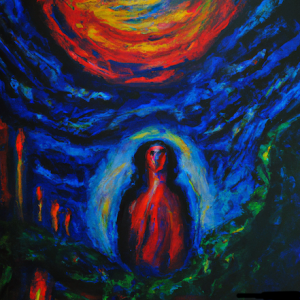
(credit: author)
Delving into the similarities and differences between the spiritual teachings of Rumi and the tenets of Christianity
Introduction
Rumi, a 13th-century Persian poet and Sufi mystic, and Christianity, the world’s largest religion based on the life and teachings of Jesus Christ, might seem worlds apart at first glance.
However, when one delves deeper into their spiritual teachings and principles, some surprising similarities and differences can be found.
Let’s compare and contrast Rumi’s works with Christianity’s principles, highlighting the areas where they converge and diverge.
Similarities Between Rumi’s Works and Christianity’s Principles
- Love as a Central Theme
Both Rumi’s works and Christianity emphasize the importance of love as a central spiritual principle.
Rumi’s poetry often explores the themes of divine love and the love for humanity, reflecting the idea that love is a path to spiritual enlightenment and union with God.
Similarly, Christianity teaches that God is love (1 John 4:8) and emphasizes the importance of loving God and loving one’s neighbor (Matthew 22:36-40).
- The Pursuit of Spiritual Growth
Rumi’s works and Christian teachings both encourage the pursuit of spiritual growth and self-improvement.
In Rumi’s poetry, the spiritual journey is often depicted as a process of self-discovery, self-awareness, and inner transformation, leading to a deeper connection with the divine.
Similarly, Christianity encourages believers to grow in their faith, cultivate virtues such as humility and compassion, and strive for spiritual maturity (Ephesians 4:11-16).
- The Role of the Teacher or Guide
Both Rumi’s works and Christianity recognize the importance of a teacher or guide on the spiritual journey.
In Rumi’s poetry, the spiritual teacher or guide, often symbolized by the figure of Shams Tabrizi, plays a crucial role in guiding the seeker toward enlightenment and union with the divine.
In Christianity, Jesus Christ is seen as the ultimate teacher and guide, leading believers on the path to salvation and eternal life (John 14:6).
Differences Between Rumi’s Works and Christianity’s Principles
- Concept of God
While both Rumi’s works and Christianity center around a belief in a higher power or divine being, their concepts of God differ significantly.
Rumi’s works, rooted in Sufism and Islamic mysticism, reflect the belief in a panentheistic God, where the divine is both transcendent and immanent within creation.
In contrast, Christianity adheres to a monotheistic belief system, where God is considered separate from creation and exists as a trinity: Father, Son, and Holy Spirit.
- The Path to Enlightenment or Salvation
The path to spiritual enlightenment in Rumi’s works often involves the annihilation of the ego (fana) and the realization of one’s divine essence (baqa).
This process is achieved through practices such as meditation, contemplation, and spiritual discipline.
In Christianity, the path to salvation is primarily based on faith in Jesus Christ and his sacrificial death and resurrection (John 3:16), with good works and spiritual disciplines seen as manifestations of that faith (James 2:14-26).
- The Nature of the Afterlife
Rumi’s works, influenced by Sufism and Islamic beliefs, often allude to the afterlife in terms of union with the divine or reunion with the Beloved.
The concept of heaven and hell is less emphasized and more symbolic in Rumi’s poetry, with the focus placed on the individual’s spiritual journey and transformation.
In contrast, Christianity posits a more distinct concept of heaven and hell as literal places of eternal reward or punishment (Matthew 25:46). In Christianity, the afterlife is determined by one’s faith in Jesus Christ and acceptance of his sacrifice for humanity’s sins (John 5:24).
Conclusion
While Rumi’s works and Christianity’s principles share some common themes, such as love, spiritual growth, and the role of a teacher or guide, they also differ in their concepts of God, the path to enlightenment or salvation, and the nature of the afterlife.
These differences reflect the unique spiritual perspectives and cultural contexts from which they emerged.
By examining these similarities and differences, we can gain a deeper appreciation of the rich diversity of spiritual thought and expression in the world, as well as the underlying commonalities that connect us as human beings in our pursuit of meaning, purpose, and transcendence.
General Christian


Recent Comments
Browse Our Archives
Select a Category Uncategorized
Select a Month July 2024 June 2024 May 2024 April 2024 March 2024 December 2023 November 2023 October 2023 September 2023 August 2023 May 2023 April 2023 March 2023
TAKE THE
Religious Wisdom Quiz
How old was Moses when he died?
Select your answer to see how you score.
120 years 100 years 110 years 90 years
Related posts from ARTIFA.io

Patheos Portals
Patheos Portals
Exploring Faith Through A Lens of Abstract Art

Patheos Portals

Patheos Portals
TRENDING AT PATHEOS Religious Art

Revelation's Jesus Isn't the Lamb — He's the...
In the first article in this series of three articles, "One Jesus,...

How Paul Turned a Dead Messiah Into Christianity's...
This is a continuation of our investigation into the New Testament theologies...

Christian Nationalism: Political Tool And Biased Reporting
Christian Nationalism - An Artificial Category to Label MAGA Supporters Could "Christian...

There is no Clear Definition for "Christian Nationalism"
In the first article of this series I presented a definition of...

"Play or Pray? Exploring Faith and Choice in...
September 25, 2017. The date may not stand out to most....

Bizzle Be Better: Critiquing the Christian Rapper Bizzle
Few Christian Hip Hop artists can connect the lyrical poetics of both...
view all Religious Art blogs
What Are Your Thoughts?leave a comment
Ad-Free & Subscriber Log-In Subscription Support
- About Us
- 2026 Calendar
- Videos
- Podcasts
- Library of World Religions
- Faith In Media Tracker
- Advertise With Us
- Write for Us
- Privacy Policy
- Terms of Service
- Do Not Sell My Data
- Contact Us
- Radiant Digital
- Manage Newsletter Subscriptions
- Unsubscribe From Notifications
- Sitemap
Copyright 2008-2026, Patheos. All rights reserved.
Subscription Support Ad-Free & Subscriber Log-In
Follow Patheos