
BuddhistCatholicContemplativeEvangelicalGeneral ChristianHinduJewishLatter-day SaintMuslimNew VisionsProgressive Christian
Beliefs
- Buddhist
- Catholic
- Contemplative
- Evangelical
- General Christian
- Hindu
- Jewish
- Latter-day Saint
- More Voices
- Muslim
- New Visions
- Pagan
- Progressive Christian
Topics
- Religion News
- Food and Religion
- Sports and Religion
- Religious Art
- Religious Music and Entertainment
- Religious Events
- History and Religion
- Style and Religion
- Politics and Religion
- Women in Religion
- Recreation Outdoors and Religion
- Business Finance and Religion
- Careers Workplace and Religion
- Education and Religion
- Family Parenting and Religion
- Health Fitness and Religion
- Home and Religion
- Relationships and Religion
- Technology and Religion
- Travel and Religion
Columnists
- Buddhist Columnists
- Business Finance and Religion Columnists
- Careers Workplace and Religion Columnists
- Catholic Columnists
- Contemplative Columnists
- Education and Religion Columnists
- Evangelists Columnists
- Family Parenting and Religion Columnists
- General Christian Columnists
- Health Fitness and Religion Columnists
- Hindu Columnists
- History and Religion Columnists
- Home and Religion Columnists
- Jewish Columnists
- More Voices Columnists
- Latter Day Columnists
- Muslim Columnists
- New Visions Columnists
- Nonreligious Columnists
- Pagan Columnists
- Politics and Religion Columnists
- Progressive Columnists
- Recreation Outdoors and Religion Columnists
- Relationships and Religion Columnists
- Religion News Columnists
- Religious Art Columnists
- Religious Events Columnists
- Religious Music and Entertainment Columnists
- Sports and Religion Columnists
- Style and Religion Columnists
- Technology and Religion Columnists
- Travel and Religion Columnists
- Women in Religion Columnists
Resource Library
- 2026 Calendar
- Library of World Religions
- The 100 Most Holy Places on Earth
- Patheos Answers
- Podcasts
- Videos
- Faith Leaders Database
- Anglican Episcopalian
- Bahai
- Baptist
- Buddhism
- Christianity
- Confucianism
- Eastern Orthodoxy
- Hinduism
- Holiness and Pentecostal
- ISKCON
- Islam
- Judaism
- Lutheran
- Methodist
- The Church of Jesus Christ of Latter-day Saints
- New Age
- Paganism
- Presbytarian and Reformed
- Protestantism
- Religion Behind the Scenes
- Roman Catholic
- Scientology
- Shia Islam
- Sikhism
- Sufism
- Sunni Islam
- Taoism
- Zen
- See all religions
Research Tools
 Ad-Free & Subscriber Log-In Subscription Support
Ad-Free & Subscriber Log-In Subscription Support
Follow Patheos 

- Trending:
- Forgiveness
- |
- Marriage
- |
- Consciousness
- |
- Death Penalty
- |
- Election
- |
- Halloween
 Approaching Justice
- Home
- About Approaching Justice
- Rawls and Religion
- "Are Mormons Christian?" An Interfaith Round Table
- Home
- Latter-day Saint
- Hugh Nibley is not the Mormon Aquinas: A Clarification
Hugh Nibley is not the Mormon Aquinas: A Clarification
Last updated on: August 23, 2013 at 10:36 am by Chris Henrichsen
Hugh Nibley is not the Mormon Aquinas: A Clarification 2013-08-23T10:36:10-07:00 Chris Henrichsen
Patheos Explore the world's faith through different perspectives on religion and spirituality! Patheos has the views of the prevalent religions and spiritualities of the world.
A few of my good friends have challenged my labeling of Hugh Nibley as the Mormon Aquinas in the title of my post Tuesday about Taylor Petrey.
I must admit, I was going for a provocative title more than I was asserting that Nibley was in some way the Mormon equivalent of Thomas Aquinas.
I have heard Nibley referred to as the Mormon Aquinas. I cannot find a good source to support that. But I am sure that I have read it.
Now, I do not think that Nibley was in any way claiming to be the a Mormon Aquinas. In addition, many things said about Nibley by his fans are the very things that would drive Nibley nuts. I am as guilty of this as anyone I am sure.
I have long struggled to figure out a way of categorizing or identifying what exactly it was that Nibley did. I once asked a classicist if Nibley would be considered a classicist. He bristled at the idea and instead argued that somebody like Nibley would likely be in a comparative literature department today. I have long be intrigued by that recommendation. Early in his career, the political science department of the University of Utah tried to hire Nibley away from Brigham Young University. With both my BA and MA in political science from the University of Utah, I have often wondered how things may have been different had Nibley taken that offer.
One difficulty is classifying Nibley is that he is a product of pre-World War II academia. His doctoral training at the University of California pre-dates many of the divisions which presently exist within Universities in the United States today.
I think that the comparison of Hugh Nibley and Thomas Aquinas is actually quite helpful. While it might not help us identify what Hugh Nibley was…It does help us identify what Nibley was not.
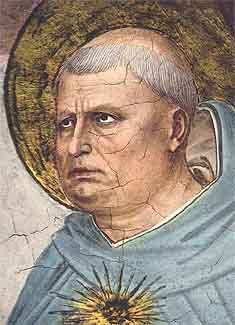
St. Thomas Aquinas
Thomas Aquinas was a 13th century monk. His most major work, Summa Theologica, is a comprehensive, systematic, and massive treatment of Catholic theology. Two things stood out to me about Aquinas when I studied him in graduate school.
First, was his brilliant exegesis of Christian scripture through the lens of Aristotle. This infusion on Aristotle into Christian thinking by Aquinas was partially due to a resurgence of Aristotelian philosophy at the time of Aquinas. While this Aristotelian turn within Christian thought is one I lament (and will address further in coming months), Aquinas introduces a particular rigor to Christian thought which cannot be undervalued. In addition, his influence is not only seen strongly in Catholic thought, one can still see glimmers of it in Christian thought far beyond Catholicism, even in Mormonism.
Second, the philosophical rigor of Aquinas’ work is amazing. It is analytical and thorough. In the Summa theologiae, applies the following method throughout:
1. He raises a theological or philosophical topic.
2. He mentions a specific question about that topic.
3. He raises multiple objections to the Christian position on the question. I find his presentation of those objections to be fair and charitable.
4. He makes his argument for the Christian position.
5. Having stated the objections and his position, Aquinas responds to each of the objections.
Here is a sample from section 70 of the Summa theologiae which deals with fruits of the spirit:
Article 1. Whether the fruits of the Holy Ghost which the Apostle enumerates (Gal. 5) are acts?
Objection 1. It would seem that the fruits of the Holy Ghost, enumerated by the Apostle (Galatians 5:22-23), are not acts. For that which bears fruit, should not itself be called a fruit, else we should go on indefinitely. But our actions bear fruit: for it is written (Wisdom 3:15): “The fruit of good labor is glorious,” and (John 4:36): “He that reapeth receiveth wages, and gathereth fruit unto life everlasting.” Therefore our actions are not to be called fruits.
Objection 2. Further, as Augustine says (De Trin. x, 10), “we enjoy [‘Fruimur’, from which verb we have the Latin ‘fructus’ and the English ‘fruit’] the things we know, when the will rests by rejoicing in them.” But our will should not rest in our actions for their own sake. Therefore our actions should not be called fruits.
Objection 3. Further, among the fruits of the Holy Ghost, the Apostle numbers certain virtues, viz. charity, meekness, faith, and chastity. Now virtues are not actions but habits, as stated above (Question 55, Article 1). Therefore the fruits are not actions.
On the contrary, It is written (Matthew 12:33): “By the fruit the tree is known”; that is to say, man is known by his works, as holy men explain the passage. Therefore human actions are called fruits.
I answer that, The word “fruit” has been transferred from the material to the spiritual world. Now fruit, among material things, is the product of a plant when it comes to perfection, and has a certain sweetness. This fruit has a twofold relation: to the tree that produces it, and to the man who gathers the fruit from the tree. Accordingly, in spiritual matters, we may take the word “fruit” in two ways: first, so that the fruit of man, who is likened to the tree, is that which he produces; secondly, so that man’s fruit is what he gathers. Yet not all that man gathers is fruit, but only that which is last and gives pleasure. For a man has both a field and a tree, and yet these are not called fruits; but that only which is last, to wit, that which man intends to derive from the field and from the tree. In this sense man’s fruit is his last end which is intended for his enjoyment.
If, however, by man’s fruit we understand a product of man, then human actions are called fruits: because operation is the second act of the operator, and gives pleasure if it is suitable to him. If then man’s operation proceeds from man in virtue of his reason, it is said to be the fruit of his reason: but if it proceeds from him in respect of a higher power, which is the power of the Holy Ghost, then man’s operation is said to be the fruit of the Holy Ghost, as of a Divine seed, for it is written (1 John 3:9): “Whosoever is born of God, committeth no sin, for His seed abideth in him.”
Reply to Objection 1. Since fruit is something last and final, nothing hinders one fruit bearing another fruit, even as one end is subordinate to another. And so our works, in so far as they are produced by the Holy Ghost working in us, are fruits: but, in so far as they are referred to the end which is eternal life, they should rather be called flowers: hence it is written (Sirach 24:23): “My flowers are the fruits of honor and riches.”
Reply to Objection 2. When the will is said to delight in a thing for its own sake, this may be understood in two ways. First, so that the expression “for the sake of” be taken to designate the final cause; and in this way, man delights in nothing for its own sake, except the last end. Secondly, so that it expresses the formal cause; and in this way, a man may delight in anything that is delightful by reason of its form. Thus it is clear that a sick man delights in health, for its own sake, as in an end; in a nice medicine, not as in an end, but as in something tasty; and in a nasty medicine, nowise for its own sake, but only for the sake of something else. Accordingly we must say that man must delight in God for His own sake, as being his last end, and in virtuous deeds, not as being his end, but for the sake of their inherent goodness which is delightful to the virtuous. Hence Ambrose says (De Parad. xiii) that virtuous deeds are called fruits because “they refresh those that have them, with a holy and genuine delight.”
Reply to Objection 3. Sometimes the names of the virtues are applied to their actions: thus Augustine writes (Tract. xl in Joan.): “Faith is to believe what thou seest not”; and (De Doctr. Christ. iii, 10): “Charity is the movement of the soul in loving God and our neighbor.” It is thus that the names of the virtues are used in reckoning the fruits.
Nothing that Nibley writes is particularly philosophical and it is definitely not systematic. Now, he did touch on philosophical themes but what he did was not philosophy. To be fair, he never said it was or acted as though it should be treated as such.
Who would be the Mormon Aguinas? To be honest, I cannot think of anyone. The closest thing might be Blake Ostler. Blake has written, and continues to write, systematic philosophical theology.
Clearly there are people writing Mormon theology, including the likes of Taylor Petrey, Terryl Givens, and Adam Miller. Additionally, there are important theological voices from the past. These include Orson Pratt, B.H. Roberts, and John A. Widstoe.
Yet, there is nobody who we would seriously point to as the Mormon Aquinas. This should not be viewed as a slight against any of these thinkers. In many ways, any young and small religious like Mormonism is hard to compare against a tradition as vast the Catholic tradition.
Maybe the lack of a Mormon Aquinas tells us something about Mormonism. What would you say that is?
Please support Approaching Justice. Thanks!
Previous Post

August 22, 2013
I will be Occupying the Microphone! (Updated with Audio)
Next Post

August 23, 2013 Pot? Bah Humbug. I've got the straight edge.
Browse Our Archives
Select a Category Adventures in Parenting Adventures in Sunday School American History American Political Thought American Politics American Religion Blog Admin Books Campaign Chronicles Culture Current Events Faith & Social Justice News Roundup General Conference Green Party Guest Post Guns HuffPost Live Hymns of Social Justice Independence Rock Group Las Vegas Marginalia Mormon Studies Mormonism Music Personal and Family Philosophy Political Philosophy Pop culture Queer Pioneer Week Quote of the Day Rawls Rawls and Religion Religion Social Justice Social Justice Book Club Sports Theology U.S Constitution Uncategorized Unions Video Wyoming
Select a Month February 2014 January 2014 December 2013 November 2013 October 2013 September 2013 August 2013 July 2013 June 2013 May 2013 April 2013 March 2013 February 2013
TAKE THE
Religious Wisdom Quiz
Which book follows Proverbs in the Old Testament?
Select your answer to see how you score.
Song of Solomon Ecclesiastes Psalms Isaiah
Related posts from Approaching Justice


Stephen Colbert's Tribute to Pete Seeger
Idaho State Rep Wants to Turn Back the...

TRENDING AT PATHEOS Latter-day Saint

Did Prayer Cure His Cancer? Or Was It...
At 4 AM one morning, Joshua W. Brown’s wife awoke to a...

8 Ways a Near-Death Experience Rewires the Soul
Does Consciousness Survive Physical Death? After 50 Years of Research, Dr. Raymond...

Holy Longing: What Our Restlessness Is Telling Us
“One can find so many pains when the rain is falling.” -John...

What this is NOT about. This blog is definitely not about...

Who said the Israelites were God’s chosen? That’s right, they did. Who...

The Spirit World Is the Real World: God...
A Monk’s Wisdom on Body and Spirit I sit with Brother Martin...
view all Latter-day Saint blogs
Ad-Free & Subscriber Log-In Subscription Support
- About Us
- 2026 Calendar
- Videos
- Podcasts
- Library of World Religions
- Faith In Media Tracker
- Advertise With Us
- Write for Us
- Privacy Policy
- Terms of Service
- Do Not Sell My Data
- Contact Us
- Radiant Digital
- Manage Newsletter Subscriptions
- Unsubscribe From Notifications
- Sitemap
Copyright 2008-2026, Patheos. All rights reserved.
Subscription Support Ad-Free & Subscriber Log-In
Follow Patheos