
BuddhistCatholicContemplativeEvangelicalGeneral ChristianHinduJewishLatter-day SaintMuslimNew VisionsProgressive Christian
Beliefs
- Buddhist
- Catholic
- Contemplative
- Evangelical
- General Christian
- Hindu
- Jewish
- Latter-day Saint
- More Voices
- Muslim
- New Visions
- Pagan
- Progressive Christian
Topics
- Religion News
- Food and Religion
- Sports and Religion
- Religious Art
- Religious Music and Entertainment
- Religious Events
- History and Religion
- Style and Religion
- Politics and Religion
- Women in Religion
- Recreation Outdoors and Religion
- Business Finance and Religion
- Careers Workplace and Religion
- Education and Religion
- Family Parenting and Religion
- Health Fitness and Religion
- Home and Religion
- Relationships and Religion
- Technology and Religion
- Travel and Religion
Columnists
- Buddhist Columnists
- Business Finance and Religion Columnists
- Careers Workplace and Religion Columnists
- Catholic Columnists
- Contemplative Columnists
- Education and Religion Columnists
- Evangelists Columnists
- Family Parenting and Religion Columnists
- General Christian Columnists
- Health Fitness and Religion Columnists
- Hindu Columnists
- History and Religion Columnists
- Home and Religion Columnists
- Jewish Columnists
- More Voices Columnists
- Latter Day Columnists
- Muslim Columnists
- New Visions Columnists
- Nonreligious Columnists
- Pagan Columnists
- Politics and Religion Columnists
- Progressive Columnists
- Recreation Outdoors and Religion Columnists
- Relationships and Religion Columnists
- Religion News Columnists
- Religious Art Columnists
- Religious Events Columnists
- Religious Music and Entertainment Columnists
- Sports and Religion Columnists
- Style and Religion Columnists
- Technology and Religion Columnists
- Travel and Religion Columnists
- Women in Religion Columnists
Resource Library
- 2026 Calendar
- Library of World Religions
- The 100 Most Holy Places on Earth
- Patheos Answers
- Podcasts
- Videos
- Faith Leaders Database
- Anglican Episcopalian
- Bahai
- Baptist
- Buddhism
- Christianity
- Confucianism
- Eastern Orthodoxy
- Hinduism
- Holiness and Pentecostal
- ISKCON
- Islam
- Judaism
- Lutheran
- Methodist
- The Church of Jesus Christ of Latter-day Saints
- New Age
- Paganism
- Presbytarian and Reformed
- Protestantism
- Religion Behind the Scenes
- Roman Catholic
- Scientology
- Shia Islam
- Sikhism
- Sufism
- Sunni Islam
- Taoism
- Zen
- See all religions
Research Tools
 Ad-Free & Subscriber Log-In Subscription Support
Ad-Free & Subscriber Log-In Subscription Support
Follow Patheos 

- Trending:
- Forgiveness
- |
- Marriage
- |
- Consciousness
- |
- Death Penalty
- |
- Election
- |
- Halloween
 Approaching Justice
- Home
- About Approaching Justice
- Rawls and Religion
- "Are Mormons Christian?" An Interfaith Round Table
- Home
- Latter-day Saint
- The Nature of Religious Symbols
The Nature of Religious Symbols
Last updated on: July 28, 2013 at 7:56 am by dwightwelch
The Nature of Religious Symbols 2013-07-28T07:56:11-07:00 dwightwelch
Patheos Explore the world's faith through different perspectives on religion and spirituality! Patheos has the views of the prevalent religions and spiritualities of the world.
 Recently Karen Armstrong and Richard Dawkins were invited to write about the status of God after Darwin. What struck me was the way both wrote about religious symbols. For Armstrong “what we call God is merely a symbol that points beyond itself to an indescribable transcendence.” For Dawkins, symbolic language obscures the central question,which is whether God exists as an “objective reality, just as surely as the Rock of Gibraltar exists.”
While I’m sympathetic to Armstrong’s case for God and not for Dawkins rejection of it, in these two pieces, I’m left unsatisfied by both accounts. So I want to examine why in this post. I think it hinges on the nature of religious symbols as they are being described and the way existence and reality are collapsed into one another.
If I was Karen Armstrong I would not use the word “merely” to describe a symbol. If symbols really do point to the transcendent, they should play a far more powerful role than one would initially suppose. I think that’s not communicated because one is left with the impression that symbolic language is only reserved for that which is beyond any thing we can know or describe in this life and world. Thus our relation to the transcendent is a mere linguistic grasping with little or no controls outside of how it cashes out in the moral and aesthetic experience of individuals.
To a scientist, like Dawkins, this could only sound as if no-thing was being described because no matter how stunning the universe is, a scientist can still develop language to get some handle on it. Symbols, whether of the “sky hooks” and “cranes” of evolution to the speculative language of theoretic physics still is designed to connect up with what we know and can predict. Symbols, in this case, reveal something of the workings of our world.
I think religious symbols can do the same work. In the words of William Ernest Hocking: We wish to bring our religion at least into the same universe with our science and have them speak with the same voice when they verge upon the same great questions of human destiny. And surely as any one person rides one consecutive route of experience through time, so surely must all truth that belongs to one person come to the same court and enter into the same total system of his world.
This is not to suggest that the descriptions or methodologies would be the same in religion and science. But they would disclose the same world in differing ways that cohere. What is the “truth” behind my grandmother’s couch? There is the molecules which make up the couch. There is the function the couch performs, that of sitting. There’s the history of the couch and the accompanying memories that come from this. These would be, what Whitehead calls, descriptive routes. Routes that don’t clash but they tell different stories of the same event, all which add to the account, all which would prove more or less useful depending on the questions and ends being pursued.
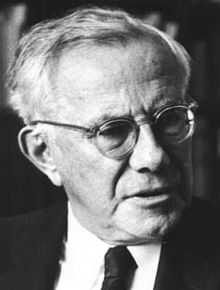
For religious symbols to do this work, I would go to Paul Tillich’s book Dynamics of Faith. Symbols, for Tillich, point to something. That is, they have a referent. It is not a one to one correspondence though because there is always more than the symbol can grasp. For instance, the name Chris Henrichsen. That really refers to Chris and yet the name only begins to scratch the surface of the fullness that is Chris.
I can learn any number of things about an individual, which while true, cannot plumb the depths of the other person. But they are a start and with it further inquiry can be opened up. In that, symbolic language can help guide experience by giving us a road map, that while faithful, does not capture the full experience that could be had. That’s transcendence, more than what we know, and yet disclosive of the world.
Paul Tillich writes that symbols “open up levels of reality which otherwise are closed for us.” In his work Shaking the Foundations, Tillich describes this in terms of “depth”. That is, we are not reaching for some higher realm but rather we are trying to broaden our appreciative sense of our current world, which means getting beyond the surface or the utilitarian purposes served by others to experience something of the depths of others, the depths of our world.
Physiologically we are so constituted as to remove most of the possible experiences we could have. Some of this is due to what information our bodies are able to receive. But some of what we receive is also sifted out by the brain to concentrate on what is relevant and important to us. Otherwise we would simply be overwhelmed. But I think the delight in children and animals is that, simply because they have other ends, they notice things most of us are too busy to notice; an ant hill, a bug, the leaves rustling in a certain way.
We have moments which reminds us that there is far more to the world than meets the eye. Not another world, but this one. Not one which contradicts science, but one which adds to the richness of our accounts. I think religious language, when done well, can do this. John Calvin compares such language to eye glasses which allows us to see the world more clearly. This is why Karen Armstrong is interested in the techniques which allows us to see the world anew.
Some of these are practices, like communion, meditation, and so forth. Some of the techniques revolve around the symbolic language we use. When Gerald Manley Hopkins writes that “the world is charged with the grandeur of God.” we get a sense that God language is an expression of gratitude, attentiveness, reverence for our world, not an escape from it. God, in this case, is evaluative language and it gives us clues on how to respond to our world.
God doesn’t have to be a “thing”, something which exists like the Rock of Gibraltar. In fact, God couldn’t be that anymore than the evolution’s “cranes” and “sky hooks”. They don’t exist either as “things”, they are road maps to get a handle on the world and to do that well they have to describe any number of activities, events, processes that produce a certain end. But in all these cases, whether talking about God or evolution’s sky hooks, we are in fact describing reality.
So the choice is not fantasy or existence, it’s fantasy versus reality. I would argue that God, like most symbols that encompass much of our world, gives us a way to get a handle on that world and do something with it. As does the incarnation, the trinity, and salvation. They provide clues on what kind of world we live in and how we can respond to it appropriately. And they can be evaluated, on how well they do this.
In this, a case for pluralism could be developed because certain traditions and symbols and practices, given their histories, are more attentive to certain features of our world than others. Now, I believe belonging to a specific tradition and community and plumbing its depths will bring far more rewards than cherry picking ideas out of context. And yet I think the need to engage other traditions thoughtfully, including secular ones, is important too, so as to reduce our own blind spots.
Previous Post

July 26, 2013
Pope Francis? Or should we just call him Pope Social Justice?!?!
Next Post

July 28, 2013 Another Liberal at Church!! (Adventures in Sunday School)
Browse Our Archives
Select a Category Adventures in Parenting Adventures in Sunday School American History American Political Thought American Politics American Religion Blog Admin Books Campaign Chronicles Culture Current Events Faith & Social Justice News Roundup General Conference Green Party Guest Post Guns HuffPost Live Hymns of Social Justice Independence Rock Group Las Vegas Marginalia Mormon Studies Mormonism Music Personal and Family Philosophy Political Philosophy Pop culture Queer Pioneer Week Quote of the Day Rawls Rawls and Religion Religion Social Justice Social Justice Book Club Sports Theology U.S Constitution Uncategorized Unions Video Wyoming
Select a Month February 2014 January 2014 December 2013 November 2013 October 2013 September 2013 August 2013 July 2013 June 2013 May 2013 April 2013 March 2013 February 2013
TAKE THE
Religious Wisdom Quiz
How many days was Jesus tempted in the wilderness?
Select your answer to see how you score.
30 days 50 days 60 days 40 days
Related posts from Approaching Justice

Stephen Colbert's Tribute to Pete Seeger
Idaho State Rep Wants to Turn Back the...

TRENDING AT PATHEOS Latter-day Saint

Did Prayer Cure His Cancer? Or Was It...
At 4 AM one morning, Joshua W. Brown’s wife awoke to a...

8 Ways a Near-Death Experience Rewires the Soul
Does Consciousness Survive Physical Death? After 50 Years of Research, Dr. Raymond...

Holy Longing: What Our Restlessness Is Telling Us
“One can find so many pains when the rain is falling.” -John...

What this is NOT about. This blog is definitely not about...

Who said the Israelites were God’s chosen? That’s right, they did. Who...

The Spirit World Is the Real World: God...
A Monk’s Wisdom on Body and Spirit I sit with Brother Martin...
view all Latter-day Saint blogs
Ad-Free & Subscriber Log-In Subscription Support
- About Us
- 2026 Calendar
- Videos
- Podcasts
- Library of World Religions
- Faith In Media Tracker
- Advertise With Us
- Write for Us
- Privacy Policy
- Terms of Service
- Do Not Sell My Data
- Contact Us
- Radiant Digital
- Manage Newsletter Subscriptions
- Unsubscribe From Notifications
- Sitemap
Copyright 2008-2026, Patheos. All rights reserved.
Subscription Support Ad-Free & Subscriber Log-In
Follow Patheos