
BuddhistCatholicContemplativeEvangelicalGeneral ChristianHinduJewishLatter-day SaintMuslimNew VisionsProgressive Christian
Beliefs
- Buddhist
- Catholic
- Contemplative
- Evangelical
- General Christian
- Hindu
- Jewish
- Latter-day Saint
- More Voices
- Muslim
- New Visions
- Pagan
- Progressive Christian
Topics
- Religion News
- Food and Religion
- Sports and Religion
- Religious Art
- Religious Music and Entertainment
- Religious Events
- History and Religion
- Style and Religion
- Politics and Religion
- Women in Religion
- Recreation Outdoors and Religion
- Business Finance and Religion
- Careers Workplace and Religion
- Education and Religion
- Family Parenting and Religion
- Health Fitness and Religion
- Home and Religion
- Relationships and Religion
- Technology and Religion
- Travel and Religion
Columnists
- Buddhist Columnists
- Business Finance and Religion Columnists
- Careers Workplace and Religion Columnists
- Catholic Columnists
- Contemplative Columnists
- Education and Religion Columnists
- Evangelists Columnists
- Family Parenting and Religion Columnists
- General Christian Columnists
- Health Fitness and Religion Columnists
- Hindu Columnists
- History and Religion Columnists
- Home and Religion Columnists
- Jewish Columnists
- More Voices Columnists
- Latter Day Columnists
- Muslim Columnists
- New Visions Columnists
- Nonreligious Columnists
- Pagan Columnists
- Politics and Religion Columnists
- Progressive Columnists
- Recreation Outdoors and Religion Columnists
- Relationships and Religion Columnists
- Religion News Columnists
- Religious Art Columnists
- Religious Events Columnists
- Religious Music and Entertainment Columnists
- Sports and Religion Columnists
- Style and Religion Columnists
- Technology and Religion Columnists
- Travel and Religion Columnists
- Women in Religion Columnists
Resource Library
- 2026 Calendar
- Library of World Religions
- The 100 Most Holy Places on Earth
- Patheos Answers
- Podcasts
- Videos
- Faith Leaders Database
- Anglican Episcopalian
- Bahai
- Baptist
- Buddhism
- Christianity
- Confucianism
- Eastern Orthodoxy
- Hinduism
- Holiness and Pentecostal
- ISKCON
- Islam
- Judaism
- Lutheran
- Methodist
- The Church of Jesus Christ of Latter-day Saints
- New Age
- Paganism
- Presbytarian and Reformed
- Protestantism
- Religion Behind the Scenes
- Roman Catholic
- Scientology
- Shia Islam
- Sikhism
- Sufism
- Sunni Islam
- Taoism
- Zen
- See all religions
Research Tools
 Ad-Free & Subscriber Log-In Subscription Support
Ad-Free & Subscriber Log-In Subscription Support
Follow Patheos 

- Trending:
- Forgiveness
- |
- Marriage
- |
- Consciousness
- |
- Death Penalty
- |
- Election
- |
- Halloween
 Approaching Justice
- Home
- About Approaching Justice
- Rawls and Religion
- "Are Mormons Christian?" An Interfaith Round Table
- Home
- Latter-day Saint
- “…they depict God as a monster moved solely by God’s own power and glory….” #rawlsreligion
“…they depict God as a monster moved solely by God’s own power and glory….” #rawlsreligion
Last updated on: June 11, 2013 at 3:20 pm by Chris Henrichsen
“…they depict God as a monster moved solely by God’s own power and glory….” #rawlsreligion 2013-06-11T15:20:42-07:00 Chris Henrichsen
Patheos Explore the world's faith through different perspectives on religion and spirituality! Patheos has the views of the prevalent religions and spiritualities of the world.
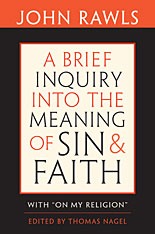
Following his experiences in World War II, John Rawls more and more moved away from Christianity. He explains that his difficulties were "always moral ones, since my fideism remained firm against all worries about the existence of God." (Rawls 2010, 263)
Fideism is the view that there cannot be an evidence-based or scientific proof of the existence of God. Since, Rawls’ view of the existence of God was not in question, his departure from Christianity was not an exodus towards Atheism, but instead a move away from Christianity on what he viewed as moral
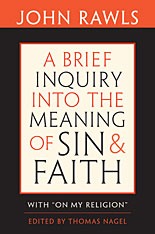
grounds.
Rawls expression of fideism and his rejection of Atheism (to be addressed later), are interesting to me. While Rawls rejects certain tenants of Christianity, he does not reject religion or the belief in deity as irrational or somehow ridiculous. This is something that sets Rawls, and other political liberals like Martha Nussbaum, apart from many secular thinkers. While they have some disagreements with certain religious ideas, they do not have a hostile or cynical view of religion in general.
Some of the Christian doctrines which Rawls came to view as "…morally wrong, in some cases even repugnant…" included the "doctrines of original sin, of heaven and hell, of salvation by true belief and based on priestly authority." (263-264) He also rejected the strongly the idea of predestination as "terrifying once one thought it through and realized what it meant." (264)
"These doctrines all became impossible for me to take seriously, not in the sense that the evidence for them was weak or doubtful. Rather, they depict God as a monster moved solely by God’s own power and glory," wrote Rawls. This in many ways resonates with me, as I expressed concerns, in my earlier post on faith, about a conception of God which portrays God as a very egotistical being.
Rawls also had misgivings about the history of Christian persecution of heretics and dissenters. He paints this as something new in history as "Greek and Roman religion was civic religion, and it served to instill loyalty to the polis or the Emporer especially in time of war and crisis. They insisted on this, but beyond that civil society could be largely free and many different religions flourished in the polis and Empire." (264) Rawls saw a connection between the persecution of dissenters and heretics and the idea that eternal salvation required true belief (264-265).
"To the extent that Christianity is taken seriously, I came to think it could have deleterious effects on one’s character," stated Rawls."Christianity is a solitary religion: each is saved or damned individually, and we naturally focus on our own salvation to the point where nothing else might seem to matter." (265)
While we are going to be concerned about ourselves to some degree, Rawls allows, "our own individual soul and its salvation are hardly important for the larger picture of civilized life…"
The example that Rawls used in addressing the trouble of individual salvation is whether one would assassinate Hitler. Such hypotheticals are hallmarks of moral theory. Rawls asks "…how important is it that I be saved compared to risking my life to assassinate Hitler, had I the chance? It is not important at all." (265 Rawls notes that the German resistance was often hampered about concerns about the ethics of assassination, killing, and specifically the killing of a head of state. For Rawls, all of these concern should have "…were so far outweighed by the enormous evil Hitler perpetuated…"
The concerns which Rawls has in this could easily apply to any number of secular moral perspectives, whether it be deontology, Utilitarianism, or virtue ethics. Yet, what sets them apart from Christianity is the connection with eternal salvation. In moral theory, we are analyzing whether an action is moral, or consistent with the good life, not whether such an action will condemn us to hell. Yet, these are things that religious ethics and moral theology have dealt with as well.
It is worth noting that in his essay "On Religion," Rawls is not making a philosophical argument against Christian theology. This is a personal narrative which explains his personal trajectory and it is intended for friends and family. As a result, this essay is missing further explanation in part that would be philosophically useful. However, given that it was posthumously published, we are left with the text as it is.
In my next post in this project, I will look at how Rawls draws on Jean Brodin at the conclusion "On My Religion" to rather briefly explain what his view of religions later in life was and why he rejects atheism.
Follow this link to see the posts in this series on Rawls and religion.
Follow this link for Approaching Justice posts about John Rawls.
Previous Post

June 10, 2013
The Good Samaritan as The Other
Next Post
June 11, 2013 Charity vs. Justice part 2
Browse Our Archives
Select a Category Adventures in Parenting Adventures in Sunday School American History American Political Thought American Politics American Religion Blog Admin Books Campaign Chronicles Culture Current Events Faith & Social Justice News Roundup General Conference Green Party Guest Post Guns HuffPost Live Hymns of Social Justice Independence Rock Group Las Vegas Marginalia Mormon Studies Mormonism Music Personal and Family Philosophy Political Philosophy Pop culture Queer Pioneer Week Quote of the Day Rawls Rawls and Religion Religion Social Justice Social Justice Book Club Sports Theology U.S Constitution Uncategorized Unions Video Wyoming
Select a Month February 2014 January 2014 December 2013 November 2013 October 2013 September 2013 August 2013 July 2013 June 2013 May 2013 April 2013 March 2013 February 2013
TAKE THE
Religious Wisdom Quiz
The righteous person will live by what quality or characteristic?
Select your answer to see how you score.
Obedience Works Faith Holiness
Related posts from Approaching Justice

"I've Been to the Mountaintop" A Little #MLK...

Dieter F. Uchtdorf: 2013 Mormon of the Year
TRENDING AT PATHEOS Latter-day Saint

Did Prayer Cure His Cancer? Or Was It...
At 4 AM one morning, Joshua W. Brown’s wife awoke to a...

8 Ways a Near-Death Experience Rewires the Soul
Does Consciousness Survive Physical Death? After 50 Years of Research, Dr. Raymond...

Holy Longing: What Our Restlessness Is Telling Us
“One can find so many pains when the rain is falling.” -John...

What this is NOT about. This blog is definitely not about...

Who said the Israelites were God’s chosen? That’s right, they did. Who...

The Spirit World Is the Real World: God...
A Monk’s Wisdom on Body and Spirit I sit with Brother Martin...
view all Latter-day Saint blogs
Ad-Free & Subscriber Log-In Subscription Support
- About Us
- 2026 Calendar
- Videos
- Podcasts
- Library of World Religions
- Faith In Media Tracker
- Advertise With Us
- Write for Us
- Privacy Policy
- Terms of Service
- Do Not Sell My Data
- Contact Us
- Radiant Digital
- Manage Newsletter Subscriptions
- Unsubscribe From Notifications
- Sitemap
Copyright 2008-2026, Patheos. All rights reserved.
Subscription Support Ad-Free & Subscriber Log-In
Follow Patheos