
BuddhistCatholicContemplativeEvangelicalGeneral ChristianHinduJewishLatter-day SaintMuslimNew VisionsProgressive Christian
Beliefs
- Buddhist
- Catholic
- Contemplative
- Evangelical
- General Christian
- Hindu
- Jewish
- Latter-day Saint
- More Voices
- Muslim
- New Visions
- Pagan
- Progressive Christian
Topics
- Religion News
- Food and Religion
- Sports and Religion
- Religious Art
- Religious Music and Entertainment
- Religious Events
- History and Religion
- Style and Religion
- Politics and Religion
- Women in Religion
- Recreation Outdoors and Religion
- Business Finance and Religion
- Careers Workplace and Religion
- Education and Religion
- Family Parenting and Religion
- Health Fitness and Religion
- Home and Religion
- Relationships and Religion
- Technology and Religion
- Travel and Religion
Columnists
- Buddhist Columnists
- Business Finance and Religion Columnists
- Careers Workplace and Religion Columnists
- Catholic Columnists
- Contemplative Columnists
- Education and Religion Columnists
- Evangelists Columnists
- Family Parenting and Religion Columnists
- General Christian Columnists
- Health Fitness and Religion Columnists
- Hindu Columnists
- History and Religion Columnists
- Home and Religion Columnists
- Jewish Columnists
- More Voices Columnists
- Latter Day Columnists
- Muslim Columnists
- New Visions Columnists
- Nonreligious Columnists
- Pagan Columnists
- Politics and Religion Columnists
- Progressive Columnists
- Recreation Outdoors and Religion Columnists
- Relationships and Religion Columnists
- Religion News Columnists
- Religious Art Columnists
- Religious Events Columnists
- Religious Music and Entertainment Columnists
- Sports and Religion Columnists
- Style and Religion Columnists
- Technology and Religion Columnists
- Travel and Religion Columnists
- Women in Religion Columnists
Resource Library
- 2026 Calendar
- Library of World Religions
- The 100 Most Holy Places on Earth
- Patheos Answers
- Podcasts
- Videos
- Faith Leaders Database
- Anglican Episcopalian
- Bahai
- Baptist
- Buddhism
- Christianity
- Confucianism
- Eastern Orthodoxy
- Hinduism
- Holiness and Pentecostal
- ISKCON
- Islam
- Judaism
- Lutheran
- Methodist
- The Church of Jesus Christ of Latter-day Saints
- New Age
- Paganism
- Presbytarian and Reformed
- Protestantism
- Religion Behind the Scenes
- Roman Catholic
- Scientology
- Shia Islam
- Sikhism
- Sufism
- Sunni Islam
- Taoism
- Zen
- See all religions
Research Tools
 Ad-Free & Subscriber Log-In Subscription Support
Ad-Free & Subscriber Log-In Subscription Support
Follow Patheos 

- Trending:
- Forgiveness
- |
- Marriage
- |
- Consciousness
- |
- Death Penalty
- |
- Election
- |
- Halloween
 Approaching Justice
- Home
- About Approaching Justice
- Rawls and Religion
- "Are Mormons Christian?" An Interfaith Round Table
- Home
- Latter-day Saint
- Ben Bernanke is a Rawlsian!
Ben Bernanke is a Rawlsian!
Last updated on: June 3, 2013 at 1:51 pm by Chris Henrichsen
Ben Bernanke is a Rawlsian! 2013-06-03T13:51:34-07:00 Chris Henrichsen
Patheos Explore the world's faith through different perspectives on religion and spirituality! Patheos has the views of the prevalent religions and spiritualities of the world.
Well, maybe.
In a speech at the Baccalaureate Ceremony at Princeton University on Sunday, Federal Reserve Chair Ben Bernanke was channelling some heavy luck egalitarianism along with some New Testament.
He gives ten suggestions to the graduates. In particularly, number three stands out as particularly Rawlsian:
The concept of success leads me to consider so-called meritocracies and their implications. We have been taught that meritocratic institutions and societies are fair. Putting aside the reality that no system, including our own, is really entirely meritocratic, meritocracies may be fairer and more efficient than some alternatives. But
Federal Reserve Chair Ben Bernanke
fair in an absolute sense? Think about it. A meritocracy is a system in which the people who are the luckiest in their health and genetic endowment; luckiest in terms of family support, encouragement, and, probably, income; luckiest in their educational and career opportunities; and luckiest in so many other ways difficult to enumerate–these are the folks who reap the largest rewards. The only way for even a putative meritocracy to hope to pass ethical muster, to be considered fair, is if those who are the luckiest in all of those respects also have the greatest responsibility to work hard, to contribute to the betterment of the world, and to share their luck with others. As the Gospel of Luke says (and I am sure my rabbi will forgive me for quoting the New Testament in a good cause): “From everyone to whom much has been given, much will be required; and from the one to whom much has been entrusted, even more will be demanded” (Luke 12:48, New Revised Standard Version Bible). Kind of grading on the curve, you might say.
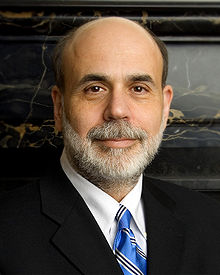
The ideas of the dessert and merit play an important role in the egalitarian philosophy of Rawls. Specifically, the possession of talents does not amount to exclusively deserving the fruits of those talents. For Rawls, those who land on top have likely worked hard…but the reason they have landed on top has as much to do with where they were born, who their parents were, and the relative stability and prosperity of the community or nation-state.
Paul Krugman in the NY Times painted the Fed Chairs speech in the following way:
OK, this is, whether BB realizes it or not (he probably does) basically a Rawlsian view of the world, in which you think of life as a kind of lottery in which you draw a ticket that includes things like your genetic endowment as well as the wealth of your parents. And what you’re supposed to do, ethically, is support the economic and social system you would choose if you had to enter that lottery not knowing what ticket you were going to draw — if you were making political choices behind the “veil of ignorance”.
Former Fed Chair Alan Greenspan, was known for his association with Ayn Rand, not John Rawls. However, even Greenspan, after leaving the Fed, commented on how the gulf between the rich and everyone else was one of the greatest challenges to the sustainability of our democratic society. The theory of John Rawls is best understood as a framework for a just democracy, and he shared with Greenspan a concern about the impact that the inequality of wealth had on the democratic society…especially as that gulf has grown is recent decades.
In his second suggestion, Bernanke says the following:
Does the fact that our lives are so influenced by chance and seemingly small decisions and actions mean that there is no point to planning, to striving? Not at all. Whatever life may have in store for you, each of you has a grand, lifelong project, and that is the development of yourself as a human being. Your family and friends and your time at Princeton have given you a good start. What will you do with it?
Rawlsian or not, Bernanke’s speech is a beautiful moral statement and it should give all of us something to contemplate.
Previous Post

June 3, 2013
Charity Vs. Justice
Next Post
June 4, 2013 Are Mormons Protestants?
Browse Our Archives
Select a Category Adventures in Parenting Adventures in Sunday School American History American Political Thought American Politics American Religion Blog Admin Books Campaign Chronicles Culture Current Events Faith & Social Justice News Roundup General Conference Green Party Guest Post Guns HuffPost Live Hymns of Social Justice Independence Rock Group Las Vegas Marginalia Mormon Studies Mormonism Music Personal and Family Philosophy Political Philosophy Pop culture Queer Pioneer Week Quote of the Day Rawls Rawls and Religion Religion Social Justice Social Justice Book Club Sports Theology U.S Constitution Uncategorized Unions Video Wyoming
Select a Month February 2014 January 2014 December 2013 November 2013 October 2013 September 2013 August 2013 July 2013 June 2013 May 2013 April 2013 March 2013 February 2013
TAKE THE
Religious Wisdom Quiz
What did the Israelites carry through the wilderness that symbolized God's presence?
Select your answer to see how you score.
Scroll of Moses Ark of the Covenant Golden Calf Burning torch
Related posts from Approaching Justice
Idaho State Rep Wants to Turn Back the...

Sister Wives: Trading Anonymity for Tolerance

"I've Been to the Mountaintop" A Little #MLK...
TRENDING AT PATHEOS Latter-day Saint

Did Prayer Cure His Cancer? Or Was It...
At 4 AM one morning, Joshua W. Brown’s wife awoke to a...

8 Ways a Near-Death Experience Rewires the Soul
Does Consciousness Survive Physical Death? After 50 Years of Research, Dr. Raymond...

Holy Longing: What Our Restlessness Is Telling Us
“One can find so many pains when the rain is falling.” -John...

What this is NOT about. This blog is definitely not about...

Who said the Israelites were God’s chosen? That’s right, they did. Who...

The Spirit World Is the Real World: God...
A Monk’s Wisdom on Body and Spirit I sit with Brother Martin...
view all Latter-day Saint blogs
Ad-Free & Subscriber Log-In Subscription Support
- About Us
- 2026 Calendar
- Videos
- Podcasts
- Library of World Religions
- Faith In Media Tracker
- Advertise With Us
- Write for Us
- Privacy Policy
- Terms of Service
- Do Not Sell My Data
- Contact Us
- Radiant Digital
- Manage Newsletter Subscriptions
- Unsubscribe From Notifications
- Sitemap
Copyright 2008-2026, Patheos. All rights reserved.
Subscription Support Ad-Free & Subscriber Log-In
Follow Patheos