
BuddhistCatholicContemplativeEvangelicalGeneral ChristianHinduJewishLatter-day SaintMuslimNew VisionsProgressive Christian
Beliefs
- Buddhist
- Catholic
- Contemplative
- Evangelical
- General Christian
- Hindu
- Jewish
- Latter-day Saint
- More Voices
- Muslim
- New Visions
- Pagan
- Progressive Christian
Topics
- Religion News
- Food and Religion
- Sports and Religion
- Religious Art
- Religious Music and Entertainment
- Religious Events
- History and Religion
- Style and Religion
- Politics and Religion
- Women in Religion
- Recreation Outdoors and Religion
- Business Finance and Religion
- Careers Workplace and Religion
- Education and Religion
- Family Parenting and Religion
- Health Fitness and Religion
- Home and Religion
- Relationships and Religion
- Technology and Religion
- Travel and Religion
Columnists
- Buddhist Columnists
- Business Finance and Religion Columnists
- Careers Workplace and Religion Columnists
- Catholic Columnists
- Contemplative Columnists
- Education and Religion Columnists
- Evangelists Columnists
- Family Parenting and Religion Columnists
- General Christian Columnists
- Health Fitness and Religion Columnists
- Hindu Columnists
- History and Religion Columnists
- Home and Religion Columnists
- Jewish Columnists
- More Voices Columnists
- Latter Day Columnists
- Muslim Columnists
- New Visions Columnists
- Nonreligious Columnists
- Pagan Columnists
- Politics and Religion Columnists
- Progressive Columnists
- Recreation Outdoors and Religion Columnists
- Relationships and Religion Columnists
- Religion News Columnists
- Religious Art Columnists
- Religious Events Columnists
- Religious Music and Entertainment Columnists
- Sports and Religion Columnists
- Style and Religion Columnists
- Technology and Religion Columnists
- Travel and Religion Columnists
- Women in Religion Columnists
Resource Library
- 2026 Calendar
- Library of World Religions
- The 100 Most Holy Places on Earth
- Patheos Answers
- Podcasts
- Videos
- Faith Leaders Database
- Anglican Episcopalian
- Bahai
- Baptist
- Buddhism
- Christianity
- Confucianism
- Eastern Orthodoxy
- Hinduism
- Holiness and Pentecostal
- ISKCON
- Islam
- Judaism
- Lutheran
- Methodist
- The Church of Jesus Christ of Latter-day Saints
- New Age
- Paganism
- Presbytarian and Reformed
- Protestantism
- Religion Behind the Scenes
- Roman Catholic
- Scientology
- Shia Islam
- Sikhism
- Sufism
- Sunni Islam
- Taoism
- Zen
- See all religions
Research Tools
 Ad-Free & Subscriber Log-In Subscription Support
Ad-Free & Subscriber Log-In Subscription Support
Follow Patheos 

- Trending:
- Forgiveness
- |
- Marriage
- |
- Consciousness
- |
- Death Penalty
- |
- Election
- |
- Halloween
 Approaching Justice
- Home
- About Approaching Justice
- Rawls and Religion
- "Are Mormons Christian?" An Interfaith Round Table
- Home
- Latter-day Saint
- Freedom and Socialism
Freedom and Socialism
Last updated on: April 1, 2013 at 9:26 am by Chris Henrichsen
Freedom and Socialism 2013-04-01T09:26:42-07:00 Chris Henrichsen
Patheos Explore the world's faith through different perspectives on religion and spirituality! Patheos has the views of the prevalent religions and spiritualities of the world.
“How can the freedom of citizens be secured in a socialist state?” asked political theorist William Connolly. In Free to Choose, Milton Friedman makes an automatic connection between the economic freedom and political freedom, implying that socialism by its very existence denies freedom to its citizens. Economic freedom, as defined by Friedman, is laissez—faire capitalism or market activity with very minimal government assistance or regulation. Political freedom, as defined by Friedman, includes the freedom of speech, the freedom of religion, and the right to vote. As a liberal egalitarian, I do not disagree with the basic definition of political freedom which Friedman advocates. However, Friedman asserts that socialist economic systems, whether they are Soviet-style system, social democratic systems, or even liberal welfare states, undermine political freedom. I find this assertion problematic not only because it does not follow logically, but also because it is a commonly held assumption
The common connection between economic socialism and political authoritarianism is a remnant of the Cold War. Our main point of reference is the Soviet Union (though this may be short-sighted), where one could admit that political freedom was heavily repressed. But it does not follow that the lack of freedom (particularly civil and political freedom) in the Soviet Union was due to its economic system. Instead, it was likely its authoritarian single party political structure. While I may be myself oversimplifying, this fear of socialism in the name of civil and political freedom is a major part of the American ideological narrative.
However, this is not to say that we should not be worried about the structure of socialism. As with capitalism (democracy, liberalism, etc.) some forms are better than others. Likewise, certain precautions need to be taken against all forms of government in order to ensure civil and political liberty. The fact that many socialist regimes have been authoritarian is clearly something which socialists should be worried about, as is Connolly – though this does not mean that they should necessarily give up on socialism.
William Connolly makes four recommendations about how socialist states can secure freedom while maintaining a commitment to socialism. First, schools and other institutions of learning “must be subject less to state control and more to the control of local communities and teachers.” He argues that by diffusing educational authority, there will be a greater amount of diverse and critical thought. It also prevents the state from using the educational system as merely a propaganda tool.
Second, it is important that “publishing houses, the press, and other media retain some independence from state control.” Such protections are needed to keep the state from manipulating the public for the states-sake. State-control of media outlets is not a socialist program, but rather a program utilized by authoritarian governments to undermine dissent.
Third, an independent judiciary is “imperative” for a socialist state, in the way that it is vital in any regime. Connelly says that a significant difference between Richard Nixon and Joseph Stalin was the existence in the United States of a judiciary which “was relatively immune from direct executive control.” Now, courts are still imperfect (there is no shortage of examples from American history), however Connelly could more generally have said that what is needed is a meaningful system of checks and balances. A strong and independent judiciary would be an important element of a significant checks and balances scheme, which would also require a strong legislature with the ability to represent the will of the people apart from the disposition of the executive.
The forth recommendation that Connelly makes is that the right of workers to strike should be maintained. The right to strike would ensure that the interests of worker are not ignored by a regime the is supposedly organized to benefit the workers.
In many ways, Connelly is calling for a socialist state with republican protections. In many ways, Marxist theory provides an economic critique which touches on politics but lacks a theory of regime types. This may not be fatal to Marxist theory, but is has complicated effort to establish socialist states.
The separation of powers, the division of powers, the protection of individual rights against government intrusion, and the rule of law are in no way capitalist ideas. One could argue that capitalist regimes have equally undermined such principles. The failure of socialist regimes in the late 20th century has cast doubt upon the prospect for socialism. However, we should not fall for the analysis of Friedman and other libertarians who blame the negatives of socialism upon its economic theory; rather we should look at the failure to establish sound political principles. These principles are under attack today in many places (Russia, Pakistan, and even the United States) where socialism does not exist is a serious way.
By claiming that capitalism produces political freedom ignores the important role of constitutional democratic government, which I would claim is the root of American freedom, despite capitalism, not because of it. We are willing to ignore those protections in the name of capitalism, much in the way that we are willing to ignore them in the pursuit of empire. John Rawls argues against laissez-faire capitalism and welfare-state capitalism largely on the grounds that the inequalities resulting from it undermine the basis for equal citizenship.
In 1977, Connelly asked “is it possible, possible even at the level of theoretical speculation, to institutionalize such a synthesis of socialist and liberal ideals?” He is less than optimistic about the possibility. While I am hesitant to place hope in this as a political reality, theoretically such a synthesis may be the direction that I am heading in. Both liberal egalitarians and proponents of market socialism seem to also be heading along a similar course.
Connolly, W. E. (1977). A note on freedom under socialism. Political Theory, 5(4), 461-472.
Friedman, M., & Friedman, R. D. (1990). Free to choose : A personal statement (1st Harvest/HBJ ed.). San Diego: Harcourt Brace Jovanovich.
Rawls, J., & Kelly, E. (2001). Justice as fairness : A restatement. Cambridge, Mass.: Belknap Press of Harvard University Press.
Previous Post

March 31, 2013
Lincoln and the Easter of Democracy
Next Post
April 2, 2013 Feminism and the Social Contract
Browse Our Archives
Select a Category Adventures in Parenting Adventures in Sunday School American History American Political Thought American Politics American Religion Blog Admin Books Campaign Chronicles Culture Current Events Faith & Social Justice News Roundup General Conference Green Party Guest Post Guns HuffPost Live Hymns of Social Justice Independence Rock Group Las Vegas Marginalia Mormon Studies Mormonism Music Personal and Family Philosophy Political Philosophy Pop culture Queer Pioneer Week Quote of the Day Rawls Rawls and Religion Religion Social Justice Social Justice Book Club Sports Theology U.S Constitution Uncategorized Unions Video Wyoming
Select a Month February 2014 January 2014 December 2013 November 2013 October 2013 September 2013 August 2013 July 2013 June 2013 May 2013 April 2013 March 2013 February 2013
TAKE THE
Religious Wisdom Quiz
How many books are in the major prophets section of the Old Testament?
Select your answer to see how you score.
5 7 3 4
Related posts from Approaching Justice

Lit Review: George and Wolfe "Natural Law and...

Entrepreneurs and Society: Ethics and Responsibility (Video)
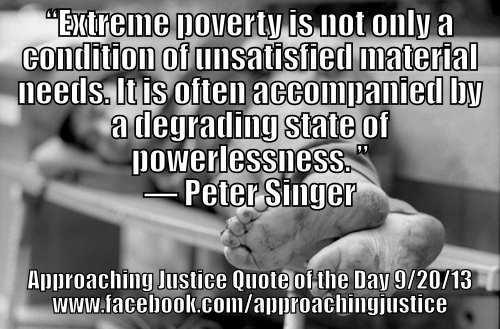
Approaching Justice Quote of the Day 9/20/13
Approaching Justice Quote of the Day 9/19/13
TRENDING AT PATHEOS Latter-day Saint

Did Prayer Cure His Cancer? Or Was It...
At 4 AM one morning, Joshua W. Brown’s wife awoke to a...

8 Ways a Near-Death Experience Rewires the Soul
Does Consciousness Survive Physical Death? After 50 Years of Research, Dr. Raymond...

Holy Longing: What Our Restlessness Is Telling Us
“One can find so many pains when the rain is falling.” -John...

What this is NOT about. This blog is definitely not about...

Who said the Israelites were God’s chosen? That’s right, they did. Who...

The Spirit World Is the Real World: God...
A Monk’s Wisdom on Body and Spirit I sit with Brother Martin...
view all Latter-day Saint blogs
Ad-Free & Subscriber Log-In Subscription Support
- About Us
- 2026 Calendar
- Videos
- Podcasts
- Library of World Religions
- Faith In Media Tracker
- Advertise With Us
- Write for Us
- Privacy Policy
- Terms of Service
- Do Not Sell My Data
- Contact Us
- Radiant Digital
- Manage Newsletter Subscriptions
- Unsubscribe From Notifications
- Sitemap
Copyright 2008-2026, Patheos. All rights reserved.
Subscription Support Ad-Free & Subscriber Log-In
Follow Patheos