
BuddhistCatholicContemplativeEvangelicalGeneral ChristianHinduJewishLatter-day SaintMuslimNew VisionsProgressive Christian
Beliefs
- Buddhist
- Catholic
- Contemplative
- Evangelical
- General Christian
- Hindu
- Jewish
- Latter-day Saint
- More Voices
- Muslim
- New Visions
- Pagan
- Progressive Christian
Topics
- Religion News
- Food and Religion
- Sports and Religion
- Religious Art
- Religious Music and Entertainment
- Religious Events
- History and Religion
- Style and Religion
- Politics and Religion
- Women in Religion
- Recreation Outdoors and Religion
- Business Finance and Religion
- Careers Workplace and Religion
- Education and Religion
- Family Parenting and Religion
- Health Fitness and Religion
- Home and Religion
- Relationships and Religion
- Technology and Religion
- Travel and Religion
Columnists
- Buddhist Columnists
- Business Finance and Religion Columnists
- Careers Workplace and Religion Columnists
- Catholic Columnists
- Contemplative Columnists
- Education and Religion Columnists
- Evangelists Columnists
- Family Parenting and Religion Columnists
- General Christian Columnists
- Health Fitness and Religion Columnists
- Hindu Columnists
- History and Religion Columnists
- Home and Religion Columnists
- Jewish Columnists
- More Voices Columnists
- Latter Day Columnists
- Muslim Columnists
- New Visions Columnists
- Nonreligious Columnists
- Pagan Columnists
- Politics and Religion Columnists
- Progressive Columnists
- Recreation Outdoors and Religion Columnists
- Relationships and Religion Columnists
- Religion News Columnists
- Religious Art Columnists
- Religious Events Columnists
- Religious Music and Entertainment Columnists
- Sports and Religion Columnists
- Style and Religion Columnists
- Technology and Religion Columnists
- Travel and Religion Columnists
- Women in Religion Columnists
Resource Library
- 2026 Calendar
- Library of World Religions
- The 100 Most Holy Places on Earth
- Patheos Answers
- Podcasts
- Videos
- Faith Leaders Database
- Anglican Episcopalian
- Bahai
- Baptist
- Buddhism
- Christianity
- Confucianism
- Eastern Orthodoxy
- Hinduism
- Holiness and Pentecostal
- ISKCON
- Islam
- Judaism
- Lutheran
- Methodist
- The Church of Jesus Christ of Latter-day Saints
- New Age
- Paganism
- Presbytarian and Reformed
- Protestantism
- Religion Behind the Scenes
- Roman Catholic
- Scientology
- Shia Islam
- Sikhism
- Sufism
- Sunni Islam
- Taoism
- Zen
- See all religions
Research Tools
 Ad-Free & Subscriber Log-In Subscription Support
Ad-Free & Subscriber Log-In Subscription Support
Follow Patheos 

- Trending:
- Forgiveness
- |
- Marriage
- |
- Consciousness
- |
- Death Penalty
- |
- Election
- |
- Halloween

- Home
- General Christian
- History and Religion
- The Scars of Conflict…
The Scars of Conflict…
Last updated on: November 20, 2023 at 7:38 am by Dorothy Sanders Wells
The Scars of Conflict… 2023-11-20T07:38:57-06:00 Dorothy Sanders Wells
Patheos Explore the world's faith through different perspectives on religion and spirituality! Patheos has the views of the prevalent religions and spiritualities of the world.

Courtesy of Pixabay
Genesis 25:7-10: 7 This is the length of Abraham’s life, one hundred and seventy-five years. 8Abraham breathed his last and died in a good old age, an old man and full of years, and was gathered to his people. 9His sons Isaac and Ishmael buried him in the cave of Machpelah, in the field of Ephron son of Zohar the Hittite, east of Mamre, 10the field that Abraham purchased from the Hittites. There Abraham was buried, with his wife Sarah.
This is the length of Abraham’s life: He died at the good old age of 175 years; his sons, Ishmael and Isaac, buried him with his wife, Sarah.
With this text, the Book of Genesis appears to wrap the story of Abraham and his family in a lovely package with a bow on top.
But such a simplistic reading (that is, if we didn’t know the rest of the story…) would belie the struggles of Abraham – and the conflicts that Abraham knew with Sarah and his sons.
Abraham, and last encounters…
The last encounter between Abraham and his firstborn son, Ishmael, that is recorded in Genesis is nearly 75 years before – on the fateful day that Abraham has taken Ishmael and Ishmael’s Egyptian slave-woman mother, Hagar, from the encampment and left them in the desert, with a single skin of water, ostensibly to die. Ishmael and Hagar’s usefulness to Abraham and Sarah had ended after Sarah had given birth to a child of her own. By this point in Abraham’s family story, Ishmael is a young teen – old enough to understand what his father has done, and certainly old enough to bear the pain and scars from his father’s actions.
After Hagar and Ishmael are banished, we are left to wonder if Abraham grieved the resulting fracture from his firstborn son – or if Ishmael grieved the absence of his father.
The last encounter between Abraham and Isaac that is recorded in Genesis is probably nearly 70 years before – on the fateful day on which Abraham has Isaac bound on an altar, preparing to sacrifice him to God. Isaac is old enough to understand where the two are traveling and that there is to be a sacrifice; when they arrive at the altar, Isaac even asks about the lamb for the sacrifice. What we don’t know – explicitly – is whether, or at what point, Isaac truly understands that he is the intended sacrifice. And we have no clue what the young Isaac tells his mother, Sarah, when they return home. This time of sacrifice is the last recorded moment of father and son together.
For that matter, there are no more recorded moments of togetherness between Abraham and Sarah: She leaves Abraham’s encampment, and later dies in the foreign land of the Hittites. Abraham purchases the land where she has died from the Hittites to make it a burial place.
There has been conflict – and loss.
We wonder, after Sarah has died, after his relationships with Ishmael and Isaac have been fractured, if Abraham grieves any of the losses.
Starting over…?
We know that Abraham effectively begins again – with another wife, and more children. But when he dies, his younger sons from his new marriage aren’t the ones who perform the duty of burying him. Instead, Ishmael and Isaac come together – returning from the places where they have settled, after what appears to have been more than 70 years apart, and in spite of the scars they bore – to perform the duty of burying their father. They take him to be buried in the place where Sarah is buried, to restore him to his long-time wife.
If what we hope to see as Ishmael and Isaac come together is some resolution to conflict, we are not so rewarded: Our scriptural text does not inform us that the two brothers engaged in good conversation, shared their experiences of their father, found some bond in their suffering, and perhaps even found a way to forge a path forward together. In our modern hearing, that would make for a much more satisfying ending to Abraham’s story: a belief that there can be some healing in the fracture.
But that kind of resolution isn’t what the scriptures give us. It appears that the two sons perform their duty, and go their separate ways.
Conflict doesn’t have a neat, tidy wrapping…
Conflict too often becomes a way of existence in our world. And as neat a bow as Genesis 25:7-10 tries to tie on Abraham’s life, we know from reading the preceding chapters of Genesis that there has been a lifetime of conflict. Two sons, with a need to come together and work together to bury their father, do so – bearing their scars, heartache, pain, grief, and the reality of our humanity etched into their souls. Whatever perceptions Ishmael and Isaac have taken from these last critical encounters with their father, whatever they believe that they have learned of Abraham, they have seen something very different about Abraham’s God: They have seen that Abraham’s God is unquestionably faithful. Abraham’s God keeps God’s promises – showing up in the desert to renew the covenant with Ishmael, showing up at the altar to provide a sacrifice for Isaac. Abraham’s God is faithful – even if it might truly appear to his sons that Abraham is not. Perhaps that one truth allows the sons to return to perform their duty.
Conflict does not have a neat, tidy wrapping. Human pain and suffering – and the differing perspectives we carry of the ways in which we have suffered – become our separate, but equally real truths. And when we come together, we bring with us our scars, our heartache, our pain, our grief – and the untold stories of the equally real truths.
The hard work of conflict resolution begins only after we acknowledge those separate, but equally real truths –
and choose to receive them respectfully and with care. Only then can we engage in the hard dialogue – work that will help us hear one another’s stories, work that will allow us to see one another as sisters and brothers who indeed are all made in the image and likeness of God.
Progressive Christian
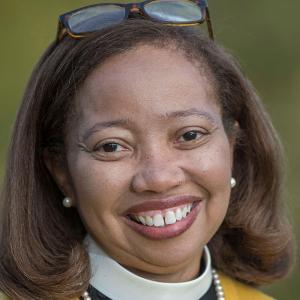
About Dr. Doroothy Sanders Wells
The Rev. Dr. Dorothy Sanders Wells is an Episcopal priest and pastor in Memphis, Tennessee, and often writes about justice and equity issues for all of God's people. Her essays have appeared in numerous outlets, including The Christian Century, Church Anew, Bearings Online/Collegeville Institute, The Anglican Digest, Episcopal Journal & Cafe, the Commercial Appeal and the Daily Memphian. Her writings have been recognized by Associated Church Press - Best of Church Press Awards. She holds degrees from Rhodes College (B.A.), Cecil C. Humphreys School of Law/University of Memphis (J.D.), Memphis Theological Seminary (M.Div.) and Candler School of Theology/Emory University (D.Min.). You can find more of her writing at https://dorothysmusings.wordpress.com/. You can read more about the author here.
Next Post

December 4, 2023 Twelve Inspiring Films to Watch in December
Recent Comments
Browse Our Archives
Select a Category Christmas Easter family History religion Uncategorized
Select a Month May 2026 December 2025 May 2025 March 2025 February 2025 December 2024 April 2024 December 2023 November 2023 September 2023 August 2023 July 2023 June 2023 May 2023 April 2023 March 2023 February 2023 January 2023 December 2022
TAKE THE
Religious Wisdom Quiz
Who said, "Can anything good come from Nazareth?"
Select your answer to see how you score.
John the Baptist Peter Pilate Nathanael
Related posts from A Pastor's Musings
Speaking and hearing anew at Pentecost
Memphis, Mercy, and the Men We Remember

Twelve Inspiring Films to Watch in December
From fear and hatred...to love: Remembering Khalid Jabara
TRENDING AT PATHEOS General Christian

The Problem with False Prophets
Miller’s Station UMC| 10/18/26| Anchor Verse: Jeremiah 23: 1, 9-23 I...

Emotion in Early Christianity by Andrew Crislip
Andrew Crislip’s Emotion in Early Christianity examines an often overlooked dimension of...

16 Spiritual Touchstones for a More Grounded Life
After decades of spiritual study, here are 16 principles I try...

Catholic Evangelization: Sharing Your Faith Every Day
Welcome back to the Graceful Awakening mini-series called, “From Faith to Mission.” ...

The Pillar of the Boatmen: the Ancient Monument...
The Pillar of the Boatmen is a Romano-Gaulish sculpture that dates from...

In one sense walking into Westminster Abbey is like walking down the...
view all General Christian blogs
Ad-Free & Subscriber Log-In Subscription Support
- About Us
- 2026 Calendar
- Videos
- Podcasts
- Library of World Religions
- Faith In Media Tracker
- Advertise With Us
- Write for Us
- Privacy Policy
- Terms of Service
- Do Not Sell My Data
- Contact Us
- Radiant Digital
- Manage Newsletter Subscriptions
- Unsubscribe From Notifications
- Sitemap
Copyright 2008-2026, Patheos. All rights reserved.
Subscription Support Ad-Free & Subscriber Log-In
Follow Patheos