
BuddhistCatholicContemplativeEvangelicalGeneral ChristianHinduJewishLatter-day SaintMuslimNew VisionsProgressive Christian
Beliefs
- Buddhist
- Catholic
- Contemplative
- Evangelical
- General Christian
- Hindu
- Jewish
- Latter-day Saint
- More Voices
- Muslim
- New Visions
- Pagan
- Progressive Christian
Topics
- Religion News
- Food and Religion
- Sports and Religion
- Religious Art
- Religious Music and Entertainment
- Religious Events
- History and Religion
- Style and Religion
- Politics and Religion
- Women in Religion
- Recreation Outdoors and Religion
- Business Finance and Religion
- Careers Workplace and Religion
- Education and Religion
- Family Parenting and Religion
- Health Fitness and Religion
- Home and Religion
- Relationships and Religion
- Technology and Religion
- Travel and Religion
Columnists
- Buddhist Columnists
- Business Finance and Religion Columnists
- Careers Workplace and Religion Columnists
- Catholic Columnists
- Contemplative Columnists
- Education and Religion Columnists
- Evangelists Columnists
- Family Parenting and Religion Columnists
- General Christian Columnists
- Health Fitness and Religion Columnists
- Hindu Columnists
- History and Religion Columnists
- Home and Religion Columnists
- Jewish Columnists
- More Voices Columnists
- Latter Day Columnists
- Muslim Columnists
- New Visions Columnists
- Nonreligious Columnists
- Pagan Columnists
- Politics and Religion Columnists
- Progressive Columnists
- Recreation Outdoors and Religion Columnists
- Relationships and Religion Columnists
- Religion News Columnists
- Religious Art Columnists
- Religious Events Columnists
- Religious Music and Entertainment Columnists
- Sports and Religion Columnists
- Style and Religion Columnists
- Technology and Religion Columnists
- Travel and Religion Columnists
- Women in Religion Columnists
Resource Library
- 2026 Calendar
- Library of World Religions
- The 100 Most Holy Places on Earth
- Patheos Answers
- Podcasts
- Videos
- Faith Leaders Database
- Anglican Episcopalian
- Bahai
- Baptist
- Buddhism
- Christianity
- Confucianism
- Eastern Orthodoxy
- Hinduism
- Holiness and Pentecostal
- ISKCON
- Islam
- Judaism
- Lutheran
- Methodist
- The Church of Jesus Christ of Latter-day Saints
- New Age
- Paganism
- Presbytarian and Reformed
- Protestantism
- Religion Behind the Scenes
- Roman Catholic
- Scientology
- Shia Islam
- Sikhism
- Sufism
- Sunni Islam
- Taoism
- Zen
- See all religions
Research Tools
 Ad-Free & Subscriber Log-In Subscription Support
Follow Patheos 

- Trending:
- Advent
- |
- Forgiveness
- |
- Thanksgiving
- |
- Election
- |
- Seasonal Holidays
- |
- Marriage

- Home
- General Christian
- History and Religion
- Carolyn Bryant Donham, Emmett Till, and a Nation’s Uncomfortable History with Lynching
Carolyn Bryant Donham, Emmett Till, and a Nation’s Uncomfortable History with Lynching
Last updated on: May 9, 2023 at 8:05 am by Dorothy Sanders Wells
Carolyn Bryant Donham, Emmett Till, and a Nation’s Uncomfortable History with Lynching 2023-05-09T08:05:11-05:00 Dorothy Sanders Wells
Patheos Explore the world's faith through different perspectives on religion and spirituality! Patheos has the views of the prevalent religions and spiritualities of the world.
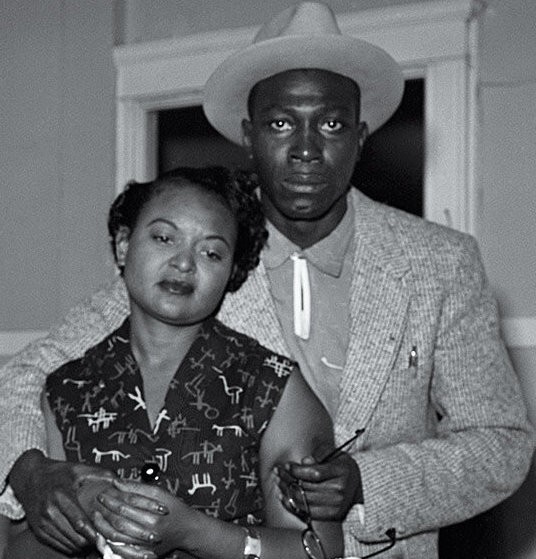
Emmitt Till’s mother Mamie Till with her is her fiancé, Gene Mobley, at the morgue before Emmitt’s funeral. / Image courtesy of Wikimedia Commons.
Carolyn Bryant (now Donham), whose accusations against Emmett Till led to his murder in 1955, has died at age 88. Bryant Donham was working in her family’s store in Money, Mississippi – a store which did a thriving business with Black sharecroppers who lived in the area – when 14-year-old Till, a youth from Chicago visiting relatives nearby, entered the store. He apparently spoke to Bryant Donham while attempting to purchase some candy or gum. Her own versions of the encounter varied widely, from a claim that Till touched her hand and whistled at her, to a later claim that he had grabbed her and made a lewd remark to her. Emmett Till’s mutilated body was found just days after the encounter in the Tallahatchie River, weighted with a cotton gin fan. Bryant Donham’s then-husband, Roy, and brother-in-law, J.W. Milam, were acquitted of Till’s murder. In January 1956, Bryant and Milam reportedly sold an interview to Look Magazine in which they acknowledged their role in the killing. Because the rule of double-jeopardy had attached, the men could not be tried again for the crime.
In 2008, Bryant Donham reportedly recanted her accusations, telling author Timothy Tyson, “Nothing that boy did could ever justify what happened to him.” Emmett Till’s family may have held out hope that Bryant Donham might finally have faced her own day in court when recently both an unserved warrant for her arrest (from 1955) and a copy of her alleged memoir surfaced, but a grand jury determined that there was insufficient evidence for an indictment, bringing an end to a 67-year quest for justice.
The 2022 release of the film, “Till,” was a painful reminder of the passion and love of a mother for her son and her heroic effort to allow the world to see photographs of a beaten, tortured Emmett – and how racism had killed him. Mamie Till’s advocacy for justice and refusal to back down helped give momentum to the Civil Rights movement. And the film also reminds us of just how recently Emmett Till’s murder occurred. The story of Emmett Till isn’t just “ancient” history: He is merely one example from our nation’s painful history with respect to Black men who have been wrongfully accused, tried and convicted – or, in the case of Till, executed – without sufficient evidence to tie them to the crimes for which they were accused, in a criminal justice system that is purportedly based upon the principle that an accused is innocent until proven guilty.
After a 2020 in which our nation saw the inexplicable deaths of Ahmaud Arbery and George Floyd, President Joe Biden signed the Emmett Till Anti-Lynching Act into law on March 29, 2022 – making lynching a federal hate crime.
Lynching takes on many forms.
A visit to The Innocence Project’s website (https://www.innocenceproject.org/) reveals some of the many ways in which our criminal justice system has failed us all, especially Black men – leaving them convicted of crimes for which there is insufficient evidence to even connect them to the crimes and allowing the guilty to remain unpunished. According to its website, “[t]he Innocence Project, founded in 1992 by Peter Neufeld and Barry Scheck at Cardozo School of Law, exonerates the wrongly convicted through DNA testing and reforms the criminal justice system to prevent future injustice.” Of the 204 cases listed on the Innocence Project’s website as cases in which it was involved in October 2022, the terms of wrongful imprisonment of men and women – White, Black, Hispanic/Latino – range from 1 year to 38 years.
Christina Swarns, Executive Director of The Innocence Project, cited a report from the National Registry of Exonerations which examines the 3,248 exonerations that have occurred in the U.S. since 1989 as demonstrative proof that persons of color are wrongfully convicted far more often than persons of European descent (“Black people are wrongly convicted more than any other group. We can prevent this.” Los Angeles Times, October 7, 2022).
Included among the findings that Swarns summarized are that:
- Black persons are seven times more likely than white people to be falsely convicted of serious crimes.
- Black persons convicted of murder are almost 80% more likely to be innocent than other people convicted of murder.
- Innocent Black persons were almost eight times more likely than innocent white persons to be falsely convicted of rape.
Perhaps an anti-lynching law may serve as a deterrent against – or justice as a result of – a black person’s life being extinguished. But imagine decades years of one’s life being taken away for a crime that one did not commit. Imagine not being able to find employment even after serving time, because one has a criminal conviction or a registered sex offender status. Imagine spending the rest of one’s life in the shadow of untruths.
Lynching takes on many forms.
The trope of the “dangerous Black man” has been repeated so frequently in our country: Susan Smith repeated that trope in South Carolina in 1994, accusing “Black men” of having drowned her young sons when she had in fact drowned them herself. Patricia Ripley, of Miami, repeated it in 2020, accusing two Black men of abducting her autistic son when in fact she had apparently drowned him. And, we can’t forget Amy Cooper having accused Christian Cooper of threatening her life in Central Park in 2020 after he had, in fact, asked her to leash her dog in an area in which her dog was required to be on-leash.
Earlier in 2023, Anthony Broadwater settled a lawsuit against the State of New York for his wrongful conviction in the rape of best-selling author Alice Sebold. After the attack in 1981, Sebold identified a different man when she viewed a lineup at the police station. With a failed identification, one might have thought that prosecutors would not have pressed forward with a case against Broadwater. Instead, he was convicted, and served 16 years in prison – and left prison as a registered sex offender.
Lynching takes on many forms.
Broadwater’s exoneration might never have come had Sebold’s memoir, Lucky – her story of the brutal rape, the trial and aftermath – not been the subject of a possible movie. Questions arose about the man who had attacked her. Lawyers finally reviewed documents and recognized that there were holes in the case against Broadwater.
And in the end, Broadwater was exonerated – 40 years after he had first maintained his innocence and during which he continued to refute the claims made against him.
No one is suggesting that Sebold intentionally misidentified or intended to harm Broadwater. She issued an apology to Broadwater and to the public, in which she expressed regret that he had become “another young Black man brutalized by our flawed legal system.”
Lynching takes on many forms.
Sebold’s memoir, Lucky, and her best-selling novels, The Lovely Bones and The Almost Moon, have sold millions of copies. The Lovely Bones was made into a film that reportedly grossed nearly $100 million. The books and film may have been successes even without Broadwater’s conviction. But the reality of the financial success of Sebold’s works cannot now be separated from Broadwater’s wrongful conviction. A contribution from Sebold, her publisher, Scribner, and Paramount Pictures to the Innocence Project could have drawn greater attention to the atrocities of our criminal justice system. This is a place where prominence and money can speak volumes.
Emmett Till’s murder, and the more recent exonerations of Anthony Broadwater, Thomas Haynesworth, Brian Banks, Gregory Counts and Van Dyke Perry, and many others after lengthy wrongful prison sentences, remind us all of our opportunities to grow together – to see one another as neighbors and not threats, and to pursue justice for those who might otherwise be invisible to us because they lack status and privilege. The Jesus-follower in me recalls that Jesus spoke quite a bit about saving the lost – and how much God rejoices when even one lost soul is found. The Jesus-follower in me deeply believes that God is aggrieved when any life is wrongfully lost. The Jesus-follower in me deeply believes that our God believes that all our lives are precious and worth saving.
Progressive Christian
Education and Religion
Previous Post

April 7, 2023
At Easter, all Christians are witnesses!
Next Post

May 13, 2023 Frances Perkins: The Intersection of Faith and Policy
Recent Comments
Browse Our Archives
Select a Category Christmas Easter family History religion Uncategorized
Select a Month May 2026 December 2025 May 2025 March 2025 February 2025 December 2024 April 2024 December 2023 November 2023 September 2023 August 2023 July 2023 June 2023 May 2023 April 2023 March 2023 February 2023 January 2023 December 2022
TAKE THE
Religious Wisdom Quiz
What does "Rabbi" mean?
Select your answer to see how you score.
Priest Teacher Messenger Scribe
Related posts from A Pastor's Musings

60 Years of A Charlie Brown Christmas

Memphis, Mercy, and the Men We Remember
The Cost of Looking Away: Who Is My...

The harvest is plentiful, but the laborers are...
TRENDING AT PATHEOS General Christian

Smart people saying smart things (11.24.26)
Please take time to listen to Perry Bacon, Sarah Posner, Adam Serwer,...

The Contingency of Our Technology
Last week we were hit with a raft of massive technology outages....

In 1939, President Franklin D. Roosevelt moved Thanksgiving from November 30 to...

Reasons for Restraint: Ricardo Gonzalez, Florida and Dec...
The Morning of January 3 I begin with the dead. On the...

I published this column for Thanksgiving 2012 in the Deseret News....

For many years, Catholicism has been caught up in division over the...
view all General Christian blogs
Ad-Free & Subscriber Log-In Subscription Support
- About Us
- 2026 Calendar
- Videos
- Podcasts
- Library of World Religions
- Faith In Media Tracker
- Advertise With Us
- Write for Us
- Privacy Policy
- Terms of Service
- Do Not Sell My Data
- Contact Us
- Radiant Digital
- Manage Newsletter Subscriptions
- Unsubscribe From Notifications
- Sitemap
Copyright 2008-2026, Patheos, part of the Radiant Digital network of media brands. All rights reserved.
Subscription Support Ad-Free & Subscriber Log-In
Follow Patheos