
BuddhistCatholicContemplativeEvangelicalGeneral ChristianHinduJewishLatter-day SaintMuslimNew VisionsProgressive Christian
Beliefs
- Buddhist
- Catholic
- Contemplative
- Evangelical
- General Christian
- Hindu
- Jewish
- Latter-day Saint
- More Voices
- Muslim
- New Visions
- Pagan
- Progressive Christian
Topics
- Religion News
- Food and Religion
- Sports and Religion
- Religious Art
- Religious Music and Entertainment
- Religious Events
- History and Religion
- Style and Religion
- Politics and Religion
- Women in Religion
- Recreation Outdoors and Religion
- Business Finance and Religion
- Careers Workplace and Religion
- Education and Religion
- Family Parenting and Religion
- Health Fitness and Religion
- Home and Religion
- Relationships and Religion
- Technology and Religion
- Travel and Religion
Columnists
- Buddhist Columnists
- Business Finance and Religion Columnists
- Careers Workplace and Religion Columnists
- Catholic Columnists
- Contemplative Columnists
- Education and Religion Columnists
- Evangelists Columnists
- Family Parenting and Religion Columnists
- General Christian Columnists
- Health Fitness and Religion Columnists
- Hindu Columnists
- History and Religion Columnists
- Home and Religion Columnists
- Jewish Columnists
- More Voices Columnists
- Latter Day Columnists
- Muslim Columnists
- New Visions Columnists
- Nonreligious Columnists
- Pagan Columnists
- Politics and Religion Columnists
- Progressive Columnists
- Recreation Outdoors and Religion Columnists
- Relationships and Religion Columnists
- Religion News Columnists
- Religious Art Columnists
- Religious Events Columnists
- Religious Music and Entertainment Columnists
- Sports and Religion Columnists
- Style and Religion Columnists
- Technology and Religion Columnists
- Travel and Religion Columnists
- Women in Religion Columnists
Resource Library
- 2026 Calendar
- Library of World Religions
- The 100 Most Holy Places on Earth
- Patheos Answers
- Podcasts
- Videos
- Faith Leaders Database
- Anglican Episcopalian
- Bahai
- Baptist
- Buddhism
- Christianity
- Confucianism
- Eastern Orthodoxy
- Hinduism
- Holiness and Pentecostal
- ISKCON
- Islam
- Judaism
- Lutheran
- Methodist
- The Church of Jesus Christ of Latter-day Saints
- New Age
- Paganism
- Presbytarian and Reformed
- Protestantism
- Religion Behind the Scenes
- Roman Catholic
- Scientology
- Shia Islam
- Sikhism
- Sufism
- Sunni Islam
- Taoism
- Zen
- See all religions
Research Tools
 Ad-Free & Subscriber Log-In Subscription Support
Follow Patheos 

- Trending:
- Advent
- |
- Forgiveness
- |
- Thanksgiving
- |
- Election
- |
- Seasonal Holidays
- |
- Marriage

- Home
- General Christian
- History and Religion
- What was the Freedmen’s Bureau, and did it succeed?
What was the Freedmen’s Bureau, and did it succeed?
Last updated on: March 3, 2023 at 1:19 pm by Dorothy Sanders Wells
What was the Freedmen’s Bureau, and did it succeed? 2023-03-03T13:19:08-06:00 Dorothy Sanders Wells
Patheos Explore the world's faith through different perspectives on religion and spirituality! Patheos has the views of the prevalent religions and spiritualities of the world.
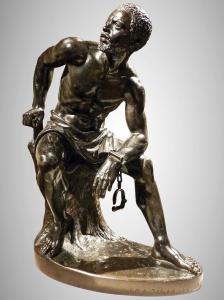
Photo courtesy of Pixabay: The Freedman (sculpture by John Quincy Adams Ward, 1891)
On March 3, 1865, the eve of President Abraham Lincoln’s second inauguration, Lincoln signed into law an act which established a “Bureau of refugees, freedmen and abandoned lands”. Debated in Congress for over a year before its enactment, the act established a federal Freedmen’s Bureau which was envisioned to provide federal protection and aid to nearly four million formerly enslaved persons who had been granted freedom by Lincoln’s Emancipation Proclamation two years before.
Having become increasingly convinced in the midst of a brutal Civil War that emancipation of enslaved persons was indeed God’s will, Lincoln had, by proclamation dated Monday, September 12, 1862, declared that effective January 1, 1863, all persons held as slaves within any of the rebelling (Confederate) states would be granted freedom. But as Jon Meacham writes in his book, And There Was Light: Abraham Lincoln and the American Struggle, even as quickly as word began to spread about the Emancipation Proclamation, Lincoln recognized that granting legal freedom to the enslaved persons would not ensure equality, or even fair treatment, under the law. (Meacham, 362)
The actuality in 1863 was that the newly emancipated persons had few freedoms, a fact about which Lincoln was well aware.
Emancipation had not meant education: Because schools had not been open to them, many formerly enslaved persons remained unable to read and write. [Frederick Douglass had surmised as a young child that there must be something quite important about the ability to read and write – important enough that his slaveowner insisted that the young enslaved Douglass should not gain those skills.]
Emancipation had not meant employment – or, where employment was available, fair wages sufficient for livelihood; even black men serving in the Union Army received wages less than those paid to white soldiers.
Emancipation had not meant that former slaveowners would allow formerly enslaved persons to live in peace.
The role of the Freedmen’s Bureau, accordingly, was to provide federal assistance to aid in the transition from slavery to freedom. Meacham observed, the Bureau was “brought into being with Lincoln’s signature…to feed the hungry, clothe the impoverished, provide health care, establish schools, negotiate fair wages, and offer rudimentary judicial protections…it was…the beginning of a kind of reparation for the system of slavery that Lincoln had decided could not stand.” (Meacham 362) W. E. B. DuBois commented, “[The Freedmen’s Bureau] was a government guardianship for the relief and guidance of white and black labor from a feudal agrarianism to modern farming and industry.” (Meacham, 362) The Bureau also “was responsible for protecting freedmen and women from intimidation and assaults by Southern whites.”
Just a month after the Freedmen’s Bureau was established, the Civil War ended on April 9, 1865 –– and by December 1865, the Thirteenth Amendment to the Constitution, freeing all enslaved persons in all of the states, had been ratified.
Abraham Lincoln did not survive to see his hope for full emancipation realized: He was assassinated by John Wilkes Booth on April 14, 1865 – eight months before the ratification of the Thirteenth Amendment.
Lincoln’s hopes for emancipation – and for effective work of a Freedmen’s Bureau to ease the transition from slavery to freedom – seemed to have died with him. Meacham observes that after Lincoln’s assassination, President Andrew Johnson, who succeeded Lincoln in the White House, did not share Lincoln’s beliefs on emancipation. (Meacham 415-16) Johnson was said to have opposed the Freedmen’s Bureau because “it infringed on states’ rights, it gave the federal government an unprecedented role in providing aid to a specific group of people at the exclusion of others, and it was expensive”. The original Freedmen’s Bureau Act had only provided for the operation of the Bureau through 1866. When a bill extending the Bureau’s operation made its way through Congress, it was twice met with a veto from Johnson. But following the second veto, both the House and Senate secured two-thirds majorities to override Johnson’s veto, and the Bureau’s operation was extended for two more years.
There was indeed progress during the operating years of the Bureau: Rations and clothing were issued, medical care was provided, schools were established, black persons were aided in negotiating pay and securing work, and some formerly enslaved persons were aided in relocating to other parts of the country.
But the true promise of Reconstruction, as Lincoln had envisioned, proved to be an elusive one: As depicted in the statue, The Freedman (1891), by sculptor John Quincy Adams Ward (photograph shown), formerly enslaved persons did not experience true freedom. Too quickly, the Reconstruction Amendments to the Constitution – which respectively emancipated the enslaved persons, made them citizens entitled to due process and equal protection under the law, and gave them the right to vote – gave way to Black Codes and Jim Crow laws, constraining the freedoms that had been guaranteed. Segregation and separation quickly dashed all hope of true freedom. (Also see, Meacham, 417.)
The struggle for Civil Rights would continue on for an entire century until a new era of legislation emerged.
The cessation of the Freedmen’s Bureau begs the question (as does all of Reconstruction) about what might have happened had Abraham Lincoln survived. Is it possible that a more stable path to freedom for formerly enslaved persons might have been established and that they might better have experienced the promise of this nation’s liberties? Was there tremendous potential for growth of all of our people together that our nation was unwilling to realize?
We learn in the Book of Exodus that an Egyptian Pharaoh with a hardened heart refused to emancipate enslaved Israelites when God’s messenger, Moses, warned him of the repercussions. Pharaoh, long after the Egyptian people had forgotten God’s providence in sending an Israelite named Joseph to them to help their economy thrive, chose disobedience instead. The choice of disobedience proved to be a poor one: Plague after plague brought disaster to the Egyptian people. Even when Pharaoh uttered the words that set the Israelites free, he chose to pursue them – and the consequences of a choice to deny the Israelites’ freedom were the deaths of his people, as they were swallowed by a watery grave.
The Exodus story reminds us of God’s will for freedom for God’s people, and the consequences that we may face when we choose to disobey God’s will.
How does the Exodus story still speak to us today? What does it teach us even now about how we care for all of God’s people and help all of God’s people experience true freedom? What consequences do we suffer for failure to obey?
What are our modern-day Freedmen’s Bureaus – giving us the opportunity to support humankind and engender true freedom – and are we putting those opportunities to their highest and best use?
Previous Post
February 18, 2023
A Voice for Freedom: Remembering Frederick Douglass
Next Post
March 15, 2023 Lessons from the life of Jimmy Carter
Recent Comments
Browse Our Archives
Select a Category Christmas Easter family History religion Uncategorized
Select a Month May 2026 December 2025 May 2025 March 2025 February 2025 December 2024 April 2024 December 2023 November 2023 September 2023 August 2023 July 2023 June 2023 May 2023 April 2023 March 2023 February 2023 January 2023 December 2022
TAKE THE
Religious Wisdom Quiz
Who led the animals onto the ark?
Select your answer to see how you score.
Jacob Isaac Moses Noah
Related posts from A Pastor's Musings
Speaking and hearing anew at Pentecost

60 Years of A Charlie Brown Christmas
Memphis, Mercy, and the Men We Remember
The Cost of Looking Away: Who Is My...
TRENDING AT PATHEOS General Christian

God and the Contingency of This World
The great Catholic philosopher Aquinas and the great Lutheran philosopher Leibniz developed...

Pope Francis and The Devil – A Pagan...
According to his private diaries, Pope Francis saw visions of the devil...

Rock N' Roll-- Morphing into/for a New Generation...
Well, should we be grateful, or is rock n' roll just dead? ...

Ansley Gordon Brings Faith and Fresh Stories to...
For screenwriter and actress Ansley Gordon, Christmas has always been about more...

Chris Pratt on Veterans, Faith, “The Way of...
For Chris Pratt, service is not something that ends when a person...

Chapter 5, Sarah: The Quest for Safety in...
Open and Relational Theology & Social Psychology About this series: This series...
view all General Christian blogs
Ad-Free & Subscriber Log-In Subscription Support
- About Us
- 2026 Calendar
- Videos
- Podcasts
- Library of World Religions
- Faith In Media Tracker
- Advertise With Us
- Write for Us
- Privacy Policy
- Terms of Service
- Do Not Sell My Data
- Contact Us
- Radiant Digital
- Manage Newsletter Subscriptions
- Unsubscribe From Notifications
- Sitemap
Copyright 2008-2026, Patheos, part of the Radiant Digital network of media brands. All rights reserved.
Subscription Support Ad-Free & Subscriber Log-In
Follow Patheos