
BuddhistCatholicContemplativeEvangelicalGeneral ChristianHinduJewishLatter-day SaintMuslimNew VisionsProgressive Christian
Beliefs
- Buddhist
- Catholic
- Contemplative
- Evangelical
- General Christian
- Hindu
- Jewish
- Latter-day Saint
- More Voices
- Muslim
- New Visions
- Pagan
- Progressive Christian
Topics
- Religion News
- Food and Religion
- Sports and Religion
- Religious Art
- Religious Music and Entertainment
- Religious Events
- History and Religion
- Style and Religion
- Politics and Religion
- Women in Religion
- Recreation Outdoors and Religion
- Business Finance and Religion
- Careers Workplace and Religion
- Education and Religion
- Family Parenting and Religion
- Health Fitness and Religion
- Home and Religion
- Relationships and Religion
- Technology and Religion
- Travel and Religion
Columnists
- Buddhist Columnists
- Business Finance and Religion Columnists
- Careers Workplace and Religion Columnists
- Catholic Columnists
- Contemplative Columnists
- Education and Religion Columnists
- Evangelists Columnists
- Family Parenting and Religion Columnists
- General Christian Columnists
- Health Fitness and Religion Columnists
- Hindu Columnists
- History and Religion Columnists
- Home and Religion Columnists
- Jewish Columnists
- More Voices Columnists
- Latter Day Columnists
- Muslim Columnists
- New Visions Columnists
- Nonreligious Columnists
- Pagan Columnists
- Politics and Religion Columnists
- Progressive Columnists
- Recreation Outdoors and Religion Columnists
- Relationships and Religion Columnists
- Religion News Columnists
- Religious Art Columnists
- Religious Events Columnists
- Religious Music and Entertainment Columnists
- Sports and Religion Columnists
- Style and Religion Columnists
- Technology and Religion Columnists
- Travel and Religion Columnists
- Women in Religion Columnists
Resource Library
- 2026 Calendar
- Library of World Religions
- The 100 Most Holy Places on Earth
- Patheos Answers
- Podcasts
- Videos
- Faith Leaders Database
- Anglican Episcopalian
- Bahai
- Baptist
- Buddhism
- Christianity
- Confucianism
- Eastern Orthodoxy
- Hinduism
- Holiness and Pentecostal
- ISKCON
- Islam
- Judaism
- Lutheran
- Methodist
- The Church of Jesus Christ of Latter-day Saints
- New Age
- Paganism
- Presbytarian and Reformed
- Protestantism
- Religion Behind the Scenes
- Roman Catholic
- Scientology
- Shia Islam
- Sikhism
- Sufism
- Sunni Islam
- Taoism
- Zen
- See all religions
Research Tools
 Ad-Free & Subscriber Log-In Subscription Support
Follow Patheos 

- Trending:
- Advent
- |
- Forgiveness
- |
- Thanksgiving
- |
- Election
- |
- Seasonal Holidays
- |
- Marriage

-
About the Authors
- Home
- Evangelical
- Ghosts, Spirits, and Wizards in Post-Puritan New England
Ghosts, Spirits, and Wizards in Post-Puritan New England
Last updated on: November 26, 2026 at 12:54 am by Philip Jenkins
Ghosts, Spirits, and Wizards in Post-Puritan New England 2026-11-25T16:24:42-04:00 Philip Jenkins
Patheos Explore the world's faith through different perspectives on religion and spirituality! Patheos has the views of the prevalent religions and spiritualities of the world.
As it is Thanksgiving, I have a seasonal post concerned with New England and its Puritan origins.
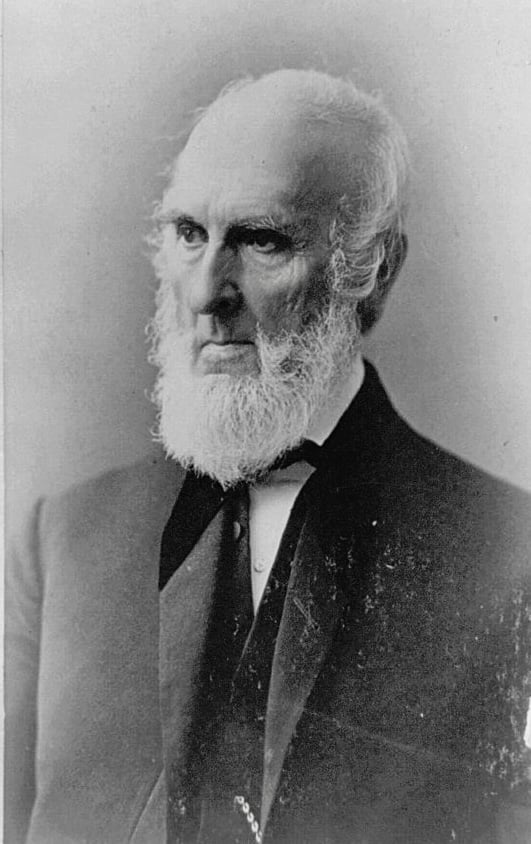
I work on a lot of topics connected with the general realm of folklore, including ideas about witchcraft and, currently, folk horror. On these matters, there is a source I love dearly that was published in 1847 by the then-very famous poet John Greenleaf Whittier, under the title Supernaturalism of New England.
If you ever enjoyed H. P. Lovecraft, you need Whittier. Lovecraft certainly read him a lot.
 all images are in the public domain
The Weird Gathering
John Greenleaf Whittier (1807-1892) was in the 1840s a cultural superstar, a Quaker poet and a ferocious abolitionist, a deadly enemy of American imperial expansion. Frederick Douglass lauded him as “the slaves’ poet,” which made it doubly ironic when in 2020 the bright sparks of Black Lives Matter decided to trash his statues as symbols of White Supremacy.
Whittier’s interest in folklore, broadly defined, dated to his early years, when he was fascinated by the poems of Robert Burns, and he also explored such other Scottish writers as James Hogg and Walter Scott. But it is Burns he loved most, and he offers long quotation from “Tam O’Shanter” and “Halloween.” His Supernaturalism tries to do for New England what those Scottish writers had already done for their own (similarly Calvinist) country, in a mighty work of recovery and preservation.
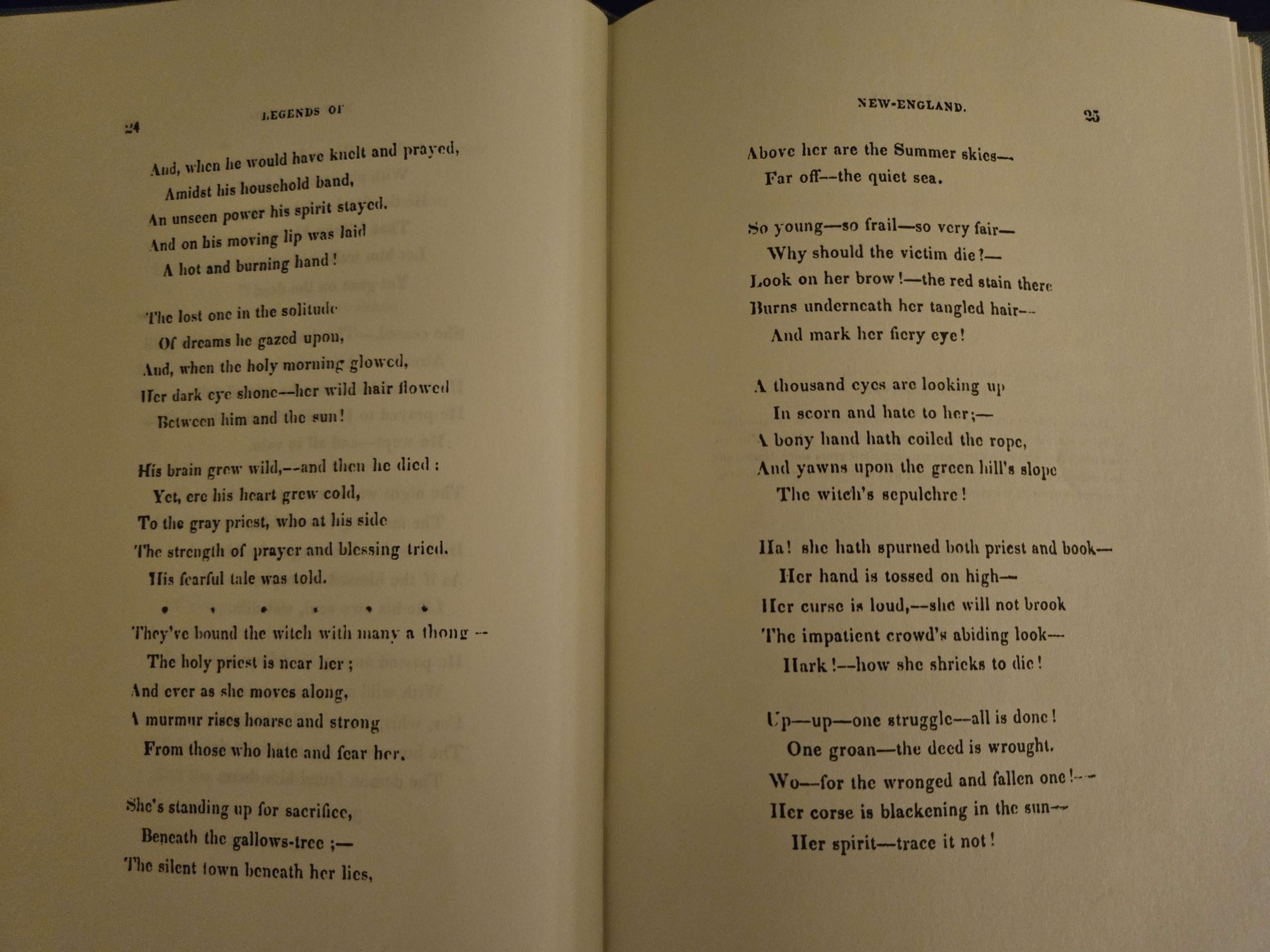
Like Hogg, he loved stories of witchcraft. As early as 1831, Whittier’s first book was on Legends of New England. Among other things, this includes a spectacular long poem on “The Weird Gathering,” about a great Witches’ Sabbat held near Salem. I offer a brief sample, but it amply repays a full reading.
They gathered there from every land
That sleepeth in the sun,—
They came with spell and charm in hand,
Waiting their Master’s high command—
Slaves to the Evil One!
From islands of the far-off seas—
From Hecla’s ice and flame—
From where the loud and savage breeze
Growls through the tall Norwegian trees,
Seer, witch and wizard came!
And, from the sunny land of palms,
The Negro hag was there—
The Gree-gree [gris-gris], with his Obi charms—
The Indian, with his tattooed arms,
And wild and streaming hair!
The Gipsey with her fierce, dark eyes,
The worshipper of flame—
The searcher out of mysteries,
Above a human sacrifice—
All—all—together came!
Whittier’s (Other) Worlds
The work on supernaturalism resulted in a major article in the Democratic Review in 1843, and then the full length book in 1847. Whittier’s stories in Supernaturalism are incredibly wide-ranging, and supported by erudite readings of authors on the supernatural. In some cases, he includes poems of his own based on those tales, with their themes of haunted houses, of prophecies of doom, of specters that foretell death. In each case, he believed that old folklore from the British Isles had mixed with Native Indian beliefs, although other critics seriously doubted that last element: Nathaniel Hawthorne was scathing.
And then there was the Puritan strand: “The Old Superstition—that dark theory of the Invisible World, in which our Puritan ancestors had united the wild extravagance of Indian tradition with the familiar and common fantasies of their native land, and that gloomy, indefinite awe of an agency of Evil which their peculiar interpretations of the Sacred Volume had inspired.” Whittier knew the classic works of Increase and Cotton Mather inside out.
A World Full of Spirits
The great virtue of Supernaturalism is that it gives a sense of the tales that were circulating in the New England countryside in the early nineteenth century, roughly between 1815 and 1840. This is not ethnography, it is rather the result of listening to what ordinary people were talking about, and what occasionally was getting into newspapers and pamphlets. Whittier does not believe any or all of them, or at least positions himself as a mildly skeptical observer, but often he sounds sympathetic.
Whittier depicts a society that is in no sense obsessed with the supernatural, but where such tales and lore circulate very freely as a standard part of social exchange. They are totally “normal,” strikingly so for a society normally associated with stereotypes of hard-headed materialistic Yankees.
Probably the most valuable parts of the book from our standpoint are the random self-contained stories that contain within themselves so much unspoken assumption and belief. Here is one example:
Some years since, a woman who is still living, in Hillsborough county, New Hampshire, was greatly troubled by witches. On one occasion, having, in company with several others, become bewildered in the woods, while searching for berries, she came to the conclusion that a witch had caused the trouble, and resorted to the expedient of turning her clothing, and that of her companions, wrongside outwards, for the purpose, it seems, of destroying the charm. At another time, one of her hens, probably from sickness, behaving contrary to the old lady’s notions of barn-yard propriety, was at once declared to be bewitched, and was actually baked alive in an oven, in the expectation that the sorceress, whoever or wherever she might be, would suffer in sympathy with her feathered victim.
We are probably dealing here with the 1830s. Without this account, how many later social historians would have suggested that such practices were common at this late date?
Or again this one, which made the local media:
Most readers will remember the account which, about a year ago, circulated through all the newspapers, of a spectre seen in Warner, N. H., by two men while watching by the bedside of a dying neighbor. A red, unnatural light filled the room ; a stranger suddenly stood beside them, and fixed his eyes upon the dying man, who writhed and shrunk beneath the ghastly scrutiny. On the disappearance of the spectre, the sick man made an effort to speak, and in broken words confessed that many years before lie had aided in the murder of the man whose spectral image had just left them. This statement, if I recollect rightly, was made under oath.
From Whittier, we know that charms, divination, and auguries remained popular, although of course he has to cite Robert Burns as additional authority:
A young woman goes down into the cellar, or into a dark room, with a mirror in her hand, and looking into it sees the face of her future husband peering at her through the darkness … A neighbor of mine, in speaking of this conjuration, insists that there is something in it, and adduces a case in point. One of her school-mates made the experiment, and saw the face of a strange man in the glass; and many years afterwards she saw the very man pass her father’s door. He proved to be an English emigrant, just landed, and in due time became her husband. Burns alludes to something like the spell above described.
The Devil Came Down to New Hampshire
And then there were demons, and the Devil himself.
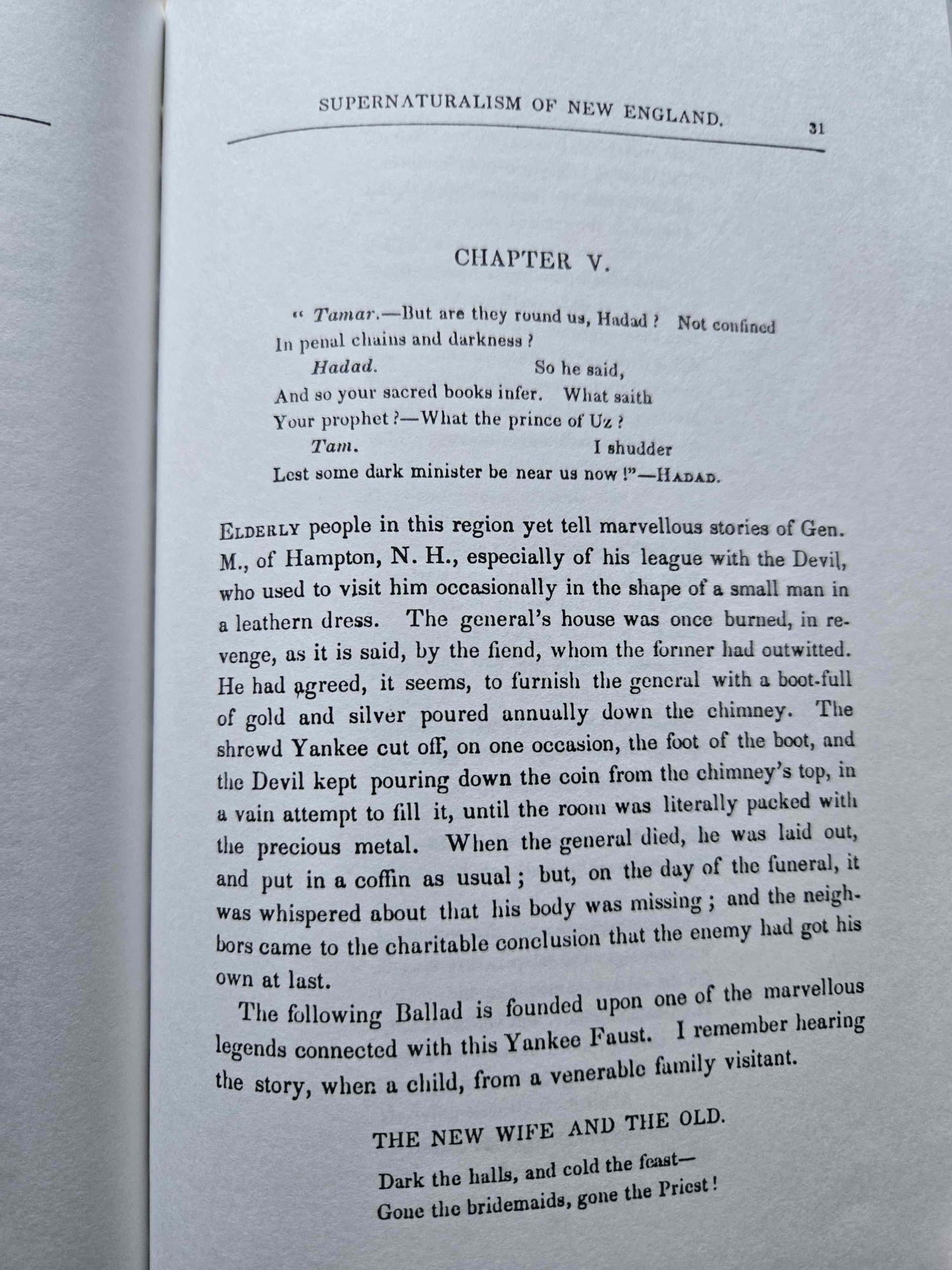
Elderly people in this region yet tell marvelous stories of Gen. M., of Hampton, N. H., especially of his league with the Devil, who used to visit him occasionally in the shape of a small man in a leathern dress. The general’s house was once burned, in revenge, as it is said, by the fiend, whom the former had outwitted. He had agreed, it seems, to furnish the general with a boot-full of gold and silver poured annually down the chimney. The shrewd Yankee cut off, on one occasion, the foot of the boot, and the Devil kept pouring down the coin from tho chimney’s top, in a vain attempt to fill it, until the room was literally packed with the precious metal. When the general died, he was laid out, and put in a coffin as usual; but, on the day of the funeral, it was whispered about that his body was missing ; and the neighbors came to the charitable conclusion that the enemy had got his own at last.
Whittier reports hearing this story as a child from an elderly visitor, so that transmission probably occurs around 1815 or so.
Errand into the (Demonic) Wilderness
Over and above any individual tales, Whittier is very good on the mindset of the Puritans and their concepts of Evil, and specifically evil in what superficially looked like a beautiful landscape. I will quote his views at some length:
Our Puritan ancestors were, in their own view of the matter, a sort of advance guard and forlorn hope of Christendom, in its contest with the Bad Angel. The New World, into which they had so valiantly pushed the outposts of the Church militant, was to them, not God’s world, but the Devil’s. They stood there on their little patch of sanctified territory … within were prayer, and fasting, unmelodious psalmody, and solemn hewing of heretics “before the Lord in Gilgal;” without were “dogs and sorcerers,” red children of perdition, Powah wizards, and “the foul fiend.”
In their grand old wilderness, broken by fair, broad rivers, and dotted with loveliest lakes, hanging with festoons of leaf and vine and flower the steep sides of mountains, whose naked tops rose over tho surrounding verdure like altars of a giant world—with its early summer greenness, and the many- colored wonder of its autumn, all glowing as if the rainbows of a summer shower had fallen upon it, under the clear, rich light of a sun, to which the misty day of their cold island was as moonlight,—they saw no beauty, they recognized no holy revelation. It was to them terrible as the forest which Dante traversed on his way to the World of Pain. Every advance step they made was upon the Enemy’s territory.
And one has only to read the writings of the two Mathers to perceive that that enemy was to them no metaphysical abstraction, no scholastic definition, no figment of a poetical fancy, but a living, active Reality, alternating between the sublimest possibilities of evil, and the lowest details of mean mischief; now a “tricksy spirit,” disturbing the good wife’s platters or soiling her new-washed linen, and anon riding the storm-cloud, and pointing its thunder-bolts; for, as the elder Mather pertinently inquires, “ how else is it that our meeting houses are burned by the lightning ?
Those diabolical incursions were most evident in the incursions of heresy, from Anne Hutchinson and Roger Williams through Whittier’s own Quaker forebears:
Who else gave the Jesuit missionaries—locusts from the pit as they were—such a hold on the affections of those very savages who would not have scrupled to hang the scalp of pious Father Wilson himself from their girdles ? To the vigilant eye of Puritanism was he not alike discernible in the light wantonness of the May-pole revellers, beating time with the cloven-foot to the vain music of obscene dances; and in the silent, hat-canopied gatherings of the Quakers, “the most melancholy of the sects,” as Dr. More calls them?
There is so much in this book that is worth reading.
On the theme of a personal wishlist, back in the 1970s there was a classic pair of anthologies with just an astonishing range of contemporary texts. I dearly wish these were available again! They are Ronald Curran, Witches, Wraiths & Warlocks: Supernatural Tales of the American Renaissance (New York: Fawcett, 1971); and Ronald Curran, The Weird Gathering and Other Tales: “Supernatural” Woman in American Popular Fiction, 1800-1850 (New York: Fawcett, 1979).
Previous Post

November 23, 2026
Best Books of 2026 on American Christianity
Recent Comments
"Every religion is "made up," even Adam and Eve were made up thousands of years ..."
Forging Druids and Inventing a Nation
"I have an identical twin, and Thomas was always the disciple I connected with most. ..."
In the Footsteps of Thomas: A ..."
"I've never thought of Constantine as a villain. Do Christians generally? Maybe the ones who ..."
"The TV sitcom BEWITCHED was an old favorite of mine"
How Scotland Gave Us Our Modern ..."
Browse Our Archives
Select a Category abolitionism Abortion Abraham Joshua Heschel Abraham Kuyper Abraham Lincoln Academia Activism Adam Renberg Advent Adventist africa African American Religion Agnes Howard Albert Camus American History American Religious History American Revolution American West Anabaptists Ancient History Andrea Turpin Andrei Tarkovsky Anglicanism Annales Ansley Lillian Quiros anti-Catholicism Antisemitism Anxious Bench apologetics Apparitions Arash Azizi Archaeology archives art Artificial Intelligence Asia Asian Americans Augustine Authors Bad Bunny Baptism Baptists Barack Obama Battle of Hastings Benjamin Franklin Bernard-Henri Levy Beth Allison Barr Beth Moore Bethany Mannon Bible Bill Cunningham Billy Graham Black Music Bob Dylan Body Boenhoffer Books Breastfeeding Bruce Springsteen C.S. Lewis Calvinism Cancel Culture Capitalism Carmelites Catholicism Cedric Robinson Cesar Chavez Charismaticism charity Charles Dickens Charles Lindbergh Che Guevara Chicago Children Chinese Christianity Chris Gehrz Christ Christian death Christian Higher Education Christian life Christian Nation Christian Nationalism Christianity Today Christmas Church life Church Practice cinema Civil Religion Civil Rights Movement Civil War civility Classics Climate Change Cold War Colonial Mexico colonialism Comer Communism community complementarianism Conference on Faith and History Congregationalism Conspiracies Conspiracy Conversion Narratives Coronavirus Costa Rica Council of Nicaea Covid-19 Creation Critical Race Theory Crusades Culture culture wars Daniel K. Williams David Barton David Swartz Death Ways death with dignity DEI democracy Democratic Party Devotion Digital Age Diplomacy discipleship diversity Donald Trump Drama Dua Lipa Early Church early modern Early modern Catholicism Easter Eastern Christianity economic exploitation Education elections Elie Wiesel Elizabeth II Elizabeth Taylor emotions Empire Engineering England enslavement Entertainment Episcopal Church Erica Ramirez eschatology Eurocentrism Evangelicalism Evangelicals Exegesis Family Feminism Film Flannery O'Connor folk music Food Foreign Policy founding fathers Franciscans Franciscus Junius fundamentalism Funerals G.K. Chesterton Gender Genocide genre geography George W. Bush George Washington George Whitefield Global Christianity Global church Grief Guadalupe guest post Guest Post gun control gun violence Gustavo Gutierrez Hamid Dabashi Harold John Ockenga Harvest Hate Hawaiian Christianity Healing health care Heather Cox Richardson Hell Heresy Hermeneutics Higher Education Hinduism Hippocratic oath Historical Fiction Historical Methodology Historical Profession Historical Profession Historical Theology Historical Thinking historiography Holidays Holocaust horror movies Human rights Humanitarian Work humanities Hummingbirds Hungary hymns Imago Dei Immigration Injustice Interviews Iran Islam Islamophobia Israel Ivan's Childhood Jacob Randolph James Bratt Janine Giordano Drake Japanese history Japanese Literature Jean Paul Sartre Jesse Miranda Jesus Jesus Christ Jimmy Carter Joan Baez Joan Didion Joanne Freeman João B. Chaves Joao Chaves Joey Cochran John Calvin John Fea John Tillotson John Turner Johnny Cash Jonathan Edwards Jonathan Tran Joseph Smith Josh Howerton Journalism Jr. Judaism Jürgen Moltmann Just War Justice Justin Brierley Karl Barth Katelyn Beaty koi ponds Kris Kristofferson Kristin Kobes Du Mez Latin American Religious History Latino Americans Lectio Divina Leisure Lent Leonard Cohen liberal arts liberalism Liberation Theology Linda Ronstadt Lisa Clark Diller Literature Lou Reed Lynchings Lynneth Miller Renberg Mainline Protestantism Malcolm Foley Marilyn Monroe Maritime history Mark Noll Marriage Martin Luther Martin Luther King Martyrdom Marxism Mary Masih Alinejad mass shootings material culture medieval Christianity Medieval Ethiopia Melissa Borja memory Mennonites Mental Health Mental Illness Methodism Mexican Americans Mexicans Mike Madrid Miles Mullin Min Jin Lee Miscarriage Missionaries Mister Rogers Mitt Romney modernity Monasticism Mormonism Motherhood Mothers of the Church Moving Music Musicals Nadya Williams Nahua Christianity Native Americans Natsume Sōseki New Contributor New England New Year New York Nico Non-Violent Protest Orthodoxy pacifism Paleo Evangelicals Palestinians Parenting Patti Smith Paul Kingsnorth Pedro Calderón de la Barca Pentecostalism Philip Jenkins Phillis Wheatley physician-assisted suicide pilgrimage Pilgrims Piracy pluralism Plutocracy Poetry Politics Pope Francis Pope Leo XIV post-modernism prayer preaching Presbyterians prosperity gospel Protest Public Executions Public history Publishing Puritans purity culture Quakers race Race Massacres Racial Capitalism racial reconciliation racialization Racism Raha Bahloulipour Re-Enchantment reading Reformation Refugees religion and the university religion and war Religious Freedom Religious Nones Religious Pluralism Religious Symbols religious violence Republican Party Revival Rita Coolidge Ritual Roger Williams Roman Catholic church Royalty Russell Moore same-sex marriage Sarah Irving-Stonebraker Scandinavia Science Science and Technology Scopes trial Scriptural Interpretation secularism Selena Quintanilla seminary Seventh-Day Adventists sexual morality Sexuality Sikhs Silence slaveholders theology Slavery Slavoj Zizek social justice Social Media Southern Baptist Convention Southern Religion Spain Spiritual Autobiography Spiritual but not religious Spiritual Discipline Sports Stanley Hauerwas Suffering Summer Camps Sunday Night Odds and Ends Supernatural Supreme Court Syriac Christianity Tal Howard Taylor Swift Teaching Technology Television Thanksgiving The Beatles The Mission theater TheoBros Theology Thomas Dixon Thomas Jefferson Thomas Kidd Thomas Merton Tim Gloege Tim Walz Tom Holland Tourism tradition Tragedy Translation Transnationalism Travel Trump Ukraine Uncategorized Unitarians United Methodist Church US History Vanessa Chan Velvet Underground Verónica A. Gutiérrez Veronica Gutierrez Vikings Violence Virgin Mary Virtue Virtue ethics Visions Voting War WCTU Wendell Berry Westminster Assembly White Evangelicalism Wildfires Winnie the Pooh Witches women Women in Ministry Women's and Gender Studies Work Worship writing Yasunari Kawabata Zena Hitz
Select a Month November 2026 October 2026 September 2026 August 2026 July 2026 June 2026 May 2026 April 2026 March 2026 February 2026 January 2026 December 2025 November 2025 October 2025 September 2025 August 2025 July 2025 June 2025 May 2025 April 2025 March 2025 February 2025 January 2025 December 2024 November 2024 October 2024 September 2024 August 2024 July 2024 June 2024 May 2024 April 2024 March 2024 February 2024 January 2024 December 2023 November 2023 October 2023 September 2023 August 2023 July 2023 June 2023 May 2023 April 2023 March 2023 February 2023 January 2023 December 2022 November 2022 October 2022 September 2022 August 2022 July 2022 June 2022 May 2022 April 2022 March 2022 February 2022 January 2022 December 2021 November 2021 October 2021 September 2021 August 2021 July 2021 June 2021 May 2021 April 2021 March 2021 February 2021 January 2021 December 2020 November 2020 October 2020 September 2020 August 2020 July 2020 June 2020 May 2020 April 2020 March 2020 February 2020 January 2020 December 2019 November 2019 October 2019 September 2019 August 2019 July 2019 June 2019 May 2019 April 2019 March 2019 February 2019 January 2019 December 2018 November 2018 October 2018 September 2018 August 2018 July 2018 June 2018 May 2018 April 2018 March 2018 February 2018 January 2018 December 2017 November 2017 October 2017 September 2017 August 2017 July 2017 June 2017 May 2017 April 2017 March 2017 February 2017 January 2017 December 2016 November 2016 October 2016 September 2016 August 2016 July 2016 June 2016 May 2016 April 2016 March 2016 February 2016 January 2016 December 2015 November 2015 October 2015 September 2015 August 2015 July 2015 June 2015 May 2015 April 2015 March 2015 February 2015 January 2015 December 2014 November 2014 October 2014 September 2014 August 2014 July 2014 June 2014 May 2014 April 2014 March 2014 February 2014 January 2014 December 2013 November 2013 October 2013 September 2013 August 2013 July 2013 June 2013 May 2013 April 2013 March 2013 February 2013 January 2013 December 2012 November 2012 October 2012 September 2012 August 2012 July 2012 June 2012 May 2012
Follow Us!
TAKE THE
Religious Wisdom Quiz
Who visited baby Jesus in the manger?
Select your answer to see how you score.
Scribes Shepherds Roman guards Fishermen
Related posts from Anxious Bench
Forging Druids and Inventing a Nation
Why Do Forgeries Explode in Some Eras and...
In the Footsteps of Thomas: A Christian Story...

Fairies, Witches, Folk Horror, and the Secret Commonwealth
TRENDING AT PATHEOS Evangelical

Here are two Thanksgiving columns that I originally wrote for the...

Book III, Chapter 3: Christ "Classic" (Matt. 9:9-34)
Book III, Chapter 3: Christ "Classic" (Matt. 9:9-34) In honor of tomorrow's...

Jesus explicitly mentions the book of Jonah twice, but he retells the...

Peggy Sue Got Married: Coppola’s Always Been Like...
I enjoyed Megalopolis (2024). It’s a mess, but I enjoyed it. The...

My dissertation The Place of Mysticism in the Late Middle Ages concerns...

God and the Contingency of This World
The great Catholic philosopher Aquinas and the great Lutheran philosopher Leibniz developed...
view all Evangelical blogs
What Are Your Thoughts?leave a comment
Ad-Free & Subscriber Log-In Subscription Support
- About Us
- 2026 Calendar
- Videos
- Podcasts
- Library of World Religions
- Faith In Media Tracker
- Advertise With Us
- Write for Us
- Privacy Policy
- Terms of Service
- Do Not Sell My Data
- Contact Us
- Radiant Digital
- Manage Newsletter Subscriptions
- Unsubscribe From Notifications
- Sitemap
Copyright 2008-2026, Patheos, part of the Radiant Digital network of media brands. All rights reserved.
Subscription Support Ad-Free & Subscriber Log-In
Follow Patheos