
BuddhistCatholicContemplativeEvangelicalGeneral ChristianHinduJewishLatter-day SaintMuslimNew VisionsProgressive Christian
Beliefs
- Buddhist
- Catholic
- Contemplative
- Evangelical
- General Christian
- Hindu
- Jewish
- Latter-day Saint
- More Voices
- Muslim
- New Visions
- Pagan
- Progressive Christian
Topics
- Religion News
- Food and Religion
- Sports and Religion
- Religious Art
- Religious Music and Entertainment
- Religious Events
- History and Religion
- Style and Religion
- Politics and Religion
- Women in Religion
- Recreation Outdoors and Religion
- Business Finance and Religion
- Careers Workplace and Religion
- Education and Religion
- Family Parenting and Religion
- Health Fitness and Religion
- Home and Religion
- Relationships and Religion
- Technology and Religion
- Travel and Religion
Columnists
- Buddhist Columnists
- Business Finance and Religion Columnists
- Careers Workplace and Religion Columnists
- Catholic Columnists
- Contemplative Columnists
- Education and Religion Columnists
- Evangelists Columnists
- Family Parenting and Religion Columnists
- General Christian Columnists
- Health Fitness and Religion Columnists
- Hindu Columnists
- History and Religion Columnists
- Home and Religion Columnists
- Jewish Columnists
- More Voices Columnists
- Latter Day Columnists
- Muslim Columnists
- New Visions Columnists
- Nonreligious Columnists
- Pagan Columnists
- Politics and Religion Columnists
- Progressive Columnists
- Recreation Outdoors and Religion Columnists
- Relationships and Religion Columnists
- Religion News Columnists
- Religious Art Columnists
- Religious Events Columnists
- Religious Music and Entertainment Columnists
- Sports and Religion Columnists
- Style and Religion Columnists
- Technology and Religion Columnists
- Travel and Religion Columnists
- Women in Religion Columnists
Resource Library
- 2026 Calendar
- Library of World Religions
- The 100 Most Holy Places on Earth
- Patheos Answers
- Podcasts
- Videos
- Faith Leaders Database
- Anglican Episcopalian
- Bahai
- Baptist
- Buddhism
- Christianity
- Confucianism
- Eastern Orthodoxy
- Hinduism
- Holiness and Pentecostal
- ISKCON
- Islam
- Judaism
- Lutheran
- Methodist
- The Church of Jesus Christ of Latter-day Saints
- New Age
- Paganism
- Presbytarian and Reformed
- Protestantism
- Religion Behind the Scenes
- Roman Catholic
- Scientology
- Shia Islam
- Sikhism
- Sufism
- Sunni Islam
- Taoism
- Zen
- See all religions
Research Tools
 Ad-Free & Subscriber Log-In Subscription Support
Follow Patheos 

- Trending:
- Advent
- |
- Forgiveness
- |
- Thanksgiving
- |
- Election
- |
- Seasonal Holidays
- |
- Marriage

-
About the Authors
- Home
- Evangelical
- History and Religion
- Hogg’s Justified Sinner: A Gothic Classic for Halloween
Hogg’s Justified Sinner: A Gothic Classic for Halloween
Last updated on: October 9, 2026 at 10:00 pm by Philip Jenkins
Hogg’s Justified Sinner: A Gothic Classic for Halloween 2026-10-09T22:00:08-04:00 Philip Jenkins
Patheos Explore the world's faith through different perspectives on religion and spirituality! Patheos has the views of the prevalent religions and spiritualities of the world.
James Hogg’s Voyage to Hell
Last time, I described the dazzling work of the Scottish writer James Hogg, and his radical reimaginings of historical witchcraft. Hogg is better known for another novel that I personally regard as one of the very finest classics of horror, mystery, and the weird in general. It is ideally suited for the approaching Halloween season. I am here adapting an article I published long ago in the sadly defunct magazine Books and Culture.
Living as a Beast
The story requires some background. In 1670, the astonishing confession of Scottish Major Thomas Weir suggested the depths of depravity that could be concealed under a cloak of holiness and respectability. Throughout his seventy years, he had been a paragon of Edinburgh’s rigorously orthodox and moral Calvinist society, and had earned glory in the Lord’s wars of the 1640s. Suddenly, though, this legendary saint spontaneously confessed to a litany of crimes that included devil-worship and witchcraft. He admitted to incest with his sister, herself an exemplary model of righteousness, and she confirmed the charge. Both were executed. Weir rejected pleas that he pray for forgiveness, declaring that “I have lived as a beast, and I must die as a beast.”
Historians can debate whether Major Weir truly was the sinful monster he claimed, or whether age and mental derangement had caused him to pour forth his darkest secret fantasies, so long suppressed. In either case, this unnerving scandal left long memories in Scottish culture. Not coincidentally, it was Edinburgh’s famous son Robert Louis Stevenson who in 1886 created one of literature’s most frightening dual personalities in Strange Case of Dr. Jekyll and Mr. Hyde.

all images are either in the public domain, or are fair use
The Confessions of a Justified Sinner
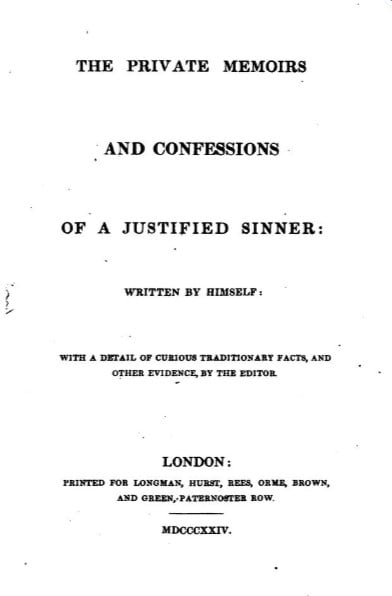
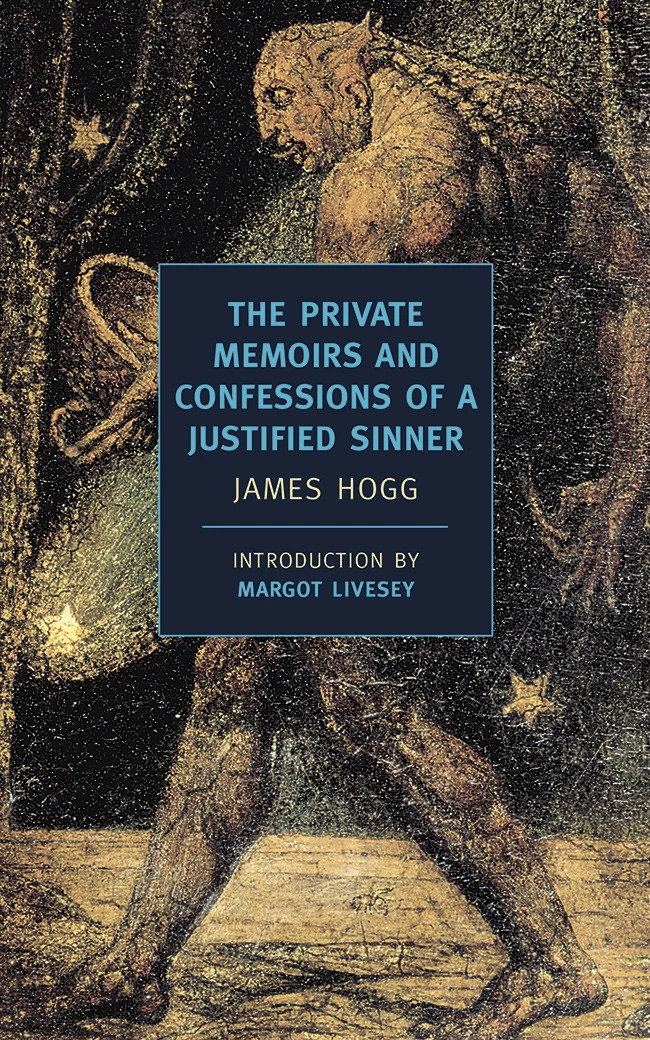
Long before Stevenson, the Weir affair had inspired another great Scottish writer, who specifically focused on its religious dimensions. In 1824, James Hogg published The Private Memoirs and Confessions of a Justified Sinner, which has enjoyed very mixed fortunes in terms of its critical reputation. Long virtually forgotten in mainstream English literature, it achieved spectacular renown in Continental Europe, where it was regarded as a Gothic classic, as well as a brilliant psychological study of religious hypocrisy. In our own time, it also inspired Gene Wolfe’s brilliant novel Peace, about which I have posted at this site.
Through the advocacy of European writers like André Gide, the Anglo-American world rediscovered the Confessions of a Justified Sinner in the mid-twentieth century. As post-modernist approaches became popular, the novel awed critics by its playful attitude to historicity and chronology, its dreamlike surrealism, its pioneering use of multiple narrative perspectives, and by the creation of the ultimate unreliable narrator. Today, the book’s classic status is ensured. Quite apart from its well-known virtues, the book’s exploration of the religious roots of violence and fanaticism gives it a strictly contemporary feel, and makes it ripe for yet another popular rediscovery.
The Confessions is multiply astonishing, as one of the very first literary works to portray extreme violent insanity from the standpoint of a deeply disturbed perpetrator. We see the events initially through the eyes of an editor, who describes the late seventeenth century marriage of a worldly Scottish laird and a deeply pious woman. After having two sons, the couple separates, with the strong suggestion that the younger son, Robert Wringhim, is actually the illegitimate son of a hyper-Calvinist local cleric – “one whose righteousness consists in splitting the doctrines of Calvin into thousands of undistinguishable films, and in setting up a system of justifying-grace against all breaches of all laws, moral or divine.” When they become adults, Robert stalks his brother, and eventually kills him. During a furious investigation, Robert disappears.
Theology, Murder, and True Crime
So much for the editor’s (fairly) sober narrative. At that point, though, a third of the way through the text, the book moves onto an entirely new and alarming plane with the introduction of Robert’s own “Memoirs and Confessions,” which reveal the inner mind of a religious fanatic. Hogg had read phenomenally widely in Scottish texts and archives, and knew precisely how devout Kirk members thought and wrote at the relevant time, around 1700. He also drew on such other confessional texts as John Bunyan’s Grace Abounding to the Chief of Sinners. Consequently, Hogg’s sense of the era’s religious discourse is pitch-perfect. At first glance, this is the sort of spiritual diary we could expect to find from a hundred archives in the English-speaking world, dating anywhere from the seventeenth century through the nineteenth.
Robert describes his upbringing, portraying what the reader will recognize as a mean-minded priggish hypocrite, whose parents delight in his theological sophistries. Indeed, Robert’s psychic and moral collapse has its origins in his religious views. Hogg was writing at a time when the Scottish church still retained its established status and much of its popular authority, yet its basic Calvinist tenets were under serious challenge from Enlightenment liberalism. One of the book’s principal goals is to satirize and undermine that Calvinism, especially the belief in Predestination, and to show how easily it could be carried to bizarre and unhealthy extremes.
Like any good Calvinist, Robert believes in his absolute and unconditional election. His spiritual father, the local parson, convinces him “That I was now a justified person, adopted among the number of God’s children – my name written in the Lamb’s book of life, and that no by-past transgression, nor any future act of my own, or of other men, could be instrumental in altering the decree.” Yet this particular justified sinner is utterly self-righteous and proud, identifying his own interests with God’s will. He dismisses all personal rivals or critics as enemies of that will, who are beyond any hope of salvation. They deserve to die.
Although he does not openly preach Antinomianism, it is the logical outcome of his fevered thinking.
The Mind Divides
As he cannot openly admit to his homicidal instincts, he projects an evil alternate personality. In a moment of revelation, he meets a wonderful stranger whom he first believes to be his guardian angel:
“You think I am your brother,” says the newcomer, “or that I am your second self. I am indeed your brother, not according to the flesh, but in my belief of the same truths, and my assurance in the same mode of redemption, than which I hold nothing so great or so glorious on earth.”
In this new character, Gil-Martin, Robert is overjoyed to find an equally pious soul after his own heart, and with whom he shares intimate dialogues. The two vehemently reject ideas of good works, and affirm their common faith in Predestination. These discussions lead Robert to experience a parody of a classic conversion experience, an exulting Born-to-Kill-Again moment. Robert’s description is densely packed theologically, and lethally logical:
“From the moment I conceived it decreed, not that I should be a minister of the gospel, but a champion of it, to cut off the enemies of the Lord from the face of the earth; and I rejoiced in the commission, finding it more congenial to my nature to be cutting sinners off with the sword than to be haranguing them from the pulpit, striving to produce an effect which God, by his act of absolute predestination, had for ever rendered impracticable.”
Not only do Christians waste time trying to convert the ungodly, it is also blasphemous even to try:
“The more I pondered on these things the more I saw of the folly and inconsistency of ministers in spending their lives striving and remonstrating with sinners in order to induce them to do that which they had it not in their power to do. Seeing that God had from all eternity decided the fate of every individual that was to be born of woman, how vain was it in man to endeavor to save those whom their Maker had, by an unchangeable decree, doomed to destruction. I could not disbelieve the doctrine which the best of men had taught me, and towards which he made the whole of the Scriptures to bear, and yet it made the economy of the Christian world appear to me as an absolute contradiction. How much more wise would it be, thought I, to begin and cut sinners off with the sword! For till that is effected, the saints can never inherit the earth in peace.”
Killing For God
Robert’s life then takes bizarre and bloody twists. His lengthy dialogues with Gil-Martin give a verbally dazzling portrait of diabolic temptation, to which he increasingly succumbs. (Hogg’s older contemporary Goethe was in these same years undertaking his final revisions to Faust, and the two authors would have had much to discuss). In effect, Robert becomes an assassin for the Devil’s cause, targeting those who are self-evidently the enemies of truth and righteousness, as he conceives them.
Robert also finds himself losing periods of time, of which he has no conscious recollection. As he returns from those blackouts, these fugues, he is startled to find that he is accused of many acts of violence and fraud, all of which have clearly occurred, but without his waking knowledge. Someone has been using his body.
As the reader deduces, Gil-Martin, then, is obviously his alter, a splinter personality, through whom he commits his evil deeds, and Hogg leaves heavy clues pointing in that direction. Gil-Martin’s interactions with Robert are self-evidently internal and imaginary, existing only in the “Sinner’s” own mind.

But… Could It Be The Devil?
No sooner have we understood the dual personality theme, though, than Hogg throws a sizable wrench into the novel’s mechanism, baffling critics at the time and subsequently. (Hogg liked to play with his readers). We are perplexed to hear that other characters have also seen Gil-Martin, sometimes together with Robert, so the two are clearly distinct. That would presumably make Gil-Martin the Devil himself or one of his minions. I have no easy explanation for this paradox, unless we are to assume that Robert’s alter has assumed material form, and that he has in fact spawned a demon.
Whatever interpretation we ultimately place on Gil-Martin, Hogg is again delving deep into Scottish traditions of deluded confession. Scotland had reported many instances of alleged devil-worship, and perhaps the most quoted example in the whole literature of witchcraft was the wholly spontaneous confession of a young woman named Isabel Gowdie, who presented her revelations only a few years before Major Weir. Something in Scottish religious life was driving a deep and toxic fascination with evil and the Satanic.
Terror and Violence
At so many levels, the Confessions repay frequent re-reading, but its chillingly plausible anatomy of religion-based violence should make it required reading for anyone interested in contemporary global conflicts and acts of terrorism.
Like modern Islamist terrorists, Robert is the self-appointed vessel of God’s wrath, unquestioning in his sense of serving as God’s chosen instrument: “There was one thing clear, I was now the Lord’s, and it behooved me to bestir myself in His service. Oh that I had an host at my command, then would I be as a devouring fire among the workers of iniquity!” And like his modern-day counterparts, he utterly dehumanizes all who fall short of his own faith. They are sheep for the slaughter. Only their death can permit the saints to enjoy the world in peace. “I saw and was convinced that the elect of God would be happier, and purer, were the wicked and unbelievers all cut off from troubling and misleading them.”
In imagining Robert Wringhim’s mind, James Hogg was recording an imaginary visit to Hell, and reporting what he had seen there. That vision still informs our understanding of the psychology of terror.
General Christian
History and Religion
Family, Parenting and Religion
Previous Post
October 6, 2026
Why Hymns and Poems Count as Real Theology
Next Post

October 12, 2026 Christians Helped Invent Race. Some Now Call It Unbiblical
Recent Comments
"Every religion is "made up," even Adam and Eve were made up thousands of years ..."
Forging Druids and Inventing a Nation
"I have an identical twin, and Thomas was always the disciple I connected with most. ..."
In the Footsteps of Thomas: A ..."
"I've never thought of Constantine as a villain. Do Christians generally? Maybe the ones who ..."
"The TV sitcom BEWITCHED was an old favorite of mine"
How Scotland Gave Us Our Modern ..."
Browse Our Archives
Select a Category abolitionism Abortion Abraham Joshua Heschel Abraham Kuyper Abraham Lincoln Academia Activism Adam Renberg Advent Adventist africa African American Religion Agnes Howard Albert Camus American History American Religious History American Revolution American West Anabaptists Ancient History Andrea Turpin Andrei Tarkovsky Anglicanism Annales Ansley Lillian Quiros anti-Catholicism Antisemitism Anxious Bench apologetics Apparitions Arash Azizi Archaeology archives art Artificial Intelligence Asia Asian Americans Augustine Authors Bad Bunny Baptism Baptists Barack Obama Battle of Hastings Benjamin Franklin Bernard-Henri Levy Beth Allison Barr Beth Moore Bethany Mannon Bible Bill Cunningham Billy Graham Black Music Bob Dylan Body Boenhoffer Books Breastfeeding Bruce Springsteen C.S. Lewis Calvinism Cancel Culture Capitalism Carmelites Catholicism Cedric Robinson Cesar Chavez Charismaticism charity Charles Dickens Charles Lindbergh Che Guevara Chicago Children Chinese Christianity Chris Gehrz Christ Christian death Christian Higher Education Christian life Christian Nation Christian Nationalism Christianity Today Christmas Church life Church Practice cinema Civil Religion Civil Rights Movement Civil War civility Classics Climate Change Cold War Colonial Mexico colonialism Comer Communism community complementarianism Conference on Faith and History Congregationalism Conspiracies Conspiracy Conversion Narratives Coronavirus Costa Rica Council of Nicaea Covid-19 Creation Critical Race Theory Crusades Culture culture wars Daniel K. Williams David Barton David Swartz Death Ways death with dignity DEI democracy Democratic Party Devotion Digital Age Diplomacy discipleship diversity Donald Trump Drama Dua Lipa Early Church early modern Early modern Catholicism Easter Eastern Christianity economic exploitation Education elections Elie Wiesel Elizabeth II Elizabeth Taylor emotions Empire Engineering England enslavement Entertainment Episcopal Church Erica Ramirez eschatology Eurocentrism Evangelicalism Evangelicals Exegesis Family Feminism Film Flannery O'Connor folk music Food Foreign Policy founding fathers Franciscans Franciscus Junius fundamentalism Funerals G.K. Chesterton Gender Genocide genre geography George W. Bush George Washington George Whitefield Global Christianity Global church Grief Guadalupe guest post Guest Post gun control gun violence Gustavo Gutierrez Hamid Dabashi Harold John Ockenga Harvest Hate Hawaiian Christianity Healing health care Heather Cox Richardson Hell Heresy Hermeneutics Higher Education Hinduism Hippocratic oath Historical Fiction Historical Methodology Historical Profession Historical Profession Historical Theology Historical Thinking historiography Holidays Holocaust horror movies Human rights Humanitarian Work humanities Hummingbirds Hungary hymns Imago Dei Immigration Injustice Interviews Iran Islam Islamophobia Israel Ivan's Childhood Jacob Randolph James Bratt Janine Giordano Drake Japanese history Japanese Literature Jean Paul Sartre Jesse Miranda Jesus Jesus Christ Jimmy Carter Joan Baez Joan Didion Joanne Freeman João B. Chaves Joao Chaves Joey Cochran John Calvin John Fea John Tillotson John Turner Johnny Cash Jonathan Edwards Jonathan Tran Joseph Smith Josh Howerton Journalism Jr. Judaism Jürgen Moltmann Just War Justice Justin Brierley Karl Barth Katelyn Beaty koi ponds Kris Kristofferson Kristin Kobes Du Mez Latin American Religious History Latino Americans Lectio Divina Leisure Lent Leonard Cohen liberal arts liberalism Liberation Theology Linda Ronstadt Lisa Clark Diller Literature Lou Reed Lynchings Lynneth Miller Renberg Mainline Protestantism Malcolm Foley Marilyn Monroe Maritime history Mark Noll Marriage Martin Luther Martin Luther King Martyrdom Marxism Mary Masih Alinejad mass shootings material culture medieval Christianity Medieval Ethiopia Melissa Borja memory Mennonites Mental Health Mental Illness Methodism Mexican Americans Mexicans Mike Madrid Miles Mullin Min Jin Lee Miscarriage Missionaries Mister Rogers Mitt Romney modernity Monasticism Mormonism Motherhood Mothers of the Church Moving Music Musicals Nadya Williams Nahua Christianity Native Americans Natsume Sōseki New Contributor New England New Year New York Nico Non-Violent Protest Orthodoxy pacifism Paleo Evangelicals Palestinians Parenting Patti Smith Paul Kingsnorth Pedro Calderón de la Barca Pentecostalism Philip Jenkins Phillis Wheatley physician-assisted suicide pilgrimage Pilgrims Piracy pluralism Plutocracy Poetry Politics Pope Francis Pope Leo XIV post-modernism prayer preaching Presbyterians prosperity gospel Protest Public Executions Public history Publishing Puritans purity culture Quakers race Race Massacres Racial Capitalism racial reconciliation racialization Racism Raha Bahloulipour Re-Enchantment reading Reformation Refugees religion and the university religion and war Religious Freedom Religious Nones Religious Pluralism Religious Symbols religious violence Republican Party Revival Rita Coolidge Ritual Roger Williams Roman Catholic church Royalty Russell Moore same-sex marriage Sarah Irving-Stonebraker Scandinavia Science Science and Technology Scopes trial Scriptural Interpretation secularism Selena Quintanilla seminary Seventh-Day Adventists sexual morality Sexuality Sikhs Silence slaveholders theology Slavery Slavoj Zizek social justice Social Media Southern Baptist Convention Southern Religion Spain Spiritual Autobiography Spiritual but not religious Spiritual Discipline Sports Stanley Hauerwas Suffering Summer Camps Sunday Night Odds and Ends Supernatural Supreme Court Syriac Christianity Tal Howard Taylor Swift Teaching Technology Television Thanksgiving The Beatles The Mission theater TheoBros Theology Thomas Dixon Thomas Jefferson Thomas Kidd Thomas Merton Tim Gloege Tim Walz Tom Holland Tourism tradition Tragedy Translation Transnationalism Travel Trump Ukraine Uncategorized Unitarians United Methodist Church US History Vanessa Chan Velvet Underground Verónica A. Gutiérrez Veronica Gutierrez Vikings Violence Virgin Mary Virtue Virtue ethics Visions Voting War WCTU Wendell Berry Westminster Assembly White Evangelicalism Wildfires Winnie the Pooh Witches women Women in Ministry Women's and Gender Studies Work Worship writing Yasunari Kawabata Zena Hitz
Select a Month November 2026 October 2026 September 2026 August 2026 July 2026 June 2026 May 2026 April 2026 March 2026 February 2026 January 2026 December 2025 November 2025 October 2025 September 2025 August 2025 July 2025 June 2025 May 2025 April 2025 March 2025 February 2025 January 2025 December 2024 November 2024 October 2024 September 2024 August 2024 July 2024 June 2024 May 2024 April 2024 March 2024 February 2024 January 2024 December 2023 November 2023 October 2023 September 2023 August 2023 July 2023 June 2023 May 2023 April 2023 March 2023 February 2023 January 2023 December 2022 November 2022 October 2022 September 2022 August 2022 July 2022 June 2022 May 2022 April 2022 March 2022 February 2022 January 2022 December 2021 November 2021 October 2021 September 2021 August 2021 July 2021 June 2021 May 2021 April 2021 March 2021 February 2021 January 2021 December 2020 November 2020 October 2020 September 2020 August 2020 July 2020 June 2020 May 2020 April 2020 March 2020 February 2020 January 2020 December 2019 November 2019 October 2019 September 2019 August 2019 July 2019 June 2019 May 2019 April 2019 March 2019 February 2019 January 2019 December 2018 November 2018 October 2018 September 2018 August 2018 July 2018 June 2018 May 2018 April 2018 March 2018 February 2018 January 2018 December 2017 November 2017 October 2017 September 2017 August 2017 July 2017 June 2017 May 2017 April 2017 March 2017 February 2017 January 2017 December 2016 November 2016 October 2016 September 2016 August 2016 July 2016 June 2016 May 2016 April 2016 March 2016 February 2016 January 2016 December 2015 November 2015 October 2015 September 2015 August 2015 July 2015 June 2015 May 2015 April 2015 March 2015 February 2015 January 2015 December 2014 November 2014 October 2014 September 2014 August 2014 July 2014 June 2014 May 2014 April 2014 March 2014 February 2014 January 2014 December 2013 November 2013 October 2013 September 2013 August 2013 July 2013 June 2013 May 2013 April 2013 March 2013 February 2013 January 2013 December 2012 November 2012 October 2012 September 2012 August 2012 July 2012 June 2012 May 2012
Follow Us!
TAKE THE
Religious Wisdom Quiz
What animal is mentioned in Proverbs as having little strength but great wisdom?
Select your answer to see how you score.
Ox Lion Bear Ant
Related posts from Anxious Bench
Forging Druids and Inventing a Nation
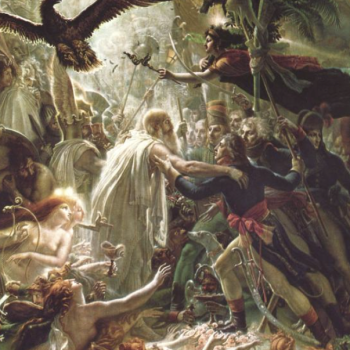
Why Do Forgeries Explode in Some Eras and...

In the Footsteps of Thomas: A Christian Story...
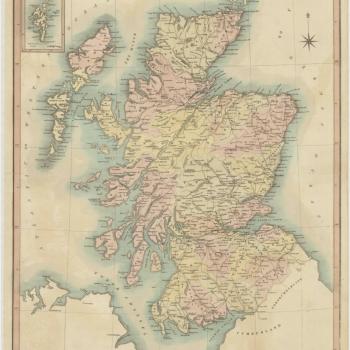
Fairies, Witches, Folk Horror, and the Secret Commonwealth
TRENDING AT PATHEOS Evangelical

Adventurous Lectionary -1st. Sunday of Advent - November...
The Adventurous Lectionary - The First Sunday of Advent – November 29,...

Will Islam become the world's biggest religion by 2035? Congo will replace...

The resilience of the Christian faith in the english speaking world of...

An Advent Calendar, and a Tree full of...
I've spent the weekend deeply invested in internet drama about a $150...

How to Have Financial Transparency in Marriage
Despite the fact that financial issues and money problems are the number...
The Healing Power of Forgiveness in Marriage
Learning how to give and accept apologies are essential ingredients of a...
view all Evangelical blogs
What Are Your Thoughts?leave a comment
Ad-Free & Subscriber Log-In Subscription Support
- About Us
- 2026 Calendar
- Videos
- Podcasts
- Library of World Religions
- Faith In Media Tracker
- Advertise With Us
- Write for Us
- Privacy Policy
- Terms of Service
- Do Not Sell My Data
- Contact Us
- Radiant Digital
- Manage Newsletter Subscriptions
- Unsubscribe From Notifications
- Sitemap
Copyright 2008-2026, Patheos. All rights reserved.
Subscription Support Ad-Free & Subscriber Log-In
Follow Patheos