
BuddhistCatholicContemplativeEvangelicalGeneral ChristianHinduJewishLatter-day SaintMuslimNew VisionsProgressive Christian
Beliefs
- Buddhist
- Catholic
- Contemplative
- Evangelical
- General Christian
- Hindu
- Jewish
- Latter-day Saint
- More Voices
- Muslim
- New Visions
- Pagan
- Progressive Christian
Topics
- Religion News
- Food and Religion
- Sports and Religion
- Religious Art
- Religious Music and Entertainment
- Religious Events
- History and Religion
- Style and Religion
- Politics and Religion
- Women in Religion
- Recreation Outdoors and Religion
- Business Finance and Religion
- Careers Workplace and Religion
- Education and Religion
- Family Parenting and Religion
- Health Fitness and Religion
- Home and Religion
- Relationships and Religion
- Technology and Religion
- Travel and Religion
Columnists
- Buddhist Columnists
- Business Finance and Religion Columnists
- Careers Workplace and Religion Columnists
- Catholic Columnists
- Contemplative Columnists
- Education and Religion Columnists
- Evangelists Columnists
- Family Parenting and Religion Columnists
- General Christian Columnists
- Health Fitness and Religion Columnists
- Hindu Columnists
- History and Religion Columnists
- Home and Religion Columnists
- Jewish Columnists
- More Voices Columnists
- Latter Day Columnists
- Muslim Columnists
- New Visions Columnists
- Nonreligious Columnists
- Pagan Columnists
- Politics and Religion Columnists
- Progressive Columnists
- Recreation Outdoors and Religion Columnists
- Relationships and Religion Columnists
- Religion News Columnists
- Religious Art Columnists
- Religious Events Columnists
- Religious Music and Entertainment Columnists
- Sports and Religion Columnists
- Style and Religion Columnists
- Technology and Religion Columnists
- Travel and Religion Columnists
- Women in Religion Columnists
Resource Library
- 2026 Calendar
- Library of World Religions
- The 100 Most Holy Places on Earth
- Patheos Answers
- Podcasts
- Videos
- Faith Leaders Database
- Anglican Episcopalian
- Bahai
- Baptist
- Buddhism
- Christianity
- Confucianism
- Eastern Orthodoxy
- Hinduism
- Holiness and Pentecostal
- ISKCON
- Islam
- Judaism
- Lutheran
- Methodist
- The Church of Jesus Christ of Latter-day Saints
- New Age
- Paganism
- Presbytarian and Reformed
- Protestantism
- Religion Behind the Scenes
- Roman Catholic
- Scientology
- Shia Islam
- Sikhism
- Sufism
- Sunni Islam
- Taoism
- Zen
- See all religions
Research Tools
 Ad-Free & Subscriber Log-In Subscription Support
Follow Patheos 

- Trending:
- Advent
- |
- Forgiveness
- |
- Thanksgiving
- |
- Election
- |
- Seasonal Holidays
- |
- Marriage

-
About the Authors
- Home
- Evangelical
- History and Religion
- The Abraham Kuyper You’ve Never Met
The Abraham Kuyper You’ve Never Met
Last updated on: August 17, 2026 at 1:28 pm by James Bratt
The Abraham Kuyper You’ve Never Met 2026-08-17T13:28:46-04:00 James Bratt
Patheos Explore the world's faith through different perspectives on religion and spirituality! Patheos has the views of the prevalent religions and spiritualities of the world.
Abraham Kuyper as a Human Being
The single most quoted line in my biography of Abraham Kuyper comes in the Introduction: “Kuyper was a great man but not a nice one.”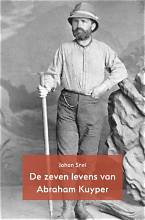 Should my book ever appear in a second edition (ha!), I’d have to modify that estimate because of a brilliant new study of the man.
Johan Snel’s The Seven Lives of Abraham Kuyper (Amsterdam, 2020 and 2024), soon available in English translation from Wipf and Stock, gives a fascinating look at a Kuyper we’ve never seen before—the Kuyper of everyday life and close personal interactions in a remarkably wide range of settings. The genius remains; the gruff combatant still rides forth endlessly to battle; the rigid schedule, the titanic labors, the boundless energy, the ever-flowing pen—they’re all here.
But so is a deep dive into the private man’s moods, his informal conversations, his genial repartee and cordial interactions with all types of men—and women—in the street. Well, not that kind of woman in the street but every other sort, from factory worker to socialite to royalty to clubwoman, be they Dutch, Turkish, Spanish, or American.
Sources
Most studies of Kuyper, especially those in English, are based on his 200+ books, with added spice from the thousand cartoons drawn of him, mostly by opponents, mild or harsh. Snel’s book includes some fine examples of the latter but breaks new ground by using digital technology to plumb the 9000+ letters that Kuyper left behind and the 13,000+ articles he wrote in his newspaper and magazine.
Then there are the 16,800 “three stars” (think turn-of-the-century tweets) from his daily paper, zingers directed at current personalities and events. He composed them daily between noon and 12:30 lunch, after the day’s heavy writing was done and before the afternoon’s teaching or political consultations. This was his favorite genre except for his weekly Bible meditation, written Sunday mornings in lieu of going to church.
Four of the “seven lives” Snel explores are already known to English readers: the scholar, the organizer, the politician, the public speaker. On the fifth, the journalist, Snel offers many new insights, journalism being the field he teaches, and Kuyper’s journalism having been the subject of his doctoral dissertation. For me the book’s most intriguing contributions lie in Kuyper’s two other, largely private, lives: as world traveler and mountaineer.
Mountaineer
Kuyper kept such a frantically full schedule that he had to take long summer vacations—six weeks at a minimum, sometimes more. These typically involved scaling mountains, every range from Norway and Scotland to the Tatras, Pyrenees, Adirondacks, and especially — over 30 times! — the Alps. South Tyrol (today the northernmost part of Italy, back then part of the Austro-Hungarian Empire) was his favorite place on earth.
Kuyper would not seem to have fit the mountain-climbing bill, what with his 5’ 6” frame carrying at least 200 lbs. But here we watch him up there six to twelve hours a day, clambering up the ashy slope of Mt. Vesuvius (4200’), sliding down an Alpine glacier, embarking on six-day treks, ascending 10,000-13,000’ peaks, sometimes with a guide, sometimes with a companion, most often by himself.
Summer after summer, this was his happy time and place. Yet, Snel notes, Kuyper—so typically—cast these feats “in terms of duty and calling….” He “enjoyed himself only when he wore himself out completely.”
World Traveler
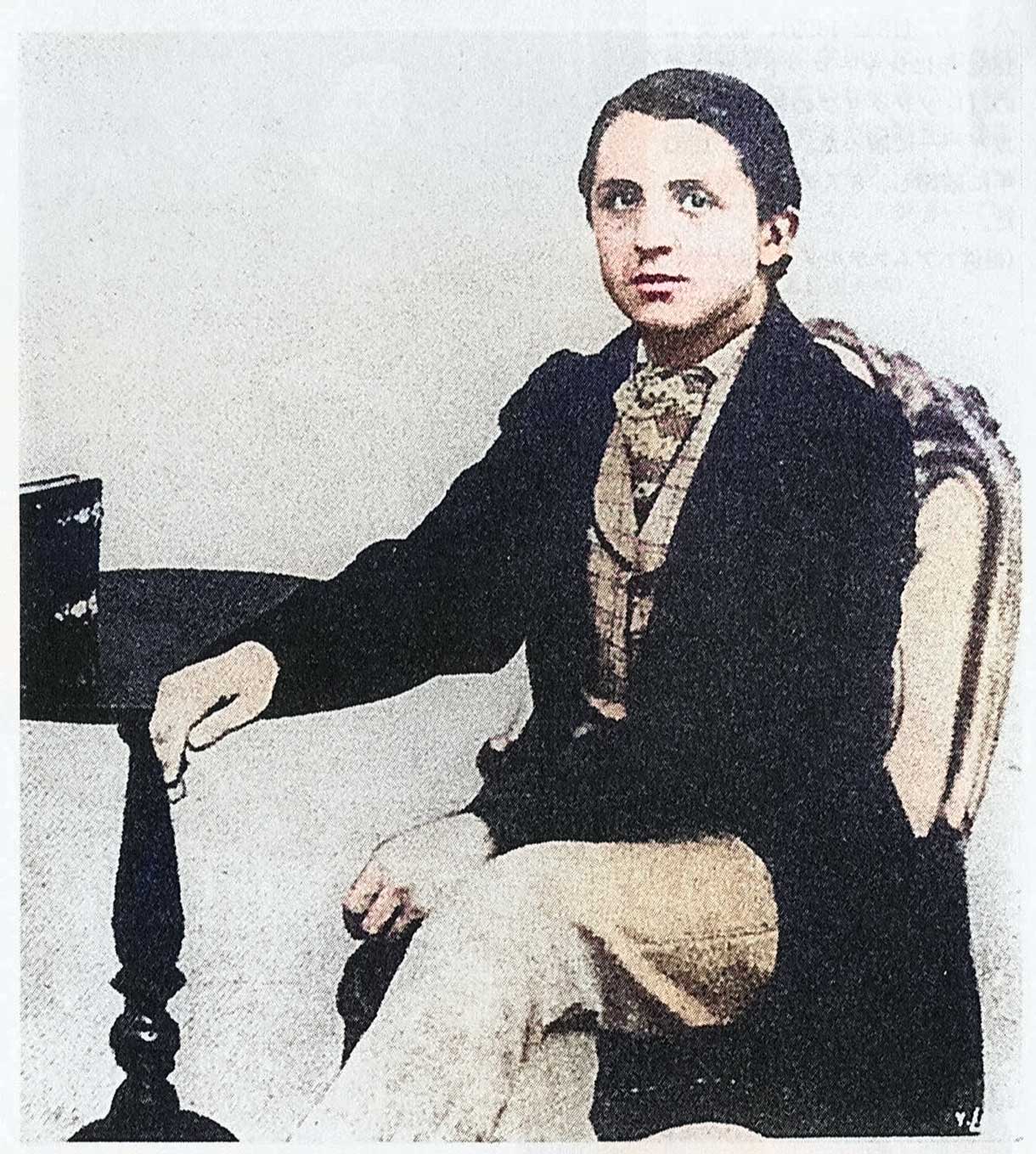 Mountaineering opened up Kuyper’s second life, the globetrotter. As the several packed passports in his archive attest, he might have been the most traveled Hollander of the age. Two journeys stand out. The first took him around the northeast quadrant of the United States in 1898 after he gave his famous Stone Lectures at Princeton. Pella, Iowa he found “sleepy,” Orange City bustling, New York City so adrift with December snow that he got in a mountain-worthy hike just getting back to his hotel.
The second was a genuine pilgrimage, a nine-month tour around the Mediterranean Sea in 1905-06. Trains everywhere, a boat down the Nile all the way to Khartoum, a camel ride, then a harrowing venture by automobile over the mountains of Morocco. Along the way he wanted to get to Kyiv but was thwarted by that year’s revolutionary uprising in Russia, so he had to content himself with dodging riots in the streets of Odessa and dropping by a couple meetings of dissidents.
Less known are Kuyper’s constant treks to Brussels and Paris, quick getaways from the pressures of the week. The big city was the only locale where he felt as happy as in the mountains, he confessed. So there was London in 1867 when he might have glimpsed Karl Marx writing Das Kapital across the reading room in the British Library as he himself did research on 16th-century Dutch exile churches.
There was Budapest in 1916 on a visit to two of his daughters working at a hospital for wounded Hungarian soldiers. Now and then there were secret diplomatic missions to Berlin and Paris and London again. He went to Rome in 1876 as he tried to recover from one of his total collapses. The next breakdown, in 1894, saw him land in Tunis to cure his lungs. Summer after summer he was in the Pyrenees where he could combine his annual water cure—blasts hot and cold in the morning—with mountain hiking in the afternoon.
Meetings
Perhaps the most intriguing coincidence in all these travels came on an August day in 1882 when, Snel calculates, Kuyper probably shared an Alpine mountain shelter with Friedrich Nietzsche. What could they talk about but the weather?
Nietzsche would start Also Sprach Zarathustra in these parts around this time; Kuyper would introduce Nietzsche to the Netherlands a decade later. In the Alps Nietzsche peered into the abyss; Kuyper gazed up at the peaks with deep spiritual insight as in his magnificent meditation on Psalm 42.
Perhaps Marx and Nietzsche, certainly the Archbishop of Canterbury, the kings and queens of Portugal, Spain, Belgium and Romania, the Grand Vizier of the Ottoman Empire, President William McKinley, Kaiser Wilhelm II, imperial movers and shakers across North Africa—Kuyper was at ease in elite company and relished the honor thereof.
But he liked to hang out with ordinary folks even more. He milled around anonymously in big-city throngs; he raised eyebrows by giving distinguished service awards to commoners; he went out of his way to interview line workers while investigating corporate labor abuses.
Character
Kuyper was ever curious, his notebook and folders ready to collect vital statistics at every spot on his travels. He was cordial with hotel and railroad staff, mountain guides, and spa workers. He exuded bonhomie in everyday interactions. He had fun with his three-star comments, and however much he might dig at his opponents therein, he rarely treated them with disrespect and never with contempt. Snel characterizes this commentary as “cabaret,” a series of cracks and quips that could “be mean to the bone” but struck “the reader [as] clever and hilarious.” Stephen Colbert, only Calvinist instead of Catholic.
This was certainly not one of the Kuypers traditionally perceived in North America. There he typically has been received as a hero crossing swords with deadly enemies of the Christian faith, or the tireless builder of institutions, or the racist architect of South African apartheid, or—the one I first picked up—“the rigid Calvinist, determined and inflexible … the systematic theologian, a close-minded thinker.”
There is something—sometimes much—in Kuyper to leave such impressions. Snel points out the huge difference, often intentional, between the public and private man, between the droll walker in the city, scaler of mountain peaks, inveterate reporter on the one hand, and the captain of a complete system demanding allegiance in the great conflict of the ages on the other.
The first figure probably attracts us more than the second. Yet the system Kuyper built, and the (Hegelian) habit of systematic diagnosis and prescription behind it, have great value. In fact, this “architectonic critique” might be the very thing that makes the man worth remembering. Still, Kuyper was a full human being, and it is a rewarding read to see that person vividly displayed in Johan Snel’s pioneering volume.
This post originally appeared in a slightly different version at the Reformed Journal.
History and Religion
Previous Post

August 14, 2026
Singing Seafarers: Sailing a 16th-Century Spanish Galleon
Next Post
August 18, 2026 Corrupting the Youth? What Universities Are Really For
Recent Comments
"Every religion is "made up," even Adam and Eve were made up thousands of years ..."
Forging Druids and Inventing a Nation
"I have an identical twin, and Thomas was always the disciple I connected with most. ..."
In the Footsteps of Thomas: A ..."
"I've never thought of Constantine as a villain. Do Christians generally? Maybe the ones who ..."
"The TV sitcom BEWITCHED was an old favorite of mine"
How Scotland Gave Us Our Modern ..."
Browse Our Archives
Select a Category abolitionism Abortion Abraham Joshua Heschel Abraham Kuyper Abraham Lincoln Academia Activism Adam Renberg Advent Adventist africa African American Religion Agnes Howard Albert Camus American History American Religious History American Revolution American West Anabaptists Ancient History Andrea Turpin Andrei Tarkovsky Anglicanism Annales Ansley Lillian Quiros anti-Catholicism Antisemitism Anxious Bench apologetics Apparitions Arash Azizi Archaeology archives art Artificial Intelligence Asia Asian Americans Augustine Authors Bad Bunny Baptism Baptists Barack Obama Battle of Hastings Benjamin Franklin Bernard-Henri Levy Beth Allison Barr Beth Moore Bethany Mannon Bible Bill Cunningham Billy Graham Black Music Bob Dylan Body Boenhoffer Books Breastfeeding Bruce Springsteen C.S. Lewis Calvinism Cancel Culture Capitalism Carmelites Catholicism Cedric Robinson Cesar Chavez Charismaticism charity Charles Dickens Charles Lindbergh Che Guevara Chicago Children Chinese Christianity Chris Gehrz Christ Christian death Christian Higher Education Christian life Christian Nation Christian Nationalism Christianity Today Christmas Church life Church Practice cinema Civil Religion Civil Rights Movement Civil War civility Classics Climate Change Cold War Colonial Mexico colonialism Comer Communism community complementarianism Conference on Faith and History Congregationalism Conspiracies Conspiracy Conversion Narratives Coronavirus Costa Rica Council of Nicaea Covid-19 Creation Critical Race Theory Crusades Culture culture wars Daniel K. Williams David Barton David Swartz Death Ways death with dignity DEI democracy Democratic Party Devotion Digital Age Diplomacy discipleship diversity Donald Trump Drama Dua Lipa Early Church early modern Early modern Catholicism Easter Eastern Christianity economic exploitation Education elections Elie Wiesel Elizabeth II Elizabeth Taylor emotions Empire Engineering England enslavement Entertainment Episcopal Church Erica Ramirez eschatology Eurocentrism Evangelicalism Evangelicals Exegesis Family Feminism Film Flannery O'Connor folk music Food Foreign Policy founding fathers Franciscans Franciscus Junius fundamentalism Funerals G.K. Chesterton Gender Genocide genre geography George W. Bush George Washington George Whitefield Global Christianity Global church Grief Guadalupe guest post Guest Post gun control gun violence Gustavo Gutierrez Hamid Dabashi Harold John Ockenga Harvest Hate Hawaiian Christianity Healing health care Heather Cox Richardson Hell Heresy Hermeneutics Higher Education Hinduism Hippocratic oath Historical Fiction Historical Methodology Historical Profession Historical Profession Historical Theology Historical Thinking historiography Holidays Holocaust horror movies Human rights Humanitarian Work humanities Hummingbirds Hungary hymns Imago Dei Immigration Injustice Interviews Iran Islam Islamophobia Israel Ivan's Childhood Jacob Randolph James Bratt Janine Giordano Drake Japanese history Japanese Literature Jean Paul Sartre Jesse Miranda Jesus Jesus Christ Jimmy Carter Joan Baez Joan Didion Joanne Freeman João B. Chaves Joao Chaves Joey Cochran John Calvin John Fea John Tillotson John Turner Johnny Cash Jonathan Edwards Jonathan Tran Joseph Smith Josh Howerton Journalism Jr. Judaism Jürgen Moltmann Just War Justice Justin Brierley Karl Barth Katelyn Beaty koi ponds Kris Kristofferson Kristin Kobes Du Mez Latin American Religious History Latino Americans Lectio Divina Leisure Lent Leonard Cohen liberal arts liberalism Liberation Theology Linda Ronstadt Lisa Clark Diller Literature Lou Reed Lynchings Lynneth Miller Renberg Mainline Protestantism Malcolm Foley Marilyn Monroe Maritime history Mark Noll Marriage Martin Luther Martin Luther King Martyrdom Marxism Mary Masih Alinejad mass shootings material culture medieval Christianity Medieval Ethiopia Melissa Borja memory Mennonites Mental Health Mental Illness Methodism Mexican Americans Mexicans Mike Madrid Miles Mullin Min Jin Lee Miscarriage Missionaries Mister Rogers Mitt Romney modernity Monasticism Mormonism Motherhood Mothers of the Church Moving Music Musicals Nadya Williams Nahua Christianity Native Americans Natsume Sōseki New Contributor New England New Year New York Nico Non-Violent Protest Orthodoxy pacifism Paleo Evangelicals Palestinians Parenting Patti Smith Paul Kingsnorth Pedro Calderón de la Barca Pentecostalism Philip Jenkins Phillis Wheatley physician-assisted suicide pilgrimage Pilgrims Piracy pluralism Plutocracy Poetry Politics Pope Francis Pope Leo XIV post-modernism prayer preaching Presbyterians prosperity gospel Protest Public Executions Public history Publishing Puritans purity culture Quakers race Race Massacres Racial Capitalism racial reconciliation racialization Racism Raha Bahloulipour Re-Enchantment reading Reformation Refugees religion and the university religion and war Religious Freedom Religious Nones Religious Pluralism Religious Symbols religious violence Republican Party Revival Rita Coolidge Ritual Roger Williams Roman Catholic church Royalty Russell Moore same-sex marriage Sarah Irving-Stonebraker Scandinavia Science Science and Technology Scopes trial Scriptural Interpretation secularism Selena Quintanilla seminary Seventh-Day Adventists sexual morality Sexuality Sikhs Silence slaveholders theology Slavery Slavoj Zizek social justice Social Media Southern Baptist Convention Southern Religion Spain Spiritual Autobiography Spiritual but not religious Spiritual Discipline Sports Stanley Hauerwas Suffering Summer Camps Sunday Night Odds and Ends Supernatural Supreme Court Syriac Christianity Tal Howard Taylor Swift Teaching Technology Television Thanksgiving The Beatles The Mission theater TheoBros Theology Thomas Dixon Thomas Jefferson Thomas Kidd Thomas Merton Tim Gloege Tim Walz Tom Holland Tourism tradition Tragedy Translation Transnationalism Travel Trump Ukraine Uncategorized Unitarians United Methodist Church US History Vanessa Chan Velvet Underground Verónica A. Gutiérrez Veronica Gutierrez Vikings Violence Virgin Mary Virtue Virtue ethics Visions Voting War WCTU Wendell Berry Westminster Assembly White Evangelicalism Wildfires Winnie the Pooh Witches women Women in Ministry Women's and Gender Studies Work Worship writing Yasunari Kawabata Zena Hitz
Select a Month November 2026 October 2026 September 2026 August 2026 July 2026 June 2026 May 2026 April 2026 March 2026 February 2026 January 2026 December 2025 November 2025 October 2025 September 2025 August 2025 July 2025 June 2025 May 2025 April 2025 March 2025 February 2025 January 2025 December 2024 November 2024 October 2024 September 2024 August 2024 July 2024 June 2024 May 2024 April 2024 March 2024 February 2024 January 2024 December 2023 November 2023 October 2023 September 2023 August 2023 July 2023 June 2023 May 2023 April 2023 March 2023 February 2023 January 2023 December 2022 November 2022 October 2022 September 2022 August 2022 July 2022 June 2022 May 2022 April 2022 March 2022 February 2022 January 2022 December 2021 November 2021 October 2021 September 2021 August 2021 July 2021 June 2021 May 2021 April 2021 March 2021 February 2021 January 2021 December 2020 November 2020 October 2020 September 2020 August 2020 July 2020 June 2020 May 2020 April 2020 March 2020 February 2020 January 2020 December 2019 November 2019 October 2019 September 2019 August 2019 July 2019 June 2019 May 2019 April 2019 March 2019 February 2019 January 2019 December 2018 November 2018 October 2018 September 2018 August 2018 July 2018 June 2018 May 2018 April 2018 March 2018 February 2018 January 2018 December 2017 November 2017 October 2017 September 2017 August 2017 July 2017 June 2017 May 2017 April 2017 March 2017 February 2017 January 2017 December 2016 November 2016 October 2016 September 2016 August 2016 July 2016 June 2016 May 2016 April 2016 March 2016 February 2016 January 2016 December 2015 November 2015 October 2015 September 2015 August 2015 July 2015 June 2015 May 2015 April 2015 March 2015 February 2015 January 2015 December 2014 November 2014 October 2014 September 2014 August 2014 July 2014 June 2014 May 2014 April 2014 March 2014 February 2014 January 2014 December 2013 November 2013 October 2013 September 2013 August 2013 July 2013 June 2013 May 2013 April 2013 March 2013 February 2013 January 2013 December 2012 November 2012 October 2012 September 2012 August 2012 July 2012 June 2012 May 2012
Follow Us!
TAKE THE
Religious Wisdom Quiz
What animal tricked Eve in the garden?
Select your answer to see how you score.
A lion A fox A serpent A wolf
Related posts from Anxious Bench

Hogg’s Justified Sinner: A Gothic Classic for Halloween

Theodore Dwight Weld: Evangelical Poster Boy to Drop...
Angelina Grimké's Forgotten Turn to Apocalyptic Faith
Living as Christians Among "Heritage Americans"
TRENDING AT PATHEOS Evangelical

I published this column for Thanksgiving 2012 in the Deseret News....

For many years, Catholicism has been caught up in division over the...

'Statements of Faith' never get shorter
Nothing demonstrates a conservative commitment to faith and faithfulness like a "statement...

Michele's Reviews - Future Grace by John Piper
In God's Place, at God's Pace, by Future Grace Impatience is...

Bama Gramma's Blackout Christmas: the Power of Light...
Another Christmas Skit: I have an alter ego: Bama Gramma. She shows...

Thanksgiving as a Way of Life: A Christian...
Each year, Thanksgiving brings families and friends together to share meals, stories,...
view all Evangelical blogs
What Are Your Thoughts?leave a comment
Ad-Free & Subscriber Log-In Subscription Support
- About Us
- 2026 Calendar
- Videos
- Podcasts
- Library of World Religions
- Faith In Media Tracker
- Advertise With Us
- Write for Us
- Privacy Policy
- Terms of Service
- Do Not Sell My Data
- Contact Us
- Radiant Digital
- Manage Newsletter Subscriptions
- Unsubscribe From Notifications
- Sitemap
Copyright 2008-2026, Patheos, part of the Radiant Digital network of media brands. All rights reserved.
Subscription Support Ad-Free & Subscriber Log-In
Follow Patheos