
BuddhistCatholicContemplativeEvangelicalGeneral ChristianHinduJewishLatter-day SaintMuslimNew VisionsProgressive Christian
Beliefs
- Buddhist
- Catholic
- Contemplative
- Evangelical
- General Christian
- Hindu
- Jewish
- Latter-day Saint
- More Voices
- Muslim
- New Visions
- Pagan
- Progressive Christian
Topics
- Religion News
- Food and Religion
- Sports and Religion
- Religious Art
- Religious Music and Entertainment
- Religious Events
- History and Religion
- Style and Religion
- Politics and Religion
- Women in Religion
- Recreation Outdoors and Religion
- Business Finance and Religion
- Careers Workplace and Religion
- Education and Religion
- Family Parenting and Religion
- Health Fitness and Religion
- Home and Religion
- Relationships and Religion
- Technology and Religion
- Travel and Religion
Columnists
- Buddhist Columnists
- Business Finance and Religion Columnists
- Careers Workplace and Religion Columnists
- Catholic Columnists
- Contemplative Columnists
- Education and Religion Columnists
- Evangelists Columnists
- Family Parenting and Religion Columnists
- General Christian Columnists
- Health Fitness and Religion Columnists
- Hindu Columnists
- History and Religion Columnists
- Home and Religion Columnists
- Jewish Columnists
- More Voices Columnists
- Latter Day Columnists
- Muslim Columnists
- New Visions Columnists
- Nonreligious Columnists
- Pagan Columnists
- Politics and Religion Columnists
- Progressive Columnists
- Recreation Outdoors and Religion Columnists
- Relationships and Religion Columnists
- Religion News Columnists
- Religious Art Columnists
- Religious Events Columnists
- Religious Music and Entertainment Columnists
- Sports and Religion Columnists
- Style and Religion Columnists
- Technology and Religion Columnists
- Travel and Religion Columnists
- Women in Religion Columnists
Resource Library
- 2026 Calendar
- Library of World Religions
- The 100 Most Holy Places on Earth
- Patheos Answers
- Podcasts
- Videos
- Faith Leaders Database
- Anglican Episcopalian
- Bahai
- Baptist
- Buddhism
- Christianity
- Confucianism
- Eastern Orthodoxy
- Hinduism
- Holiness and Pentecostal
- ISKCON
- Islam
- Judaism
- Lutheran
- Methodist
- The Church of Jesus Christ of Latter-day Saints
- New Age
- Paganism
- Presbytarian and Reformed
- Protestantism
- Religion Behind the Scenes
- Roman Catholic
- Scientology
- Shia Islam
- Sikhism
- Sufism
- Sunni Islam
- Taoism
- Zen
- See all religions
Research Tools
 Ad-Free & Subscriber Log-In Subscription Support
Ad-Free & Subscriber Log-In Subscription Support
Follow Patheos 

- Trending:
- Forgiveness
- |
- Marriage
- |
- Consciousness
- |
- Death Penalty
- |
- Election
- |
- Halloween

-
About the Authors
- Home
- Evangelical
- Of Fairies, Elves, and the Lost Races Next Door
Of Fairies, Elves, and the Lost Races Next Door
Last updated on: October 25, 2025 at 6:48 am by Philip Jenkins
Of Fairies, Elves, and the Lost Races Next Door 2025-10-25T06:48:27-04:00 Philip Jenkins
Patheos Explore the world's faith through different perspectives on religion and spirituality! Patheos has the views of the prevalent religions and spiritualities of the world.
As you will know if you have followed these blogposts through the years, I am a devout follower of Halloween. I am also a keen fan of horror, and hence the book project I am currently pursuing on the history of folk horror. But today’s post is different and, well, weird. I take what might appear to be a popular trope of horror literature, namely the belief in mysterious pre-human races living more or less next door to our modern world, and show that these ideas were not just confined to the horror genre. For half a century or more, that idea was utterly standard to very sane and respectable people in the British Isles as a literal truth. They believed that there really, seriously, literally, were elves and gnomes and fairies and little people, and that belief was integral to the racial and biological thought of the time.
Bizarre as it might appear, and however little attention it receives, that really was a thing. (Do note the splendid site “British Fairies” for lots of related material).
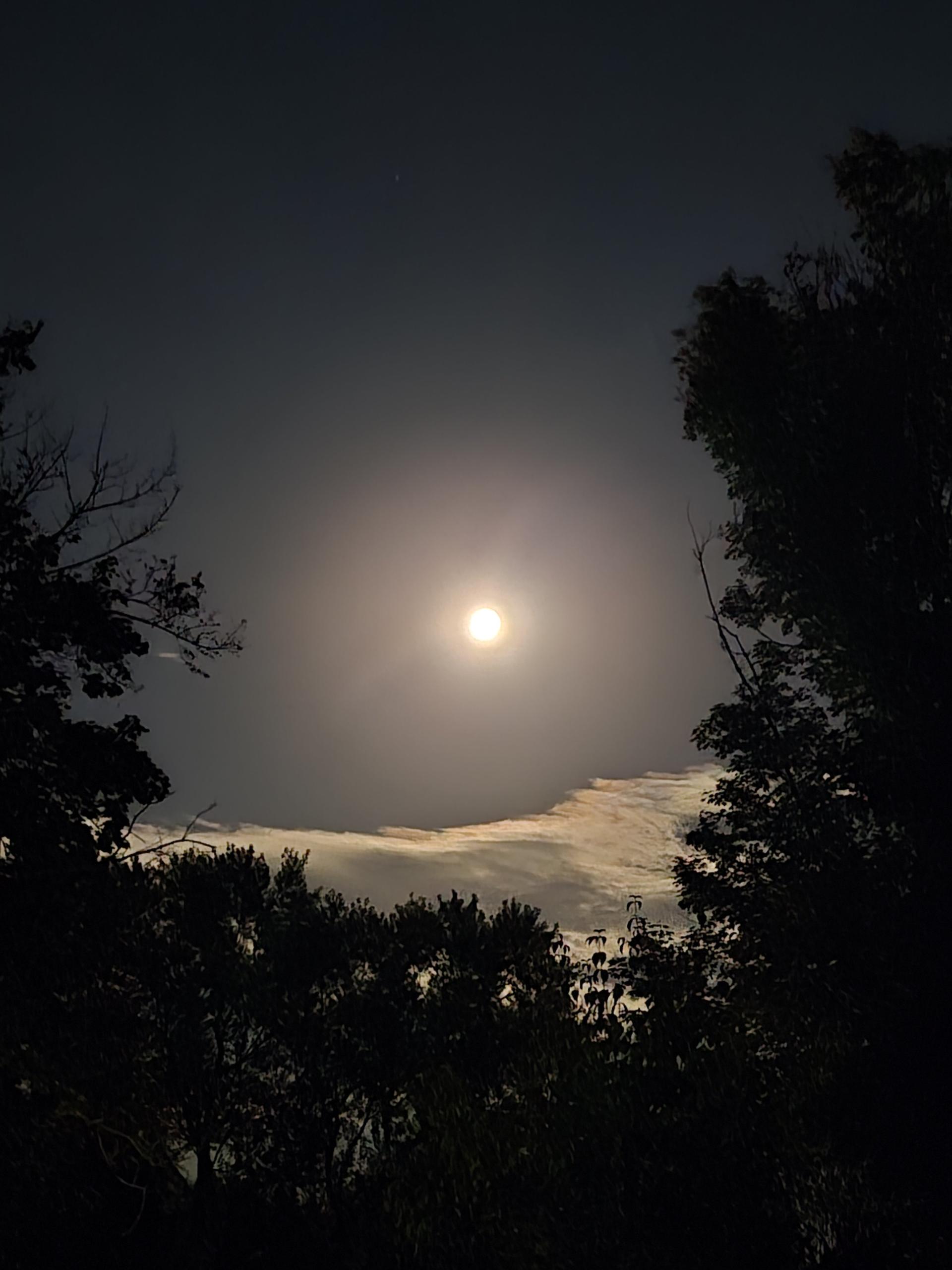 image is my own work
Degenerate Races
If we look back at the horror literature that flourished a century or so ago, we often find ideas of degenerate human types that fell short of full human status. The Darwinian theories that were so much in vogue in these years suggested the varieties of primitive beings that might be found on the evolutionary scale, as was illustrated by the discovery of Neanderthal races.
Fears of degeneracy long agonized ruling elites and drove eugenic responses. In Britain that impulse found draconian expression in the Mental Deficiency Act of 1913, which sought to confine and segregate those believed to be mentally inferior, as defined very broadly. Racial nightmares about the subhuman and near-human manifested in H. G. Wells’ 1895 novel of The Time Machine, which imagines the far future race of the Morlocks, who are underworld-dwelling cannibals.
But very similar ideas manifest frequently in folk horror stories which imagine savage societies living perilously close to the modern world, yet who are still characterized by practices that proclaim their deeply archaic nature, in the form of human sacrifice or cannibalism.
Fairies and Elves
That idea of the literal existence of prehuman populations on British soil was startlingly common in these years. For modern audiences who are so used to the influence of classic cartoons, fairies and leprechauns appear as humorous, playful figures. The whole world of Peter Pan and Tinker Bell dates to the 1904 play Peter Pan, by J. M. Barrie.
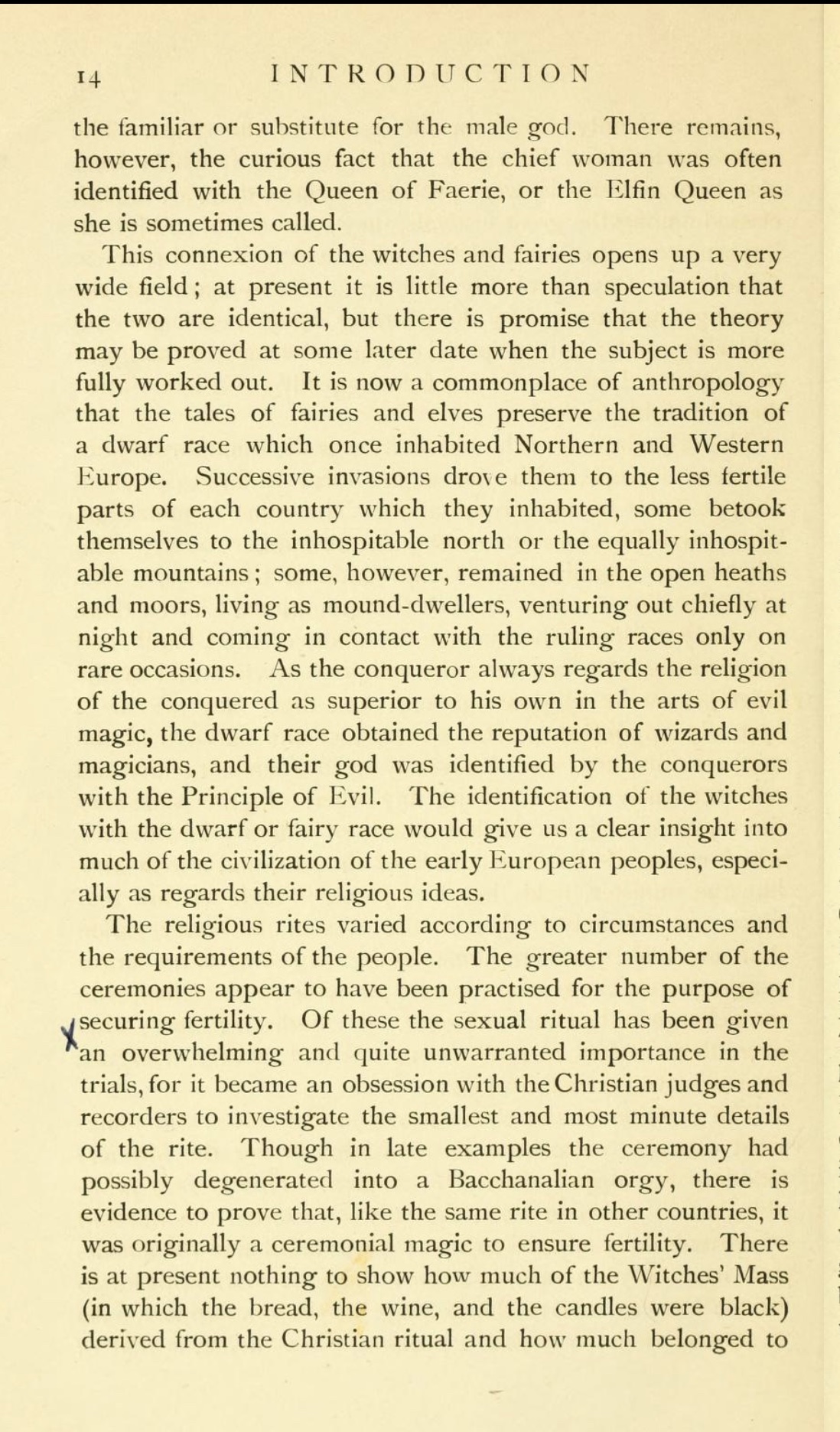
But in precisely that era, some theorists of pagan survivals offered a more threatening interpretation. A great many European myths and fairy stories told of small mis-shapen creatures often described as elves, fairies, gnomes, or goblins, who lived underground in concealed kingdoms, and who seized human prey for sacrifice. Some scholars seriously suggested that such tales preserved memories of an authentic “dwarf race” that inhabited Europe until quite modern times, perhaps the remnant of an early near-human species. They long predated the “Aryan” Celtic peoples of the Iron Age, who recorded them in their folklore.
Technically, this argument is “euhemerist,” in suggesting that these myths and “fairy tales” could be traced back to actual living breathing beings, and it had a potent influence on the anthropological world of the ate nineteenth century. The argument was famously made by Scottish folklorist David MacRitchie in his influential book The Testimony of Tradition (1890), who referred to the hidden people as “Turanian,” or possibly they were “Picts.” Also vital was his 1893 book Fians, Fairies and Picts.
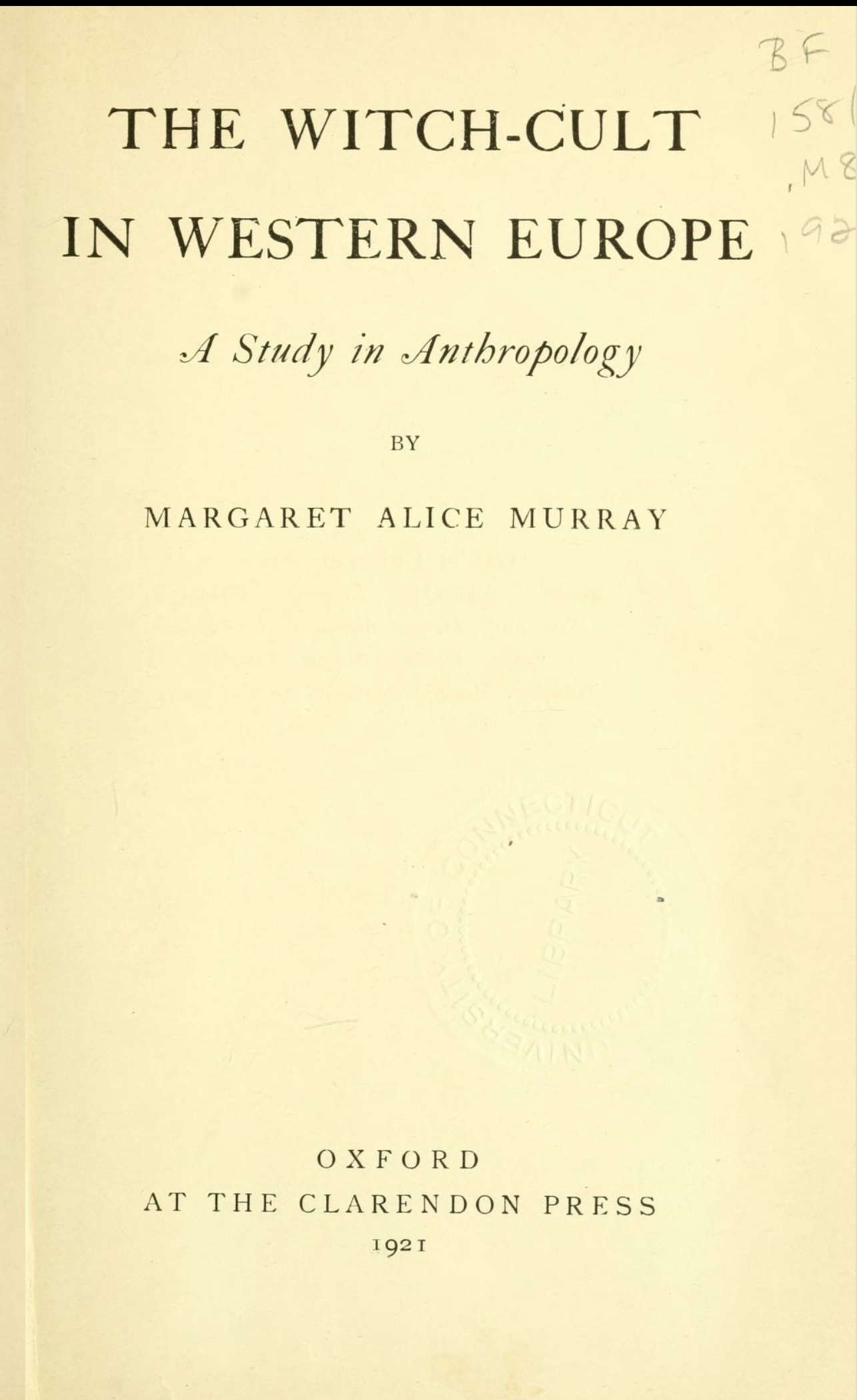
The idea was publicized by anthropologist Margaret Murray, in her wildly successful writings on The Witch Cult in Western Europe (1921) – which sensible people were still treating seriously into the 1970s. As Murray wrote:
It is now a commonplace of anthropology that the tales of fairies and elves preserve the tradition of a dwarf race which once inhabited Northern and Western Europe. Successive invasions drove them to the less fertile parts of each country which they inhabited, some betook themselves to the inhospitable north or the equally inhospitable mountains; some, however, remained in the open heaths and moors, living as mound-dwellers, venturing out chiefly at night and coming in contact with the ruling races only on rare occasions.
Do read that first sentence again. “It is now a commonplace of anthropology [my emphasis] that the tales of fairies and elves preserve the tradition of a dwarf race which once inhabited Northern and Western Europe.” It took only a little extrapolation to suppose that those supposed races might have continued into the present day. The Stone Age (or the Bronze Age) might quite literally still exist, just over the next mountain. What a gift to writers of horror fiction!
Murray was fascinated by stories that linked fairies to witches, a common feature of Scottish cases. Perhaps, she believed, the rituals that appeared in the witchcraft trials were actually memories of ancient pre-Aryan religion, which those ancient races still pursued in their remote lands.
“Mongol” Races Next Door
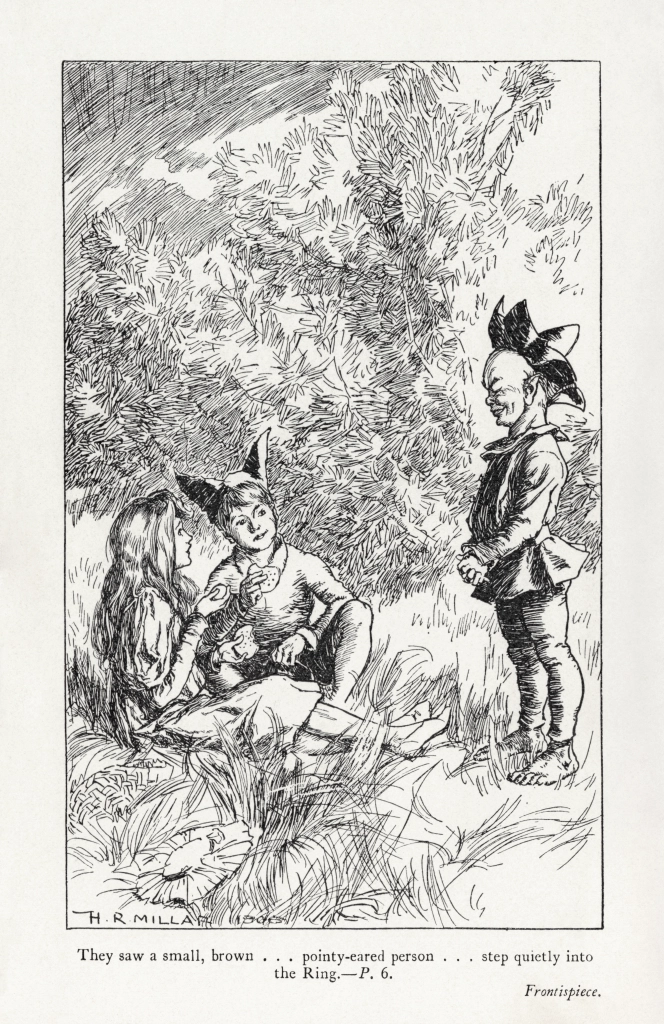
According to some versions of the tale, the former races were “Oriental” or “Mongoloid” in character – perhaps Finno-Ugric? – and thus predecessors of the authentically White Aryan peoples. To put this in context, the earliest and most influential cartoon representations of the Yellow Peril date from 1895, when that concept became such a pervasive and scandalous theme in European media. Even Kipling’s benevolent Puck (in Puck of Pook’s Hill, 1906) has an obviously Asian face.
When physician John Langdon Down discovered the syndrome that bears his name, he applied the terms “Mongol” and “Mongoloid,” reinforcing the Asian context of racial degeneracy.
The Little People
However bizarre their content might appear, folk horror stories gained special force precisely because they were so clearly echoing and enhancing very mainstream social concerns. We find this especially in the work of fantasy writers such as Arthur Machen and John Buchan.
Machen drew effectively on the mythology of the “little people,” its pre- or sub-human races. Although Machen’s 1895 book The Three Impostors is described as a novel, its various sections can easily be read as free-standing stories, and one part in particular has been much anthologized under the title of The Novel of the Black Seal. Machen here uses what would become the standard trope of an academic researching ancient tales, in this case concerning mysterious hieroglyphic marks in the Welsh hills, in a region where several people had recently disappeared.
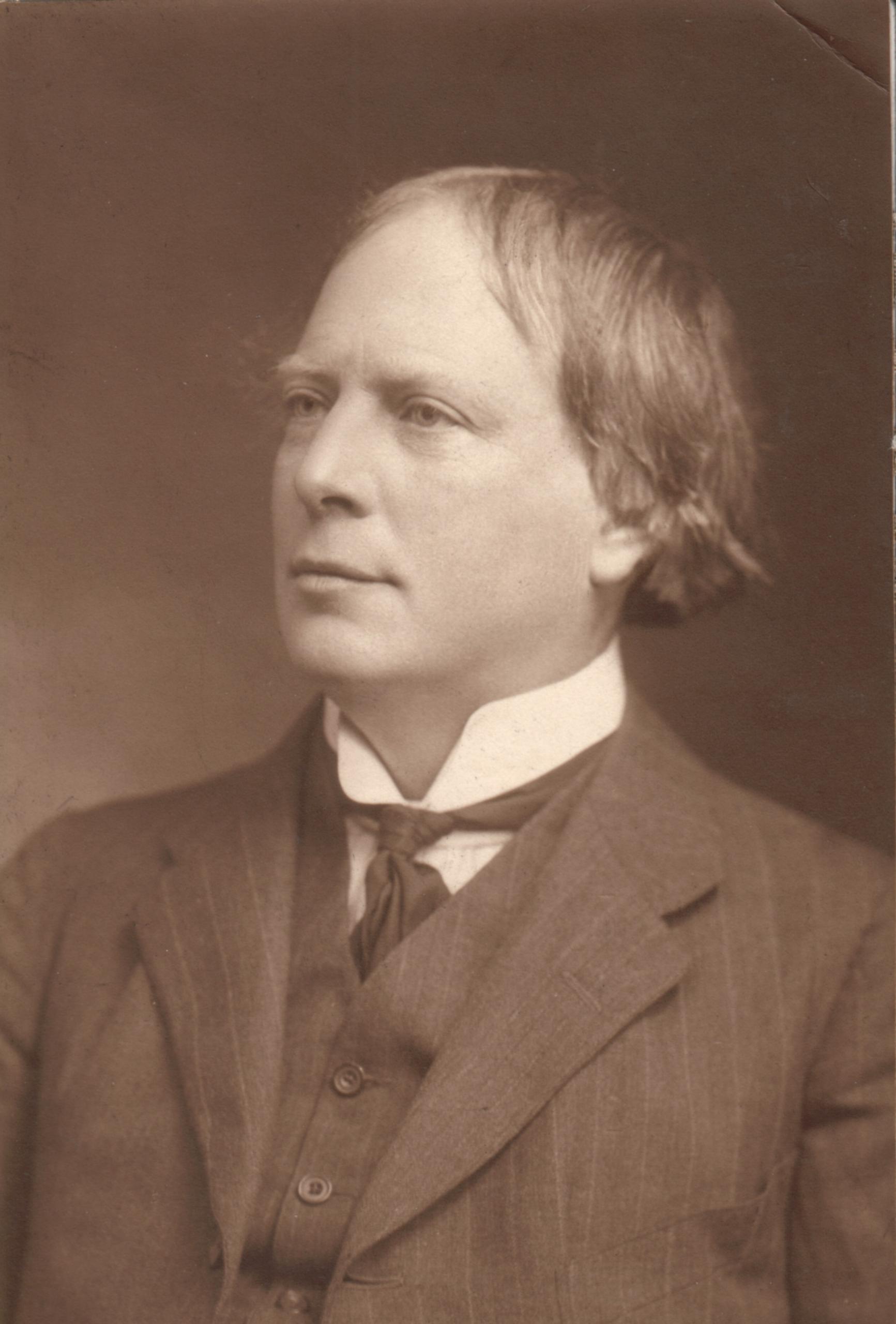
As so often in his work, the setting is near a fictionalized Caerleon, but in “even wilder country, barren and savage hills, and ragged commonland, a territory all strange and unvisited, and more unknown to Englishmen than the very heart of Africa.” The hero, Professor Gregg, knows that the landscape is still the dwelling place of a people that
dwells in remote and secret places, and celebrates foul mysteries on savage hills. Nothing have they in common with men save the face, and the customs of humanity are wholly strange to them; and they hate the sun. They hiss rather than speak; their voices are harsh, and not to be heard without fear.
The Little People are pre-human cave dwellers who still deploy ancient stone weapons, but whose society survives intact, as the hidden neighbors of modern humanity.
Machen used the same subject matter in several stories from about this time, and “The Shining Pyramid” offers a detailed description of the underground race. As they investigate the disappearance of a local girl, the detective Dyson and his friend note the appearance of strange objects in the landscape – flint arrowheads arranged in symbolic patterns or hieroglyphs on walls and stones. They observe the primitive race gathered for a great ritual, “the things made in the form of men but stunted like children hideously deformed, the faces with the almond eyes burning with evil and unspeakable lusts; the ghastly yellow of the mass of naked flesh.” But these are in no sense supernatural figures. As Dyson explains,
They represent a tradition of the prehistoric Turanian inhabitants of the country, who were cave dwellers: and then I realized with a shock that I was looking for a being under four feet in height, accustomed to live in darkness, possessing stone instruments, and familiar with the Mongolian cast of features!
The investigators despair of reclaiming the kidnapped girl, with the implication either that she has been raped and racially polluted by the Mongoloid creatures, or else mutilated.
No Man’s Land
John Buchan used a similar mythology in his story “No Man’s Land,” (published 1902). This concerns an academic traveling in Scotland who explores an area where folk tales circulate of a race of little people or Brownies. He duly finds a surviving tribe of ancient Picts, dark and squat creatures reminiscent of Arthur Machen’s lost Turanians, and Buchan’s “Folk of the Hills” are no less savage. Their life
was a murderous chronicle—a history of lust and rapine and unmentionable deeds in the darkness. One thing they had early recognized—that the race could not be maintained within itself; so that ghoulish carrying away of little girls from the lowlands began, which I had heard of but never credited. Shut up in those dismal holes, the girls soon died, and when the new race had grown up the plunder had been repeated. Then there were bestial murders in lonely cottages, done for God knows what purpose. Sometimes the occupant had seen more than was safe, sometimes the deed was the mere exuberance of a lust of slaying.
The Picts kidnap a local girl with the intention of sacrificing her to their gods.
The Devil’s Mistress
“Historical” fairies also feature prominently in a pioneering witchcraft novel that very rarely receives the attention it deserves. In 1915, Scottish occultist J. W. Brodie-Innes published The Devil’s Mistress, a historical novel set in mid-seventeenth century Scotland, and focusing on the real-life witch of that era, Isobel Gowdie. In the novel, Gowdie is no innocent victim of unjust persecution or religious hysteria but is rather the authentic member of a Scottish witch cult that is organized in covens, each led by a Queen and a Dark Master, as described in the classic accounts of witch trials. The novel’s witch cult operates in close collaboration with a fairy kingdom of Elfinland which exists in parallel to visible Christian society. Isobel travels between known reality and the ancient pagan landscapes that now came fully into view. She meets the fairies at “an ancient stone circle,” which she comes to see not just as bare stones but as marble pillars adorned with flowers, the setting for music and dancing.
Lovecraft’s Mythology
In his “Supernatural Horror in Literature” (1927), Lovecraft offered something like a credal statement that could have been advanced by a great many authors of these years. It assuredly included the idea of barely human dwarf races:
Much of the power of Western horror-lore was undoubtedly due to the hidden but often suspected presence of a hideous cult of nocturnal worshippers whose strange customs—descended from pre-Aryan and pre-agricultural times when a squat race of Mongoloids roved over Europe with their flocks and herds—were rooted in the most revolting fertility-rites of immemorial antiquity. This secret religion, stealthily handed down amongst peasants for thousands of years despite the outward reign of the Druidic, Graeco-Roman, and Christian faiths in the regions involved, was marked by wild “Witches’ Sabbaths” in lonely woods and atop distant hills on Walpurgis-Night and Hallowe’en, the traditional breeding-seasons of the goats and sheep and cattle; and became the source of vast riches of sorcery-legend, besides provoking extensive witchcraft-prosecutions of which the Salem affair forms the chief American example.
The Fairies Endure
As I have suggested, these stories had a very long history, and I can only mention a few titles here. But I will end with a manifestation that is personally dear to me, namely from the British Folk Music revival which developed from 1967-68 onward. Among many other acts, Fairport Convention formed in 1967, issuing the pivotal album Liege and Lief in 1969, which was also the year that Steeleye Span emerged.
Both bands delved deeply into the archives of British folk music, with all its tales of witches and fairies, and some were almost shockingly pagan. “Tam Lin” (1969) by Fairport Convention used an Early Modern ballad from the Scottish borders. The story tells how Janet becomes pregnant by the “elfin” Tam Lin, who was a human being abducted by fairies. Tam fears that he will soon fall victim to the pagan custom of “paying a tithe to Hell” – that is, becoming a human sacrifice. On Halloween, when the fairy folk ride, Janet must rescue him by seizing him, and holding on to him despite all the bodily transformations through which he will pass. She succeeds, to the anger of the Fairy Queen.
I am not suggesting that these folk musicians were treating those stories as literally true. But for a shockingly long time, many scholars certainly did.
Previous Post
October 22, 2025
Yes, Pentecostals Really Do Need Those Airplanes
Next Post

October 24, 2025 Ask of Old Paths: An Interview with Grace Hamman
Recent Comments
"Very good point about MacDonald.I am certainly a Machen fan!"
Fairies, Witches, Folk Horror, and the ..."
"The Scottish author George MacDonald integrated fairy world into his fiction in a way that ..."
Fairies, Witches, Folk Horror, and the ..."
"I like the idea that we can have different streams. The coffee analogy is genius."
How Do You Take Your Evangelicalism?
"Geography lesson: Southern California is actually in North Texas. I've lived her for 40 years, ..."
How Do You Take Your Evangelicalism?
Browse Our Archives
Select a Category abolitionism Abortion Abraham Joshua Heschel Abraham Kuyper Abraham Lincoln Academia Activism Adam Renberg Advent Adventist africa African American Religion Agnes Howard Albert Camus American History American Religious History American Revolution American West Anabaptists Ancient History Andrea Turpin Andrei Tarkovsky Anglicanism Annales Ansley Lillian Quiros anti-Catholicism Antisemitism Anxious Bench apologetics Apparitions Arash Azizi Archaeology archives art Artificial Intelligence Asia Asian Americans Augustine Authors Bad Bunny Baptism Baptists Barack Obama Battle of Hastings Benjamin Franklin Bernard-Henri Levy Beth Allison Barr Beth Moore Bethany Mannon Bible Bill Cunningham Billy Graham Black Music Bob Dylan Body Boenhoffer Books Breastfeeding Bruce Springsteen C.S. Lewis Calvinism Cancel Culture Capitalism Carmelites Catholicism Cedric Robinson Cesar Chavez Charismaticism charity Charles Dickens Charles Lindbergh Che Guevara Chicago Children Chinese Christianity Chris Gehrz Christ Christian death Christian Higher Education Christian life Christian Nation Christian Nationalism Christianity Today Christmas Church life Church Practice cinema Civil Religion Civil Rights Movement Civil War civility Classics Climate Change Cold War Colonial Mexico colonialism Comer Communism community complementarianism Conference on Faith and History Congregationalism Conspiracies Conspiracy Conversion Narratives Coronavirus Costa Rica Council of Nicaea Covid-19 Creation Critical Race Theory Crusades Culture culture wars Daniel K. Williams David Barton David Swartz Death Ways death with dignity DEI democracy Democratic Party Devotion Digital Age Diplomacy discipleship diversity Donald Trump Drama Dua Lipa Early Church early modern Early modern Catholicism Easter Eastern Christianity economic exploitation Education elections Elie Wiesel Elizabeth II Elizabeth Taylor emotions Empire Engineering England enslavement Entertainment Episcopal Church Erica Ramirez eschatology Eurocentrism Evangelicalism Evangelicals Exegesis Family Feminism Film Flannery O'Connor folk music Food Foreign Policy founding fathers Franciscans Franciscus Junius fundamentalism Funerals G.K. Chesterton Gender Genocide genre geography George W. Bush George Washington George Whitefield Global Christianity Global church Grief Guadalupe guest post Guest Post gun control gun violence Gustavo Gutierrez Hamid Dabashi Harold John Ockenga Harvest Hate Hawaiian Christianity Healing health care Heather Cox Richardson Hell Heresy Hermeneutics Higher Education Hinduism Hippocratic oath Historical Fiction Historical Methodology Historical Profession Historical Profession Historical Theology Historical Thinking historiography Holidays Holocaust horror movies Human rights Humanitarian Work humanities Hummingbirds Hungary hymns Imago Dei Immigration Injustice Interviews Iran Islam Islamophobia Israel Ivan's Childhood Jacob Randolph James Bratt Janine Giordano Drake Japanese history Japanese Literature Jean Paul Sartre Jesse Miranda Jesus Jesus Christ Jimmy Carter Joan Baez Joan Didion Joanne Freeman João B. Chaves Joao Chaves Joey Cochran John Calvin John Fea John Tillotson John Turner Johnny Cash Jonathan Edwards Jonathan Tran Joseph Smith Josh Howerton Journalism Jr. Judaism Jürgen Moltmann Just War Justice Justin Brierley Karl Barth Katelyn Beaty koi ponds Kris Kristofferson Kristin Kobes Du Mez Latin American Religious History Latino Americans Lectio Divina Leisure Lent Leonard Cohen liberal arts liberalism Liberation Theology Linda Ronstadt Lisa Clark Diller Literature Lou Reed Lynchings Lynneth Miller Renberg Mainline Protestantism Malcolm Foley Marilyn Monroe Maritime history Mark Noll Marriage Martin Luther Martin Luther King Martyrdom Marxism Mary Masih Alinejad mass shootings material culture medieval Christianity Medieval Ethiopia Melissa Borja memory Mennonites Mental Health Mental Illness Methodism Mexican Americans Mexicans Mike Madrid Miles Mullin Min Jin Lee Miscarriage Missionaries Mister Rogers Mitt Romney modernity Monasticism Mormonism Motherhood Mothers of the Church Moving Music Musicals Nadya Williams Nahua Christianity Native Americans Natsume Sōseki New Contributor New England New Year New York Nico Non-Violent Protest Orthodoxy pacifism Paleo Evangelicals Palestinians Parenting Patti Smith Paul Kingsnorth Pedro Calderón de la Barca Pentecostalism Philip Jenkins Phillis Wheatley physician-assisted suicide pilgrimage Pilgrims pluralism Plutocracy Poetry Politics Pope Francis Pope Leo XIV post-modernism prayer preaching Presbyterians prosperity gospel Protest Public history Publishing Puritans purity culture Quakers race Race Massacres Racial Capitalism racial reconciliation racialization Racism Raha Bahloulipour Re-Enchantment reading Reformation Refugees religion and the university religion and war Religious Freedom Religious Nones Religious Pluralism Religious Symbols religious violence Republican Party Revival Rita Coolidge Ritual Roger Williams Roman Catholic church Royalty Russell Moore same-sex marriage Sarah Irving-Stonebraker Scandinavia Science Science and Technology Scopes trial Scriptural Interpretation secularism Selena Quintanilla seminary Seventh-Day Adventists sexual morality Sexuality Sikhs Silence slaveholders theology Slavery Slavoj Zizek social justice Social Media Southern Baptist Convention Southern Religion Spain Spiritual Autobiography Spiritual but not religious Spiritual Discipline Sports Stanley Hauerwas Suffering Summer Camps Sunday Night Odds and Ends Supernatural Supreme Court Syriac Christianity Tal Howard Taylor Swift Teaching Technology Television Thanksgiving The Beatles The Mission theater TheoBros Theology Thomas Dixon Thomas Jefferson Thomas Kidd Thomas Merton Tim Gloege Tim Walz Tom Holland Tourism tradition Tragedy Translation Transnationalism Travel Trump Ukraine Uncategorized Unitarians United Methodist Church US History Vanessa Chan Velvet Underground Verónica A. Gutiérrez Veronica Gutierrez Vikings Violence Virgin Mary Virtue Virtue ethics Visions Voting War WCTU Wendell Berry Westminster Assembly White Evangelicalism Wildfires Winnie the Pooh Witches women Women in Ministry Women's and Gender Studies Work Worship writing Yasunari Kawabata Zena Hitz
Select a Month October 2026 September 2026 August 2026 July 2026 June 2026 May 2026 April 2026 March 2026 February 2026 January 2026 December 2025 November 2025 October 2025 September 2025 August 2025 July 2025 June 2025 May 2025 April 2025 March 2025 February 2025 January 2025 December 2024 November 2024 October 2024 September 2024 August 2024 July 2024 June 2024 May 2024 April 2024 March 2024 February 2024 January 2024 December 2023 November 2023 October 2023 September 2023 August 2023 July 2023 June 2023 May 2023 April 2023 March 2023 February 2023 January 2023 December 2022 November 2022 October 2022 September 2022 August 2022 July 2022 June 2022 May 2022 April 2022 March 2022 February 2022 January 2022 December 2021 November 2021 October 2021 September 2021 August 2021 July 2021 June 2021 May 2021 April 2021 March 2021 February 2021 January 2021 December 2020 November 2020 October 2020 September 2020 August 2020 July 2020 June 2020 May 2020 April 2020 March 2020 February 2020 January 2020 December 2019 November 2019 October 2019 September 2019 August 2019 July 2019 June 2019 May 2019 April 2019 March 2019 February 2019 January 2019 December 2018 November 2018 October 2018 September 2018 August 2018 July 2018 June 2018 May 2018 April 2018 March 2018 February 2018 January 2018 December 2017 November 2017 October 2017 September 2017 August 2017 July 2017 June 2017 May 2017 April 2017 March 2017 February 2017 January 2017 December 2016 November 2016 October 2016 September 2016 August 2016 July 2016 June 2016 May 2016 April 2016 March 2016 February 2016 January 2016 December 2015 November 2015 October 2015 September 2015 August 2015 July 2015 June 2015 May 2015 April 2015 March 2015 February 2015 January 2015 December 2014 November 2014 October 2014 September 2014 August 2014 July 2014 June 2014 May 2014 April 2014 March 2014 February 2014 January 2014 December 2013 November 2013 October 2013 September 2013 August 2013 July 2013 June 2013 May 2013 April 2013 March 2013 February 2013 January 2013 December 2012 November 2012 October 2012 September 2012 August 2012 July 2012 June 2012 May 2012
Follow Us!
TAKE THE
Religious Wisdom Quiz
What did the disciples do when Jesus asked them to stay awake in the garden?
Select your answer to see how you score.
They left They sang They prayed They fell asleep
Related posts from Anxious Bench

Fairies, Witches, Folk Horror, and the Secret Commonwealth

Hogg’s Justified Sinner: A Gothic Classic for Halloween

James Hogg, Weird Wives, and Feminist Witches

How an Explosive Book Rewrote the Study of...
TRENDING AT PATHEOS Evangelical

In "Irreplaceable," our book on vocation and technology, Trevor Sutton and I...

I was strolling through the top floor of the brand new Parthenon...

What Does Gêvâh Mean For Kimberley Guifoyle &...
This week, a lot of the news is focused on Kimberly Guilfoyle....

INNER CIRCLE: Profound Mystery (Of Christ In All...
Ephesians 5:31-32 “For this reason, a man will leave his father and...

Do Not Rejoice When Your Enemy Falls: The...
Turning an execution into a public spectacle is a disturbing expression of...

'The Chosen' S6 Trailer: The Passion Gets Very...
Not many watching 'The Chosen' worry about spoilers, but just because they...
view all Evangelical blogs
What Are Your Thoughts?leave a comment
Ad-Free & Subscriber Log-In Subscription Support
- About Us
- 2026 Calendar
- Videos
- Podcasts
- Library of World Religions
- Faith In Media Tracker
- Advertise With Us
- Write for Us
- Privacy Policy
- Terms of Service
- Do Not Sell My Data
- Contact Us
- Radiant Digital
- Manage Newsletter Subscriptions
- Unsubscribe From Notifications
- Sitemap
Copyright 2008-2026, Patheos. All rights reserved.
Subscription Support Ad-Free & Subscriber Log-In
Follow Patheos