
BuddhistCatholicContemplativeEvangelicalGeneral ChristianHinduJewishLatter-day SaintMuslimNew VisionsProgressive Christian
Beliefs
- Buddhist
- Catholic
- Contemplative
- Evangelical
- General Christian
- Hindu
- Jewish
- Latter-day Saint
- More Voices
- Muslim
- New Visions
- Pagan
- Progressive Christian
Topics
- Religion News
- Food and Religion
- Sports and Religion
- Religious Art
- Religious Music and Entertainment
- Religious Events
- History and Religion
- Style and Religion
- Politics and Religion
- Women in Religion
- Recreation Outdoors and Religion
- Business Finance and Religion
- Careers Workplace and Religion
- Education and Religion
- Family Parenting and Religion
- Health Fitness and Religion
- Home and Religion
- Relationships and Religion
- Technology and Religion
- Travel and Religion
Columnists
- Buddhist Columnists
- Business Finance and Religion Columnists
- Careers Workplace and Religion Columnists
- Catholic Columnists
- Contemplative Columnists
- Education and Religion Columnists
- Evangelists Columnists
- Family Parenting and Religion Columnists
- General Christian Columnists
- Health Fitness and Religion Columnists
- Hindu Columnists
- History and Religion Columnists
- Home and Religion Columnists
- Jewish Columnists
- More Voices Columnists
- Latter Day Columnists
- Muslim Columnists
- New Visions Columnists
- Nonreligious Columnists
- Pagan Columnists
- Politics and Religion Columnists
- Progressive Columnists
- Recreation Outdoors and Religion Columnists
- Relationships and Religion Columnists
- Religion News Columnists
- Religious Art Columnists
- Religious Events Columnists
- Religious Music and Entertainment Columnists
- Sports and Religion Columnists
- Style and Religion Columnists
- Technology and Religion Columnists
- Travel and Religion Columnists
- Women in Religion Columnists
Resource Library
- 2026 Calendar
- Library of World Religions
- The 100 Most Holy Places on Earth
- Patheos Answers
- Podcasts
- Videos
- Faith Leaders Database
- Anglican Episcopalian
- Bahai
- Baptist
- Buddhism
- Christianity
- Confucianism
- Eastern Orthodoxy
- Hinduism
- Holiness and Pentecostal
- ISKCON
- Islam
- Judaism
- Lutheran
- Methodist
- The Church of Jesus Christ of Latter-day Saints
- New Age
- Paganism
- Presbytarian and Reformed
- Protestantism
- Religion Behind the Scenes
- Roman Catholic
- Scientology
- Shia Islam
- Sikhism
- Sufism
- Sunni Islam
- Taoism
- Zen
- See all religions
Research Tools
 Ad-Free & Subscriber Log-In Subscription Support
Ad-Free & Subscriber Log-In Subscription Support
Follow Patheos 

- Trending:
- Forgiveness
- |
- Marriage
- |
- Consciousness
- |
- Death Penalty
- |
- Election
- |
- Halloween

-
About the Authors
- Home
- Evangelical
- 1893: What Would Jesus Do To Improve the Race?
1893: What Would Jesus Do To Improve the Race?
Last updated on: July 11, 2025 at 2:11 pm by Philip Jenkins
1893: What Would Jesus Do To Improve the Race? 2025-07-11T14:11:43-04:00 Philip Jenkins
Patheos Explore the world's faith through different perspectives on religion and spirituality! Patheos has the views of the prevalent religions and spiritualities of the world.
In 1893, Congregationalist minister Josiah Strong (1847-1916) was a leading figure in the Social Gospel movement that was such a prominent feature of American Christianity in the late nineteenth century. The great church historian Sidney Ahlstrom calls him “a legend in American history, as both a religious and a secular figure.” But by modern standards, his ideas combined two approaches that to us seem utterly irreconcilable, of radical social reform and scientific racism. His story epitomizes a critical moment in American Protestant history.
The New Era And The Coming Kingdom
Strong, like other Progressive-minded clergy, urgently wanted the churches to respond to the crying needs of the swelling cities, to fight corruption and poverty, to eradicate slums and saloons, and to build good housing. His book published in that year, The New Era; Or, The Coming Kingdom,is a sweeping and very influential manifesto of Social Gospel theories, and of specific campaigns for reform. Only thus could the working masses be brought back to the churches.
Conservative evangelicals hated such ideas. As Ahlstrom says, he was
denounced as one who betrayed biblical teaching on the Kingdom of God and put millennial doctrines at the service of social reform and foreign policy. To those many Protestants in almost all denominations who think of the churches as essentially spiritual institutions which should be concerned primarily with reaching and converting individuals, Strong was seen as a meddler in secular affairs which are not the proper concern of organized Christianity; in addition he was blamed for subverting the aims of the Evangelical Alliance by making it an engine of theological liberalism and social activism. … If the Social Gospel and its secular corollary, Progressivism, deserve any credit, then so does Josiah Strong. Indeed he more than any other made it possible to speak of the Social Gospel as a movement.
In modern liberal terms, so to speak, Strong sounds like one of the good guys. But in the same book, The New Era, Strong wrote at length about the glories and the power of the Anglo-Saxon race as the summit of human accomplishment – and as a race, not just a cultural tradition. He speaks repeatedly of bloodlines, of breeding, of human stock, both superior and inferior. The reader should draw vital lessons:
The importance to mankind and to the coming Kingdom of guarding against the deterioration of the Anglo-Saxon stock in the United States by immigration. There is now being injected into the veins of the nation a large amount of inferior blood every day of every year. … He does most to Christianize the world and to hasten the coming of the Kingdom who does most to make thoroughly Christian the United States.
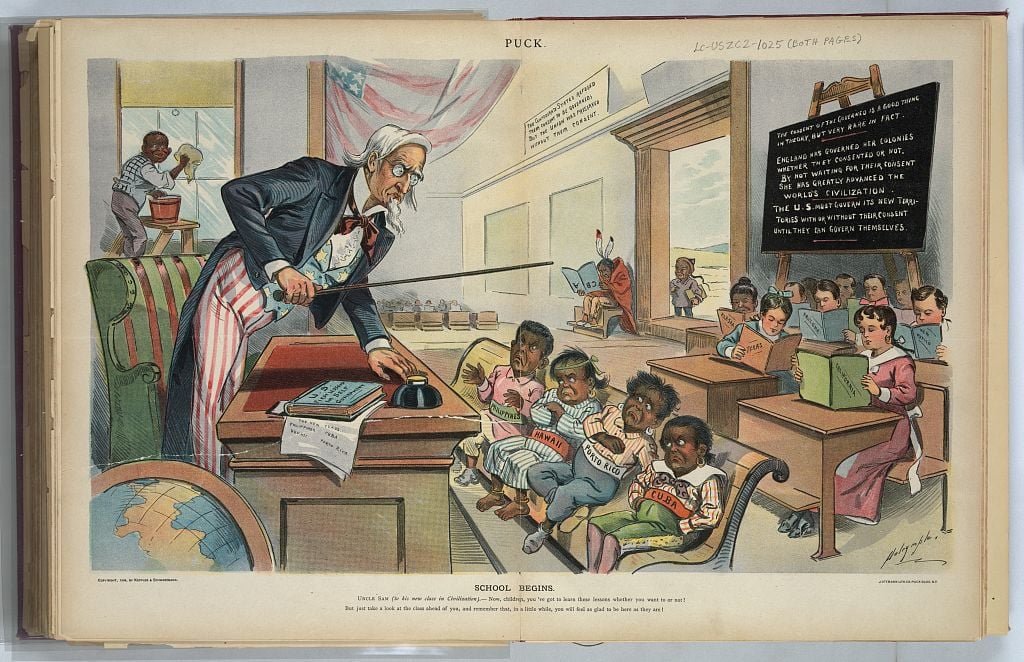 This image, together with all others in this post, is in the public domain.
The Problem of Labels
Many modern readers find a serious disconnect here, and particularly in terms of applying labels. We live in a world in which racial theories and biological classifications have moved wholly beyond the acceptable political spectrum, and we would presumably describe Strong’s opinions as lying on the extreme Right. At the same time, we think of the Social Gospel as part of a liberal progressive movement, which at times advocated political interventions that surely belong to the Left. Those progressive causes commonly included women’s rights, the suffrage and Temperance, and in each of those case women campaigners were likely to cite biological and racial arguments for change. Often too, they were frankly Nativist (I will cite examples in upcoming blogposts).
In that seeming combination of opposites, Strong in fact was very typical of his age, and especially of religious thought. Put simply, those apparent opposites absolutely were not opposites to him, or to a great many of his educated contemporaries. In the intellectual world of the time, racial and biological theories and rhetoric enjoyed enormous significance, to the point that they have to be included in any credible account of the religious or reformist world-view. For many leading figures, racial and religious thought were inextricable. For my present purposes, understanding such ideas is so critical because they so often manifest themselves in the thought and writing of 1893, and in ways that might seem startling or even shocking.
If you ever find a way to write the religious history of this era without taking full account of biological and racial theories, do let me know: I can’t.
The Hierarchy of Races
Any account of nineteenth century thought will highlight the year 1859 and the publication of Charles Darwin’s Origin of Species, which undeniably created furious debate among religious believers. But even some of the religious and clerical thinkers who denied Darwin’s specific theories absorbed many ideas that we think of as part of the evolutionary package, and its subsequent developments. Most such ideas centrally used the concept of race, and the factors by which races changed over time. The key name here was not Darwin but his half-cousin Francis Galton, who in 1883 defined the science of eugenics, “the study of all agencies under human control which can improve or impair the racial quality of future generations.”
Essential to this structure was the idea of classifying existing human types as belonging to higher or lower races, and indeed as more or less fully human: Australian Aborigines usually featured very low in this scheme, with Black Africans scarcely better. In a notorious passage in his Descent of Man (1871), Darwin rated the intermediary types that lay between full humanity and primitive apes:
At some future period, not very distant as measured by centuries, the civilized races of man will almost certainly exterminate and replace throughout the world the savage races. At the same time the anthropomorphous apes, … will no doubt be exterminated. The break will then be rendered wider, for it will intervene between man in a more civilized state, as we may hope, than the Caucasian, and some ape as low as a baboon, instead of as at present between the Negro or Australian and the gorilla.
At the other end of the spectrum were the higher races, which demonstrated their evident superiority through their accomplishments, and their growing numbers and political power, which was so apparent during the age of European empires. In the Anglo-American mind, the summit of creation was represented by the Anglo-Saxon peoples, which together were conquering much of the world’s surface and dominating its peoples, demonstrating starkly the “survival of the fittest.” Besides Anglo-Saxonism, “Nordic” terminology was also gaining favor.
Lesser races might ultimately fade away and vanish, or they might survive, but in the meantime, their position in regard to the higher races was that of restless children as opposed to mature adults. The Anglo-Saxons literally were the grown-ups in the room. And as with unruly children, they could in no sense expect any kind of equality of treatment, of rights, or of self-government.
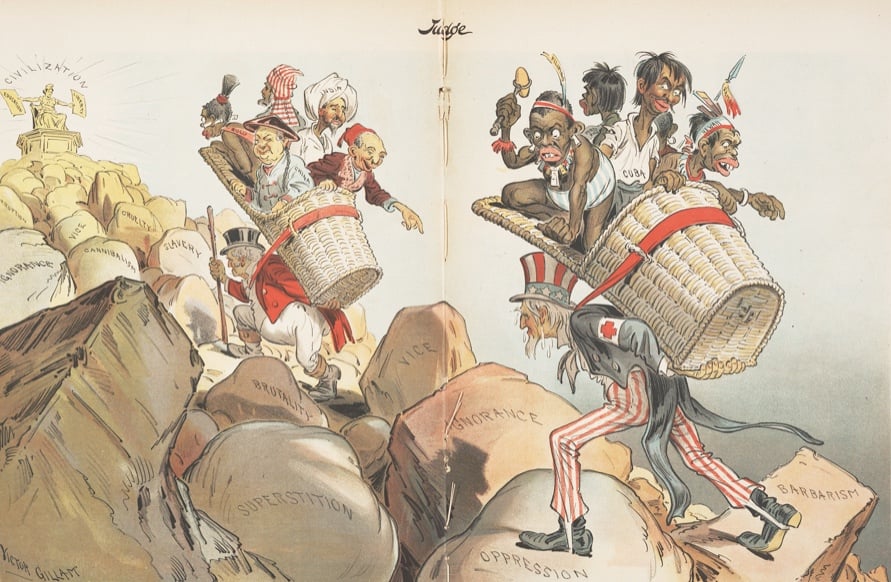
Falling Back
But those relative positions on the evolutionary scale were not fixed, and higher races could decline or fall. That idea of hereditary influences shaping communities for better or worse was by no means new to Americans. In 1877, Richard Dugdale published his study of a multigenerational problem family in The Jukes: A Study of Crime, Pauperism, Disease and Heredity. In the same year, Italian scholar Cesare Lombroso presented his theory that criminals represented a kind of evolutionary throwback to primitive and violent beings, and that atavism was reflected in their distinctive bodily features. This owed much to the highly publicized discovery of Neanderthal remains in the 1850s. Lombroso, quite seriously, thought that the common criminal fashion for tattooing themselves was convincing evidence that they were throwbacks to primitive races.
A race could fall back and degenerate, or it could improve, and policymakers had a major influence on that choice of rival paths. Two issues in particular focused public fears at the end of the nineteenth century, as potential blights on the future of the race, namely sexual diseases – above all, syphilis – and alcoholic drinks.
Religion and Racial Decline
At this point, it might reasonably be asked what any of this had to do with religion, and specifically the Protestantism that was the hegemonic faith of nineteenth century America? Drawing on memories of the Scopes Trial and the film of Inherit the Wind, we might assume a straight conflict between Darwinian evolution and Biblical literalism.
In fact, not only did prominent clergy support such opinions, they were their primary exponents in US culture. More specifically, the key thinkers were Congregationalists, who found such ideas very congenial with their Calvinist roots.
One of the most respected and influential American theologians of the time was Congregationalist Horace Bushnell, whose book Christian Nurture (1861) made some far-reaching observations about Christian expansion and the fate of lesser nations. At this early date, just two years after Origin of Species, he stressed that that Christian growth was a matter of population expansion rather than mission, and that this expansion was the result of selection and evolutionary advantage, that is, of “fitness.” Particular developed and maintained characteristics, whether civilized or savage, and the advantages of civilized races allow them to grow and spread at the expense of inferiors. Christians, he believed – and by this he invariably meant White American Protestants – stood at the highest end of such a racial hierarchy. As a race achieves new levels of “personal and religious character,” so it increases its “populating power,” which allowed it to outnumber and dominate less successful and “fit” groups, such as Catholics and Latinos. He praised “The Out-Populating Power of the Christian [that is, White Protestant] Stock.” Over time, those lesser races had to submit and accommodate the successful race, and they faced a real chance of extinction.
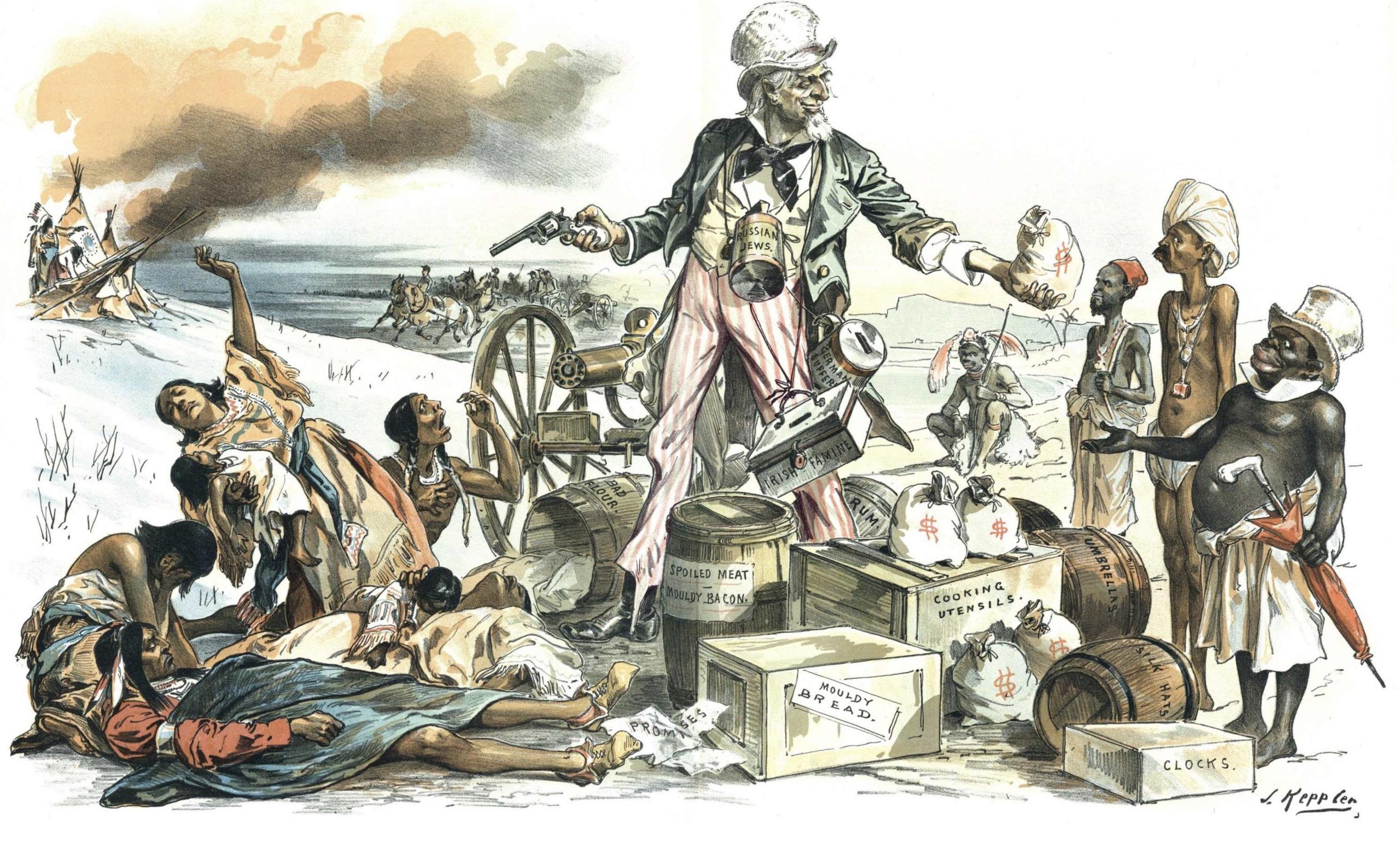
Josiah Strong and the Anglo-Saxons
More prestigious and celebrated even than Bushnell was Josiah Strong. In 1885, he achieved a major bestseller with the book Our Country: Its Possible Future and Its Present Crisis, which combined evangelical thought with imperial ambition, combined with racial, eugenic, and Social Darwinist thought.
For Strong, the Anglo-Saxon race was destined to dominate the world, and the US would be at the core of such a project. Indeed, the aggression and violence of which foreigners so often complained about in the US context constituted a positive evolutionary feature that promised well for the future of that race. Citing Bushnell, he asked rhetorically, “Is it manifest that the Anglo-Saxon holds in his hands the destinies of mankind for ages to come? Is it evident that the United States is to be the home of this race, the principal seat of His power, the great center of His influence?”
In the context of the time, that Anglo-Saxon race was evidently the world’s most successful:
Then this race of unequaled energy, with all the majesty of numbers and the might of wealth behind it — the representative, let us hope, of the largest liberty, the purest Christianity, the highest civilization — having developed peculiarly aggressive traits calculated to impress its institutions upon mankind, will spread itself over the earth. If I read not amiss, this powerful race will move down upon Mexico, down upon Central and South America, out upon the islands of the sea, over upon Africa and beyond. And can anyone doubt that the result of this competition of races will be the “survival of the fittest”?
In language that has chilling connotations for modern readers, Strong suggests that “in what Dr. Bushnell calls ‘the out-populating power of the Christian stock,’ may be found God’s final and complete solution of the dark problem of heathenism among many inferior peoples.” Yes, he did refer to a final solution.
The Destiny of the Race
Hard to believe, but the 1891 edition of Our Country was even more explicitly biological and Darwinist, based as it was on the findings of the 1890 census. So was his The New Era of 1893. In a chapter on “The Destiny of the Race”, he sounds the alarm about racial degeneracy and the rise of inferior racial stock, and “the survival of the unfittest”:
Thus the weak members of civilized societies propagate their kind. No one who has attended to the breeding of domestic animals will doubt that this must be highly injurious to the race. It is surprising how soon a want of care, or care wrongly directed, leads to the degeneration of a domestic race; but, excepting in the case of man himself, hardly any one is so ignorant as to allow his worst animals to breed. And civilization not only preserves the defective classes and permits them to propagate their kind, it also tends to reduce the fecundity of the more highly cultivated. The poor are apt to have large families, the rich small. … The Mountain Whites of the South, who are little more than semi- civilized, do not count a family of a dozen or fourteen members large; and sometimes there are found twenty or more children of one mother. On the other hand, we hear laments that the old New England stock is dying out. Certainly the families of that stock are much smaller than they were a few generations ago and afford a painful contrast to those of alien blood who are transforming New England into a New Ireland or New France.
It is hard to exaggerate Strong’s influence in shaping US opinion, and especially in the ideology of Anglo-Saxonism. His arguments surfaced repeatedly in the grand national debates over the creation of an American empire after the Spanish American war. Religious critics of empire especially recognized that they had to fight hard against what they saw as a dreadful merger of Calvinism and Darwinism.
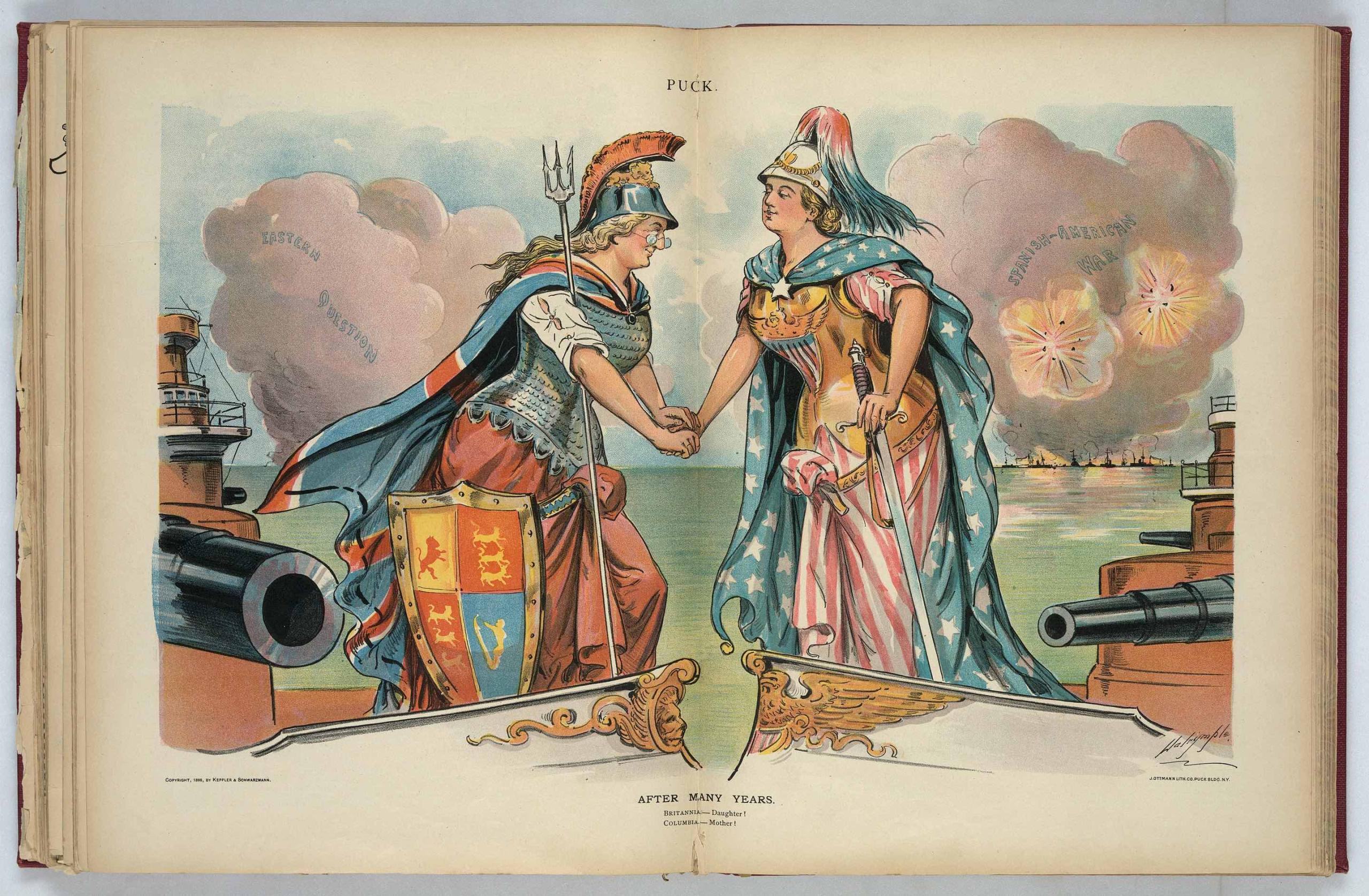
Josiah Strong and the Social Gospel
And as I have said, Strong was also a critical figure in the Social Gospel movement. To summarize quickly, this movement originated in the 1880s (the term first appears in 1879). It attracted such paladins of American Protestantism as Washington Gladden and Walter Rauschenbusch, and any account of the movement normally gives equal prominence to Josiah Strong, and specifically to Our Country and The New Era. Already in 1885, Our Country had laid out the seven components of the national “Crisis,” seven deadly dangers facing the nation: Catholicism, Mormonism, Socialism, Intemperance, Wealth, Urbanization, and Immigration. The Social Gospel approach was later popularized through Charles M Sheldon’s novel In His Steps (1896), which coined the famous question What Would Jesus Do?
For us, the combination of racial theory and reformist zeal seems incongruous and even baffling, but the links become apparent if we pursue the social activism of the coming decades. Christians had long denounced drink, and as I will show, the Temperance movement enjoyed a massive revival from the early 1890s. Unlike in earlier eras, they now placed a central emphasis on the racial harm of alcohol, and the damage caused to new generations of children. Christians had likewise campaigned against sexual immorality, but again, that militancy now found a biological focus, in preventing the spread of sexual diseases and hereditary harms and the undermining of the Anglo-Saxon racial project.
Morality, as defined in its White American Protestant mode, actually supported the defense and building of the race. And in all these individual campaigns, women played a critical role, as the bearers of the ascendant new race, who must be preserved from sexual diseases and alcohol-fueled abuse. Feminists, suffragists, and Temperance advocates alike all drew heavily on racial and biological ideas, which were likewise immersed in Nativism and anti-Catholicism.
In modern times, people have been shocked to find just how deeply the birth control movement of the Progressive Era was immersed in eugenic theories: witness the embarrassment about Margaret Sanger. But this connection was absolutely what we would expect of the era.
So to rephrase Charles Sheldon’s question as it might have appeared in that era: What Would Jesus Do To Improve the Race?
Previous Post

July 9, 2025
Min Jin Lee and the Art of Historical Fiction
Next Post

July 11, 2025 Extracting Voices from the Archives: María de la Paz’s Story
Recent Comments
"Very good point about MacDonald.I am certainly a Machen fan!"
Fairies, Witches, Folk Horror, and the ..."
"The Scottish author George MacDonald integrated fairy world into his fiction in a way that ..."
Fairies, Witches, Folk Horror, and the ..."
"I like the idea that we can have different streams. The coffee analogy is genius."
How Do You Take Your Evangelicalism?
"Geography lesson: Southern California is actually in North Texas. I've lived her for 40 years, ..."
How Do You Take Your Evangelicalism?
Browse Our Archives
Select a Category abolitionism Abortion Abraham Joshua Heschel Abraham Kuyper Abraham Lincoln Academia Activism Adam Renberg Advent Adventist africa African American Religion Agnes Howard Albert Camus American History American Religious History American Revolution American West Anabaptists Ancient History Andrea Turpin Andrei Tarkovsky Anglicanism Annales Ansley Lillian Quiros anti-Catholicism Antisemitism Anxious Bench apologetics Apparitions Arash Azizi Archaeology archives art Artificial Intelligence Asia Asian Americans Augustine Authors Bad Bunny Baptism Baptists Barack Obama Battle of Hastings Benjamin Franklin Bernard-Henri Levy Beth Allison Barr Beth Moore Bethany Mannon Bible Bill Cunningham Billy Graham Black Music Bob Dylan Body Boenhoffer Books Breastfeeding Bruce Springsteen C.S. Lewis Calvinism Cancel Culture Capitalism Carmelites Catholicism Cedric Robinson Cesar Chavez Charismaticism charity Charles Dickens Charles Lindbergh Che Guevara Chicago Children Chinese Christianity Chris Gehrz Christ Christian death Christian Higher Education Christian life Christian Nation Christian Nationalism Christianity Today Christmas Church life Church Practice cinema Civil Religion Civil Rights Movement Civil War civility Classics Climate Change Cold War Colonial Mexico colonialism Comer Communism community complementarianism Conference on Faith and History Congregationalism Conspiracies Conspiracy Conversion Narratives Coronavirus Costa Rica Council of Nicaea Covid-19 Creation Critical Race Theory Crusades Culture culture wars Daniel K. Williams David Barton David Swartz Death Ways death with dignity DEI democracy Democratic Party Devotion Digital Age Diplomacy discipleship diversity Donald Trump Drama Dua Lipa Early Church early modern Early modern Catholicism Easter Eastern Christianity economic exploitation Education elections Elie Wiesel Elizabeth II Elizabeth Taylor emotions Empire Engineering England enslavement Entertainment Episcopal Church Erica Ramirez eschatology Eurocentrism Evangelicalism Evangelicals Exegesis Family Feminism Film Flannery O'Connor folk music Food Foreign Policy founding fathers Franciscans Franciscus Junius fundamentalism Funerals G.K. Chesterton Gender Genocide genre geography George W. Bush George Washington George Whitefield Global Christianity Global church Grief Guadalupe Guest Post guest post gun control gun violence Gustavo Gutierrez Hamid Dabashi Harold John Ockenga Harvest Hate Hawaiian Christianity Healing health care Heather Cox Richardson Hell Heresy Hermeneutics Higher Education Hinduism Hippocratic oath Historical Fiction Historical Methodology Historical Profession Historical Profession Historical Theology Historical Thinking historiography Holidays Holocaust horror movies Human rights Humanitarian Work humanities Hummingbirds Hungary hymns Imago Dei Immigration Injustice Interviews Iran Islam Islamophobia Israel Ivan's Childhood Jacob Randolph James Bratt Janine Giordano Drake Japanese history Japanese Literature Jean Paul Sartre Jesse Miranda Jesus Jesus Christ Jimmy Carter Joan Baez Joan Didion Joanne Freeman João B. Chaves Joao Chaves Joey Cochran John Calvin John Fea John Tillotson John Turner Johnny Cash Jonathan Edwards Jonathan Tran Joseph Smith Josh Howerton Journalism Jr. Judaism Jürgen Moltmann Just War Justice Justin Brierley Karl Barth Katelyn Beaty koi ponds Kris Kristofferson Kristin Kobes Du Mez Latin American Religious History Latino Americans Lectio Divina Leisure Lent Leonard Cohen liberal arts liberalism Liberation Theology Linda Ronstadt Lisa Clark Diller Literature Lou Reed Lynchings Lynneth Miller Renberg Mainline Protestantism Malcolm Foley Marilyn Monroe Maritime history Mark Noll Marriage Martin Luther Martin Luther King Martyrdom Marxism Mary Masih Alinejad mass shootings material culture medieval Christianity Medieval Ethiopia Melissa Borja memory Mennonites Mental Health Mental Illness Methodism Mexican Americans Mexicans Mike Madrid Miles Mullin Min Jin Lee Miscarriage Missionaries Mister Rogers Mitt Romney modernity Monasticism Mormonism Motherhood Mothers of the Church Moving Music Musicals Nadya Williams Nahua Christianity Native Americans Natsume Sōseki New Contributor New England New Year New York Nico Non-Violent Protest Orthodoxy pacifism Paleo Evangelicals Palestinians Parenting Patti Smith Paul Kingsnorth Pedro Calderón de la Barca Pentecostalism Philip Jenkins Phillis Wheatley physician-assisted suicide pilgrimage Pilgrims pluralism Plutocracy Poetry Politics Pope Francis Pope Leo XIV post-modernism prayer preaching Presbyterians prosperity gospel Protest Public history Publishing Puritans purity culture Quakers race Race Massacres Racial Capitalism racial reconciliation racialization Racism Raha Bahloulipour Re-Enchantment reading Reformation Refugees religion and the university religion and war Religious Freedom Religious Nones Religious Pluralism Religious Symbols religious violence Republican Party Revival Rita Coolidge Ritual Roger Williams Roman Catholic church Royalty Russell Moore same-sex marriage Sarah Irving-Stonebraker Scandinavia Science Science and Technology Scopes trial Scriptural Interpretation secularism Selena Quintanilla seminary Seventh-Day Adventists sexual morality Sexuality Sikhs Silence slaveholders theology Slavery Slavoj Zizek social justice Social Media Southern Baptist Convention Southern Religion Spain Spiritual Autobiography Spiritual but not religious Spiritual Discipline Sports Stanley Hauerwas Suffering Summer Camps Sunday Night Odds and Ends Supernatural Supreme Court Syriac Christianity Tal Howard Taylor Swift Teaching Technology Television Thanksgiving The Beatles The Mission theater TheoBros Theology Thomas Dixon Thomas Jefferson Thomas Kidd Thomas Merton Tim Gloege Tim Walz Tom Holland Tourism tradition Tragedy Translation Transnationalism Travel Trump Ukraine Uncategorized Unitarians United Methodist Church US History Vanessa Chan Velvet Underground Verónica A. Gutiérrez Veronica Gutierrez Vikings Violence Virgin Mary Virtue Virtue ethics Visions Voting War WCTU Wendell Berry Westminster Assembly White Evangelicalism Wildfires Winnie the Pooh Witches women Women in Ministry Women's and Gender Studies Work Worship writing Yasunari Kawabata Zena Hitz
Select a Month October 2026 September 2026 August 2026 July 2026 June 2026 May 2026 April 2026 March 2026 February 2026 January 2026 December 2025 November 2025 October 2025 September 2025 August 2025 July 2025 June 2025 May 2025 April 2025 March 2025 February 2025 January 2025 December 2024 November 2024 October 2024 September 2024 August 2024 July 2024 June 2024 May 2024 April 2024 March 2024 February 2024 January 2024 December 2023 November 2023 October 2023 September 2023 August 2023 July 2023 June 2023 May 2023 April 2023 March 2023 February 2023 January 2023 December 2022 November 2022 October 2022 September 2022 August 2022 July 2022 June 2022 May 2022 April 2022 March 2022 February 2022 January 2022 December 2021 November 2021 October 2021 September 2021 August 2021 July 2021 June 2021 May 2021 April 2021 March 2021 February 2021 January 2021 December 2020 November 2020 October 2020 September 2020 August 2020 July 2020 June 2020 May 2020 April 2020 March 2020 February 2020 January 2020 December 2019 November 2019 October 2019 September 2019 August 2019 July 2019 June 2019 May 2019 April 2019 March 2019 February 2019 January 2019 December 2018 November 2018 October 2018 September 2018 August 2018 July 2018 June 2018 May 2018 April 2018 March 2018 February 2018 January 2018 December 2017 November 2017 October 2017 September 2017 August 2017 July 2017 June 2017 May 2017 April 2017 March 2017 February 2017 January 2017 December 2016 November 2016 October 2016 September 2016 August 2016 July 2016 June 2016 May 2016 April 2016 March 2016 February 2016 January 2016 December 2015 November 2015 October 2015 September 2015 August 2015 July 2015 June 2015 May 2015 April 2015 March 2015 February 2015 January 2015 December 2014 November 2014 October 2014 September 2014 August 2014 July 2014 June 2014 May 2014 April 2014 March 2014 February 2014 January 2014 December 2013 November 2013 October 2013 September 2013 August 2013 July 2013 June 2013 May 2013 April 2013 March 2013 February 2013 January 2013 December 2012 November 2012 October 2012 September 2012 August 2012 July 2012 June 2012 May 2012
Follow Us!
TAKE THE
Religious Wisdom Quiz
True or False: David committed adultery with Bathsheba and arranged for her husband Uriah to be killed.
Select your answer to see how you score.
TRUE FALSE
Related posts from Anxious Bench

Fairies, Witches, Folk Horror, and the Secret Commonwealth

Hogg’s Justified Sinner: A Gothic Classic for Halloween

James Hogg, Weird Wives, and Feminist Witches

How an Explosive Book Rewrote the Study of...
TRENDING AT PATHEOS Evangelical

Janie Learns the Way of the Cross: A...
Teaching children about Jesus' Passion can be challenging. Many parents and educators...

Looking For Good Catholic Writing - October 2026
He alone extends the heavens, and he walks upon the waves of...

In "Irreplaceable," our book on vocation and technology, Trevor Sutton and I...

I was strolling through the top floor of the brand new Parthenon...

What Does Gêvâh Mean For Kimberley Guifoyle &...
This week, a lot of the news is focused on Kimberly Guilfoyle....

INNER CIRCLE: Profound Mystery (Of Christ In All...
Ephesians 5:31-32 “For this reason, a man will leave his father and...
view all Evangelical blogs
What Are Your Thoughts?leave a comment
Ad-Free & Subscriber Log-In Subscription Support
- About Us
- 2026 Calendar
- Videos
- Podcasts
- Library of World Religions
- Faith In Media Tracker
- Advertise With Us
- Write for Us
- Privacy Policy
- Terms of Service
- Do Not Sell My Data
- Contact Us
- Radiant Digital
- Manage Newsletter Subscriptions
- Unsubscribe From Notifications
- Sitemap
Copyright 2008-2026, Patheos. All rights reserved.
Subscription Support Ad-Free & Subscriber Log-In
Follow Patheos