
BuddhistCatholicContemplativeEvangelicalGeneral ChristianHinduJewishLatter-day SaintMuslimNew VisionsProgressive Christian
Beliefs
- Buddhist
- Catholic
- Contemplative
- Evangelical
- General Christian
- Hindu
- Jewish
- Latter-day Saint
- More Voices
- Muslim
- New Visions
- Pagan
- Progressive Christian
Topics
- Religion News
- Food and Religion
- Sports and Religion
- Religious Art
- Religious Music and Entertainment
- Religious Events
- History and Religion
- Style and Religion
- Politics and Religion
- Women in Religion
- Recreation Outdoors and Religion
- Business Finance and Religion
- Careers Workplace and Religion
- Education and Religion
- Family Parenting and Religion
- Health Fitness and Religion
- Home and Religion
- Relationships and Religion
- Technology and Religion
- Travel and Religion
Columnists
- Buddhist Columnists
- Business Finance and Religion Columnists
- Careers Workplace and Religion Columnists
- Catholic Columnists
- Contemplative Columnists
- Education and Religion Columnists
- Evangelists Columnists
- Family Parenting and Religion Columnists
- General Christian Columnists
- Health Fitness and Religion Columnists
- Hindu Columnists
- History and Religion Columnists
- Home and Religion Columnists
- Jewish Columnists
- More Voices Columnists
- Latter Day Columnists
- Muslim Columnists
- New Visions Columnists
- Nonreligious Columnists
- Pagan Columnists
- Politics and Religion Columnists
- Progressive Columnists
- Recreation Outdoors and Religion Columnists
- Relationships and Religion Columnists
- Religion News Columnists
- Religious Art Columnists
- Religious Events Columnists
- Religious Music and Entertainment Columnists
- Sports and Religion Columnists
- Style and Religion Columnists
- Technology and Religion Columnists
- Travel and Religion Columnists
- Women in Religion Columnists
Resource Library
- 2026 Calendar
- Library of World Religions
- The 100 Most Holy Places on Earth
- Patheos Answers
- Podcasts
- Videos
- Faith Leaders Database
- Anglican Episcopalian
- Bahai
- Baptist
- Buddhism
- Christianity
- Confucianism
- Eastern Orthodoxy
- Hinduism
- Holiness and Pentecostal
- ISKCON
- Islam
- Judaism
- Lutheran
- Methodist
- The Church of Jesus Christ of Latter-day Saints
- New Age
- Paganism
- Presbytarian and Reformed
- Protestantism
- Religion Behind the Scenes
- Roman Catholic
- Scientology
- Shia Islam
- Sikhism
- Sufism
- Sunni Islam
- Taoism
- Zen
- See all religions
Research Tools
 Ad-Free & Subscriber Log-In Subscription Support
Ad-Free & Subscriber Log-In Subscription Support
Follow Patheos 

- Trending:
- Forgiveness
- |
- Marriage
- |
- Consciousness
- |
- Death Penalty
- |
- Election
- |
- Halloween

-
About the Authors
- Home
- Evangelical
- History and Religion
- 1893: The Revolution in Understanding Crime and Sexuality
1893: The Revolution in Understanding Crime and Sexuality
Last updated on: July 18, 2025 at 6:56 pm by Philip Jenkins
1893: The Revolution in Understanding Crime and Sexuality 2025-07-18T18:56:07-04:00 Philip Jenkins
Patheos Explore the world's faith through different perspectives on religion and spirituality! Patheos has the views of the prevalent religions and spiritualities of the world.
Have you ever used the words heterosexual, homosexual, bisexual, or masochistic? Or talked about sadomasochism? Have you ever expressed concern about child sexual abuse, or pedophilia? Then in linguistic terms as much as conceptual, you owe a sizable debt to a cultural revolution that occurred in the United States in and around the year 1893.
I have argued that the year 1893 marked several critical turning points in American history, broadly defined, and especially in matters of religion. This was also a time of quite radical innovations in understanding society and especially through studying deviancy, crime, and sexual misbehavior. Each in its way was seen as appropriate for scientific study and scientific solutions, belonging in the realm of the technocrat rather than the moralist or the preacher. In a very short period, Americans vastly expanded their understanding of such once unthinkable topics as homosexuality and sexual deviance, of child abuse and molestation, and much of the vocabulary we use to approach such issues stems from these times. In all these matters, we see the impact of new understandings of biology, which was so often bound up with racial nightmares. Of course, not all these tectonic changes occurred in a single year, but 1893 was central to something like a social and intellectual revolution.
A TRIGGER WARNING, SERIOUSLY. I never do such things normally, but in this case might I caution that some of the material below concerning sexual crime and abuse might well be upsetting? Read with care.
The Murder Castle
The most celebrated event of that year was the great World’s Fair held in Chicago, which was intended as a triumphant symbol of modernity, progress, and science, of America at its most glorious and expansive. Yet as so often, modernity had a Dark Shadow, in the form of multiple killer H. H. Holmes (Herman Webster Mudgett), who targeted women visiting the Fair, luring them to his notorious “murder castle.” His trial in 1895 was an international sensation. In modern times, the case is the subject of Erik Larson’s book The Devil in the White City (2003).
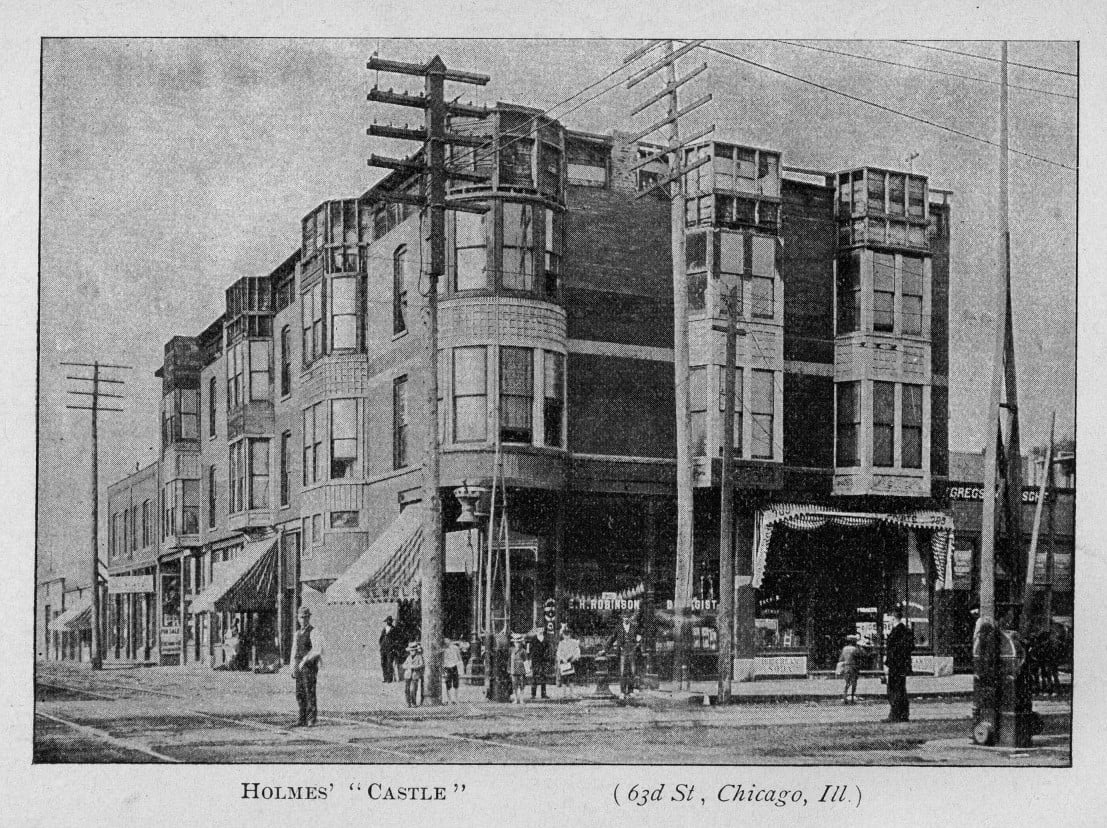 All illustrations in this blog are in the public domain
Many societies are fascinated by stories of True Crime, and serial killers are a perennial source of interest (even if that particular term would not be coined until the 1980s). But the Holmes case occurred at a time of unprecedented interest in various forms of criminality, and especially acts linked to mental illness or “degeneracy”. Was Holmes a true monster, or could science account for him? In the story of how people tried to answer that question, the short period between 1892 and 1894 was amazingly creative. The continuous history of American criminology dates from 1893.
Crime, Heredity and Eugenics
As Western societies urbanized and industrialized in the nineteenth century, many scholars and observers studied the crime and poverty that accompanied progress. Although they varied greatly as to the interpretations they offered, their work produced vastly more evidence of what we would today call underclass worlds. Initially in Europe, scholars increasingly offered biological and evolutionary explanations of these problems. (I discussed these trends in a recent blogpost). Particularly influential from the 1870s was the Italian scholar Cesare Lombroso, who argued that modern day criminals represented evolutionary throwbacks, which left unmistakable traces on their bodily features. Building on their understandings of Charles Darwin, British scholars argued for eugenic solutions, using selective breeding to stop social problems: if criminals and paupers were not born, then crime and poverty would vanish.
These ideas had powerful American manifestations. I have already discussed Richard Dugdale’s study of a multigenerational problem family in The Jukes: A Study of Crime, Pauperism, Disease and Heredity.(1877), but it was in 1893 that the new ideas became most powerfully apparent, when the Prisoners and Paupers of Henry M. Boies of Scranton. This offered a comprehensive eugenic and Lombrosan view of conditions in Pennsylvania.
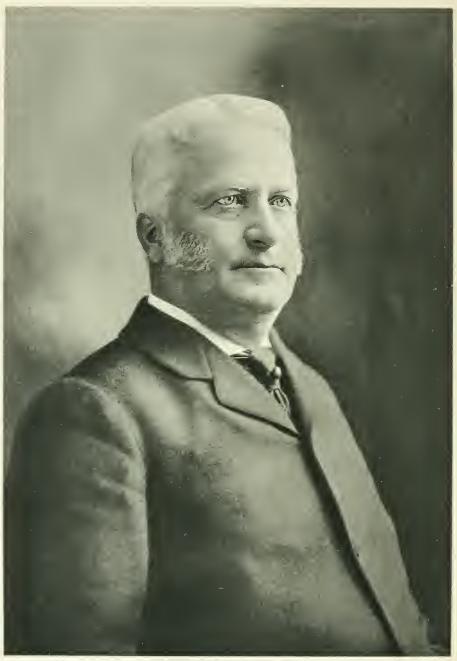
Boies believed that crime, pauperism and mental deficiency were all increasing at a terrifying rate. In explaining these changes, Boies mentioned immigration, alcohol, and the devastating effects of modern urban life on the family and on morality, but his conclusions were thoroughly eugenic. Crime, pauperism and deficiency were the result of heredity, and all belonged to what Boies called “the imperfect, knotty, knurly, worm-eaten fruit of the race.” Perversion, alcoholism, crime, epilepsy and insanity, were all by-products of the “genetic rubbish” polluting the social gene pool, and which would stubbornly resist conventional legal solutions.
True ‘born criminals’ should be confined for life; but the real solutions were preventive. Boies attacked the “incomprehensible neglect of rational measures to restrict degeneration”, by which he meant sterilization. In summary, ‘The marriage of the criminal and defective must be prevented; and indeed, marriage of all those afflicted with constitutional defects should be prohibited.” In his later writing, such as his 1901 Science of Penology, Boies used an extreme Lombrosan and Positivist approach to crime, with a definite emphasis on the hereditary element in causing drunkenness, pauperism, disease, syphilis, murder, theft and prostitution.

Far from being an isolated crank, Boies was very well connected in the state’s administrative structure: he was a member of the Board of Public Charities, the Lunacy Committee and the Prison Discipline Society, all groups heavily influenced by the new ideas. Over the next twenty years, Pennsylvania was at the vanguard of sweeping legislation rooted in eugenic ideas, including provisions for sterilization.
Eugenic arguments of the most draconian kind even featured at the great World’s Columbian Exposition held in Chicago in 1893. Texas doctor F. E. Daniel, editor of the Texas Medical Journal, delivered his paper, “Should Insane Criminals or Sexual Perverts be Permitted to Procreate?” He argued that
While we can not hope ever to institute a Sanitary Utopia in our day and generation, it would seem within the legitimate scope and sphere of Preventive Medicine, aided by the enactment and enforcement of suitable laws, to eliminate much that is defective in human genesis, and to improve our race mentally, morally and physically; to bring to bear in the breeding of peoples the principles recognized and utilized by every intelligent stock-raiser in the improvement of his cattle; and in my humble judgment the substitution of castration, as advocated above, for the useless and cruel execution of criminals, is the first step in the reformation. I predict that in twenty years the beneficial results of castration for crimes committed in obedience to a perverted (diseased) sexual impulse will be established and appreciated. Rape, sodomy, bestiality, pederasty and habitual masturbation should be made crimes or misdemeanors, punishable by forfeit of all rights, including that of procreation; in short by castration, or castration plus other penalties, according to the gravity of the offense.
Frontiers of Sexuality
Other scholars in these years were investigating the frontiers of the mind, and in so doing, they sometimes found “monsters.” In the 1880s, German psychiatrist Richard von Krafft-Ebing had published widely on the fringes of sexuality, most notably in his Psychopathia Sexualis: eine Klinisch-Forensische Studie (Sexual Psychopathy: A Clinical-Forensic Study, from 1886. Among other things, this introduced such terms as sadism and masochism, and popularized the recently coined word “homosexuality,” together with “heterosexuality.” In 1892, neurologist Charles Chaddock translated the Psychopathia Sexualis, and in the process introduced those terms into English, along with “bisexuality.” Just having the words available, even if for experts only, transformed the intellectual discourse of sexuality.
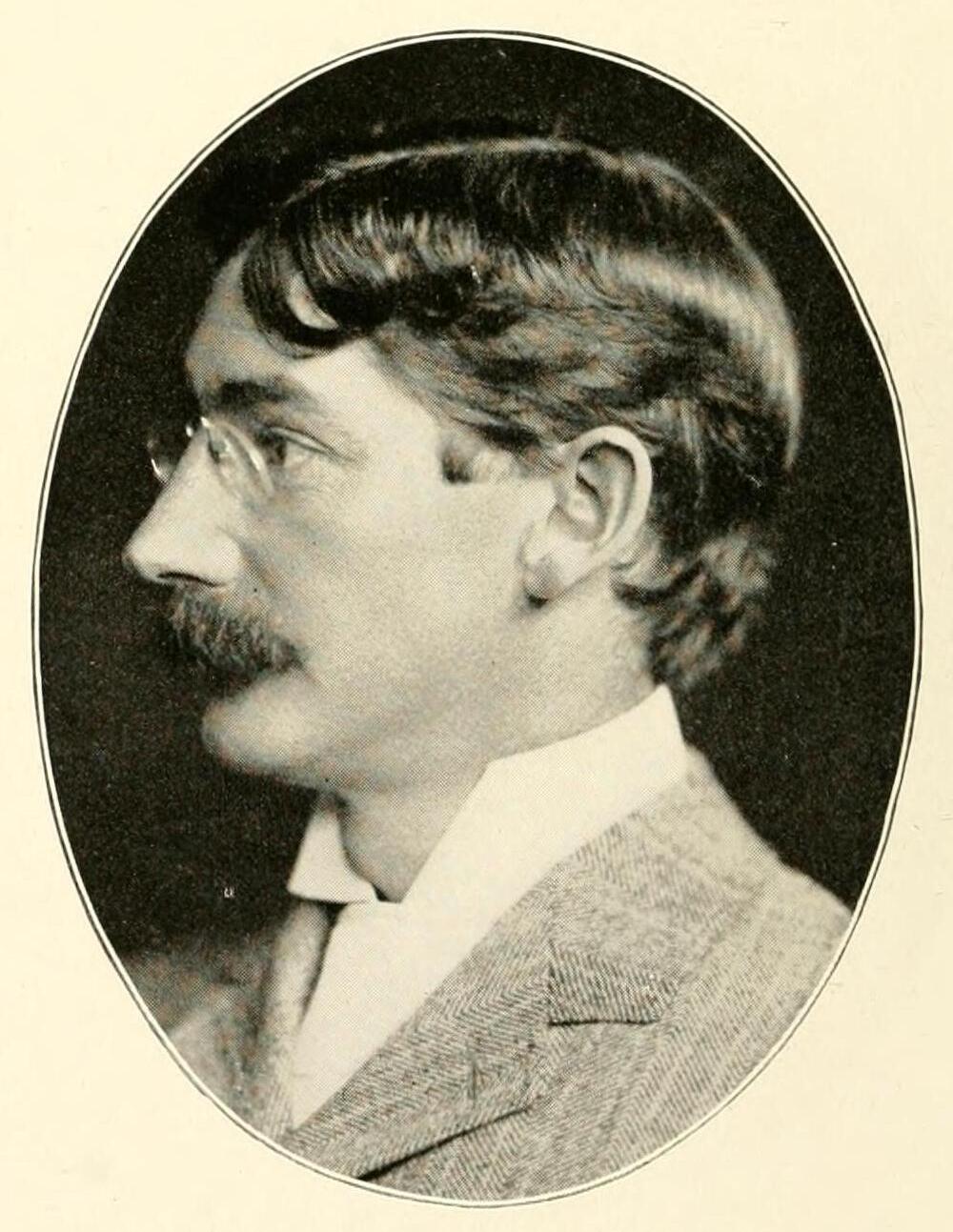
Over the next quarter century, these theories were popularized by numerous scholarly and professional studies. Krafft-Ebing’s work inspired an outpouring of writing on sexual conditions and complaints, as American scholars developed their own taxonomy of sex-killers, pedophiles, and other sexually motivated offenders. “Perversion” suddenly became a significant social issue. In 1892-93, Max Nordau’s crucial book Degeneration was available to the many American scholars with access to German.
The problems facing society were evident, and whole new disciplines emerged to confront them. Arthur MacDonald’s influential text Criminology dates from 1893 (New York: Funk and Wagnalls): Lombroso supplied the introduction. The word “criminology” had been coined in Europe in the 1880s, and became commonplace in Italian and French, but MacDonald’s book popularized it in English.
Criminological themes entered popular culture. In 1893, Mark Twain was working on his Pudd’nhead Wilson, which appeared in print the following year. The plot depends on the idea of identification through fingerprints, an idea advanced by Francis Galton’s book Finger-Prints (1892). Although that point has no necessary connection with the eugenic themes I have discussed here, it was Galton who coined the word “eugenics”, and who was the best-known exponent of the theme in the contemporary world.

Saving Children
Social campaigners, feminists and eugenic campaigners alike stressed the desperate need to protect children from sexual violation – from what we would call abuse. (I will discuss the feminist context of these ideas at some length in my next post). In a very few years around 1893, something like a social and psychological science of child abuse and child protection appeared. In his 1893 book, Henry Boies complained that children “sporting promiscuously” in the streets, “where every foul nighthawk seeks its prey, lose the lovely innocence of childhood before they reach their teens.” Also in 1893, Mary Charlton Edholm published her frequently reprinted tract on Traffic in Girls which eloquently denounced cases in which preteen girls were molested by middle aged men. The perpetrators were “human gorillas, otherwise known as lecherous men.” The analogy uses the then-common idea of the gorilla as a vicious and supremely violent monster, and also nods to the Lombrosan idea of the biological throwback. (Again, I will have more to say about that author in my next post).
In 1894, a widely read textbook on A System of Legal Medicine edited by Allan McLane Hamilton and Lawrence Godkin included a pioneering account of “Sexual Crimes,” by Dr. Charles G. Chaddock, the translator of Krafft-Ebing. Reading Chaddock today, his work seems unsurprising and even obvious: who would ever have thought differently about such matters? But his ideas were revolutionary at the time, and they would repeatedly be forgotten and rediscovered in the United States over the following century.
Chaddock included sections on “‘rape’, ‘sexual abuse of children’, ‘sodomy’ (including ‘pederasty’, ‘bestiality’ and ‘tribadism’), ‘incest’, ‘exhibition / indecent exposure’ and ‘sexual perversion’.” This authoritative book initiated the whole American literature on child sexual abuse, and Chaddock used European statistics to suggest that “Rape of children is the most frequent form of sexual crime,” amounting to perhaps eighty percent of rapes reported to the police. This frequency was easily explained, as children were weak and vulnerable, while men were always in search of novel sexual excitement.
Can I cite that incredible sentence again? “Rape of children is the most frequent form of sexual crime.” When such statements were made again the 1970s and 1980s, they seemed to be wholly novel and startling, but they had a deep history. Remember that cliche about there being nothing new in the world except the history we have forgotten?
Other forms of exploitation noted by Chaddock included “sexual abuse,” defined as “sexual manipulations which are unrelated to the normal sexual act”. “Sexual perversion (erotic fetichism) might lead to an unnatural preference for children,” and arose from “constitutional psychopathic deficiency.” This is among the very first scholarly discoveries of pedophilia. The word pedophily appeared in English the following year, and in 1896, a new edition of Krafft-Ebing discussed the condition that he termed paedophilia erotica.
Dr. Gibb’s Revolution
The same System of Legal Medicine contained a trailblazing chapter on the “Indecent Assault of Children,” by the young gynecologist W. Travis Gibb, the very first study to suggest the prevalence of incest and molestation within the United States. Gibb was the examining physician for the New York Society for the Prevention of Cruelty of Children (NYSPCC), a charity formed in 1874 to investigate physical maltreatment and neglect of the young.
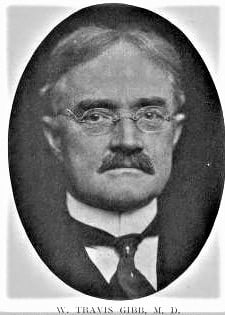
As child-savers explored the life of the slums, they discovered other evils: “Besides recognizing the constant presence of flagrant physical abuse of the type which led to this movement, new forms of protection have been recognized,” namely “that girls, while mere children and before they know what they are doing, invite or are unwillingly subjected to horrible abuses from men,” and catching “loathsome diseases” as a result. Gibb in fact was one of the first American medical experts, and probably the first, to realize that a young girl infected with a sexual disease was likely to have been assaulted, rather than catching it in some other way.
As all the cases observed involved poor and (often) immigrant children, the problem was taken to reflect the non-Protestant values of city-dwellers, leading Gibb to conclude that “The largest majority of cases… occur among the poorest and most depraved classes of people.” Gibb’s key insight was that molestation was a very common crime, and one which extended beyond the familiar image of men raping or seducing underage girls. Although “there is little or nothing in the medico-legal literature pertaining directly to the crime of indecent assault upon children,” The acts “occur much more frequently than is generally supposed,” and were “usually committed in secret and without witnesses.” Indecent assaults were committed by adult men against boys, and by women against either sex.
Assaults were perpetrated by “men who are insane, old men beyond the age of virility, men under the influence of liquor, and those suffering from some form of perversion of the sexual instinct which may be akin to insanity”. The damage resulting from abusive acts varied enormously from case to case, often causing no damage “beyond the moral,” but were sometimes so extreme as to cause death.
Such writings demonstrate the wide-ranging awareness of child sexual abuse that emerged so rapidly during the early 1890s – in historical terms, almost overnight. That is the definition of a revolution.
I talk about these issues at length in my book Moral Panic: Changing Concepts of the Child Molester in Modern America (Yale University Press, 1998).
Many years ago, when velociraptors roamed the Earth, I worked quite a bit on the history of American eugenics, and actually turned up some major undiscovered sources and archives on the topic: see my “Eugenics, Crime and Ideology,” in Pennsylvania History 51(1) (1984): 64-78.
History and Religion
Health, Fitness and Religion
Previous Post
July 16, 2025
Zion: The Garden City of God
Next Post

July 18, 2025 Rachel Held Evans and the Specter of Scopes in Dayton
Recent Comments
"I love horror but would have to acclimate back to Lovecraft and especially Machen. Have ..."
Fairies, Witches, Folk Horror, and the ..."
"Very good point about MacDonald.I am certainly a Machen fan!"
Fairies, Witches, Folk Horror, and the ..."
"The Scottish author George MacDonald integrated fairy world into his fiction in a way that ..."
Fairies, Witches, Folk Horror, and the ..."
"I like the idea that we can have different streams. The coffee analogy is genius."
How Do You Take Your Evangelicalism?
Browse Our Archives
Select a Category abolitionism Abortion Abraham Joshua Heschel Abraham Kuyper Abraham Lincoln Academia Activism Adam Renberg Advent Adventist africa African American Religion Agnes Howard Albert Camus American History American Religious History American Revolution American West Anabaptists Ancient History Andrea Turpin Andrei Tarkovsky Anglicanism Annales Ansley Lillian Quiros anti-Catholicism Antisemitism Anxious Bench apologetics Apparitions Arash Azizi Archaeology archives art Artificial Intelligence Asia Asian Americans Augustine Authors Bad Bunny Baptism Baptists Barack Obama Battle of Hastings Benjamin Franklin Bernard-Henri Levy Beth Allison Barr Beth Moore Bethany Mannon Bible Bill Cunningham Billy Graham Black Music Bob Dylan Body Boenhoffer Books Breastfeeding Bruce Springsteen C.S. Lewis Calvinism Cancel Culture Capitalism Carmelites Catholicism Cedric Robinson Cesar Chavez Charismaticism charity Charles Dickens Charles Lindbergh Che Guevara Chicago Children Chinese Christianity Chris Gehrz Christ Christian death Christian Higher Education Christian life Christian Nation Christian Nationalism Christianity Today Christmas Church life Church Practice cinema Civil Religion Civil Rights Movement Civil War civility Classics Climate Change Cold War Colonial Mexico colonialism Comer Communism community complementarianism Conference on Faith and History Congregationalism Conspiracies Conspiracy Conversion Narratives Coronavirus Costa Rica Council of Nicaea Covid-19 Creation Critical Race Theory Crusades Culture culture wars Daniel K. Williams David Barton David Swartz Death Ways death with dignity DEI democracy Democratic Party Devotion Digital Age Diplomacy discipleship diversity Donald Trump Drama Dua Lipa Early Church early modern Early modern Catholicism Easter Eastern Christianity economic exploitation Education elections Elie Wiesel Elizabeth II Elizabeth Taylor emotions Empire Engineering England enslavement Entertainment Episcopal Church Erica Ramirez eschatology Eurocentrism Evangelicalism Evangelicals Exegesis Family Feminism Film Flannery O'Connor folk music Food Foreign Policy founding fathers Franciscans Franciscus Junius fundamentalism Funerals G.K. Chesterton Gender Genocide genre geography George W. Bush George Washington George Whitefield Global Christianity Global church Grief Guadalupe guest post Guest Post gun control gun violence Gustavo Gutierrez Hamid Dabashi Harold John Ockenga Harvest Hate Hawaiian Christianity Healing health care Heather Cox Richardson Hell Heresy Hermeneutics Higher Education Hinduism Hippocratic oath Historical Fiction Historical Methodology Historical Profession Historical Profession Historical Theology Historical Thinking historiography Holidays Holocaust horror movies Human rights Humanitarian Work humanities Hummingbirds Hungary hymns Imago Dei Immigration Injustice Interviews Iran Islam Islamophobia Israel Ivan's Childhood Jacob Randolph James Bratt Janine Giordano Drake Japanese history Japanese Literature Jean Paul Sartre Jesse Miranda Jesus Jesus Christ Jimmy Carter Joan Baez Joan Didion Joanne Freeman João B. Chaves Joao Chaves Joey Cochran John Calvin John Fea John Tillotson John Turner Johnny Cash Jonathan Edwards Jonathan Tran Joseph Smith Josh Howerton Journalism Jr. Judaism Jürgen Moltmann Just War Justice Justin Brierley Karl Barth Katelyn Beaty koi ponds Kris Kristofferson Kristin Kobes Du Mez Latin American Religious History Latino Americans Lectio Divina Leisure Lent Leonard Cohen liberal arts liberalism Liberation Theology Linda Ronstadt Lisa Clark Diller Literature Lou Reed Lynchings Lynneth Miller Renberg Mainline Protestantism Malcolm Foley Marilyn Monroe Maritime history Mark Noll Marriage Martin Luther Martin Luther King Martyrdom Marxism Mary Masih Alinejad mass shootings material culture medieval Christianity Medieval Ethiopia Melissa Borja memory Mennonites Mental Health Mental Illness Methodism Mexican Americans Mexicans Mike Madrid Miles Mullin Min Jin Lee Miscarriage Missionaries Mister Rogers Mitt Romney modernity Monasticism Mormonism Motherhood Mothers of the Church Moving Music Musicals Nadya Williams Nahua Christianity Native Americans Natsume Sōseki New Contributor New England New Year New York Nico Non-Violent Protest Orthodoxy pacifism Paleo Evangelicals Palestinians Parenting Patti Smith Paul Kingsnorth Pedro Calderón de la Barca Pentecostalism Philip Jenkins Phillis Wheatley physician-assisted suicide pilgrimage Pilgrims pluralism Plutocracy Poetry Politics Pope Francis Pope Leo XIV post-modernism prayer preaching Presbyterians prosperity gospel Protest Public history Publishing Puritans purity culture Quakers race Race Massacres Racial Capitalism racial reconciliation racialization Racism Raha Bahloulipour Re-Enchantment reading Reformation Refugees religion and the university religion and war Religious Freedom Religious Nones Religious Pluralism Religious Symbols religious violence Republican Party Revival Rita Coolidge Ritual Roger Williams Roman Catholic church Royalty Russell Moore same-sex marriage Sarah Irving-Stonebraker Scandinavia Science Science and Technology Scopes trial Scriptural Interpretation secularism Selena Quintanilla seminary Seventh-Day Adventists sexual morality Sexuality Sikhs Silence slaveholders theology Slavery Slavoj Zizek social justice Social Media Southern Baptist Convention Southern Religion Spain Spiritual Autobiography Spiritual but not religious Spiritual Discipline Sports Stanley Hauerwas Suffering Summer Camps Sunday Night Odds and Ends Supernatural Supreme Court Syriac Christianity Tal Howard Taylor Swift Teaching Technology Television Thanksgiving The Beatles The Mission theater TheoBros Theology Thomas Dixon Thomas Jefferson Thomas Kidd Thomas Merton Tim Gloege Tim Walz Tom Holland Tourism tradition Tragedy Translation Transnationalism Travel Trump Ukraine Uncategorized Unitarians United Methodist Church US History Vanessa Chan Velvet Underground Verónica A. Gutiérrez Veronica Gutierrez Vikings Violence Virgin Mary Virtue Virtue ethics Visions Voting War WCTU Wendell Berry Westminster Assembly White Evangelicalism Wildfires Winnie the Pooh Witches women Women in Ministry Women's and Gender Studies Work Worship writing Yasunari Kawabata Zena Hitz
Select a Month October 2026 September 2026 August 2026 July 2026 June 2026 May 2026 April 2026 March 2026 February 2026 January 2026 December 2025 November 2025 October 2025 September 2025 August 2025 July 2025 June 2025 May 2025 April 2025 March 2025 February 2025 January 2025 December 2024 November 2024 October 2024 September 2024 August 2024 July 2024 June 2024 May 2024 April 2024 March 2024 February 2024 January 2024 December 2023 November 2023 October 2023 September 2023 August 2023 July 2023 June 2023 May 2023 April 2023 March 2023 February 2023 January 2023 December 2022 November 2022 October 2022 September 2022 August 2022 July 2022 June 2022 May 2022 April 2022 March 2022 February 2022 January 2022 December 2021 November 2021 October 2021 September 2021 August 2021 July 2021 June 2021 May 2021 April 2021 March 2021 February 2021 January 2021 December 2020 November 2020 October 2020 September 2020 August 2020 July 2020 June 2020 May 2020 April 2020 March 2020 February 2020 January 2020 December 2019 November 2019 October 2019 September 2019 August 2019 July 2019 June 2019 May 2019 April 2019 March 2019 February 2019 January 2019 December 2018 November 2018 October 2018 September 2018 August 2018 July 2018 June 2018 May 2018 April 2018 March 2018 February 2018 January 2018 December 2017 November 2017 October 2017 September 2017 August 2017 July 2017 June 2017 May 2017 April 2017 March 2017 February 2017 January 2017 December 2016 November 2016 October 2016 September 2016 August 2016 July 2016 June 2016 May 2016 April 2016 March 2016 February 2016 January 2016 December 2015 November 2015 October 2015 September 2015 August 2015 July 2015 June 2015 May 2015 April 2015 March 2015 February 2015 January 2015 December 2014 November 2014 October 2014 September 2014 August 2014 July 2014 June 2014 May 2014 April 2014 March 2014 February 2014 January 2014 December 2013 November 2013 October 2013 September 2013 August 2013 July 2013 June 2013 May 2013 April 2013 March 2013 February 2013 January 2013 December 2012 November 2012 October 2012 September 2012 August 2012 July 2012 June 2012 May 2012
Follow Us!
TAKE THE
Religious Wisdom Quiz
True or False: James says that if anyone is a hearer of the word and not a doer, he is blessed in what he does.
Select your answer to see how you score.
FALSE TRUE
Related posts from Anxious Bench

Fairies, Witches, Folk Horror, and the Secret Commonwealth

Hogg’s Justified Sinner: A Gothic Classic for Halloween

James Hogg, Weird Wives, and Feminist Witches

How an Explosive Book Rewrote the Study of...
TRENDING AT PATHEOS Evangelical

Nearly every morning, I make the drive to Detroit with my high-school-age...

The Real AI Story Is Adoption Without Trust
Artificial intelligence has crossed a political threshold. It is no longer a...

A new article, written by Jeff Lindsay and Gale L. Pooley,...

Swimfan: Forgotten Aughts Pleasures
This is a recovery effort. In 2002, My Big Fat Greek Wedding...

Top Three Anti-Catholic Lies About Catholicism
This is my initial transcript for the video, "THE 3 WORST...

Pope Leo Celebrates Mass for Nurses & Docs...
I don't have any idea how he did it, but Pope Leo...
view all Evangelical blogs
What Are Your Thoughts?leave a comment
Ad-Free & Subscriber Log-In Subscription Support
- About Us
- 2026 Calendar
- Videos
- Podcasts
- Library of World Religions
- Faith In Media Tracker
- Advertise With Us
- Write for Us
- Privacy Policy
- Terms of Service
- Do Not Sell My Data
- Contact Us
- Radiant Digital
- Manage Newsletter Subscriptions
- Unsubscribe From Notifications
- Sitemap
Copyright 2008-2026, Patheos. All rights reserved.
Subscription Support Ad-Free & Subscriber Log-In
Follow Patheos