
BuddhistCatholicContemplativeEvangelicalGeneral ChristianHinduJewishLatter-day SaintMuslimNew VisionsProgressive Christian
Beliefs
- Buddhist
- Catholic
- Contemplative
- Evangelical
- General Christian
- Hindu
- Jewish
- Latter-day Saint
- More Voices
- Muslim
- New Visions
- Pagan
- Progressive Christian
Topics
- Religion News
- Food and Religion
- Sports and Religion
- Religious Art
- Religious Music and Entertainment
- Religious Events
- History and Religion
- Style and Religion
- Politics and Religion
- Women in Religion
- Recreation Outdoors and Religion
- Business Finance and Religion
- Careers Workplace and Religion
- Education and Religion
- Family Parenting and Religion
- Health Fitness and Religion
- Home and Religion
- Relationships and Religion
- Technology and Religion
- Travel and Religion
Columnists
- Buddhist Columnists
- Business Finance and Religion Columnists
- Careers Workplace and Religion Columnists
- Catholic Columnists
- Contemplative Columnists
- Education and Religion Columnists
- Evangelists Columnists
- Family Parenting and Religion Columnists
- General Christian Columnists
- Health Fitness and Religion Columnists
- Hindu Columnists
- History and Religion Columnists
- Home and Religion Columnists
- Jewish Columnists
- More Voices Columnists
- Latter Day Columnists
- Muslim Columnists
- New Visions Columnists
- Nonreligious Columnists
- Pagan Columnists
- Politics and Religion Columnists
- Progressive Columnists
- Recreation Outdoors and Religion Columnists
- Relationships and Religion Columnists
- Religion News Columnists
- Religious Art Columnists
- Religious Events Columnists
- Religious Music and Entertainment Columnists
- Sports and Religion Columnists
- Style and Religion Columnists
- Technology and Religion Columnists
- Travel and Religion Columnists
- Women in Religion Columnists
Resource Library
- 2026 Calendar
- Library of World Religions
- The 100 Most Holy Places on Earth
- Patheos Answers
- Podcasts
- Videos
- Faith Leaders Database
- Anglican Episcopalian
- Bahai
- Baptist
- Buddhism
- Christianity
- Confucianism
- Eastern Orthodoxy
- Hinduism
- Holiness and Pentecostal
- ISKCON
- Islam
- Judaism
- Lutheran
- Methodist
- The Church of Jesus Christ of Latter-day Saints
- New Age
- Paganism
- Presbytarian and Reformed
- Protestantism
- Religion Behind the Scenes
- Roman Catholic
- Scientology
- Shia Islam
- Sikhism
- Sufism
- Sunni Islam
- Taoism
- Zen
- See all religions
Research Tools
 Ad-Free & Subscriber Log-In Subscription Support
Ad-Free & Subscriber Log-In Subscription Support
Follow Patheos 

- Trending:
- Forgiveness
- |
- Marriage
- |
- Consciousness
- |
- Death Penalty
- |
- Election
- |
- Halloween

-
About the Authors
- Home
- Evangelical
- 1893: Reading the Bible Through the Eyes of Anthropology
1893: Reading the Bible Through the Eyes of Anthropology
Last updated on: June 12, 2025 at 12:21 am by Philip Jenkins
1893: Reading the Bible Through the Eyes of Anthropology 2025-06-06T14:17:14-04:00 Philip Jenkins
Patheos Explore the world's faith through different perspectives on religion and spirituality! Patheos has the views of the prevalent religions and spiritualities of the world.
My recent blogs have focused on the year 1893, which I believe marked multiple critical landmarks in American history – social, cultural, and above all religious. Some of those events are famous and well studied, such as the World Parliament of Religions held that year in Chicago, but other developments are not well known, even to specialists. Today I will talk about a very important study of Native American spirituality that appeared in that year, one that almost surreptitiously offered an incendiary commentary on the Bible, and on both Jewish and Christian faiths. And this astonishing work was printed by an agency of the US government.
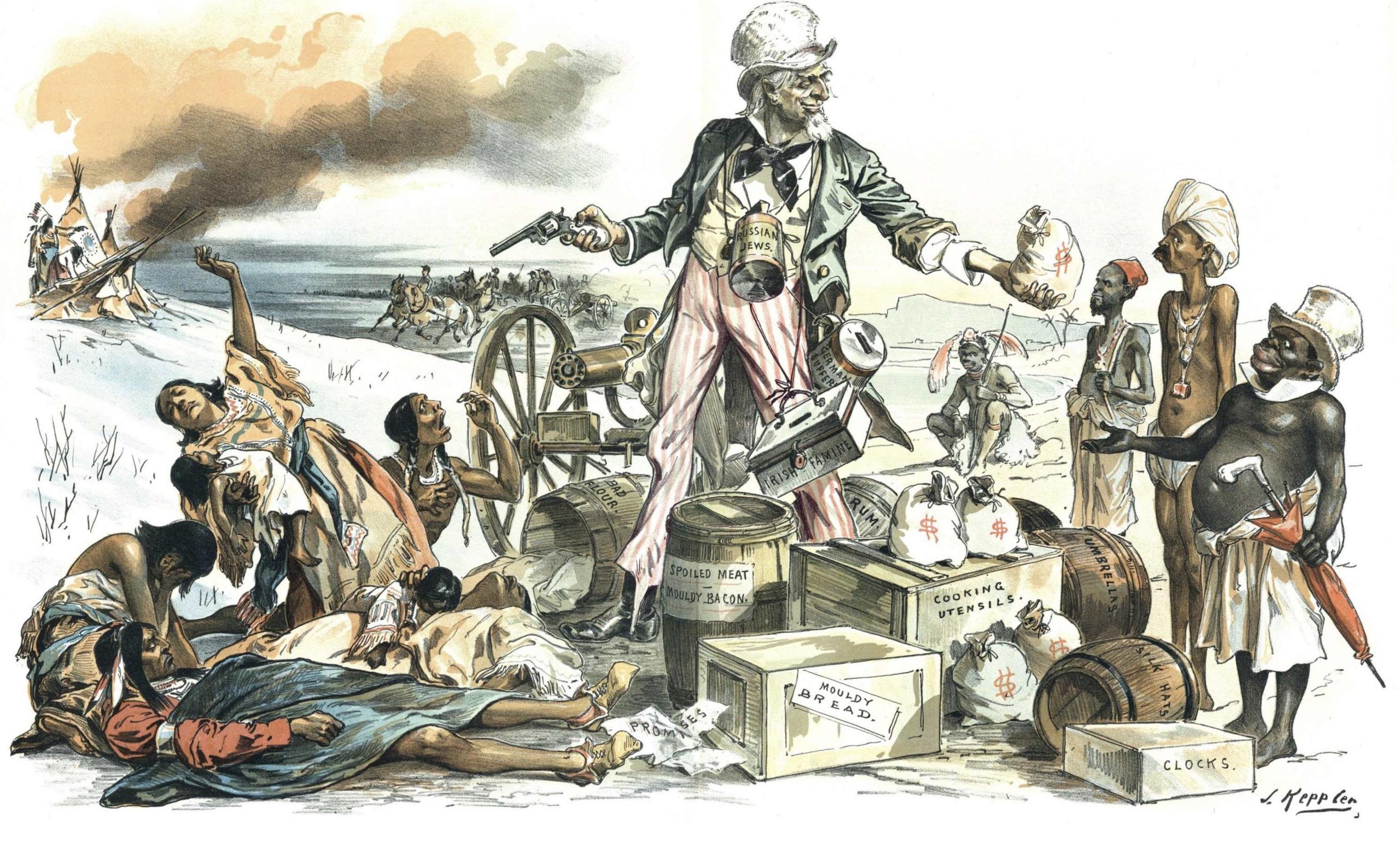
All Images in this post are public domain. This image is from the Library of Congress.
The New Anthropology
By way of background, the science of anthropology was booming in these years, and scholars devoted great attention to Native American societies, which, they believed, had many parallels to ancient and “primitive” societies. Anthropologists like Sir Edward Tylor ranked such communities according to where they stood on a supposed ladder of ascent, from the savage to the barbaric, and on to the civilized. These findings had many implications for understanding modern and civilized family arrangements, and for religious assumptions. The first volume of Sir James Frazer’s The Golden Bough appeared in 1890: see the discussion of larger trends in Timothy Larsen’s The Slain God: Anthropologists and the Christian Faith (Oxford University Press, 2014).
Several developments made the year 1893 crucially important in this story. Successive world’s fairs and expositions played a major role in popularizing anthropological findings to the general audience, displaying Native American dwellings, crafts, and rituals, and even featuring whole “human zoos” of “primitive” peoples. The Centennial Exhibition held at Philadelphia in 1876 had offered many Native exhibits, and the World’s Columbian Exposition, held in Chicago in 1893, sought to show the state of societies as they existed before European settlement. These included performances by Native peoples themselves. Very important for later developments, this research brought the German scholar Franz Boas to the United States, where he became a visible and quite dominant figure for decades to come.
In these same years, non-specialist White Americans were also becoming aware of the range and diversity of Native cultures on their own soil. Given the centrality of the Great Plains in Western mythologies, we inevitably think primarily of figures such as Sitting Bull, Crazy Horse, and the Ghost Dance movement, which Whites portrayed in terms of savage violence and fanaticism. But at the same time, explanations in the Southwest were producing impressive evidence of more substantial cultures with their temples and even cities, often associated with the Pueblo peoples. In the 1880s, the awe-inspiring cliff settlement of Mesa Verde won growing attention, and that lost world penetrated the popular media, as well as fiction. In 1890, Adolph Bandelier published his brilliant reconstruction of ancient Pueblo life in his still insufficiently known novel The Delight-Makers.
In 1893, Henry Blake Fuller published a novel set in contemporary Chicago which represented an innovative breakthrough in urban, naturalist, and social realist fiction, and which set the stage for Theodore Dreiser. But despite its very contemporary setting, the setting in the skyscrapers and multi-storied apartments led Fuller to give his book a title that would seize the interest of a public used to hearing about such mysterious Native cities as Mesa Verde: the book is called The Cliff-Dwellers. (Fuller later earned fame as a pioneer of gay themes in American fiction).
I’ll be returning to that Pueblo idea, and the fact that it was so well established in American thought.

The Indian Man
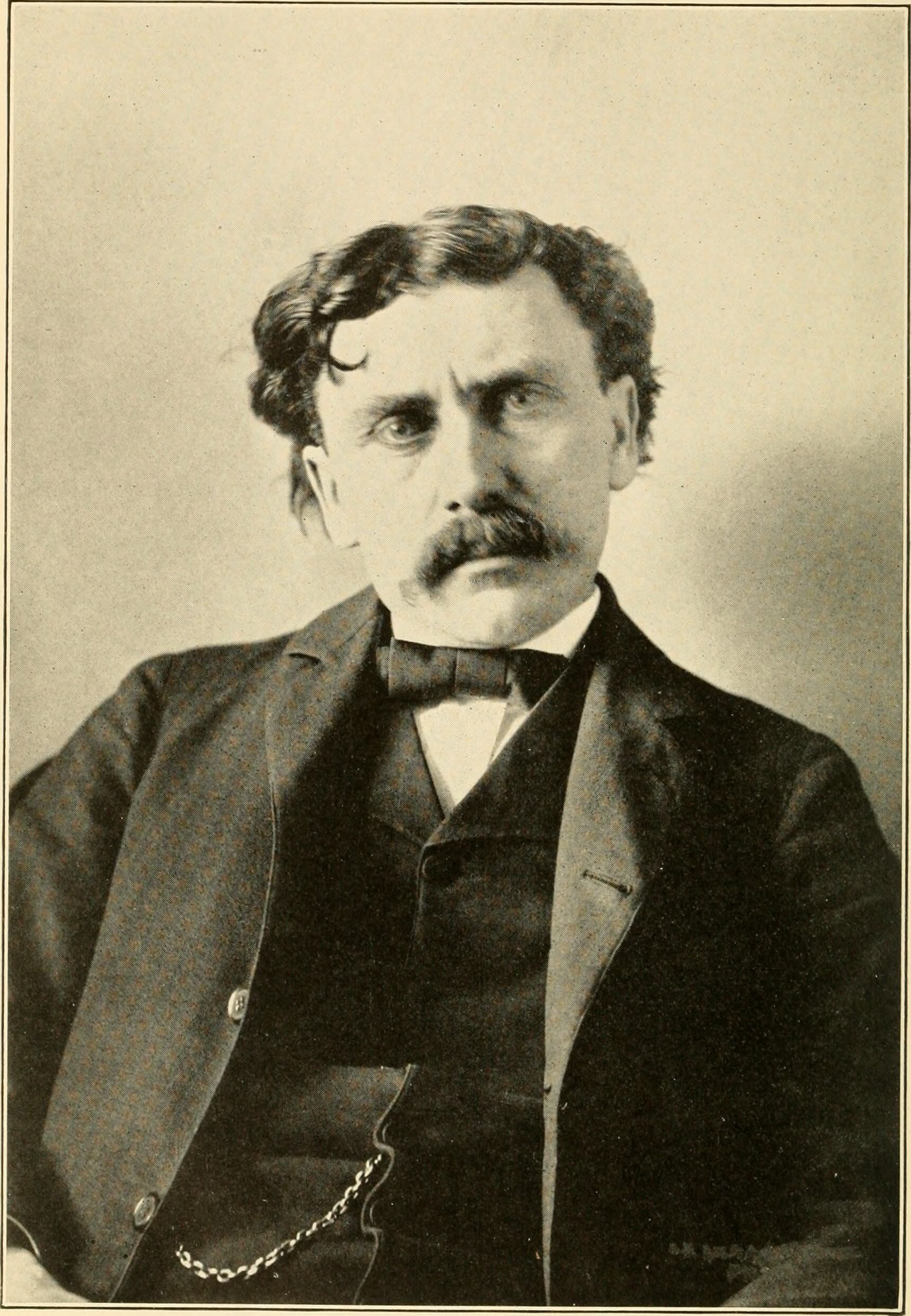
A key figure in the American story was ethnographer James Mooney, “the Indian Man,” who lived for many years with Native peoples. One of his greatest achievements was his very sizable report on The Ghost-Dance Religion And The Sioux Outbreak Of 1890, which studied the messianic and millenarian movement led by the prophet Wovoka. The messianic expectations that now surged led to a conflict with US forces, who feared that fanatical devotees were preparing acts of violence. The affair culminated in the notorious Wounded Knee massacre of 1890. For White Americans, the whole affair epitomized the irrational savagery that they attributed to Native peoples.
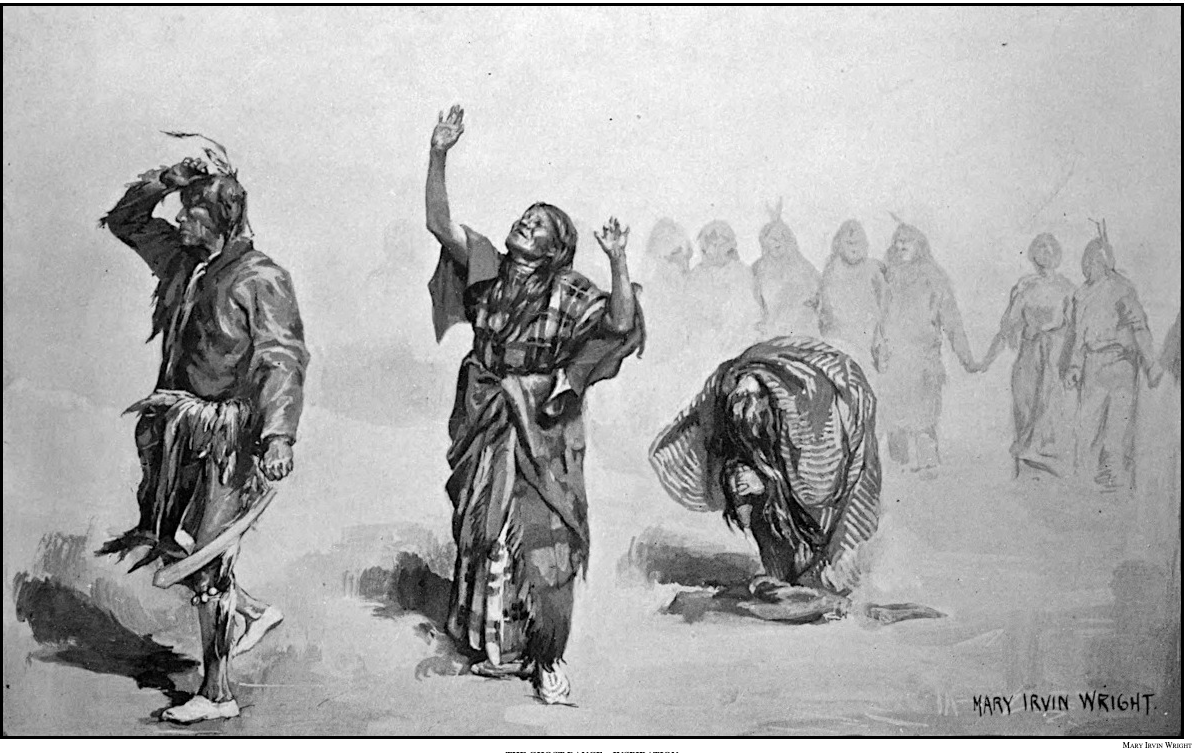
Mooney’s analysis of the affair appeared in 1896, but it reflected years of research and observation, and much of it was actually written in 1892-3. This masterful work survives as a classic study of a millenarian movement – and a movement that incidentally drew heavily on Christian and evangelical influences. But many of Mooney’s remarks are subversive, and must be read carefully to appreciate their importance and, in the context of the age, their radicalism. Fittingly for an age when Americans discovering other global faiths, Mooney’s book contextualizes Indian “Primitivism” alongside any and all world religions. “The doctrines of the Hindu avatar, the Hebrew Messiah, the Christian millennium, and the Hesûnanin of the Indian Ghost Dance are essentially the same, and have their origin in a hope and longing common to all humanity.”
One of Mooney’s chapters, on “Parallels in Other Systems,” demands special attention for its clear relativism, and its refusal to grant any unique status to Biblical religion (and as I say, in a report published by the US government). As Mooney argues,
The Indian messiah religion is the inspiration of a dream. Its ritual is the dance, the ecstasy, and the trance. Its priests are hypnotics and cataleptics. All these have formed a part of every great religious development of which we have knowledge from the beginning of history.
He then expands on the unavoidable Biblical parallels to every one of these components:
In the ancestors of the Hebrews, as described in the Old Testament, we have a pastoral people, living in tents, acquainted with metal working, but without letters, agriculture, or permanent habitations. They had reached about the plane of our own Navaho, but were below that of the Pueblo. Their mythologic and religious system was closely parallel.
Their chiefs were priests who assumed to govern by inspiration from God, communicated through frequent dreams and waking visions. Each of the patriarchs is the familiar confidant of God and his angels, going up to heaven in dreams and receiving direct instructions in waking visits, and regulating his family and his tribe, and ordering their religious ritual, in accord with these instructions. Jacob, alone in the desert, sleeps and dreams, and sees a ladder reaching to heaven, with angels going up and down upon it, and God himself, who tells him of the future greatness of the Jewish nation. So Wovoka, asleep on the mountain, goes up to the Indian heaven and is told by the Indian god of the coming restoration of his race. Abraham is “tempted” by God and commanded to sacrifice his son, and proceeds to carry out the supernatural injunction. So Black Coyote dreams and is commanded to sacrifice himself for the sake of his children.
Indian Messiahs and Biblical Messiahs
Mooney offers numerous Biblical parallels, including the visions reported by Ezekiel and St Paul. Moreover,
The four gospels are full of inspirational dreams and trances, such as the vision of Cornelius, and that of Peter, when he went up alone upon the housetop to pray and “fell into a trance and saw heaven opened,” and again when “a vision appeared to Paul in the night,” of a man who begged him to come over into Macedonia, so that “immediately we endeavored to go into Macedonia, assuredly gathering that the Lord had called us.” …
And yes, this list of visionary and dream encounters certainly extended to Christ himself:
Fasting and solitary contemplation in lonely places were as powerful auxiliaries to the trance condition in Bible days as now among the tribes of the Plains. When Daniel had his great vision by the river Hiddekel, he tells us that he had been mourning for three full weeks, during which time he “ate no pleasant bread, neither came flesh nor wine in my mouth, neither did I anoint myself at all.” When the vision comes, all the strength and breath leave his body and he falls down, and “then was I in a deep sleep on my face, and my face toward the ground.” Six hundred years later, Christ is “led by the spirit into the wilderness, being forty days tempted by the devil, and in those days he did eat nothing.” Another instance occurs at his baptism, when, as he was coming out of the water, he saw the heavens opened and the spirit like a dove, and heard a voice, and immediately was driven by the spirit into the wilderness. In the transfiguration on the mountain, when “his face did shine as the sun,” and in the agony of Gethsemane, with its mental anguish and bloody sweat, we see the same phenomena that appear in the lives of religious enthusiasts from Mohammed and Joan of Arc down to George Fox and the prophets of the Ghost dance.
And while the Biblical parallels strike us forcefully, Mooney devotes even more attention to the origins of Islam, and the carer of Muhammad. Religions are religions, prophets are prophets, and messiahs are messiahs.
Incidentally, Mooney’s comments about the universal human characteristics that drive religious responses appeared several years before William James’s Varieties of Religious Experience (1902).
About The Plane Of Our Own Navaho
Mooney’s observations are in no sense presented as a diatribe against Biblical faith. Rather, they just note that the Hebrew societies that produced the Bible were as “primitive” as any modern Native Americans, or Africans, or any other members of tribal communities. In his major study of the Cherokees, for example, he remarks quite casually that
Among all primitive nations, including the ancient Hebrews, we find an elaborate code of rules in regard to the conduct and treatment of women on arriving at the age of puberty, during pregnancy and the menstrual periods, and at childbirth.
Imagine reading Mooney’s words in the Christian context of the 1890s, when Higher Criticism was achieving wide influence in elite circles, but was still very controversial indeed. Look especially at one short passage in his Ghost Dance study about the Biblical Hebrews, one that clamors for quotation: “They had reached about the plane of our own Navaho, but were below that of the Pueblo. Their mythologic and religious system was closely parallel.” Read that through the eyes of a White American of the time with all the standard prejudices concerning Native savagery: the novels of Tony Hillerman were still a long way off. And this Mooney man is asking us to see the cherished world of the Patriarchs as equivalent to that! When you have read that line about “the plane of our own Navaho,” how can you prevent yourself reading anything in the Old Testament through that vision, of a society that still has not yet clawed its way up to the level of the Pueblo?
Tylor had popularized the idea of “culture,”, which he famously defined thus:
Culture or Civilization, taken in its wide ethnographic sense, is that complex whole which includes knowledge, belief, art, morals, law, custom, and any other capabilities and habits acquired by man as a member of society.
Christians were taught that the Old Testament offered teachings of absolute and eternal validity. But might they not be the products of a culture, which was roughly akin to that of the modern Navajo? How could they have any relevance for modern eras, still less any force?
The reader might then turn back to Mooney’s introductory sentence, as quoted earlier: “The Indian messiah religion is the inspiration of a dream. Its ritual is the dance, the ecstasy, and the trance. Its priests are hypnotics and cataleptics.” Might an objective observer make the same remark about the Jewish/Christian messiah religion? As I mentioned in a recent column, daring American thinkers of the 1890s were already speaking of “the Christ-myth.”
Applied to the religious context, cultural relativism could be a weapon of mass destruction.
Previous Post

June 11, 2025
Summer Reading with Elie Wiesel
Next Post

June 13, 2025 You Are Enough: Walking the Caminito de Santiago Compostela
Recent Comments
"Life Force is a guilty pleasure of mine! Not a great film, but a fun ..."
Fairies, Witches, Folk Horror, and the ..."
"I love horror but would have to acclimate back to Lovecraft and especially Machen. Have ..."
Fairies, Witches, Folk Horror, and the ..."
"Very good point about MacDonald.I am certainly a Machen fan!"
Fairies, Witches, Folk Horror, and the ..."
"The Scottish author George MacDonald integrated fairy world into his fiction in a way that ..."
Fairies, Witches, Folk Horror, and the ..."
Browse Our Archives
Select a Category abolitionism Abortion Abraham Joshua Heschel Abraham Kuyper Abraham Lincoln Academia Activism Adam Renberg Advent Adventist africa African American Religion Agnes Howard Albert Camus American History American Religious History American Revolution American West Anabaptists Ancient History Andrea Turpin Andrei Tarkovsky Anglicanism Annales Ansley Lillian Quiros anti-Catholicism Antisemitism Anxious Bench apologetics Apparitions Arash Azizi Archaeology archives art Artificial Intelligence Asia Asian Americans Augustine Authors Bad Bunny Baptism Baptists Barack Obama Battle of Hastings Benjamin Franklin Bernard-Henri Levy Beth Allison Barr Beth Moore Bethany Mannon Bible Bill Cunningham Billy Graham Black Music Bob Dylan Body Boenhoffer Books Breastfeeding Bruce Springsteen C.S. Lewis Calvinism Cancel Culture Capitalism Carmelites Catholicism Cedric Robinson Cesar Chavez Charismaticism charity Charles Dickens Charles Lindbergh Che Guevara Chicago Children Chinese Christianity Chris Gehrz Christ Christian death Christian Higher Education Christian life Christian Nation Christian Nationalism Christianity Today Christmas Church life Church Practice cinema Civil Religion Civil Rights Movement Civil War civility Classics Climate Change Cold War Colonial Mexico colonialism Comer Communism community complementarianism Conference on Faith and History Congregationalism Conspiracies Conspiracy Conversion Narratives Coronavirus Costa Rica Council of Nicaea Covid-19 Creation Critical Race Theory Crusades Culture culture wars Daniel K. Williams David Barton David Swartz Death Ways death with dignity DEI democracy Democratic Party Devotion Digital Age Diplomacy discipleship diversity Donald Trump Drama Dua Lipa Early Church early modern Early modern Catholicism Easter Eastern Christianity economic exploitation Education elections Elie Wiesel Elizabeth II Elizabeth Taylor emotions Empire Engineering England enslavement Entertainment Episcopal Church Erica Ramirez eschatology Eurocentrism Evangelicalism Evangelicals Exegesis Family Feminism Film Flannery O'Connor folk music Food Foreign Policy founding fathers Franciscans Franciscus Junius fundamentalism Funerals G.K. Chesterton Gender Genocide genre geography George W. Bush George Washington George Whitefield Global Christianity Global church Grief Guadalupe Guest Post guest post gun control gun violence Gustavo Gutierrez Hamid Dabashi Harold John Ockenga Harvest Hate Hawaiian Christianity Healing health care Heather Cox Richardson Hell Heresy Hermeneutics Higher Education Hinduism Hippocratic oath Historical Fiction Historical Methodology Historical Profession Historical Profession Historical Theology Historical Thinking historiography Holidays Holocaust horror movies Human rights Humanitarian Work humanities Hummingbirds Hungary hymns Imago Dei Immigration Injustice Interviews Iran Islam Islamophobia Israel Ivan's Childhood Jacob Randolph James Bratt Janine Giordano Drake Japanese history Japanese Literature Jean Paul Sartre Jesse Miranda Jesus Jesus Christ Jimmy Carter Joan Baez Joan Didion Joanne Freeman João B. Chaves Joao Chaves Joey Cochran John Calvin John Fea John Tillotson John Turner Johnny Cash Jonathan Edwards Jonathan Tran Joseph Smith Josh Howerton Journalism Jr. Judaism Jürgen Moltmann Just War Justice Justin Brierley Karl Barth Katelyn Beaty koi ponds Kris Kristofferson Kristin Kobes Du Mez Latin American Religious History Latino Americans Lectio Divina Leisure Lent Leonard Cohen liberal arts liberalism Liberation Theology Linda Ronstadt Lisa Clark Diller Literature Lou Reed Lynchings Lynneth Miller Renberg Mainline Protestantism Malcolm Foley Marilyn Monroe Maritime history Mark Noll Marriage Martin Luther Martin Luther King Martyrdom Marxism Mary Masih Alinejad mass shootings material culture medieval Christianity Medieval Ethiopia Melissa Borja memory Mennonites Mental Health Mental Illness Methodism Mexican Americans Mexicans Mike Madrid Miles Mullin Min Jin Lee Miscarriage Missionaries Mister Rogers Mitt Romney modernity Monasticism Mormonism Motherhood Mothers of the Church Moving Music Musicals Nadya Williams Nahua Christianity Native Americans Natsume Sōseki New Contributor New England New Year New York Nico Non-Violent Protest Orthodoxy pacifism Paleo Evangelicals Palestinians Parenting Patti Smith Paul Kingsnorth Pedro Calderón de la Barca Pentecostalism Philip Jenkins Phillis Wheatley physician-assisted suicide pilgrimage Pilgrims pluralism Plutocracy Poetry Politics Pope Francis Pope Leo XIV post-modernism prayer preaching Presbyterians prosperity gospel Protest Public history Publishing Puritans purity culture Quakers race Race Massacres Racial Capitalism racial reconciliation racialization Racism Raha Bahloulipour Re-Enchantment reading Reformation Refugees religion and the university religion and war Religious Freedom Religious Nones Religious Pluralism Religious Symbols religious violence Republican Party Revival Rita Coolidge Ritual Roger Williams Roman Catholic church Royalty Russell Moore same-sex marriage Sarah Irving-Stonebraker Scandinavia Science Science and Technology Scopes trial Scriptural Interpretation secularism Selena Quintanilla seminary Seventh-Day Adventists sexual morality Sexuality Sikhs Silence slaveholders theology Slavery Slavoj Zizek social justice Social Media Southern Baptist Convention Southern Religion Spain Spiritual Autobiography Spiritual but not religious Spiritual Discipline Sports Stanley Hauerwas Suffering Summer Camps Sunday Night Odds and Ends Supernatural Supreme Court Syriac Christianity Tal Howard Taylor Swift Teaching Technology Television Thanksgiving The Beatles The Mission theater TheoBros Theology Thomas Dixon Thomas Jefferson Thomas Kidd Thomas Merton Tim Gloege Tim Walz Tom Holland Tourism tradition Tragedy Translation Transnationalism Travel Trump Ukraine Uncategorized Unitarians United Methodist Church US History Vanessa Chan Velvet Underground Verónica A. Gutiérrez Veronica Gutierrez Vikings Violence Virgin Mary Virtue Virtue ethics Visions Voting War WCTU Wendell Berry Westminster Assembly White Evangelicalism Wildfires Winnie the Pooh Witches women Women in Ministry Women's and Gender Studies Work Worship writing Yasunari Kawabata Zena Hitz
Select a Month October 2026 September 2026 August 2026 July 2026 June 2026 May 2026 April 2026 March 2026 February 2026 January 2026 December 2025 November 2025 October 2025 September 2025 August 2025 July 2025 June 2025 May 2025 April 2025 March 2025 February 2025 January 2025 December 2024 November 2024 October 2024 September 2024 August 2024 July 2024 June 2024 May 2024 April 2024 March 2024 February 2024 January 2024 December 2023 November 2023 October 2023 September 2023 August 2023 July 2023 June 2023 May 2023 April 2023 March 2023 February 2023 January 2023 December 2022 November 2022 October 2022 September 2022 August 2022 July 2022 June 2022 May 2022 April 2022 March 2022 February 2022 January 2022 December 2021 November 2021 October 2021 September 2021 August 2021 July 2021 June 2021 May 2021 April 2021 March 2021 February 2021 January 2021 December 2020 November 2020 October 2020 September 2020 August 2020 July 2020 June 2020 May 2020 April 2020 March 2020 February 2020 January 2020 December 2019 November 2019 October 2019 September 2019 August 2019 July 2019 June 2019 May 2019 April 2019 March 2019 February 2019 January 2019 December 2018 November 2018 October 2018 September 2018 August 2018 July 2018 June 2018 May 2018 April 2018 March 2018 February 2018 January 2018 December 2017 November 2017 October 2017 September 2017 August 2017 July 2017 June 2017 May 2017 April 2017 March 2017 February 2017 January 2017 December 2016 November 2016 October 2016 September 2016 August 2016 July 2016 June 2016 May 2016 April 2016 March 2016 February 2016 January 2016 December 2015 November 2015 October 2015 September 2015 August 2015 July 2015 June 2015 May 2015 April 2015 March 2015 February 2015 January 2015 December 2014 November 2014 October 2014 September 2014 August 2014 July 2014 June 2014 May 2014 April 2014 March 2014 February 2014 January 2014 December 2013 November 2013 October 2013 September 2013 August 2013 July 2013 June 2013 May 2013 April 2013 March 2013 February 2013 January 2013 December 2012 November 2012 October 2012 September 2012 August 2012 July 2012 June 2012 May 2012
Follow Us!
TAKE THE
Religious Wisdom Quiz
An angel appeared to a priest burning incense in the temple, announcing his wife would bear a son despite her old age. Who was this priest?
Select your answer to see how you score.
Simeon Eli Joseph Zechariah
Related posts from Anxious Bench

Fairies, Witches, Folk Horror, and the Secret Commonwealth

Hogg’s Justified Sinner: A Gothic Classic for Halloween

James Hogg, Weird Wives, and Feminist Witches

How an Explosive Book Rewrote the Study of...
TRENDING AT PATHEOS Evangelical

Emotion in Early Christianity by Andrew Crislip
Andrew Crislip’s Emotion in Early Christianity examines an often overlooked dimension of...

16 Spiritual Touchstones for a More Grounded Life
After decades of spiritual study, here are 16 principles I try...

Catholic Evangelization: Sharing Your Faith Every Day
Welcome back to the Graceful Awakening mini-series called, “From Faith to Mission.” ...

The Pillar of the Boatmen: the Ancient Monument...
The Pillar of the Boatmen is a Romano-Gaulish sculpture that dates from...

In one sense walking into Westminster Abbey is like walking down the...

'Super Scam Me' Exposes AI Jon Bon Jovi...
Leslie Pickett believed she was in a relationship with Jon Bon Jovi....
view all Evangelical blogs
What Are Your Thoughts?leave a comment
Ad-Free & Subscriber Log-In Subscription Support
- About Us
- 2026 Calendar
- Videos
- Podcasts
- Library of World Religions
- Faith In Media Tracker
- Advertise With Us
- Write for Us
- Privacy Policy
- Terms of Service
- Do Not Sell My Data
- Contact Us
- Radiant Digital
- Manage Newsletter Subscriptions
- Unsubscribe From Notifications
- Sitemap
Copyright 2008-2026, Patheos. All rights reserved.
Subscription Support Ad-Free & Subscriber Log-In
Follow Patheos