
BuddhistCatholicContemplativeEvangelicalGeneral ChristianHinduJewishLatter-day SaintMuslimNew VisionsProgressive Christian
Beliefs
- Buddhist
- Catholic
- Contemplative
- Evangelical
- General Christian
- Hindu
- Jewish
- Latter-day Saint
- More Voices
- Muslim
- New Visions
- Pagan
- Progressive Christian
Topics
- Religion News
- Food and Religion
- Sports and Religion
- Religious Art
- Religious Music and Entertainment
- Religious Events
- History and Religion
- Style and Religion
- Politics and Religion
- Women in Religion
- Recreation Outdoors and Religion
- Business Finance and Religion
- Careers Workplace and Religion
- Education and Religion
- Family Parenting and Religion
- Health Fitness and Religion
- Home and Religion
- Relationships and Religion
- Technology and Religion
- Travel and Religion
Columnists
- Buddhist Columnists
- Business Finance and Religion Columnists
- Careers Workplace and Religion Columnists
- Catholic Columnists
- Contemplative Columnists
- Education and Religion Columnists
- Evangelists Columnists
- Family Parenting and Religion Columnists
- General Christian Columnists
- Health Fitness and Religion Columnists
- Hindu Columnists
- History and Religion Columnists
- Home and Religion Columnists
- Jewish Columnists
- More Voices Columnists
- Latter Day Columnists
- Muslim Columnists
- New Visions Columnists
- Nonreligious Columnists
- Pagan Columnists
- Politics and Religion Columnists
- Progressive Columnists
- Recreation Outdoors and Religion Columnists
- Relationships and Religion Columnists
- Religion News Columnists
- Religious Art Columnists
- Religious Events Columnists
- Religious Music and Entertainment Columnists
- Sports and Religion Columnists
- Style and Religion Columnists
- Technology and Religion Columnists
- Travel and Religion Columnists
- Women in Religion Columnists
Resource Library
- 2026 Calendar
- Library of World Religions
- The 100 Most Holy Places on Earth
- Patheos Answers
- Podcasts
- Videos
- Faith Leaders Database
- Anglican Episcopalian
- Bahai
- Baptist
- Buddhism
- Christianity
- Confucianism
- Eastern Orthodoxy
- Hinduism
- Holiness and Pentecostal
- ISKCON
- Islam
- Judaism
- Lutheran
- Methodist
- The Church of Jesus Christ of Latter-day Saints
- New Age
- Paganism
- Presbytarian and Reformed
- Protestantism
- Religion Behind the Scenes
- Roman Catholic
- Scientology
- Shia Islam
- Sikhism
- Sufism
- Sunni Islam
- Taoism
- Zen
- See all religions
Research Tools
 Ad-Free & Subscriber Log-In Subscription Support
Ad-Free & Subscriber Log-In Subscription Support
Follow Patheos 

- Trending:
- Forgiveness
- |
- Marriage
- |
- Consciousness
- |
- Death Penalty
- |
- Election
- |
- Halloween

-
About the Authors
- Home
- Evangelical
- Arthur Hugh Clough’s Hymn Against Easter and Resurrection
Arthur Hugh Clough’s Hymn Against Easter and Resurrection
Last updated on: April 24, 2025 at 12:43 am by Philip Jenkins
Arthur Hugh Clough’s Hymn Against Easter and Resurrection 2025-04-23T13:57:46-04:00 Philip Jenkins
Patheos Explore the world's faith through different perspectives on religion and spirituality! Patheos has the views of the prevalent religions and spiritualities of the world.
At special times of the year such as Easter, I always like to offer seasonally appropriate posts. That is what I will be doing again this year, but if the season is suitable, the topic is… maybe not so much. In fact, I want to report on a great *anti-*Easter poem, which still has the power to surprise and provoke. I claim no great discoveries here, but the work in question is nothing like as well-known as it should be, at least in the US.
As everyone knows, many educated and elite figures in the Christian West experienced a crisis of faith in the nineteenth century. A crucial part of that story was the emergence of Biblical Higher Criticism, originally in Germany, and symbolized by the publication in 1835 of David Friedrich Strauss’s Das Leben Jesu (George Eliot translated his book into English). When this cultural revolution is discussed in the British context, it is more or less compulsory to quote from Matthew Arnold’s “Dover Beach,” with the famous declaration that
The Sea of Faith
Was once, too, at the full, and round earth’s shore
Lay like the folds of a bright girdle furled.
But now I only hear
Its melancholy, long, withdrawing roar.
The poem appeared in 1867, but it was written much earlier, before 1851, and likely in the year 1849.
That dating is important, because 1849 is also the setting for another very notable poem, written by Arnold’s good friend, Arthur Hugh Clough (1819-1861). Although Clough’s reputation has fluctuated over time, he now stands very high in critical esteem. Craig Raine writes that “He is, all the same, a great Modernist poet before Modernism, truly avant-garde, a radical genius of experimentalism. … His poetry shows a nimble ironist who cut genuine pathos with bold deadpan bathos – they co-exist.” Some of his sexual material is amazingly frank for its time, to the extent that even today, I would be a bit nervous about offering any extended quotes in the context of the Anxious Bench. He could also be really funny, and I will return to his satirical writing at the end of this post.
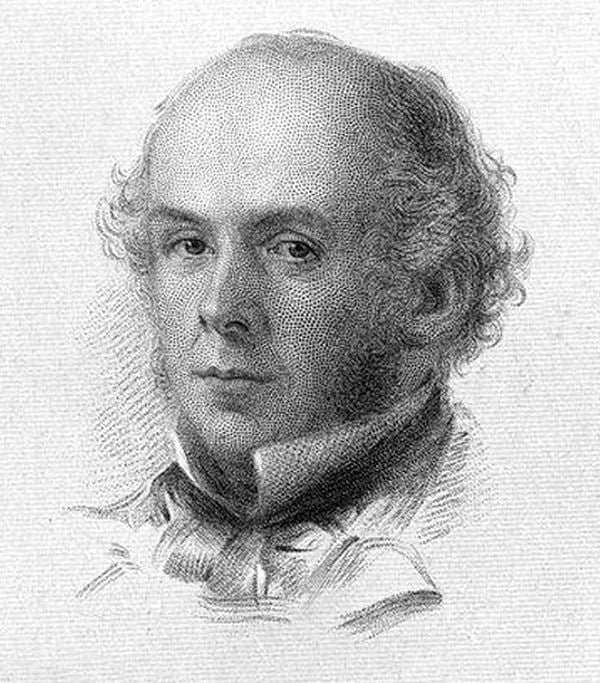
Clough lived through the religious excitement at Oxford in the 1830s, the great age of the Tractarians and the Oxford Movement, but he lost his faith, or at least in any orthodox form.In his Epi-Strauss-ium (1846?) he imagined seeing the sun’s light shining through stained glass windows in which he saw
Matthew and Mark and Luke and holy John
Evanished all and gone!
He lives in a world “After Strauss”, that is after David Friedrich Strauss, who had demolished faith in the canonical gospels, and specifically the tales of the Resurrection. Yet if the orthodox landmarks were gone, true Light could still shine and illuminate the world. Clough flirted with Unitarianism, and met Ralph Waldo Emerson on his visit to England. When the two separated, they bemoaned the spiritual struggles of young thinkers in England, who were wandering so far from faith but had not yet found a home. Emerson reported that
I put my hand upon his head as we walked, and I said, ‘Clough, I consecrate you Bishop of All England. It shall be your part to go up and down through the desert to find out these wanderers and to lead them into the promised land’.
Clough traveled widely during his life, and he had many American connections: he even spent some childhood years in Charleston, SC. Even so, he was most attached to Italy, a land then in the midst of sweeping revolutions. This gave him material for his Amours de Voyage, a highly readable verse novel describing travels through Italy during the political crisis of 1848-49. The poem includes some strikingly immediate and journalistic (almost televisual) accounts of the riots and street battles in Rome during the nationalist revolution.
The poem gives a terrific sense of being in the center of great historical events and even having the status of an eye witness, but still being really uncertain what is actually happening:
So, I have seen a man killed! An experience that, among others!
Yes, I suppose I have; although I can hardly be certain,
And in a court of justice could never declare I had seen it.
But a man was killed, I am told, in a place where I saw
Something; a man was killed, I am told, and I saw something.
That awareness of the dangers of unreliable narration echoes Clough’s critical reading of the gospels.
In 1849, he was in Naples at Easter, where he witnessed the luxurious ceremonials, and heard all the bells and choirs proclaiming the Resurrection. How could anyone resist a new commitment to faith, however temporary?
Well, Clough did indeed resist, and he described his reactions in the poem “Easter Day”, with its repeated declarations contesting faith. He is almost describing a conversion experience, the diametric opposite of how evangelicals described being born again. Note the familiar evangelical language of heat, warmth and fire, recalling John Wesley’s heart being “strangely warmed.”
Through the great sinful streets of Naples as I past,
With fiercer heat than flamed above my head
My heart was hot within me; till at last
My brain was lightened, when my tongue had said—
Christ is not risen!
Christ is not risen, no,
He lies and moulders low;
Christ is not risen.
With slight variations, that last line becomes the refrain of each stanza.
I will only offer selections here, as you can find the whole work easily enough. Repeatedly, Clough cites the weaknesses of “the Gospel,” which evidently shows his familiarity with Higher Criticism:
What if the women, ere the dawn was grey,
Saw one or more great angels, as they say,
(Angels, or Him himself)? Yet neither there, nor then,
Nor afterward, nor elsewhere, nor at all,
Hath He appeared to Peter or the Ten;
Nor, save in thunderous terror, to blind Saul;
Save in an after-Gospel and late Creed
He is not risen indeed,
Christ is not risen.
Or what if e’en, as runs the tale, the Ten
Saw, heard, and touched, again and yet again?
What if at Emmaüs’ inn and by Capernaum’s Lake
Came One the bread that brake—
Came One that spake as never mortal spake,
And with them ate and drank and stood and walked about?
Ah! ‘some’ did well to ‘doubt’!
Ah! the true Christ, while these things came to pass,
Nor heard, nor spake, nor walked, nor dreamt, alas!
He was not risen, no—
He lay and moulder low,
Christ was not risen.
Like the Higher Critics of the day, Clough was very concerned with dating the various New Testament texts precisely, and tracing the development of doctrines over time: hence the reference to “after-Gospel and late Creed.”
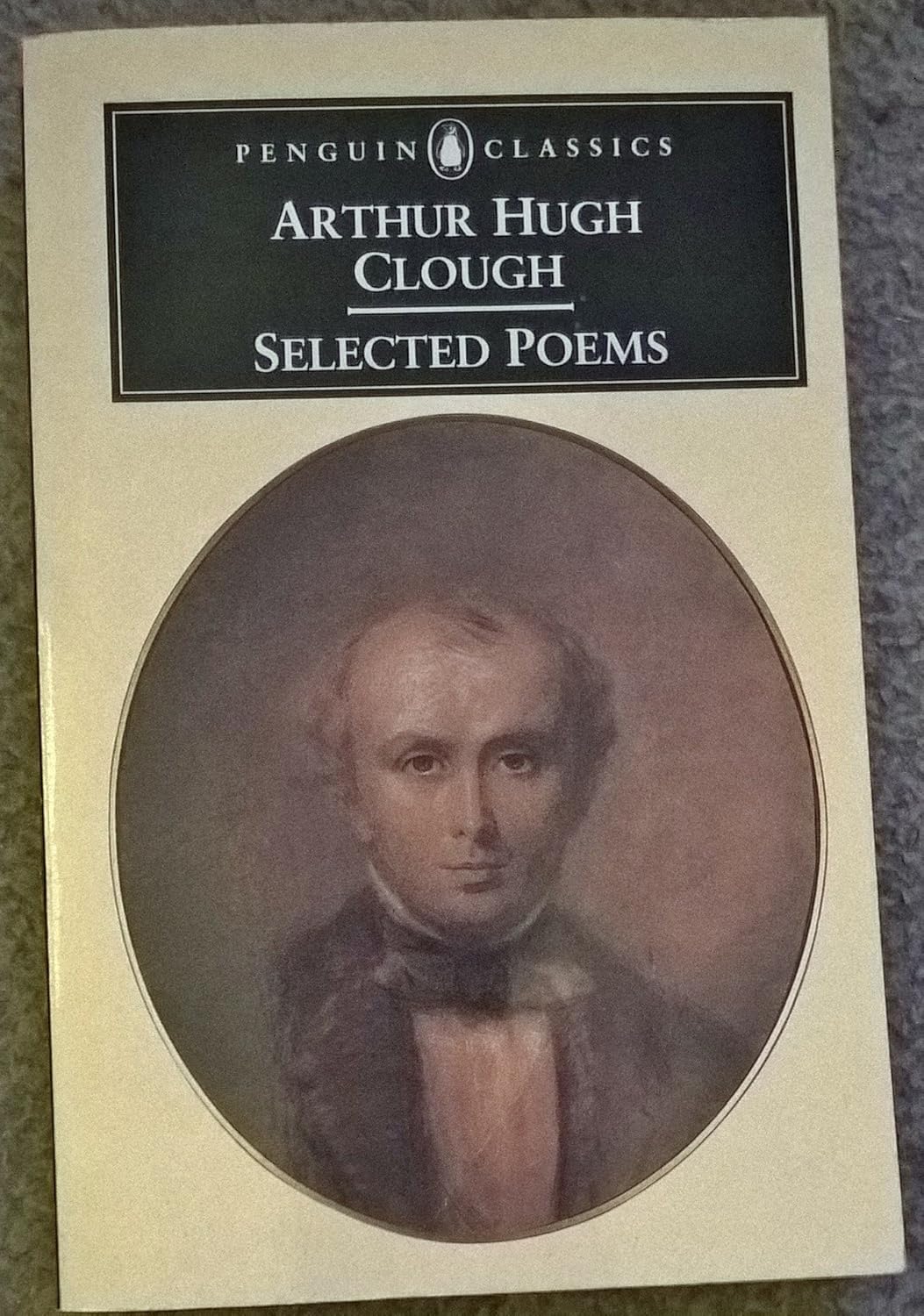
The whole long poem (a thousand words) is an essay as much as a lyric. It is an extended meditation on the denial of Resurrection, and with it, the need to construct a valid world without religious faith, or at least not in any sense that the term was used at the time:
Eat, drink, and play, and think that this is bliss:
There is no Heaven but this;
There is no Hell;—
Save Earth, which serves the purpose doubly well,
Seeing it visits still
With equallest apportionment of ill
Both good and bad alike, and brings to one same dust
The unjust and the just
With Christ, who is not risen.
Eat, drink, and die, for we are souls bereaved
Of all the creatures under heaven’s wide cope
We are most hopeless, who had once most hope,
And most beliefless, that had most believed.
Ashes to ashes, dust to dust;
As of the unjust, also of the just—
Yea, of that just One too!
It is the one sad Gospel that is true—
Christ is not risen!
…
Here, on our Easter Day
We rise, we come, and lo! we find Him not,
Gardener nor other, on the sacred spot:
Where they have laid Him there is none to say;
No sound, nor in, nor out—no word
Of where to seek the dead or meet the living Lord.
There is no glistering of an angel’s wings,
There is no voice of heavenly clear behest:
Let us go hence, and think upon these things
In silence, which is best.
Is He not risen? No—
But lies and moulders low?
Christ is not risen?
Clough himself lived a difficult and tragic life, dying at the age of 42. After his death, another poem of his was found, which at least seems to reverse that stark 1849 original, although it is even less celebrated. “Easter Day II” is in no sense a simple affirmation of faith, as it rejects any physical or literal Resurrection. But even so, he leaves space for the belief that, in a spiritual or liturgical sense, Jesus still lives:
Though He be dead, He is not dead,
Nor gone, though fled,
Not lost, though vanished;
Though He return not, though
He lies and moulders low;
In the true creed
He is yet risen indeed;
Christ is yet risen
….
In the great gospel and true creed,
He is yet risen indeed;
Christ is yet risen.
If we can’t claim any kind of deathbed conversion, Clough did find his way to seeing value in faith. In modern language, we might think in terms of cultural Christianity.
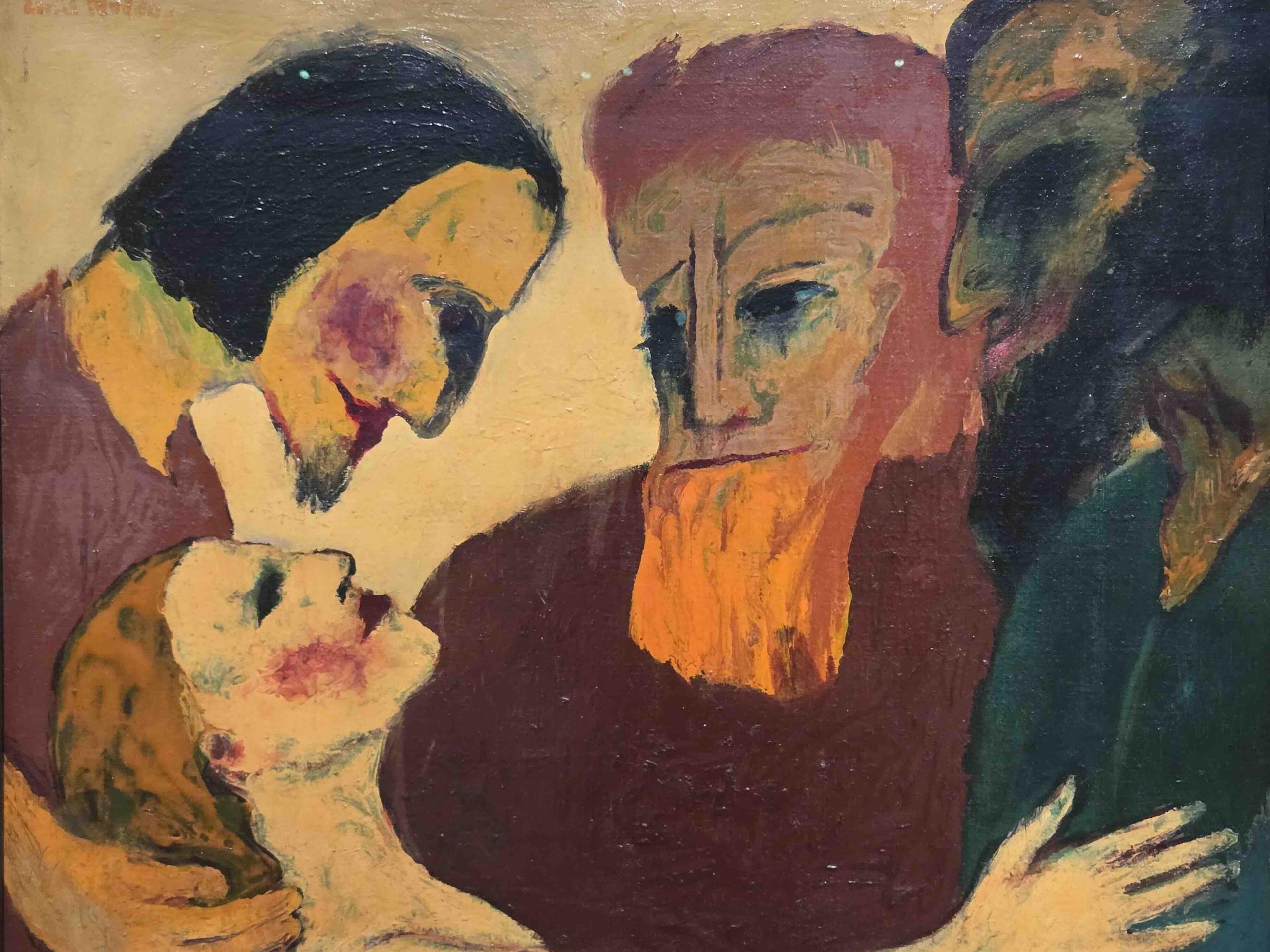 (Photograph is my own work)
After discussing those weighty texts, I can’t resist quoting the whole text of one Clough poem that illustrates his power as a satirist, in this case attacking established religion and hypocritical bourgeois morality. He helpfully offered the mid-Victorian world an updated version of the Ten Commandments, the “Latest Decalogue”:
Thou shalt have one God only; who
Would tax himself to worship two?
God’s image nowhere shalt thou see,
Save haply in the currency:
Swear not at all; since for thy curse
Thine enemy is not the worse:
At church on Sunday to attend
Will help to keep the world thy friend:
Honor thy parents; that is, all
From whom promotion may befall:
Thou shalt not kill; but needst not strive
Officiously to keep alive:
Adultery it is not fit
Or safe, for women, to commit:
Thou shalt not steal; an empty feat,
When ’tis so lucrative to cheat:
False witness not to bear be strict;
And cautious, ere you contradict.
Thou shalt not covet; but tradition
Sanctions the keenest competition.
Yes, he is still very much worth reading.
Previous Post

April 23, 2025
From the Archives: Learning from SBC Women’s Ministries
Next Post
May 1, 2025 Prince Gallitzin and Sacred Pennsylvania
Recent Comments
"Very good point about MacDonald.I am certainly a Machen fan!"
Fairies, Witches, Folk Horror, and the ..."
"The Scottish author George MacDonald integrated fairy world into his fiction in a way that ..."
Fairies, Witches, Folk Horror, and the ..."
"I like the idea that we can have different streams. The coffee analogy is genius."
How Do You Take Your Evangelicalism?
"Geography lesson: Southern California is actually in North Texas. I've lived her for 40 years, ..."
How Do You Take Your Evangelicalism?
Browse Our Archives
Select a Category abolitionism Abortion Abraham Joshua Heschel Abraham Kuyper Abraham Lincoln Academia Activism Adam Renberg Advent Adventist africa African American Religion Agnes Howard Albert Camus American History American Religious History American Revolution American West Anabaptists Ancient History Andrea Turpin Andrei Tarkovsky Anglicanism Annales Ansley Lillian Quiros anti-Catholicism Antisemitism Anxious Bench apologetics Apparitions Arash Azizi Archaeology archives art Artificial Intelligence Asia Asian Americans Augustine Authors Bad Bunny Baptism Baptists Barack Obama Battle of Hastings Benjamin Franklin Bernard-Henri Levy Beth Allison Barr Beth Moore Bethany Mannon Bible Bill Cunningham Billy Graham Black Music Bob Dylan Body Boenhoffer Books Breastfeeding Bruce Springsteen C.S. Lewis Calvinism Cancel Culture Capitalism Carmelites Catholicism Cedric Robinson Cesar Chavez Charismaticism charity Charles Dickens Charles Lindbergh Che Guevara Chicago Children Chinese Christianity Chris Gehrz Christ Christian death Christian Higher Education Christian life Christian Nation Christian Nationalism Christianity Today Christmas Church life Church Practice cinema Civil Religion Civil Rights Movement Civil War civility Classics Climate Change Cold War Colonial Mexico colonialism Comer Communism community complementarianism Conference on Faith and History Congregationalism Conspiracies Conspiracy Conversion Narratives Coronavirus Costa Rica Council of Nicaea Covid-19 Creation Critical Race Theory Crusades Culture culture wars Daniel K. Williams David Barton David Swartz Death Ways death with dignity DEI democracy Democratic Party Devotion Digital Age Diplomacy discipleship diversity Donald Trump Drama Dua Lipa Early Church early modern Early modern Catholicism Easter Eastern Christianity economic exploitation Education elections Elie Wiesel Elizabeth II Elizabeth Taylor emotions Empire Engineering England enslavement Entertainment Episcopal Church Erica Ramirez eschatology Eurocentrism Evangelicalism Evangelicals Exegesis Family Feminism Film Flannery O'Connor folk music Food Foreign Policy founding fathers Franciscans Franciscus Junius fundamentalism Funerals G.K. Chesterton Gender Genocide genre geography George W. Bush George Washington George Whitefield Global Christianity Global church Grief Guadalupe Guest Post guest post gun control gun violence Gustavo Gutierrez Hamid Dabashi Harold John Ockenga Harvest Hate Hawaiian Christianity Healing health care Heather Cox Richardson Hell Heresy Hermeneutics Higher Education Hinduism Hippocratic oath Historical Fiction Historical Methodology Historical Profession Historical Profession Historical Theology Historical Thinking historiography Holidays Holocaust horror movies Human rights Humanitarian Work humanities Hummingbirds Hungary hymns Imago Dei Immigration Injustice Interviews Iran Islam Islamophobia Israel Ivan's Childhood Jacob Randolph James Bratt Janine Giordano Drake Japanese history Japanese Literature Jean Paul Sartre Jesse Miranda Jesus Jesus Christ Jimmy Carter Joan Baez Joan Didion Joanne Freeman João B. Chaves Joao Chaves Joey Cochran John Calvin John Fea John Tillotson John Turner Johnny Cash Jonathan Edwards Jonathan Tran Joseph Smith Josh Howerton Journalism Jr. Judaism Jürgen Moltmann Just War Justice Justin Brierley Karl Barth Katelyn Beaty koi ponds Kris Kristofferson Kristin Kobes Du Mez Latin American Religious History Latino Americans Lectio Divina Leisure Lent Leonard Cohen liberal arts liberalism Liberation Theology Linda Ronstadt Lisa Clark Diller Literature Lou Reed Lynchings Lynneth Miller Renberg Mainline Protestantism Malcolm Foley Marilyn Monroe Maritime history Mark Noll Marriage Martin Luther Martin Luther King Martyrdom Marxism Mary Masih Alinejad mass shootings material culture medieval Christianity Medieval Ethiopia Melissa Borja memory Mennonites Mental Health Mental Illness Methodism Mexican Americans Mexicans Mike Madrid Miles Mullin Min Jin Lee Miscarriage Missionaries Mister Rogers Mitt Romney modernity Monasticism Mormonism Motherhood Mothers of the Church Moving Music Musicals Nadya Williams Nahua Christianity Native Americans Natsume Sōseki New Contributor New England New Year New York Nico Non-Violent Protest Orthodoxy pacifism Paleo Evangelicals Palestinians Parenting Patti Smith Paul Kingsnorth Pedro Calderón de la Barca Pentecostalism Philip Jenkins Phillis Wheatley physician-assisted suicide pilgrimage Pilgrims pluralism Plutocracy Poetry Politics Pope Francis Pope Leo XIV post-modernism prayer preaching Presbyterians prosperity gospel Protest Public history Publishing Puritans purity culture Quakers race Race Massacres Racial Capitalism racial reconciliation racialization Racism Raha Bahloulipour Re-Enchantment reading Reformation Refugees religion and the university religion and war Religious Freedom Religious Nones Religious Pluralism Religious Symbols religious violence Republican Party Revival Rita Coolidge Ritual Roger Williams Roman Catholic church Royalty Russell Moore same-sex marriage Sarah Irving-Stonebraker Scandinavia Science Science and Technology Scopes trial Scriptural Interpretation secularism Selena Quintanilla seminary Seventh-Day Adventists sexual morality Sexuality Sikhs Silence slaveholders theology Slavery Slavoj Zizek social justice Social Media Southern Baptist Convention Southern Religion Spain Spiritual Autobiography Spiritual but not religious Spiritual Discipline Sports Stanley Hauerwas Suffering Summer Camps Sunday Night Odds and Ends Supernatural Supreme Court Syriac Christianity Tal Howard Taylor Swift Teaching Technology Television Thanksgiving The Beatles The Mission theater TheoBros Theology Thomas Dixon Thomas Jefferson Thomas Kidd Thomas Merton Tim Gloege Tim Walz Tom Holland Tourism tradition Tragedy Translation Transnationalism Travel Trump Ukraine Uncategorized Unitarians United Methodist Church US History Vanessa Chan Velvet Underground Verónica A. Gutiérrez Veronica Gutierrez Vikings Violence Virgin Mary Virtue Virtue ethics Visions Voting War WCTU Wendell Berry Westminster Assembly White Evangelicalism Wildfires Winnie the Pooh Witches women Women in Ministry Women's and Gender Studies Work Worship writing Yasunari Kawabata Zena Hitz
Select a Month October 2026 September 2026 August 2026 July 2026 June 2026 May 2026 April 2026 March 2026 February 2026 January 2026 December 2025 November 2025 October 2025 September 2025 August 2025 July 2025 June 2025 May 2025 April 2025 March 2025 February 2025 January 2025 December 2024 November 2024 October 2024 September 2024 August 2024 July 2024 June 2024 May 2024 April 2024 March 2024 February 2024 January 2024 December 2023 November 2023 October 2023 September 2023 August 2023 July 2023 June 2023 May 2023 April 2023 March 2023 February 2023 January 2023 December 2022 November 2022 October 2022 September 2022 August 2022 July 2022 June 2022 May 2022 April 2022 March 2022 February 2022 January 2022 December 2021 November 2021 October 2021 September 2021 August 2021 July 2021 June 2021 May 2021 April 2021 March 2021 February 2021 January 2021 December 2020 November 2020 October 2020 September 2020 August 2020 July 2020 June 2020 May 2020 April 2020 March 2020 February 2020 January 2020 December 2019 November 2019 October 2019 September 2019 August 2019 July 2019 June 2019 May 2019 April 2019 March 2019 February 2019 January 2019 December 2018 November 2018 October 2018 September 2018 August 2018 July 2018 June 2018 May 2018 April 2018 March 2018 February 2018 January 2018 December 2017 November 2017 October 2017 September 2017 August 2017 July 2017 June 2017 May 2017 April 2017 March 2017 February 2017 January 2017 December 2016 November 2016 October 2016 September 2016 August 2016 July 2016 June 2016 May 2016 April 2016 March 2016 February 2016 January 2016 December 2015 November 2015 October 2015 September 2015 August 2015 July 2015 June 2015 May 2015 April 2015 March 2015 February 2015 January 2015 December 2014 November 2014 October 2014 September 2014 August 2014 July 2014 June 2014 May 2014 April 2014 March 2014 February 2014 January 2014 December 2013 November 2013 October 2013 September 2013 August 2013 July 2013 June 2013 May 2013 April 2013 March 2013 February 2013 January 2013 December 2012 November 2012 October 2012 September 2012 August 2012 July 2012 June 2012 May 2012
Follow Us!
TAKE THE
Religious Wisdom Quiz
What did the disciples do when Jesus asked them to stay awake in the garden?
Select your answer to see how you score.
They left They sang They prayed They fell asleep
Related posts from Anxious Bench

Fairies, Witches, Folk Horror, and the Secret Commonwealth

Hogg’s Justified Sinner: A Gothic Classic for Halloween

James Hogg, Weird Wives, and Feminist Witches

How an Explosive Book Rewrote the Study of...
TRENDING AT PATHEOS Evangelical

In "Irreplaceable," our book on vocation and technology, Trevor Sutton and I...

I was strolling through the top floor of the brand new Parthenon...

What Does Gêvâh Mean For Kimberley Guifoyle &...
This week, a lot of the news is focused on Kimberly Guilfoyle....

INNER CIRCLE: Profound Mystery (Of Christ In All...
Ephesians 5:31-32 “For this reason, a man will leave his father and...

Do Not Rejoice When Your Enemy Falls: The...
Turning an execution into a public spectacle is a disturbing expression of...

'The Chosen' S6 Trailer: The Passion Gets Very...
Not many watching 'The Chosen' worry about spoilers, but just because they...
view all Evangelical blogs
What Are Your Thoughts?leave a comment
Ad-Free & Subscriber Log-In Subscription Support
- About Us
- 2026 Calendar
- Videos
- Podcasts
- Library of World Religions
- Faith In Media Tracker
- Advertise With Us
- Write for Us
- Privacy Policy
- Terms of Service
- Do Not Sell My Data
- Contact Us
- Radiant Digital
- Manage Newsletter Subscriptions
- Unsubscribe From Notifications
- Sitemap
Copyright 2008-2026, Patheos. All rights reserved.
Subscription Support Ad-Free & Subscriber Log-In
Follow Patheos