
BuddhistCatholicContemplativeEvangelicalGeneral ChristianHinduJewishLatter-day SaintMuslimNew VisionsProgressive Christian
Beliefs
- Buddhist
- Catholic
- Contemplative
- Evangelical
- General Christian
- Hindu
- Jewish
- Latter-day Saint
- More Voices
- Muslim
- New Visions
- Pagan
- Progressive Christian
Topics
- Religion News
- Food and Religion
- Sports and Religion
- Religious Art
- Religious Music and Entertainment
- Religious Events
- History and Religion
- Style and Religion
- Politics and Religion
- Women in Religion
- Recreation Outdoors and Religion
- Business Finance and Religion
- Careers Workplace and Religion
- Education and Religion
- Family Parenting and Religion
- Health Fitness and Religion
- Home and Religion
- Relationships and Religion
- Technology and Religion
- Travel and Religion
Columnists
- Buddhist Columnists
- Business Finance and Religion Columnists
- Careers Workplace and Religion Columnists
- Catholic Columnists
- Contemplative Columnists
- Education and Religion Columnists
- Evangelists Columnists
- Family Parenting and Religion Columnists
- General Christian Columnists
- Health Fitness and Religion Columnists
- Hindu Columnists
- History and Religion Columnists
- Home and Religion Columnists
- Jewish Columnists
- More Voices Columnists
- Latter Day Columnists
- Muslim Columnists
- New Visions Columnists
- Nonreligious Columnists
- Pagan Columnists
- Politics and Religion Columnists
- Progressive Columnists
- Recreation Outdoors and Religion Columnists
- Relationships and Religion Columnists
- Religion News Columnists
- Religious Art Columnists
- Religious Events Columnists
- Religious Music and Entertainment Columnists
- Sports and Religion Columnists
- Style and Religion Columnists
- Technology and Religion Columnists
- Travel and Religion Columnists
- Women in Religion Columnists
Resource Library
- 2026 Calendar
- Library of World Religions
- The 100 Most Holy Places on Earth
- Patheos Answers
- Podcasts
- Videos
- Faith Leaders Database
- Anglican Episcopalian
- Bahai
- Baptist
- Buddhism
- Christianity
- Confucianism
- Eastern Orthodoxy
- Hinduism
- Holiness and Pentecostal
- ISKCON
- Islam
- Judaism
- Lutheran
- Methodist
- The Church of Jesus Christ of Latter-day Saints
- New Age
- Paganism
- Presbytarian and Reformed
- Protestantism
- Religion Behind the Scenes
- Roman Catholic
- Scientology
- Shia Islam
- Sikhism
- Sufism
- Sunni Islam
- Taoism
- Zen
- See all religions
Research Tools
 Ad-Free & Subscriber Log-In Subscription Support
Ad-Free & Subscriber Log-In Subscription Support
Follow Patheos 

- Trending:
- Forgiveness
- |
- Marriage
- |
- Consciousness
- |
- Death Penalty
- |
- Election
- |
- Halloween

-
About the Authors
- Home
- Evangelical
- History and Religion
- Evangelicals, Charismatics, and Reformation Roleplay, Pt 1
Evangelicals, Charismatics, and Reformation Roleplay, Pt 1
Last updated on: January 24, 2025 at 12:11 pm by Jacob Randolph
Evangelicals, Charismatics, and Reformation Roleplay, Pt 1 2025-01-24T12:11:02-04:00 Jacob Randolph
Patheos Explore the world's faith through different perspectives on religion and spirituality! Patheos has the views of the prevalent religions and spiritualities of the world.
Evangelicalism and ecstatic Spirit-filled movements have long had an uneasy relationship. The inclusion of Pentecostal denominations into the newly-formed National Association of Evangelicals in 1942 meant that, on paper, Pentecostals were card-carrying members of conservative orthodoxy. Yet, the relationship between Pentecostals and midcentury evangelical power-brokers was often chilly. Pentecostals represented a threat to Neo-evangelicals’ self-perception as rationalistic, objective, and socially respectable. For their part, some Pentecostals saw the move into evangelical spaces as weighing into a cultural fight that wasn’t theirs and diluting the distinctiveness of the Pentecostal tradition.
If the relationship between evangelicalism and charismaticism was uneasy, this was mostly because evangelicalism had an uneasy relationship with itself. As Molly Worthen in 2014 and Isaac Sharp in 2023 argued, a lack of any central adjudicatory authority in evangelicalism, paired with a cult of personality and a range of self-appointed leaders, meant that theological and social boundaries were in a state of constant drawing, redrawing, and patrolling. To quote Sharp’s The Other Evangelicals, the job of leaders was to open the doors to invite large swaths of conservative Protestants into the circle and then to flesh out “a fuller definition of evangelical identity by sorting out the border cases from the central examples, differentiating between the ideally evangelical and the questionably evangelical, distinguishing between the conservative-enough-to-count and the too-liberal-to-consider, and separating the sheep from the goats.”
I think we see this process occurring in the wake of the charismatic renewals of the 20th century. Yet even in this process, the standards for this sorting were contested. As Calvinist evangelicals began to think twice about their early acceptance of Pentecostals, many Pentecostals and charismatics argued forcefully for their full inclusion in the evangelical sphere. A few non-charismatic evangelicals generously extended the hand of fellowship; others did so cautiously. Others still demonized charismatic Christians as fanatical at best, heretical at worst.
According to neo-evangelicals and their progeny, there were two wolves inside evangelicalism: the so-called “doctrine party,” that held fast to sola scriptura and carried the mantle of the church fathers, the reformers, and the Puritans, and the “experience party,” composed of Christians that looked for fresh revelation from God and were tossed about by the waves of subjective experience. Over time, church history was conscripted into this battle for evangelical identity. When Reformed evangelicals aimed their keyboards, it was often at evangelicals they perceived as “less-than,” who served as proxies for the great heterodoxies and heresies of Church tradition. Neo-evangelicals’ great matter was the question of biblical inerrancy. But since inerrancy did not settle the question of how to interpret an inerrant Bible, Calvinist evangelicals looked to a truncated and selective past to argue what constituted a pure evangelical. The magisterial Reformers took pride of place as the beacons of reason and regularity, scripture and doctrinal rigor. Reformed evangelicals saw themselves as standing in a line with Luther, Calvin, Latimer, and others who defended the faith against heresies old and new. And if they were Luther, it became all too easy to see Luther’s enemies as their own, the “heavenly prophets” of Zwickau and Wittenberg as proto-pentecostals or, if you like, to see charismatic Christians as Thomas Müntzer in modern guise.
Neo-Evangelicals, Biblical Inerrancy, and the Reformation
Beginning the 1940s, an interdenominational network of theologians and church leaders began a PR campaign to claim this concept of evangelicalism—a big-tent silent majority of conservative, Bible-believing Protestants—as the natural—even inevitable—continuation of Protestant confessional orthodoxy. To do this, they walked the tightrope of claiming Reformation heritage by a focus on the Bible while jettisoning denominational particulars on questions of the sacraments or church polity. Thus, Carl F.H. Henry, Harold Ockenga, and others were willing extend evangelical credentials to the Assemblies of God and other Pentecostals in the early ‘40s by inviting them into the National Association of Evangelicals.
But the fresh wave of charismatic renewal that began in the 1960s created serious theological problems for neo-evangelicals. Beginning in the late 50s and spreading widely in the 60s, various non-Pentecostal groups began reporting experiences of baptism in the Holy Spirit, an unleashing of spiritual power that included healings, speaking in tongues, prophecy, and divine words of knowledge and wisdom. Amid growing charismatic revivals in mainline and Roman Catholic churches, the preponderance of which threatened the neo-evangelical claim to spiritual exclusivity, Henry and others began to openly critique the charismatic movement as contrary to the Reformation principles of evangelicalism. In the pages of Christianity Today and in books published by evangelical presses, neo-evangelicals argued the charismatic push was an assault on reason, a failure to prioritize rational Christianity over ecstatic spirituality. To safeguard rational Christianity from spiritual excess was, for Henry and others, to uphold the very soul of the Reformation.
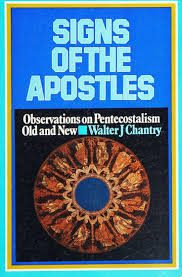
Walter Chantry, Signs of the Apostles (1973)
The claims for the modern miraculous read as a challenge to the sufficiency of scripture, a major evangelical thrust. “Charismatic enthusiasts are undermining confidence in the sufficiency of scripture,” Walter Chantry wrote in his Signs of the Apostles (1973). Pentecostal practice is a de facto denial of the sufficiency of scripture,” since they were “seeking an additional word from God, a further source of truth. For them the Bible is not enough.” “The ‘charismatic movement’,” he concluded, “does not carry on the Reformation but rather strikes a damaging blow to its very roots.”
For the most part, neo-evangelicals’ associations of the charismatic movement with Reformation heretics operated on the level of innuendo. Calling forth broad categories of “Enthusiastic sects” and “extremists” may have read as generalizations to most laypeople. However, these kinds of expressions gestured back to well-known conflicts in the Protestant Reformation. The shadows behind many of evangelical accusations against charismatics were Martin Luther’s old enemies: the Zwickau Prophets, Thomas Müntzer, the Anabaptists and Andreas Karlstadt. The theologies, goals, and rationales of these various figures and groups all varied, but in Luther’s mind, they shared a common trait: they abandoned the written Word of God in the Bible for the internal witness of the Spirit. They relativized Luther’s arguments from scripture as slavery to the “dead letter” against the living Spirit of prophecy. They were all fanatics, enthusiasts, Schwärmer, bees buzzing around busily doing little but wreaking havoc. As the battle over evangelical identity raged in the 80s and 90s and into the new millennium, Luther and his Schwärmer would be trotted out as foils to distinguish the true evangelicals from the false.
The Third Wave of Müntzerites
Third-wave charismaticism, or the neo-charismatic movement, saw the creation of new evangelical neocharismatic denominations, like the Vineyard Movement, but it also saw a marked rise in charismata within more storied evangelical institutions. In the late 1970s, Fuller professor Peter Wagner had teamed up with Vineyard founder John Wimber to teach a seminary course entitled, “Signs, Wonders and Church Growth.” According to Vinson Synan, the course attracted over 100 students. A hybrid of lecture and “clinical” work, it was not uncommon for students to engage in glossolalia, prophecy and prayer for healing. By Synan’s estimations, one-third of the student populations at both Fuller and Gordon-Conwell seminaries, both founded as neoevangelical training schools in the midcentury, were charismatic in belief and practice. For some Calvinist evangelicals, the explosion of these Spirit-empowered so-called evangelicals was a bridge a too far.
Controversial PCA pastor and Trinity Foundation founder John Robbins wrote in 1989 that the charismatic movement’s preoccupation with inward experience was both a manifestation of the German prophets like Müntzer and the Zwickau prophets, and it was a return to the errors of medieval Rome. “We have now come to the time when the issues of the sixteenth century have to be fought out again. This time the conflict will be more severe, and it will be final. Roll up the old denominational boundary lines. There is going to be a re-grouping of the religious world. On the one side there will be a grand union of Roman Catholics, pseudo-Protestants, and Pentecostals in what appears to be a movement for the conversion of the whole world. On the other side there will be a movement to restore the everlasting Gospel in its pristine purity and power. The Gospel will triumph. Though Antichrist may be victorious for a moment, his doom is sure. One little word shall fell him.”
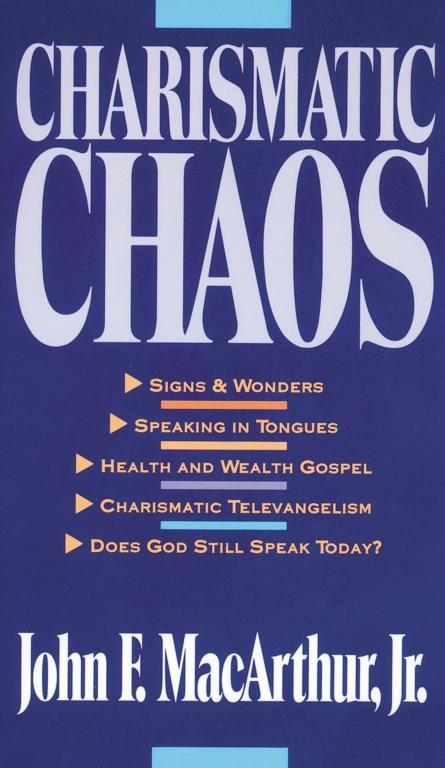
John MacArthur, Charismatic Chaos (1992)
Independent Baptist preacher John MacArthur also saw links between Roman and charismatic error. Although not denominationally aligned, MacArthur had gained influence in the broader evangelical sphere through his radio program, Grace to You, which combined expository preaching, Calvinist soteriology, and fundamentalist biblicism and social ethics. In 1992, MacArthur published Charismatic Chaos with Zondervan Press, a direct rejoinder to Wimber, Wagner, and other evangelical charismatic leaders. MacArthur’s claims were simple. There were two approaches to Christianity: the historical, objective approach that began with scripture, and the personal, subjective approach that began with experience. “Objective, historic theology is Reformation theology. It is historical evangelicalism. It is historical orthodoxy. We begin with Scripture,” MacArthur wrote. On the other side stood both Roman Catholicism and historic Pentecostalism. Oh, and liberalism and neo-orthodoxy. What all these had in common against historical orthodoxy is they were driven by intuition and feeling. Against these, “historical evangelicalism” was embodied by Martin Luther at the Diet of Worms. For MacArthur, Luther was the standard-bearer for reason and the sufficiency of scripture against all forms of mysticism, gnosticism, and experientialism.
Shortly after MacArthur’s Charismatic Chaos hit bookshelves, new, controversial revivals linked to the third-wave further excited the ire of Calvinist evangelicals. Testimonies of Holy Spirit power, healings, the appearance of supernatural gold fillings in teeth, freedom from addiction, holy laughter, and euphoria swept across the nation from the Toronto Blessing in 1994, associated with the Vineyard Movement, and the Brownsville Revival of 1995, associated with the Assemblies of God. For Calvinistic evangelical leaders who sought social respectability and associated evangelical truth with rationalism, “false revivalism” marked an embarrassing regression from the pure truths of the Reformation, a return to the biblical illiteracy and spiritual blindness of the so-called dark ages.
Mere months after the outbreak of the Toronto Blessing, in the spring ’94 edition of Reformation and Revival journal, Lutheran pastor and Gordon-Conwell graduate Rick Ritchie penned his warning against the charismatic movement. His hook was a telling indictment of Wimber and the quote-unquote ‘power evangelicals’: “If Thomas Muntzer were alive today,” Ritchie wrote, “his church would have a dove on its front wall. Or, more likely, no ornament; he would be too busy running ‘signs and wonders’ conferences to worry about a building.” He continued: “the charge that today’s Reformation churches are dead because of their lack of emphasis on the work of the Holy Spirit is as old as the Reformation itself. And so is one Reformation answer—Luther’s: “Muntzer, I wouldn’t believe you if you swallowed the Holy Ghost, feathers and all!” Ritchie’s garbling of Luther’s words notwithstanding, he was making a clear distinction—evangelicals who embraced scripture were standing on the side of Luther. And they were the ones who truly understood and experienced the Holy Spirit in the words of scripture. “It is only when we recognize that the Word is the Spirit’s chosen instrument that we will see that captivity of the Word is openness to the spirit,” wrote Ritchie. “On a day-to-day basis, if we wish to have God advise us personally about our money worries, comfort us when we feel arthritic, or affirm the inner child within, we are likely to be disappointed. God does speak of many things in His Word, many things that may be pertinent in the above instances. The Holy Spirit can illuminate Scripture making it understandable when it has not been before. His timing in illumination will often be remarkably providential. If this is not enough for us-if we want more—Reformation truth will be a disappointment.” If you wanted to mimic the experience of neocharismatic power rather than be content with Reformation truth, he cheekily wrote, you could simply stick your finger into a light socket.
By 1994, Carl Henry was ready to put away the prospect of a Pentecostal or charismatic evangelical space. The skepticism of a midcentury Henry had calcified into a full-on disapproval. In his Gods of the Age or God of the Ages, Henry repeated his two-party distinction of “Reformation-oriented evangelicals” and “experiential” groups. He wrote that “The tendency to use the term ‘evangelical’ as inclusive not only of Arminian and Reformed Christians, but of charismatic believers as well, and more broadly still of whoever claims a ‘born again’ experience, has diluted its cognitive force.” Lest anyone misunderstand, he doubled down: “I do not use the term ‘evangelical,’ as some now do, for non-Reformed Protestants. The historic Reformed faith champions evangelical orthodoxy, with much focus on the early ecumenical creeds and historic confessions. By the term evangelicals, I mean Protestants of broadly Reformed commitment, whether identified with Reformed denominations or not. The theological orientation and doctrinal sensitivity of the Reformed churches lend them a special serviceability in confronting the confessional weaknesses and ambiguities of many Protestant communities. The primarily experiential orientation of many professedly evangelical churches is a conspicuous weakness.”
Another frequent contributor to Reformation and Revival, Westminster Theological Seminary professor Michael Horton, wrote in 1996 that by jumping into bed with experience over scripture alone, evangelicals were betraying their Reformation heritage. Sola scriptura was a scandal to both Rome and radicals, who undermined the doctrine “by appeals to extra biblical revelation and by creating a host of individualistic sects led by charismatic prophets. In our day, too,” Horton wrote, “the Word and Spirit are often set against each other in what is often sadly called ‘revival.’” By the mid-90s, neocharismatic revivalism and the pentecostalization of Arminian evangelicalism were a foregone conclusion. Evangelical boundary lines were firmly set, or so it seemed. In the mid-90s, Horton critiqued neocharismatics from the comfortable perch of Presbyterian evangelicalism. But less than a decade later, he and his Westminster colleagues would face the uneasy task of challenging new charismatics who also claimed the mantle of Reformed theology.
History and Religion
Previous Post

January 23, 2025
How NOT To Count American Religious Extremists
Next Post
January 25, 2025 Was Carter a Progressive Evangelical or Centrist Politician?
Recent Comments
"Very good point about MacDonald.I am certainly a Machen fan!"
Fairies, Witches, Folk Horror, and the ..."
"The Scottish author George MacDonald integrated fairy world into his fiction in a way that ..."
Fairies, Witches, Folk Horror, and the ..."
"I like the idea that we can have different streams. The coffee analogy is genius."
How Do You Take Your Evangelicalism?
"Geography lesson: Southern California is actually in North Texas. I've lived her for 40 years, ..."
How Do You Take Your Evangelicalism?
Browse Our Archives
Select a Category abolitionism Abortion Abraham Joshua Heschel Abraham Kuyper Abraham Lincoln Academia Activism Adam Renberg Advent Adventist africa African American Religion Agnes Howard Albert Camus American History American Religious History American Revolution American West Anabaptists Ancient History Andrea Turpin Andrei Tarkovsky Anglicanism Annales Ansley Lillian Quiros anti-Catholicism Antisemitism Anxious Bench apologetics Apparitions Arash Azizi Archaeology archives art Artificial Intelligence Asia Asian Americans Augustine Authors Bad Bunny Baptism Baptists Barack Obama Battle of Hastings Benjamin Franklin Bernard-Henri Levy Beth Allison Barr Beth Moore Bethany Mannon Bible Bill Cunningham Billy Graham Black Music Bob Dylan Body Boenhoffer Books Breastfeeding Bruce Springsteen C.S. Lewis Calvinism Cancel Culture Capitalism Carmelites Catholicism Cedric Robinson Cesar Chavez Charismaticism charity Charles Dickens Charles Lindbergh Che Guevara Chicago Children Chinese Christianity Chris Gehrz Christ Christian death Christian Higher Education Christian life Christian Nation Christian Nationalism Christianity Today Christmas Church life Church Practice cinema Civil Religion Civil Rights Movement Civil War civility Classics Climate Change Cold War Colonial Mexico colonialism Comer Communism community complementarianism Conference on Faith and History Congregationalism Conspiracies Conspiracy Conversion Narratives Coronavirus Costa Rica Council of Nicaea Covid-19 Creation Critical Race Theory Crusades Culture culture wars Daniel K. Williams David Barton David Swartz Death Ways death with dignity DEI democracy Democratic Party Devotion Digital Age Diplomacy discipleship diversity Donald Trump Drama Dua Lipa Early Church early modern Early modern Catholicism Easter Eastern Christianity economic exploitation Education elections Elie Wiesel Elizabeth II Elizabeth Taylor emotions Empire Engineering England enslavement Entertainment Episcopal Church Erica Ramirez eschatology Eurocentrism Evangelicalism Evangelicals Exegesis Family Feminism Film Flannery O'Connor folk music Food Foreign Policy founding fathers Franciscans Franciscus Junius fundamentalism Funerals G.K. Chesterton Gender Genocide genre geography George W. Bush George Washington George Whitefield Global Christianity Global church Grief Guadalupe Guest Post guest post gun control gun violence Gustavo Gutierrez Hamid Dabashi Harold John Ockenga Harvest Hate Hawaiian Christianity Healing health care Heather Cox Richardson Hell Heresy Hermeneutics Higher Education Hinduism Hippocratic oath Historical Fiction Historical Methodology Historical Profession Historical Profession Historical Theology Historical Thinking historiography Holidays Holocaust horror movies Human rights Humanitarian Work humanities Hummingbirds Hungary hymns Imago Dei Immigration Injustice Interviews Iran Islam Islamophobia Israel Ivan's Childhood Jacob Randolph James Bratt Janine Giordano Drake Japanese history Japanese Literature Jean Paul Sartre Jesse Miranda Jesus Jesus Christ Jimmy Carter Joan Baez Joan Didion Joanne Freeman João B. Chaves Joao Chaves Joey Cochran John Calvin John Fea John Tillotson John Turner Johnny Cash Jonathan Edwards Jonathan Tran Joseph Smith Josh Howerton Journalism Jr. Judaism Jürgen Moltmann Just War Justice Justin Brierley Karl Barth Katelyn Beaty koi ponds Kris Kristofferson Kristin Kobes Du Mez Latin American Religious History Latino Americans Lectio Divina Leisure Lent Leonard Cohen liberal arts liberalism Liberation Theology Linda Ronstadt Lisa Clark Diller Literature Lou Reed Lynchings Lynneth Miller Renberg Mainline Protestantism Malcolm Foley Marilyn Monroe Maritime history Mark Noll Marriage Martin Luther Martin Luther King Martyrdom Marxism Mary Masih Alinejad mass shootings material culture medieval Christianity Medieval Ethiopia Melissa Borja memory Mennonites Mental Health Mental Illness Methodism Mexican Americans Mexicans Mike Madrid Miles Mullin Min Jin Lee Miscarriage Missionaries Mister Rogers Mitt Romney modernity Monasticism Mormonism Motherhood Mothers of the Church Moving Music Musicals Nadya Williams Nahua Christianity Native Americans Natsume Sōseki New Contributor New England New Year New York Nico Non-Violent Protest Orthodoxy pacifism Paleo Evangelicals Palestinians Parenting Patti Smith Paul Kingsnorth Pedro Calderón de la Barca Pentecostalism Philip Jenkins Phillis Wheatley physician-assisted suicide pilgrimage Pilgrims pluralism Plutocracy Poetry Politics Pope Francis Pope Leo XIV post-modernism prayer preaching Presbyterians prosperity gospel Protest Public history Publishing Puritans purity culture Quakers race Race Massacres Racial Capitalism racial reconciliation racialization Racism Raha Bahloulipour Re-Enchantment reading Reformation Refugees religion and the university religion and war Religious Freedom Religious Nones Religious Pluralism Religious Symbols religious violence Republican Party Revival Rita Coolidge Ritual Roger Williams Roman Catholic church Royalty Russell Moore same-sex marriage Sarah Irving-Stonebraker Scandinavia Science Science and Technology Scopes trial Scriptural Interpretation secularism Selena Quintanilla seminary Seventh-Day Adventists sexual morality Sexuality Sikhs Silence slaveholders theology Slavery Slavoj Zizek social justice Social Media Southern Baptist Convention Southern Religion Spain Spiritual Autobiography Spiritual but not religious Spiritual Discipline Sports Stanley Hauerwas Suffering Summer Camps Sunday Night Odds and Ends Supernatural Supreme Court Syriac Christianity Tal Howard Taylor Swift Teaching Technology Television Thanksgiving The Beatles The Mission theater TheoBros Theology Thomas Dixon Thomas Jefferson Thomas Kidd Thomas Merton Tim Gloege Tim Walz Tom Holland Tourism tradition Tragedy Translation Transnationalism Travel Trump Ukraine Uncategorized Unitarians United Methodist Church US History Vanessa Chan Velvet Underground Verónica A. Gutiérrez Veronica Gutierrez Vikings Violence Virgin Mary Virtue Virtue ethics Visions Voting War WCTU Wendell Berry Westminster Assembly White Evangelicalism Wildfires Winnie the Pooh Witches women Women in Ministry Women's and Gender Studies Work Worship writing Yasunari Kawabata Zena Hitz
Select a Month October 2026 September 2026 August 2026 July 2026 June 2026 May 2026 April 2026 March 2026 February 2026 January 2026 December 2025 November 2025 October 2025 September 2025 August 2025 July 2025 June 2025 May 2025 April 2025 March 2025 February 2025 January 2025 December 2024 November 2024 October 2024 September 2024 August 2024 July 2024 June 2024 May 2024 April 2024 March 2024 February 2024 January 2024 December 2023 November 2023 October 2023 September 2023 August 2023 July 2023 June 2023 May 2023 April 2023 March 2023 February 2023 January 2023 December 2022 November 2022 October 2022 September 2022 August 2022 July 2022 June 2022 May 2022 April 2022 March 2022 February 2022 January 2022 December 2021 November 2021 October 2021 September 2021 August 2021 July 2021 June 2021 May 2021 April 2021 March 2021 February 2021 January 2021 December 2020 November 2020 October 2020 September 2020 August 2020 July 2020 June 2020 May 2020 April 2020 March 2020 February 2020 January 2020 December 2019 November 2019 October 2019 September 2019 August 2019 July 2019 June 2019 May 2019 April 2019 March 2019 February 2019 January 2019 December 2018 November 2018 October 2018 September 2018 August 2018 July 2018 June 2018 May 2018 April 2018 March 2018 February 2018 January 2018 December 2017 November 2017 October 2017 September 2017 August 2017 July 2017 June 2017 May 2017 April 2017 March 2017 February 2017 January 2017 December 2016 November 2016 October 2016 September 2016 August 2016 July 2016 June 2016 May 2016 April 2016 March 2016 February 2016 January 2016 December 2015 November 2015 October 2015 September 2015 August 2015 July 2015 June 2015 May 2015 April 2015 March 2015 February 2015 January 2015 December 2014 November 2014 October 2014 September 2014 August 2014 July 2014 June 2014 May 2014 April 2014 March 2014 February 2014 January 2014 December 2013 November 2013 October 2013 September 2013 August 2013 July 2013 June 2013 May 2013 April 2013 March 2013 February 2013 January 2013 December 2012 November 2012 October 2012 September 2012 August 2012 July 2012 June 2012 May 2012
Follow Us!
TAKE THE
Religious Wisdom Quiz
What did God write the Ten Commandments with?
Select your answer to see how you score.
A pen A sword A chisel His finger
Related posts from Anxious Bench
Why Hymns and Poems Count as Real Theology

What Coffee Reveals About America's Evangelical Varieties

A Casserole is Not a Counterpoint
George Rogers and the Pentecostal Case Against Movies
TRENDING AT PATHEOS Evangelical

In "Irreplaceable," our book on vocation and technology, Trevor Sutton and I...

I was strolling through the top floor of the brand new Parthenon...

What Does Gêvâh Mean For Kimberley Guifoyle &...
This week, a lot of the news is focused on Kimberly Guilfoyle....

INNER CIRCLE: Profound Mystery (Of Christ In All...
Ephesians 5:31-32 “For this reason, a man will leave his father and...

Do Not Rejoice When Your Enemy Falls: The...
Turning an execution into a public spectacle is a disturbing expression of...

'The Chosen' S6 Trailer: The Passion Gets Very...
Not many watching 'The Chosen' worry about spoilers, but just because they...
view all Evangelical blogs
What Are Your Thoughts?leave a comment
Ad-Free & Subscriber Log-In Subscription Support
- About Us
- 2026 Calendar
- Videos
- Podcasts
- Library of World Religions
- Faith In Media Tracker
- Advertise With Us
- Write for Us
- Privacy Policy
- Terms of Service
- Do Not Sell My Data
- Contact Us
- Radiant Digital
- Manage Newsletter Subscriptions
- Unsubscribe From Notifications
- Sitemap
Copyright 2008-2026, Patheos. All rights reserved.
Subscription Support Ad-Free & Subscriber Log-In
Follow Patheos