
BuddhistCatholicContemplativeEvangelicalGeneral ChristianHinduJewishLatter-day SaintMuslimNew VisionsProgressive Christian
Beliefs
- Buddhist
- Catholic
- Contemplative
- Evangelical
- General Christian
- Hindu
- Jewish
- Latter-day Saint
- More Voices
- Muslim
- New Visions
- Pagan
- Progressive Christian
Topics
- Religion News
- Food and Religion
- Sports and Religion
- Religious Art
- Religious Music and Entertainment
- Religious Events
- History and Religion
- Style and Religion
- Politics and Religion
- Women in Religion
- Recreation Outdoors and Religion
- Business Finance and Religion
- Careers Workplace and Religion
- Education and Religion
- Family Parenting and Religion
- Health Fitness and Religion
- Home and Religion
- Relationships and Religion
- Technology and Religion
- Travel and Religion
Columnists
- Buddhist Columnists
- Business Finance and Religion Columnists
- Careers Workplace and Religion Columnists
- Catholic Columnists
- Contemplative Columnists
- Education and Religion Columnists
- Evangelists Columnists
- Family Parenting and Religion Columnists
- General Christian Columnists
- Health Fitness and Religion Columnists
- Hindu Columnists
- History and Religion Columnists
- Home and Religion Columnists
- Jewish Columnists
- More Voices Columnists
- Latter Day Columnists
- Muslim Columnists
- New Visions Columnists
- Nonreligious Columnists
- Pagan Columnists
- Politics and Religion Columnists
- Progressive Columnists
- Recreation Outdoors and Religion Columnists
- Relationships and Religion Columnists
- Religion News Columnists
- Religious Art Columnists
- Religious Events Columnists
- Religious Music and Entertainment Columnists
- Sports and Religion Columnists
- Style and Religion Columnists
- Technology and Religion Columnists
- Travel and Religion Columnists
- Women in Religion Columnists
Resource Library
- 2026 Calendar
- Library of World Religions
- The 100 Most Holy Places on Earth
- Patheos Answers
- Podcasts
- Videos
- Faith Leaders Database
- Anglican Episcopalian
- Bahai
- Baptist
- Buddhism
- Christianity
- Confucianism
- Eastern Orthodoxy
- Hinduism
- Holiness and Pentecostal
- ISKCON
- Islam
- Judaism
- Lutheran
- Methodist
- The Church of Jesus Christ of Latter-day Saints
- New Age
- Paganism
- Presbytarian and Reformed
- Protestantism
- Religion Behind the Scenes
- Roman Catholic
- Scientology
- Shia Islam
- Sikhism
- Sufism
- Sunni Islam
- Taoism
- Zen
- See all religions
Research Tools
 Ad-Free & Subscriber Log-In Subscription Support
Ad-Free & Subscriber Log-In Subscription Support
Follow Patheos 

- Trending:
- Forgiveness
- |
- Marriage
- |
- Consciousness
- |
- Death Penalty
- |
- Election
- |
- Halloween

-
About the Authors
- Home
- Evangelical
- History and Religion
- An Unexpected Friendship’s Influence
An Unexpected Friendship’s Influence
Last updated on: August 13, 2024 at 2:00 am by Wyatt Reynolds
An Unexpected Friendship’s Influence 2024-08-13T01:14:25-04:00 Wyatt Reynolds
Patheos Explore the world's faith through different perspectives on religion and spirituality! Patheos has the views of the prevalent religions and spiritualities of the world.
In the spring semester, I did a bit of research towards a project that while a bit outside my wheelhouse, is influencing my methodologies in ways I think are interesting and important. I’ll be presenting a version of this project at a conference this fall, and I thought I might introduce a bit of it here also. This will be part one of a series over the next couple months where I explain my process and introduce pieces of what I discovered along the way. I began looking into this project because of a hunch. I suspected that James Cone (the founder of Back liberation Theology) and Vine Deloria Jr. (one of the most important Native American intellectuals of the twentieth century) had been friends. I suspected this because of how a few scholars seemed to have studied under and been influenced by both of them. I really had nothing hard to go off of though until I spoke with Deloria’s son, Phil–now a distinguished professor at Harvard. He told me that they had been friends and I should hunt down the connection. Luckily, I live next door to Yale where Deloria’s papers are stored and am a PhD student at Columbia, where Cone’s papers are housed. I dug into the archives and began to discover a beautiful and influential friendship. I begin to tell its story below with these epigraphs.
As with any generation
The oral tradition depends on each person
Listening and remembering a portion
And it is together—
All of us remembering what we have heard together—
That creates the whole story
The long story of the people.
~Leslie Marmon Silko
“Our ‘religion’ is not what we profess, or what we say, or what we proclaim; our ‘religion’ is what we do, what we desire, what we seek, what we dream about… One’s religion, then, is one’s life, not merely the ideal life but life as it is actually lived.” ~Jack Forbes
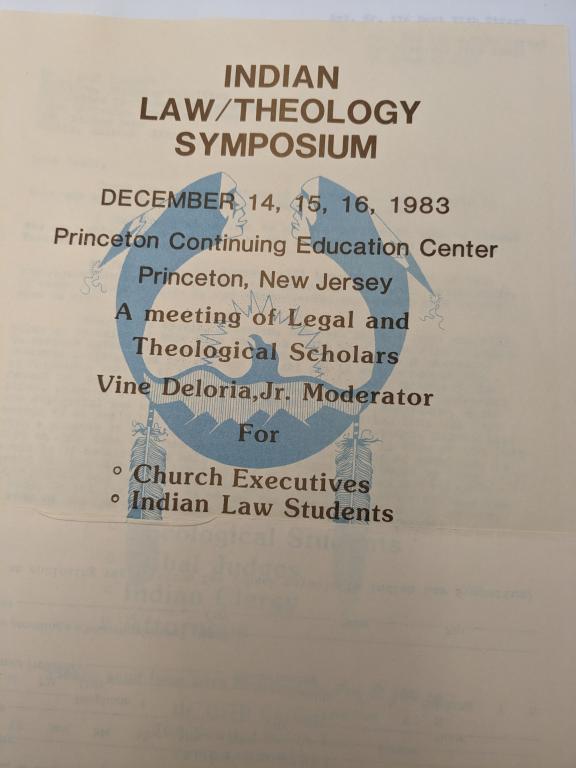
“Whether Indian peoples and indigenous peoples are to be treated as human beings, having essentially the same rights as other human beings, or whether, on the contrary, they are something different and therefore to have different rights under the law has been a question which has engaged the intellect of theologians as well as legal scholars for some centuries.”[1] Vine Deloria Jr. wrote these words in an abstract circulated before a 1983 conference entitled “The Symposium on Indian Theology and Indian Law.” The conference was hosted at Princeton University and co-sponsored by the Cook School for Theological Training, a largely Native school. One of the other speakers at the conference was James Cone, professor of Theology at Union Seminary in New York City. Deloria had told his co-convener, Cecil Corbett that Cone was the most important theologian, whose presence would be necessary for the conference’s success.[2] Cone and Deloria had been friends for nearly a decade by the time Deloria wrote to him inviting him to participate in the Princeton conference.
In his talk, titled “Translation and Transformation: Some Problems in the Formulation and Interpretation of Indian Rights,” Deloria lamented that the Native American rights movement did not possess the same intellectual rigor and firepower as the Civil Rights movement had. He described an argument with one of the leaders of AIM who told students to drop out of college and become activists. Deloria contended that “If we were really serious about making America pay its long overdue bill, we needed two students in the library for each protestor that marched to Washington or sat on Alcatraz or other surplus federal property. My estimate was exceedingly low.”[3] Both Cone and Deloria labored to fix this imbalance. Through their work and advisory capacities, they shaped a new generation of Native intellectuals. Many of these thinkers saw themselves living in the space between Vine Deloria Jr. and James H. Cone, the space of their friendship.
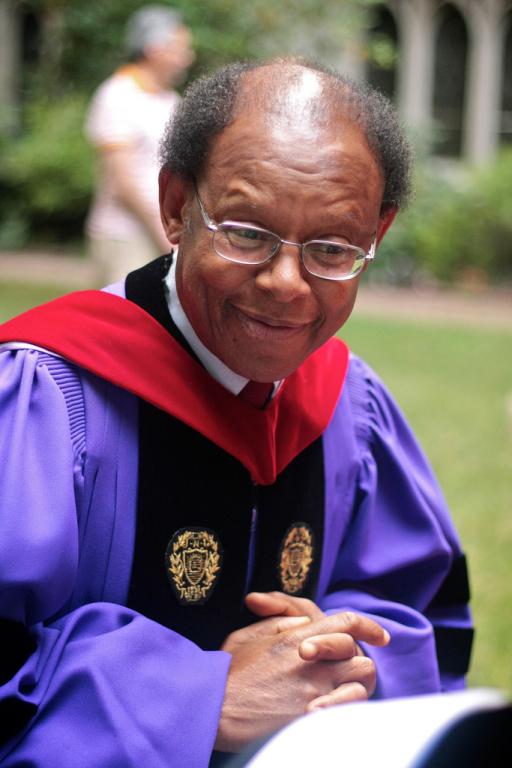 James Cone is perhaps the most important Black theologian between the death of Martin Luther King Jr. and his own passing in 2018. Having studied at historically Black colleges, Cone eventually received his doctorate from Northwestern University. Almost immediately, he became a lightning rod in the theological world. In his first book, Black Theology and Black Power, Cone dropped a bomb. Remembering how he wrote the book, Cone describes seventeen hour writing days with his only real breaks being Sundays spent immersed in the black church community, hearing sermons and living with a community pastored by his brother. It was through this book that he began to propagate a particular form of theology, which he would come to call Black Liberation Theology. “Black liberation theology came out of black culture and religion, and it celebrated a new freedom to talk about God and Jesus in a jazz mode, a blues style, and with the sound of the spirituals.”[4] In constructing this theology, Cone saw himself as shaped by the influence of both Malcolm X and Martin Luther King Jr. In a posthumously published memoir, Cone writes “The King assassination was a turning point in my life. As long as King was alive I had hope that white America could be converted to seeing Negroes as human beings… Malcolm repeatedly told King and the Negro masses that white America had no conscience and would never treat blacks as human beings unless we forced them. Malcolm’s words were ringing true.”[5] On the strength of this book and a second, published less than a year later, Cone was hired as professor of systematic theology at Union Theological Seminary in New York City. Union was without a doubt the most influential progressive Protestant seminary. Both Reinhold Niebuhr and Paul Tillich, arguably the most influential white theologians of the twentieth century, had taught at Union for the majority of their careers. Cone was the first African American to hold a professorship at Union.
Vine Deloria Jr was perhaps the most important Native intellectual of the second half of the twentieth century. While two volumes promising at least partial biographies of Deloria have beenpublished in the last few years, neither really offer us a complete figure of the man. And unlike Cone, Deloria never published a memoir. Instead, then, we must glean what we can from his essays, correspondence, and reminisces from his students and friends. Both Weaver and Warrior note that in private Deloria was quite insecure about having never received a doctorate. This might explain his often-deferential tone in correspondence with Cone when it comes to academic matters.
Cone and Deloria first met while the former was giving a lecture in Denver. During the question-and-answer portion of the program, Vine Deloria stood up and asked the question “What does all this have to do with Indians?”[6] Cone was stumped. After further conversation, the two continued their discussion over catfish in the Deloria kitchen. In the first letter from their voluminous correspondence, dating from March 1976, Cone thanks Deloria: “By the way, you wrapped the fish so well that I was able to bring it back to N.Y. and Rose, my wife, and children just loved it. They send their thanks.”[7] The friendship, collaboration, and letters would continue until Deloria’s death in 2005.
Both Deloria and Cone were giants in their respective fields. They also realized this about themselves and each other. One scholar commented to me that “Everyone sort of has their own personal Vine.” Similar stories were offered about Cone. It is perhaps not surprising then, that while I have heard from several scholars who knew Deloria intimately that he was publicly contemptuous of liberation theology, he wrote to Cone in 1979 apologizing for misunderstanding what liberation theology was: “I thought you had to be a Marxist.”[8] In some essays, Deloria even refers to himself as a Liberation theologian. Towards the end of his life, Deloria wrote that “The bitterness of reflection, these days, dwells not on what was accomplished but on what could have been accomplished had men been reasonable, just, or even consistent with themselves.” In Cone, he had found an intellectual fellow traveler who fulfilled these criteria. In another letter, he refers to both men as “people of the drum” up against and perhaps in conflict with the Western “people of the lyre.”[9]
Deloria then, somewhat confusingly, explains that he does believe that “the message of Christianity can’t be repeated enough… it does take the edge off the Anglo-Saxon Germanic desire to destroy.”[10] Meanwhile, he was publicly contemptuous of all christianity. Despite these claims to have “joined the pagans and heathens gathering in the hills,” Deloria had been ordained in the Episcopal Church after theological training, came from a long familial tradition of the priesthood, and continued in conversations with christians of nearly innumerable stripes.[11] Indeed, his father, Fr. Vine Deloria, Sr. was not only present at the 1983 Princeton conference, but offered an opening invocation and a closing benediction. Warrior comments that “The church had wounded him, but he kept going back, at least in certain ways because of his family and feeling bound by prophecy.”[12]
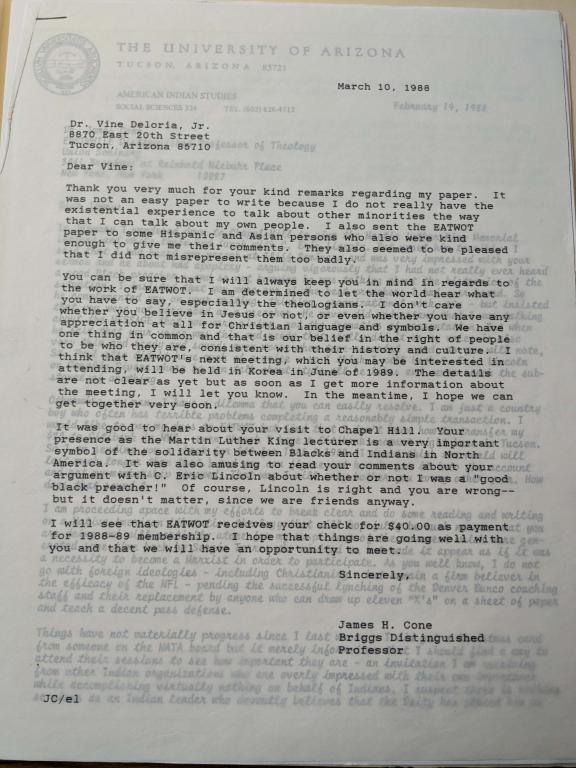
Additionally, one of the very few side-by-side comparisons of Cone and Deloria’s works I have been able to find in secondary literature comes in an essay by the Black scholar of religion, Charles Long, who argues quite critically that theology as a discipline is inappropriate for both Native and Black liberation. It becomes clear there are a series of critiques which we must make sense of. There is the critique Cone and Deloria level against White christianity, Deloria’s critique against religion writ large, the critique against theology, and critiques of these outside critics against Cone and Deloria. Cone and Deloria each clearly felt a debt to and a need to defend the other. In a September, 1988 letter to Cone, Deloria writes “Thanks of course to your career and leadership I have been able to get my intellectual ship on course and have been seriously thinking about what should be written from an Indian perspective on Liberation.”[13] In response, Cone wrote to Deloria “I am determined to let the world hear what you have to say, especially the theologians.”[14]
Helpfully, Cone describes for us what both systematic and liberation theology are. In a memoir published posthumously, he defines the field as “Theology is not philosophy…Theology is symbolic language, language about the imagination, which seeks to comprehend what is beyond comprehension. Theology is not antirational but it is nonrational, transcending the realm of rational discourse.”[15] Cone’s particular innovation was reading and constructing theology particularly as a Black man. As he puts it, “God must be with us because he was with Christ on the Cross. Even as we are lynched, God is beside us.”[16] Black Liberation Theology as he defined it focused on three themes in the christian scriptures and then married these themes to the experience of Black Americans. They are the Exodus or liberation of the Jews from Egypt, the Hebrew prophets’ emphasis on God’s solidarity with the poor, and Jesus’ description of his ministry as focusing on liberation. Cone further argued that “If the gospel is a gospel of liberation for the oppressed, then Jesus is where the oppressed are…If perchance, he is not in the ghetto, if he is not where men are living at the brink of existence, but is rather in the easy life of the suburb, then he lied and Christianity is a mistake.”[17] It should come as no surprise then that Cone and Deloria found common cause in questioning the veracity and helpfulness of easy, white christianity.
These themes have also been articulated by liberation theologians across the non-Western world and would also immerge amongst Native American Liberation Theology, which Deloria touched on and others have continued. Gustavo Guitierrez (A Peruvian theologian, largely credited alongside Cone as an originator of the broader category of liberation theology), Cone, and Deloria are all participants in a 1999 volume on American Liberation Theologies.[18] This volume also includes contributions from such luminaries as Cesar Chavez, Fr. Greg Boyle, and Delores Williams. Here we see Deloria at, in certain respects, his most pro-christian. In his essay, titled “Vision and Community, a Native American Voice,” Deloria argues that “we can glimpse a vision of community through the praxis of that liberation theology asks and demands of us.”[19] This praxis was precisely the preferential treatment liberation theology offered to the subaltern. It would also form the basis of a method for Cone’s Native students.
Cone and Deloria’s correspondence is the genre of the letter at its best and most colorful. Their letters are peppered with Biblical allusions, NFL allusions, and references to classic literature as well as their disgust with contemporary political figures, most especially Ronald Reagan. Deloria often references professional football as his true religion, even more than Lakota traditions. The humor at work between them also helps the friendship come to life before the reader’s eyes. In a letter from November 1992, Deloria opens “Well, I expected no less from an avowed Christian than a total forgiveness and I am glad I have that in hand.”[20]
Next month, I’ll most likely continue the story. For now, here’s the very first letter I found between the two. Its warmth excited me and suggested there was much more to come.
[1] Vine Deloria Papers. Yale Collection of Western Americana, Beinecke Rare Book and Manuscript Library. Correspondence box 119
[2] Vine Deloria Papers. Yale Collection of Western Americana, Beinecke Rare Book and Manuscript Library. Box 49, file Indian Theology and Law, Princeton
[3] Ibid.
[4] (Cone, Said I Wasn’t Gonna Tell Nobody: The Making of a Black Theologian 2018) 64, (Cone, Risks of Faith: The Emergence of a Black Theology of Liberation 2005) xi ff
[5] (Cone, Said I Wasn’t Gonna Tell Nobody: The Making of a Black Theologian 2018) 33ff
[6] Warrior describes hearing this story from both Cone and Deloria. Weaver heard it from Cone. It is also referenced throughout the Deloria/Cone correspondence. Robert Warrior, “Video: The Impact of God Is Red on Theology: Women’s Studies in Religion Program,” Harvard University, August 11, 2022, https://wsrp.hds.harvard.edu/news/2022/11/08/video-impact-god-red-theology-4.
[7] Vine Deloria Papers. Yale Collection of Western Americana, Beinecke Rare Book and Manuscript Library. box 129, file James Cone
[8] James Hal Cone papers, box 44, file 17
[9] Ibid.
[10] Ibid.
[11] Following theologian George Tinker (Osage) I capitalize “White” while leaving “christianity” and several other terms lower case. Tinker explains this move “using the lower case christian or biblical allows us to avoid any unnecessary normativizing or universalizing of the principal institutional religious quotient of the Euro-west… Paradoxically, I insist on capitalizing the W in White (adjective or noun) to indicate a clear cultural pattern invested in Whiteness that is all too often overlooked or even denied by American Whites.”
[12] Interview with the author. This prophecy was given by a Deloria ancestor who determined that the family’s lives would be intertwined with christianity and particularly the Episcopal church. It was in duty to this prophecy that Vine Deloria Sr. became a priest instead of a football player. (P. J. Deloria 2004) Deloria interprets the vision/prophecy of his ancestor as such: “Had he chosen it, the left-hand road with the four skeletons would have meant that Saswe would have four generations of prosperous descendants, but the people following him would be no more than skeletons with flesh who would contribute virtually nothing to the world. It would have been a safe but completely nondescript family that nonetheless would have luck and would prosper. The red road was fraught with danger but filled with life. The four purification tents meant that Saswe would kill four men of his own tribe and have to undergo four purification rituals. He would have great powers as a medicine man, the Thunders would be his close
friends, and many birds and animals would help him. He was given a special stone to make it rain.” (Deloria Jr. 2000) (Hoffman 2009) 104
[13] Vine Deloria Papers. Yale Collection of Western Americana, Beinecke Rare Book and Manuscript Library. box 129, file James Cone.
[14] Ibid.
[15] (Cone, Said I Wasn’t Gonna Tell Nobody: The Making of a Black Theologian 2018) 67ff
[16] Ibid. p 127-129, 131
[17] (Cone, Risks of Faith: The Emergence of a Black Theology of Liberation 2005) 9ff
[18] (Peter-Raoul, Forcey and Hunter 1990)
[19] Ibid. 79
[20] Vine Deloria Papers. Yale Collection of Western Americana, Beinecke Rare Book and Manuscript Library. box 49 folder James Cone
History and Religion
Previous Post

August 12, 2024
Peace in the midst of the 2024 Presidential Election Storm
Next Post

August 14, 2024 Hello Again, George W: Latino Politics and Pictures
Recent Comments
"Life Force is a guilty pleasure of mine! Not a great film, but a fun ..."
Fairies, Witches, Folk Horror, and the ..."
"I love horror but would have to acclimate back to Lovecraft and especially Machen. Have ..."
Fairies, Witches, Folk Horror, and the ..."
"Very good point about MacDonald.I am certainly a Machen fan!"
Fairies, Witches, Folk Horror, and the ..."
"The Scottish author George MacDonald integrated fairy world into his fiction in a way that ..."
Fairies, Witches, Folk Horror, and the ..."
Browse Our Archives
Select a Category abolitionism Abortion Abraham Joshua Heschel Abraham Kuyper Abraham Lincoln Academia Activism Adam Renberg Advent Adventist africa African American Religion Agnes Howard Albert Camus American History American Religious History American Revolution American West Anabaptists Ancient History Andrea Turpin Andrei Tarkovsky Anglicanism Annales Ansley Lillian Quiros anti-Catholicism Antisemitism Anxious Bench apologetics Apparitions Arash Azizi Archaeology archives art Artificial Intelligence Asia Asian Americans Augustine Authors Bad Bunny Baptism Baptists Barack Obama Battle of Hastings Benjamin Franklin Bernard-Henri Levy Beth Allison Barr Beth Moore Bethany Mannon Bible Bill Cunningham Billy Graham Black Music Bob Dylan Body Boenhoffer Books Breastfeeding Bruce Springsteen C.S. Lewis Calvinism Cancel Culture Capitalism Carmelites Catholicism Cedric Robinson Cesar Chavez Charismaticism charity Charles Dickens Charles Lindbergh Che Guevara Chicago Children Chinese Christianity Chris Gehrz Christ Christian death Christian Higher Education Christian life Christian Nation Christian Nationalism Christianity Today Christmas Church life Church Practice cinema Civil Religion Civil Rights Movement Civil War civility Classics Climate Change Cold War Colonial Mexico colonialism Comer Communism community complementarianism Conference on Faith and History Congregationalism Conspiracies Conspiracy Conversion Narratives Coronavirus Costa Rica Council of Nicaea Covid-19 Creation Critical Race Theory Crusades Culture culture wars Daniel K. Williams David Barton David Swartz Death Ways death with dignity DEI democracy Democratic Party Devotion Digital Age Diplomacy discipleship diversity Donald Trump Drama Dua Lipa Early Church early modern Early modern Catholicism Easter Eastern Christianity economic exploitation Education elections Elie Wiesel Elizabeth II Elizabeth Taylor emotions Empire Engineering England enslavement Entertainment Episcopal Church Erica Ramirez eschatology Eurocentrism Evangelicalism Evangelicals Exegesis Family Feminism Film Flannery O'Connor folk music Food Foreign Policy founding fathers Franciscans Franciscus Junius fundamentalism Funerals G.K. Chesterton Gender Genocide genre geography George W. Bush George Washington George Whitefield Global Christianity Global church Grief Guadalupe Guest Post guest post gun control gun violence Gustavo Gutierrez Hamid Dabashi Harold John Ockenga Harvest Hate Hawaiian Christianity Healing health care Heather Cox Richardson Hell Heresy Hermeneutics Higher Education Hinduism Hippocratic oath Historical Fiction Historical Methodology Historical Profession Historical Profession Historical Theology Historical Thinking historiography Holidays Holocaust horror movies Human rights Humanitarian Work humanities Hummingbirds Hungary hymns Imago Dei Immigration Injustice Interviews Iran Islam Islamophobia Israel Ivan's Childhood Jacob Randolph James Bratt Janine Giordano Drake Japanese history Japanese Literature Jean Paul Sartre Jesse Miranda Jesus Jesus Christ Jimmy Carter Joan Baez Joan Didion Joanne Freeman João B. Chaves Joao Chaves Joey Cochran John Calvin John Fea John Tillotson John Turner Johnny Cash Jonathan Edwards Jonathan Tran Joseph Smith Josh Howerton Journalism Jr. Judaism Jürgen Moltmann Just War Justice Justin Brierley Karl Barth Katelyn Beaty koi ponds Kris Kristofferson Kristin Kobes Du Mez Latin American Religious History Latino Americans Lectio Divina Leisure Lent Leonard Cohen liberal arts liberalism Liberation Theology Linda Ronstadt Lisa Clark Diller Literature Lou Reed Lynchings Lynneth Miller Renberg Mainline Protestantism Malcolm Foley Marilyn Monroe Maritime history Mark Noll Marriage Martin Luther Martin Luther King Martyrdom Marxism Mary Masih Alinejad mass shootings material culture medieval Christianity Medieval Ethiopia Melissa Borja memory Mennonites Mental Health Mental Illness Methodism Mexican Americans Mexicans Mike Madrid Miles Mullin Min Jin Lee Miscarriage Missionaries Mister Rogers Mitt Romney modernity Monasticism Mormonism Motherhood Mothers of the Church Moving Music Musicals Nadya Williams Nahua Christianity Native Americans Natsume Sōseki New Contributor New England New Year New York Nico Non-Violent Protest Orthodoxy pacifism Paleo Evangelicals Palestinians Parenting Patti Smith Paul Kingsnorth Pedro Calderón de la Barca Pentecostalism Philip Jenkins Phillis Wheatley physician-assisted suicide pilgrimage Pilgrims pluralism Plutocracy Poetry Politics Pope Francis Pope Leo XIV post-modernism prayer preaching Presbyterians prosperity gospel Protest Public history Publishing Puritans purity culture Quakers race Race Massacres Racial Capitalism racial reconciliation racialization Racism Raha Bahloulipour Re-Enchantment reading Reformation Refugees religion and the university religion and war Religious Freedom Religious Nones Religious Pluralism Religious Symbols religious violence Republican Party Revival Rita Coolidge Ritual Roger Williams Roman Catholic church Royalty Russell Moore same-sex marriage Sarah Irving-Stonebraker Scandinavia Science Science and Technology Scopes trial Scriptural Interpretation secularism Selena Quintanilla seminary Seventh-Day Adventists sexual morality Sexuality Sikhs Silence slaveholders theology Slavery Slavoj Zizek social justice Social Media Southern Baptist Convention Southern Religion Spain Spiritual Autobiography Spiritual but not religious Spiritual Discipline Sports Stanley Hauerwas Suffering Summer Camps Sunday Night Odds and Ends Supernatural Supreme Court Syriac Christianity Tal Howard Taylor Swift Teaching Technology Television Thanksgiving The Beatles The Mission theater TheoBros Theology Thomas Dixon Thomas Jefferson Thomas Kidd Thomas Merton Tim Gloege Tim Walz Tom Holland Tourism tradition Tragedy Translation Transnationalism Travel Trump Ukraine Uncategorized Unitarians United Methodist Church US History Vanessa Chan Velvet Underground Verónica A. Gutiérrez Veronica Gutierrez Vikings Violence Virgin Mary Virtue Virtue ethics Visions Voting War WCTU Wendell Berry Westminster Assembly White Evangelicalism Wildfires Winnie the Pooh Witches women Women in Ministry Women's and Gender Studies Work Worship writing Yasunari Kawabata Zena Hitz
Select a Month October 2026 September 2026 August 2026 July 2026 June 2026 May 2026 April 2026 March 2026 February 2026 January 2026 December 2025 November 2025 October 2025 September 2025 August 2025 July 2025 June 2025 May 2025 April 2025 March 2025 February 2025 January 2025 December 2024 November 2024 October 2024 September 2024 August 2024 July 2024 June 2024 May 2024 April 2024 March 2024 February 2024 January 2024 December 2023 November 2023 October 2023 September 2023 August 2023 July 2023 June 2023 May 2023 April 2023 March 2023 February 2023 January 2023 December 2022 November 2022 October 2022 September 2022 August 2022 July 2022 June 2022 May 2022 April 2022 March 2022 February 2022 January 2022 December 2021 November 2021 October 2021 September 2021 August 2021 July 2021 June 2021 May 2021 April 2021 March 2021 February 2021 January 2021 December 2020 November 2020 October 2020 September 2020 August 2020 July 2020 June 2020 May 2020 April 2020 March 2020 February 2020 January 2020 December 2019 November 2019 October 2019 September 2019 August 2019 July 2019 June 2019 May 2019 April 2019 March 2019 February 2019 January 2019 December 2018 November 2018 October 2018 September 2018 August 2018 July 2018 June 2018 May 2018 April 2018 March 2018 February 2018 January 2018 December 2017 November 2017 October 2017 September 2017 August 2017 July 2017 June 2017 May 2017 April 2017 March 2017 February 2017 January 2017 December 2016 November 2016 October 2016 September 2016 August 2016 July 2016 June 2016 May 2016 April 2016 March 2016 February 2016 January 2016 December 2015 November 2015 October 2015 September 2015 August 2015 July 2015 June 2015 May 2015 April 2015 March 2015 February 2015 January 2015 December 2014 November 2014 October 2014 September 2014 August 2014 July 2014 June 2014 May 2014 April 2014 March 2014 February 2014 January 2014 December 2013 November 2013 October 2013 September 2013 August 2013 July 2013 June 2013 May 2013 April 2013 March 2013 February 2013 January 2013 December 2012 November 2012 October 2012 September 2012 August 2012 July 2012 June 2012 May 2012
Follow Us!
TAKE THE
Religious Wisdom Quiz
Who replaced Haman as the king's chief adviser?
Select your answer to see how you score.
Ezra Sanballat Zerubbabel Mordecai
Related posts from Anxious Bench

Christians Helped Invent Race. Some Now Call It...
Why Hymns and Poems Count as Real Theology
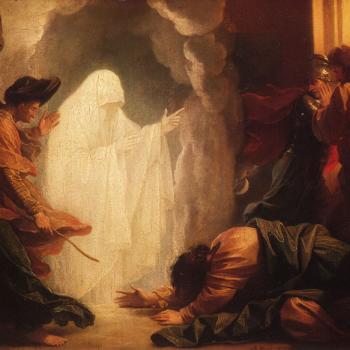
Origen, Eustathius, and the Witch of Endor

Angelina Grimké's Forgotten Turn to Apocalyptic Faith
TRENDING AT PATHEOS Evangelical

The Iron Gates and the Lion of the...
Yesterday, I didn't finish my report about, well, yesterday. So I'll...

Dolly Parton’s Last Song Wins Dove Award with...
Bluegrass band The Grascals, speaking on the red carpet at the 57th...

The Image: On the Horror of Capitalism and...
The Image Then went the Pharisees, and took counsel how they might...

We are approaching the date of our new American national holiday: October...

Letters on Living the Faith by C.S. Lewis
Most of us met C.S. Lewis as a public intellectual. Mere Christianity....

When Halloween Unmasks Married Hearts
Written by Dr. David K. Ewen from Eternal Truth Bible College Behind...
view all Evangelical blogs
What Are Your Thoughts?leave a comment
Ad-Free & Subscriber Log-In Subscription Support
- About Us
- 2026 Calendar
- Videos
- Podcasts
- Library of World Religions
- Faith In Media Tracker
- Advertise With Us
- Write for Us
- Privacy Policy
- Terms of Service
- Do Not Sell My Data
- Contact Us
- Radiant Digital
- Manage Newsletter Subscriptions
- Unsubscribe From Notifications
- Sitemap
Copyright 2008-2026, Patheos. All rights reserved.
Subscription Support Ad-Free & Subscriber Log-In
Follow Patheos