
BuddhistCatholicContemplativeEvangelicalGeneral ChristianHinduJewishLatter-day SaintMuslimNew VisionsProgressive Christian
Beliefs
- Buddhist
- Catholic
- Contemplative
- Evangelical
- General Christian
- Hindu
- Jewish
- Latter-day Saint
- More Voices
- Muslim
- New Visions
- Pagan
- Progressive Christian
Topics
- Religion News
- Food and Religion
- Sports and Religion
- Religious Art
- Religious Music and Entertainment
- Religious Events
- History and Religion
- Style and Religion
- Politics and Religion
- Women in Religion
- Recreation Outdoors and Religion
- Business Finance and Religion
- Careers Workplace and Religion
- Education and Religion
- Family Parenting and Religion
- Health Fitness and Religion
- Home and Religion
- Relationships and Religion
- Technology and Religion
- Travel and Religion
Columnists
- Buddhist Columnists
- Business Finance and Religion Columnists
- Careers Workplace and Religion Columnists
- Catholic Columnists
- Contemplative Columnists
- Education and Religion Columnists
- Evangelists Columnists
- Family Parenting and Religion Columnists
- General Christian Columnists
- Health Fitness and Religion Columnists
- Hindu Columnists
- History and Religion Columnists
- Home and Religion Columnists
- Jewish Columnists
- More Voices Columnists
- Latter Day Columnists
- Muslim Columnists
- New Visions Columnists
- Nonreligious Columnists
- Pagan Columnists
- Politics and Religion Columnists
- Progressive Columnists
- Recreation Outdoors and Religion Columnists
- Relationships and Religion Columnists
- Religion News Columnists
- Religious Art Columnists
- Religious Events Columnists
- Religious Music and Entertainment Columnists
- Sports and Religion Columnists
- Style and Religion Columnists
- Technology and Religion Columnists
- Travel and Religion Columnists
- Women in Religion Columnists
Resource Library
- 2026 Calendar
- Library of World Religions
- The 100 Most Holy Places on Earth
- Patheos Answers
- Podcasts
- Videos
- Faith Leaders Database
- Anglican Episcopalian
- Bahai
- Baptist
- Buddhism
- Christianity
- Confucianism
- Eastern Orthodoxy
- Hinduism
- Holiness and Pentecostal
- ISKCON
- Islam
- Judaism
- Lutheran
- Methodist
- The Church of Jesus Christ of Latter-day Saints
- New Age
- Paganism
- Presbytarian and Reformed
- Protestantism
- Religion Behind the Scenes
- Roman Catholic
- Scientology
- Shia Islam
- Sikhism
- Sufism
- Sunni Islam
- Taoism
- Zen
- See all religions
Research Tools
 Ad-Free & Subscriber Log-In Subscription Support
Ad-Free & Subscriber Log-In Subscription Support
Follow Patheos 

- Trending:
- Forgiveness
- |
- Marriage
- |
- Consciousness
- |
- Death Penalty
- |
- Election
- |
- Halloween

-
About the Authors
- Home
- Evangelical
- History and Religion
- It’s a Big Country: Thoughts on America’s Masculinity Crisis
It’s a Big Country: Thoughts on America’s Masculinity Crisis
Last updated on: July 9, 2024 at 2:59 pm by Wyatt Reynolds
It’s a Big Country: Thoughts on America’s Masculinity Crisis 2024-07-09T14:59:37-04:00 Wyatt Reynolds
Patheos Explore the world's faith through different perspectives on religion and spirituality! Patheos has the views of the prevalent religions and spiritualities of the world.
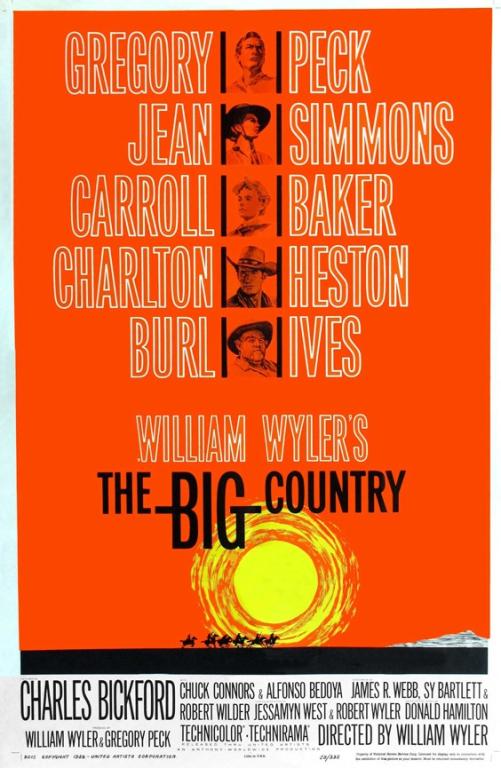 This is my first piece as a regular columnist for the Anxious Bench, and I’m going to deviate a bit from most of what I have written thus far for this blog. About a year ago “the crisis of masculinity” became the problem of American society—the discourse™ became centered on the question of masculinity in America. There were a series of articles, videos, and news reels wrestling with the problem of men. One such piece happened to quote me about the crisis. I was asked by several people at the time what my own thoughts on masculinity were. I pushed such a project off for a while, letting it percolate. After many conversations, much thought, and rewatching several movies; this piece is the beginnings of a thought on the matter.
Almost everyone has agreed for a while that masculinity is in crisis. I won’t take time here to argue for the existence of this crisis. Instead, I’m going to try and give a positive vision of masculinity in an American context. To do so, I will invoke characters from several important Westerns produced during the Cold War, whence, it might be argued our current crises stem. The most famous dueling Westerns from this period may well be High Noon starring Gary Cooper, directed by Fred Zinneman, and the John Wayne and Howard Hawks trilogy of Rio Bravo, El Dorado, and Rio Lobo. Hawks and Wayne saw High Noon as dangerously anti-American and perhaps sympathetic to communism. They both worked publicly to have film’s writer and director blacklisted in Hollywood and made their own films to represent a different story of the heroic American lawman. If you aren’t familiar with that conflict, I recommend reading up on it.
I only mention the conflict here as a precedent for dueling masculine archetypes I see in another remarkable Western from the period. The Big Country (1958), was written and directed by William Wyler, and was his project directly before the legendary Ben-Hur. I think it offers us a set of character studies in American masculinity that help us find both some diagnoses and perhaps a way forward. In The Big Country, we follow Gregory Peck’s Jim McKay—a college educated sea captain and heir to a shipping empire. As the film opens, McKay is engaged to Pat Terrill, played by Carroll Baker. Pat is the daughter of Maj. Terrill (Charles Bickford), owner of the largest ranch and ruling elite of the region.
The Big Country is, as far as I can tell, an under-remembered film. I only happened upon it because I bought its two-tape VHS when a video rental store in my small Georgia hometown was going out of business. The film attracted me because I enjoyed Westerns; plus, Gregory Peck and Charleton Heston were on the front—what more could a boy want? A first viewing around age nine found the film to be tedious and lacking sufficient gun fights. Without streaming at my fingertips though, I often rewatched films, and over time, The Big Country became one of my favorites. I probably watched it a dozen times before leaving for college and largely forgetting it. Occasionally, it would pop up in my consciousness, but I didn’t rewatch it again until grad school amidst the COVID pandemic. Suddenly, the film stood before me powerfully, in an altogether different light. The film now presented me with four visions of white masculinity in America competing for my support, arguing that I should emulate them. The movie is almost seventy years old, I apologize for spoilers, but regardless, I recommend checking it out on Amazon Prime.
The first character we meet is a stranger in the land, stepping fresh out of a stagecoach. Gregory Peck plays Jim McKay, remarkably out of place in his dude suit and bowler hat amidst the clearly still wild West. We are given the impression—although it’s never explicitly stated—that he has sailed around the globe at least once. He knows how to plot a course with map and compass. He’s worldly, with a strange bit of old-world flair about him and a particular sense of quiet justice that makes his more macho interlocutors uncomfortable to say the least.
Contrasted with McKay are two feuding Western patriarchs and their followers. Major Henry Terrill (Charles Bickford) is the father of Jim’s fiancé and owns the largest ranch in the region. There are several reasons to think that his rank comes from serving in the Confederate army during the Civil War. Opposing the Major (as he is called throughout the film) is Burl Ives as Rufus Hannassey, in a role for which he won the Academy Award for Best Supporting Actor. Hannassey is the father of a rowdy family that while rich in land, lacks money and a consistent water supply. Each of these men has their own protégé: Charlton Heston’s Steve Leech is the Major’s ranch foreman who was also raised by him; Buck, played by Chuck Connors, is Rufus’s eldest son—a hard drinking, hard riding man that his father fears is a coward. Rounding out the cast are Carroll Baker as the Major’s daughter and McKay’s fiancée and Jean Simmons as Julie Maragon, a schoolteacher and heiress to the third of the largest ranches alongside the Hannassey’s and Terrill’s.
Three moments stuck out to me when re-watching the movie with these questions surrounding American masculinity on my mind. The first comes when Steve Leech attempts to convince McKay to ride an older wild horse kept around to embarrass newcomers. McKay refuses to ride the horse in front of a waiting audience, telling Leech he will do so another time. He does in fact ride the horse later, alone except for the assistance of a Mexican friend named Ramone. The Major attempts to explain this attempt to Jim as a rite of passage. While Jim acknowledges the helpfulness of such moments, he explains how he underwent such rituals “at college, and when I first passed the equator, I was keelhauled.” The Major makes clear that having participated in these rites of manhood mean little to nothing in the new culture he has come to live amongst. He explains how he has raised Steve Leech from a young man who arrived with only the clothes on his back to be the best foreman in the country. Later, this moment of conflict is brought to a point when McKay returns from a couple of days of solo travel, only to be accused (again) by Leech of being lost and too cowardly to admit this. On the contrary, Jim has been navigating with his own map and compass, a skill the cowboys and their master lack. So while it is beyond their imagination that any stranger could travel across the plains without getting lost, Jim had no problem. Again, McKay refuses to perform before an audience. Recognizing that Leech is picking a fight, Peck’s character calls out his motives: earning the admiration and perhaps love of McKay’s fiancé. Later he invites Leech to a fight, only asking that “whatever happens, let’s keep this between us.” After a drawn out, torturous fight, the combatants are left similarly exhausted and seemingly unmoved.
The second of these moments comes as Pat Terrill talks with Julie about her distrust of Jim that has grown since he refuses to fight (ostensibly for her) or even ride Old Thunder, the wild horse. Julie knows from a conversation with Jim that he did ride the horse and finds Ramone to ask for confirmation. Ramone refuses to answer Patricia when she asks, but Julie is able to wheedle the information from him. Patricia is aghast that Jim would ride the horse without an audience and expresses confusion as to what the point of such an exercise would be. Julie tries to explain that Jim is not interested in demonstrating his masculinity for anyone. This isn’t a sign of cowardice or a lack of ability, but rather a fear “that anyone might think he’s showing off.”
Finally, the film ends with two one-on-one duels instead of the large-scale fight that both patriarchs claim to desire. The first is between Jim and Buck Hannassey. The former is finally forced to fight publicly because Julie is being held hostage to try and gain control of her ranch and ensure water rights for the Hannasseys. Rufus requires them to use the dueling pistols Jim inherited from his father. Here we see two important conflicts come to a head. Earlier, Julie informs Jim that the whole country has been waiting for the moment when Leech and Buck confront each other—each as the champion of their mentor’s way of being in the Big Country. Instead, Jim confronts both of them, keeping the peace as he told Julie he hopes to. Simultaneously, the duel with Buck forces a dismayed Hannassey to seek out a final confrontation with the Major, telling Jim, “This is between the Major and me.” Hannassey calls out the Major to meet him in canyon, man to man so that no one else has to die. The two shoot each other and collapse at each other’s feet. Of the main characters, only Jim and Julie remain to inherit The Big Country. They ride back to their ranch with the populist and elite sides of the feud lying shattered and dying.
They have no words. As viewers, we could remain silent. So many words have failed to get far beyond diagnosis. Perhaps if we just wait for the many-headed hydra of toxic masculinity to die out, things will get better. I don’t think we have this luxury. And not only because no generation of young boys deserves to suffer the emotional neutering that both Steve Leech and Buck Hannassey undergo. What might a healthy vision of masculinity along the lines of that practiced by McKay look like in our day?
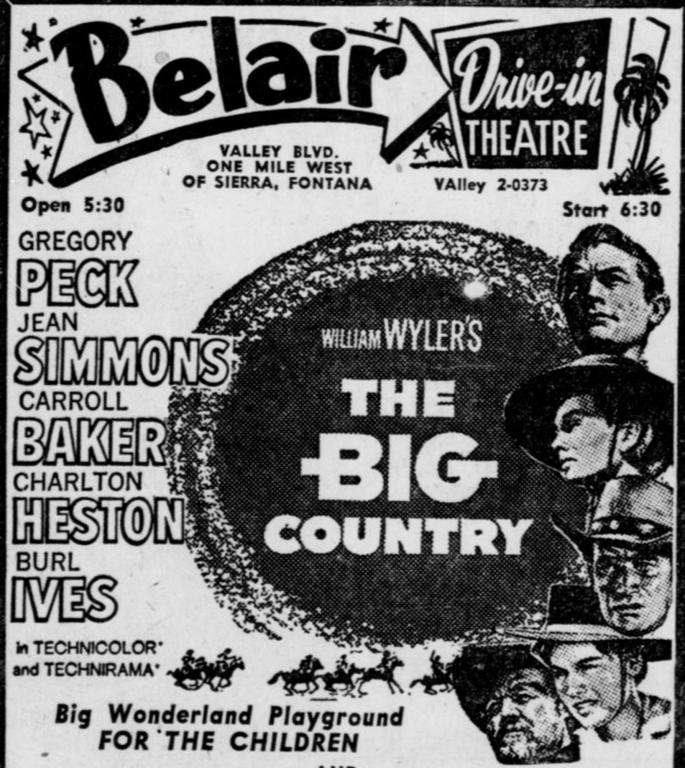
I want to argue that masculinity when healthy is a type of authority: power tempered by the relationships which demand something of us as lived particularly by men. Masculinity, properly, lies at an intersection between two virtues: magnanimity and prudence. In The Big Country, Jim McKay exemplifies the tension that is a virtuous masculinity. He is strong and has undergone his own group’s rites of manhood, and thus is able to reject what Leech and the Major want to require of him. He can properly assess and then ignore their attempts to attack his character and bearing. Despite arriving as a fish out of water, Jim quickly shows he has authority, without seeking personal glory or recognition. He exercises prudence, by not performing the exercises in machismo desired, but still shows himself capable of them at times and places of his own choosing. In contrast to the macho posturing and bravado of other male characters in the film, McKay’s masculinity is defined by his inner strength, moral courage, and capacity for empathy. He embodies a different kind of heroism—one that transcends (without diminishing) physical prowess and instead emphasizes moral integrity and compassion.
One of my favorite writers on this problem in America has this to say: “I want there to be a place in the world where people can engage in one another’s differences in a way that is redemptive, full of hope and possibility. Not this ‘In order to love you, I must make you something else.’ That’s what domination is all about, that in order to be close to you, I must possess you, remake and recast you.” How do we create a space for the creation of adulthood in general and manhood in particular that is not dependent upon domination of an other? Three moments from my growing up standout to me in considering this.
First, when I turned thirteen, my parents did something I find increasingly remarkable. They asked around a dozen men in my life from all sorts of backgrounds to write me letters about what it means to become a man and particularly, a Godly man. I still have these letters and read them at least once a year. Even when I no longer agree with their advice, I find wisdom that directs me. I found this process so meaningful and shaping, that when I recently turned 30, I asked several mentors to write me similar letters for thinking about being a man in the next stage of life. This points towards two things I think boys growing up right now need. First, they need male role models to spend time around. Studies show that boys need men in their lives in order to mature healthily. I made this point in the Washington Post article last year, but I think it remains incredibly important. Most of the boys and young men I know don’t want or expect someone flashy. They just want older men to spend time with and learn from. A moment particularly sticks out to me from soon after my dad died. I met one of my pastors for coffee and then, he brought me along grocery shopping. I was invited into his and his family’s life. This was huge. Since then, I have had other men invite me in similarly, and whether it was Scotch whisky, landscaping, religious history, political psychology, or kitchen repairs, I learned as much from simply being around these men as I did skills.
Second, and related to the letters I received; rituals of transition are important. I’m not saying everyone should have the same goal as my mother, who wanted me to be capable of taking care of a house by age thirteen. However, I think the fact that I learned to cook, clean, do laundry and iron, balance a checkbook, alongside the outdoors skills I was learning in Boy Scouts, helped me feel I had the ability to be an adult—even a man. Not only so, but these rites or rituals should be recognized across the different forms of our society. It won’t look the same in the South or rural Midwest as it might in New England or the Pacific Northwest. As the disagreement between Steve Leech and Jim McKay show, when we fail to recognize a common manhood achieved different ways, we are inviting not just conflict, but violent conflict. One method of doing this, which I will only gesture at is mandatory (non-military) national service. This is obviously a controversial subject, but one remarkable possibility it represents is a universal baseline for adulthood across the country. It would also create an opportunity for the understanding of different types of coming into adulthood that I have gestured towards. What is most important is not the particular method by which this occurs, but that a community, including adults (especially older men) provide it for boys as they are brought into maturity.
As I hope these two points demonstrate, we cannot have healthy men without healthy communities and mentorship practices. This is also a lesson from The Big Country. Neither the feuding Terrill nor Hennessy families creates the community necessary for healthy men to be formed. This leaves us in an uncomfortable position. I remain unconvinced that we have communities healthy enough to grow children into generic adulthood, let alone manhood and womanhood. This also implies we are unable to foster a healthy environment for any sort of romantic relationship. We are already unable to recognize any shared humanity in those we vehemently disagree with, let alone a common manhood. We cannot hope for a top-down solution. No one is going to hand us communities that create healthy, small-scale relationships, but we may be able to build them in the homes and communities where we already live. I have found myself over the last few years talking with young men from an immense range of backgrounds, family lives, and stories discussing the loneliness we feel and how we might be men. If you make yourself available and approachable you might also find yourself addressing this problem at the granular scale wherever you are.
History and Religion
Previous Post
July 8, 2024
The Christian Origins of Religious Freedom?
Next Post

July 10, 2024 Jürgen Moltmann (1926-2024): A (Hopeful) Reflection
Recent Comments
"The Scottish author George MacDonald integrated fairy world into his fiction in a way that ..."
Fairies, Witches, Folk Horror, and the ..."
"I like the idea that we can have different streams. The coffee analogy is genius."
How Do You Take Your Evangelicalism?
"Geography lesson: Southern California is actually in North Texas. I've lived her for 40 years, ..."
How Do You Take Your Evangelicalism?
"So much Rush love going on in the 90s and Obama Antichrist in the 00s. ..."
A Casserole is Not a Counterpoint
Browse Our Archives
Select a Category abolitionism Abortion Abraham Joshua Heschel Abraham Kuyper Abraham Lincoln Academia Activism Adam Renberg Advent Adventist africa African American Religion Agnes Howard Albert Camus American History American Religious History American Revolution American West Anabaptists Ancient History Andrea Turpin Andrei Tarkovsky Anglicanism Annales Ansley Lillian Quiros anti-Catholicism Antisemitism Anxious Bench apologetics Apparitions Arash Azizi Archaeology archives art Artificial Intelligence Asia Asian Americans Augustine Authors Bad Bunny Baptism Baptists Barack Obama Battle of Hastings Benjamin Franklin Bernard-Henri Levy Beth Allison Barr Beth Moore Bethany Mannon Bible Bill Cunningham Billy Graham Black Music Bob Dylan Body Boenhoffer Books Breastfeeding Bruce Springsteen C.S. Lewis Calvinism Cancel Culture Capitalism Carmelites Catholicism Cedric Robinson Cesar Chavez Charismaticism charity Charles Dickens Charles Lindbergh Che Guevara Chicago Children Chinese Christianity Chris Gehrz Christ Christian death Christian Higher Education Christian life Christian Nation Christian Nationalism Christianity Today Christmas Church life Church Practice cinema Civil Religion Civil Rights Movement Civil War civility Classics Climate Change Cold War Colonial Mexico colonialism Comer Communism community complementarianism Conference on Faith and History Congregationalism Conspiracies Conspiracy Conversion Narratives Coronavirus Costa Rica Council of Nicaea Covid-19 Creation Critical Race Theory Crusades Culture culture wars Daniel K. Williams David Barton David Swartz Death Ways death with dignity DEI democracy Democratic Party Devotion Digital Age Diplomacy discipleship diversity Donald Trump Drama Dua Lipa Early Church early modern Early modern Catholicism Easter Eastern Christianity economic exploitation Education elections Elie Wiesel Elizabeth II Elizabeth Taylor emotions Empire Engineering England enslavement Entertainment Episcopal Church Erica Ramirez eschatology Eurocentrism Evangelicalism Evangelicals Exegesis Family Feminism Film Flannery O'Connor folk music Food Foreign Policy founding fathers Franciscans Franciscus Junius fundamentalism Funerals G.K. Chesterton Gender Genocide genre geography George W. Bush George Washington George Whitefield Global Christianity Global church Grief Guadalupe Guest Post guest post gun control gun violence Gustavo Gutierrez Hamid Dabashi Harold John Ockenga Harvest Hate Hawaiian Christianity Healing health care Heather Cox Richardson Hell Heresy Hermeneutics Higher Education Hinduism Hippocratic oath Historical Fiction Historical Methodology Historical Profession Historical Profession Historical Theology Historical Thinking historiography Holidays Holocaust horror movies Human rights Humanitarian Work humanities Hummingbirds Hungary hymns Imago Dei Immigration Injustice Interviews Iran Islam Islamophobia Israel Ivan's Childhood Jacob Randolph James Bratt Janine Giordano Drake Japanese history Japanese Literature Jean Paul Sartre Jesse Miranda Jesus Jesus Christ Jimmy Carter Joan Baez Joan Didion Joanne Freeman João B. Chaves Joao Chaves Joey Cochran John Calvin John Fea John Tillotson John Turner Johnny Cash Jonathan Edwards Jonathan Tran Joseph Smith Josh Howerton Journalism Jr. Judaism Jürgen Moltmann Just War Justice Justin Brierley Karl Barth Katelyn Beaty koi ponds Kris Kristofferson Kristin Kobes Du Mez Latin American Religious History Latino Americans Lectio Divina Leisure Lent Leonard Cohen liberal arts liberalism Liberation Theology Linda Ronstadt Lisa Clark Diller Literature Lou Reed Lynchings Lynneth Miller Renberg Mainline Protestantism Malcolm Foley Marilyn Monroe Maritime history Mark Noll Marriage Martin Luther Martin Luther King Martyrdom Marxism Mary Masih Alinejad mass shootings material culture medieval Christianity Medieval Ethiopia Melissa Borja memory Mennonites Mental Health Mental Illness Methodism Mexican Americans Mexicans Mike Madrid Miles Mullin Min Jin Lee Miscarriage Missionaries Mister Rogers Mitt Romney modernity Monasticism Mormonism Motherhood Mothers of the Church Moving Music Musicals Nadya Williams Nahua Christianity Native Americans Natsume Sōseki New Contributor New England New Year New York Nico Non-Violent Protest Orthodoxy pacifism Paleo Evangelicals Palestinians Parenting Patti Smith Paul Kingsnorth Pedro Calderón de la Barca Pentecostalism Philip Jenkins Phillis Wheatley physician-assisted suicide pilgrimage Pilgrims pluralism Plutocracy Poetry Politics Pope Francis Pope Leo XIV post-modernism prayer preaching Presbyterians prosperity gospel Protest Public history Publishing Puritans purity culture Quakers race Race Massacres Racial Capitalism racial reconciliation racialization Racism Raha Bahloulipour Re-Enchantment reading Reformation Refugees religion and the university religion and war Religious Freedom Religious Nones Religious Pluralism Religious Symbols religious violence Republican Party Revival Rita Coolidge Ritual Roger Williams Roman Catholic church Royalty Russell Moore same-sex marriage Sarah Irving-Stonebraker Scandinavia Science Science and Technology Scopes trial Scriptural Interpretation secularism Selena Quintanilla seminary Seventh-Day Adventists sexual morality Sexuality Sikhs Silence slaveholders theology Slavery Slavoj Zizek social justice Social Media Southern Baptist Convention Southern Religion Spain Spiritual Autobiography Spiritual but not religious Spiritual Discipline Sports Stanley Hauerwas Suffering Summer Camps Sunday Night Odds and Ends Supernatural Supreme Court Syriac Christianity Tal Howard Taylor Swift Teaching Technology Television Thanksgiving The Beatles The Mission theater TheoBros Theology Thomas Dixon Thomas Jefferson Thomas Kidd Thomas Merton Tim Gloege Tim Walz Tom Holland Tourism tradition Tragedy Translation Transnationalism Travel Trump Ukraine Uncategorized Unitarians United Methodist Church US History Vanessa Chan Velvet Underground Verónica A. Gutiérrez Veronica Gutierrez Vikings Violence Virgin Mary Virtue Virtue ethics Visions Voting War WCTU Wendell Berry Westminster Assembly White Evangelicalism Wildfires Winnie the Pooh Witches women Women in Ministry Women's and Gender Studies Work Worship writing Yasunari Kawabata Zena Hitz
Select a Month October 2026 September 2026 August 2026 July 2026 June 2026 May 2026 April 2026 March 2026 February 2026 January 2026 December 2025 November 2025 October 2025 September 2025 August 2025 July 2025 June 2025 May 2025 April 2025 March 2025 February 2025 January 2025 December 2024 November 2024 October 2024 September 2024 August 2024 July 2024 June 2024 May 2024 April 2024 March 2024 February 2024 January 2024 December 2023 November 2023 October 2023 September 2023 August 2023 July 2023 June 2023 May 2023 April 2023 March 2023 February 2023 January 2023 December 2022 November 2022 October 2022 September 2022 August 2022 July 2022 June 2022 May 2022 April 2022 March 2022 February 2022 January 2022 December 2021 November 2021 October 2021 September 2021 August 2021 July 2021 June 2021 May 2021 April 2021 March 2021 February 2021 January 2021 December 2020 November 2020 October 2020 September 2020 August 2020 July 2020 June 2020 May 2020 April 2020 March 2020 February 2020 January 2020 December 2019 November 2019 October 2019 September 2019 August 2019 July 2019 June 2019 May 2019 April 2019 March 2019 February 2019 January 2019 December 2018 November 2018 October 2018 September 2018 August 2018 July 2018 June 2018 May 2018 April 2018 March 2018 February 2018 January 2018 December 2017 November 2017 October 2017 September 2017 August 2017 July 2017 June 2017 May 2017 April 2017 March 2017 February 2017 January 2017 December 2016 November 2016 October 2016 September 2016 August 2016 July 2016 June 2016 May 2016 April 2016 March 2016 February 2016 January 2016 December 2015 November 2015 October 2015 September 2015 August 2015 July 2015 June 2015 May 2015 April 2015 March 2015 February 2015 January 2015 December 2014 November 2014 October 2014 September 2014 August 2014 July 2014 June 2014 May 2014 April 2014 March 2014 February 2014 January 2014 December 2013 November 2013 October 2013 September 2013 August 2013 July 2013 June 2013 May 2013 April 2013 March 2013 February 2013 January 2013 December 2012 November 2012 October 2012 September 2012 August 2012 July 2012 June 2012 May 2012
Follow Us!
TAKE THE
Religious Wisdom Quiz
Which book is the largest by chapters in the Bible?
Select your answer to see how you score.
Isaiah Genesis Psalms Proverbs
Related posts from Anxious Bench
George Rogers and the Pentecostal Case Against Movies

Angelina Grimké's Forgotten Turn to Apocalyptic Faith
How Modern Citizenship Debates Echo the Reformation
When Pentecostals Took on “Hellywood”
TRENDING AT PATHEOS Evangelical

In "Irreplaceable," our book on vocation and technology, Trevor Sutton and I...

I was strolling through the top floor of the brand new Parthenon...

What Does Gêvâh Mean For Kimberley Guifoyle &...
This week, a lot of the news is focused on Kimberly Guilfoyle....

INNER CIRCLE: Profound Mystery (Of Christ In All...
Ephesians 5:31-32 “For this reason, a man will leave his father and...

Do Not Rejoice When Your Enemy Falls: The...
Turning an execution into a public spectacle is a disturbing expression of...

'The Chosen' S6 Trailer: The Passion Gets Very...
Not many watching 'The Chosen' worry about spoilers, but just because they...
view all Evangelical blogs
What Are Your Thoughts?leave a comment
Ad-Free & Subscriber Log-In Subscription Support
- About Us
- 2026 Calendar
- Videos
- Podcasts
- Library of World Religions
- Faith In Media Tracker
- Advertise With Us
- Write for Us
- Privacy Policy
- Terms of Service
- Do Not Sell My Data
- Contact Us
- Radiant Digital
- Manage Newsletter Subscriptions
- Unsubscribe From Notifications
- Sitemap
Copyright 2008-2026, Patheos. All rights reserved.
Subscription Support Ad-Free & Subscriber Log-In
Follow Patheos