
BuddhistCatholicContemplativeEvangelicalGeneral ChristianHinduJewishLatter-day SaintMuslimNew VisionsProgressive Christian
Beliefs
- Buddhist
- Catholic
- Contemplative
- Evangelical
- General Christian
- Hindu
- Jewish
- Latter-day Saint
- More Voices
- Muslim
- New Visions
- Pagan
- Progressive Christian
Topics
- Religion News
- Food and Religion
- Sports and Religion
- Religious Art
- Religious Music and Entertainment
- Religious Events
- History and Religion
- Style and Religion
- Politics and Religion
- Women in Religion
- Recreation Outdoors and Religion
- Business Finance and Religion
- Careers Workplace and Religion
- Education and Religion
- Family Parenting and Religion
- Health Fitness and Religion
- Home and Religion
- Relationships and Religion
- Technology and Religion
- Travel and Religion
Columnists
- Buddhist Columnists
- Business Finance and Religion Columnists
- Careers Workplace and Religion Columnists
- Catholic Columnists
- Contemplative Columnists
- Education and Religion Columnists
- Evangelists Columnists
- Family Parenting and Religion Columnists
- General Christian Columnists
- Health Fitness and Religion Columnists
- Hindu Columnists
- History and Religion Columnists
- Home and Religion Columnists
- Jewish Columnists
- More Voices Columnists
- Latter Day Columnists
- Muslim Columnists
- New Visions Columnists
- Nonreligious Columnists
- Pagan Columnists
- Politics and Religion Columnists
- Progressive Columnists
- Recreation Outdoors and Religion Columnists
- Relationships and Religion Columnists
- Religion News Columnists
- Religious Art Columnists
- Religious Events Columnists
- Religious Music and Entertainment Columnists
- Sports and Religion Columnists
- Style and Religion Columnists
- Technology and Religion Columnists
- Travel and Religion Columnists
- Women in Religion Columnists
Resource Library
- 2026 Calendar
- Library of World Religions
- The 100 Most Holy Places on Earth
- Patheos Answers
- Podcasts
- Videos
- Faith Leaders Database
- Anglican Episcopalian
- Bahai
- Baptist
- Buddhism
- Christianity
- Confucianism
- Eastern Orthodoxy
- Hinduism
- Holiness and Pentecostal
- ISKCON
- Islam
- Judaism
- Lutheran
- Methodist
- The Church of Jesus Christ of Latter-day Saints
- New Age
- Paganism
- Presbytarian and Reformed
- Protestantism
- Religion Behind the Scenes
- Roman Catholic
- Scientology
- Shia Islam
- Sikhism
- Sufism
- Sunni Islam
- Taoism
- Zen
- See all religions
Research Tools
 Ad-Free & Subscriber Log-In Subscription Support
Ad-Free & Subscriber Log-In Subscription Support
Follow Patheos 

- Trending:
- Forgiveness
- |
- Marriage
- |
- Consciousness
- |
- Death Penalty
- |
- Election
- |
- Halloween

-
About the Authors
- Home
- Evangelical
- History and Religion
- The Danger of Silence About Gaza
The Danger of Silence About Gaza
Last updated on: June 11, 2024 at 2:00 am by Guest Contributor
The Danger of Silence About Gaza 2024-06-10T15:38:19-04:00 Guest Contributor
Patheos Explore the world's faith through different perspectives on religion and spirituality! Patheos has the views of the prevalent religions and spiritualities of the world.
A group of Palestinian kids in Gaza huddles around a phone screen. Their beaming smiles contrast with the utter destruction surrounding them. But they are transfixed by a just-released music video by an American rapper from Seattle, Washington, protesting Israel’s war on Gaza. The song calls for a ceasefire and invokes the name and story of Hind Rajab, a six-year old Palestinian girl from the Tel al-Hawa neighborhood of Gaza City.
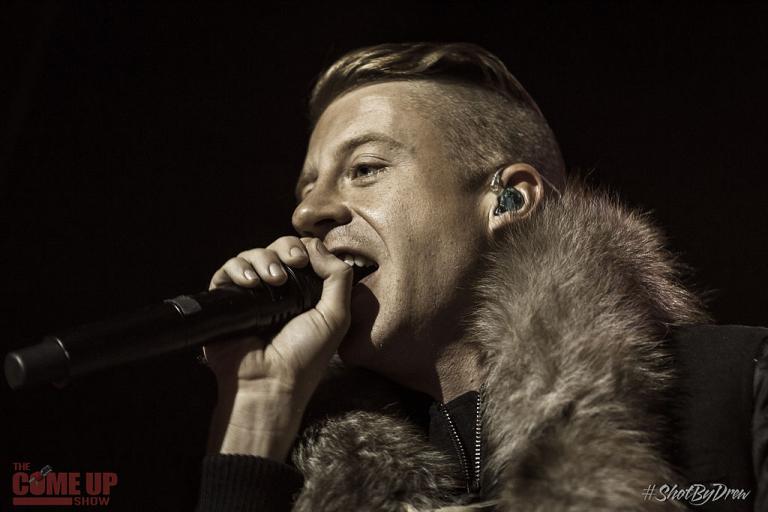
Macklemore singing during the Heist Tour in Toronto.
The story of Hind’s death still haunts me. I remember waking up in January to a social media post with the audio of Hind’s desperate voice just before she was killed. After surviving a tank firing on her family’s car, which killed six of the relatives with her, her cousin in the car with her called emergency services. In the recording, her cousin pleads for help, but is interrupted by the sound of machine gun fire cutting through the car. Her cousin’s voice goes silent, and little later Hind can be heard crying for help. “I’m so scared, please come. Come take me. Please, will you come?” she pleaded. Later, her lifeless body was recovered, along with the bodies of paramedics who tried to come rescue her but were also killed by Israeli forces.
As that group of kids in Gaza watch Macklemore’s protest song, they are asked by a reporter what they like about it. And they exclaim, “We thought no one was standing with us, but he shares the story of our situation.” Regardless of the various critiques about the timing and centering of US political issues in Macklemore’s protest song, he did something many evangelical Christians have struggled to do: He spoke about Palestinian people’s suffering.
The current situation in Gaza is horrifying. The war Israel wages on Gaza is a reaction to Hamas’s attack and massacre of Israelis on 7 October 2023, itself a war crime and a crime against humanity. Hamas’s massacre of Israelis was carried out in the context of a long-standing conflict, tracing back to either 1948, or 1947, or 1917, when efforts to create a Jewish majority nation-state resorted to systematically depriving Arab Palestinians of their land, possessions, and property, and subsequently establishing political and military domination over what remains. In the last 8 months, Israel’s disproportionate retaliation has killed more than 36,000 people in Gaza (not to mention more than 500 killed in the West Bank). They have destroyed or badly damaged 60% of residential buildings, 80% of all commercial buildings, 73% of schools, and some of the oldest churches in the world. The scale of this destruction is backgrounded by Israel’s 16-year long siege on Gaza, which, combined with current events, exhibits a more dismaying agenda.
As the war continues unabated, the severity of what is happening in Gaza has alarmed many experts who have said Israel’s war qualifies as genocide. In January, South Africa filed a complaint to the International Court of Justice (ICJ) contending Israeli government’s actions demonstrate “genocidal intent” in its war on Gaza. The ICJ’s ruling found it “plausible that Israel’s acts [in Gaza] could amount to genocide,” and ordered Israel to immediately take action to prevent killing and harming Palestinian people until the court could further the investigation.
The devastation has sparked government inquiries, political positioning, and popular protests. Everyone is talking about it. And inevitably, evangelical Christians are caught up in questions about culpability. Following the October 7 attack by Hamas, leading evangelicals in the U.S. context spoke up about their unwavering support for Israel. But in the weeks that followed, fewer have spoken about Palestinian suffering following Israel’s retaliation. Various elements of evangelical theology – from eschatology, to a theology of power, to hermeneutics – undergird this support for Israel. Many evangelicals, however, have found it more difficult to speak. In view of deep political and ideological differences, and subsequent protests, riots, and extreme social media proclamations, many Christian leaders and institutions may find themselves reticent to speak publicly to name the dehumanization and root causes that are causing such horrific suffering.
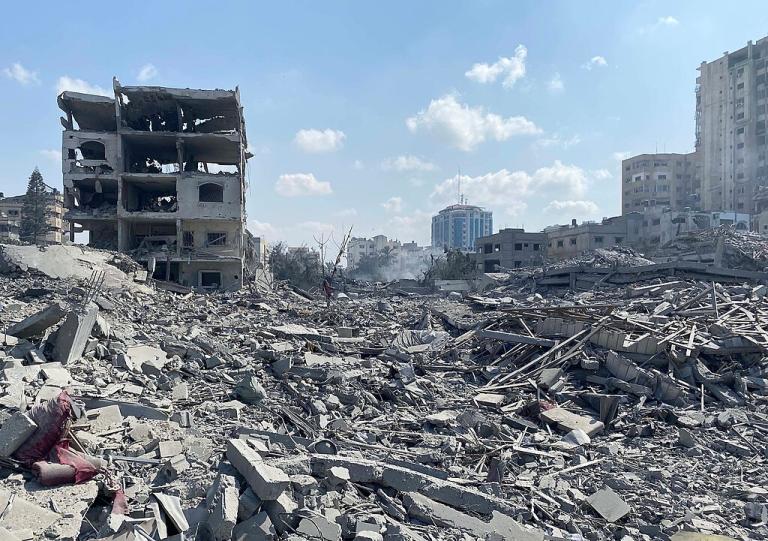
Palestinians inspect the damage following an Israeli airstrike on the El-Remal aera in Gaza City on October 9, 2023. Israel continued to battle Hamas fighters on October 10 and massed tens of thousands of troops and heavy armour around the Gaza Strip after vowing a massive blow over the Palestinian militants’ surprise attack. Photo by Naaman Omar apaimages
The idea that remaining silent in the face of injustice equates to complicity has gained widespread acceptance, often attributed to figures like Martin Luther King, Jr., Dietrich Bonhoeffer, and Martin Niemöller. As rhetoric, it is powerful and clear. But is it right? Given the countless injustices in the world, human limitations mean that most of us will inevitably stay silent about the majority of them. Yet not speaking about any one of the countless injustices that seem unrelated to you is not the same as keeping quiet about one happening under your nose. Recognizing our limitations should not excuse inaction.
Yet given the reactive social media activism and caustic divisiveness in political talk these days, is the silence-is-complicity formula itself a form of violence, used to bully and coerce? What of remaining silent? Might silence be innocuous, a quiet defense from being drawn into the mire?
Looking to recent history can be instructive for us. In the aftermath of some of the more well-known genocides in the 20th century, many people have struggled with the complicity of various actors in the carnage, including churches and church leadership. Historians of these genocides point out the significant challenge of evaluating the silence of a person or a group. They point out how bystanders to atrocities in which they have no part can be located on a wide spectrum between passivity and activity.[1] And during the events, individuals and groups often begin in one place on the spectrum and move to another. That movement complicates evaluating of culpability related inaction. That said, hindsight does clarify some things, especially for those involved as they look back.
In the 1994 genocide of ethnic Tutsi in Rwanda, many churches and church leadership responded either by remaining silent or by actively making ethnic violence seem understandable and acceptable to their people. Timothy Longman’s research drawing on post-genocide reflections by those church leaders draws out how both kinds of responses were driven by their desire to protect their own interests and power. They themselves drew parallels regarding culpability.
Fifty years previously, a German Christian and Lutheran pastor named Martin Niemöller wrestled with his own guilt and complicity with the rise of Nazism and the genocide against Jews. In 1936, Niemöller was also a German nationalist and Nazi supporter, who later came into conflict with the Nazis over their interference in church affairs (note the role of power, here too), leading to his imprisonment from 1938, for the duration of the war. His analysis of his own hesitancy to “speak out” against Nazi persecution of Jews became the subject of numerous speeches he gave, which has now become a classic admission of silent inaction. Yet, during the genocide, he and other German Protestant leaders only found their voices when the Nazis began interfering in their church affairs.
Several observations occur to me when I look back at these historical situations. First, the reasons motivating silence do seem complex when considered from the perspective of those faced with the decision at the time. The extent to which any individual or groups inaction or actions are actively known to “cause harm” to those who are suffering may not be evident to them in the moment. Second, those bystanders who chose inactivity recognized, in retrospect, the ways in which speaking up would have been the right thing to do. Their complicity of silence was a confession: We failed by not doing.
The common wisdom held in the idea that silence is complicity, I believe, is just that…proverbial advice. Not a rule to judge, bully, or coerce. But a general truth and counsel from those with experience. The right time to speak up against injustice, they tell us, is sooner rather than later.
In the decades following both the Jewish Holocaust and genocide against the Tutsi, various churches and Christian leaders responded to their complicity with confessions, followed by resolutions, about how they sought to do better at maintaining Christian witness the next time they face conditions of escalating dehumanization, injustice, and large-scale atrocities.[2] These resolutions and public statements stress the importance of refusing a stance of neutrality and inaction. Their resolutions are full of suggestions for productive action—beyond the online articles, tweets, and shares that are the norm in the age of social media—that are instructive for Christian leaders and institutions who find themselves unsure of how to respond as bystanders and witnesses from a distance, such as:
- Organizing corporate prayers of confession and intercession related to the situation
- Writing individual and corporate notes or letters of concern to affected communities
- Calling affected communities to listen, pray with, and bear witness to their suffering
- Serving, listening to, and bearing witness across divisions and barriers
- Remembering, identifying, and naming the injustices and suffering in sermons, liturgical prayers, and times of corporate gathering
- Providing forums for education and discussion of root causes of the conflict
- Seeking relationship with affected communities to learn from and about one another
- Raising awareness and advocating for those who suffer with one’s political representatives where that is possible
- Organizing as churches to host forcibly displaced people, advocating for them in asylum claims
- Training Christian leaders to be aware, draw attention to, and resist, the subtle ways that dehumanizing language, attitudes, practices slip into the life and outlook of churches
What becomes clear when we look at history is that we expose ourselves to all kinds of risks when we fail to identify and speak out against injustice, especially when it is wrapped in the language of divine justification. Christian leaders and institutions who want to follow in the way of Jesus should listen to how communities that have been marginalized by U.S. evangelicalism have said about the silence about oppression. “Theology’s great sin,” is what Black liberation theologian James Cone calls it. Likewise, Munther Isaac, a Palestinian theologian and pastor in Bethlehem, has challenged the theology of neutrality and inaction that remains silent out of fear of jeopardizing their own interests.
Certainly, speaking up involves risks, whether through coming into conflict with state authorities or nationalist political trends, or offending donors or partner organizations. But by keeping silent, we risk the very heart of Christian mission. Regardless of whether these small acts of “speaking up” seem productive on a large scale, the alternative negates our role as agents of God’s mercy, healing, and peace in the smallness of our churches and communities. Silence risks planting in our communities the seeds of believing that systems and structures of oppression are acceptable to God.
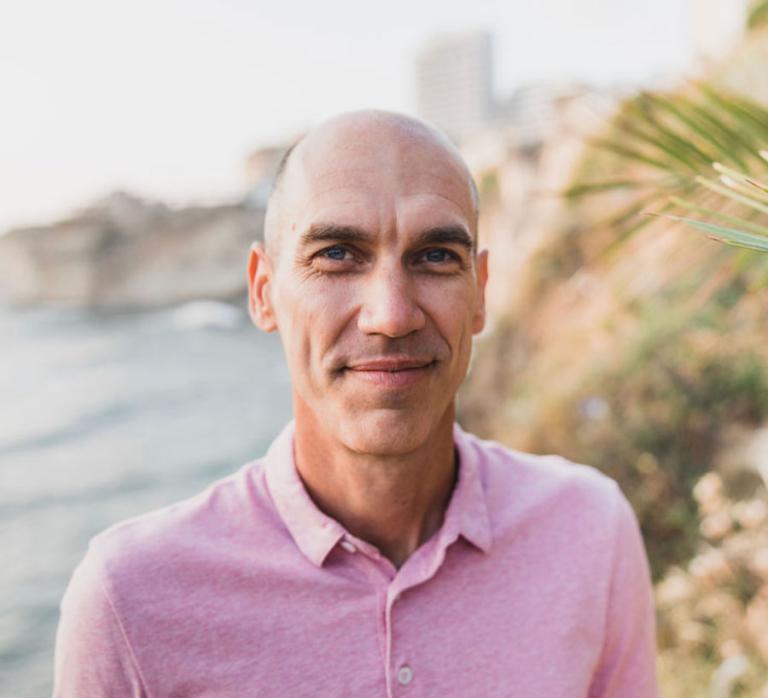 Caleb Hutcherson is an Assistant Professorof Historical and Theological Studies at the Arab Baptist Theological Seminary, where he teaches students from across the Middle East and North Africa region. He also serves in various leadership roles in the humanitarian and development sectors. Caleb and his family have lived in Beirut, Lebanon since 2008. He holds a ThM from Dallas Theological Seminary (Historical Theology/Intercultural Studies) and a PhD from Vrije Universiteit Amsterdam (Practical Theology). His research interests engage with issues relating to faith and everyday life for Arab Christians, exploring questions that relate to theology, cultural practice, and social and humanitarian issues. You can follow Caleb on Twitter @8aleb_l7aj7asan (his Arabic nickname).
[1] Lee Spitzer, Baptists, Jews, and the Holocaust: The Hand of Sincere Friendship. Judson Press: 2017.
[2] See “Reconciliation as the Mission of God: Faithful Christian Witness in a World of Destructive Conflicts.” Lausanne, Occasional Paper no.51 (2004), available in pdf; and, Lee Spitzer, “The Hand of Sincere Friendship: The Responses of Baptists in the United States to Nazi Anti-Semitism and the Persecution of the Jewish People, 1933-1948.” PhD thesis, Vrije Universiteit, 2016. http://dare.ubvu.vu.nl/handle/1871/54564, p460-489.
History and Religion
Previous Post

June 10, 2024
Donald Trump's Conviction and Historical Turning Points
Next Post

June 12, 2024 Saluting the Translators
Recent Comments
"I love horror but would have to acclimate back to Lovecraft and especially Machen. Have ..."
Fairies, Witches, Folk Horror, and the ..."
"Very good point about MacDonald.I am certainly a Machen fan!"
Fairies, Witches, Folk Horror, and the ..."
"The Scottish author George MacDonald integrated fairy world into his fiction in a way that ..."
Fairies, Witches, Folk Horror, and the ..."
"I like the idea that we can have different streams. The coffee analogy is genius."
How Do You Take Your Evangelicalism?
Browse Our Archives
Select a Category abolitionism Abortion Abraham Joshua Heschel Abraham Kuyper Abraham Lincoln Academia Activism Adam Renberg Advent Adventist africa African American Religion Agnes Howard Albert Camus American History American Religious History American Revolution American West Anabaptists Ancient History Andrea Turpin Andrei Tarkovsky Anglicanism Annales Ansley Lillian Quiros anti-Catholicism Antisemitism Anxious Bench apologetics Apparitions Arash Azizi Archaeology archives art Artificial Intelligence Asia Asian Americans Augustine Authors Bad Bunny Baptism Baptists Barack Obama Battle of Hastings Benjamin Franklin Bernard-Henri Levy Beth Allison Barr Beth Moore Bethany Mannon Bible Bill Cunningham Billy Graham Black Music Bob Dylan Body Boenhoffer Books Breastfeeding Bruce Springsteen C.S. Lewis Calvinism Cancel Culture Capitalism Carmelites Catholicism Cedric Robinson Cesar Chavez Charismaticism charity Charles Dickens Charles Lindbergh Che Guevara Chicago Children Chinese Christianity Chris Gehrz Christ Christian death Christian Higher Education Christian life Christian Nation Christian Nationalism Christianity Today Christmas Church life Church Practice cinema Civil Religion Civil Rights Movement Civil War civility Classics Climate Change Cold War Colonial Mexico colonialism Comer Communism community complementarianism Conference on Faith and History Congregationalism Conspiracies Conspiracy Conversion Narratives Coronavirus Costa Rica Council of Nicaea Covid-19 Creation Critical Race Theory Crusades Culture culture wars Daniel K. Williams David Barton David Swartz Death Ways death with dignity DEI democracy Democratic Party Devotion Digital Age Diplomacy discipleship diversity Donald Trump Drama Dua Lipa Early Church early modern Early modern Catholicism Easter Eastern Christianity economic exploitation Education elections Elie Wiesel Elizabeth II Elizabeth Taylor emotions Empire Engineering England enslavement Entertainment Episcopal Church Erica Ramirez eschatology Eurocentrism Evangelicalism Evangelicals Exegesis Family Feminism Film Flannery O'Connor folk music Food Foreign Policy founding fathers Franciscans Franciscus Junius fundamentalism Funerals G.K. Chesterton Gender Genocide genre geography George W. Bush George Washington George Whitefield Global Christianity Global church Grief Guadalupe guest post Guest Post gun control gun violence Gustavo Gutierrez Hamid Dabashi Harold John Ockenga Harvest Hate Hawaiian Christianity Healing health care Heather Cox Richardson Hell Heresy Hermeneutics Higher Education Hinduism Hippocratic oath Historical Fiction Historical Methodology Historical Profession Historical Profession Historical Theology Historical Thinking historiography Holidays Holocaust horror movies Human rights Humanitarian Work humanities Hummingbirds Hungary hymns Imago Dei Immigration Injustice Interviews Iran Islam Islamophobia Israel Ivan's Childhood Jacob Randolph James Bratt Janine Giordano Drake Japanese history Japanese Literature Jean Paul Sartre Jesse Miranda Jesus Jesus Christ Jimmy Carter Joan Baez Joan Didion Joanne Freeman João B. Chaves Joao Chaves Joey Cochran John Calvin John Fea John Tillotson John Turner Johnny Cash Jonathan Edwards Jonathan Tran Joseph Smith Josh Howerton Journalism Jr. Judaism Jürgen Moltmann Just War Justice Justin Brierley Karl Barth Katelyn Beaty koi ponds Kris Kristofferson Kristin Kobes Du Mez Latin American Religious History Latino Americans Lectio Divina Leisure Lent Leonard Cohen liberal arts liberalism Liberation Theology Linda Ronstadt Lisa Clark Diller Literature Lou Reed Lynchings Lynneth Miller Renberg Mainline Protestantism Malcolm Foley Marilyn Monroe Maritime history Mark Noll Marriage Martin Luther Martin Luther King Martyrdom Marxism Mary Masih Alinejad mass shootings material culture medieval Christianity Medieval Ethiopia Melissa Borja memory Mennonites Mental Health Mental Illness Methodism Mexican Americans Mexicans Mike Madrid Miles Mullin Min Jin Lee Miscarriage Missionaries Mister Rogers Mitt Romney modernity Monasticism Mormonism Motherhood Mothers of the Church Moving Music Musicals Nadya Williams Nahua Christianity Native Americans Natsume Sōseki New Contributor New England New Year New York Nico Non-Violent Protest Orthodoxy pacifism Paleo Evangelicals Palestinians Parenting Patti Smith Paul Kingsnorth Pedro Calderón de la Barca Pentecostalism Philip Jenkins Phillis Wheatley physician-assisted suicide pilgrimage Pilgrims pluralism Plutocracy Poetry Politics Pope Francis Pope Leo XIV post-modernism prayer preaching Presbyterians prosperity gospel Protest Public history Publishing Puritans purity culture Quakers race Race Massacres Racial Capitalism racial reconciliation racialization Racism Raha Bahloulipour Re-Enchantment reading Reformation Refugees religion and the university religion and war Religious Freedom Religious Nones Religious Pluralism Religious Symbols religious violence Republican Party Revival Rita Coolidge Ritual Roger Williams Roman Catholic church Royalty Russell Moore same-sex marriage Sarah Irving-Stonebraker Scandinavia Science Science and Technology Scopes trial Scriptural Interpretation secularism Selena Quintanilla seminary Seventh-Day Adventists sexual morality Sexuality Sikhs Silence slaveholders theology Slavery Slavoj Zizek social justice Social Media Southern Baptist Convention Southern Religion Spain Spiritual Autobiography Spiritual but not religious Spiritual Discipline Sports Stanley Hauerwas Suffering Summer Camps Sunday Night Odds and Ends Supernatural Supreme Court Syriac Christianity Tal Howard Taylor Swift Teaching Technology Television Thanksgiving The Beatles The Mission theater TheoBros Theology Thomas Dixon Thomas Jefferson Thomas Kidd Thomas Merton Tim Gloege Tim Walz Tom Holland Tourism tradition Tragedy Translation Transnationalism Travel Trump Ukraine Uncategorized Unitarians United Methodist Church US History Vanessa Chan Velvet Underground Verónica A. Gutiérrez Veronica Gutierrez Vikings Violence Virgin Mary Virtue Virtue ethics Visions Voting War WCTU Wendell Berry Westminster Assembly White Evangelicalism Wildfires Winnie the Pooh Witches women Women in Ministry Women's and Gender Studies Work Worship writing Yasunari Kawabata Zena Hitz
Select a Month October 2026 September 2026 August 2026 July 2026 June 2026 May 2026 April 2026 March 2026 February 2026 January 2026 December 2025 November 2025 October 2025 September 2025 August 2025 July 2025 June 2025 May 2025 April 2025 March 2025 February 2025 January 2025 December 2024 November 2024 October 2024 September 2024 August 2024 July 2024 June 2024 May 2024 April 2024 March 2024 February 2024 January 2024 December 2023 November 2023 October 2023 September 2023 August 2023 July 2023 June 2023 May 2023 April 2023 March 2023 February 2023 January 2023 December 2022 November 2022 October 2022 September 2022 August 2022 July 2022 June 2022 May 2022 April 2022 March 2022 February 2022 January 2022 December 2021 November 2021 October 2021 September 2021 August 2021 July 2021 June 2021 May 2021 April 2021 March 2021 February 2021 January 2021 December 2020 November 2020 October 2020 September 2020 August 2020 July 2020 June 2020 May 2020 April 2020 March 2020 February 2020 January 2020 December 2019 November 2019 October 2019 September 2019 August 2019 July 2019 June 2019 May 2019 April 2019 March 2019 February 2019 January 2019 December 2018 November 2018 October 2018 September 2018 August 2018 July 2018 June 2018 May 2018 April 2018 March 2018 February 2018 January 2018 December 2017 November 2017 October 2017 September 2017 August 2017 July 2017 June 2017 May 2017 April 2017 March 2017 February 2017 January 2017 December 2016 November 2016 October 2016 September 2016 August 2016 July 2016 June 2016 May 2016 April 2016 March 2016 February 2016 January 2016 December 2015 November 2015 October 2015 September 2015 August 2015 July 2015 June 2015 May 2015 April 2015 March 2015 February 2015 January 2015 December 2014 November 2014 October 2014 September 2014 August 2014 July 2014 June 2014 May 2014 April 2014 March 2014 February 2014 January 2014 December 2013 November 2013 October 2013 September 2013 August 2013 July 2013 June 2013 May 2013 April 2013 March 2013 February 2013 January 2013 December 2012 November 2012 October 2012 September 2012 August 2012 July 2012 June 2012 May 2012
Follow Us!
TAKE THE
Religious Wisdom Quiz
What does "Ebenezer" mean, as in the stone Samuel set up?
Select your answer to see how you score.
Stone of David Stone of help Stone of God Stone of Law
Related posts from Anxious Bench

Just War, Non-Violence, and Pete Hegseth


Dylan, Cash, and the Holy Land

Mourning a Victim by Learning (Analysis) from His...
TRENDING AT PATHEOS Evangelical

The Sermon on the Mount, Part I: Matthew...
The Sermon on the Mount, Part I (Matthew 4:12-5:12) St. Matthew moves...

What's up from Crossway: Reviewing some of their latest A few weeks...

Janie Learns the Way of the Cross: A...
Teaching children about Jesus' Passion can be challenging. Many parents and educators...

Looking For Good Catholic Writing - October 2026
He alone extends the heavens, and he walks upon the waves of...

In "Irreplaceable," our book on vocation and technology, Trevor Sutton and I...

I was strolling through the top floor of the brand new Parthenon...
view all Evangelical blogs
What Are Your Thoughts?leave a comment
Ad-Free & Subscriber Log-In Subscription Support
- About Us
- 2026 Calendar
- Videos
- Podcasts
- Library of World Religions
- Faith In Media Tracker
- Advertise With Us
- Write for Us
- Privacy Policy
- Terms of Service
- Do Not Sell My Data
- Contact Us
- Radiant Digital
- Manage Newsletter Subscriptions
- Unsubscribe From Notifications
- Sitemap
Copyright 2008-2026, Patheos. All rights reserved.
Subscription Support Ad-Free & Subscriber Log-In
Follow Patheos