
BuddhistCatholicContemplativeEvangelicalGeneral ChristianHinduJewishLatter-day SaintMuslimNew VisionsProgressive Christian
Beliefs
- Buddhist
- Catholic
- Contemplative
- Evangelical
- General Christian
- Hindu
- Jewish
- Latter-day Saint
- More Voices
- Muslim
- New Visions
- Pagan
- Progressive Christian
Topics
- Religion News
- Food and Religion
- Sports and Religion
- Religious Art
- Religious Music and Entertainment
- Religious Events
- History and Religion
- Style and Religion
- Politics and Religion
- Women in Religion
- Recreation Outdoors and Religion
- Business Finance and Religion
- Careers Workplace and Religion
- Education and Religion
- Family Parenting and Religion
- Health Fitness and Religion
- Home and Religion
- Relationships and Religion
- Technology and Religion
- Travel and Religion
Columnists
- Buddhist Columnists
- Business Finance and Religion Columnists
- Careers Workplace and Religion Columnists
- Catholic Columnists
- Contemplative Columnists
- Education and Religion Columnists
- Evangelists Columnists
- Family Parenting and Religion Columnists
- General Christian Columnists
- Health Fitness and Religion Columnists
- Hindu Columnists
- History and Religion Columnists
- Home and Religion Columnists
- Jewish Columnists
- More Voices Columnists
- Latter Day Columnists
- Muslim Columnists
- New Visions Columnists
- Nonreligious Columnists
- Pagan Columnists
- Politics and Religion Columnists
- Progressive Columnists
- Recreation Outdoors and Religion Columnists
- Relationships and Religion Columnists
- Religion News Columnists
- Religious Art Columnists
- Religious Events Columnists
- Religious Music and Entertainment Columnists
- Sports and Religion Columnists
- Style and Religion Columnists
- Technology and Religion Columnists
- Travel and Religion Columnists
- Women in Religion Columnists
Resource Library
- 2026 Calendar
- Library of World Religions
- The 100 Most Holy Places on Earth
- Patheos Answers
- Podcasts
- Videos
- Faith Leaders Database
- Anglican Episcopalian
- Bahai
- Baptist
- Buddhism
- Christianity
- Confucianism
- Eastern Orthodoxy
- Hinduism
- Holiness and Pentecostal
- ISKCON
- Islam
- Judaism
- Lutheran
- Methodist
- The Church of Jesus Christ of Latter-day Saints
- New Age
- Paganism
- Presbytarian and Reformed
- Protestantism
- Religion Behind the Scenes
- Roman Catholic
- Scientology
- Shia Islam
- Sikhism
- Sufism
- Sunni Islam
- Taoism
- Zen
- See all religions
Research Tools
 Ad-Free & Subscriber Log-In Subscription Support
Ad-Free & Subscriber Log-In Subscription Support
Follow Patheos 

- Trending:
- Forgiveness
- |
- Marriage
- |
- Consciousness
- |
- Death Penalty
- |
- Election
- |
- Halloween

-
About the Authors
- Home
- Evangelical
- History and Religion
- Protestants, and Other Mythical Beasts
Protestants, and Other Mythical Beasts
Last updated on: January 22, 2024 at 12:56 am by Philip Jenkins
Protestants, and Other Mythical Beasts 2024-01-22T00:56:06-04:00 Philip Jenkins
Patheos Explore the world's faith through different perspectives on religion and spirituality! Patheos has the views of the prevalent religions and spiritualities of the world.
Whatever be historical Christianity, it is not Protestantism. If ever there were a safe truth, it is this. … To be deep in history is to cease to be a Protestant.
Well, that is an explosive sentiment if ever there was one. I’ll come back to that quote shortly – it’s from Cardinal Newman – but let me explain why I ran up against this issue quite recently. I faced a challenging question in an Episcopal church group aimed at preparing people for confirmation. It concerned a very difficult word. What, I was asked, is a Protestant? And was I one? This blogpost is an attempt to answer those deceptively simple questions. I’ll focus here on one aspect of a possible answer, and arguably the most important one, namely the role of the Bible in defining that faith. If we just rely on strictly Protestant arguments about that issue, we honestly can’t arrive at quite fundamental and even essential Christian doctrines. Protestants, in fact, rely on many unacknowledged assumptions, and most of those assumptions are in fact small c-catholic.
I stress that my problem word here is Protestant, as opposed to Evangelical or Pentecostal, terms that raise quite different questions – and which, I think, are easier to address.
What is a Protestant?
“What is a Protestant?” is a much tougher question than we might immediately think. Look at various online sources, such as Wikipedia (of course) and they basically offer some very flexible answers. A Protestant is defined as:
a.Someone who belongs to a church with a history that tracks back to those bodies that broke away from the Catholic church in the sixteenth century, whatever they actually believe or practice. Hence that would include the US Episcopal Church, of which I am a member: but as I will explain, I do not consider myself a Protestant. Nor, I think, do many other Episcopalians, or Anglicans.
and/or
b.Someone specifically who holds to the doctrine of the solae – sola Scriptura (scripture alone), sola Fide (Faith alone), and others, although finding the actual list of solae one may or must believe is tough, as they have varied so greatly through the years in number and content. The Five Solae (Five? Really?) are very different today from what they were just a hundred years ago.
and/or
c.Finally, there is the de facto answer that holds in the US and many other parts of traditional Christian world, namely that a Protestant is a Christian who is not a member of the Roman Catholic church (or the Orthodox Church either, but traditionally that option was not on the radar of Western Christians). And yes, that is about as useful as the line from (as I recall it) a fictional encyclopedia cited in a Monty Python offshoot, which defines “CAT: Not a dog,” followed by “DOG: Not a cat.”
That “anything but Catholic” idea explains the successive changes of name of the Episcopal church. When it was constituted in the 1780s, the name “Anglican” was tainted by association with England, which was perilous right after the Revolution. Hence, the new church adopted the usage common in Maryland, where Anglicans had been known as “Protestant Episcopal” to distinguish them from the other church with bishops, which was Roman Catholic. The “Protestant Episcopal” label survived as the title of the national church right up to 1964, when it just became the Episcopal Church. Other “Protestant” language disappeared from the institution over the following two decades.
Who Believes What?
In 2017, as part of the commemoration of the start of the Reformation, the Pew Research Center published a major study of Americans who defined themselves as Protestants, and found that “U.S. Protestants Are Not Defined by Reformation-Era Controversies 500 Years Later.” That is putting it mildly:
Nearly half of U.S. Protestants today (46%) say faith alone is needed to attain salvation (a belief held by Protestant reformers in the 16th century, known in Latin as sola fide). But about half (52%) say both good deeds and faith are needed to get into heaven, a historically Catholic belief.
U.S. Protestants also are split on another issue that played a key role in the Reformation: 46% say the Bible is the sole source of religious authority for Christians – a traditionally Protestant belief known as sola scriptura. Meanwhile, 52% say Christians should look both to the Bible and to the church’s official teachings and tradition for guidance, the position held by the Catholic Church during the time of the Reformation and today.
When these two questions are combined, the survey shows that just three-in-ten U.S. Protestants believe in both sola fide and sola scriptura. One third of Protestants (35%) affirm one but not the other, and 36% do not believe in either sola fide or sola scriptura.
A striking thirty percent of the sample could not identify “the Reformation as the term commonly used to refer to the historical period in which Protestants broke away from the Catholic Church.” I doubt that levels of knowledge have improved much since then.
So why, apart from habit and custom, do Protestants define themselves as Protestants?
The Bible and the Religion of Protestants
At some point, we have to stress the centrality of the Bible as an absolute and unquestioned authority. Biblicism, we recall, is one of David Bebbington’s four points for defining evangelicals. Now, that point is less clear than in earlier eras when the Roman Catholic Church was not as eager than it is today to exalt Biblical authority, but it still matters enormously. Surely, we can agree there about an impregnable core component of the Protestant package?
One classic statement of that Protestant view was written in 1638 by the brilliant Anglican scholar William Chillingworth, who pursued fierce controversies with Catholic thinkers, which all revolved around that ultimate question of authority.
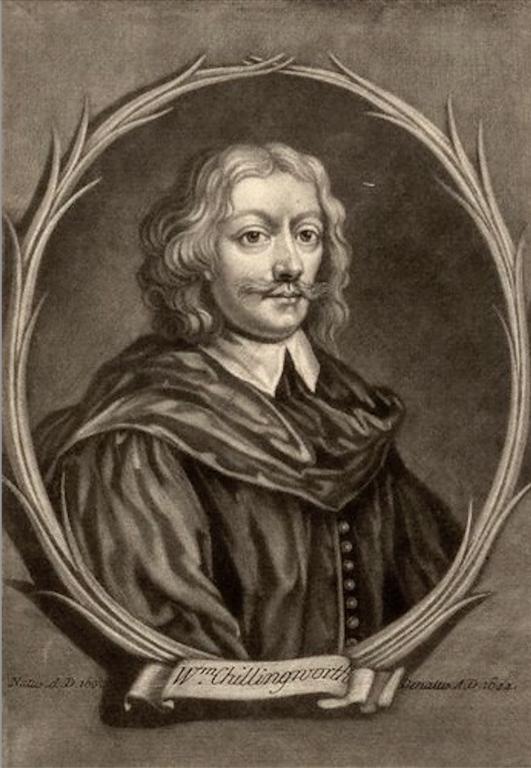
Chillingworth was explicit:
By the Religion of Protestants, [he wrote] I do not understand the Doctrine of Luther, or Calvin, or Melanchthon; nor the Confession of Augusta, or Geneva, nor the Catechism of Heidelberg, nor the Articles of the Church of England, no nor the Harmony of Protestant Confessions; but that wherein they all agree, and which they all subscribe with a greater Harmony, as a perfect rule of their Faith and Actions, that is, The BIBLE. The BIBLE, I say, The BIBLE only is the Religion of Protestants!
Anything someone might hold over and above that is a matter of opinion, but can decide neither faith nor religion. Historically, you can point to Popes contradicting Popes, Councils fighting other Councils, and Fathers disagreeing with each other (and as a major scholar, he knew those texts very well indeed). But the Bible was consistent, and utterly dependable:
In a word, there is no sufficient certainty but of Scripture only, for any considering man to build upon. This therefore, and this only I have reason to believe: This I will profess, according to this I will live, and for this, if there be occasion, I will not only willingly, but even gladly lose my life, though I should be sorry that Christians should take it from me. Propose me any thing out of this book, and require whether I believe it or no, and seem it never so incomprehensible to human reason, I will subscribe it with hand and heart, as knowing no demonstration can be stronger then this, God hath said so, therefore it is true.
That would roughly define the faith of a great many modern believers.
Calvin and the Self-Authenticating Scripture
Chillingworth was an Anglican and a Royalist, who died as a prisoner of the Puritan Parliamentarian forces in the English Civil War, Even so, in his views on the Bible, Chillingworth was echoing the views of John Calvin, who had held that scripture was not just infallible but it was also self-authenticating, autopiston, and that it owed nothing to the intentions or devices of any human authority. It was unnecessary and even sinful to try and prove it in human terms, or through human reason:
Nothing therefore can be more absurd than the fiction, that the power of judging Scripture is in the Church, and that on her nod its certainty depends. When the Church receives it, and gives it the stamp of her authority, she does not make that authentic which was otherwise doubtful or controverted but, acknowledging it as the truth of God, she, as in duty bounds shows her reverence by an unhesitating assent. As to the question, How shall we be persuaded that it came from God without recurring to a decree of the Church? it is just the same as if it were asked, How shall we learn to distinguish light from darkness, white from black, sweet from bitter? Scripture bears upon the face of it as clear evidence of its truth, as white and black do of their color, sweet and bitter of their taste.
Even more than much else that Calvin wrote, his argument has aged very poorly, not least because he so often asserts the unquestioned authority of scripture on the basis of what he believes to be knockdown quotes from that very same scripture. The argument is totally circular. If I say I am infallible, I must be infallible.
As Calvin’s words were adapted into the Westminster Confession of Faith (1646):
The authority of the holy Scripture, for which it ought to be believed and obeyed, dependeth not upon the testimony of any man or church, but wholly upon God (who is truth itself), the Author thereof; and therefore it is to be received, because it is the Word of God.
Whose Bible?
Obviously, such views can be criticized in a number of different ways, including the insights of critical scholarship over the past couple of centuries. These show to the satisfaction of a great many Christians (certainly not all) that not every word of the Bible is to be taken as literal historical truth.
But quite apart from that, there are other significant problems, the most basic of which is “which Bible?” Bibles vary according to time and place.
For about half its history, all Christian churches accepted several other books as fully canonical parts of the Old Testament, and a majority of Christians today (that is, the Catholic and Orthodox) still accord them that status. Up until the nineteenth century, these books were included in Protestant Bibles, but safely ring-fenced in the inferior category of “Apocrypha,” rather than fully authoritative. Those texts – such as Sirach, Wisdom, Tobit, or Maccabees – pose no threats whatever to conventional Christian orthodoxies as Protestants understand them, but they do raise the question of just what “Scripture” entails, and how that was defined. Chillingworth’s THE BIBLE as he knew it in 1638 was a considerably shorter book than would have been recognized by the Early or Patristic Church.
As is well known, the Church also made the decision not to include plenty of other candidates for the canon of either the Old Testament or the New, and they took those decisions on both historical and theological grounds: the Gospel of Thomas is one famous example of a non-finalist. After battles spanning several centuries, the Revelation of John made the cut, while the Revelation of Peter did not. The Catholic Epistles were accepted (generally, and with many holdouts around the world). The author of the Epistle of Jude, which is canonical, believed that 1 Enoch was part of Scripture, although most later churches disagreed.
The Bible is not a free-standing, well-defined, and self-contained thing that emerged directly from Heaven, roughly on the lines that Muslims understand the Quran. It was compiled over several centuries, and decisions were made about what to include, and what to exclude, usually after prolonged and bitter debate. Those decisions were made by the Christian community – or rather, by multiple Christian communities as they existed over many different regions and eras. The Bible, in short – at least, the Christian Bible – was created by the Church.
The earliest church used a Bible that was roughly the Old Testament, but a more voluminous and hazily defined Old Testament than we know presently. That church, of course, pre-existed the New Testament, and created that collection.
You cannot understand the Bible without the Church, and the evolving body of tradition and debate on which it relied. That in itself is quite a catholic, or Catholic, view, is it not?
How Tradition Made Christian Doctrine
The same points apply far beyond the Bible itself. By definition, a sizable majority of Protestants believe in certain core doctrines as fundamental components of the Christian faith. That includes the Trinity, the Incarnation, and the relationship between Christ’s human and divine natures. But here’s the problem. Those doctrines cannot be derived simply from Scripture, but rather grow out of church tradition. Once you have formulated the belief, you can if you wish select or cherry-pick Biblical verses to support it, but you would never have reached the position through Scripture alone.
The obvious example is the Trinity itself, which is a fundamental belief for anyone claiming Christian credentials. Yet it is not explicitly stated in the Bible, with the arguable exception of one lone verse at the conclusion of Matthew’s gospel (28.19). Other Biblical writers make no reference to the doctrine, and you can point to other texts that seem to contradict it. At John 14.28, Jesus says “the Father is greater than I.” Yet the Trinity is very deeply rooted indeed in church tradition. The doctrine was certainly held by Christian believers in the second century, by Apostolic Fathers such as Ignatius and Justin Martyr. To speak of church tradition does not, of course, mean that such later figures invented doctrines for their own sinister purposes. Rather, as Catholic and Orthodox theologians would claim, the church was, and is guided by the Holy Spirit. But without such a belief in the power of continuing organic tradition, how can anyone justify the doctrine of the Trinity?
No church tradition, no Trinity.
Proving the Incarnation
Scarcely less fundamental is the belief in Christ’s Incarnation. The New Testament certainly allows us to form ideas of Christ’s divinity, and his becoming human. Relying on those Biblical texts, though, gave early believers huge leeway in how they defined the relationship between human and divine. Was Christ literally God walking on earth in human guise? Or if he was human, did divinity or Sonship descend on Jesus at a specific moment in his life? Plenty of early Christians read the New Testament as a clear statement that this is exactly what had occurred at Jesus’s baptism in the Jordan. If so, then that divinity might have left him at another moment, presumably at the Crucifixion.
Or did Jesus become the Son of God? In Romans 1, Paul reports how Christ “was appointed [or declared] the Son of God in power” (τοῦ ὁρισθέντος υἱοῦ θεοῦ ἐν δυνάμει) by his Resurrection, and presumably, only at that moment. Compare Acts 10.42 and 17.31, both of which use the same “appoint” word, ὥρισεν.
Christians argued about these complex doctrines for centuries, basing their opinions on their interpretation of what seemed to them to be plain scriptural evidence: the problem was that those interpretations were mutually irreconcilable. Those Christian believers only settled these questions decisively at the Council of Chalcedon in 451 AD. In other words, the doctrine was settled by debate within the Church, on the basis of scripture and tradition, and (as they would have asserted) under the guidance of the Spirit.
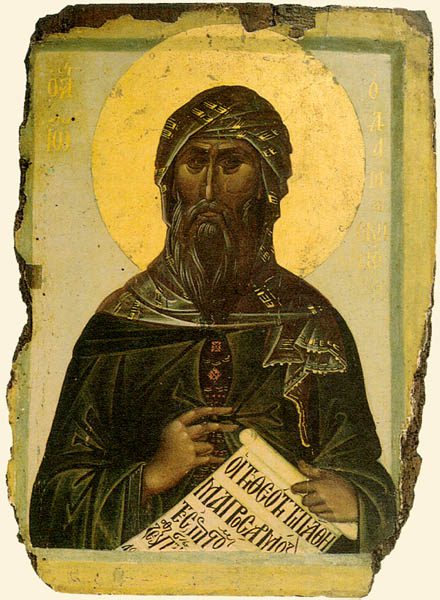
As John of Damascus rightly asked in the eighth century, listing what had become critical words in fundamental Christian doctrine:
Where do you find in the Old Testament, or in the Gospel, the Trinity, or consubstantiality [homoousion], or one Godhead, or three Persons [hypostaseis], or the one Substance of Christ, or His two Natures, expressed in so many words?
The obvious answer was “You don’t.”
No church tradition, then, no doctrine of Incarnation.
Protestants and Tradition
Protestants have always held the early church in high esteem, and distinguished evangelical scholars publish learned works on the early Fathers (and increasingly, Mothers). The evangelical press IVP has presented a wonderful series of volumes under the title Ancient Christian Commentary on Scripture. Having said this, Protestants in general and evangelicals in particular still balk at using the wisdom of the early Church to establish doctrine.
But suppose they do admit that key doctrines like the Trinity are in fact grounded on the traditions of that early Church. How do Protestants define “early”? Do they see the workings of the Spirit still in action at the Council of Nicea in 325, or might they extend that latitude to the time of Chalcedon in 451, as they must if they are to accept the Incarnation? If they accept the ideas of St. Augustine as authoritative, then that already takes us well into the fifth century. Both Luther and Calvin venerated Augustine, and would certainly have seen him as the crucial forerunner of the Reformation they were undertaking.
But when Protestants do venture into the fourth and fifth centuries, they are looking at a church that must, to them, seem disturbingly medieval and even Catholic. Suppose we take the church as Augustine knew it, around the year 420. This was very much a hierarchical organization with strong ideas about the status of clergy, and definite rules about clerical celibacy and monasticism. Pilgrimage was also a well established custom. From the second century, moreover, ideas about the exalted role of the Virgin Mary were becoming ever more popular and mainstream in the church. Are they then any less authoritative than doctrines like the Trinity? So why not Mary?
And as I have described, the Bible canon that Augustine knew was substantially broader than the standard Protestant version familiar to Chillingworth.
Relying on Scripture alone simply cannot take us to what we are told are some fundamental Christian doctrines. Whether they admit it or not, Protestants hold firmly to ideas that depend on small-c catholic assumptions about historical tradition and the central role of the Church. That does not necessarily mean accepting Roman Catholic claims about the Papacy and that particular version of the hierarchical institutional church. But it does mean going far beyond that list of solae, of “onlys.”
To Be Deep In History
To borrow the famous words of John Henry Newman, which I mentioned at the start of this post:
Whatever be historical Christianity, it is not Protestantism. If ever there were a safe truth, it is this. And Protestantism has ever felt it so. I do not mean that every Protestant writer has felt it; for it was the fashion at first, at least as a rhetorical argument against Rome, to appeal to past ages, or to some of them; but Protestantism, as a whole, feels it, and has felt it. This is shown in the determination of dispensing with historical Christianity altogether, and of forming a Christianity from the Bible alone; men never would have put it aside, unless they had despaired of it. …
To be deep in history is to cease to be a Protestant.
We might perhaps find a compromise in the words of W. H. Auden: “in each of us, there is a bit of a Catholic and a bit of a Protestant; for truth is catholic, but the search for it is protestant.” But do note the principle suggested there of what the truth actually is!
If you ask me to define “Protestant,” I would begin with “It’s a long story.” To the specific question “Are you a Protestant?”, the answer is “No.”
History and Religion
Previous Post

January 17, 2024
“Each Separate Anguish”: Death, Influence, and Carrying On
Next Post
January 19, 2024 What A Paint Color Reveals About Christian History
Recent Comments
"I love horror but would have to acclimate back to Lovecraft and especially Machen. Have ..."
Fairies, Witches, Folk Horror, and the ..."
"Very good point about MacDonald.I am certainly a Machen fan!"
Fairies, Witches, Folk Horror, and the ..."
"The Scottish author George MacDonald integrated fairy world into his fiction in a way that ..."
Fairies, Witches, Folk Horror, and the ..."
"I like the idea that we can have different streams. The coffee analogy is genius."
How Do You Take Your Evangelicalism?
Browse Our Archives
Select a Category abolitionism Abortion Abraham Joshua Heschel Abraham Kuyper Abraham Lincoln Academia Activism Adam Renberg Advent Adventist africa African American Religion Agnes Howard Albert Camus American History American Religious History American Revolution American West Anabaptists Ancient History Andrea Turpin Andrei Tarkovsky Anglicanism Annales Ansley Lillian Quiros anti-Catholicism Antisemitism Anxious Bench apologetics Apparitions Arash Azizi Archaeology archives art Artificial Intelligence Asia Asian Americans Augustine Authors Bad Bunny Baptism Baptists Barack Obama Battle of Hastings Benjamin Franklin Bernard-Henri Levy Beth Allison Barr Beth Moore Bethany Mannon Bible Bill Cunningham Billy Graham Black Music Bob Dylan Body Boenhoffer Books Breastfeeding Bruce Springsteen C.S. Lewis Calvinism Cancel Culture Capitalism Carmelites Catholicism Cedric Robinson Cesar Chavez Charismaticism charity Charles Dickens Charles Lindbergh Che Guevara Chicago Children Chinese Christianity Chris Gehrz Christ Christian death Christian Higher Education Christian life Christian Nation Christian Nationalism Christianity Today Christmas Church life Church Practice cinema Civil Religion Civil Rights Movement Civil War civility Classics Climate Change Cold War Colonial Mexico colonialism Comer Communism community complementarianism Conference on Faith and History Congregationalism Conspiracies Conspiracy Conversion Narratives Coronavirus Costa Rica Council of Nicaea Covid-19 Creation Critical Race Theory Crusades Culture culture wars Daniel K. Williams David Barton David Swartz Death Ways death with dignity DEI democracy Democratic Party Devotion Digital Age Diplomacy discipleship diversity Donald Trump Drama Dua Lipa Early Church early modern Early modern Catholicism Easter Eastern Christianity economic exploitation Education elections Elie Wiesel Elizabeth II Elizabeth Taylor emotions Empire Engineering England enslavement Entertainment Episcopal Church Erica Ramirez eschatology Eurocentrism Evangelicalism Evangelicals Exegesis Family Feminism Film Flannery O'Connor folk music Food Foreign Policy founding fathers Franciscans Franciscus Junius fundamentalism Funerals G.K. Chesterton Gender Genocide genre geography George W. Bush George Washington George Whitefield Global Christianity Global church Grief Guadalupe Guest Post guest post gun control gun violence Gustavo Gutierrez Hamid Dabashi Harold John Ockenga Harvest Hate Hawaiian Christianity Healing health care Heather Cox Richardson Hell Heresy Hermeneutics Higher Education Hinduism Hippocratic oath Historical Fiction Historical Methodology Historical Profession Historical Profession Historical Theology Historical Thinking historiography Holidays Holocaust horror movies Human rights Humanitarian Work humanities Hummingbirds Hungary hymns Imago Dei Immigration Injustice Interviews Iran Islam Islamophobia Israel Ivan's Childhood Jacob Randolph James Bratt Janine Giordano Drake Japanese history Japanese Literature Jean Paul Sartre Jesse Miranda Jesus Jesus Christ Jimmy Carter Joan Baez Joan Didion Joanne Freeman João B. Chaves Joao Chaves Joey Cochran John Calvin John Fea John Tillotson John Turner Johnny Cash Jonathan Edwards Jonathan Tran Joseph Smith Josh Howerton Journalism Jr. Judaism Jürgen Moltmann Just War Justice Justin Brierley Karl Barth Katelyn Beaty koi ponds Kris Kristofferson Kristin Kobes Du Mez Latin American Religious History Latino Americans Lectio Divina Leisure Lent Leonard Cohen liberal arts liberalism Liberation Theology Linda Ronstadt Lisa Clark Diller Literature Lou Reed Lynchings Lynneth Miller Renberg Mainline Protestantism Malcolm Foley Marilyn Monroe Maritime history Mark Noll Marriage Martin Luther Martin Luther King Martyrdom Marxism Mary Masih Alinejad mass shootings material culture medieval Christianity Medieval Ethiopia Melissa Borja memory Mennonites Mental Health Mental Illness Methodism Mexican Americans Mexicans Mike Madrid Miles Mullin Min Jin Lee Miscarriage Missionaries Mister Rogers Mitt Romney modernity Monasticism Mormonism Motherhood Mothers of the Church Moving Music Musicals Nadya Williams Nahua Christianity Native Americans Natsume Sōseki New Contributor New England New Year New York Nico Non-Violent Protest Orthodoxy pacifism Paleo Evangelicals Palestinians Parenting Patti Smith Paul Kingsnorth Pedro Calderón de la Barca Pentecostalism Philip Jenkins Phillis Wheatley physician-assisted suicide pilgrimage Pilgrims pluralism Plutocracy Poetry Politics Pope Francis Pope Leo XIV post-modernism prayer preaching Presbyterians prosperity gospel Protest Public history Publishing Puritans purity culture Quakers race Race Massacres Racial Capitalism racial reconciliation racialization Racism Raha Bahloulipour Re-Enchantment reading Reformation Refugees religion and the university religion and war Religious Freedom Religious Nones Religious Pluralism Religious Symbols religious violence Republican Party Revival Rita Coolidge Ritual Roger Williams Roman Catholic church Royalty Russell Moore same-sex marriage Sarah Irving-Stonebraker Scandinavia Science Science and Technology Scopes trial Scriptural Interpretation secularism Selena Quintanilla seminary Seventh-Day Adventists sexual morality Sexuality Sikhs Silence slaveholders theology Slavery Slavoj Zizek social justice Social Media Southern Baptist Convention Southern Religion Spain Spiritual Autobiography Spiritual but not religious Spiritual Discipline Sports Stanley Hauerwas Suffering Summer Camps Sunday Night Odds and Ends Supernatural Supreme Court Syriac Christianity Tal Howard Taylor Swift Teaching Technology Television Thanksgiving The Beatles The Mission theater TheoBros Theology Thomas Dixon Thomas Jefferson Thomas Kidd Thomas Merton Tim Gloege Tim Walz Tom Holland Tourism tradition Tragedy Translation Transnationalism Travel Trump Ukraine Uncategorized Unitarians United Methodist Church US History Vanessa Chan Velvet Underground Verónica A. Gutiérrez Veronica Gutierrez Vikings Violence Virgin Mary Virtue Virtue ethics Visions Voting War WCTU Wendell Berry Westminster Assembly White Evangelicalism Wildfires Winnie the Pooh Witches women Women in Ministry Women's and Gender Studies Work Worship writing Yasunari Kawabata Zena Hitz
Select a Month October 2026 September 2026 August 2026 July 2026 June 2026 May 2026 April 2026 March 2026 February 2026 January 2026 December 2025 November 2025 October 2025 September 2025 August 2025 July 2025 June 2025 May 2025 April 2025 March 2025 February 2025 January 2025 December 2024 November 2024 October 2024 September 2024 August 2024 July 2024 June 2024 May 2024 April 2024 March 2024 February 2024 January 2024 December 2023 November 2023 October 2023 September 2023 August 2023 July 2023 June 2023 May 2023 April 2023 March 2023 February 2023 January 2023 December 2022 November 2022 October 2022 September 2022 August 2022 July 2022 June 2022 May 2022 April 2022 March 2022 February 2022 January 2022 December 2021 November 2021 October 2021 September 2021 August 2021 July 2021 June 2021 May 2021 April 2021 March 2021 February 2021 January 2021 December 2020 November 2020 October 2020 September 2020 August 2020 July 2020 June 2020 May 2020 April 2020 March 2020 February 2020 January 2020 December 2019 November 2019 October 2019 September 2019 August 2019 July 2019 June 2019 May 2019 April 2019 March 2019 February 2019 January 2019 December 2018 November 2018 October 2018 September 2018 August 2018 July 2018 June 2018 May 2018 April 2018 March 2018 February 2018 January 2018 December 2017 November 2017 October 2017 September 2017 August 2017 July 2017 June 2017 May 2017 April 2017 March 2017 February 2017 January 2017 December 2016 November 2016 October 2016 September 2016 August 2016 July 2016 June 2016 May 2016 April 2016 March 2016 February 2016 January 2016 December 2015 November 2015 October 2015 September 2015 August 2015 July 2015 June 2015 May 2015 April 2015 March 2015 February 2015 January 2015 December 2014 November 2014 October 2014 September 2014 August 2014 July 2014 June 2014 May 2014 April 2014 March 2014 February 2014 January 2014 December 2013 November 2013 October 2013 September 2013 August 2013 July 2013 June 2013 May 2013 April 2013 March 2013 February 2013 January 2013 December 2012 November 2012 October 2012 September 2012 August 2012 July 2012 June 2012 May 2012
Follow Us!
TAKE THE
Religious Wisdom Quiz
What did fire from heaven consume to prove Elijah's God was real?
Select your answer to see how you score.
Sacrifice on Mount Carmel A chariot A golden calf The temple
Related posts from Anxious Bench

Fairies, Witches, Folk Horror, and the Secret Commonwealth

Hogg’s Justified Sinner: A Gothic Classic for Halloween

James Hogg, Weird Wives, and Feminist Witches
John Calvin: Pastor. Theologian. Immigrant Nuisance?
TRENDING AT PATHEOS Evangelical

Methodist Central Hall and Westminster Abbey
Situated on the same square is Methodist Central Hall and Westminster Abbey. ...

57th Dove Awards Honor Dolly Parton, Crown New...
On gospel music’s biggest night, the 57th annual GMA Dove Awards honored...

The First Eucharistic Controversy: Christ’s Real Presence
For Catholics, the Eucharist is the source and summit of the Christian...

What a Stop Sign Can Teach Us About...
How to Make a Decision When You Can't Hear God Main point:...

Archdiocese Hosts Military Marriage Retreat in Germany
RASTATT, Germany — The transient military lifestyle, with its frequent deployments and...

Nearly every morning, I make the drive to Detroit with my high-school-age...
view all Evangelical blogs
What Are Your Thoughts?leave a comment
Ad-Free & Subscriber Log-In Subscription Support
- About Us
- 2026 Calendar
- Videos
- Podcasts
- Library of World Religions
- Faith In Media Tracker
- Advertise With Us
- Write for Us
- Privacy Policy
- Terms of Service
- Do Not Sell My Data
- Contact Us
- Radiant Digital
- Manage Newsletter Subscriptions
- Unsubscribe From Notifications
- Sitemap
Copyright 2008-2026, Patheos. All rights reserved.
Subscription Support Ad-Free & Subscriber Log-In
Follow Patheos