
BuddhistCatholicContemplativeEvangelicalGeneral ChristianHinduJewishLatter-day SaintMuslimNew VisionsProgressive Christian
Beliefs
- Buddhist
- Catholic
- Contemplative
- Evangelical
- General Christian
- Hindu
- Jewish
- Latter-day Saint
- More Voices
- Muslim
- New Visions
- Pagan
- Progressive Christian
Topics
- Religion News
- Food and Religion
- Sports and Religion
- Religious Art
- Religious Music and Entertainment
- Religious Events
- History and Religion
- Style and Religion
- Politics and Religion
- Women in Religion
- Recreation Outdoors and Religion
- Business Finance and Religion
- Careers Workplace and Religion
- Education and Religion
- Family Parenting and Religion
- Health Fitness and Religion
- Home and Religion
- Relationships and Religion
- Technology and Religion
- Travel and Religion
Columnists
- Buddhist Columnists
- Business Finance and Religion Columnists
- Careers Workplace and Religion Columnists
- Catholic Columnists
- Contemplative Columnists
- Education and Religion Columnists
- Evangelists Columnists
- Family Parenting and Religion Columnists
- General Christian Columnists
- Health Fitness and Religion Columnists
- Hindu Columnists
- History and Religion Columnists
- Home and Religion Columnists
- Jewish Columnists
- More Voices Columnists
- Latter Day Columnists
- Muslim Columnists
- New Visions Columnists
- Nonreligious Columnists
- Pagan Columnists
- Politics and Religion Columnists
- Progressive Columnists
- Recreation Outdoors and Religion Columnists
- Relationships and Religion Columnists
- Religion News Columnists
- Religious Art Columnists
- Religious Events Columnists
- Religious Music and Entertainment Columnists
- Sports and Religion Columnists
- Style and Religion Columnists
- Technology and Religion Columnists
- Travel and Religion Columnists
- Women in Religion Columnists
Resource Library
- 2026 Calendar
- Library of World Religions
- The 100 Most Holy Places on Earth
- Patheos Answers
- Podcasts
- Videos
- Faith Leaders Database
- Anglican Episcopalian
- Bahai
- Baptist
- Buddhism
- Christianity
- Confucianism
- Eastern Orthodoxy
- Hinduism
- Holiness and Pentecostal
- ISKCON
- Islam
- Judaism
- Lutheran
- Methodist
- The Church of Jesus Christ of Latter-day Saints
- New Age
- Paganism
- Presbytarian and Reformed
- Protestantism
- Religion Behind the Scenes
- Roman Catholic
- Scientology
- Shia Islam
- Sikhism
- Sufism
- Sunni Islam
- Taoism
- Zen
- See all religions
Research Tools
 Ad-Free & Subscriber Log-In Subscription Support
Ad-Free & Subscriber Log-In Subscription Support
Follow Patheos 

- Trending:
- Forgiveness
- |
- Marriage
- |
- Consciousness
- |
- Death Penalty
- |
- Election
- |
- Halloween

-
About the Authors
- Home
- Evangelical
- History and Religion
- Can an Authoritarian Political Regime Happen Here?
Can an Authoritarian Political Regime Happen Here?
Last updated on: January 23, 2024 at 2:00 am by Daniel K. Williams
Can an Authoritarian Political Regime Happen Here? 2024-01-22T16:26:53-04:00 Daniel K. Williams
Patheos Explore the world's faith through different perspectives on religion and spirituality! Patheos has the views of the prevalent religions and spiritualities of the world.
As the slow pace of economic recovery left many people discontent, it looked like the Democratic president would face a demagogic, authoritarian-minded populist challenger in his bid for reelection. Millions of people were angry with democratic liberalism and were looking for more radical solutions.
There was also international unrest. A European dictator had just invaded another country for no apparent reason – but few Americans had any desire to help. The United States didn’t need to get involved in other countries’ affairs, most people thought; it had enough to worry about at home.
In the evangelical Protestant world, some premillennial dispensationalist magazine editors speculated that the Antichrist might have already arrived, and they began looking at Israel in anticipation of end-times prophecies. But rather than calling for curbs on international lawlessness, they focused their rhetorical fire on the policies of the Democratic president, accusing him of being a dangerous socialist whose policies threatened American freedom.
Meanwhile, other fundamentalist preachers, along with one nationally prominent Catholic broadcaster, were taking to the airwaves both to denounce the president and to warn about a dangerous political and financial Jewish conspiracy that threatened to destroy the United States from within. Virulent expressions of anti-Semitism were on the rise.
Some of these preachers had weekly audiences in the millions. One received more mail than the president of the United States. The president worried that all of this populist demagoguery might be just enough to affect the upcoming presidential election.
One of the nation’s most prominent novelists was so worried about the prospect that the United States might descend into fascism that he wrote a book titled It Can’t Happen Here. Its subtitle, “What Will Happen When America Has a Dictator,” suggested that authoritarianism could happen here in the United States and that democracy was in jeopardy.
Although most of these things may sound eerily similar to some of the events of our own time, the year I’ve described was not 2024 but rather 1935. The “demagogic populist challenger” was not Donald Trump but rather Huey Long, the former governor of Louisiana who then became a US senator. Long had little regard for traditional democratic institutions; when people in his administration challenged him, he illegally fired them, as he did to his state’s properly elected lieutenant governor. In 1935, Long was gearing up for a populist third-party challenge to President Franklin Roosevelt, and polls showed that he would likely receive several million votes – enough to put Roosevelt’s reelection chances in doubt.

Huey Long (1935) (Library of Congress)
Long’s campaign received support from Father Charles Coughlin, the wildly popular anti-Semitic Catholic radio broadcaster who had an audience of millions for his show that blasted Roosevelt’s New Deal as the “Jew Deal.” It also received support from even more virulently anti-Semitic radio preachers in the Midwest, such as Gerald L. K. Smith and Gerald B. Winrod.
At the same time, international unrest cast a cloud over American politics. The European dictator who ordered an invasion of another country that year was not Vladimir Putin, but rather Benito Mussolini, whose Italian troops invaded Ethiopia without provocation in 1935. But despite an abundance of evidence that the international order was breaking down – evidence that included Nazi Germany’s remilitarization and Japan’s annexation of Manchuria – an overwhelming majority of Americans wanted the US to stay neutral and keep out of foreign wars.
Yet despite all of this – and despite the apprehensions of Sinclair Lewis, the author of the dystopian novel It Can’t Happen Here – a fascist-style dictatorship did not emerge in the United States in the 1930s. Long was assassinated in September 1935, which took him out of the running for the presidential contest of 1936. In his absence, his supporters could not find another person with his charisma and national following to run a populist campaign against President Roosevelt.
The Christian radio broadcasters’ political empires also collapsed. Coughlin, the most popular of the broadcasters, was eventually ordered off the air by his Catholic superiors; when he faced a choice between his clerical collar and holding onto his radio show, he preferred to remain a priest.
The Protestant anti-Semitic radio broadcasters did not face these ecclesiastical constraints, but they, too, lost influence in the late 1930s. Winrod lost the Republican senatorial primary in Kansas in 1938 and was charged with sedition by the US government in the early 1940s because of his opposition to US involvement in World War II. Smith also lost his campaigns for political office and suffered a decline in influence in the 1940s, as he gravitated even further toward the anti-Semitic far right. His America First Party, which he organized in 1943, foundered. The fundamentalist magazines that warned that Roosevelt might be a dictator and a precursor for the antichrist muted their criticisms after World War II began and the Depression ended. But even before then, Roosevelt’s landslide reelection victory in November 1936 demonstrated that his support was more solid than perhaps he had feared. And while Roosevelt’s liberal view of executive power alarmed some conservatives, he was a far cry from the fascist-style dictatorial populist figures that seemed a political threat in the 1930s. Under FDR’s leadership, the basic framework of American democracy was preserved.
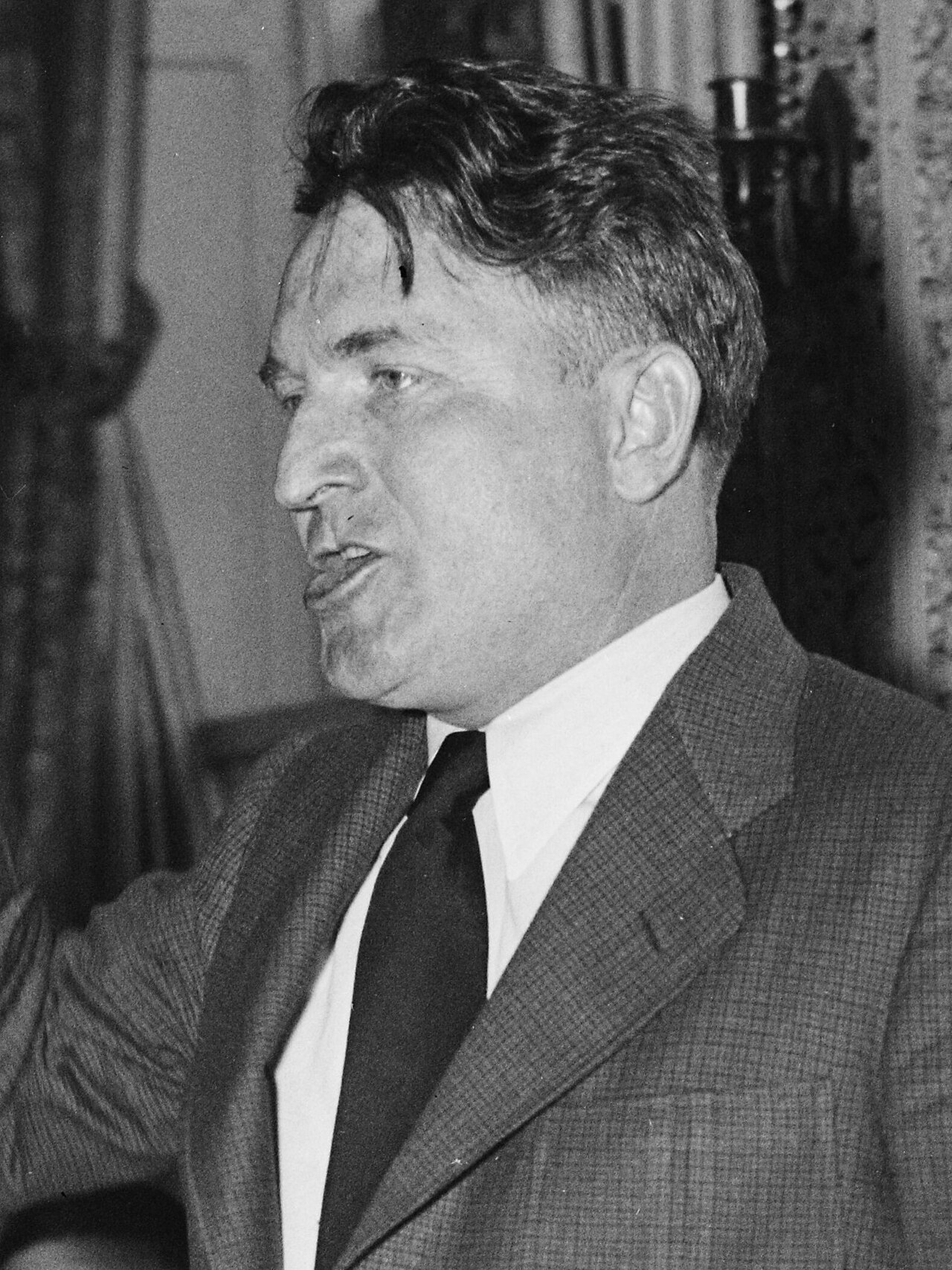
Gerald L. K. Smith (Library of Congress)
But why didn’t a populist authoritarian figure take over the United States and subvert the democratic system in the 1930s? After all, the country was in the midst of the Great Depression, with an unemployment rate as high as 25 percent at times. There was widespread discontent with the political status quo, both before Roosevelt’s election in 1932 and even for several years after it. There were marches on Washington – including, most famously, a Bonus Army march of thousands of World War I veterans who descended on the capital in the spring of 1932 to demand payments from the government for their war service and who then set up camp and refused to leave until the US army dispersed them by force.
Nearly every sign of popular political discontent that we can detect today was present in greater measure in the 1930s – which is why a lot of Americans across the political spectrum were willing to give up on democracy and support an authoritarian leader, at least for the moment. Even Republican politicians – the last ones one might have suspected of wanting to give Democratic president Franklin Roosevelt dictatorial powers – were willing to entertain the notion (even if only very briefly) because of the nation’s dire economic straits. “I think we need a ‘dictator,’” Republican senator Arthur Vandenberg of Michigan said in 1933. “But a dictator is of no use unless he dictates.” Kansas Republican governor (and future presidential candidate) Alfred Landon agreed. “Even the iron hand of a national dictator is in preference to a paralytic stroke,” he said.
So, why didn’t Sinclair Lewis’s ominous predictions become a reality? Why didn’t the United States take a plunge into authoritarianism during the Great Depression?
And, if we can pinpoint the reason why the US managed to escape a brush with dictatorship at this perilous moment in the 1930s, can we apply these insights to our own time, when many people are worried about the potential subversion of our democracy?
The answer may not be one that will offer us much comfort today, because it doesn’t suggest that the United States was saved from authoritarianism by its people’s love for democratic institutions. But there was one important check on the people’s potential gravitation toward a potential dictator: the party leaders who controlled the presidential nomination process.
At the time, most states did not hold presidential primaries, and even the ones that did often threw their votes to a local “favorite son” (such as the state’s own governor or senator) who could never attract enough votes across the nation to win the nomination. As a result, the real nomination contest took place at party conventions, where delegates pledged to a particular candidate who could never win a majority might negotiate with representatives of opposing campaigns to see which of the more promising candidates might best represent their interests. This type of nomination process tended to favor experienced, consensus-minded candidates, since no one could win the nomination without appealing to a broad cross-section of the party across multiple regions.
Today a populist figure like Long would probably not hesitate to mount a primary challenge against an incumbent, but that was inconceivable in the 1930s, since the party conventions would be highly unlikely to give the presidential nomination to such a maverick. So, instead, Long was expected to run a third-party campaign and act as a spoiler in the race – or, as Roosevelt feared, throw the country into chaos to the point where people were ready to proclaim him dictator. The idea may have been far-fetched, but the thought that the leaders of the Democratic Party (or the Republican Party, for that matter) would ever consider giving the party nomination to a populist demagogue was even more unbelievable. If Long had any hope at all of running a viable presidential campaign, that hope would come through a third-party run, not through the conventions of either of the two major parties.
All of that changed in the 1970s, when party primaries across the nation began to replace the convention negotiations as the path to the White House. The move seemed much more democratic – and it probably was. Progressives had advocated the direct primary for decades.
But voters in party primaries often held more extreme views than convention delegates had – if not a different set of concerns altogether. When party conventions controlled the nomination process, they could easily ignore the views of religious demagogues on the radio or fundamentalist diatribes in religious periodicals. But as soon as the presidential primaries replaced the convention nomination process, primary voters began demanding that presidential contenders answer their questions about culture-war issues such as abortion and even evolution.
Grassroots movements pushed a political agenda that conventional party leaders didn’t want – but ultimately had to accept. At a time when mainstream Republican leaders favored immigration reform legislation that would offer amnesty for undocumented immigrants already in the United States, Republican voters at the grassroots protested and launched the Tea Party to change the GOP’s direction. The movement eventually found a champion for its cause in Donald Trump.
If traditional party leaders had controlled the nomination process in tightly run party conventions (as they did in the 1930s), the 2016 presidential election would have been a very different contest – and so, by extension, would 2020 and 2024. In November 2016, voters in the presidential election would have faced the choice between an immigration moderate like Jeb Bush (or maybe, if more strident conservatives had had their way at the Republican convention, Marco Rubio) and a centrist establishment Democrat like Hillary Clinton (who would not have had to worry about a serious primary challenge from a democratic socialist like Bernie Sanders).
Either Trump or another anti-establishment, immigration hardliner from the Tea Party might have mounted a third-party challenge to the establishment candidates, but at most, that candidate could have acted as a spoiler in the race; no third-party candidate could have actually won the presidency. And since it is certain that the 2016 Republican Party establishment would never have nominated Donald Trump, it’s equally certain that Trump could never have become president under the old convention system – and the party realignment that happened as a result of Trump’s election would not have been able to occur. Nor would the United States currently be facing the possibility of an authoritarian turn if the likely Republican presidential nominee wins the general election.
This may sound like an anti-democratic conclusion, since it seems like I’m saying that the only way to save American democracy and avoid a slide into authoritarianism is to limit popular democracy in the nominating process. That doesn’t sound like a very hopeful conclusion – though actually, it accords pretty well with the warnings of Alexander Hamilton and a few other founders about the dangers of a populist candidate if too much democratic power were given to the people without the appropriate checks and balances that the founders included in the original constitutional system.
But actually, I think that we can draw another conclusion from all of this – and that is this: Because we now live in a system of direct voter presidential primaries, where voters such as ourselves have a greater influence on the presidential nomination process than ever before, we have a greater responsibility to preserve our democracy than previous generations of Americans did. This warning is especially applicable to conservative Christians, who often have not made the preservation of the democratic process a high political priority.
In the 1930s, religious broadcasters such as Coughlin, Smith, and Winrod could spew anti-Semitic invective and support an authoritarian populist like Huey Long without affecting the presidential nominations of either of the nation’s major political parties. What they did was damaging enough, but it wasn’t sufficient to put an authoritarian leader in the White House. Nor was all of the end-times speculation in fundamentalist premillennial dispensationalist magazines likely to have much practical effect on a presidential election. But once the direct presidential primaries became the method the nation used to nominate its presidents, that changed. The words of a nationally influential religious broadcaster suddenly mattered a lot more. Indeed, a nationally influential religious broadcaster could now even run a credible campaign for president himself, as Pat Robertson did in 1988.
In such an environment, where voters now have the power to choose not only a president but also a party’s presidential nominee, it’s more important than ever for us to think about how our votes will affect the future of our democratic process – not merely the future of the particular agenda we care about.
Democracies, it turns out, are extremely fragile. Most of the world’s democratic experiments over the last 200 years have collapsed into some form of authoritarianism. But a few have lasted longer – and among those has been the United States.
In 2016, Harvard history professor James Kloppenberg published a massive global comparative study of democracies in which he concluded that the key to a democracy’s success is the willingness of voters to look beyond their own narrow self-interest. In the United States, he said, voters have done that primarily because of the influence of liberal Protestantism, which encouraged even affluent, privileged people to care about the rights of the marginalized and less fortunate. But now that liberal Protestantism and the values associated with it are in decline, the future of American democracy seems more perilous.
In the 1930s, plenty of people outside the liberal Protestant establishment did not share these values, and some of those people seemed like they could be open to exchanging American democratic pluralism for some of sort of fascist-like authoritarianism or anti-Semitic conspiracy theories. But in the end, the presidential nomination process was controlled by people who tended to gravitate toward practitioners of the liberal Protestant social ethic – that is, toward people like the Episcopalian liberal Democrat Franklin D. Roosevelt, whose New Deal was a call to extend the nation’s economic safety net to the poor and the marginalized.
But today we don’t have a majority liberal Protestant culture to protect us, and we don’t have a presidential nomination process controlled by party leaders with the power to give the nomination to someone who longs to inspire people to look beyond their own self-interest. Instead, we just have the voters as the only barricade now holding the nation back from an anti-democratic authoritarian turn.
It’s now up to the voters to show the foresight and selflessness necessary to preserve the nation’s democracy. And if they don’t, we no longer have much reason for confidence that an authoritarian turn “can’t happen here.”
History and Religion
Previous Post

January 22, 2024
The Snow Day as (Endangered) Holiday
Next Post

January 24, 2024 Walls Around the World: A Year in Review
Recent Comments
"I love horror but would have to acclimate back to Lovecraft and especially Machen. Have ..."
Fairies, Witches, Folk Horror, and the ..."
"Very good point about MacDonald.I am certainly a Machen fan!"
Fairies, Witches, Folk Horror, and the ..."
"The Scottish author George MacDonald integrated fairy world into his fiction in a way that ..."
Fairies, Witches, Folk Horror, and the ..."
"I like the idea that we can have different streams. The coffee analogy is genius."
How Do You Take Your Evangelicalism?
Browse Our Archives
Select a Category abolitionism Abortion Abraham Joshua Heschel Abraham Kuyper Abraham Lincoln Academia Activism Adam Renberg Advent Adventist africa African American Religion Agnes Howard Albert Camus American History American Religious History American Revolution American West Anabaptists Ancient History Andrea Turpin Andrei Tarkovsky Anglicanism Annales Ansley Lillian Quiros anti-Catholicism Antisemitism Anxious Bench apologetics Apparitions Arash Azizi Archaeology archives art Artificial Intelligence Asia Asian Americans Augustine Authors Bad Bunny Baptism Baptists Barack Obama Battle of Hastings Benjamin Franklin Bernard-Henri Levy Beth Allison Barr Beth Moore Bethany Mannon Bible Bill Cunningham Billy Graham Black Music Bob Dylan Body Boenhoffer Books Breastfeeding Bruce Springsteen C.S. Lewis Calvinism Cancel Culture Capitalism Carmelites Catholicism Cedric Robinson Cesar Chavez Charismaticism charity Charles Dickens Charles Lindbergh Che Guevara Chicago Children Chinese Christianity Chris Gehrz Christ Christian death Christian Higher Education Christian life Christian Nation Christian Nationalism Christianity Today Christmas Church life Church Practice cinema Civil Religion Civil Rights Movement Civil War civility Classics Climate Change Cold War Colonial Mexico colonialism Comer Communism community complementarianism Conference on Faith and History Congregationalism Conspiracies Conspiracy Conversion Narratives Coronavirus Costa Rica Council of Nicaea Covid-19 Creation Critical Race Theory Crusades Culture culture wars Daniel K. Williams David Barton David Swartz Death Ways death with dignity DEI democracy Democratic Party Devotion Digital Age Diplomacy discipleship diversity Donald Trump Drama Dua Lipa Early Church early modern Early modern Catholicism Easter Eastern Christianity economic exploitation Education elections Elie Wiesel Elizabeth II Elizabeth Taylor emotions Empire Engineering England enslavement Entertainment Episcopal Church Erica Ramirez eschatology Eurocentrism Evangelicalism Evangelicals Exegesis Family Feminism Film Flannery O'Connor folk music Food Foreign Policy founding fathers Franciscans Franciscus Junius fundamentalism Funerals G.K. Chesterton Gender Genocide genre geography George W. Bush George Washington George Whitefield Global Christianity Global church Grief Guadalupe Guest Post guest post gun control gun violence Gustavo Gutierrez Hamid Dabashi Harold John Ockenga Harvest Hate Hawaiian Christianity Healing health care Heather Cox Richardson Hell Heresy Hermeneutics Higher Education Hinduism Hippocratic oath Historical Fiction Historical Methodology Historical Profession Historical Profession Historical Theology Historical Thinking historiography Holidays Holocaust horror movies Human rights Humanitarian Work humanities Hummingbirds Hungary hymns Imago Dei Immigration Injustice Interviews Iran Islam Islamophobia Israel Ivan's Childhood Jacob Randolph James Bratt Janine Giordano Drake Japanese history Japanese Literature Jean Paul Sartre Jesse Miranda Jesus Jesus Christ Jimmy Carter Joan Baez Joan Didion Joanne Freeman João B. Chaves Joao Chaves Joey Cochran John Calvin John Fea John Tillotson John Turner Johnny Cash Jonathan Edwards Jonathan Tran Joseph Smith Josh Howerton Journalism Jr. Judaism Jürgen Moltmann Just War Justice Justin Brierley Karl Barth Katelyn Beaty koi ponds Kris Kristofferson Kristin Kobes Du Mez Latin American Religious History Latino Americans Lectio Divina Leisure Lent Leonard Cohen liberal arts liberalism Liberation Theology Linda Ronstadt Lisa Clark Diller Literature Lou Reed Lynchings Lynneth Miller Renberg Mainline Protestantism Malcolm Foley Marilyn Monroe Maritime history Mark Noll Marriage Martin Luther Martin Luther King Martyrdom Marxism Mary Masih Alinejad mass shootings material culture medieval Christianity Medieval Ethiopia Melissa Borja memory Mennonites Mental Health Mental Illness Methodism Mexican Americans Mexicans Mike Madrid Miles Mullin Min Jin Lee Miscarriage Missionaries Mister Rogers Mitt Romney modernity Monasticism Mormonism Motherhood Mothers of the Church Moving Music Musicals Nadya Williams Nahua Christianity Native Americans Natsume Sōseki New Contributor New England New Year New York Nico Non-Violent Protest Orthodoxy pacifism Paleo Evangelicals Palestinians Parenting Patti Smith Paul Kingsnorth Pedro Calderón de la Barca Pentecostalism Philip Jenkins Phillis Wheatley physician-assisted suicide pilgrimage Pilgrims pluralism Plutocracy Poetry Politics Pope Francis Pope Leo XIV post-modernism prayer preaching Presbyterians prosperity gospel Protest Public history Publishing Puritans purity culture Quakers race Race Massacres Racial Capitalism racial reconciliation racialization Racism Raha Bahloulipour Re-Enchantment reading Reformation Refugees religion and the university religion and war Religious Freedom Religious Nones Religious Pluralism Religious Symbols religious violence Republican Party Revival Rita Coolidge Ritual Roger Williams Roman Catholic church Royalty Russell Moore same-sex marriage Sarah Irving-Stonebraker Scandinavia Science Science and Technology Scopes trial Scriptural Interpretation secularism Selena Quintanilla seminary Seventh-Day Adventists sexual morality Sexuality Sikhs Silence slaveholders theology Slavery Slavoj Zizek social justice Social Media Southern Baptist Convention Southern Religion Spain Spiritual Autobiography Spiritual but not religious Spiritual Discipline Sports Stanley Hauerwas Suffering Summer Camps Sunday Night Odds and Ends Supernatural Supreme Court Syriac Christianity Tal Howard Taylor Swift Teaching Technology Television Thanksgiving The Beatles The Mission theater TheoBros Theology Thomas Dixon Thomas Jefferson Thomas Kidd Thomas Merton Tim Gloege Tim Walz Tom Holland Tourism tradition Tragedy Translation Transnationalism Travel Trump Ukraine Uncategorized Unitarians United Methodist Church US History Vanessa Chan Velvet Underground Verónica A. Gutiérrez Veronica Gutierrez Vikings Violence Virgin Mary Virtue Virtue ethics Visions Voting War WCTU Wendell Berry Westminster Assembly White Evangelicalism Wildfires Winnie the Pooh Witches women Women in Ministry Women's and Gender Studies Work Worship writing Yasunari Kawabata Zena Hitz
Select a Month October 2026 September 2026 August 2026 July 2026 June 2026 May 2026 April 2026 March 2026 February 2026 January 2026 December 2025 November 2025 October 2025 September 2025 August 2025 July 2025 June 2025 May 2025 April 2025 March 2025 February 2025 January 2025 December 2024 November 2024 October 2024 September 2024 August 2024 July 2024 June 2024 May 2024 April 2024 March 2024 February 2024 January 2024 December 2023 November 2023 October 2023 September 2023 August 2023 July 2023 June 2023 May 2023 April 2023 March 2023 February 2023 January 2023 December 2022 November 2022 October 2022 September 2022 August 2022 July 2022 June 2022 May 2022 April 2022 March 2022 February 2022 January 2022 December 2021 November 2021 October 2021 September 2021 August 2021 July 2021 June 2021 May 2021 April 2021 March 2021 February 2021 January 2021 December 2020 November 2020 October 2020 September 2020 August 2020 July 2020 June 2020 May 2020 April 2020 March 2020 February 2020 January 2020 December 2019 November 2019 October 2019 September 2019 August 2019 July 2019 June 2019 May 2019 April 2019 March 2019 February 2019 January 2019 December 2018 November 2018 October 2018 September 2018 August 2018 July 2018 June 2018 May 2018 April 2018 March 2018 February 2018 January 2018 December 2017 November 2017 October 2017 September 2017 August 2017 July 2017 June 2017 May 2017 April 2017 March 2017 February 2017 January 2017 December 2016 November 2016 October 2016 September 2016 August 2016 July 2016 June 2016 May 2016 April 2016 March 2016 February 2016 January 2016 December 2015 November 2015 October 2015 September 2015 August 2015 July 2015 June 2015 May 2015 April 2015 March 2015 February 2015 January 2015 December 2014 November 2014 October 2014 September 2014 August 2014 July 2014 June 2014 May 2014 April 2014 March 2014 February 2014 January 2014 December 2013 November 2013 October 2013 September 2013 August 2013 July 2013 June 2013 May 2013 April 2013 March 2013 February 2013 January 2013 December 2012 November 2012 October 2012 September 2012 August 2012 July 2012 June 2012 May 2012
Follow Us!
TAKE THE
Religious Wisdom Quiz
According to 1 John, what three things testify on earth?
Select your answer to see how you score.
Prayer, fasting, and almsgiving The Father, the Son, and the Holy Spirit The Spirit, the water, and the blood Faith, hope, and love
Related posts from Anxious Bench

Angelina Grimké's Forgotten Turn to Apocalyptic Faith
How Modern Citizenship Debates Echo the Reformation

The Sunday School Democrats: Carter and Talarico
White Whales and Early Republic Indian Rights Petitions
TRENDING AT PATHEOS Evangelical

The Sermon on the Mount, Part I: Matthew...
The Sermon on the Mount, Part I (Matthew 4:12-5:12) St. Matthew moves...

What's up from Crossway: Reviewing some of their latest A few weeks...

Janie Learns the Way of the Cross: A...
Teaching children about Jesus' Passion can be challenging. Many parents and educators...

Looking For Good Catholic Writing - October 2026
He alone extends the heavens, and he walks upon the waves of...

In "Irreplaceable," our book on vocation and technology, Trevor Sutton and I...

I was strolling through the top floor of the brand new Parthenon...
view all Evangelical blogs
What Are Your Thoughts?leave a comment
Ad-Free & Subscriber Log-In Subscription Support
- About Us
- 2026 Calendar
- Videos
- Podcasts
- Library of World Religions
- Faith In Media Tracker
- Advertise With Us
- Write for Us
- Privacy Policy
- Terms of Service
- Do Not Sell My Data
- Contact Us
- Radiant Digital
- Manage Newsletter Subscriptions
- Unsubscribe From Notifications
- Sitemap
Copyright 2008-2026, Patheos. All rights reserved.
Subscription Support Ad-Free & Subscriber Log-In
Follow Patheos