
BuddhistCatholicContemplativeEvangelicalGeneral ChristianHinduJewishLatter-day SaintMuslimNew VisionsProgressive Christian
Beliefs
- Buddhist
- Catholic
- Contemplative
- Evangelical
- General Christian
- Hindu
- Jewish
- Latter-day Saint
- More Voices
- Muslim
- New Visions
- Pagan
- Progressive Christian
Topics
- Religion News
- Food and Religion
- Sports and Religion
- Religious Art
- Religious Music and Entertainment
- Religious Events
- History and Religion
- Style and Religion
- Politics and Religion
- Women in Religion
- Recreation Outdoors and Religion
- Business Finance and Religion
- Careers Workplace and Religion
- Education and Religion
- Family Parenting and Religion
- Health Fitness and Religion
- Home and Religion
- Relationships and Religion
- Technology and Religion
- Travel and Religion
Columnists
- Buddhist Columnists
- Business Finance and Religion Columnists
- Careers Workplace and Religion Columnists
- Catholic Columnists
- Contemplative Columnists
- Education and Religion Columnists
- Evangelists Columnists
- Family Parenting and Religion Columnists
- General Christian Columnists
- Health Fitness and Religion Columnists
- Hindu Columnists
- History and Religion Columnists
- Home and Religion Columnists
- Jewish Columnists
- More Voices Columnists
- Latter Day Columnists
- Muslim Columnists
- New Visions Columnists
- Nonreligious Columnists
- Pagan Columnists
- Politics and Religion Columnists
- Progressive Columnists
- Recreation Outdoors and Religion Columnists
- Relationships and Religion Columnists
- Religion News Columnists
- Religious Art Columnists
- Religious Events Columnists
- Religious Music and Entertainment Columnists
- Sports and Religion Columnists
- Style and Religion Columnists
- Technology and Religion Columnists
- Travel and Religion Columnists
- Women in Religion Columnists
Resource Library
- 2026 Calendar
- Library of World Religions
- The 100 Most Holy Places on Earth
- Patheos Answers
- Podcasts
- Videos
- Faith Leaders Database
- Anglican Episcopalian
- Bahai
- Baptist
- Buddhism
- Christianity
- Confucianism
- Eastern Orthodoxy
- Hinduism
- Holiness and Pentecostal
- ISKCON
- Islam
- Judaism
- Lutheran
- Methodist
- The Church of Jesus Christ of Latter-day Saints
- New Age
- Paganism
- Presbytarian and Reformed
- Protestantism
- Religion Behind the Scenes
- Roman Catholic
- Scientology
- Shia Islam
- Sikhism
- Sufism
- Sunni Islam
- Taoism
- Zen
- See all religions
Research Tools
 Ad-Free & Subscriber Log-In Subscription Support
Ad-Free & Subscriber Log-In Subscription Support
Follow Patheos 

- Trending:
- Forgiveness
- |
- Marriage
- |
- Consciousness
- |
- Death Penalty
- |
- Election
- |
- Halloween

-
About the Authors
- Home
- Evangelical
- History and Religion
- Evangelicals Behaving Badly
Evangelicals Behaving Badly
Last updated on: January 10, 2024 at 1:14 am by Joey Cochran
Evangelicals Behaving Badly 2024-01-10T01:14:55-04:00 Joey Cochran
Patheos Explore the world's faith through different perspectives on religion and spirituality! Patheos has the views of the prevalent religions and spiritualities of the world.
[Article Updated, December 19, 2023: Some words have been added/altered to recognize that Stackhouse disputes the charges against him. A paragraph has also been added to clarify that this article is not about Stackhouse himself or alleges, accuses, or defames him. Rather this article focuses on a certain kind of history writing and history that never gets told about evangelicals. All changes are bracketed [ ], as a service to those who are curious about how this article has been revised.]
I was horrified on Thanksgiving Day to learn about the most recent [alleged] case of evangelicals behaving badly. But this time it was one of our own, a historian. As I read through the documents Crandall University released on the independent investigation of the influential historian of evangelicalism, John Stackhouse, and viewed the Instagram Account, @DoBetterCrandall, I was stunned.
My consternation increased as I observed the responses from fellow historians and Christians on social media, and read the ensuing articles discussing the news. First, I noted that far more women had a response concerning the allegations than men. Men seemed silently resigned to forego discussing the matter. Second, when I personally talked to men about the matter, every one of them indicated sadness rather than anger over the matter.
Quite honestly, I understand the phenomenon behind these responses, but I believe it only exasperates the situation. We should not talk in hushed tones when evangelicals have behaved badly or let it go unaddressed. The reason why is because I believe evangelicals have had a long history of the organized forgetting of its leaders sexual indiscretions. Dismantling the problem of evangelicals behaving badly starts by shedding light on the darkness.
This is why I’m grateful for Katelyn Beaty’s, Celebrities for Jesus (Brazos Press, 2022), which meticulously recounts recent controversies regarding the sexual impropriety of evangelical leaders since Billy Graham and his “Rule”.
However, I believe that there is a history to tell about evangelicals behaving badly that goes all the way back to the headwaters of evangelicalism. In fact, it very well may be that the evangelical style and structure has led to evangelicals behaving badly throughout evangelical history.
[Stackhouse has since disputed these charges against him and published personal statements by his wife and himself. He has elected to take litigious actions, as his personal statement makes clear. So, this issue is disputed. Nonetheless, it stands to reason that this episode, in my opinion, has been generative for thinking about how evangelicals have behaved badly and how it goes forgotten by historians. Whether Stackhouse ought to be considered an evangelical, who has behaved badly, may be contested, and I am making no judgment on whether that is the case or not. This article is concerned with a kind of history writing that leaves out the indiscretions of evangelicals, who have behaved badly.]
Where Does Stackhouse Fit Into the Story?
During the Summer of 2022, I voraciously consumed Stackhouse’s Evangelicalism: A Very Short Introduction (OUP, 2022). It was one among a handful of books on Evangelicalism that I was thrilled to work through that summer, in preparation for a Spring 2023 Wheaton College course, the Rise of Evangelicalism. Many of these other histories are cited in this column.
Let’s pause real quick because you have to let this sit. Did you know that Stackhouse wrote Oxford’s very short introduction to evangelicalism? These books are only written by leaders in the field of their study. Others have pointed out that Stackhouse was a proponent of feminism and published on the subject, which makes the charges against him even more disheartening. To add to this, he is a leading expert on understanding the history, theology, and social imaginary of evangelicalism.
How does [any person] get to the place where they think they may get away with such egregious behavior, which is so far removed from the ethical vision of Christianity? Well, let me show you, by helping you see how Stackhouse[, perhaps, as a historian,] is one among many historians, who have participated in the organized forgetting of some of evangelical history’s darkest secrets. Those secrets involve how the evangelical story’s foundation included men not being held accountable for behaving badly.
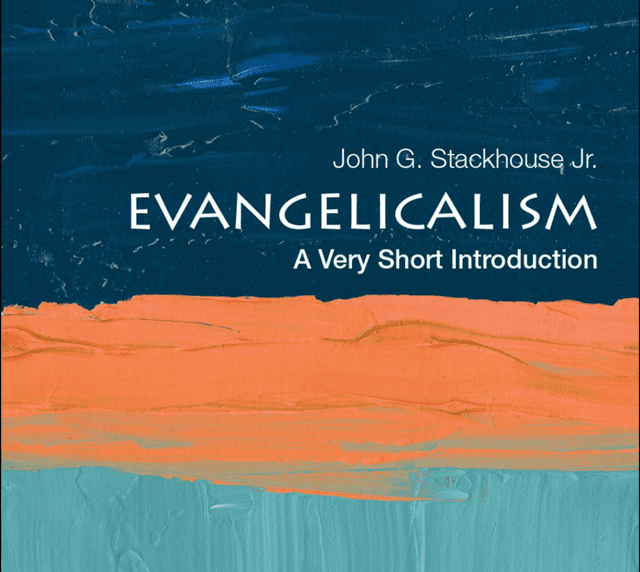
Evangelicalism: A Very Short Introduction by John G. Stackhouse
A Very Short [AND CLEAN] Introduction to the Ur-Evangelicals
Stackhouse situated his portrait of Evangelicalism as one that followed in the historic, theologically orthodox, tradition of Christianity. So, at first blush, his depiction is tough to distinguish from the long view of the Christian faith.
One of the contributions of his introduction is his innovative notion of the ur-evangelicals—a term he dubs for the primitive or prototypical leaders of this movement. Among those leaders include Count von Zinzendorf, Jonathan Edwards, George Whitefield, and John and Charles Wesley.
While Stackhouse provides his own [CLEAN] narrative history of these ur-evangelicals (Cf. Stackhouse, 12–19), I prefer mine, so I’m going to go ahead and convey it in my style for you. Please bear with me on this recounting of a [CLEAN] evangelical history. It will be so worth your time.
Any standard literature review of primitive evangelical history will recognize that evangelical roots could be perceived in early 18th century East Prussian revivalism, that either coincided or came swiftly on the heels of the War of Spanish Succession (Cf. Ward, The Protestant Evangelical Awakening).
Protestant war refugees from Silesia, Bohemia, and Moravia formed a diaspora throughout Western Europe, as they sought refuge from Catholic persecution. The Moravians found refuge on the lands of Nikolaus Ludwig, Reichsgraf von Zinzendorf in 1722, where they settled the village of Herrnhut, on his lands in Saxony. This village became a vital center for proto-evangelical belief. According to Moravian records, the Moravian Pentecost occurred in August of 1727, which set in motion events that led to a global Moravian mission movement in 1732. Count von Zinzendorf functioned as the patron and director of this entire movement (Cf. Sensbach, Rebecca’s Revival).
One of the fruits of the Moravian mission movement included Moravian contact with the young Oxford Holy Club members, John and Charles Wesley. The Wesleys set out for mission work in Savannah, Georgia in 1736. Their travels serendipitously put them in contact with the Moravians, from whom they learned a spirituality centered in the heart. However, the brothers’ mission work was untimely interrupted, and they ended up abandoning their missionary post and returning to England. Nonetheless, John Wesley continued to seek out Moravian spirituality. He later reported that his evangelical conversion experience took place at a Moravian meeting in Aldersgate, London (Cf. Hindmarsh, The Evangelical Conversion Narrative).
Not long before the Wesley’s failed missionary venture, Jonathan Edwards recorded a little awakening that had occurred on his side of the Atlantic in Northampton, New England. Employing an enlightened technique to carefully document the spiritual phenomenon he observed, Edwards had the good fortune to have his little revival history conveyed by Benjamin Colman to the hands of Isaac Watts and John Guyse in London. Watts and Guyse published A Faithful Narrative in London in 1737, which ended up being translated into multiple languages and diffused throughout the Atlantic World. The Wesleys and the Moravians found this narrative edifying, as well as one other of the Wesley’s associates, George Whitefield.
The Wesley’s fellow Holy Club member, George Whitefield, had recently had his heart set on fire for revival. He began preaching in the fields of Bristol and near its mines to any laborer who would hear. He then set out across the Atlantic and carried out a preaching tour throughout the British North Atlantic Colonies from December 1739–40. Whitefield’s preaching tour demarcates the beginning of what many call the Great Awakening. Whitefield made sure to include Edwards’s, now famous, Northampton, as a stop on his tour. Having met Edwards’s lovely wife and daughters and having observed their dutiful support of Edwards’s ministry, one fruit of Whitefield’s foray to New England included a newfound zeal to find the ideal ministerial wife to support his work (Cf. Kidd, George Whitefield).
With this rather very short introduction to the auspicious, first moments of the evangelical era, I have just introduced to you a cast of characters, who have become outsized in their influence, across the last few centuries. They are our evangelical giants, who have shaped the beginning of evangelical history.
However, what if I were to tell you, that a certain sort of organized forgetting has permitted their ascendancy, and without it, they are just a handful of men, who have a checkered past, much like has [alleged] to be the case with one of their historical narrators, John G. Stackhouse, Jr.
Richard Edwards and the Evangelical Histories We Tend To Conceal
Jonathan Edwards would have never occupied the crucial Connecticut River Valley pastorate of Northampton had it not been for his grandfathers. Some readers will be familiar with his maternal grandfather, Solomon Stoddard, who led his church through a series of revival harvests during his nearly 60 years occupying the pulpit in Northampton. Stoddard’s family was a leading family of New England, counted among other such noteworthy families as the Mathers. However, far fewer readers will be aware of Edwards’s paternal grandfather, Richard Edwards, and how he set the foundation for Jonathan Edwards’s social opportunities. This is part of the organized forgetting of evangelical history.
Richard Edwards was a barrel maker in Hartford, Connecticut, who had his hopes set on becoming an attorney. However, marrying Elizabeth Tuttle in his youth threatened his dreams. Shortly after their marriage, Tuttle gave birth to their first child, far too soon to be considered a premature birth. In fact, the couple had to appear in court and accept the charge and fine for the crime of fornication.
Sadly, Tuttle’s family carried on an ongoing and spreading stain of shame, as a result of a series of episodes that pointed to a contagion of madness in the family. Her brother Benjamin murdered their sister Sarah in late 1676, and her sister Mercy murdered her son Samuel in 1691. Historian, Ava Chamberlain, refers to these two events as the bookends for the decline and end of Richard and Elizabeth’s marriage. After 1676, Richard and Elizabeth became increasingly estranged.
Beginning in 1688, Richard brought forth two suits for divorce from Elizabeth. However, in order to successfully sever the relationship, he had to prove that fault fell on Elizabeth. He argued in court, over various hearings, that Elizabeth had abandoned him once she began depriving him of sexual-exercises around 5–6 years prior to the time of the hearings. The court finally awarded his divorce, on these grounds, in 1691 shortly after Elizabeth’s sister murdered her son. This court decision was unprecedented in British colonial history.
Part of Richard’s case hinged on demonstrating that he felt his life was threatened by Elizabeth, and the evidence that madness seemed widespread in her family helped his case. However, Richard had to also demonstrate that he was without fault, which required him to deny the charge of fornication prior to his marriage. He shrewdly argued that his wife had actually fornicated with another man, and he maintained that their first daughter was not his own until the day he died (Chamberlain, The Notorious Elizabeth Tuttle, 120–37).
Not long after Richard’s successful divorce, the middle-aged man took Mary Talcott for his wife. Talcott was the daughter of one of if not the leading man of Hartford. The social connections that the marriage created for Richard Edwards elevated his status and paved the way for his career as an attorney. In 1699, he became known, alongside a colleague, Daniel Clark, as “attorneys for the country”, and in 1705 he was named the colony’s first Queen’s attorney. In 1708, he was appointed the Hartford Country Probate Court’s prosecuting attorney and was the first man admitted to the newly formed Connecticut Bar (Chamberlain, 144).
Richard Edwards’s success depended entirely on his new social connections found through the Talcott family. These connections helped him secure his financial future and set up his son, Timothy Edwards to finish his studies at Harvard and receive his calling to the First Congregational Church of East Windsor, where he would marry the daughter of Solomon Stoddard. All these events put the Edwards family in the orbit of New England colonial greatness, which would one day set up Jonathan Edwards for his future global influence.
Yet, I’ve left out still one more crucial detail. “On June 5, 1688, a single woman named Mary Talcott was presented in Hartford County Court for the crime of fornication” (Chamberlain, 129). Rather than appearing in court, a fine of 50 shillings was imposed, and the magistrate ordered that “Richard Edwards be sumened to the next sessions to answer to what shall be layd against him,” for he was clearly the adulterer who had lain with her (Chamberlain, 129).
While Jonathan Edwards, himself, is not guilty of a checkered past, he might never have had the opportunities he had, as a minister, had his grandfather’s checkered past not been concealed and forgotten.
Count von Zinzendorf and The Evangelical Histories We Tend To Conceal
The Edwards family is by no means the only ur-evangelical to have profited from the organized forgetting of a checkered past. Count von Zinzendorf and the Moravians are often extolled as the ideal patron and ideal devotees to the evangelical faith. Few evangelicals seem to be aware of the sexual peculiarities of Moravian devotion and the accusations of sexual indiscretions against a couple of their key leaders.
Moravians had used the notion of “sifting” (sichtung) to indicate various times of crisis, testing, and purification throughout the late 1730s through the 1740s. One such “Time of Sifting” occurred in the late 1740s. Since the Brethren later put forth a concerted effort to destroy records and erase the history of this “Time of Sifting” it has taken the skillful work of historians to recover the organized forgetting of these events.
One of the key documents that did not go destroyed was Count von Zinzendorf’s reprimand to the Brethren, a missive written to all the congregations and missions of the Moravian Church on February 10, 1749, which reproached the Moravians for undermining and challenging the authority of the Zinzendorf family and bringing public shame upon the Moravian Church.
But what was the nature of this public shame? What were the Zinzendorf family and Moravian’s trying to conceal from the public? Fundamentally, the nature of the issue revolved around the spiritualized sexuality of the Moravian Brethren (Cf. Sensbach, 186–87; Fogleman, “Jesus is Female”; Atwood, “Sleeping in the Arms of Christ,” 25–51; Peucker, A Time of Sifting).
Oddly enough, married couples did not cohabitate in Moravian communities. Rather, all married people of one sex were segregated into separate dormitories, while single men and single women had their own dormitories as well. In order for married partners to partake in the “holy ritual” and “radical celebration of the divine gift of sexuality”, they scheduled their meetings with a “bed master” or “curator”, who gave them access to a special bedroom or “blue cabinet” not far removed from their meetings. At times, lines of couples would form to gain access to the cabinets or bedchambers in the various Moravian communities throughout the Atlantic World.
What is more, Moravian theology and devotion emphasized the brutal crucifixion of Jesus, and especially focused devotion around the side wound Jesus received from the spear, which had penetrated him. This side wound became sexualized in their devotion, redefining the gender of Jesus. Devotees were encouraged to enter into the side wound of Jesus, which itself was a peculiar sexual inuendo.
For understandable reasons, this nascent movement of exclusive Moravian communities concealed these esoteric, sexualized, spiritual practices from outsiders. However, some of the Moravian “children” had broken trust and shared with outsiders about their practices, while others became disenchanted, broke from their community, and even became hostile to it. As a result, a series of embarrassing publications surfaced during the late 1740s, which brought public shame upon the Moravian Brethen.
One disenchanted Moravian, who had left the Brethren in 1743, outed them for these practices and made accusations that two of its leading men had committed egregious sexual indiscretions. Jean Francois Reynier accused both Bishop August Spagenberg and Bishop Count von Zinzendorf, respectively, of having peeked into the “Blue Cabinet” through a peephole and fondled the breasts of new brides prior to their weddings. Another former Moravian, Alexander Volck, also exposed the sensual practices of Moravian spirituality in his publication, The Revealed Secret, and Carl Gottlob Hofmann, superintendent of Wittenberg, furthered these allegations and undermined the public’s trust of the Moravian Brethren with his publication Gegründete Anzeige in 1749. This string of bad press motivated Count von Zinzendorf’s reprimand of the church in February, 1749.
Conveniently, Zinzendorf had been exiled from Saxony, beginning in 1736, so he might be held blameless from being responsible for these sexual practices, which he had originally promoted. His exile, by all means, concealed under the guise of mission work and visitations to other Moravian communities in the Atlantic World, freed him to nimbly go from one Moravian community to another, in order to participate in these practices while separated from his wife, Erdmuthe Dorothea. In 1739, he visited St. Thomas (one of the present-day U. S. Virgin Islands) to check on the fruitfulness of missions on this island, and, in 1741, he visited Bethlehem, Pennsylvania to observe the work of missionaries to the Natives in the British North Atlantic. He continued to tour various hubs of the Moravian spiritual empire until his return to Saxony in 1755. He and his wife lived separate until her death in 1756, when he married his longtime assistant Anna Nitschmann, who was 15 years his junior.
The Wesleys and The Evangelical Histories We Tend To Conceal
So, what about the Wesley’s? Surely not all the ur-evangelicals have a checkered past regarding sexual indiscretions? Well, there has also been an organized forgetting with them as well.
The Wesley’s original mission to Savannah, Georgia was disrupted by a bad episode having to do with Charles. After only a few months there, on Sunday, March 21, 1736 Charles’s sermon was disrupted by gunfire from an upset doctor, who threated to blow him away for his hypocrisy. By July, he resigned his role and returned to England (Noll, The Rise of Evangelicalism, 83).
So, why did this doctor fire upon Charles? Well, because he had thought Charles was sleeping around. Wesley records a comment in his journal that Dr. Hawkins made from his jail cell, after the shooting, when he saw Wesley accompanying a Mrs. Welch.
Hawkins, seeing me from the guardroom walking with his maid between the two rows of houses had said, ‘There goes the parson with his whore. I myself saw her and him were under the bushes.’ Modest Mrs. Hawkins added, ‘upon the ground’. (Kimbrough, “Charles Wesley in Georgia,” Methodist History 45:3 (January 2007):90–91)
In fact, Doctor Hawkins’s wife, Mrs. Hawkins had accused both Governor Ogelthorpe and Charles of sexual impropriety, and she attempted to play the two of them against one another. She also enlisted the aid of Mrs. Welch in her efforts.
Charles recorded in short-hand five entries in his journal that pertained to this controversy. In his records, he indicates how both Mrs. Hawkins and Mrs. Welch co-conspired against him and Governor Ogelthorpe. One of the reports recounted how Dr. Hawkins had accused Charles of sexual impropriety with both Mrs. Hawkins and Welch. There are also numerous comments concerning Mrs. Welch’s reports about her and Charles’s illicit relationship. These reports implicate both Ogelthorpe and Wesley with sexual deviance. The matter gets resolved by Charles leaving Georgia and returning to London, and he and Ogelthorpe commit to never speak about this episode again (Kimbrough, “Charles Wesley in Georgia,” 88–99).
Back in England, Charles and John continued to grow renown as revivalists and organizers of revival. In the late 1730s, they are regularly in correspondence with women and share entries from their journals with the women “bands” (small groups) at Methodist gatherings. Evangelical historian Bruce Hindmarsh indicated that women were quite smitten with these two young and attractive evangelists (Hindmarsh, The Evangelical Conversion Narrative, 154–55). In his history, he included a 1740 missive from James Hutton to Count von Zinzendorf:
J. W. and C. Wesley, both of them, are dangerous snares to many young women; several are in love with them. I wish they were once married to some good sisters, but I would not give them one of my sisters, if I had any.
Hindmarsh comments on this report:
The Wesleys and Whitefield were unmarried and young, and several of the women in the bands were undoubtedly infatuated with them, and this certainly added an additional motive on the part of some of the women to emulate the piety of the Methodist clergy.
Even if these allegations prove to be attempts to discredit the Wesley’s and the success of the Wesleyan Methodist movement, it’s hard to look past the next vignette.
In 1757, John Wesley made Sarah Ryan the housekeeper of his Bristol estate and the Kingswood School that he had established. Ryan had been a bigamist twice over. In other words, she was married to three men, all of whom were still alive. Furthermore, it appears that she was the source of Wesley’s estrangement to his wife Mary, who on one occasion called her a whore at the dinner table. He later published her spiritual autobiography in the Arminian Magazine, some time after her death in 1779 (Hindmarsh, 235–36).
Where Do We Go from Here?
The first step to move forward on evangelicals behaving badly is to make the stories known and talk about what structural elements and stylistic elements exist that have led to such horrifying sexual deviance. We have to acknowledge this past rather than conceal it or forget it.
History and Religion
Previous Post
December 5, 2023
Joy in the Waiting: Medieval Plays and Advent Reflections
Next Post
December 7, 2023 The Friar and the Maya
Recent Comments
"I love horror but would have to acclimate back to Lovecraft and especially Machen. Have ..."
Fairies, Witches, Folk Horror, and the ..."
"Very good point about MacDonald.I am certainly a Machen fan!"
Fairies, Witches, Folk Horror, and the ..."
"The Scottish author George MacDonald integrated fairy world into his fiction in a way that ..."
Fairies, Witches, Folk Horror, and the ..."
"I like the idea that we can have different streams. The coffee analogy is genius."
How Do You Take Your Evangelicalism?
Browse Our Archives
Select a Category abolitionism Abortion Abraham Joshua Heschel Abraham Kuyper Abraham Lincoln Academia Activism Adam Renberg Advent Adventist africa African American Religion Agnes Howard Albert Camus American History American Religious History American Revolution American West Anabaptists Ancient History Andrea Turpin Andrei Tarkovsky Anglicanism Annales Ansley Lillian Quiros anti-Catholicism Antisemitism Anxious Bench apologetics Apparitions Arash Azizi Archaeology archives art Artificial Intelligence Asia Asian Americans Augustine Authors Bad Bunny Baptism Baptists Barack Obama Battle of Hastings Benjamin Franklin Bernard-Henri Levy Beth Allison Barr Beth Moore Bethany Mannon Bible Bill Cunningham Billy Graham Black Music Bob Dylan Body Boenhoffer Books Breastfeeding Bruce Springsteen C.S. Lewis Calvinism Cancel Culture Capitalism Carmelites Catholicism Cedric Robinson Cesar Chavez Charismaticism charity Charles Dickens Charles Lindbergh Che Guevara Chicago Children Chinese Christianity Chris Gehrz Christ Christian death Christian Higher Education Christian life Christian Nation Christian Nationalism Christianity Today Christmas Church life Church Practice cinema Civil Religion Civil Rights Movement Civil War civility Classics Climate Change Cold War Colonial Mexico colonialism Comer Communism community complementarianism Conference on Faith and History Congregationalism Conspiracies Conspiracy Conversion Narratives Coronavirus Costa Rica Council of Nicaea Covid-19 Creation Critical Race Theory Crusades Culture culture wars Daniel K. Williams David Barton David Swartz Death Ways death with dignity DEI democracy Democratic Party Devotion Digital Age Diplomacy discipleship diversity Donald Trump Drama Dua Lipa Early Church early modern Early modern Catholicism Easter Eastern Christianity economic exploitation Education elections Elie Wiesel Elizabeth II Elizabeth Taylor emotions Empire Engineering England enslavement Entertainment Episcopal Church Erica Ramirez eschatology Eurocentrism Evangelicalism Evangelicals Exegesis Family Feminism Film Flannery O'Connor folk music Food Foreign Policy founding fathers Franciscans Franciscus Junius fundamentalism Funerals G.K. Chesterton Gender Genocide genre geography George W. Bush George Washington George Whitefield Global Christianity Global church Grief Guadalupe guest post Guest Post gun control gun violence Gustavo Gutierrez Hamid Dabashi Harold John Ockenga Harvest Hate Hawaiian Christianity Healing health care Heather Cox Richardson Hell Heresy Hermeneutics Higher Education Hinduism Hippocratic oath Historical Fiction Historical Methodology Historical Profession Historical Profession Historical Theology Historical Thinking historiography Holidays Holocaust horror movies Human rights Humanitarian Work humanities Hummingbirds Hungary hymns Imago Dei Immigration Injustice Interviews Iran Islam Islamophobia Israel Ivan's Childhood Jacob Randolph James Bratt Janine Giordano Drake Japanese history Japanese Literature Jean Paul Sartre Jesse Miranda Jesus Jesus Christ Jimmy Carter Joan Baez Joan Didion Joanne Freeman João B. Chaves Joao Chaves Joey Cochran John Calvin John Fea John Tillotson John Turner Johnny Cash Jonathan Edwards Jonathan Tran Joseph Smith Josh Howerton Journalism Jr. Judaism Jürgen Moltmann Just War Justice Justin Brierley Karl Barth Katelyn Beaty koi ponds Kris Kristofferson Kristin Kobes Du Mez Latin American Religious History Latino Americans Lectio Divina Leisure Lent Leonard Cohen liberal arts liberalism Liberation Theology Linda Ronstadt Lisa Clark Diller Literature Lou Reed Lynchings Lynneth Miller Renberg Mainline Protestantism Malcolm Foley Marilyn Monroe Maritime history Mark Noll Marriage Martin Luther Martin Luther King Martyrdom Marxism Mary Masih Alinejad mass shootings material culture medieval Christianity Medieval Ethiopia Melissa Borja memory Mennonites Mental Health Mental Illness Methodism Mexican Americans Mexicans Mike Madrid Miles Mullin Min Jin Lee Miscarriage Missionaries Mister Rogers Mitt Romney modernity Monasticism Mormonism Motherhood Mothers of the Church Moving Music Musicals Nadya Williams Nahua Christianity Native Americans Natsume Sōseki New Contributor New England New Year New York Nico Non-Violent Protest Orthodoxy pacifism Paleo Evangelicals Palestinians Parenting Patti Smith Paul Kingsnorth Pedro Calderón de la Barca Pentecostalism Philip Jenkins Phillis Wheatley physician-assisted suicide pilgrimage Pilgrims pluralism Plutocracy Poetry Politics Pope Francis Pope Leo XIV post-modernism prayer preaching Presbyterians prosperity gospel Protest Public history Publishing Puritans purity culture Quakers race Race Massacres Racial Capitalism racial reconciliation racialization Racism Raha Bahloulipour Re-Enchantment reading Reformation Refugees religion and the university religion and war Religious Freedom Religious Nones Religious Pluralism Religious Symbols religious violence Republican Party Revival Rita Coolidge Ritual Roger Williams Roman Catholic church Royalty Russell Moore same-sex marriage Sarah Irving-Stonebraker Scandinavia Science Science and Technology Scopes trial Scriptural Interpretation secularism Selena Quintanilla seminary Seventh-Day Adventists sexual morality Sexuality Sikhs Silence slaveholders theology Slavery Slavoj Zizek social justice Social Media Southern Baptist Convention Southern Religion Spain Spiritual Autobiography Spiritual but not religious Spiritual Discipline Sports Stanley Hauerwas Suffering Summer Camps Sunday Night Odds and Ends Supernatural Supreme Court Syriac Christianity Tal Howard Taylor Swift Teaching Technology Television Thanksgiving The Beatles The Mission theater TheoBros Theology Thomas Dixon Thomas Jefferson Thomas Kidd Thomas Merton Tim Gloege Tim Walz Tom Holland Tourism tradition Tragedy Translation Transnationalism Travel Trump Ukraine Uncategorized Unitarians United Methodist Church US History Vanessa Chan Velvet Underground Verónica A. Gutiérrez Veronica Gutierrez Vikings Violence Virgin Mary Virtue Virtue ethics Visions Voting War WCTU Wendell Berry Westminster Assembly White Evangelicalism Wildfires Winnie the Pooh Witches women Women in Ministry Women's and Gender Studies Work Worship writing Yasunari Kawabata Zena Hitz
Select a Month October 2026 September 2026 August 2026 July 2026 June 2026 May 2026 April 2026 March 2026 February 2026 January 2026 December 2025 November 2025 October 2025 September 2025 August 2025 July 2025 June 2025 May 2025 April 2025 March 2025 February 2025 January 2025 December 2024 November 2024 October 2024 September 2024 August 2024 July 2024 June 2024 May 2024 April 2024 March 2024 February 2024 January 2024 December 2023 November 2023 October 2023 September 2023 August 2023 July 2023 June 2023 May 2023 April 2023 March 2023 February 2023 January 2023 December 2022 November 2022 October 2022 September 2022 August 2022 July 2022 June 2022 May 2022 April 2022 March 2022 February 2022 January 2022 December 2021 November 2021 October 2021 September 2021 August 2021 July 2021 June 2021 May 2021 April 2021 March 2021 February 2021 January 2021 December 2020 November 2020 October 2020 September 2020 August 2020 July 2020 June 2020 May 2020 April 2020 March 2020 February 2020 January 2020 December 2019 November 2019 October 2019 September 2019 August 2019 July 2019 June 2019 May 2019 April 2019 March 2019 February 2019 January 2019 December 2018 November 2018 October 2018 September 2018 August 2018 July 2018 June 2018 May 2018 April 2018 March 2018 February 2018 January 2018 December 2017 November 2017 October 2017 September 2017 August 2017 July 2017 June 2017 May 2017 April 2017 March 2017 February 2017 January 2017 December 2016 November 2016 October 2016 September 2016 August 2016 July 2016 June 2016 May 2016 April 2016 March 2016 February 2016 January 2016 December 2015 November 2015 October 2015 September 2015 August 2015 July 2015 June 2015 May 2015 April 2015 March 2015 February 2015 January 2015 December 2014 November 2014 October 2014 September 2014 August 2014 July 2014 June 2014 May 2014 April 2014 March 2014 February 2014 January 2014 December 2013 November 2013 October 2013 September 2013 August 2013 July 2013 June 2013 May 2013 April 2013 March 2013 February 2013 January 2013 December 2012 November 2012 October 2012 September 2012 August 2012 July 2012 June 2012 May 2012
Follow Us!
TAKE THE
Religious Wisdom Quiz
Who is credited with writing much of Proverbs?
Select your answer to see how you score.
Hezekiah Solomon David Agur
Related posts from Anxious Bench

What Coffee Reveals About America's Evangelical Varieties

A Casserole is Not a Counterpoint
The Evangelical Brand Image Crisis
TRENDING AT PATHEOS Evangelical

When Halloween Unmasks Married Hearts
Written by Dr. David K. Ewen from Eternal Truth Bible College Behind...

Aristotle. He’s been called the father of logic, the father of the...

Methodist Central Hall and Westminster Abbey
Situated on the same square is Methodist Central Hall and Westminster Abbey. ...

57th Dove Awards Honor Dolly Parton, Crown New...
On gospel music’s biggest night, the 57th annual GMA Dove Awards honored...

The First Eucharistic Controversy: Christ’s Real Presence
For Catholics, the Eucharist is the source and summit of the Christian...

What a Stop Sign Can Teach Us About...
How to Make a Decision When You Can't Hear God Main point:...
view all Evangelical blogs
What Are Your Thoughts?leave a comment
Ad-Free & Subscriber Log-In Subscription Support
- About Us
- 2026 Calendar
- Videos
- Podcasts
- Library of World Religions
- Faith In Media Tracker
- Advertise With Us
- Write for Us
- Privacy Policy
- Terms of Service
- Do Not Sell My Data
- Contact Us
- Radiant Digital
- Manage Newsletter Subscriptions
- Unsubscribe From Notifications
- Sitemap
Copyright 2008-2026, Patheos. All rights reserved.
Subscription Support Ad-Free & Subscriber Log-In
Follow Patheos