
BuddhistCatholicContemplativeEvangelicalGeneral ChristianHinduJewishLatter-day SaintMuslimNew VisionsProgressive Christian
Beliefs
- Buddhist
- Catholic
- Contemplative
- Evangelical
- General Christian
- Hindu
- Jewish
- Latter-day Saint
- More Voices
- Muslim
- New Visions
- Pagan
- Progressive Christian
Topics
- Religion News
- Food and Religion
- Sports and Religion
- Religious Art
- Religious Music and Entertainment
- Religious Events
- History and Religion
- Style and Religion
- Politics and Religion
- Women in Religion
- Recreation Outdoors and Religion
- Business Finance and Religion
- Careers Workplace and Religion
- Education and Religion
- Family Parenting and Religion
- Health Fitness and Religion
- Home and Religion
- Relationships and Religion
- Technology and Religion
- Travel and Religion
Columnists
- Buddhist Columnists
- Business Finance and Religion Columnists
- Careers Workplace and Religion Columnists
- Catholic Columnists
- Contemplative Columnists
- Education and Religion Columnists
- Evangelists Columnists
- Family Parenting and Religion Columnists
- General Christian Columnists
- Health Fitness and Religion Columnists
- Hindu Columnists
- History and Religion Columnists
- Home and Religion Columnists
- Jewish Columnists
- More Voices Columnists
- Latter Day Columnists
- Muslim Columnists
- New Visions Columnists
- Nonreligious Columnists
- Pagan Columnists
- Politics and Religion Columnists
- Progressive Columnists
- Recreation Outdoors and Religion Columnists
- Relationships and Religion Columnists
- Religion News Columnists
- Religious Art Columnists
- Religious Events Columnists
- Religious Music and Entertainment Columnists
- Sports and Religion Columnists
- Style and Religion Columnists
- Technology and Religion Columnists
- Travel and Religion Columnists
- Women in Religion Columnists
Resource Library
- 2026 Calendar
- Library of World Religions
- The 100 Most Holy Places on Earth
- Patheos Answers
- Podcasts
- Videos
- Faith Leaders Database
- Anglican Episcopalian
- Bahai
- Baptist
- Buddhism
- Christianity
- Confucianism
- Eastern Orthodoxy
- Hinduism
- Holiness and Pentecostal
- ISKCON
- Islam
- Judaism
- Lutheran
- Methodist
- The Church of Jesus Christ of Latter-day Saints
- New Age
- Paganism
- Presbytarian and Reformed
- Protestantism
- Religion Behind the Scenes
- Roman Catholic
- Scientology
- Shia Islam
- Sikhism
- Sufism
- Sunni Islam
- Taoism
- Zen
- See all religions
Research Tools
 Ad-Free & Subscriber Log-In Subscription Support
Follow Patheos 

- Trending:
- Advent
- |
- Forgiveness
- |
- Thanksgiving
- |
- Election
- |
- Seasonal Holidays
- |
- Marriage

-
About the Authors
- Home
- Evangelical
- History and Religion
- The Philosophical Assumptions behind Historical Criticism of the Gospels
The Philosophical Assumptions behind Historical Criticism of the Gospels
Last updated on: November 28, 2023 at 2:00 am by Daniel K. Williams
The Philosophical Assumptions behind Historical Criticism of the Gospels 2023-11-27T22:42:28-04:00 Daniel K. Williams
Patheos Explore the world's faith through different perspectives on religion and spirituality! Patheos has the views of the prevalent religions and spiritualities of the world.
Twenty-one percent of white mainline Protestants do not believe in the virgin birth of Jesus, a Pew research survey found. By contrast, only 1 percent of white evangelical Protestants say they don’t believe this story.
This division among Protestants over the virgin birth, as well as other biblical miracles, is not new. For more than a century, American Protestants have been debating these questions – and for more than a century, some seminary and college professors of the New Testament have said that the historical evidence does not support the facticity of the virgin birth or other traditional beliefs of the church.
Those who don’t believe often cite the evidence of historical criticism of the Bible as a reason to assume that stories such as the virgin birth were early Christian legends that developed over the course of several decades rather than factual accounts based on first-hand testimony. Theologically conservative Christians who continue to believe in the virgin birth or the resurrection are ignoring the historical evidence, they claim.
Yet on closer inspection, it seems that this claim is based on philosophical assumptions rather than historical evidence. In fact, when American college professors of the New Testament first encountered historical criticism of the gospels in the early nineteenth century, they rejected it on the grounds that the evidence for it was lacking. It was only a half century later, after they had acquired a new philosophical framework, that they accepted historical criticism of the Bible. The evidence for (or against) historical criticism of the Bible had not changed, but their view of it did, because their philosophical frame of reference had shifted.
Historical criticism of the Bible (that is, the attempt to reconstruct the history of a biblical text’s formation and examine it as a product of a particular historical era) began at least as early as the late seventeenth century, when the skeptical Dutch Jewish philosopher Baruch Spinoza critically examined the Torah and concluded that there were at least some parts that Moses could never have written, since they described events that occurred after his lifetime. He could never have written the last chapter of Deuteronomy, for instance, since it describes his own death.
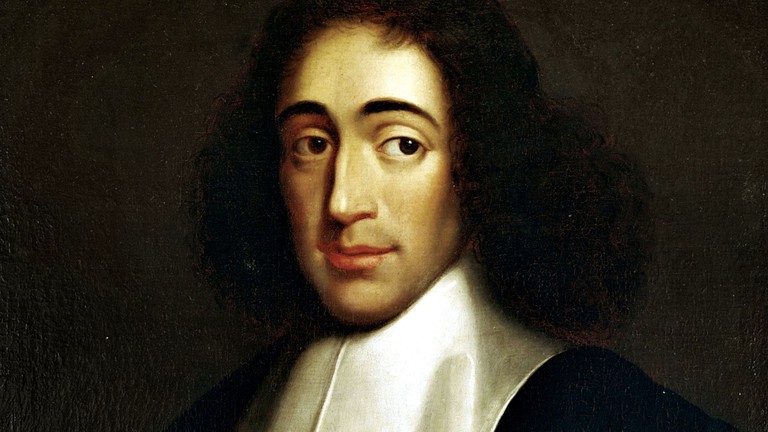
Baruch Spinoza (1632-1677)
Spinoza’s work influenced several British deists, who repeated some of his arguments, and it also sparked critical study of the Bible in France. At the end of the eighteenth century, German scholars began imitating some of his methods and expanding them into a scientific discipline that covered not only the Old Testament but also the New.
British and American college professors, ministers, and Christian apologists almost never referenced Spinoza or other practitioners of historical criticism of the Bible directly, but when they encountered the arguments of the historical critics through the writings of contemporary deists, they issued rebuttals that they thought were convincing. In the mid-eighteenth century, the Dissenting church minister Nathaniel Lardner wrote a 17-volume defense of the historicity of the four gospels that addressed every argument he could find against the historical accuracy of any episode of Jesus’s life recorded in the Synoptics or the gospel of John. He spent 86 pages on the census of Quirinius, ultimately concluding that while an empire-wide census in the year of Jesus’s birth was unlikely, there was no reason to believe that a local census in Judea had not occurred that year.
Lardner approached his project with different assumptions than the historical critics had. For Lardner, the question he faced with every recorded episode in Jesus’s life was: Is there anything in this biblical account that is impossible to reconcile with what I know from the other gospels and from extrabiblical sources from the ancient world? If the answer was no, the account should be believed, he thought.
But this was not the question that guided historical critics in early nineteenth-century German universities as they examined the biblical text. They did not ask whether the biblical accounts could be harmonized with information from other sources. Instead, they approached the text with a much greater suspicion of the miraculous than Lardner had had – and they believed that if miraculous accounts were legends, they must have evolved over the course of several generations.
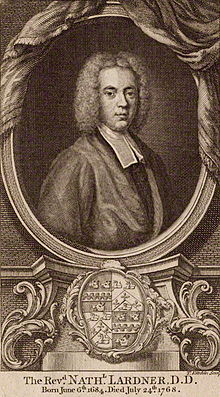
Nathaniel Lardner (1684-1768) (engraving by Thomas Kitchin)
Lardner was in many ways a liberal in his day. He was far more willing than his American contemporary Jonathan Edwards was to subject the Bible to the test of human reason. In his quest to weigh each episode in the gospels against the historical evidence from other sources, he was engaged in an Enlightenment project that Calvinist ministers of a previous generation would have been unlikely to attempt. But ultimately, he thought that the Bible could be harmonized with other sources, and that if that were the case, the Bible should be accepted as historically trustworthy until proven otherwise. Miraculous accounts should not be rejected a priori – and if they harmonized with other historical evidence and were based on eyewitness testimony, they should be treated as credible as long as the witnesses themselves were trustworthy.
This reflected the views of the two British philosophers who had the greatest influence on eighteenth and early nineteenth-century Anglo-American thought: John Locke and Thomas Reid. Locke believed that one could use reason to know God’s existence from the evidence from nature, and that one could likewise use reason to evaluate the evidence of the testimony of miracles contained in the gospels and know from that evidence that Jesus was a man like no other and that his message had a divine origin. Reid’s common-sense realist philosophy expanded on that argument with a lengthy philosophical defense of the legitimacy of evidence from testimony – an argument that was largely a refutation of the skepticism of David Hume, the eighteenth-century Scottish philosopher who rejected all testimonies of the miraculous out of hand.
The German historical critics of the early nineteenth century, by contrast, were not Lockeans or common-sense realists. Instead, they were Kantians and Hegelians. From Immanuel Kant (1724-1804), they learned that the realm of the spiritual was separate from the realm of reason; one could not use natural evidence to prove the existence of God or the reality of miracles, as John Locke had thought. From Georg Wilhelm Friedrich Hegel (1770-1831), they learned that history was progressive, and that all of civilization – including religion – was evolving from more primitive to more advanced stages.
While early nineteenth-century American professors of the Bible were using comparative historical study of the text to demonstrate the historical credibility of biblical miracles, German historical critics of the Bible during the same period were dismissing these miraculous accounts as implausible on philosophical grounds and were embarking on a quest to determine the evolution of the biblical text using their Hegelian assumptions about religious and cultural progress. The best known of these Hegelian-inspired German critical scholars was David Strauss, whose The Life of Jesus, Critically Examined created an international sensation when it was published in the 1830s.

David Strauss (1808-1874)
The New Testament gospel accounts – filled as they were with implausible accounts of fantastic miracles – were myths, Strauss argued, and myths take time to develop. The gospel accounts were therefore probably written in the second century, many decades after Jesus’s crucifixion.
Strauss’s book had an enormous influence in Europe. The skeptic Mary Ann Evans (better known by her pen name George Eliot) helped translate the work into English. In the United States, some of the Transcendentalists, such as Ralph Waldo Emerson, found the arguments of Strauss and other German historical critics persuasive.
But when Harvard New Testament professor Andrews Norton read Strauss’s argument, he was aghast at its lack of supporting evidence. Although he was a Unitarian who did not believe in biblical inerrancy, he did think that the historical evidence supported the general historical credibility of the gospels, including the gospels’ miraculous accounts. And he thought that there was no evidence at all for Strauss’s suggestion that the gospels could not have been written in the first century.
In the multivolume defense of the gospels’ historicity that Norton produced as a refutation of Strauss and other German critics, he pointed out that early second-century early Christian writers, such as Clement of Rome and Ignatius of Antioch, quoted from the gospels as authoritative apostolic sources. And if the early Christians were quoting from the gospels at the very beginning of the second century, they must have been produced no later than the late first century.
Because Kant and Hegel were mostly unknown in the United States at the time, most American scholars of the antebellum era saw no reason to dismiss credible historical testimony simply because of a philosophical assumption that miraculous accounts were legendary or that the accounts of Jesus’s life in the canonical gospels must have evolved over the course of several generations. Strauss’s book therefore had very little influence on college or seminary curricula in the United States when it first appeared in German in the 1830s or was translated into English in the 1840s.
But that changed in the late nineteenth century. After the Civil War, a new generation of American biblical scholars traveled to German research universities to study for a Ph.D., a degree that barely existed in the United States at the time. (The first Ph.D. in the United States was not granted until 1861, when Yale awarded the degree to three students). With the expansion of American higher education after the Civil War, there was a new interest in research degrees and in learning from the leading scholars in the world – which, in the case of biblical studies (as well as many other fields) meant studying in Germany.
The American students who traveled to Germany for graduate study learned not only the particular arguments of historical critics of the Bible but the larger philosophy of historicism – that is, the belief that history is progressive and that the present is very different from the past. They learned a Kantian separation of religious truth claims from scientific truth claims – and thus became suspicious of history that tried to blend the supernatural with the natural, as American biblical scholars had previously done when treating Jesus’s miracles as historical events. While there were a handful of holdouts, most of the American biblical scholars who studied in Germany in the late nineteenth century returned to the United States with a view of scripture that very closely paralleled the views of the German historical critics who had been universally dismissed by American educators in the 1830s and 1840s.
Yale church history professor George Park Fisher was dismayed at this development, because in his view, the evidence was still in favor of the Bible’s historicity – and especially the historicity of the gospels. In his Manual of Christian Evidences, published in 1892, he systematically demonstrated that the gospel writers were familiar with the language, customs, and geography of first-century Judea and Galilee. They could not therefore have been written much after the destruction of Jerusalem in 70 CE. The fact that the second-century Christians considered these works authoritative and apostolic must have meant that they had already been circulating in the churches for years by the beginning of the second century.
The only reason that people dismissed the historical evidence for the gospels’ early composition was because they found the miraculous accounts implausible, Fisher said. Because they insisted that the miraculous accounts were legends, they had to give the legends enough time to develop, which meant that they had to move the composition of the gospels to the second century, as Strauss had. But the objection to the miraculous was a philosophical, not a historical one, and in his view, it had already been conclusively answered in the eighteenth century, when Christian apologists were arguing against David Hume.
Hume’s “fundamental error consists in arguing the question on the tacit assumption of atheism. He ignores the existence of a cause adequate to work miracles, and, of course, the existence of any motive or occasion for them to be wrought,” Fisher declared. In other words, if one assumed the existence of a God capable of effecting miracles, and if one assumed that this God might have good reason to perform miracles at particular junctures in human history, one no longer had reason to dismiss testimonies of miracles out of hand – especially when dismissing these testimonies required one to ignore good historical evidence.
Christian apologists lauded Fisher’s arguments, but they did not influence many seminaries or college religion courses. Instead, with only a few exceptions, American Protestant colleges and seminaries in the early twentieth century embraced liberal Protestant assumptions about the Bible’s composition. They became wholesale converts to the type of historical criticism of the Bible that was taught in German research universities of the time.
Perhaps that was largely because the entire American research university model, along with the new discipline of historical criticism of the Bible, was an import from Germany, and German scholarship on the Bible was widely considered to be the best in the Western world. To repudiate the foundational assumptions of German scholarship would have called into question the entire discipline of critical biblical studies, as well as some of the fundamental assumptions of the modern research university. Few scholars at American research universities or research-oriented seminaries (such as the University of Chicago) were willing to do that.
Nevertheless, throughout the twentieth century, evangelical scholars pushed back against the critical views that defined the mainstream. In addition to repeating Fisher’s arguments, they also pointed to twentieth-century archaeological evidence that supported the historicity of the biblical text. Archaeological confirmations of the existence of Pontius Pilate and Caiaphas the high priest, along with several other figures mentioned in the gospels and the book of Acts, seemed to suggest that these books were composed by people familiar with early first-century Judea. Mid-twentieth-century Wheaton professor Joseph Free, for instance, was convinced that information about biblical archaeology was the best antidote to historical criticism of the Bible. In addition, new biblical manuscripts discovered in the twentieth century – such as the John Rylands Library’s fragment of the gospel of John, dated to the second century CE – made it seem highly unlikely that the gospels could have been composed much later than 100 CE, as Strauss had claimed.

Papyrus fragment of the gospel of John, John Rylands Library
Today even many liberal New Testament scholars who accept the assumptions of historical criticism believe that some or all of the gospels were composed in the first century, because the historical evidence for a first-century date for this material is too compelling to ignore. But the philosophical presuppositions against the historicity of the Bible’s miraculous accounts, along with the belief that the gospel accounts must have evolved over time (even if that time frame is now believed to be shorter than Strauss assumed) have continued. Bart Ehrman, for instance, continues to argue that the virgin birth and many other stories from the gospels are fictional legends – but because of the manuscript evidence for a first-century date for the gospels, he argues that these legends developed in the first century rather than the second, as Strauss had believed. Yet the belief that some or all of the miraculous stories of the New Testament are legends is rooted more in philosophical assumptions than in historical evidence.
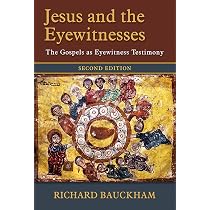
In Britain some conservative scholars, such as N.T. Wright and Richard Bauckham, have won international recognition for scholarship that doesn’t rest on these philosophical assumptions – because they have shown that when we’re not tied to the philosophical assumption that Jesus could not have risen from the dead, the historical evidence for the countercultural nature of early Christian belief in the resurrection can raise fascinating questions that scholars who are tied to the philosophical presuppositions of nineteenth-century German scholarship might never think to ask. There is compelling textual evidence to indicate that at least some of the gospel accounts were based on the recollections of eyewitnesses, they argue.
Why does all of this matter? As we enter into the Christmas season this year, we may at some point be confronted by the question of how we can continue to believe in a literal virgin birth or a literal incarnation after so much critical New Testament scholarship has been produced casting doubt on all of those beliefs. For a while, I was troubled by those questions myself. But if I know that this scholarship was based not on a dispassionate reading of the historical evidence but on philosophical assumptions that I don’t have any reason to share, I’m not as likely to find those questions very troubling. There’s good historical reason to believe that the gospel accounts of Jesus were not merely legends or myths – provided, of course, that we’re not distracted by the philosophical presuppositions that led nineteenth-century German scholars to believe that they were.
History and Religion

Next Post

November 29, 2023 The Education of Beth Moore: A Review of All My Knotted-Up Life
Recent Comments
"Every religion is "made up," even Adam and Eve were made up thousands of years ..."
Forging Druids and Inventing a Nation
"I have an identical twin, and Thomas was always the disciple I connected with most. ..."
In the Footsteps of Thomas: A ..."
"I've never thought of Constantine as a villain. Do Christians generally? Maybe the ones who ..."
"The TV sitcom BEWITCHED was an old favorite of mine"
How Scotland Gave Us Our Modern ..."
Browse Our Archives
Select a Category abolitionism Abortion Abraham Joshua Heschel Abraham Kuyper Abraham Lincoln Academia Activism Adam Renberg Advent Adventist africa African American Religion Agnes Howard Albert Camus American History American Religious History American Revolution American West Anabaptists Ancient History Andrea Turpin Andrei Tarkovsky Anglicanism Annales Ansley Lillian Quiros anti-Catholicism Antisemitism Anxious Bench apologetics Apparitions Arash Azizi Archaeology archives art Artificial Intelligence Asia Asian Americans Augustine Authors Bad Bunny Baptism Baptists Barack Obama Battle of Hastings Benjamin Franklin Bernard-Henri Levy Beth Allison Barr Beth Moore Bethany Mannon Bible Bill Cunningham Billy Graham Black Music Bob Dylan Body Boenhoffer Books Breastfeeding Bruce Springsteen C.S. Lewis Calvinism Cancel Culture Capitalism Carmelites Catholicism Cedric Robinson Cesar Chavez Charismaticism charity Charles Dickens Charles Lindbergh Che Guevara Chicago Children Chinese Christianity Chris Gehrz Christ Christian death Christian Higher Education Christian life Christian Nation Christian Nationalism Christianity Today Christmas Church life Church Practice cinema Civil Religion Civil Rights Movement Civil War civility Classics Climate Change Cold War Colonial Mexico colonialism Comer Communism community complementarianism Conference on Faith and History Congregationalism Conspiracies Conspiracy Conversion Narratives Coronavirus Costa Rica Council of Nicaea Covid-19 Creation Critical Race Theory Crusades Culture culture wars Daniel K. Williams David Barton David Swartz Death Ways death with dignity DEI democracy Democratic Party Devotion Digital Age Diplomacy discipleship diversity Donald Trump Drama Dua Lipa Early Church early modern Early modern Catholicism Easter Eastern Christianity economic exploitation Education elections Elie Wiesel Elizabeth II Elizabeth Taylor emotions Empire Engineering England enslavement Entertainment Episcopal Church Erica Ramirez eschatology Eurocentrism Evangelicalism Evangelicals Exegesis Family Feminism Film Flannery O'Connor folk music Food Foreign Policy founding fathers Franciscans Franciscus Junius fundamentalism Funerals G.K. Chesterton Gender Genocide genre geography George W. Bush George Washington George Whitefield Global Christianity Global church Grief Guadalupe guest post Guest Post gun control gun violence Gustavo Gutierrez Hamid Dabashi Harold John Ockenga Harvest Hate Hawaiian Christianity Healing health care Heather Cox Richardson Hell Heresy Hermeneutics Higher Education Hinduism Hippocratic oath Historical Fiction Historical Methodology Historical Profession Historical Profession Historical Theology Historical Thinking historiography Holidays Holocaust horror movies Human rights Humanitarian Work humanities Hummingbirds Hungary hymns Imago Dei Immigration Injustice Interviews Iran Islam Islamophobia Israel Ivan's Childhood Jacob Randolph James Bratt Janine Giordano Drake Japanese history Japanese Literature Jean Paul Sartre Jesse Miranda Jesus Jesus Christ Jimmy Carter Joan Baez Joan Didion Joanne Freeman João B. Chaves Joao Chaves Joey Cochran John Calvin John Fea John Tillotson John Turner Johnny Cash Jonathan Edwards Jonathan Tran Joseph Smith Josh Howerton Journalism Jr. Judaism Jürgen Moltmann Just War Justice Justin Brierley Karl Barth Katelyn Beaty koi ponds Kris Kristofferson Kristin Kobes Du Mez Latin American Religious History Latino Americans Lectio Divina Leisure Lent Leonard Cohen liberal arts liberalism Liberation Theology Linda Ronstadt Lisa Clark Diller Literature Lou Reed Lynchings Lynneth Miller Renberg Mainline Protestantism Malcolm Foley Marilyn Monroe Maritime history Mark Noll Marriage Martin Luther Martin Luther King Martyrdom Marxism Mary Masih Alinejad mass shootings material culture medieval Christianity Medieval Ethiopia Melissa Borja memory Mennonites Mental Health Mental Illness Methodism Mexican Americans Mexicans Mike Madrid Miles Mullin Min Jin Lee Miscarriage Missionaries Mister Rogers Mitt Romney modernity Monasticism Mormonism Motherhood Mothers of the Church Moving Music Musicals Nadya Williams Nahua Christianity Native Americans Natsume Sōseki New Contributor New England New Year New York Nico Non-Violent Protest Orthodoxy pacifism Paleo Evangelicals Palestinians Parenting Patti Smith Paul Kingsnorth Pedro Calderón de la Barca Pentecostalism Philip Jenkins Phillis Wheatley physician-assisted suicide pilgrimage Pilgrims Piracy pluralism Plutocracy Poetry Politics Pope Francis Pope Leo XIV post-modernism prayer preaching Presbyterians prosperity gospel Protest Public Executions Public history Publishing Puritans purity culture Quakers race Race Massacres Racial Capitalism racial reconciliation racialization Racism Raha Bahloulipour Re-Enchantment reading Reformation Refugees religion and the university religion and war Religious Freedom Religious Nones Religious Pluralism Religious Symbols religious violence Republican Party Revival Rita Coolidge Ritual Roger Williams Roman Catholic church Royalty Russell Moore same-sex marriage Sarah Irving-Stonebraker Scandinavia Science Science and Technology Scopes trial Scriptural Interpretation secularism Selena Quintanilla seminary Seventh-Day Adventists sexual morality Sexuality Sikhs Silence slaveholders theology Slavery Slavoj Zizek social justice Social Media Southern Baptist Convention Southern Religion Spain Spiritual Autobiography Spiritual but not religious Spiritual Discipline Sports Stanley Hauerwas Suffering Summer Camps Sunday Night Odds and Ends Supernatural Supreme Court Syriac Christianity Tal Howard Taylor Swift Teaching Technology Television Thanksgiving The Beatles The Mission theater TheoBros Theology Thomas Dixon Thomas Jefferson Thomas Kidd Thomas Merton Tim Gloege Tim Walz Tom Holland Tourism tradition Tragedy Translation Transnationalism Travel Trump Ukraine Uncategorized Unitarians United Methodist Church US History Vanessa Chan Velvet Underground Verónica A. Gutiérrez Veronica Gutierrez Vikings Violence Virgin Mary Virtue Virtue ethics Visions Voting War WCTU Wendell Berry Westminster Assembly White Evangelicalism Wildfires Winnie the Pooh Witches women Women in Ministry Women's and Gender Studies Work Worship writing Yasunari Kawabata Zena Hitz
Select a Month November 2026 October 2026 September 2026 August 2026 July 2026 June 2026 May 2026 April 2026 March 2026 February 2026 January 2026 December 2025 November 2025 October 2025 September 2025 August 2025 July 2025 June 2025 May 2025 April 2025 March 2025 February 2025 January 2025 December 2024 November 2024 October 2024 September 2024 August 2024 July 2024 June 2024 May 2024 April 2024 March 2024 February 2024 January 2024 December 2023 November 2023 October 2023 September 2023 August 2023 July 2023 June 2023 May 2023 April 2023 March 2023 February 2023 January 2023 December 2022 November 2022 October 2022 September 2022 August 2022 July 2022 June 2022 May 2022 April 2022 March 2022 February 2022 January 2022 December 2021 November 2021 October 2021 September 2021 August 2021 July 2021 June 2021 May 2021 April 2021 March 2021 February 2021 January 2021 December 2020 November 2020 October 2020 September 2020 August 2020 July 2020 June 2020 May 2020 April 2020 March 2020 February 2020 January 2020 December 2019 November 2019 October 2019 September 2019 August 2019 July 2019 June 2019 May 2019 April 2019 March 2019 February 2019 January 2019 December 2018 November 2018 October 2018 September 2018 August 2018 July 2018 June 2018 May 2018 April 2018 March 2018 February 2018 January 2018 December 2017 November 2017 October 2017 September 2017 August 2017 July 2017 June 2017 May 2017 April 2017 March 2017 February 2017 January 2017 December 2016 November 2016 October 2016 September 2016 August 2016 July 2016 June 2016 May 2016 April 2016 March 2016 February 2016 January 2016 December 2015 November 2015 October 2015 September 2015 August 2015 July 2015 June 2015 May 2015 April 2015 March 2015 February 2015 January 2015 December 2014 November 2014 October 2014 September 2014 August 2014 July 2014 June 2014 May 2014 April 2014 March 2014 February 2014 January 2014 December 2013 November 2013 October 2013 September 2013 August 2013 July 2013 June 2013 May 2013 April 2013 March 2013 February 2013 January 2013 December 2012 November 2012 October 2012 September 2012 August 2012 July 2012 June 2012 May 2012
Follow Us!
TAKE THE
Religious Wisdom Quiz
Though commanded to prophesy, I could not speak or warn the people until God opened my mouth. What affliction kept me silent?
Select your answer to see how you score.
Paralysis Fear Muteness A disease
Related posts from Anxious Bench
Paris & CT Burn 50 Years After Newsweek's...
How Should We ‘Use’ Early Christians?

What Coffee Reveals About America's Evangelical Varieties

A Casserole is Not a Counterpoint
TRENDING AT PATHEOS Evangelical

What are your dreams trying to tell you?...
Dreams can seem crazy. You’re suddenly with a person you haven’t seen...

Advent Begins in the Waiting: Preparing for Jesus
The Christmas season seems to arrive earlier every year. Before Halloween decorations...

As was predicted many years ago, the Interpreter Foundation's website is...

"Why Do Churches Talk So Much About Money?"
If you were inclined to do so, you could probably find any...

Watch and Pray: On Mark 13:33-37
Jesus said to his disciples: “Be watchful! Be alert! You do not...

Debate on Purgatory & Biblical Evidences for It
This is from a combox on my video channel, Catholic Bible Highlights....
view all Evangelical blogs
What Are Your Thoughts?leave a comment
Ad-Free & Subscriber Log-In Subscription Support
- About Us
- 2026 Calendar
- Videos
- Podcasts
- Library of World Religions
- Faith In Media Tracker
- Advertise With Us
- Write for Us
- Privacy Policy
- Terms of Service
- Do Not Sell My Data
- Contact Us
- Radiant Digital
- Manage Newsletter Subscriptions
- Unsubscribe From Notifications
- Sitemap
Copyright 2008-2026, Patheos, part of the Radiant Digital network of media brands. All rights reserved.
Subscription Support Ad-Free & Subscriber Log-In
Follow Patheos