
BuddhistCatholicContemplativeEvangelicalGeneral ChristianHinduJewishLatter-day SaintMuslimNew VisionsProgressive Christian
Beliefs
- Buddhist
- Catholic
- Contemplative
- Evangelical
- General Christian
- Hindu
- Jewish
- Latter-day Saint
- More Voices
- Muslim
- New Visions
- Pagan
- Progressive Christian
Topics
- Religion News
- Food and Religion
- Sports and Religion
- Religious Art
- Religious Music and Entertainment
- Religious Events
- History and Religion
- Style and Religion
- Politics and Religion
- Women in Religion
- Recreation Outdoors and Religion
- Business Finance and Religion
- Careers Workplace and Religion
- Education and Religion
- Family Parenting and Religion
- Health Fitness and Religion
- Home and Religion
- Relationships and Religion
- Technology and Religion
- Travel and Religion
Columnists
- Buddhist Columnists
- Business Finance and Religion Columnists
- Careers Workplace and Religion Columnists
- Catholic Columnists
- Contemplative Columnists
- Education and Religion Columnists
- Evangelists Columnists
- Family Parenting and Religion Columnists
- General Christian Columnists
- Health Fitness and Religion Columnists
- Hindu Columnists
- History and Religion Columnists
- Home and Religion Columnists
- Jewish Columnists
- More Voices Columnists
- Latter Day Columnists
- Muslim Columnists
- New Visions Columnists
- Nonreligious Columnists
- Pagan Columnists
- Politics and Religion Columnists
- Progressive Columnists
- Recreation Outdoors and Religion Columnists
- Relationships and Religion Columnists
- Religion News Columnists
- Religious Art Columnists
- Religious Events Columnists
- Religious Music and Entertainment Columnists
- Sports and Religion Columnists
- Style and Religion Columnists
- Technology and Religion Columnists
- Travel and Religion Columnists
- Women in Religion Columnists
Resource Library
- 2026 Calendar
- Library of World Religions
- The 100 Most Holy Places on Earth
- Patheos Answers
- Podcasts
- Videos
- Faith Leaders Database
- Anglican Episcopalian
- Bahai
- Baptist
- Buddhism
- Christianity
- Confucianism
- Eastern Orthodoxy
- Hinduism
- Holiness and Pentecostal
- ISKCON
- Islam
- Judaism
- Lutheran
- Methodist
- The Church of Jesus Christ of Latter-day Saints
- New Age
- Paganism
- Presbytarian and Reformed
- Protestantism
- Religion Behind the Scenes
- Roman Catholic
- Scientology
- Shia Islam
- Sikhism
- Sufism
- Sunni Islam
- Taoism
- Zen
- See all religions
Research Tools
 Ad-Free & Subscriber Log-In Subscription Support
Ad-Free & Subscriber Log-In Subscription Support
Follow Patheos 

- Trending:
- Forgiveness
- |
- Marriage
- |
- Consciousness
- |
- Death Penalty
- |
- Election
- |
- Halloween

-
About the Authors
- Home
- Evangelical
- Why A Founding Father of Communism Has Some Really Worthwhile Things to Say About Early Christianity
Why A Founding Father of Communism Has Some Really Worthwhile Things to Say About Early Christianity
Last updated on: September 8, 2022 at 12:48 am by Philip Jenkins
Why A Founding Father of Communism Has Some Really Worthwhile Things to Say About Early Christianity 2022-09-05T12:50:41-04:00 Philip Jenkins
Patheos Explore the world's faith through different perspectives on religion and spirituality! Patheos has the views of the prevalent religions and spiritualities of the world.
There is an odd but very useful source on early Christianity that even now remains strangely unfamiliar to many writers on that topic. Even less known is the discussion by a totally unexpected nineteenth century source, which provides many insights that are still valuable. There is great material here for the sociology of religion, in any era.
In the late second century, the pagan satirist Lucian wrote the story of one Peregrinus, who died in the 160s. (He ultimately burned himself alive). Lucian presents Peregrinus as a Cynic, a rogue pseudo-philosopher who wanders from city to city, exploiting the gullible. For our purposes, there is a remarkable section when he is taken up by local Christians, who assume he has been persecuted for his faith in Christ. He lives very well off them until he moves on yet again. This is one of the few pagan sources of the period to mention Christians in any detail, even from a hostile point of view. (Some modern scholars treat Peregrinus’s Christian career much more seriously).
No less interesting, though, is the use of this story by Friedrich Engels, the partner and patron of Karl Marx. Engels had a deep interest in early Christianity as a social movement. Although he was a deadly enemy of the churches, he respected early Christianity as an authentic voice of the poor, before it was co-opted by the state and the institutional church. I should also say that his comments on these topics can actually be … well, pretty funny.
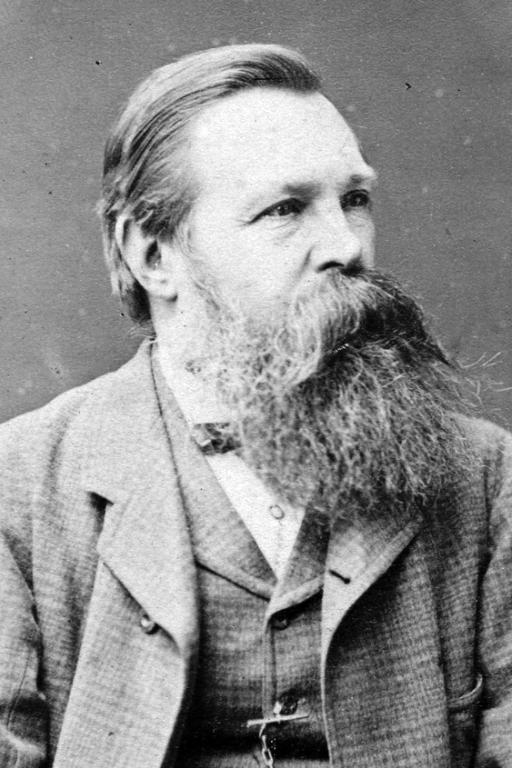
In the 1890s, Engels used the story of Peregrinus to frame that early situation. Remarkably, he was not using Lucian to depict Christians as fools, and he drew quite startling parallels between those early believers and the radical Left of his own day. In both eras, he says, there were dedicated activists for the poor, but if they were not careful, they tended to slide off into hare-brained schemes, and to fall for the manipulation of deceivers, tricksters, grifters, confidence tricksters, and what we might call cult-leaders.
In both eras, con-men could go a long way before being found out. A little apocalyptic preaching went a long way. It even helped when people began to find out what you were up to, as it was easy enough to dismiss charges against you as the result of the lying plots of an evil world. And as the radical movement developed, so it attracted flaky eccentrics who pinned their particular causes on the true doctrine of the mainstream movement.
Engels’s attitude to the early church fooled by Peregrinus is a sympathetic “Oh my, you also had to deal with rogues like that even way back then?” Engels himself can remember meeting people like Peregrinus in the leftist underground of nineteenth century Europe, which had plenty of would-be prophets and self-proclaimed messiahs.
Engels made no claims to be fair and balanced on this or any topic, but his account does ring true for the developmental stages of many new and emerging religious movements.
The Adventures of Peregrinus
You can read Engels’s account in full, but let me offer an excerpt here. Engels writes:
[Lucian] relates among other things the life-story of a certain adventurous Peregrinus, Proteus by name, from Parium in Hellespontus. When a youth, this Peregrinus made his début in Armenia by committing fornication. He was caught in the act and [nearly] lynched according to the custom of the country. He was fortunate enough to escape and after strangling his father in Parium he had to flee.
“And so it happened … that he also came to hear of the astonishing learning of the Christians, with whose priests and scribes he had cultivated intercourse in Palestine. He made such progress in a short time that his teachers were like children compared with him. He became a prophet, an elder, a master of the synagogue, in a word, all in everything. He interpreted their writings and himself wrote a great number of works, so that finally people saw in him a superior being, let him lay down laws for them and made him their overseer (bishop) …. On that ground (i.e., because he was a Christian) Proteus was at length arrested by the authorities and thrown into prison….
“As he thus lay in chains, the Christians, who saw in his capture a great misfortune, made all possible attempts to free him. But they did not succeed. Then they administered to him in all possible ways with the greatest solicitude. As early as daybreak one could see aged mothers, widows and young orphans crowding at the door of his prison; the most prominent among the Christians even bribed the warders and spent whole nights with him; they took their meals with them and read their holy books in his presence; briefly, the beloved Peregrinus” (he still went by that name) “was no less to them than a new Socrates. Envoys of Christian communities came to him even from towns in Asia Minor to lend him a helping hand, to console him and to testify in his favor in court.
“It is unbelievable how quick these people are to act whenever it is a question of their community; they immediately spare neither exertion nor expense. And thus from all sides money then poured in to Peregrinus so that his imprisonment became for him a source of great income. For the poor people persuaded themselves that they were immortal in body and in soul and that they would live for all eternity; that was why, they scorned death and many of them even voluntarily written by his sacrificed their lives. Then their most prominent lawgiver convinced them that they would all be brothers one to another once they were converted, i.e., renounced the Greek gods, professed faith in the crucified sophist and lived according to his prescriptions. That is why they despise all material goods without distinction and own them in common — doctrines which they have accepted in good faith, without demonstration or proof. And when a skilful imposter who knows how to make clever use of circumstances comes to them he can manage to get rich in a short time and laugh up his sleeve over these simpletons. For the rest, Peregrinus was set free by him who was then prefect of Syria.”
Then, after a few more adventures,
“Our worthy set forth a second time” (from Parium) “on his peregrinations, the Christians’ good disposition standing him in lieu of money for his journey: they administered to his needs everywhere and never let him suffer want. He was fed for a time in this way. But then, when he violated the laws of the Christians too — I think he was caught eating of some forbidden food — they excommunicated him from their community.”
A World of Cults and Cult-Leaders
Engels then offers his own interpretations, from his own time, where he finds lots of parallel cases. We note the near-total overlap between religious and political movements, a world of radical political networks, communes, and apocalyptic believers. We could be talking about the US at the same time, or indeed, around 1970. A cultural/spiritual explosion had created a perfect environment for an unscrupulous political/spiritual entrepreneur, and they saw rich opportunities. As Sammy Davis jr. sang in Sweet Charity,
Daddy, there’s a million pigeons
Waiting to be hooked on new religions.
This is what Engels tells us – and you don’t have to get every passing reference to people and movements to get the idea:
What memories of youth come to my mind as I read this passage from Lucian! First of all the “prophet Albrecht” who from about 1840 literally plundered the Weitling communist communities in Switzerland for several years — a tall powerful man with a long beard who wandered on foot through Switzerland and gathered audiences for his mysterious new Gospel of world emancipation, but who, after all, seems to have been a tolerably harmless hoaxer and soon died.
Then his not so harmless successor, “the doctor” Georg Kuhlmann from Holstein, who put to profit the time when Weitling was in prison to convert the communities of French Switzerland to his own Gospel, and for a time with such success that he even caught August Becker, by far the cleverest but also the biggest ne’er-do-well among them. This Kuhlmann used to deliver lectures to them which were published in Geneva in 1845 under the title The New World, or the Kingdom of the Spirit on Earth: Proclamation. In the introduction, supporters (probably August Becker) we read:
“What was needed was a man on whose lips all our sufferings and all our longings and hopes, in a word, all that affects our time most profoundly should find expression …. This man, whom our time was waiting for, has come. He is the doctor Georg Kuhlmann from Holstein. He has come forward with the doctrine of the new world or the kingdom of the spirit in reality”
I hardly need to add that this doctrine of the new world is nothing more than the most vulgar sentimental nonsense rendered in half-biblical expressions a la Lamennais and declaimed with prophet-like arrogance. But this did not prevent the good Weitlingers from carrying the swindler shoulder-high as the Asian Christians once did Peregrinus. They who were otherwise arch-democrats and extreme equalitarians to the extent of fostering ineradicable suspicion against any schoolmaster, journalist, and any man generally who was not a manual worker as being an “erudite” who was out to exploit them, let themselves be persuaded by the melodramatically arrayed Kuhlman that in the “New World” it would be the wisest of all, ie, Kuhlmann, who would regulate the distribution of pleasures and that therefore, even then, in the Old World, the disciples ought to bring pleasures by the bushel to that same wisest of all while they themselves should be content with crumbs.
So Peregrinus Kuhlmann lived a splendid life of pleasure at the expense of the community — as long as it lasted. It did not last very long, of course; the growing murmurs of doubters and unbelievers and the menace of persecution by the Vaudois Government put an end to the “Kingdom of the Spirit” in Lausanne — Kuhlmann disappeared.
This is a classic portrait of a nineteenth century messianic cult leader, the main novelty being that this is in Europe: that sort of character is much more familiar to us from the American situation. If you read German, there’s a detailed account of Kuhlmann’s career here.
Religious Fringe Movements Through History
Engels continues:
Everybody who has known by experience the European working-class movement in its beginnings will remember dozens of similar examples.
Today such extreme cases, at least in the large centers, have become impossible; but in remote districts where the movement has won new ground a small Peregrinus of this kind can still count on a temporary limited success. And just as all those who have nothing to look forward to from the official world or have come to the end of their tether with it — opponents of inoculation, supporters of abstemiousness, vegetarians, anti-vivisectionists, nature-healers, free-community preachers whose communities have fallen to pieces, authors of new theories on the origin of the universe, unsuccessful or unfortunate inventors, victims of real or imaginary injustice who are termed “good-for-nothing pettifoggers” by all bureaucracy, honest fools and dishonest swindlers — all throng to the working-class parties in all countries — so it was with the first Christians.
Hmm, “opponents of inoculation,” or as we might know them, anti-vaxxers – surely such strange people don’t exist in modern times?
All the elements which had been set free, i.e., at a loose end, by the dissolution of the old world came one after the other into the orbit of Christianity as the only element that resisted that process of dissolution — for the very reason that it was the necessary product of that process — and that therefore persisted and grew while the other elements were but ephemeral flies. There was no fanaticism, no foolishness, no scheming that did not flock to the young Christian communities and did not at least for a time and in isolated places find attentive ears and willing believers.
It sounds just like the American 1960s and 1970s, doesn’t it?
As a historian, Engels had the enormous virtue of moving outside the library, to understand early Christianity though his own lived experience in the nineteenth century radical Socialist underground. He knew exactly what it was like to operate in a clandestine transnational movement of the lower class. Both were under constant observation by the police, and you never knew exactly who might be a spy or informer.
Engels and The Early Christians
Oddly, given his strongly anti-religious opinions, Engels had something like a love for the early Christians, and he imagines talking to them as fellow-sufferers who came from exactly the same kind of setting. As he writes,
The history of early Christianity has notable points of resemblance with the modern working-class movement. Like the latter, Christianity was originally a movement of oppressed people: it first appeared as the religion of slaves and emancipated slaves, of poor people deprived of all rights, of peoples subjugated or dispersed by Rome. Both Christianity and the workers’ socialism preach forthcoming salvation from bondage and misery; Christianity places this salvation in a life beyond, after death, in heaven; socialism places it in this world, in a transformation of society. Both are persecuted and baited, their adherents are despised and made the objects of exclusive laws, the former as enemies of the human race, the latter as enemies of the state, enemies of religion, the family, social order.
Engels uses a quote from Ernest Renan: “If I wanted to give you an idea of the early Christian communities, I would tell you to look at a local section of the International Working Men’s Association.” [The so-called First International]
Hah! says Engels. What can a mere academic know about the everyday details of that kind of life?
I should like to see the old “International” who can read, for example, the so-called Second Epistle of Paul to the Corinthians without old-wounds re-opening, at least in one respect. The whole epistle, from chapter eight onwards, echoes the eternal, and oh! so well-known complaint: “les cotisations ne rentrent pas” — contributions are not coming in! How many of the most zealous propagandists of the [eighteen-]sixties would sympathizingly squeeze the hand of the author of that epistle, whoever he may be, and whisper: “So it was like that with you too!” We too — Corinthians were legion in our Association — can sing a song about contributions not coming in but tantalizing us as they floated elusively before our eyes.
More seriously, his comments on the turbulent early Christian world merit quotation:
In fact, the struggle against a world that at the beginning was superior in force, and at the same time against [amongst?] the innovators themselves, is common to the early Christians and the Socialists. Neither of these two great movements were made by leaders or prophets — although there are prophets enough among both of them — they are mass movements. And mass movements are bound to be confused at the beginning; confused because the thinking of the masses at first moves among contradictions, lack of clarity and lack of cohesion, and also because of the role that prophets still play in them at the beginning. This confusion is to be seen in the formation of numerous sects which right against one another with at least the same zeal as against the common external enemy.
So it was with early Christianity, so it was in the beginning of the socialist movement, no matter how much that worried the well-meaning worthies who preached unity where no unity was possible.
Beyond noting parallels and echoes, Engels is making the vital point that these were the ways that insurgent apocalyptic and millenarian movements tended to act, and the problems they tended to face – all the sectarianism, the credulity, and the cultish behavior. You don’t have to agree with every one of Engels’s comments and criticisms, but the whole piece is well worth reading, and indeed eye-opening, for reading the New Testament.
Ben Jones discussed Engels in his recent Apocalypse Without God : Apocalyptic thought, ideal politics, and the limits of Utopian hope (Cambridge University Press, 2022).
I am adapting this material from blogs published on this site many aeons ago.
Previous Post
September 7, 2022
The Myth of Racial Reconciliation
Next Post
September 9, 2022 Historians and the Supernatural
Browse Our Archives
Select a Category abolitionism Abortion Abraham Joshua Heschel Abraham Kuyper Abraham Lincoln Academia Activism Adam Renberg Advent Adventist africa African American Religion Agnes Howard Albert Camus American History American Religious History American Revolution American West Anabaptists Ancient History Andrea Turpin Andrei Tarkovsky Anglicanism Annales Ansley Lillian Quiros anti-Catholicism Antisemitism Anxious Bench apologetics Apparitions Arash Azizi Archaeology archives art Artificial Intelligence Asia Asian Americans Augustine Authors Bad Bunny Baptism Baptists Barack Obama Battle of Hastings Benjamin Franklin Bernard-Henri Levy Beth Allison Barr Beth Moore Bethany Mannon Bible Bill Cunningham Billy Graham Black Music Bob Dylan Body Boenhoffer Books Breastfeeding Bruce Springsteen C.S. Lewis Calvinism Cancel Culture Capitalism Carmelites Catholicism Cedric Robinson Cesar Chavez Charismaticism charity Charles Dickens Charles Lindbergh Che Guevara Chicago Children Chinese Christianity Chris Gehrz Christ Christian death Christian Higher Education Christian life Christian Nation Christian Nationalism Christianity Today Christmas Church life Church Practice cinema Civil Religion Civil Rights Movement Civil War civility Classics Climate Change Cold War Colonial Mexico colonialism Comer Communism community complementarianism Conference on Faith and History Congregationalism Conspiracies Conspiracy Conversion Narratives Coronavirus Costa Rica Council of Nicaea Covid-19 Creation Critical Race Theory Crusades Culture culture wars Daniel K. Williams David Barton David Swartz Death Ways death with dignity DEI democracy Democratic Party Devotion Digital Age Diplomacy discipleship diversity Donald Trump Drama Dua Lipa Early Church early modern Early modern Catholicism Easter Eastern Christianity economic exploitation Education elections Elie Wiesel Elizabeth II Elizabeth Taylor emotions Empire Engineering England enslavement Entertainment Episcopal Church Erica Ramirez eschatology Eurocentrism Evangelicalism Evangelicals Exegesis Family Feminism Film Flannery O'Connor folk music Food Foreign Policy founding fathers Franciscans Franciscus Junius fundamentalism Funerals G.K. Chesterton Gender Genocide genre geography George W. Bush George Washington George Whitefield Global Christianity Global church Grief Guadalupe Guest Post guest post gun control gun violence Gustavo Gutierrez Hamid Dabashi Harold John Ockenga Harvest Hate Hawaiian Christianity Healing health care Heather Cox Richardson Hell Heresy Hermeneutics Higher Education Hinduism Hippocratic oath Historical Fiction Historical Methodology Historical Profession Historical Profession Historical Theology Historical Thinking historiography Holidays Holocaust horror movies Human rights Humanitarian Work humanities Hummingbirds Hungary hymns Imago Dei Immigration Injustice Interviews Iran Islam Islamophobia Israel Ivan's Childhood Jacob Randolph James Bratt Janine Giordano Drake Japanese history Japanese Literature Jean Paul Sartre Jesse Miranda Jesus Jesus Christ Jimmy Carter Joan Baez Joan Didion Joanne Freeman João B. Chaves Joao Chaves Joey Cochran John Calvin John Fea John Tillotson John Turner Johnny Cash Jonathan Edwards Jonathan Tran Joseph Smith Josh Howerton Journalism Jr. Judaism Jürgen Moltmann Just War Justice Justin Brierley Karl Barth Katelyn Beaty koi ponds Kris Kristofferson Kristin Kobes Du Mez Latin American Religious History Latino Americans Lectio Divina Leisure Lent Leonard Cohen liberal arts liberalism Liberation Theology Linda Ronstadt Lisa Clark Diller Literature Lou Reed Lynchings Lynneth Miller Renberg Mainline Protestantism Malcolm Foley Marilyn Monroe Maritime history Mark Noll Marriage Martin Luther Martin Luther King Martyrdom Marxism Mary Masih Alinejad mass shootings material culture medieval Christianity Medieval Ethiopia Melissa Borja memory Mennonites Mental Health Mental Illness Methodism Mexican Americans Mexicans Mike Madrid Miles Mullin Min Jin Lee Miscarriage Missionaries Mister Rogers Mitt Romney modernity Monasticism Mormonism Motherhood Mothers of the Church Moving Music Musicals Nadya Williams Nahua Christianity Native Americans Natsume Sōseki New Contributor New England New Year New York Nico Non-Violent Protest Orthodoxy pacifism Paleo Evangelicals Palestinians Parenting Patti Smith Paul Kingsnorth Pedro Calderón de la Barca Pentecostalism Philip Jenkins Phillis Wheatley physician-assisted suicide pilgrimage Pilgrims pluralism Plutocracy Poetry Politics Pope Francis Pope Leo XIV post-modernism prayer preaching Presbyterians prosperity gospel Protest Public history Publishing Puritans purity culture Quakers race Race Massacres Racial Capitalism racial reconciliation racialization Racism Raha Bahloulipour Re-Enchantment reading Reformation Refugees religion and the university religion and war Religious Freedom Religious Nones Religious Pluralism Religious Symbols religious violence Republican Party Revival Rita Coolidge Ritual Roger Williams Roman Catholic church Royalty Russell Moore same-sex marriage Sarah Irving-Stonebraker Scandinavia Science Science and Technology Scopes trial Scriptural Interpretation secularism Selena Quintanilla seminary Seventh-Day Adventists sexual morality Sexuality Sikhs Silence slaveholders theology Slavery Slavoj Zizek social justice Social Media Southern Baptist Convention Southern Religion Spain Spiritual Autobiography Spiritual but not religious Spiritual Discipline Sports Stanley Hauerwas Suffering Summer Camps Sunday Night Odds and Ends Supernatural Supreme Court Syriac Christianity Tal Howard Taylor Swift Teaching Technology Television Thanksgiving The Beatles The Mission theater TheoBros Theology Thomas Dixon Thomas Jefferson Thomas Kidd Thomas Merton Tim Gloege Tim Walz Tom Holland Tourism tradition Tragedy Translation Transnationalism Travel Trump Ukraine Uncategorized Unitarians United Methodist Church US History Vanessa Chan Velvet Underground Verónica A. Gutiérrez Veronica Gutierrez Vikings Violence Virgin Mary Virtue Virtue ethics Visions Voting War WCTU Wendell Berry Westminster Assembly White Evangelicalism Wildfires Winnie the Pooh Witches women Women in Ministry Women's and Gender Studies Work Worship writing Yasunari Kawabata Zena Hitz
Select a Month October 2026 September 2026 August 2026 July 2026 June 2026 May 2026 April 2026 March 2026 February 2026 January 2026 December 2025 November 2025 October 2025 September 2025 August 2025 July 2025 June 2025 May 2025 April 2025 March 2025 February 2025 January 2025 December 2024 November 2024 October 2024 September 2024 August 2024 July 2024 June 2024 May 2024 April 2024 March 2024 February 2024 January 2024 December 2023 November 2023 October 2023 September 2023 August 2023 July 2023 June 2023 May 2023 April 2023 March 2023 February 2023 January 2023 December 2022 November 2022 October 2022 September 2022 August 2022 July 2022 June 2022 May 2022 April 2022 March 2022 February 2022 January 2022 December 2021 November 2021 October 2021 September 2021 August 2021 July 2021 June 2021 May 2021 April 2021 March 2021 February 2021 January 2021 December 2020 November 2020 October 2020 September 2020 August 2020 July 2020 June 2020 May 2020 April 2020 March 2020 February 2020 January 2020 December 2019 November 2019 October 2019 September 2019 August 2019 July 2019 June 2019 May 2019 April 2019 March 2019 February 2019 January 2019 December 2018 November 2018 October 2018 September 2018 August 2018 July 2018 June 2018 May 2018 April 2018 March 2018 February 2018 January 2018 December 2017 November 2017 October 2017 September 2017 August 2017 July 2017 June 2017 May 2017 April 2017 March 2017 February 2017 January 2017 December 2016 November 2016 October 2016 September 2016 August 2016 July 2016 June 2016 May 2016 April 2016 March 2016 February 2016 January 2016 December 2015 November 2015 October 2015 September 2015 August 2015 July 2015 June 2015 May 2015 April 2015 March 2015 February 2015 January 2015 December 2014 November 2014 October 2014 September 2014 August 2014 July 2014 June 2014 May 2014 April 2014 March 2014 February 2014 January 2014 December 2013 November 2013 October 2013 September 2013 August 2013 July 2013 June 2013 May 2013 April 2013 March 2013 February 2013 January 2013 December 2012 November 2012 October 2012 September 2012 August 2012 July 2012 June 2012 May 2012
Follow Us!
TAKE THE
Religious Wisdom Quiz
Who said, "Here I am, send me!"?
Select your answer to see how you score.
Moses Elijah Peter Isaiah
Related posts from Anxious Bench

Fairies, Witches, Folk Horror, and the Secret Commonwealth

Hogg’s Justified Sinner: A Gothic Classic for Halloween

James Hogg, Weird Wives, and Feminist Witches

How an Explosive Book Rewrote the Study of...
TRENDING AT PATHEOS Evangelical

In "Irreplaceable," our book on vocation and technology, Trevor Sutton and I...

I was strolling through the top floor of the brand new Parthenon...

What Does Gêvâh Mean For Kimberley Guifoyle &...
This week, a lot of the news is focused on Kimberly Guilfoyle....

INNER CIRCLE: Profound Mystery (Of Christ In All...
Ephesians 5:31-32 “For this reason, a man will leave his father and...

Do Not Rejoice When Your Enemy Falls: The...
Turning an execution into a public spectacle is a disturbing expression of...

'The Chosen' S6 Trailer: The Passion Gets Very...
Not many watching 'The Chosen' worry about spoilers, but just because they...
view all Evangelical blogs
Ad-Free & Subscriber Log-In Subscription Support
- About Us
- 2026 Calendar
- Videos
- Podcasts
- Library of World Religions
- Faith In Media Tracker
- Advertise With Us
- Write for Us
- Privacy Policy
- Terms of Service
- Do Not Sell My Data
- Contact Us
- Radiant Digital
- Manage Newsletter Subscriptions
- Unsubscribe From Notifications
- Sitemap
Copyright 2008-2026, Patheos. All rights reserved.
Subscription Support Ad-Free & Subscriber Log-In
Follow Patheos