
BuddhistCatholicContemplativeEvangelicalGeneral ChristianHinduJewishLatter-day SaintMuslimNew VisionsProgressive Christian
Beliefs
- Buddhist
- Catholic
- Contemplative
- Evangelical
- General Christian
- Hindu
- Jewish
- Latter-day Saint
- More Voices
- Muslim
- New Visions
- Pagan
- Progressive Christian
Topics
- Religion News
- Food and Religion
- Sports and Religion
- Religious Art
- Religious Music and Entertainment
- Religious Events
- History and Religion
- Style and Religion
- Politics and Religion
- Women in Religion
- Recreation Outdoors and Religion
- Business Finance and Religion
- Careers Workplace and Religion
- Education and Religion
- Family Parenting and Religion
- Health Fitness and Religion
- Home and Religion
- Relationships and Religion
- Technology and Religion
- Travel and Religion
Columnists
- Buddhist Columnists
- Business Finance and Religion Columnists
- Careers Workplace and Religion Columnists
- Catholic Columnists
- Contemplative Columnists
- Education and Religion Columnists
- Evangelists Columnists
- Family Parenting and Religion Columnists
- General Christian Columnists
- Health Fitness and Religion Columnists
- Hindu Columnists
- History and Religion Columnists
- Home and Religion Columnists
- Jewish Columnists
- More Voices Columnists
- Latter Day Columnists
- Muslim Columnists
- New Visions Columnists
- Nonreligious Columnists
- Pagan Columnists
- Politics and Religion Columnists
- Progressive Columnists
- Recreation Outdoors and Religion Columnists
- Relationships and Religion Columnists
- Religion News Columnists
- Religious Art Columnists
- Religious Events Columnists
- Religious Music and Entertainment Columnists
- Sports and Religion Columnists
- Style and Religion Columnists
- Technology and Religion Columnists
- Travel and Religion Columnists
- Women in Religion Columnists
Resource Library
- 2026 Calendar
- Library of World Religions
- The 100 Most Holy Places on Earth
- Patheos Answers
- Podcasts
- Videos
- Faith Leaders Database
- Anglican Episcopalian
- Bahai
- Baptist
- Buddhism
- Christianity
- Confucianism
- Eastern Orthodoxy
- Hinduism
- Holiness and Pentecostal
- ISKCON
- Islam
- Judaism
- Lutheran
- Methodist
- The Church of Jesus Christ of Latter-day Saints
- New Age
- Paganism
- Presbytarian and Reformed
- Protestantism
- Religion Behind the Scenes
- Roman Catholic
- Scientology
- Shia Islam
- Sikhism
- Sufism
- Sunni Islam
- Taoism
- Zen
- See all religions
Research Tools
 Ad-Free & Subscriber Log-In Subscription Support
Ad-Free & Subscriber Log-In Subscription Support
Follow Patheos 

- Trending:
- Forgiveness
- |
- Marriage
- |
- Consciousness
- |
- Death Penalty
- |
- Election
- |
- Halloween

-
About the Authors
- Home
- Evangelical
- The Irenic Spirit of a Pilgrim Historian
The Irenic Spirit of a Pilgrim Historian
Last updated on: July 27, 2022 at 4:03 pm by Joey Cochran
The Irenic Spirit of a Pilgrim Historian 2022-07-27T16:03:00-04:00 Joey Cochran
Patheos Explore the world's faith through different perspectives on religion and spirituality! Patheos has the views of the prevalent religions and spiritualities of the world.

I have been a reader of the Anxious Bench since its beginning. The first post from Thomas Kidd that caught my attention was Slavery, Historical Heroes, and “Precious Puritans.” So when the Anxious Bench approached me about becoming “blogmeister,” I was thrilled.
I immediately felt the weight of responsibility for editing the Anxious Bench, and a little bit of anxiety too, especially concerning what my first post would be. The first post sets a tone. It reflects and projects what to expect from a contributor.
I dug through the archive to see what previous contributing editors, Kidd and Gehrz, wrote for their first contributions. Kidd’s first post, Ross Douthat’s Vanishing Christian Center, interacted with cultural commentary from a conservative New York Times columnist and functioned as public theology and philosophy—hinting towards Kidd’s alignment to political, social, and theological conservatism. I wasn’t terribly surprised by his post. However, I noted it offered no runway or introduction concerning himself or this new blog.
Gehrz published two posts his first day on the Bench: British Christians Debate Brexit and How Christians Can Love Their LGBT Neighbors? Start by Learning Their History. Both posts commented on present social and cultural crises, engaging them at the intersection of faith and history. In contrast to Kidd’s first post, Gehrz introduced his personality and perspective. He conveyed his role as a historical interpreter, and he approached these topics from his vantage point.
After observing the tactics of two outstanding historians, I entered into an internal wrestling concerning my first post. After the mental dust settled, I decided to write a methodological post, rather than dive into contemporary social commentary.
Truthfully, even as the events of yet another mass shooting took place, within an hour of my Chicagoland home, I called this tactic into question. Nonetheless, I think this is a wise decision. I would rather write a well researched response concerning the history of mass shootings, after having laboriously studied the long history of gun violence in America, rather than subject myself to shooting from the hip, if you will, by publishing a piece of punditry.
This tactic, of writing a methodological post, commends the vital idea that the historical enterprise is a personal enterprise that demands personal, patient reflection. Topics discussed by contributors at the Anxious Bench reflect their expertise and interests. Otherwise, this blog becomes a gaggle of pundits purveying ideological takes. That won’t do. I agree with John Turner’s recent assertion and parting caution. “The Anxious Bench isn’t an ideological blog.” Rather, our first-class scholars deliver incisive observations and commentary from the advantage of their expertise.
Second, with any shift in leadership, people want to know what else might shift. They seek a vision of what may be. No doubt this is the case for our regular readers, current contributors, and any potential contributors we wish to attract to this site.
Thus, it makes sense to offer a methodological reflection of what I hope the Anxious Bench will offer for readers in years to come. The span of this reflection will be three posts in length. It will follow a Western historical trajectory, one that mirrors the historical development and evolution of the Anxious Bench contributors and contributions.
Following a Western historical trajectory respects the historical integrity of what has been. Without endorsing this vector, it recognizes its reality. I do not wish to reinvent a historical past with a fictional revisionist history. Rather, we must reckon with what has been and how it must yet advance.
While the Anxious Bench’s beginning was White, male, and Western centered, it has evolved over time and will continue to do so. All the components necessary for continued progress are already present. The vision is a continued trajectory towards a global and diverse historical perspective.
To sum up, I hope our contributors will champion the irenic spirt of a pilgrim historian.
An Irenic Spirit
One of my Summer reading goals has been to dive deeper into the life and works of the late sixteenth-century Reformed Orthodox Scholastic, Franciscus Junius. I have been reading an English translation of A Treatise on True Theology (De Theologia Vera), while picking through parts of Tobias Sarx, Franciscus Junius d.Ä. (1545–1602) and Junius’s Eirenicum de pace ecclesiæ catholic.
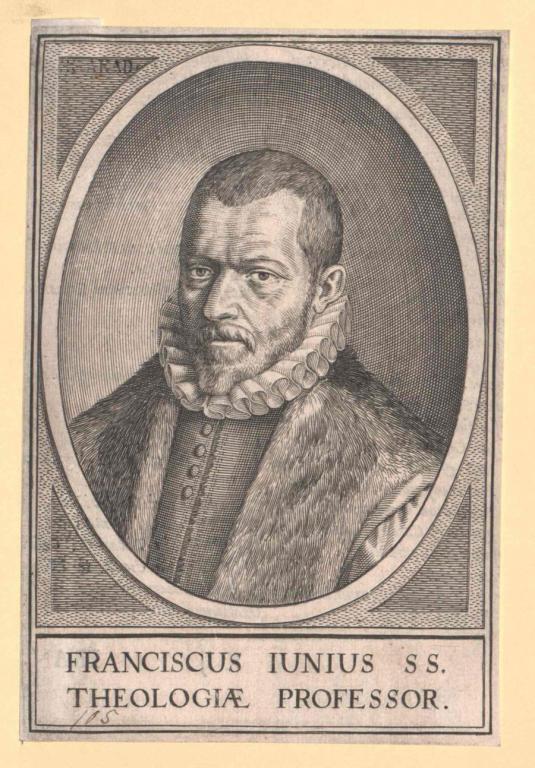 My foray into studying Junius has been fruitful. It facilitated reflection on the significance of irenic historical work, and the importance of producing a faithful prolegomena to historical methodology, what I call pilgrim history.
Many readers may be unfamiliar with Junius. Franciscus Junius was professor of theology at the University of Leiden from 1592 until his death in 1602.
He was such an eminent theologian that King Henry IV of France invited him to Paris to provide theological council on Protestant affairs in 1591. Bear in mind, this is prior to that Protestant Bourbon King’s conversion to Catholicism in March of 1593 and the Edict of Nantes in 1598. If you recall, the Edict of Nantes provided religious toleration for Protestant citizens of Catholic France.
An even more interesting anecdote about Junius’s connections concerns a theologian he met at the wedding of Geertje Jacobsdochter in 1596. During the wedding banquet, Junius had a rousing discussion about the doctrine of predestination with one Jacob Arminius. The two proceeded to carry on confidential correspondence for the next seven years.
Upon Junius’s death, Arminius succeeded him as professor of theology at Leiden. Later, his ideas became subject to censure. 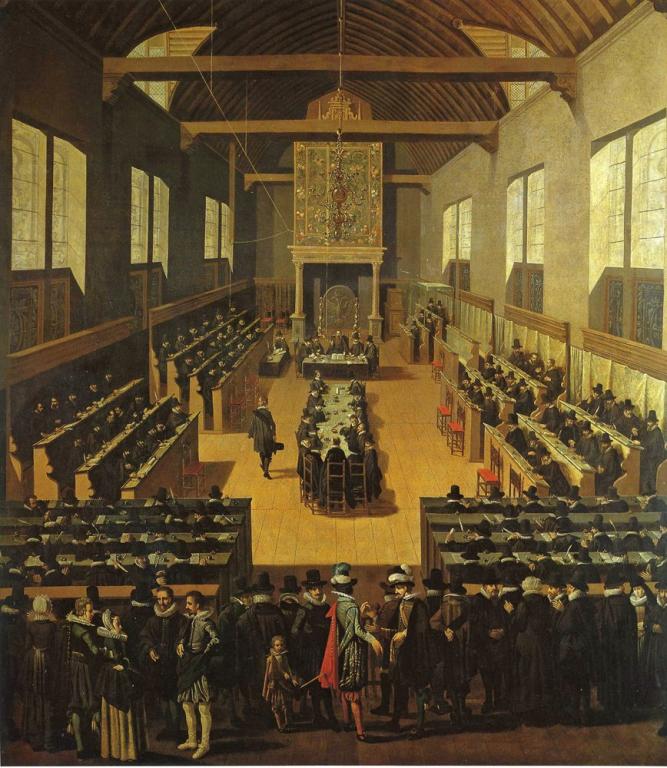 The Dutch Synod of Dordt, convened in 1619, codified Reformed Orthodoxy’s view of the doctrines of grace, and stifled the spread of Jacob Arminius’s ideas across Europe and the Atlantic. (Yes! The same year a Dutch slaver delivered a cargo of slaves to Jamestown.)
These two anecdotes hint towards the ecumenical and irenic spirit of Junius. He leveraged his theological acumen for public service to the King of France, and he patiently engaged in respectful disputation and theological reflection with an ideological opponent for years.
Junius, as public theologian, provides what I think is a fitting moral and social model for public historians, one which is worthy of mimesis (imitation). However, I think he offers even more from a methodological standpoint.
Pilgrim History
In his prolegomena of theology, A Treatise on True Theology, Junius popularized the concepts of archetypal and ectypal theology for the Protestant tradition. He subdivided theology into two divisions, which boil down to the notion that the finitude of human nature cannot comprehend the infinity of God (finitum non capax infiniti).
There is the knowledge of God in Godself that is only knowable to Godself, and there is knowledge of God that is communicated to humanity. Junius categorized the communicable, ectypal theology with three genus: 1) union with Christ (unione), 2) vision of the beatified (visione), and 3) revelation to the pilgrim (revelatione viator).
For the first class, there is knowledge of God privileged to the Son by virtue of his union to the Father. Even so, it should be noted that the human nature of the Son partakes in a limited knowledge of what the Father knows (ectypal theologie).
Likewise, the second class, the angels in heaven and triumphal saints, partake in a limited knowledge of what God knows. Their union with Christ and participation in the beatific vision privileges them with special knowledge and revelation of God. Yet, there are limits to their theological knowing as well.
The third class, pilgrims or viators, are members of the militant church on earth. Their theological knowing is removed yet one more step; of the three, pilgrims are rational creatures at the greatest disadvantage of knowing what God knows.
While some might express chagrin that the Son of God’s knowledge of God is limited, the veracity of this taxonomy can be verified by Matthew 24:36: “But about that day or hour no one knows, not even the angels in heaven, nor the Son, but only the Father.” Here we see Junius’s taxonomy at work: pilgrims (no one), the beatified (angels), and the Son do not know what only the Father knows.
I find Junius’s taxonomy to be suggestive for Christian historians. It invites Christian historians to conceive themselves as pilgrims on a journey to recover the past, to make its memory knowable to others. Configuring knowability of the past (history) with the same categories relieves pressure for historians to do the impossible, know everything and have absolute certainty about their knowability.
This taxonomy also gives pilgrim historians something to look forward to, a future hope fulfilled. They will participate in past knowing as beatified, triumphal saints, alongside the angels. Though there will be things hidden from them for which “they will long to look,” as revelation unfolds, they will watch it unfold on earth. Aspects of their past knowing will gain new clarity that comes only through the advantage of being beatified and a partaker in union with Christ. I expect a beatified historical imagination exists at a higher degree of excellence than a pilgrim’s historical imagination.
The Opportunity of Pilgrim History
The concept of pilgrim history invites historians to see themselves as those who have entered into the journey of classical Christianity. (I am more inclined to use the terminology of classical Christianity rather than the slippery and fraught terminology of evangelical Christianity.) As such, pilgrim historians 1) see themselves as pilgrims, 2) see past Christian historical figures as pilgrims, and 3) see other past historians as pilgrims.
Pilgrim historians see themselves as pilgrims. Embracing the identity of a pilgrim historian makes room for historical complexity. It also creates space for a pilgrim historian to develop as a historian. Pilgrim historians foster historical virtues, such as temperance and courage—two virtues that function complementary to one another.
Pilgrim historians see past Christian historical figures as pilgrims. This proposition aligns with Junius’s own assessment of redeemed humans in his theological prolegomena. The notion that past Christian historical figures are pilgrims invites historians to consider those subjects sympathetically and respectfully, in a similar manner to how one rightfully honors dead saints as a cloud of witnesses.
Pilgrim historians see other past historians as pilgrims. Each pilgrim historian looks to past pilgrim historians as pilgrims, recognizing their limitations and uncertainty. This, then, sets a fitting expectation on the self to admit to historical factual errors, which may have been made or revisit one’s own or another’s misconstrued historical interpretations. It resets expectations for how to treat past historical subjects.
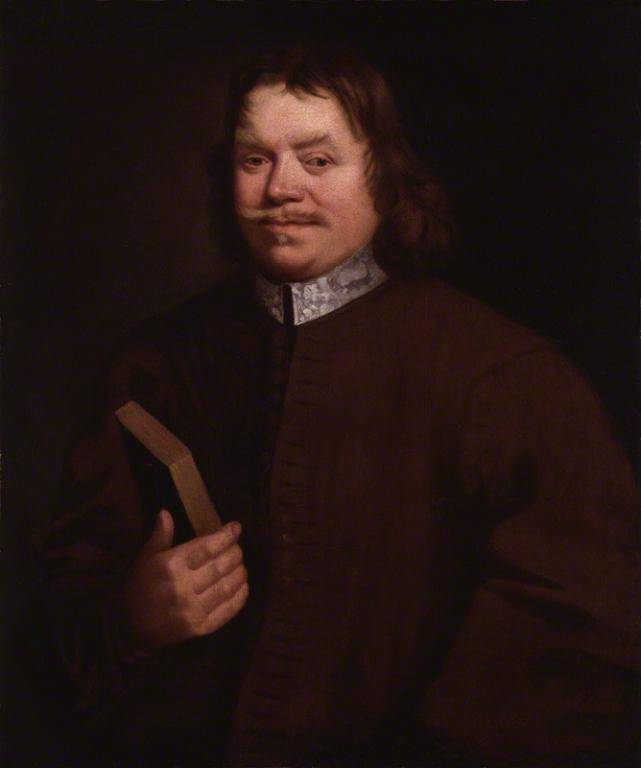 No doubt, as I have conveyed the idea of pilgrim history, I have conjured for some readers plot elements from John Bunyan’s The Pilgrim’s Progress. This is no accident. While this post functions as an introduction to pilgrim history, my next post will turn to a successor of Franciscus Junius, who popularized the idea of the viator (pilgrim). John Bunyan made pilgrim theology concrete and portable through his wildly popular publication, The Pilgrim’s Progress, an allegory about the figure of a pilgrim named Christian.
In my next post, I will discuss the print history of The Pilgrim’s Progress, the editorial development of its second part, concerning the pilgrimage of Pilgrim’s spouse, and how this text and its ideas migrated to the British Colonies and around the world.
You see, pilgrims are women too, and pilgrim history has welcomed women into the fold. Just as Thomas Kidd did when he invited Beth Barr to contribute at the Anxious Bench.
But the story does not end there. The Pilgrim’s Progress was one of the many works that influence a literary successor of Bunyan, America’s first African-American woman poet, Phillis Wheatley, who I will take up as the subject of my third post.
I hope readers recognize the trajectory and potential pilgrim history has for globally trafficking the values of diversity, in gender and race, for historical studies and leadership. These values will continually flourish at the Anxious Bench in coming years.
Previous Post

July 5, 2022
Welcome to our New Editor!
Next Post

July 7, 2022 Of Image Breakers, Snake Handlers, and the Art of Naming
Browse Our Archives
Select a Category abolitionism Abortion Abraham Joshua Heschel Abraham Kuyper Abraham Lincoln Academia Activism Adam Renberg Advent Adventist africa African American Religion Agnes Howard Albert Camus American History American Religious History American Revolution American West Anabaptists Ancient History Andrea Turpin Andrei Tarkovsky Anglicanism Annales Ansley Lillian Quiros anti-Catholicism Antisemitism Anxious Bench apologetics Apparitions Arash Azizi Archaeology archives art Artificial Intelligence Asia Asian Americans Augustine Authors Bad Bunny Baptism Baptists Barack Obama Battle of Hastings Benjamin Franklin Bernard-Henri Levy Beth Allison Barr Beth Moore Bethany Mannon Bible Bill Cunningham Billy Graham Black Music Bob Dylan Body Boenhoffer Books Breastfeeding Bruce Springsteen C.S. Lewis Calvinism Cancel Culture Capitalism Carmelites Catholicism Cedric Robinson Cesar Chavez Charismaticism charity Charles Dickens Charles Lindbergh Che Guevara Chicago Children Chinese Christianity Chris Gehrz Christ Christian death Christian Higher Education Christian life Christian Nation Christian Nationalism Christianity Today Christmas Church life Church Practice cinema Civil Religion Civil Rights Movement Civil War civility Classics Climate Change Cold War Colonial Mexico colonialism Comer Communism community complementarianism Conference on Faith and History Congregationalism Conspiracies Conspiracy Conversion Narratives Coronavirus Costa Rica Council of Nicaea Covid-19 Creation Critical Race Theory Crusades Culture culture wars Daniel K. Williams David Barton David Swartz Death Ways death with dignity DEI democracy Democratic Party Devotion Digital Age Diplomacy discipleship diversity Donald Trump Drama Dua Lipa Early Church early modern Early modern Catholicism Easter Eastern Christianity economic exploitation Education elections Elie Wiesel Elizabeth II Elizabeth Taylor emotions Empire Engineering England enslavement Entertainment Episcopal Church Erica Ramirez eschatology Eurocentrism Evangelicalism Evangelicals Exegesis Family Feminism Film Flannery O'Connor folk music Food Foreign Policy founding fathers Franciscans Franciscus Junius fundamentalism Funerals G.K. Chesterton Gender Genocide genre geography George W. Bush George Washington George Whitefield Global Christianity Global church Grief Guadalupe Guest Post guest post gun control gun violence Gustavo Gutierrez Hamid Dabashi Harold John Ockenga Harvest Hate Hawaiian Christianity Healing health care Heather Cox Richardson Hell Heresy Hermeneutics Higher Education Hinduism Hippocratic oath Historical Fiction Historical Methodology Historical Profession Historical Profession Historical Theology Historical Thinking historiography Holidays Holocaust horror movies Human rights Humanitarian Work humanities Hummingbirds Hungary hymns Imago Dei Immigration Injustice Interviews Iran Islam Islamophobia Israel Ivan's Childhood Jacob Randolph James Bratt Janine Giordano Drake Japanese history Japanese Literature Jean Paul Sartre Jesse Miranda Jesus Jesus Christ Jimmy Carter Joan Baez Joan Didion Joanne Freeman João B. Chaves Joao Chaves Joey Cochran John Calvin John Fea John Tillotson John Turner Johnny Cash Jonathan Edwards Jonathan Tran Joseph Smith Josh Howerton Journalism Jr. Judaism Jürgen Moltmann Just War Justice Justin Brierley Karl Barth Katelyn Beaty koi ponds Kris Kristofferson Kristin Kobes Du Mez Latin American Religious History Latino Americans Lectio Divina Leisure Lent Leonard Cohen liberal arts liberalism Liberation Theology Linda Ronstadt Lisa Clark Diller Literature Lou Reed Lynchings Lynneth Miller Renberg Mainline Protestantism Malcolm Foley Marilyn Monroe Maritime history Mark Noll Marriage Martin Luther Martin Luther King Martyrdom Marxism Mary Masih Alinejad mass shootings material culture medieval Christianity Medieval Ethiopia Melissa Borja memory Mennonites Mental Health Mental Illness Methodism Mexican Americans Mexicans Mike Madrid Miles Mullin Min Jin Lee Miscarriage Missionaries Mister Rogers Mitt Romney modernity Monasticism Mormonism Motherhood Mothers of the Church Moving Music Musicals Nadya Williams Nahua Christianity Native Americans Natsume Sōseki New Contributor New England New Year New York Nico Non-Violent Protest Orthodoxy pacifism Paleo Evangelicals Palestinians Parenting Patti Smith Paul Kingsnorth Pedro Calderón de la Barca Pentecostalism Philip Jenkins Phillis Wheatley physician-assisted suicide pilgrimage Pilgrims pluralism Plutocracy Poetry Politics Pope Francis Pope Leo XIV post-modernism prayer preaching Presbyterians prosperity gospel Protest Public history Publishing Puritans purity culture Quakers race Race Massacres Racial Capitalism racial reconciliation racialization Racism Raha Bahloulipour Re-Enchantment reading Reformation Refugees religion and the university religion and war Religious Freedom Religious Nones Religious Pluralism Religious Symbols religious violence Republican Party Revival Rita Coolidge Ritual Roger Williams Roman Catholic church Royalty Russell Moore same-sex marriage Sarah Irving-Stonebraker Scandinavia Science Science and Technology Scopes trial Scriptural Interpretation secularism Selena Quintanilla seminary Seventh-Day Adventists sexual morality Sexuality Sikhs Silence slaveholders theology Slavery Slavoj Zizek social justice Social Media Southern Baptist Convention Southern Religion Spain Spiritual Autobiography Spiritual but not religious Spiritual Discipline Sports Stanley Hauerwas Suffering Summer Camps Sunday Night Odds and Ends Supernatural Supreme Court Syriac Christianity Tal Howard Taylor Swift Teaching Technology Television Thanksgiving The Beatles The Mission theater TheoBros Theology Thomas Dixon Thomas Jefferson Thomas Kidd Thomas Merton Tim Gloege Tim Walz Tom Holland Tourism tradition Tragedy Translation Transnationalism Travel Trump Ukraine Uncategorized Unitarians United Methodist Church US History Vanessa Chan Velvet Underground Verónica A. Gutiérrez Veronica Gutierrez Vikings Violence Virgin Mary Virtue Virtue ethics Visions Voting War WCTU Wendell Berry Westminster Assembly White Evangelicalism Wildfires Winnie the Pooh Witches women Women in Ministry Women's and Gender Studies Work Worship writing Yasunari Kawabata Zena Hitz
Select a Month October 2026 September 2026 August 2026 July 2026 June 2026 May 2026 April 2026 March 2026 February 2026 January 2026 December 2025 November 2025 October 2025 September 2025 August 2025 July 2025 June 2025 May 2025 April 2025 March 2025 February 2025 January 2025 December 2024 November 2024 October 2024 September 2024 August 2024 July 2024 June 2024 May 2024 April 2024 March 2024 February 2024 January 2024 December 2023 November 2023 October 2023 September 2023 August 2023 July 2023 June 2023 May 2023 April 2023 March 2023 February 2023 January 2023 December 2022 November 2022 October 2022 September 2022 August 2022 July 2022 June 2022 May 2022 April 2022 March 2022 February 2022 January 2022 December 2021 November 2021 October 2021 September 2021 August 2021 July 2021 June 2021 May 2021 April 2021 March 2021 February 2021 January 2021 December 2020 November 2020 October 2020 September 2020 August 2020 July 2020 June 2020 May 2020 April 2020 March 2020 February 2020 January 2020 December 2019 November 2019 October 2019 September 2019 August 2019 July 2019 June 2019 May 2019 April 2019 March 2019 February 2019 January 2019 December 2018 November 2018 October 2018 September 2018 August 2018 July 2018 June 2018 May 2018 April 2018 March 2018 February 2018 January 2018 December 2017 November 2017 October 2017 September 2017 August 2017 July 2017 June 2017 May 2017 April 2017 March 2017 February 2017 January 2017 December 2016 November 2016 October 2016 September 2016 August 2016 July 2016 June 2016 May 2016 April 2016 March 2016 February 2016 January 2016 December 2015 November 2015 October 2015 September 2015 August 2015 July 2015 June 2015 May 2015 April 2015 March 2015 February 2015 January 2015 December 2014 November 2014 October 2014 September 2014 August 2014 July 2014 June 2014 May 2014 April 2014 March 2014 February 2014 January 2014 December 2013 November 2013 October 2013 September 2013 August 2013 July 2013 June 2013 May 2013 April 2013 March 2013 February 2013 January 2013 December 2012 November 2012 October 2012 September 2012 August 2012 July 2012 June 2012 May 2012
Follow Us!
TAKE THE
Religious Wisdom Quiz
What continent was the birthplace of Christianity?
Select your answer to see how you score.
Europe Asia Africa Australia
Related posts from Anxious Bench

What Coffee Reveals About America's Evangelical Varieties

Emulating Odysseus? Ancient History and Modern Politics
The Evangelical Brand Image Crisis
TRENDING AT PATHEOS Evangelical

Emotion in Early Christianity by Andrew Crislip
Andrew Crislip’s Emotion in Early Christianity examines an often overlooked dimension of...

16 Spiritual Touchstones for a More Grounded Life
After decades of spiritual study, here are 16 principles I try...

Catholic Evangelization: Sharing Your Faith Every Day
Welcome back to the Graceful Awakening mini-series called, “From Faith to Mission.” ...

The Pillar of the Boatmen: the Ancient Monument...
The Pillar of the Boatmen is a Romano-Gaulish sculpture that dates from...

In one sense walking into Westminster Abbey is like walking down the...

'Super Scam Me' Exposes AI Jon Bon Jovi...
Leslie Pickett believed she was in a relationship with Jon Bon Jovi....
view all Evangelical blogs
Ad-Free & Subscriber Log-In Subscription Support
- About Us
- 2026 Calendar
- Videos
- Podcasts
- Library of World Religions
- Faith In Media Tracker
- Advertise With Us
- Write for Us
- Privacy Policy
- Terms of Service
- Do Not Sell My Data
- Contact Us
- Radiant Digital
- Manage Newsletter Subscriptions
- Unsubscribe From Notifications
- Sitemap
Copyright 2008-2026, Patheos. All rights reserved.
Subscription Support Ad-Free & Subscriber Log-In
Follow Patheos