
BuddhistCatholicContemplativeEvangelicalGeneral ChristianHinduJewishLatter-day SaintMuslimNew VisionsProgressive Christian
Beliefs
- Buddhist
- Catholic
- Contemplative
- Evangelical
- General Christian
- Hindu
- Jewish
- Latter-day Saint
- More Voices
- Muslim
- New Visions
- Pagan
- Progressive Christian
Topics
- Religion News
- Food and Religion
- Sports and Religion
- Religious Art
- Religious Music and Entertainment
- Religious Events
- History and Religion
- Style and Religion
- Politics and Religion
- Women in Religion
- Recreation Outdoors and Religion
- Business Finance and Religion
- Careers Workplace and Religion
- Education and Religion
- Family Parenting and Religion
- Health Fitness and Religion
- Home and Religion
- Relationships and Religion
- Technology and Religion
- Travel and Religion
Columnists
- Buddhist Columnists
- Business Finance and Religion Columnists
- Careers Workplace and Religion Columnists
- Catholic Columnists
- Contemplative Columnists
- Education and Religion Columnists
- Evangelists Columnists
- Family Parenting and Religion Columnists
- General Christian Columnists
- Health Fitness and Religion Columnists
- Hindu Columnists
- History and Religion Columnists
- Home and Religion Columnists
- Jewish Columnists
- More Voices Columnists
- Latter Day Columnists
- Muslim Columnists
- New Visions Columnists
- Nonreligious Columnists
- Pagan Columnists
- Politics and Religion Columnists
- Progressive Columnists
- Recreation Outdoors and Religion Columnists
- Relationships and Religion Columnists
- Religion News Columnists
- Religious Art Columnists
- Religious Events Columnists
- Religious Music and Entertainment Columnists
- Sports and Religion Columnists
- Style and Religion Columnists
- Technology and Religion Columnists
- Travel and Religion Columnists
- Women in Religion Columnists
Resource Library
- 2026 Calendar
- Library of World Religions
- The 100 Most Holy Places on Earth
- Patheos Answers
- Podcasts
- Videos
- Faith Leaders Database
- Anglican Episcopalian
- Bahai
- Baptist
- Buddhism
- Christianity
- Confucianism
- Eastern Orthodoxy
- Hinduism
- Holiness and Pentecostal
- ISKCON
- Islam
- Judaism
- Lutheran
- Methodist
- The Church of Jesus Christ of Latter-day Saints
- New Age
- Paganism
- Presbytarian and Reformed
- Protestantism
- Religion Behind the Scenes
- Roman Catholic
- Scientology
- Shia Islam
- Sikhism
- Sufism
- Sunni Islam
- Taoism
- Zen
- See all religions
Research Tools
 Ad-Free & Subscriber Log-In Subscription Support
Ad-Free & Subscriber Log-In Subscription Support
Follow Patheos 

- Trending:
- Forgiveness
- |
- Marriage
- |
- Consciousness
- |
- Death Penalty
- |
- Election
- |
- Halloween

-
About the Authors
- Home
- Evangelical
- The Biblical Potency, Cultural Fluency, and Fluidity of Pilgrim History
The Biblical Potency, Cultural Fluency, and Fluidity of Pilgrim History
Last updated on: July 12, 2022 at 3:07 pm by Joey Cochran
The Biblical Potency, Cultural Fluency, and Fluidity of Pilgrim History 2022-07-12T15:07:10-04:00 Joey Cochran
Patheos Explore the world's faith through different perspectives on religion and spirituality! Patheos has the views of the prevalent religions and spiritualities of the world.
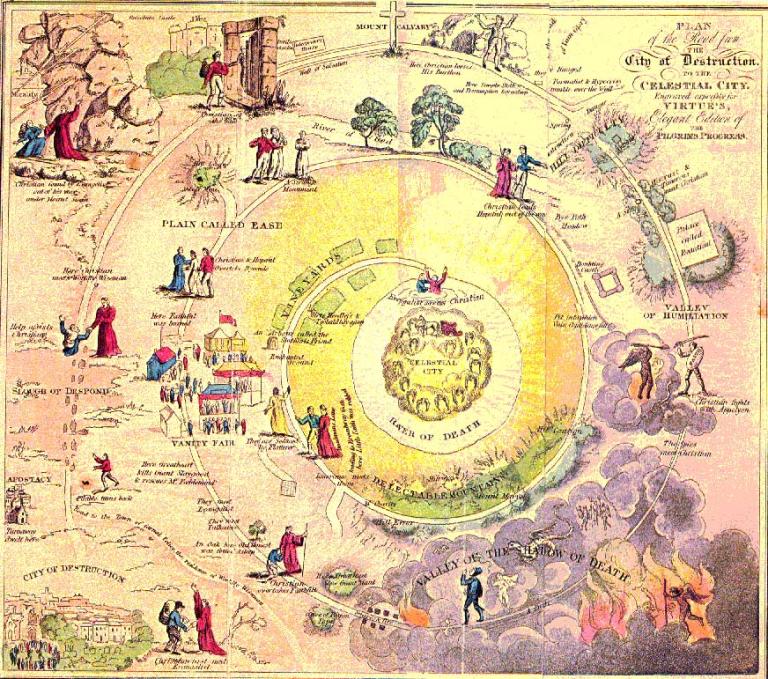
My mother nurtured the vital habit of literacy in me from an early age. She daily read children’s books to me, and we frequented the public library, so I could participate in a story-hour for children. I have fond memories from childhood of floating in an innertube in our backyard pool and reading The Three Investigators, The Hardy Boys, or one of the many series of fantasy fiction books I enjoyed.
When I became interested in spiritual matters my sophomore year in high school, I exchanged a voracious appetite for profane literature for an interest in “godly reading.” I made a list of Christian books to read. I binged quite a bit of C. S. Lewis in those early days of spiritual growth. I also recall reading In His Steps by Charles Sheldon.
Yet, no book captured my imagination and resonated with my prior taste for fantasy literature like The Pilgrim’s Progress. I do not recall what edition of The Pilgrim’s Progress I read. I recollect that it was abridged and its English was modernized. To this day, The Pilgrim’s Progress is one of the most significant books I have read. It is on the short list of books I recommend to new believers. If you have not read it, I commend it to you. I recommend either the Penguin Classics version, edited and introduced by Roger Pooley; the Oxford World’s Classics version, edited with an introduction and notes by W. R. Owens; or the Audible adaption narrated by David Shaw-Parker.
The Popularity of The Pilgrim’s Progress
Among books published and printed in the English language, aside the Bible, The Pilgrim’s Progress scarcely has its equal. John Bunyan’s classic has never been out of print. The phenomenal success of this publication is only compounded by the conditions of its composition and the surprising gifts of its composer. Though it is one of the most read books in the English language, I will not assume you are familiar with this text or its author, so here is a brief summary on its background and publication.
John Bunyan (1628–88) served in Cromwell’s New Model Army during the English Civil War and married his first wife a couple years after the war’s resolution. Descended from a yeoman class family and trained as a tinker, Bunyan fell under deep conviction for his sin, while listening to the conversation of pious women in the backstreet of Bedford. A full account of his conversion story can be read from his autobiography, Grace Abounding to the Chief of Sinners (1666). He joined Bedford Free Church and under the mentoring of its pastor, John Gifford, he began to preach at the church and in the countryside. Having no formal education, he published his first publication in 1656, a polemic against Quakerism called Gospel Truths Opened. With the restoration of the Stuart monarchy in 1660, King Charles II committed to a policy that suppressed non-conformity. Even prior to the 1662 Act of Uniformity, Bunyan was arrested for transgressing the Conventicle Act of 1593. He remained in prison for twelve years until the king issued a declaration of indulgence in 1672. This indulgence increased religious toleration for non-conformists like Bunyan, who was released from prison that May.
During his long imprisonment, John Bunyan penned this classic allegory of the Christian faith, The Pilgrim’s Progress. It was printed in 1678 for Nathaniel Ponder at the Peacock in the Poultry near Cornhil in London. In the following years, its popularity and creative compositional style drew many readers to discuss and interpret its meaning. Others elaborated on the text and created aberrant revisions of the work.
In 1681, The Pilgrim’s Progress was printed for the first time in North America and translated and published for a Dutch audience. Since others had created unauthorized expansions and editions of his text, Bunyan found it necessary to expand his publication with a second authorized part in 1684.
The Plot of The Pilgrim’s Progress
 The original publication of The Pilgrim’s Progress followed the story of Christian, who upon reading from the book and listening to Evangelist, followed Evangelist’s instruction and fled the City of Destruction. He traveled to the Wicket Gate and received further instruction from the Interpreter. Pilgrim had his burden removed when he looked upon the Crucified One. The Shining Ones clothed him in new garments, gave him a scroll, and marked him on his forehead. He traveled along the Narrow Way, finding rest and relief at various stages. On his journey, he traveled with companions, encountered counterfeit pilgrims, and combated enemies, until he finally crossed the River of Death and reached the Celestial City.
Michael Davies, in The Oxford Handbook of John Bunyan, remarks that one reason for the popularity of The Pilgrim’s Progress is Bunyan’s innovative technique to integrate Scripture into allegory. He comments:
Like an immersive virtual world, everything we see rendered imaginatively upon its pages—its landscapes, conversations, and people, as lifelike as they appear to be at times—is constructed from the informational building blocks of Scripture. This is a text programmed, as it were, in biblical ‘code’. Reading The Pilgrim’s Progress can, then, be like walking through the Bible itself: artfully rearranged and homiletically expounded; disguised as fiction but revealed as ‘Truth’ by characters who encounter scriptural quotations as objects to be held or beheld and who, like figures in Puritan guidebooks, address us ‘Dialogue-wise’, at times as imitations of humanity and at others as animated concordances (249).
The second part of The Pilgrim’s Progress picks up the story of Christiana and her children. When Christian flees the City of Destruction, he abandoned his wife and children. Some scholars have connected this plot line to a parallel in the real life of John Bunyan, whose wife and children had to support themselves for a dozen years while he languished in prison. Christiana is accompanied on her journey with Mercie and other travel companions. Most notable among them is their escort Great-Heart.
In her contribution to The Oxford Companion of John Bunyan, Margaret Olofson Thickstun provides an incisive analysis of the cultural and gender dynamics within the second part of Bunyan’s tale (308–24). She demonstrates how Bunyan offered a major corrective in his second part. In part one, Christian’s journey is emblematic of the individual experience of conversion and sanctification. Part two’s corrective emphasizes how the pilgrimage to the Celestial City is best done in community. Great-Heart fulfills the role of a pastor guiding a church to the Celestial City. Throughout part two, Bunyan focused more attention to the existence of house churches at places of respite and the refreshment pilgrim’s experienced in Christian community.
The role of women and children in the pilgrimage fit within the cultural dynamic of Puritan patriarchy and the English Common Law system of Coverture. Though the plot development revolves around Christiana and her children being reunited with Christian at the Celestial City, she and her children function as the supporting cast to the male stars. It’s these noble male pilgrims: Great-Heart, Valiant-for-Truth, and Stand-Fast, who stand out in the narrative, while weaker members of the group like Ready-to-Halt, Feeble-Mind, Despondency, and Much-Afraid play foils to the quintessential male figures of the group.
Margaret Sönser Breen suggests that the text emphasizes an oral culture rather than a literate culture for women. Throughout part two, Scripture is mediated by the men of the party. These men guide the women, who are weaker in frame and given to fancy. Kathleen M. Swaim’s interpretation of the second part masterfully conveys the tropes of domesticity and female subordination. Her work, Pilgrim’s Progress: Discourses and Contexts, situates the scholarship of Puritan femininity from Amanda Porterfield and Laurel Thatcher Ulrich within the specific case of The Pilgrim’s Progress.
The Portability of The Pilgrim’s Progress
These two parts of The Pilgrim’s Progress have been edited, abridged, translated, and adapted in hundreds of ways and for multiple mediums for nearly 350 years.
Isabel Rivers tracked the print story of this work during the eighteenth-century in her Vanity Fair and the Celestial City: Dissenting, Methodist, and Evangelical Literary Culture in England 1720–1800 (see especially 136–44). This story involves the calvinistical and methodistical contest waged through a print war of editions of The Pilgrim’s Progress. Rivers recounts how various editors bowdlerized the text to reflect their own theological inclinations concerning the doctrine of justification*.*
This contest was initiated by John Wesley. Wesley has been rightly credited as the organizer of revivalism in the eighteenth century, but perhaps not enough credit has been attributed to him for being a print genius of revivalism. His network of pastor-colporteurs and his ability to abridge texts into affordable tracts, for mass public consumption, spread a hunger for godly literacy and revival throughout the English-speaking world.
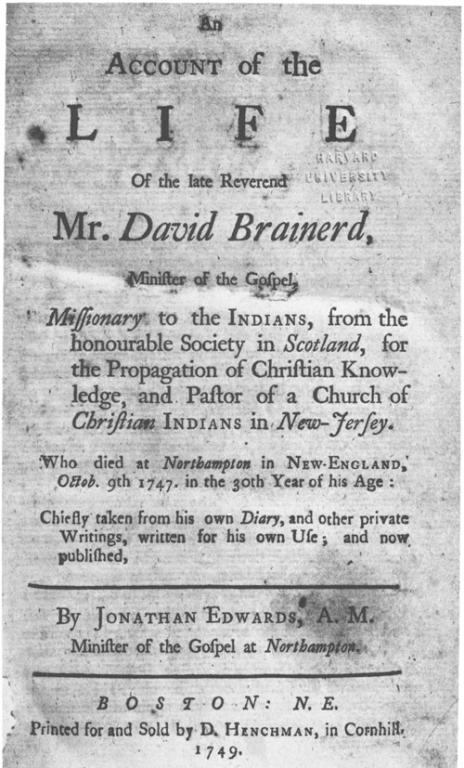 Isabel Rivers makes a notable connection between two great works in the Christian tradition that Wesley championed with wide print circulation. If Wesley believed The Pilgrim’s Progress was a significant text for stimulating the spiritual lives of everyday Christians, he believed The Life of David Brainerd was the signal text for stimulating itinerant preaching ministers and global missions. Rivers observes the magic behind the Life of David Brainerd is how he portrayed his spiritual journey as a pilgrim. Brainerd’s published diary provided a concrete example of Bunyan’s allegory. Rivers says, “The importance of Brainerd for Wesley and his preachers, which went beyond his importance for Edwards, was that he was an itinerant: he was a literal stranger and pilgrim who resisted the temptations of place, possessions, and family” (203).
Isabel Hofmeyr’s The Portable Bunyan continues the story of the global spread of The Pilgrim’s Progress by recounting its translation and distribution throughout Africa in the nineteenth century. She argues that the book’s portability lies in its folktale like qualities and its capacity to function as both godly literature and magical fetish for Africans. In other words, it’s a text that thrived cross-culturally because of its qualities to syncretize with pre-existing cultural values in Africa. Hofmeyr asserts, “It was not so much a book as an environment, a set of orientations, a language, and a currency shared by most evangelicals. The evangelical energy that drove the dissemination of The Pilgrim’s Progress ‘at home’ simultaneously led to the book’s propagation and translation in other parts of the globe” (61).
Biblical Potency, Cultural Fluency, and Fluidity of Pilgrim History
In my last essay, I adapted the theological prolegomena of Franciscus Junius in order to cast a vision for pilgrim history. This essay has presented the popularity, plot, and portability of The Pilgrim’s Progress to exhibit how the idea of pilgrim history has a similar potential for widespread circulation and reception. The elements that distinguished John Bunyan’s creative allegory as a Christian spiritual classic are vital components of pilgrim history.
The Pilgrim’s Progress possessed biblical potency for its readers. Scripture came alive to its readers through vivid, figural similitude. Readers had to possess some level of biblical fluency to interpret the story’s meaning, and its creative rendering of Scripture whet reader’s appetites for Holy Writ. Since Christian history is the history of the development of Scriptural interpretations, pilgrim historians must possess a savvy fluency of Scripture.
However, a pilgrim historian must also distinguish biblical scripts from cultural scripts. Pilgrim historians must be deft and fluent in biblical and cultural exegesis. They must rightly divide between the Word of God and the world that has been constructed by men.
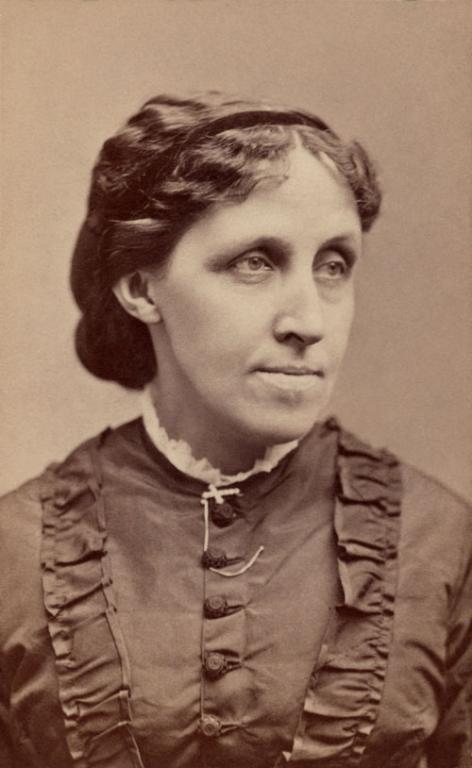 John Bunyan’s The Pilgrim’s Progress reflected cultural values of Puritan patriarchy that confined women to a world of domesticity. He would have been shocked by Louisa May Alcott’s Little Women, who pilgrimaged as giant and dragon slayers from the basement to the attic. Sadly, our modern film dramatizations have not faithfully depicted Alcott’s ample allusions and appropriation of The Pilgrim’s Progress. And it is not happenstance that the skilled pilgrim historian, Laurel Thatcher Ulrich, published a cultural and social history of pious women in New England under the same title of Louisa May Alcott’s sequel, Good Wives.
Thankfully, with their fascination for Bunyan’s The Pilgrim’s Progress, historians like Ulrich, Porterfield, Rivers, Hofmeyr, Swaim, Breen, and Thickstun long have been blazing a trail for pilgrims*.* These historians have devoted time and energy into distinguishing when the Bible speaks and when men speak.
The Pilgrim’s Progress functioned as a culturally adaptable and fluid text that has possessed a portability, which spans time and space. Unlike Bunyan’s Great-Heart, who could be none other than a male pastor, women readily function as pilgrim historians. Women historians stopped being sidelined and silenced long ago.
Sadly, I still encounter women, who earnestly believe they have to function like a submissive and subordinate Christiana. I also come across men, who follow the fiery conviction, that only men can be Great-Hearts in the fields of history and ministry.
We need more women set free to guide other pilgrims on a journey through time and space. We need women who employ the Sword of the Spirit to reveal the genuine intentions of Talkative’s heart. We need women who navigate pilgrims along the narrow way between the deep ditch and the quagmire, through Vanity Fair, and to the Celestial City. And we need more men to encourage, welcome, and validate our sisters, who are skilled, equipped, and ready to guide pilgrims through history.
The Anxious Bench will continue to champion these values in years to come.
The Oxford Handbook of John Bunyan
Previous Post

July 7, 2022
Of Image Breakers, Snake Handlers, and the Art of Naming
Next Post
July 13, 2022 The Virtues Have Been Canceled: Life in a Post-Virtue World
Browse Our Archives
Select a Category abolitionism Abortion Abraham Joshua Heschel Abraham Kuyper Abraham Lincoln Academia Activism Adam Renberg Advent Adventist africa African American Religion Agnes Howard Albert Camus American History American Religious History American Revolution American West Anabaptists Ancient History Andrea Turpin Andrei Tarkovsky Anglicanism Annales Ansley Lillian Quiros anti-Catholicism Antisemitism Anxious Bench apologetics Apparitions Arash Azizi Archaeology archives art Artificial Intelligence Asia Asian Americans Augustine Authors Bad Bunny Baptism Baptists Barack Obama Battle of Hastings Benjamin Franklin Bernard-Henri Levy Beth Allison Barr Beth Moore Bethany Mannon Bible Bill Cunningham Billy Graham Black Music Bob Dylan Body Boenhoffer Books Breastfeeding Bruce Springsteen C.S. Lewis Calvinism Cancel Culture Capitalism Carmelites Catholicism Cedric Robinson Cesar Chavez Charismaticism charity Charles Dickens Charles Lindbergh Che Guevara Chicago Children Chinese Christianity Chris Gehrz Christ Christian death Christian Higher Education Christian life Christian Nation Christian Nationalism Christianity Today Christmas Church life Church Practice cinema Civil Religion Civil Rights Movement Civil War civility Classics Climate Change Cold War Colonial Mexico colonialism Comer Communism community complementarianism Conference on Faith and History Congregationalism Conspiracies Conspiracy Conversion Narratives Coronavirus Costa Rica Council of Nicaea Covid-19 Creation Critical Race Theory Crusades Culture culture wars Daniel K. Williams David Barton David Swartz Death Ways death with dignity DEI democracy Democratic Party Devotion Digital Age Diplomacy discipleship diversity Donald Trump Drama Dua Lipa Early Church early modern Early modern Catholicism Easter Eastern Christianity economic exploitation Education elections Elie Wiesel Elizabeth II Elizabeth Taylor emotions Empire Engineering England enslavement Entertainment Episcopal Church Erica Ramirez eschatology Eurocentrism Evangelicalism Evangelicals Exegesis Family Feminism Film Flannery O'Connor folk music Food Foreign Policy founding fathers Franciscans Franciscus Junius fundamentalism Funerals G.K. Chesterton Gender Genocide genre geography George W. Bush George Washington George Whitefield Global Christianity Global church Grief Guadalupe Guest Post guest post gun control gun violence Gustavo Gutierrez Hamid Dabashi Harold John Ockenga Harvest Hate Hawaiian Christianity Healing health care Heather Cox Richardson Hell Heresy Hermeneutics Higher Education Hinduism Hippocratic oath Historical Fiction Historical Methodology Historical Profession Historical Profession Historical Theology Historical Thinking historiography Holidays Holocaust horror movies Human rights Humanitarian Work humanities Hummingbirds Hungary hymns Imago Dei Immigration Injustice Interviews Iran Islam Islamophobia Israel Ivan's Childhood Jacob Randolph James Bratt Janine Giordano Drake Japanese history Japanese Literature Jean Paul Sartre Jesse Miranda Jesus Jesus Christ Jimmy Carter Joan Baez Joan Didion Joanne Freeman João B. Chaves Joao Chaves Joey Cochran John Calvin John Fea John Tillotson John Turner Johnny Cash Jonathan Edwards Jonathan Tran Joseph Smith Josh Howerton Journalism Jr. Judaism Jürgen Moltmann Just War Justice Justin Brierley Karl Barth Katelyn Beaty koi ponds Kris Kristofferson Kristin Kobes Du Mez Latin American Religious History Latino Americans Lectio Divina Leisure Lent Leonard Cohen liberal arts liberalism Liberation Theology Linda Ronstadt Lisa Clark Diller Literature Lou Reed Lynchings Lynneth Miller Renberg Mainline Protestantism Malcolm Foley Marilyn Monroe Maritime history Mark Noll Marriage Martin Luther Martin Luther King Martyrdom Marxism Mary Masih Alinejad mass shootings material culture medieval Christianity Medieval Ethiopia Melissa Borja memory Mennonites Mental Health Mental Illness Methodism Mexican Americans Mexicans Mike Madrid Miles Mullin Min Jin Lee Miscarriage Missionaries Mister Rogers Mitt Romney modernity Monasticism Mormonism Motherhood Mothers of the Church Moving Music Musicals Nadya Williams Nahua Christianity Native Americans Natsume Sōseki New Contributor New England New Year New York Nico Non-Violent Protest Orthodoxy pacifism Paleo Evangelicals Palestinians Parenting Patti Smith Paul Kingsnorth Pedro Calderón de la Barca Pentecostalism Philip Jenkins Phillis Wheatley physician-assisted suicide pilgrimage Pilgrims pluralism Plutocracy Poetry Politics Pope Francis Pope Leo XIV post-modernism prayer preaching Presbyterians prosperity gospel Protest Public history Publishing Puritans purity culture Quakers race Race Massacres Racial Capitalism racial reconciliation racialization Racism Raha Bahloulipour Re-Enchantment reading Reformation Refugees religion and the university religion and war Religious Freedom Religious Nones Religious Pluralism Religious Symbols religious violence Republican Party Revival Rita Coolidge Ritual Roger Williams Roman Catholic church Royalty Russell Moore same-sex marriage Sarah Irving-Stonebraker Scandinavia Science Science and Technology Scopes trial Scriptural Interpretation secularism Selena Quintanilla seminary Seventh-Day Adventists sexual morality Sexuality Sikhs Silence slaveholders theology Slavery Slavoj Zizek social justice Social Media Southern Baptist Convention Southern Religion Spain Spiritual Autobiography Spiritual but not religious Spiritual Discipline Sports Stanley Hauerwas Suffering Summer Camps Sunday Night Odds and Ends Supernatural Supreme Court Syriac Christianity Tal Howard Taylor Swift Teaching Technology Television Thanksgiving The Beatles The Mission theater TheoBros Theology Thomas Dixon Thomas Jefferson Thomas Kidd Thomas Merton Tim Gloege Tim Walz Tom Holland Tourism tradition Tragedy Translation Transnationalism Travel Trump Ukraine Uncategorized Unitarians United Methodist Church US History Vanessa Chan Velvet Underground Verónica A. Gutiérrez Veronica Gutierrez Vikings Violence Virgin Mary Virtue Virtue ethics Visions Voting War WCTU Wendell Berry Westminster Assembly White Evangelicalism Wildfires Winnie the Pooh Witches women Women in Ministry Women's and Gender Studies Work Worship writing Yasunari Kawabata Zena Hitz
Select a Month October 2026 September 2026 August 2026 July 2026 June 2026 May 2026 April 2026 March 2026 February 2026 January 2026 December 2025 November 2025 October 2025 September 2025 August 2025 July 2025 June 2025 May 2025 April 2025 March 2025 February 2025 January 2025 December 2024 November 2024 October 2024 September 2024 August 2024 July 2024 June 2024 May 2024 April 2024 March 2024 February 2024 January 2024 December 2023 November 2023 October 2023 September 2023 August 2023 July 2023 June 2023 May 2023 April 2023 March 2023 February 2023 January 2023 December 2022 November 2022 October 2022 September 2022 August 2022 July 2022 June 2022 May 2022 April 2022 March 2022 February 2022 January 2022 December 2021 November 2021 October 2021 September 2021 August 2021 July 2021 June 2021 May 2021 April 2021 March 2021 February 2021 January 2021 December 2020 November 2020 October 2020 September 2020 August 2020 July 2020 June 2020 May 2020 April 2020 March 2020 February 2020 January 2020 December 2019 November 2019 October 2019 September 2019 August 2019 July 2019 June 2019 May 2019 April 2019 March 2019 February 2019 January 2019 December 2018 November 2018 October 2018 September 2018 August 2018 July 2018 June 2018 May 2018 April 2018 March 2018 February 2018 January 2018 December 2017 November 2017 October 2017 September 2017 August 2017 July 2017 June 2017 May 2017 April 2017 March 2017 February 2017 January 2017 December 2016 November 2016 October 2016 September 2016 August 2016 July 2016 June 2016 May 2016 April 2016 March 2016 February 2016 January 2016 December 2015 November 2015 October 2015 September 2015 August 2015 July 2015 June 2015 May 2015 April 2015 March 2015 February 2015 January 2015 December 2014 November 2014 October 2014 September 2014 August 2014 July 2014 June 2014 May 2014 April 2014 March 2014 February 2014 January 2014 December 2013 November 2013 October 2013 September 2013 August 2013 July 2013 June 2013 May 2013 April 2013 March 2013 February 2013 January 2013 December 2012 November 2012 October 2012 September 2012 August 2012 July 2012 June 2012 May 2012
Follow Us!
TAKE THE
Religious Wisdom Quiz
Who was Boaz's wife?
Select your answer to see how you score.
Orpah Ruth Naomi Sarah
Related posts from Anxious Bench

What Coffee Reveals About America's Evangelical Varieties

The Evangelical Brand Image Crisis

Profiting on Promoting 250 Years of Christian Nationalism
TRENDING AT PATHEOS Evangelical

How to Make a Decision When You Can't...
Main point: It’s much more valuable to stay close to God so...

Archdiocese Hosts Military Marriage Retreat in Germany
RASTATT, Germany — The transient military lifestyle, with its frequent deployments and...

Nearly every morning, I make the drive to Detroit with my high-school-age...

The Real AI Story Is Adoption Without Trust
Artificial intelligence has crossed a political threshold. It is no longer a...

A new article, written by Jeff Lindsay and Gale L. Pooley,...

Swimfan: Forgotten Aughts Pleasures
This is a recovery effort. In 2002, My Big Fat Greek Wedding...
view all Evangelical blogs
Ad-Free & Subscriber Log-In Subscription Support
- About Us
- 2026 Calendar
- Videos
- Podcasts
- Library of World Religions
- Faith In Media Tracker
- Advertise With Us
- Write for Us
- Privacy Policy
- Terms of Service
- Do Not Sell My Data
- Contact Us
- Radiant Digital
- Manage Newsletter Subscriptions
- Unsubscribe From Notifications
- Sitemap
Copyright 2008-2026, Patheos. All rights reserved.
Subscription Support Ad-Free & Subscriber Log-In
Follow Patheos