
BuddhistCatholicContemplativeEvangelicalGeneral ChristianHinduJewishLatter-day SaintMuslimNew VisionsProgressive Christian
Beliefs
- Buddhist
- Catholic
- Contemplative
- Evangelical
- General Christian
- Hindu
- Jewish
- Latter-day Saint
- More Voices
- Muslim
- New Visions
- Pagan
- Progressive Christian
Topics
- Religion News
- Food and Religion
- Sports and Religion
- Religious Art
- Religious Music and Entertainment
- Religious Events
- History and Religion
- Style and Religion
- Politics and Religion
- Women in Religion
- Recreation Outdoors and Religion
- Business Finance and Religion
- Careers Workplace and Religion
- Education and Religion
- Family Parenting and Religion
- Health Fitness and Religion
- Home and Religion
- Relationships and Religion
- Technology and Religion
- Travel and Religion
Columnists
- Buddhist Columnists
- Business Finance and Religion Columnists
- Careers Workplace and Religion Columnists
- Catholic Columnists
- Contemplative Columnists
- Education and Religion Columnists
- Evangelists Columnists
- Family Parenting and Religion Columnists
- General Christian Columnists
- Health Fitness and Religion Columnists
- Hindu Columnists
- History and Religion Columnists
- Home and Religion Columnists
- Jewish Columnists
- More Voices Columnists
- Latter Day Columnists
- Muslim Columnists
- New Visions Columnists
- Nonreligious Columnists
- Pagan Columnists
- Politics and Religion Columnists
- Progressive Columnists
- Recreation Outdoors and Religion Columnists
- Relationships and Religion Columnists
- Religion News Columnists
- Religious Art Columnists
- Religious Events Columnists
- Religious Music and Entertainment Columnists
- Sports and Religion Columnists
- Style and Religion Columnists
- Technology and Religion Columnists
- Travel and Religion Columnists
- Women in Religion Columnists
Resource Library
- 2026 Calendar
- Library of World Religions
- The 100 Most Holy Places on Earth
- Patheos Answers
- Podcasts
- Videos
- Faith Leaders Database
- Anglican Episcopalian
- Bahai
- Baptist
- Buddhism
- Christianity
- Confucianism
- Eastern Orthodoxy
- Hinduism
- Holiness and Pentecostal
- ISKCON
- Islam
- Judaism
- Lutheran
- Methodist
- The Church of Jesus Christ of Latter-day Saints
- New Age
- Paganism
- Presbytarian and Reformed
- Protestantism
- Religion Behind the Scenes
- Roman Catholic
- Scientology
- Shia Islam
- Sikhism
- Sufism
- Sunni Islam
- Taoism
- Zen
- See all religions
Research Tools
 Ad-Free & Subscriber Log-In Subscription Support
Ad-Free & Subscriber Log-In Subscription Support
Follow Patheos 

- Trending:
- Forgiveness
- |
- Marriage
- |
- Consciousness
- |
- Death Penalty
- |
- Election
- |
- Halloween

-
About the Authors
- Home
- Evangelical
- When Beloved Community Doesn’t Work
When Beloved Community Doesn’t Work
Last updated on: June 29, 2022 at 7:55 am by David Swartz
When Beloved Community Doesn’t Work 2022-06-29T07:55:15-04:00 David Swartz
Patheos Explore the world's faith through different perspectives on religion and spirituality! Patheos has the views of the prevalent religions and spiritualities of the world.
In 1970 John Perkins had an idea. Six years earlier Freedom Summer had attracted civil rights activists to the South, and it had moved the needle. There had been freedom protests, freedom schools, freedom housing, freedom libraries, and a drive to register African Americans to vote. To be sure, it hadn’t been easy. Over 1,000 people had been arrested, eighty workers beaten, thirty-seven churches bombed, four white workers killed, and at least three African Americans murdered. Despite—or perhaps because of—the terrible violence, President Lyndon Johnson later that summer signed the Civil Rights Act of 1964. Wouldn’t it be great, thought Perkins, if evangelicals could accomplish their own civil rights victory?
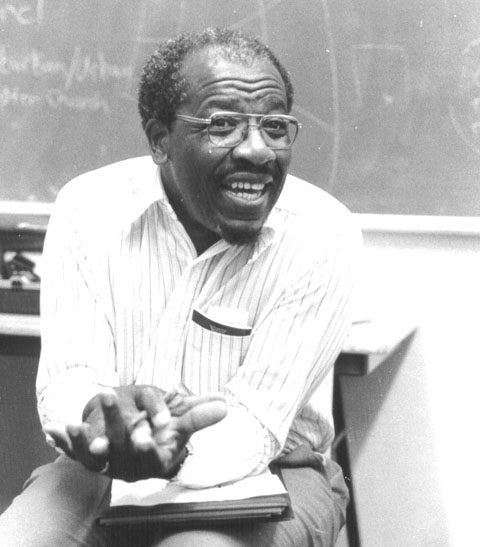
John Perkins
But “Freedom Summer 1971” was a disaster. Perkins, the founder of Voice of Calvary, an evangelistic and social service ministry in Jackson, Mississippi, brought together members of the black student association at the University of Michigan and white fundamentalist youths from California for a three-month period of intense community-building. As scholar Charles Marsh describes it, the white participants came armed with Campus Crusade’s “Four Spiritual Laws” booklet; many of the black participants had just read Black Panther Eldridge Cleaver. Not surprisingly, cultural misunderstandings and resentments mounted as the summer progressed. Half of the Black students ended up “bunkered down in the Jackson headquarters of the Republic of New Africa, sparring with local police and the FBI in a gun battle.” The fearful white students could hardly bring themselves to step outside the community center. At the beginning, Perkins had said, “This summer will be great. . . What a combination: black and white, socially oriented and spiritually oriented. All with skills and energy!” At the end, he called it “the biggest failure in Voice of Calvary history.”
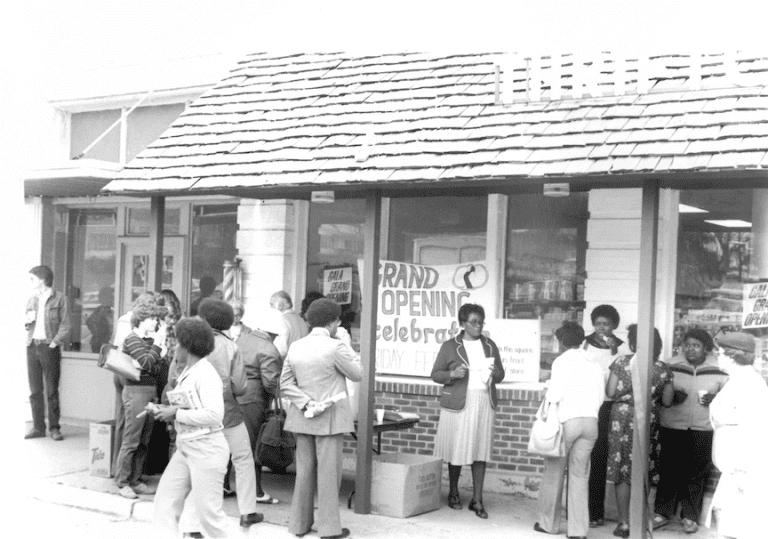
Voice of Calvary Ministries in Jackson, Mississippi
This social experiment was not an isolated case of racial tension. At the 1973 Thanksgiving Workshops of the evangelical left, for example, many black participants were at first “deeply encouraged” to find whites of “like precious faith” willing to sign a statement that confessed “the conspicuous responsibility of the evangelical community for perpetuating the personal attitudes and institutional structures that have divided the body of Christ along color lines.” White delegates also seemed responsive to a laundry list of proposals from a hastily formed Black caucus. But that hope receded. At the 1974 Workshop, Black participants convened a caucus to ensure “substantive” consideration of their proposals, but the 1975 Workshop, which only addressed theoretical models of social concern, did precisely the opposite. After listening to long presentations on Anabaptist, Lutheran, and Reformed political theory, Bentley rose to “shatter the calm, analytical atmosphere,” declaring, “I question whether you people can even see us blacks.”
Most Black evangelicals had not begun with these critiques. As late as 1969 they expressed ambivalence toward Stokely Carmichael, the Student Nonviolent Coordinating Committee (SNCC), and other advocates of Black Power. On one hand, they agreed that American society was structurally racist and saw need for some independent black institutions. On the other hand, they criticized what they saw as the excesses of the movement, specifically the new openness to violence among SNCC members and a more strident black separatism emerging in some quarters. They still sought to fulfill Martin Luther King, Jr.’s vision of “beloved community.”
But beloved community did not feel so beloved when they experienced white evangelical versions of it, and their skepticism of Black Power rapidly dissolved. Young black evangelical students, incensed by discrimination at evangelical colleges, appeared in John Alexander’s magazine Freedom Now posing with a black power salute. In an extended interview, these “black militant evangelicals,” as the magazine’s editor called them, insisted on the creation of separate black institutions. White institutions were irrelevant, one explained, and white educational institutions created for blacks were inferior and failed to use black symbols to teach children. Another asserted, “What we need is a black, fundamental, Bible-believing, Bible institute and college that will dehonkify our minds and teach us how to communicate Christ to black people.” The impulse by early Black leaders like missionary Howard Jones to create an integrated evangelical community lost momentum as a younger generation embraced racial separatism.
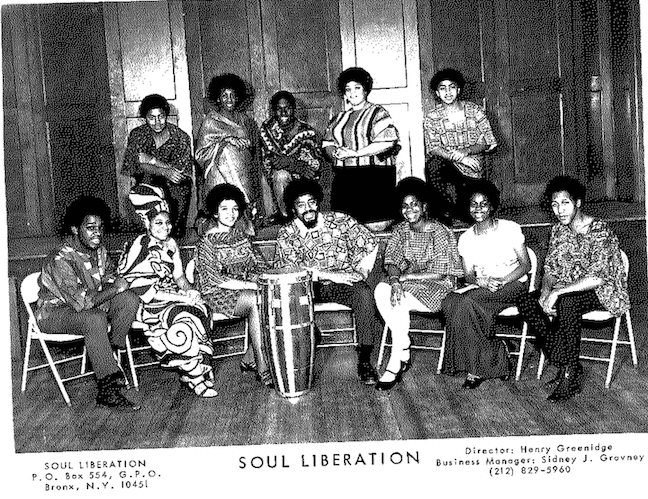 Disillusioned with the mainstream evangelicalism and dismayed by the lack of cultural cohesiveness among black youth, these young Black leaders unleashed a torrent of critiques. In Your God Is Too White, Columbus Salley wrote, “Black Power begins with the realization that blacks have been conditioned by white institutions to hate themselves and to question their basic worth,” wrote. Evangelicalism had conditioned blacks to believe in a “white, blue-eyed Jesus—a Jesus who negates the humanity of their blackness, a Jesus who demands that they whiten their souls in order to save them.” Ron Potter called for the “theological decolonization of minds,” mourning that black evangelicals still “see through a glass whitely.”
William Bentley, dubbed the “godfather” of militant black evangelicals, proclaimed a “Declaration of Independence from uncritical dependence upon white evangelical theologians who would attempt to tell us what the content of our efforts at liberation should be.” He called instead for an authentic Black evangelical theology, one that was biblical, grounded in “concrete sociopolitical realities,” and that did not “merely blackenize the theologies of E.J. Carnell, Carl F. H. Henry, Francis Schaeffer, and other White Evangelical ‘saints.’” While such thinkers could offer some insight, Bentley acknowledged, too many young Black evangelicals were “under the academic spell” of white evangelical intellectuals who suffered from “blindness to the specifics of the Black American experience.” Rather, Salley insisted, “God must become black.” Clarence Hilliard, co-pastor of the interracial Circle Church in Chicago, echoed, “Jesus stood with and for the poor and oppressed and disinherited. He came for the sick and needy. … He came into the world as the ultimate ‘n—–’ of the universe.” Black evangelical theology, wrote Bentley and Potter, should build on an “ethnic brand” and draw from black sources such as James Cone and the collective experience of Black evangelicals.
Calls for the creation of a Black theology grew into a broader push for racial identity and “ethnic self-acceptance.” Since black culture “has been lost, stolen, or destroyed,” wrote Walter McCray, noted author and founder of Black Light Fellowship in Chicago, “syncretism and integration must be checked. We must, as best we can, isolate what is our own culture.” McCray, who discouraged interracial dating, encouraged black students to “read and ponder on Blackness. Students must be ever learning about themselves as Blacks.” Wyn Wright Potter, staff member of the Douglass-Tubman Christian Center in the Robert Taylor housing project in Chicago, told white participants at a conference on politics at Calvin College in 1974 about how “Jesus Christ the Liberator” heals the wounds of black America by “fostering black identity and human dignity.” In order to heal their psyches, they needed to be part of an all-encompassing Black community, and whites needed to stay out of the way. “Whatever role whites play in a leadership capacity,” explained Bentley, “it should be of an indirect nature and complementary to, not in advance of indigenous Black leadership.” Before racial integration could occur within evangelicalism, individuals needed psychological wholeness rooted in ethnic consciousness.
Indeed, as white evangelical energy on issues of race waned in the late 1970s, Black evangelicals began to focus their own energy into dozens of Black organizations. Many were affiliated with the National Black Evangelical Association, which built local chapters in Portland, Chicago, New York City, Pittsburgh, Dallas, Seattle, Phoenix, Los Angeles, Philadelphia, Cleveland, San Francisco, and Detroit. By 1980, it had a mailing list of five thousand and claimed an “extended constituency” of thirty to forty thousand. These were microscopic numbers compared to the total number of fifteen million Protestant, church-going African Americans. They were significant, however, within the lily-white neo-evangelical orbit.
Did this new emphasis on Black identity exacerbate the already wide cultural divide and contribute to the deterioration of black-white cooperation? Perhaps. But the more salient narrative is that beloved community was a fiction in the first place. Again, how beloved could it really be given neo-evangelicalism’s white structure, given its proclamations of colorblindness even as it privileged white voices and dominated institutions?
Since the 1980s a new wave of biblical hermeneutics—much of it produced by Black, Hispanic, and global scholars—has been offering new ways of thinking about Christian community. It speaks of the Apostle John’s vision of an evangelical future that is decidedly not colorblind. It speaks of “a new heaven and a new earth” after “the first earth had passed away,” of a “Holy City, a new Jerusalem, coming down out of heaven from God.” The new contextual work notes that Jerusalem in that era was a large capital city of about a quarter of a million people. It was a cosmopolitan city, one teeming with the exotica of the ancient world: disciplined Roman legions, Greek travelers, merchants from Asia, and of course the many varieties of Jews. If Jerusalem was the basis of John’s vision, the promised land will be a place of vibrant multiculturalism. “I heard a loud voice from the throne,” John exulted in Revelation 21. “Look! God’s dwelling place is now among the people, and he will dwell with them. They will be his people, and God himself will be with them and be their God.”
These words offer an eschatological vision with color and with shape. It is not a monocultural vision of a melting pot in which everyone acts the same, dresses the same, speaks the same language, and integrates into a white, middle-class American mainstream. It’s a diverse collection of sojourners who have created, perhaps uncomfortably but certainly meaningfully, a home together.
In my experience this eschatological vision continues to be more of a vision than a reality. But perhaps the theological creativity and Black identity that has risen out of the ashes of Freedom Summer and the travails of the 1970s is making a difference. Perhaps beloved community will paradoxically materialize out of separation.
Next Post

June 30, 2022 From the Russian Empire to the Cold War, and Back Again
Browse Our Archives
Select a Category abolitionism Abortion Abraham Joshua Heschel Abraham Kuyper Abraham Lincoln Academia Activism Adam Renberg Advent Adventist africa African American Religion Agnes Howard Albert Camus American History American Religious History American Revolution American West Anabaptists Ancient History Andrea Turpin Andrei Tarkovsky Anglicanism Annales Ansley Lillian Quiros anti-Catholicism Antisemitism Anxious Bench apologetics Apparitions Arash Azizi Archaeology archives art Artificial Intelligence Asia Asian Americans Augustine Authors Bad Bunny Baptism Baptists Barack Obama Battle of Hastings Benjamin Franklin Bernard-Henri Levy Beth Allison Barr Beth Moore Bethany Mannon Bible Bill Cunningham Billy Graham Black Music Bob Dylan Body Boenhoffer Books Breastfeeding Bruce Springsteen C.S. Lewis Calvinism Cancel Culture Capitalism Carmelites Catholicism Cedric Robinson Cesar Chavez Charismaticism charity Charles Dickens Charles Lindbergh Che Guevara Chicago Children Chinese Christianity Chris Gehrz Christ Christian death Christian Higher Education Christian life Christian Nation Christian Nationalism Christianity Today Christmas Church life Church Practice cinema Civil Religion Civil Rights Movement Civil War civility Classics Climate Change Cold War Colonial Mexico colonialism Comer Communism community complementarianism Conference on Faith and History Congregationalism Conspiracies Conspiracy Conversion Narratives Coronavirus Costa Rica Council of Nicaea Covid-19 Creation Critical Race Theory Crusades Culture culture wars Daniel K. Williams David Barton David Swartz Death Ways death with dignity DEI democracy Democratic Party Devotion Digital Age Diplomacy discipleship diversity Donald Trump Drama Dua Lipa Early Church early modern Early modern Catholicism Easter Eastern Christianity economic exploitation Education elections Elie Wiesel Elizabeth II Elizabeth Taylor emotions Empire Engineering England enslavement Entertainment Episcopal Church Erica Ramirez eschatology Eurocentrism Evangelicalism Evangelicals Exegesis Family Feminism Film Flannery O'Connor folk music Food Foreign Policy founding fathers Franciscans Franciscus Junius fundamentalism Funerals G.K. Chesterton Gender Genocide genre geography George W. Bush George Washington George Whitefield Global Christianity Global church Grief Guadalupe guest post Guest Post gun control gun violence Gustavo Gutierrez Hamid Dabashi Harold John Ockenga Harvest Hate Hawaiian Christianity Healing health care Heather Cox Richardson Hell Heresy Hermeneutics Higher Education Hinduism Hippocratic oath Historical Fiction Historical Methodology Historical Profession Historical Profession Historical Theology Historical Thinking historiography Holidays Holocaust horror movies Human rights Humanitarian Work humanities Hummingbirds Hungary hymns Imago Dei Immigration Injustice Interviews Iran Islam Islamophobia Israel Ivan's Childhood Jacob Randolph James Bratt Janine Giordano Drake Japanese history Japanese Literature Jean Paul Sartre Jesse Miranda Jesus Jesus Christ Jimmy Carter Joan Baez Joan Didion Joanne Freeman João B. Chaves Joao Chaves Joey Cochran John Calvin John Fea John Tillotson John Turner Johnny Cash Jonathan Edwards Jonathan Tran Joseph Smith Josh Howerton Journalism Jr. Judaism Jürgen Moltmann Just War Justice Justin Brierley Karl Barth Katelyn Beaty koi ponds Kris Kristofferson Kristin Kobes Du Mez Latin American Religious History Latino Americans Lectio Divina Leisure Lent Leonard Cohen liberal arts liberalism Liberation Theology Linda Ronstadt Lisa Clark Diller Literature Lou Reed Lynchings Lynneth Miller Renberg Mainline Protestantism Malcolm Foley Marilyn Monroe Maritime history Mark Noll Marriage Martin Luther Martin Luther King Martyrdom Marxism Mary Masih Alinejad mass shootings material culture medieval Christianity Medieval Ethiopia Melissa Borja memory Mennonites Mental Health Mental Illness Methodism Mexican Americans Mexicans Mike Madrid Miles Mullin Min Jin Lee Miscarriage Missionaries Mister Rogers Mitt Romney modernity Monasticism Mormonism Motherhood Mothers of the Church Moving Music Musicals Nadya Williams Nahua Christianity Native Americans Natsume Sōseki New Contributor New England New Year New York Nico Non-Violent Protest Orthodoxy pacifism Paleo Evangelicals Palestinians Parenting Patti Smith Paul Kingsnorth Pedro Calderón de la Barca Pentecostalism Philip Jenkins Phillis Wheatley physician-assisted suicide pilgrimage Pilgrims pluralism Plutocracy Poetry Politics Pope Francis Pope Leo XIV post-modernism prayer preaching Presbyterians prosperity gospel Protest Public history Publishing Puritans purity culture Quakers race Race Massacres Racial Capitalism racial reconciliation racialization Racism Raha Bahloulipour Re-Enchantment reading Reformation Refugees religion and the university religion and war Religious Freedom Religious Nones Religious Pluralism Religious Symbols religious violence Republican Party Revival Rita Coolidge Ritual Roger Williams Roman Catholic church Royalty Russell Moore same-sex marriage Sarah Irving-Stonebraker Scandinavia Science Science and Technology Scopes trial Scriptural Interpretation secularism Selena Quintanilla seminary Seventh-Day Adventists sexual morality Sexuality Sikhs Silence slaveholders theology Slavery Slavoj Zizek social justice Social Media Southern Baptist Convention Southern Religion Spain Spiritual Autobiography Spiritual but not religious Spiritual Discipline Sports Stanley Hauerwas Suffering Summer Camps Sunday Night Odds and Ends Supernatural Supreme Court Syriac Christianity Tal Howard Taylor Swift Teaching Technology Television Thanksgiving The Beatles The Mission theater TheoBros Theology Thomas Dixon Thomas Jefferson Thomas Kidd Thomas Merton Tim Gloege Tim Walz Tom Holland Tourism tradition Tragedy Translation Transnationalism Travel Trump Ukraine Uncategorized Unitarians United Methodist Church US History Vanessa Chan Velvet Underground Verónica A. Gutiérrez Veronica Gutierrez Vikings Violence Virgin Mary Virtue Virtue ethics Visions Voting War WCTU Wendell Berry Westminster Assembly White Evangelicalism Wildfires Winnie the Pooh Witches women Women in Ministry Women's and Gender Studies Work Worship writing Yasunari Kawabata Zena Hitz
Select a Month October 2026 September 2026 August 2026 July 2026 June 2026 May 2026 April 2026 March 2026 February 2026 January 2026 December 2025 November 2025 October 2025 September 2025 August 2025 July 2025 June 2025 May 2025 April 2025 March 2025 February 2025 January 2025 December 2024 November 2024 October 2024 September 2024 August 2024 July 2024 June 2024 May 2024 April 2024 March 2024 February 2024 January 2024 December 2023 November 2023 October 2023 September 2023 August 2023 July 2023 June 2023 May 2023 April 2023 March 2023 February 2023 January 2023 December 2022 November 2022 October 2022 September 2022 August 2022 July 2022 June 2022 May 2022 April 2022 March 2022 February 2022 January 2022 December 2021 November 2021 October 2021 September 2021 August 2021 July 2021 June 2021 May 2021 April 2021 March 2021 February 2021 January 2021 December 2020 November 2020 October 2020 September 2020 August 2020 July 2020 June 2020 May 2020 April 2020 March 2020 February 2020 January 2020 December 2019 November 2019 October 2019 September 2019 August 2019 July 2019 June 2019 May 2019 April 2019 March 2019 February 2019 January 2019 December 2018 November 2018 October 2018 September 2018 August 2018 July 2018 June 2018 May 2018 April 2018 March 2018 February 2018 January 2018 December 2017 November 2017 October 2017 September 2017 August 2017 July 2017 June 2017 May 2017 April 2017 March 2017 February 2017 January 2017 December 2016 November 2016 October 2016 September 2016 August 2016 July 2016 June 2016 May 2016 April 2016 March 2016 February 2016 January 2016 December 2015 November 2015 October 2015 September 2015 August 2015 July 2015 June 2015 May 2015 April 2015 March 2015 February 2015 January 2015 December 2014 November 2014 October 2014 September 2014 August 2014 July 2014 June 2014 May 2014 April 2014 March 2014 February 2014 January 2014 December 2013 November 2013 October 2013 September 2013 August 2013 July 2013 June 2013 May 2013 April 2013 March 2013 February 2013 January 2013 December 2012 November 2012 October 2012 September 2012 August 2012 July 2012 June 2012 May 2012
Follow Us!
TAKE THE
Religious Wisdom Quiz
What does Proverbs often contrast with wisdom?
Select your answer to see how you score.
Strength Poverty Foolishness Priesthood
Related posts from Anxious Bench

Christians Helped Invent Race. Some Now Call It...

What Coffee Reveals About America's Evangelical Varieties

A Casserole is Not a Counterpoint

Angelina Grimké's Forgotten Turn to Apocalyptic Faith
TRENDING AT PATHEOS Evangelical

Letters on Living the Faith by C.S. Lewis
Most of us met C.S. Lewis as a public intellectual. Mere Christianity....

When Halloween Unmasks Married Hearts
Written by Dr. David K. Ewen from Eternal Truth Bible College Behind...

Aristotle. He’s been called the father of logic, the father of the...

Methodist Central Hall and Westminster Abbey
Situated on the same square is Methodist Central Hall and Westminster Abbey. ...

57th Dove Awards Honor Dolly Parton, Crown New...
On gospel music’s biggest night, the 57th annual GMA Dove Awards honored...

The First Eucharistic Controversy: Christ’s Real Presence
For Catholics, the Eucharist is the source and summit of the Christian...
view all Evangelical blogs
Ad-Free & Subscriber Log-In Subscription Support
- About Us
- 2026 Calendar
- Videos
- Podcasts
- Library of World Religions
- Faith In Media Tracker
- Advertise With Us
- Write for Us
- Privacy Policy
- Terms of Service
- Do Not Sell My Data
- Contact Us
- Radiant Digital
- Manage Newsletter Subscriptions
- Unsubscribe From Notifications
- Sitemap
Copyright 2008-2026, Patheos. All rights reserved.
Subscription Support Ad-Free & Subscriber Log-In
Follow Patheos