
BuddhistCatholicContemplativeEvangelicalGeneral ChristianHinduJewishLatter-day SaintMuslimNew VisionsProgressive Christian
Beliefs
- Buddhist
- Catholic
- Contemplative
- Evangelical
- General Christian
- Hindu
- Jewish
- Latter-day Saint
- More Voices
- Muslim
- New Visions
- Pagan
- Progressive Christian
Topics
- Religion News
- Food and Religion
- Sports and Religion
- Religious Art
- Religious Music and Entertainment
- Religious Events
- History and Religion
- Style and Religion
- Politics and Religion
- Women in Religion
- Recreation Outdoors and Religion
- Business Finance and Religion
- Careers Workplace and Religion
- Education and Religion
- Family Parenting and Religion
- Health Fitness and Religion
- Home and Religion
- Relationships and Religion
- Technology and Religion
- Travel and Religion
Columnists
- Buddhist Columnists
- Business Finance and Religion Columnists
- Careers Workplace and Religion Columnists
- Catholic Columnists
- Contemplative Columnists
- Education and Religion Columnists
- Evangelists Columnists
- Family Parenting and Religion Columnists
- General Christian Columnists
- Health Fitness and Religion Columnists
- Hindu Columnists
- History and Religion Columnists
- Home and Religion Columnists
- Jewish Columnists
- More Voices Columnists
- Latter Day Columnists
- Muslim Columnists
- New Visions Columnists
- Nonreligious Columnists
- Pagan Columnists
- Politics and Religion Columnists
- Progressive Columnists
- Recreation Outdoors and Religion Columnists
- Relationships and Religion Columnists
- Religion News Columnists
- Religious Art Columnists
- Religious Events Columnists
- Religious Music and Entertainment Columnists
- Sports and Religion Columnists
- Style and Religion Columnists
- Technology and Religion Columnists
- Travel and Religion Columnists
- Women in Religion Columnists
Resource Library
- 2026 Calendar
- Library of World Religions
- The 100 Most Holy Places on Earth
- Patheos Answers
- Podcasts
- Videos
- Faith Leaders Database
- Anglican Episcopalian
- Bahai
- Baptist
- Buddhism
- Christianity
- Confucianism
- Eastern Orthodoxy
- Hinduism
- Holiness and Pentecostal
- ISKCON
- Islam
- Judaism
- Lutheran
- Methodist
- The Church of Jesus Christ of Latter-day Saints
- New Age
- Paganism
- Presbytarian and Reformed
- Protestantism
- Religion Behind the Scenes
- Roman Catholic
- Scientology
- Shia Islam
- Sikhism
- Sufism
- Sunni Islam
- Taoism
- Zen
- See all religions
Research Tools
 Ad-Free & Subscriber Log-In Subscription Support
Follow Patheos 

- Trending:
- Advent
- |
- Forgiveness
- |
- Thanksgiving
- |
- Election
- |
- Seasonal Holidays
- |
- Marriage

-
About the Authors
- Home
- Evangelical
- Biblical Authority amidst American Christian Division: From the Civil War to the Present
Biblical Authority amidst American Christian Division: From the Civil War to the Present
Last updated on: November 18, 2021 at 3:00 am by Daniel K. Williams
Biblical Authority amidst American Christian Division: From the Civil War to the Present 2021-11-17T18:40:15-04:00 Daniel K. Williams
Patheos Explore the world's faith through different perspectives on religion and spirituality! Patheos has the views of the prevalent religions and spiritualities of the world.
Supposedly, the split among American evangelical Protestants over slavery in the Civil War era reduced the hegemony of biblical authority in American religious and public life. Before the Civil War, American Christians trusted the Bible to give them the answer to every moral and religious question. But when American Protestants could not agree on what the Bible said about the most important moral question of their time – the question of slavery, which resulted in a civil war with more than half a million casualties – it produced what Mark Noll called a “theological crisis.” American Protestants after the 1860s were less likely to look to the Bible as their chief source of authority.
Or were they? Contrary to what we might expect, the division over biblical interpretation that the Civil War produced did not lead many American Protestants to question whether the Bible held the answers to all of life’s questions; it instead made them more loyal to the particular interpretation of the Bible that their group held. As James Byrd notes in his new book A Holy Baptism of Fire and Blood: The Bible and the American Civil War (Oxford University Press, 2021), “The Bible was a constant in the Civil War, but it was also constantly debated, its meaning shifting with each interpreter in response to every crisis. Americans were never in more disagreement over the Bible, and yet never more in agreement that the Bible proved the sacredness of war” (Byrd, 301). Having invested so much blood in their particular interpretation of the Bible, each side emerged from the conflict with a renewed dedication to the Holy Book, as interpreted through their side’s particular hermeneutic.
Why did respect for biblical authority continue undiminished among many American Protestants after the Civil War? And why in our own era is confidence that the Bible can provide authoritative answers to every moral question likely to continue among American evangelicals, even as they sharply disagree with each other about what the Bible says about critical race theory, COVID vaccines, and gender roles? Perhaps a closer look at the place of the Bible in American religion immediately after the Civil War will provide some clues.
In the South, the end of the Civil War solidified an emerging Bible belt and created the basis for a regional public culture that was deeply committed to biblical literalism, an evangelical theology of personal salvation, and an unquestioning allegiance to biblical authority. Both Black and white Christians shared this ethos. Among African Americans, the end of slavery and the racial segregation of denominations gave them the new opportunity to expand their own religious institutions in the South. The new Baptist and Methodist denominational organizations that they created were devoted to racial uplift, personal moral responsibility, social concern, and a biblical literalism that was predicated on the idea that the God who had liberated the ancient Israelites in the Exodus was at work in their lives in the same way. Among white Christians in the South, an evangelical interpretation of the Bible developed that was based on biblical literalism, personal morality, and an evangelical theology of personal salvation – all of which African American Christians also shared. But unlike African American Christians, white Christians in the South also read the Bible through the lens of white nationalism – which meant that veneration for fallen Confederate leaders and a defense of racial segregation became sacred duties, with rituals that were so closely associated with southern Christianity that historians have termed them a “religion of the Lost Cause.”
In keeping with a widespread regional veneration for the Bible, late 19th-century southern colleges and universities expelled professors who taught the theory of evolution or higher criticism of the Bible. They literally interpreted what was written (such as the statement that God created the earth in six days and made Adam out of the dust of the ground) and what was not written (such as the idea that Christians should not drink alcohol, an idea that the overwhelming majority of Protestant ministers in the South came to embrace by the early 20th century). The southern Bible belt was aptly named, because churches in this region really were united by a common adherence to the Bible’s authority, even if their interpretations of the Bible divided along racial lines.
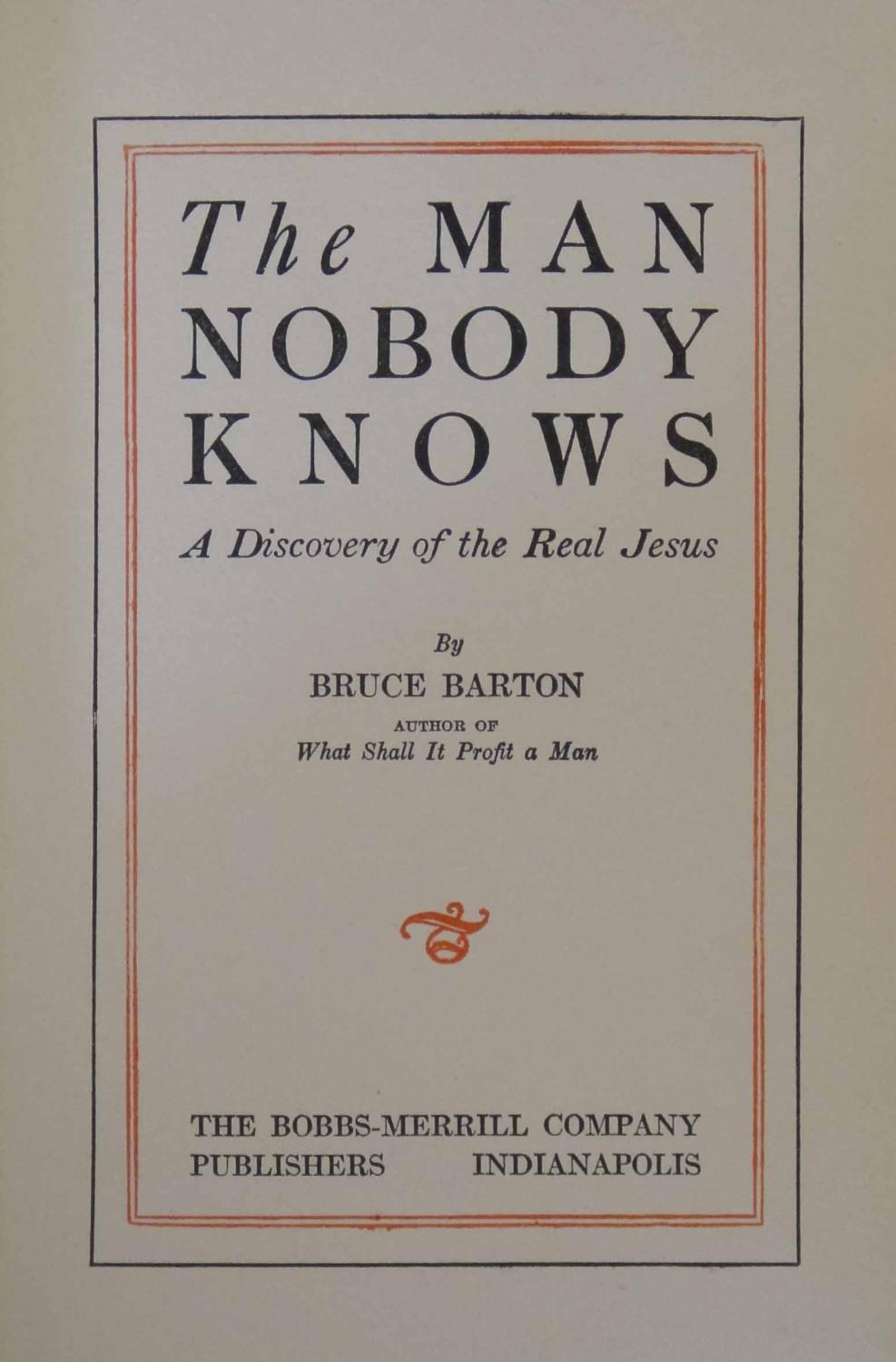
But even in the North, the Bible remained an authoritative book among Protestants. In the early 20th century, northern fundamentalists claimed the Bible as their authority, but so did other Protestants who did not align themselves with fundamentalism. Several of the bestselling religious books of the 20th century were written by non-fundamentalist northern Protestants who interpreted the Bible as a book of personal inspiration and moral guidance. Bruce Barton’s The Man Nobody Knows (1925) focused entirely on Jesus (as depicted in the four canonical gospels), even if its theology has been widely panned. Similarly, Norman Vincent Peale’s The Power of Positive Thinking (1952) supported its practical advice with dozens of scriptural quotations. And the bestselling nonfiction book of the 1970s, Hal Lindsey’s The Late, Great Planet Earth (1970), was a dispensationalist Bible lesson in prophetic interpretation of the imminent future.

Perhaps in certain parts of academia – and in ministerial training in some denominations – historical criticism caused some to question the authority of the Bible, but for more than a century after the Civil War, the reading preferences and church affiliation choices of millions of American Protestants suggested that respect for the Bible’s authority continued undiminished, even if biblical literacy was not quite what it had once been. The fact that 40 percent of Americans currently believe that God directly created humans in their present form – without evolution – and that another 33 percent believe that God guided the evolutionary process to create humans – shows that when it comes to views of human origins, sacred literature (which for the vast majority of Americans means primarily the Bible) still carries a lot of authoritative weight.
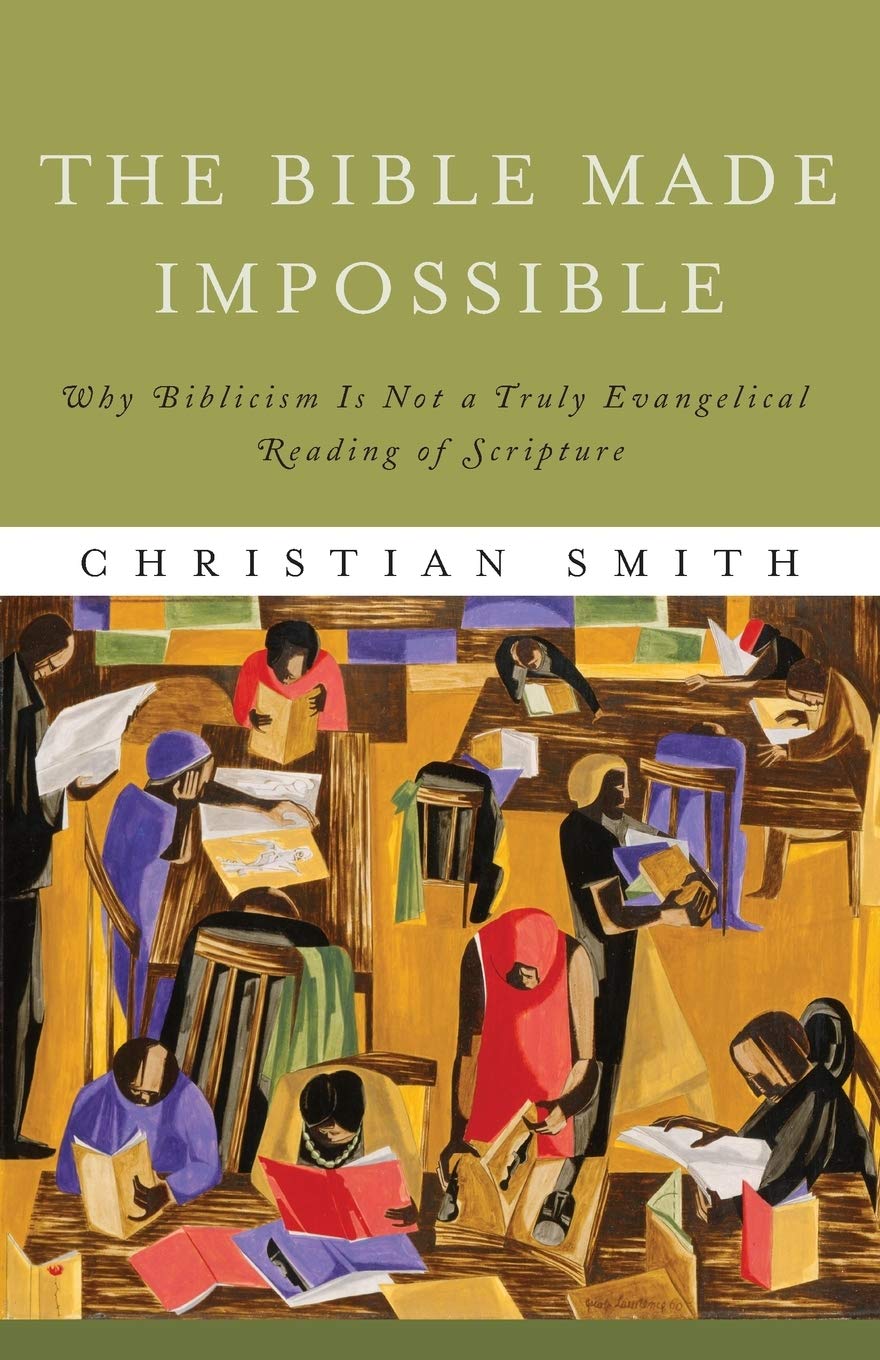
And yet, as numerous scholars have written, American Christians who agree that the Bible is divinely authoritative cannot agree on the Bible’s meaning. This is the premise of Byrd’s A Holy Baptism of Fire and Blood, but Byrd is hardly the only scholar to point out this truth. Christian Smith’s The Bible Made Impossible: Why Biblicism Is Not a Truly Evangelical Reading of Scripture (Brazos Press, 2011) surveys the ways in which Protestants have disagreed with each other over the Bible’s message regarding almost every conceivable matter of doctrinal or moral debate – a phenomenon that suggests the Bible’s impossibility of serving as a locus of moral or doctrinal authority, at least in the way that American evangelicals and fundamentalists have traditionally used it. Molly Worthen’s Apostles of Reason: The Crisis of Authority in American Evangelicalism (OUP, 2012) argues that in the late 20th century, American evangelicals found that the Bible alone was not a sufficient moral authority, so they turned to other sources from the scientific or secular world – such as psychology, history, or some other field of academic study – to bolster their arguments and give their moral claims more sufficient grounding. Some left evangelicalism altogether and became Roman Catholics or Eastern Orthodox Christians because of their desire for a more solid basis of authority than mere personal interpretation of the Bible – the method long championed by many American evangelicals – could provide.
American evangelicals have traditionally advanced two arguments for why unaided personal Bible reading is a promising way to arrive at biblical truth. One argument is based on the philosophy of common sense realism: The Bible’s message should be obvious to any honest reader, just as any text is. Common sense realism fell out of favor in American academia by the end of the 19th century, but some version of it remained popular in conservative evangelical circles for much of the 20th. Nevertheless, this line of reasoning, though popular in a few Christian traditions such as the Churches of Christ, probably receives a lot less emphasis today than another line of argument – the argument that the Holy Spirit who indwells each individual believer will give each individual Christian guidance into the correct interpretation of Scripture. This is the premise behind the classic evangelical ritual of early morning “quiet time”: A Christian should make it a daily habit to find a quiet place alone to sit alone with their Bible, and they should use those minutes to pray, read a short passage of Scripture, and then journal their thoughts, confident that God will use that time to guide them to truths that they need to receive that day.

Tens of millions of American Christians – along with many more around the world – remain convinced that they are correctly interpreting the written word of God, whether because its meaning is self-evident or because they are guided by the Holy Spirit. Yet Christian Smith’s critique is undoubtedly true: One can find professed Bible-believing Christians using Bible verses to support their claims on both sides of every moral, cultural, or doctrinal debate in the nation today. One can find evangelicals who appeal to the Bible in books against critical race theory (as Owen Strachan and Voddie Baucham have done) and evangelicals who appeal to the Bible in arguing for an anti-racism informed by CRT (as Jemar Tisby and Jonathan Wilson-Hartgrove have). One can find books making biblical arguments for gender egalitarian and other making arguments for complementarianism; one can find Bible-based arguments for same-sex marriage and others against it.
Even in theologically conservative denominations that are guided by confessional statements and denominational position papers that have addressed all of the obvious culture-war fractures, new issues emerge that divide congregations over matters of biblical interpretation. Maybe in particular denominations, the vast majority believe that the Bible provides clear answers on abortion, same-sex marriage, and other hot-button issues that have already been debated for years, but what about a relatively new issue like COVID safety protocols? Can a pro-life Christian who believes that abortion is murder best honor unborn human life by refusing to take a COVID vaccine that was developed with cell lines taken from two fetuses that were aborted in 1973 and 1985? Or can one best honor human life (both born and unborn) by getting a vaccine that will reduce COVID transmission rates and thus save human lives? Christians may have strong opinions about this (as I do), but in all fairness, one has to admit that the Bible does not offer a direct answer to this question – which is why Bible-believing Christians on both sides of this debate can believe that the Bible supports the stance they have chosen.
So why, despite abundant historical and contemporary evidence that biblical interpretations vary widely, does the Bible continue to be venerated as a source of unchanging, clear moral authority? One reason, perhaps, is that other alleged sources of moral authority have been equally opaque and divisive. One might think that if moral authority is grounded in a particular group of official interpreters of a tradition, it would be less likely to lead to confusion than if everyone acts as one’s own interpreter. But a quick glance at the deep divisions between progressive and conservative Catholics shows this is not the case. The pope might say that President Joe Biden should continue receiving communion despite his pro-choice stance on abortion, but this doesn’t mean that conservative Catholics who say that they believe in the magisterium and papal authority agree with the pope on this issue. The magisterium may say that artificial birth control is illicit, but this doesn’t mean that most American Catholics subscribe to this teaching. Similarly, one might have thought that liberal Protestantism, with its more flexible view of Scripture and its wide latitude for individual interpretation in the light of reason and experience, would be less prone to fissure, but that’s not the case either. In the 21st century, several of the most prominent mainline Protestant denominations – including the Episcopal Church, the United Methodist Church, and the Presbyterian Church (USA) – have split over the issue of homosexuality and same-sex marriage.
One might think that abandoning a religious source of authority altogether and following science, reason, humanism, or the principles of a particular political ideology as a guide would provide a surer moral foundation, but it does not. When the American Humanist Association rescinded the atheist biologist Richard Dawkins’s “Humanist of the Year” award for his negative comments about trans people that were made in the name of “science” or when the author J. K. Rowling received an avalanche of hate mail after she issued even more pointed negative comments about the transgender rights movement in the name of protecting women, the uncertain grounding of secular ideologies were on full display. People who were once united in the belief that science and humanism provided their locus of authority could not agree on what science and humanism really said about transgender rights. And people such as Rowling who had made feminist principles a locus of moral authority experienced severe disagreements with others who appealed to these same principles on the opposite side of the moral debate. Ten years ago, Dawkins and Rowling might have been heralded as progressive advocates on the secular left, but the emergence of a new cause has called their reputation into question, at least among some of their erstwhile admirers.
So we are left with the question: Is there any secure locus of moral authority? While this answer may seem unsatisfactory to some, I think that the most historically persuasive answer is that the only enduring sources of moral authority have been grounded in communities – that is, in particular groups of people who journey through life together and therefore succeed in shaping a particular vision of reality that becomes persuasive to people within that community. Declarations of what “science” says or what the Constitution means or how the Bible should be interpreted are persuasive to people within a particular community, but may not be persuasive to people outside of it. Our thinking is heavily influenced by the communities to which we belong. That is why the Bible or the Constitution or “science” can remain authoritative – with a supposedly self-evident meaning that might not be obvious to those outside the community – to people within a particular cultural subgroup.
And that is why the Bible remained authoritative among American Protestants long after the Civil War. While northern whites, southern whites, and African Americans all “read the same Bible and prayed to the same God,” as Abraham Lincoln said, they did not do so in the same community. Thus, each distinct community emerged from the war with an undiminished faith in its own interpretation of the Bible. For many northern Protestants, it was clear that the Bible had offered a guide to personal peace and comfort, as well as unchanging moral truth, during the challenges of the war. For many African Americans, it was clear that the God of the Exodus deliverance really had been at work during the four-year struggle to become free. And for many southern whites, it was equally clear that the God of the biblical covenant had chastened his people to call them to renewed lives of spiritual devotion and pious living in order to make them worthy of the cause for which so many of their relatives had died.
Today American Christians are equally likely to look to their own cultural subgroup for vindication of their particular readings of the Bible, regardless of whether those interpretations conflict with those other subgroups of Christians. In fact, we are probably on the verge of a new division among evangelicals over biblical hermeneutics, as Christians divide on questions of racial justice, gender roles, and sexuality. But if the past is any guide to the present, multiple groups of evangelicals with very different frameworks for interpreting the Bible’s message will nevertheless emerge from the religious divisions with their confidence in the Bible’s clarity and perspicuity undiminished.
Evangelicalism originated around an individualistic notion of a direct personal connection with the Holy Spirit, but the history of American evangelicals over the past 250 years has shown that evangelicals, despite their best efforts to remain individually autonomous, have developed their views of the Bible primarily in like-minded communities of the faithful. Perhaps evangelicals are more likely than most other groups of Christians to make it a regular practice to read their Bibles in solitude. But when it comes to interpreting its meaning or understanding its authority, evangelicals don’t act alone.
Though we may not want to admit it, evangelicals are just as dependent on a community for interpretive cues as any other group of Christians might be. And maybe that’s how it should be. If God designed the church to be a covenant community where people learn to live in relationship with each other, should it be any surprise that we can’t rightly discern the voice of the Holy Spirit in interpreting God’s word apart from that community of believers?
Of course, as the competing biblical interpretations of late 19th-century American Protestants might suggest, not all community-driven interpretations of the Bible are equally correct. The religion of the Lost Cause was a community-generated interpretation of the Bible that was heavily infused with racism and nationalism and at odds with many principles of the gospel. Those of us who want to accurately discern the meaning of the Bible have a responsibility to choose our communities carefully and continue to compare the message of our community with what we are reading in Scripture. But if we think that we can interpret Scripture apart from the voice of a faithful community, we’re probably wrong. American Protestants didn’t do that in the late 19th century, and they’re not likely to do so in the 21st.
Previous Post

November 17, 2021
The 2020 Census and Evangelical Immigration, Part II
Next Post

November 19, 2021 1709: How a Climate Crisis Almost Drove England to Religious Civil War
Browse Our Archives
Select a Category abolitionism Abortion Abraham Joshua Heschel Abraham Kuyper Abraham Lincoln Academia Activism Adam Renberg Advent Adventist africa African American Religion Agnes Howard Albert Camus American History American Religious History American Revolution American West Anabaptists Ancient History Andrea Turpin Andrei Tarkovsky Anglicanism Annales Ansley Lillian Quiros anti-Catholicism Antisemitism Anxious Bench apologetics Apparitions Arash Azizi Archaeology archives art Artificial Intelligence Asia Asian Americans Augustine Authors Bad Bunny Baptism Baptists Barack Obama Battle of Hastings Benjamin Franklin Bernard-Henri Levy Beth Allison Barr Beth Moore Bethany Mannon Bible Bill Cunningham Billy Graham Black Music Bob Dylan Body Boenhoffer Books Breastfeeding Bruce Springsteen C.S. Lewis Calvinism Cancel Culture Capitalism Carmelites Catholicism Cedric Robinson Cesar Chavez Charismaticism charity Charles Dickens Charles Lindbergh Che Guevara Chicago Children Chinese Christianity Chris Gehrz Christ Christian death Christian Higher Education Christian life Christian Nation Christian Nationalism Christianity Today Christmas Church life Church Practice cinema Civil Religion Civil Rights Movement Civil War civility Classics Climate Change Cold War Colonial Mexico colonialism Comer Communism community complementarianism Conference on Faith and History Congregationalism Conspiracies Conspiracy Conversion Narratives Coronavirus Costa Rica Council of Nicaea Covid-19 Creation Critical Race Theory Crusades Culture culture wars Daniel K. Williams David Barton David Swartz Death Ways death with dignity DEI democracy Democratic Party Devotion Digital Age Diplomacy discipleship diversity Donald Trump Drama Dua Lipa Early Church early modern Early modern Catholicism Easter Eastern Christianity economic exploitation Education elections Elie Wiesel Elizabeth II Elizabeth Taylor emotions Empire Engineering England enslavement Entertainment Episcopal Church Erica Ramirez eschatology Eurocentrism Evangelicalism Evangelicals Exegesis Family Feminism Film Flannery O'Connor folk music Food Foreign Policy founding fathers Franciscans Franciscus Junius fundamentalism Funerals G.K. Chesterton Gender Genocide genre geography George W. Bush George Washington George Whitefield Global Christianity Global church Grief Guadalupe Guest Post guest post gun control gun violence Gustavo Gutierrez Hamid Dabashi Harold John Ockenga Harvest Hate Hawaiian Christianity Healing health care Heather Cox Richardson Hell Heresy Hermeneutics Higher Education Hinduism Hippocratic oath Historical Fiction Historical Methodology Historical Profession Historical Profession Historical Theology Historical Thinking historiography Holidays Holocaust horror movies Human rights Humanitarian Work humanities Hummingbirds Hungary hymns Imago Dei Immigration Injustice Interviews Iran Islam Islamophobia Israel Ivan's Childhood Jacob Randolph James Bratt Janine Giordano Drake Japanese history Japanese Literature Jean Paul Sartre Jesse Miranda Jesus Jesus Christ Jimmy Carter Joan Baez Joan Didion Joanne Freeman João B. Chaves Joao Chaves Joey Cochran John Calvin John Fea John Tillotson John Turner Johnny Cash Jonathan Edwards Jonathan Tran Joseph Smith Josh Howerton Journalism Jr. Judaism Jürgen Moltmann Just War Justice Justin Brierley Karl Barth Katelyn Beaty koi ponds Kris Kristofferson Kristin Kobes Du Mez Latin American Religious History Latino Americans Lectio Divina Leisure Lent Leonard Cohen liberal arts liberalism Liberation Theology Linda Ronstadt Lisa Clark Diller Literature Lou Reed Lynchings Lynneth Miller Renberg Mainline Protestantism Malcolm Foley Marilyn Monroe Maritime history Mark Noll Marriage Martin Luther Martin Luther King Martyrdom Marxism Mary Masih Alinejad mass shootings material culture medieval Christianity Medieval Ethiopia Melissa Borja memory Mennonites Mental Health Mental Illness Methodism Mexican Americans Mexicans Mike Madrid Miles Mullin Min Jin Lee Miscarriage Missionaries Mister Rogers Mitt Romney modernity Monasticism Mormonism Motherhood Mothers of the Church Moving Music Musicals Nadya Williams Nahua Christianity Native Americans Natsume Sōseki New Contributor New England New Year New York Nico Non-Violent Protest Orthodoxy pacifism Paleo Evangelicals Palestinians Parenting Patti Smith Paul Kingsnorth Pedro Calderón de la Barca Pentecostalism Philip Jenkins Phillis Wheatley physician-assisted suicide pilgrimage Pilgrims Piracy pluralism Plutocracy Poetry Politics Pope Francis Pope Leo XIV post-modernism prayer preaching Presbyterians prosperity gospel Protest Public Executions Public history Publishing Puritans purity culture Quakers race Race Massacres Racial Capitalism racial reconciliation racialization Racism Raha Bahloulipour Re-Enchantment reading Reformation Refugees religion and the university religion and war Religious Freedom Religious Nones Religious Pluralism Religious Symbols religious violence Republican Party Revival Rita Coolidge Ritual Roger Williams Roman Catholic church Royalty Russell Moore same-sex marriage Sarah Irving-Stonebraker Scandinavia Science Science and Technology Scopes trial Scriptural Interpretation secularism Selena Quintanilla seminary Seventh-Day Adventists sexual morality Sexuality Sikhs Silence slaveholders theology Slavery Slavoj Zizek social justice Social Media Southern Baptist Convention Southern Religion Spain Spiritual Autobiography Spiritual but not religious Spiritual Discipline Sports Stanley Hauerwas Suffering Summer Camps Sunday Night Odds and Ends Supernatural Supreme Court Syriac Christianity Tal Howard Taylor Swift Teaching Technology Television Thanksgiving The Beatles The Mission theater TheoBros Theology Thomas Dixon Thomas Jefferson Thomas Kidd Thomas Merton Tim Gloege Tim Walz Tom Holland Tourism tradition Tragedy Translation Transnationalism Travel Trump Ukraine Uncategorized Unitarians United Methodist Church US History Vanessa Chan Velvet Underground Verónica A. Gutiérrez Veronica Gutierrez Vikings Violence Virgin Mary Virtue Virtue ethics Visions Voting War WCTU Wendell Berry Westminster Assembly White Evangelicalism Wildfires Winnie the Pooh Witches women Women in Ministry Women's and Gender Studies Work Worship writing Yasunari Kawabata Zena Hitz
Select a Month November 2026 October 2026 September 2026 August 2026 July 2026 June 2026 May 2026 April 2026 March 2026 February 2026 January 2026 December 2025 November 2025 October 2025 September 2025 August 2025 July 2025 June 2025 May 2025 April 2025 March 2025 February 2025 January 2025 December 2024 November 2024 October 2024 September 2024 August 2024 July 2024 June 2024 May 2024 April 2024 March 2024 February 2024 January 2024 December 2023 November 2023 October 2023 September 2023 August 2023 July 2023 June 2023 May 2023 April 2023 March 2023 February 2023 January 2023 December 2022 November 2022 October 2022 September 2022 August 2022 July 2022 June 2022 May 2022 April 2022 March 2022 February 2022 January 2022 December 2021 November 2021 October 2021 September 2021 August 2021 July 2021 June 2021 May 2021 April 2021 March 2021 February 2021 January 2021 December 2020 November 2020 October 2020 September 2020 August 2020 July 2020 June 2020 May 2020 April 2020 March 2020 February 2020 January 2020 December 2019 November 2019 October 2019 September 2019 August 2019 July 2019 June 2019 May 2019 April 2019 March 2019 February 2019 January 2019 December 2018 November 2018 October 2018 September 2018 August 2018 July 2018 June 2018 May 2018 April 2018 March 2018 February 2018 January 2018 December 2017 November 2017 October 2017 September 2017 August 2017 July 2017 June 2017 May 2017 April 2017 March 2017 February 2017 January 2017 December 2016 November 2016 October 2016 September 2016 August 2016 July 2016 June 2016 May 2016 April 2016 March 2016 February 2016 January 2016 December 2015 November 2015 October 2015 September 2015 August 2015 July 2015 June 2015 May 2015 April 2015 March 2015 February 2015 January 2015 December 2014 November 2014 October 2014 September 2014 August 2014 July 2014 June 2014 May 2014 April 2014 March 2014 February 2014 January 2014 December 2013 November 2013 October 2013 September 2013 August 2013 July 2013 June 2013 May 2013 April 2013 March 2013 February 2013 January 2013 December 2012 November 2012 October 2012 September 2012 August 2012 July 2012 June 2012 May 2012
Follow Us!
TAKE THE
Religious Wisdom Quiz
What city is known as the Holy City, sacred to Jews, Christians, and Muslims?
Select your answer to see how you score.
Rome Athens Cairo Jerusalem
Related posts from Anxious Bench
Paris & CT Burn 50 Years After Newsweek's...

What Coffee Reveals About America's Evangelical Varieties

A Casserole is Not a Counterpoint
Origen, Eustathius, and the Witch of Endor
TRENDING AT PATHEOS Evangelical

Thomas Paine, the Smiths, the apostles in England,...
I'm pleased to announce that the Becoming Brigham Black Friday Sale,...

CatholicTV Series: Six Black Catholics on Path to...
WATERTOWN, Mass., November 9, 2026 – In recognition of Black Catholic History...

New Advent Journal Invites Catholics to Be Pilgrims
Florissant, MO, November 16, 2026— What if Advent were more than a...

INNER CIRCLE: John's Quantum Gospel
INTRODUCTION In this next Inner Circle series, which I anticipate will...
"Three B's" of My Apologetics Ministry (+ VIDEO)
In early December 2026 (less than a week from the time...

James Ishmael Ford's books on Zen
James Ishmael Ford's Official Website provides the most complete annotated list of...
view all Evangelical blogs
Ad-Free & Subscriber Log-In Subscription Support
- About Us
- 2026 Calendar
- Videos
- Podcasts
- Library of World Religions
- Faith In Media Tracker
- Advertise With Us
- Write for Us
- Privacy Policy
- Terms of Service
- Do Not Sell My Data
- Contact Us
- Radiant Digital
- Manage Newsletter Subscriptions
- Unsubscribe From Notifications
- Sitemap
Copyright 2008-2026, Patheos, part of the Radiant Digital network of media brands. All rights reserved.
Subscription Support Ad-Free & Subscriber Log-In
Follow Patheos